Psychological DISORDERS – Neuroses (3c)


MY CHARACTER DEFECTS
are just twisted versions of the True me!

PREVIOUS: Disorders #3b


1. HEALTHY


2. NEUROSES
 – Different  Perspective (cont) a. Enneagram  //  b. Trauma

c. Transactional Analysis  – The IMPASSE
Def : 
A road or passage having no exit, as a cul-de-sac
A situation so difficult that no progress can be made. Deadlock/stalemate

In psychological terms, impasses are formed at Type 1, 2 & 3 developmental stages in childhood ⬇️, when script-decisions are made. Scripts – our unconscious plan for life /internal ‘story’ – are usually based on unmet needs & abuse.
This causes inner conflicts between one’s Parent & Child ego states, & usually experienced by the child first as a personal failure – an internalized sense of inadequacy. Scripts are presented by, repeated & reinforced by parents, wider family & society —

— in some cases positive, but most often harmful. (Gouldings’ 12 script themes – similar to ACoA Toxic Rules)   ✥ This shows the power & active participation of children in their own development.

As adults, we all carry a representation (model) of the world & ourself – where we belong, how we fit in, our work & how we do it, & where we’re headed. If the source of this model comes from a dysfunctional family, it will always fall short of dynamic, ever-changing reality, limiting our S & I growth.  An impasse (being stuck in some area of life) indicates a need for change in order to move forward.
✺ The different intensities of psychological disorders represent various stages & intensities of impasse. (MORE...)

CHART : 3 developmental stages of conflicts between inner Parent (P) & Child (C)
✓ 3rd degree impasse (Po-Co: Birth to 6 months, pre-verbal, even pre-natal)

These earliest conflicts come from the type of connection between mother & child, depending on how they relate day after day. Conflicts will be around the issue of survival, between: abandonment & engulfment, destroying or being destroyed, worth & worthlessness….

EXPIf the mother has an unhealed WIC – stuck in her own impasse – her wounds get communicated to the baby, day after day. If she is insensitive, controlling or brutal – the effect on the baby is predictable.
However – much more difficult to identify later on –  is if h
er grown up Adult & Parent parts are used to activate, even improve her parenting style, but without Recovery her behavior won’t have any affect on her little C1 ego state. No matter how she tries to cover it up, her deepest damage will unconsciously keep re-traumatizing the baby. 

A depressed or angry mother can ‘responsibly’ feed & look after her baby son every day, but he knows / senses his mother is emotionally bereft. He intuits (or is told) that he needs to take care of her – all focus must be on her instead of his own feelings & needs – OR ELSE she may somehow leave (die). So he feels unworthy to be taken care of & worthless for not being able to help her, which causes intense anxiety. So he slowly develops defensive patterns like people-pleasing / isolation / addictions…., which form his False Self.

As an adult,
this earliest impasse continues as deep-seated conflicts in PMES forms such as muscle tension, psychosomatic complaints, immune disorders…. & expressed verbally in symbolic images, such as “I feel as if I’m in a fog, lost, cold & alone, there’s a wall up between me & everyone else” …. 

 ✓ 2 degree impasse (P1-C1:  6 mths – 6 yrs)
Made up of Injunctions (authoritative parental orders) carried by the child’s feelings /emotions. They become internalized, often through non-verbal comman
ds, at a time when the child has only a basic grasp of language. Script-decisions made are basic theme about the child’s identity, such as: “Who am I? // Am I important? // Don’t grow up // Don’t feel”…..
Later on, it’s much harder to remember how these issues developed, so the person usually doesn’t know they’re stuck back there

1 degree impasse (P2-C2 : 6+ yrs old, when they can understand language)
The struggle here is between what the child should & should not do, what behaviors are socially acceptable or not. Internalized verbal
instructions (counter-injunctions) will be things like: “Please others // Always try hard // Be a good boy or good girl // Never get angry”….. These are more accessible to awareness, so later on it’s easier to remember who gave them & in what form. (More….  in ‘Ego States’ posts).

BREAKING the Impasse – options
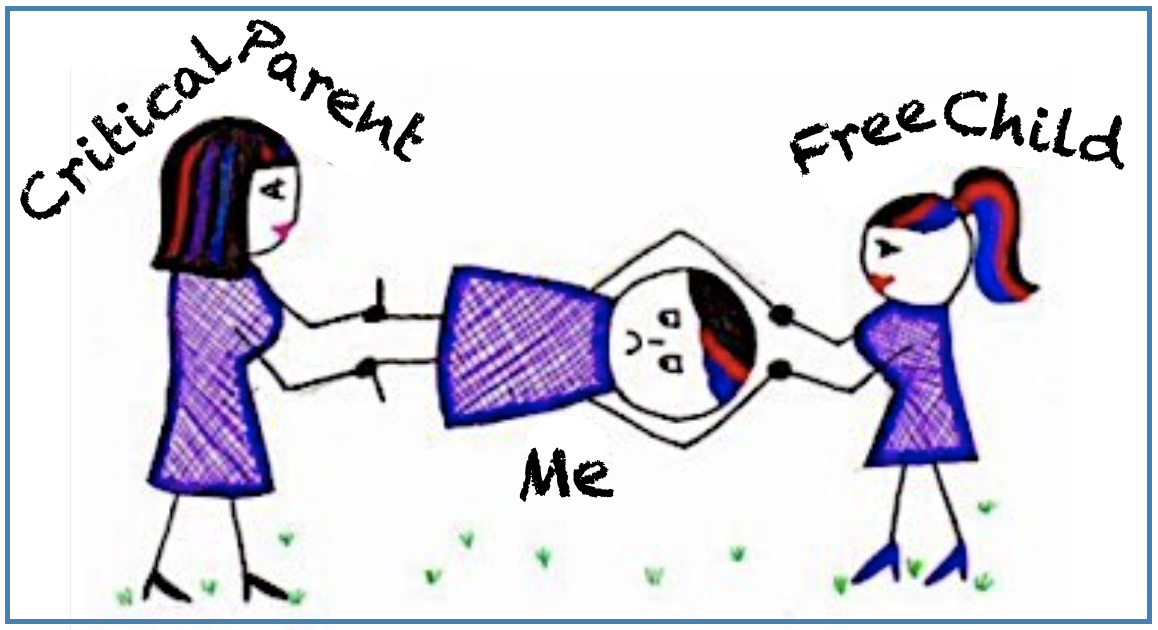
When the Bad Parent is so strong that it keeps the messages in place, the person gives in & continues to live by the original ‘rules’, keeping the Healthy Child bound.
HOWEVER –
a. When the person’s Wounded Child refuses to go along with its Bad Parent’s messages & is finally allowed to get angry, it liberates the Healthy / Free Child
b. The Bad Parent’s injunctions are agreed with, but the Healthy Child’s needs are ‘redefined’, often in humorous terms. Then both sides win.
EXP = Parent voice: “You’re crazy”  Child: “I may be crazy, but I’m never boring!”:)

NEXT: Disorders #4a

Psychological DISORDERS – Neuroses (Part 3b)

I’M ALWAYS ANXIOUS
when I  have to travel

PREVIOUS: Disorders #3a

BOOK:Neurosis & Treatment: A Holistic Theory. – A. Angyal


2. NEUROSES (cont.)

Neurotic Disorders
Agoraphobia w/ panic – believing some environment to be unsafe with no easy or possible escape, so needing to stay hidden indoors
 • Conversion (hysteria) – very distressing neurological symptoms (numbness, blindness, paralysis, fits) without a well-established organic cause, traced back to a psychological trigger
Depersonalization – feeling disconnected or estranged from one’s Self – as an outside observer of ones thoughts or actions

Dissociative (DDNOS) – chronic & recurrent identity disturbance due to prolonged & intense brainwashing (coercive persuasion) – which disrupts normal functioning of consciousness, memory or perception of the environment
Generalized anxiety (GAD) – the “worry cycle”, being concerned about getting through the day, but with no apparent or current problem

Hypochondriasis – excessive worry about having a serious illness, despite the absence of any actual medical diagnosis / proof
Neurasthenia (from stress &/or isolation) – a mechanical weakness of the nerves, with symptoms of anxiety, depressed mood, fatigue, headache, heart palpitations, high blood pressure & neuralgia

Neurotic Depression – same mental & physical problems as depression, with less severe but longer-lasting symptoms
Obsessive-compulsive – the need to repeatedly check things, perform certain routines (“rituals”), or having recurring unwanted thoughts, which control behavior
Phobic state – an irrational fear of a place or situation that makes one feel powerless & out of control (no choice)
Panic (without agoraphobia) – sudden periods of intense fear that may include palpitations, sweating, shaking, shortness of breath, numbness, or a feeling that something really bad is going to happen

• Post-Traumatic – caused by experiencing a single or prolonged traumatic events, & includes physical flashbacks, nightmares, & intrusive memories
Social anxiety – significant amount of fear in one or more social situations, causing considerable distress & impaired ability to function in at least some parts of daily life
Somatization – multiple clinically significant repeated physical complaints, representing emotional pain

A Different Perspective (non-traditional, non-medical)
a.  Students of the Enneagram start with each Type’s distortion or flaw, seen as a positive characteristic which has been bent away from True Center – because of wounding experiences. This is similar to the ancient Greek notion of sin or fault as hamartia = ‘missing the mark’. If you aim at a target with a bent gun barrel or crooked arrow, you’ll miss the target.

Starting in childhood, when we need the most nurturing & encouragement, our vulnerability can  turn our innate strengths into weaknesses, but ONLY —
— IF our values are attacked, discounted, made fun of or in any way violated, so we feel threatened & scared
— IF our strengths are challenged, distrusted, dismissed or questioned, so we can become anxious, guilty, ashamed & angry

Inner Child work is about uncovering & healing the wounds / vulnerabilities created when growing up. It’s discovering where our Healthy IC is, & where the WIC is hiding, how, where & from what, and what it really needs. By knowing our specific sensitivities, our EnneaType can be used as a guide to growth. (MORE….)
FLAW                                                    GIFT
#1 – Criticism /Resentment         == Serene / Good
#2 – Pride / Flattery                      == Humble / Loving
#3 – Deceit / Vanity                      == Authentic / Effective
#4 – Envy / Moody                        == Emotionally balanced,  Creative
#5 – Avarice / Stingy                     ==  Unattached / Wise
#6 – Fear / Cowardice                   == Courageous /Loyal
#7 – Gluttony / Avoidance           == Sober / Joyful
#8 – Lust  / Vengeance                 == Subtle / Protective
#9 – Sloth  / Withdrawal              == Engaged / Peaceful

(MORE ….  ➕ what each EnneaType really wants)
BOOK: “The Positive Enneagram“, Susan Rhodes

b. SIMILARLY – Andras Angyal (1965), a neo-psychoanalytic therapist, wrote:  “The real traumatizing factors are those which prevent the person from expressing these basic tendencies. In neurotic development there are always a number of unfortunate circumstances which instill a self-derogatory feeling in the child ……”  (MORE – excellent)
However –
✳️ “The person’s essentially healthy features exist not beside but within the neurosis. Each neurotic manifestation is a distorted expression of an individually shaped healthy trend. (p.228).
The distortion must be clearly seen & acknowledged, but the healthy core will be found within the distortion itself. So, when a person learns that the neurosis is an exaggerated version of health, they can feel less shame, & be more hopeful.”
• In other words – trace the neurosis back to it’s original strength & focus on expressing that instead.

NEXT: Disorders #3c

Psychological DISORDER – Normal (Part 2a)

GETTING TO BE A HAPPY SENIOR
took a lot of effort & help!

PREVIOUS: Disorders #1

HUMORPsych Disorders of Winnie the Pooh Characters

1. HEALTHY (NORMAL) cont.
Theresa Lowry-Lehnen, Health Psychology lecturer, said:
“Emotional stability refers to the level of control a person has over their own emotions. A healthy personality does not have unreasonable & unwanted negative thoughts & feelings towards others, nor indulges in self-loathing. They can be spontaneous but not impulsive, can make rational, well-judged decisions, & are able to protect their health, self-esteem & well-being – despite any problems in their life.”

TOOLs that improve Mental Health
• Value yourself     – • Take care of your body (food, rest, exercise, sleep…)
• Learn how to deal with stress     – • Quiet your mind  – • Practice gratitude
• Surround yourself with good (healthy) people
• Set realistic goals   – • Look for ways to change routines (travel, learn….)
• Express kindness to some else (but NOT at your one expense!)
• Practice saying NO!   – • Get help when you need it!    (MORE ideas….)

DEFENSES
Our coping mechanisms develop organically in response to frustrating, difficult & painful situations / experiences. They function like a human firewall, a psychological immune system needed to defend against hurtful & abusive relationships, while hopefully allowing healthy / nurturing relationships to pass thru’ the protective walls. (Posts: Boundaries .… weak, rigid, healthy)

At their best:
Defenses are important to know about because they strongly influence how easily people can form & maintain healthy relationships, while being able to reject unhealthy relationships. Knowing when to be defensive & when not to be – is key for health.
We need them to keep us safe from people who mess with us, but also need to be able to relax & let the wall open up, to keep the capacity for innocence, availability & healthy connections. (Posts: Trust …. over. under, healthy)

At worst: Defenses are harmful & debilitating when they turn into psychological armor solidified into stone or iron, not allowing trust & spontaneous interactions with positive PPT (people, places, things) in our life.

 MATURE Defenses (Healthy)
Altruism = You feel true pleasure from helping other people, & if you couldn’t, you’d sense something’s missing in your life & feel sad or get depressed
Anticipation = When you know you’ll be faced with a challenging situation, you try to plan ahead so you won’t be overwhelmed
Distraction = When something upsetting happens or has already happened, consciously decide to put off negative thoughts (which add anxiety) by temporarily focusing your attention on something less threatening
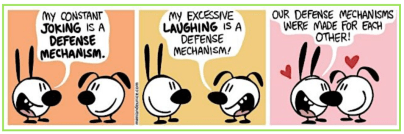
Humor (not humiliating, mean, sarcastic….) = You look for the funny side of situations, even when they’re stressful or potentially upsetting (watch a comedy show on TV)
Identification (healthy version) = When in new or scary situation, you temporarily use a characteristic – that you don’t automatically / naturally have – of an admired & respected person  (“What would ____ do or say right now?”)
EXP from the Enneagram :  Picking up positive qualities of the Number at the end of your type’s “Security Point” arrow (direction of growth)

Introjection (healthy version) = You admit not having a skill or trait that you value – so you copy examples from the environment & with practice – make them part of yourself
Sublimation = when you’re feeling anxious, you do something constructive that soothe you ,such as cooking, reading, woodworking….
Suppression – When bothered by something or someone, you keep the lid on your thoughts & emotions, if letting them show would interfere with your goals or well-being

HERITABILITY = is a statistic which assesses the amount of variation in the population one can attribute to the likelihood of inheriting a trait by genetic variation. While it’s a population-wide statistic, it can be informative on an individual level.
— If heritability is 1.0, all is genetic – offspring are a direct combination of their parents
— If heritability is ~0.0, then there’s no correlation between parents & offspring.

EXP: the heritability of height is ~0.90 in the Western world. (More….)
See Survey CHART  re.Genetic influence on human psychological Traits – which can give a rough sense of the “pull” that biological inheritance will have on an individual. Biology may not be destiny, but it is definitely probability.

Some Behavioral Traits w/ HIGH Heritability
• Aggressiveness,  Strong avoidance, Impulsivity, Reward-dependent
• Altruism, Empathy, Nurturance, Well-being, Persistence (or stubbornness)
• Assertiveness, Leadership, Constraint (non-impulsive)
• Sociability, Social closeness, Traditionalism, Physicality  (More….)

Article: “All Human Behavioral Traits are Heritable” from studies in BioDiversity

NEXT: Psych Disorders – ACoAs  (#2b)

ACoAs being ‘RIGHT’ (Part 2)

IF I’M NOT RIGHT,
then
who am I?

PREVIOUS: Being Right (#1)

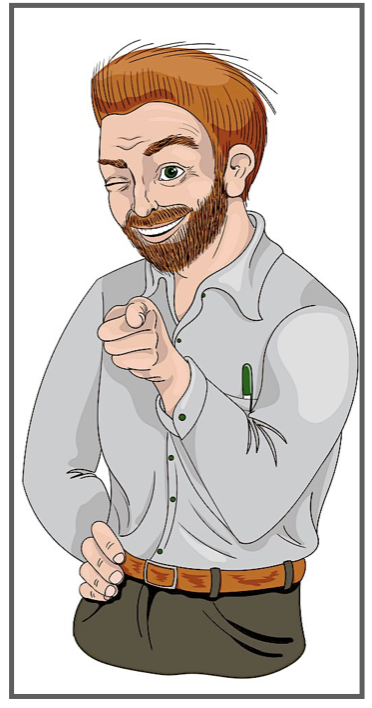
⬅ “ARROGANT BOSS” by DMT


🟧 WHAT’S WRONG With Being ‘Right’?
Unhealthy (mild): The narcissist in us (& every ACoA has one) will think or say “If I can see this so clearly, why in the world can’t you? // If I can do that task, what’s your problem? // If I love that, I assume you will too. If not, why not?!”
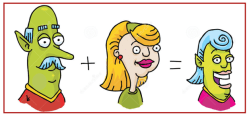
This attitude makes no sense at all. Even identical twins are different in some fundamental ways. One person is not automatically better or more correct than another – just different. (See “Symbiosis & ACoAs #3“)

UNHEALTHY (severe) Addicted to being right (aBR)
🖤 This character defect (a cognitive distortion) applies TO :
— some adults we grew up with, AND
— those of us who have copied them , &
— anyone we’re ‘stuck to’ as adults who is like that

A Closed System – The state of a person or thing being isolated from its surrounding environment.
a : Any one person so rigid in their opinions that they can’t let in anything which differs from their own determined ‘correctness’

b 2 people, a Dominant (D) & a Submissive (S) personality, who interact in an ongoing feedback loop, constantly exchanging limited, often distorted, info – characterized by coercion/compliance, co-dependence, sameness & symbiosis (like Mrs Bucket & husband)

For the D – there is no concern & equality for others, or desire to change, and –
For the S – there is no autonomy, questioning, rocking the boat, separateness, speaking up or taking a stand . (More….)

● GROUPS: (family, academia, church… )
Groups who assert they have the only right answer – discourage change, differences, disrupting the status quo, equality, independence, objecting, questioning, or taking a stand.
They tend to promote factions, gossip, immaturity, repression, secrets & triangulation. It makes members reactive & anxious, even if this is hidden from each other. They don’t feel safe to question or disagree leadership or the official rules, feafulr of disapproval, punishment or rejection. (MORE…)

🔒 At the extreme ‘right’ we find the ‘Right-ists’.

RIGHT-ists are in a world of their own, extremely self-absorbed & arrogant – The accuracy or importance of whatever point they’re pushing is not as relevant as their need to be agreed with.
Their rigid thinking is used in a power struggle to bring everyone else to their knees – psychologically, mentally & emotionally. They want to capture other people’s thoughts – even in situations truly & totally beyond their control, such as with the active addicts .(Serenity Prayer backwards“).
Ingrained Right-ists truly feel justified in their position, rarely if ever seeing the arrogance & selfishness of their attitude. Sure of themself & comfortable in their superiority – so there’s no internal cognitive dissonance.

NOTE: Some right-ists camouflage their compulsion by seeming concerned for others’ welfare, sounding reasonable or just giving ‘helpful’ suggestions. But all the while they’re trying to control their environment – to make it conform to their world-view.
One hint: they consistently make unsolicited & often unwanted suggestions, give advice & offer help – there version.
DO NOT be taken in by the presentation. If your own opinions & needs are often or always ignored or over-ruled – you’re dealing with a sneak-narcissist.

Re. SELF,  RIGHT-ists:
• are rigid & controlling, so they don’t work well with others
• can become quite aggressive in order to eliminate the threat to their (secret or unconscious) weak self-image
• experience anyone who opposes or simply has differing opinions – as a direct threat to their sense of well-being
• lack empathy, have no patience with others & are often snide
• need the world to revolve around them

Re. OTHERS
., RIGHT-ists :
• alienate others without realizing it, OR of they do, they wonder why, then assume it’s the other person’s fault
• can end up isolated & deprived of companionship, love, affection, …. unless they find a passive person who uses the ‘Right-ist’ to think for them!
• can’t imagine that other people actually have different needs & opinions from their own (NPD mother = “Put a sweater on, I’m cold”)
• may push good info from ‘good intentions’, without considering that they’re discrediting another’s process, boundary invading, & being arrogant (“others NEED me”)
• regard others’ ideas or viewpoints as inferior or worthless, often losing out on new info, & wonderful opportunities or relationships.

NEXT: Being Right (Part 3a)

RED FLAGS from Psychopaths (Part 2)

LISTEN TO PATTERN
of their conversation

PREVIOUS: Red Flags #1

BOOK HOW to TAKE REVENGE on a NARCISSIST: Take your power back by using their secret techniques 

List BASED ON: “30 Red Flags of Manipulative People”


1. RELATIONAL Manipulation (Part 1)

2. SOCIAL Manipulation
Boredom – They focus more on their new activity & ignore other ones with you. They don’t seem to care when you’re not nearby, since they can just as easily move on to the next source of energy

Comparing you with everyone else in their life, including your eventual replacement. When idealizing you, you feel very special by being told how much better you are than ‘these’ people. Later, when devaluing you, they use these comparisons to cut you down

Communicating – texts you dozens of times a day, adding compliments, flattery, songs & poems on Facebook….  You come to rely on this flood of attention as a source of self-confidence

Denouncing – they seem to have an unusual amount of crazies in their past. They bad-mouth previous business execs & personal relationships who ‘abandoned’ them, labeling those people as disloyal, jealous, bipolar, alcoholic….  They’ll trash-talk about you the same way to their next target

Exes, Exes, Exes – it’s the psychopath’s favorite topic of conversation & you’re stuck listening about previous relationships all the time – their names & everything that happened between them – but only the psychopath’s version

In Demand – they surround themselves with former lovers & potential mates, bragging that their exes still want to sleep with him/her, but assures you not to worry. You feel jealous, believing your partner is in high demand

• Isolating – If you try to keep up ties with family & friends outside your relationship, they will be sure to undermine each one until you’re severed. And if you work hard to foster inner peace in your life, they’ll make it their mission to destroy every avenue or tool you try to use

Mind reading. Psychopaths expect you to always be able to know what they want or need, when they’re upset, when they don’t feel well, when they want you to do something – all without saying!

Rivalry – they shift their laser focus from you back to previously denounced exes, using social media to post ambiguous videos & status updates, old songs & inside jokes. They make you doubt your importance to them, but if called out will say it’s all innocent – that you’re paranoid.

Shape shifting. They adopt different personae for different people or groups, transforming their outward personality to match their audience. But sometimes they forget what role they’re playing with you, then slip & accidentally use the wrong mask. You begin to wonder – Who are they really?
Very eerie, but it’s not Multiple Personality Disorder. Each shift is conscious & cleverly molded – all to cover their inner emptiness.

3. GENERAL
• Blaming others – nothing is ever their fault. They spend all their time rationalizing & excusing their behavior rather than improving it

•  Dichotomy – they confuse you by acting like a swaggering street-smarts toughness, alternating with a little boy/girl ‘innocence’ routine (not real!).

• Fake goodness – they may create a ‘saintly’ aura by engaging in phony altruism (volunteering, donating, gift-giving…), & then can’t wait to boast about the great things they do for others – to gain your trust

•  Fake ‘tears’ – their emotions are shallow & short-lived.
— the’ve learned to copy emotions they see in others, so the mask rarely slips – unconsciously, when you get a feeling hint that something’s ‘off”
— you may catch flashes of contempt (feeling superior), unrelated to anything going at the moment. Micro-expressions leak their true opinions
— rage is one of the few Es they actually feel, but even so they can go from ranting to compete calm in a minute

• Fun – they actively search our extreme sports & dangerous activities, from a need to feel excitement via high risk & intensity. Anything from ‘BASE’ jumping to having sex in public, from juggling matches to carelessly cheating on a mate

Overwhelming selfishness – only their needs, desires, opinions, upsets… count

•  Talking style – on the one hand their speech is filled with ‘umm / er / uh’ s… maybe   needing the time or mental effort to come up with the next lie, ‘story’ or way to make a good impression
On the other hand – they can barrage you with endless (sometimes interesting) monologues, like being on stage, but ignore responses or interruptions

• TMI – they love to tell about shady & ‘dirty’ things they’ve done (business & sexual) – as if those were something to be proud of – while giving the impression that’s all in the past for them.    (Modified from “Identifying a Psychopath….”)

NEXT: Psychopath RED FLAGS #3

RED FLAGS from Psychopaths (Part 1)


NOTICE HOW OUT OF TUNE

they are with the rest of us

PREVIOUS: Dealing with P-As, #5

SITE: Movie Psychopaths – Most & Least realistic 


BASED ON: “30 Red Flags of Manipulative People”

Many of these Red Flags are contradictory – which is part of the psychopath’s bag of tricks. Don’t be fooled, because if  you believe their initial con-job, then they can keep you off balance, & you stay hooked.

★ We always need to be awake for what people are telling us about themselves – in all relationships. One Red Flag to look for is:
Always be suspicious of anyone who comes on too strong, too attentive & complimentary, too easily ‘attached’ – almost as soon as they meet you, even if some of what they say about you is accurate. They simply don’t know you yet, so all their sweet-talk is a form of manipulation & narcissism. It’s creepy!

Healthy people are not taken in by this – they can ‘feel’ such a person’s inappropriateness, whether from neediness or used as a self-serving hook. Smart adults take the time to slowly get to know others, allowing the process to unfold the truth. This is especially important for ACoAs, who are looking for a symbiotic, instant attachment – but which makes us vulnerable to being used & then thrown away!

1. RELATIONAL Manipulation
Bait & Switch. After the initial seduction & idealization phase, they stop the compliments & flattery, then undermine your self-esteem by being degrading & belittling

• Be Non-reactive – they’re cool, calm & collected & want you to feel inferior or over-sensitive for having normal human emotions & reactions

Controlling – They tell you what to of, say & feel. They try to ‘fix’ you up, obsessed with your appearance, making comments about what you’re wearing  & how you look, always picking at you, pointing out flaws that don’t even exist\

Declare you are their soul mate – in the beginning: psychopaths will tell you how much you have in common, they just can’t believe how perfect you are for them, let you do all the talking…. so you’re enchanted

Flatter your deepest insecurities, mirroring your greatest fantasies, playing whatever role is necessary to win your heart. EXP:
— If you’re self-conscious about your looks, they’ll say you’re the sexiest person in the world
— If you have a need to be entertaining, they’ll say you’re the funniest most interesting person they’ve ever known….

Gaslighting. Psychopaths blatantly deny their own manipulative behavior, ignoring clear evidence when confronted with it. They get angry if you try to disprove their denial / delusions using facts

Insult you in a joking but condescending way, subtly minimizing your intelligence & achievements, such as smirk any time you try to express yourself

Over-emphasize emotions, verbally, but not ever show any themselves. Make passionate statements like “I’ve never felt so happy in my life”, but in a robotic, detached voice – like an alien trying to imitate human feelings

Provoke emotional reactions – deliberately setting you up. EXP:
— call you jealous after blatantly flirting with their ex on social media
— call you needy after intentionally ignoring you for 3 days straight…..

Teasing you becomes their major style of communication – “just joking”! If you point this out, they call you hypersensitive, paranoid & cra

Ultimate hypocrite. Psychopaths expect you to be their perfect mate, demanding total fidelity, respect & admiration – while they cheat, lie, steal & use you emotionally

Withhold attention. Once you’re hooked they suddenly become withdrawn & physically uninterested – without any obvious reason or explanation. They act bored, like it’s a chore to be intimate, completely annoyed that you expect to continue the passionate relationship they started.
It make you desperate & needy, ensuring that you’ll always be the one to initiate contact

• Silent treatment: If they stop talking to you for several days, it’s to show their displeasure because they want you to believe that it was your fault for expecting too much from them, for ruining their plans, for not being available when they wanted you…. & they’ll play the victim as an excuse for not telling you

Spotlight – always shining it on your faults and ignoring their own. If you point out their mistakes, they’re quick to point the finger back at you.  EXP:
— If they’re 2 hours late, they remind you that you were once 5 minutes late to your first date
— If they’ve forgotten to keep a promise, they remind you of the time you didn’t buy the milk you said you’d pick it up for their breakfast…..

Teasing you becomes their major style of communication – “just joking”! If you point this out, they call you hypersensitive, paranoid & crazy

NEXT: Red Flags, #2

Qs: Are You Passive-Aggressive?

I DON’T LIKE these questions!

PREVIOUS : P-A ACoAs – Review, #3

BOOK: Overcoming Passive-Aggression…..

SITE: Why Empaths Freeze Around Fake People” 

See ACRONYM page for abbrev.

REVIEW: Ways to express anger – Bible perspective

Qs re. Silent Treatment – Christian focus
A Master Mind student formulated the following Qs for such a person to ask themselves, but they can also be used in couple’s counseling & in groups.

MOTIVATION for using the Silent Treatment (ST)
✐ What are you trying to achieve, accomplish, or prove with ST?
✐ What are you trying to protect yourself from by choosing silence?
✐ Is this a defensive tactic? If Yes, then against what?
✐ What are you trying to control when you use ST?
✐ What is it that makes you so angry?
✐ What are you afraid of if you were to actually talk to the person you’re ignoring?

COMMUNITY
🔎 Are you aware how this tactic affects your family – this type of abuse?
🔎 Are there any other people in your life you treat this way?
🔎 How does it make you feel when you are ignored & alienated?
🔎 Do you have anyone holding you accountable for this tactic?
🔎 Are you willing to change now? Will you stop doing this and voice your concern?

QUESTIONNAIRE re. being Passive-Aggressive 
Unexpressed anger can build up and take over your life, making you miserable in many different ways. You may have deep unresolved anger if you:

📕 EMOTIONAL /PSYCHOLOGICAL

_____ Are afraid to express strong emotion, believing it’s wrong to be angry

_____ Are bored, apathetic, have lost interest in things you used to enjoy

_____ Are excessively impatient and irritable

_____ Become easily frustrated with other people’s faults or limitations

_____ Deny your feelings of frustration, irritation & impatience

_____ Often complain to others about injustice at your job or at home

_____Smile but are bitter and cynical, while you’re hurting inside

_____You seem sweet, compliant & agreeable, but underneath are really resentful, angry, petty & envious

_____You’re afraid of being alone, & equally afraid of being dependent

_____You cover up feel inadequate with superiority, disdain, hostile passivity

_____You sulk, withdraw and pout

_____You constantly protect yourself so noone will know how afraid you are of being inadequate, imperfect, left, dependent or simply human

🖥️ MENTAL / PHYSICAL

_____ Are unnecessarily critical of yourself

_____Feel insulted by others’ selfish driving, resulting in road rage

_____ Grind teeth or clench your jaws, with chronic tight facial muscles

_____ Have chronic muscle tension in neck & shoulders, that worsens when anxious

_____ Have continual thoughts of revenge

_____ Habitually clenched fists, tap feet or hands when upset

_____ Turn your anger on yourself & mentally beat yourself up

_____You are often late and/or forgetful

_____ You often procrastinate, especially about things you do for others

_____You regularly complain that you’re treated unfairly

📱 COMMUNICATION / SOCIAL

_____ Are afraid to express your opinion because you might blow up

_____ Are sarcastic and use humor destructively

_____ Are secretly or outwardly judgmental about how others act

_____ Agree to do something, then don’t follow through. “Forget” your promises

_____ Displace anger on ‘safer’ people (less threatening) or on objects

_____ Frequently pepper your talk with cuss words

_____ Must have the last work in disagreements, keep a fight going

_____ Overly polite, cheerful, ‘grin & bear it’ to hide feel mistreated

_____ Pick at others & provoke them to anger

_____You drag your feet to frustrate others

____ You don’t speak your truth openly, kindly & honestly – when asked for your opinion or asked to do something for someone

_____You’re unwilling to give a straight answer

_____ You make up stories, excuses and lies

_____ Want to be known as the “nice guy/gal” but inwardly are in turmoil

NEXT: Dealing with P-As, #1 

Passive-Aggressive ‘Nice’ COMMENTS

I HAVE LOTS OF WAYS
of being covertly angry
PREVIOUS: P-A #1

SITEs27 Most Passive-Aggressive Things That Ever Happened
P-A Commuter Types – (London)

** Southern P-A veiled insults 


Somethings Passive-Aggressives SAY :

Using their cherished bag-of-tricks to combat insecurity, especially if they feel pushed outside their comfort zone, P-As silently hope for attention & approval, trying to prevent loss of connection by avoiding confrontation.

The following statements are meant to express disappointment, hurt & hostility, but are coded in the form of underhanded insults instead of respectful honesty. Totally confusing most people, this style insures P-As do not get their needs met, while feeling ONE UP.
When they give those little looks, roll their eyes, or throw out subtly sweetly nasty comments, they’re cresting brain fog, so most ‘recipients’ don’t catch on that they’re being messed with. 

NOTE: Emotionally healthy people are self-reflective, so not only do they have decent self-esteem, but aren’t afraid to own their ‘stuff’.  So they rarely point a finger at others,, keep the focus on themself, not ashamed of their emotions, & can communicate directly with ‘I‘ statements.
EXP: “I won’t be able to help you with that // This is who I am, please accept me as is….”

BUT dyed-in-the-wool P-As have none of those characteristics. Almost all the following statements are ‘you’ types (some implied), and none of the “I” statements are kind or supportive, nor admit personal responsibility for their feelings / opinions

THIS often leaves someone wondering:
“Did I hear right? / / Did they mean to be mean? / / If I catch them or say ‘this hurt’ – will they deny or attack?……”  What the P-A wants is for others to always be off-balance.

This list includes things said/written by any adult in any setting
Aren’t we pretty today? = Who do you think you are? / / Is that what you’re going to wear? // What you’re wearing is ugly
Don’t bother! = means I really want you to do _____, & angry that you won’t
• Don’t take it so personally = means that it was a very personal barb
Fine. Whatever = sulking, they want you to stop bugging them
• How is your therapy progressing? =You don’t seem to be getting any better (maybe worse!) // you’re still such a mess, I don’t think even this will help
I’m coming! = foot-dragging, putting off doing something they want // I’m busy!

I didn’t know you meant now = means I won’t let you control when I do what you want, which I don’t want to do anyway
If you really want to = means I don’t really want to, but won’t say so
• It’s nice that you’ve found a friend = finally, since you’re not very desirable
If you insist! = means I don’t agree //  I don’t want you to, but won’t ask you to stop
It’s fine if you’re late, again = they feel disrespected but think it’s too petty to object directly (don’t have a right to be considered)
I didn’t do anything (wrong) = complete denial of their abuse or neglect
• I didn’t mean anything by it = means ‘pretend you didn’t get it’
I h0pe it’s worth it = they’re “worried” about a choice or decision you’re making, think it’s wrong and hope you fail
I thought you knew/ are in the loop = 
they had no intention of including you
• I was curious about / surprised / confused by…  =
a disguised criticism
I was only joking = sarcasm meant to stab at you. It’s not funny

• Oh my dear, you’re looking so much better today = boy have you been looking like something the cat dragged in lately (although you have not been sick)
No worries = short for Screw You
So… (by itself) = another form of Screw you, or what’s your point? — If in a sentence : So….When are we going? / have you called them back yet?…..  = the P-A is clearly agitated, worried…. but won’t admit it
Sure, I’d be happy to = they don’t want to & have no intention of doing it
• This is far too complicated for you to understand = dumb, dumb, dumb
Thanks in advance = you’re will do what they want, without your input or consent

• You’re asking too much / just wanted everything to be perfect = they don’t want to do what you asked for, but can’t get away with putting it off, so do it badly or half-assed, then are defensive when you rightly object to a sloppy execution
• You’ve done so well for someone with your limitations / with what you had to work with = means the P-A is jealous, but patting you on the head like a child. OR are very displeased & disappointed in you, & blames you

You decide / whatever you want = (as a pattern) never taking responsibility for what they want & then objects or criticized your choices
You’re imagining things = means that if you’re ‘crazy’, they’re home free – got away with abuse

You’re so intense / too emotional = P-As are hiding their own anger & pain, so don’t want your strong emotions to stir up their suppressed ones
You’re too sensitive = P-As don’t want you to object to their hostility, judgement or insult
Why are you getting so upset? = means “Ha, I got you!”
• We’re watching your progress & hoping the best for you = we don’t have a lot of hope or confidence in you, but want to sound supportive!.

NEXT: P-A ACoAs (Part 1)

SYMPTOMS of Passive-Aggressive Anger – in us

I MAKE SURE
they take care of me!

PREVIOUS: P-A characteristics, #4

SITE: LIST of more provocative behaviors (scroll down)

CHARACTERISTICS

OVERTLY hostile people live by the motto :  “To survive I must fight with anger”
Co-Dep people-pleasers think : “To survive I must placate everyone
P-As think : “To survive I must attack everyone from behind

COVERTLY Angry people
❥ are finely tuned to everyone else’s needs but their own
❥ spent all their time trying to read everyone’s mind so they can provide whatever someone supposedly needs, even before they know it themself
❥ hide their abandonment anger behind ‘killing you with kindness’

b. Passive-Aggressives
➤ spend a lot of time obsessing about how they’ve been wronged in ways that caused them emotional & physical pain. SO —
➤ put all their effort into making sure other people don’t get what they want – either – instead of striving for what would make themself happy.

P-A SYMPTOMS
Behavior – YOU :
• are indecisive, drag your feet to frustrate others
• are erratic & unpredictable, causing confusion, frustration & aggravation
• are accident-prone  (BOOK:”My Mother/ My Self”, Nancy Friday: constantly bumping into things, from rage)
• are inefficient on purpose, sabotaging projects in small ‘innocent’ ways

• get financially supported – use partner as your bank, never pay for anything
• ‘innocently’ make messes – anywhere, everywhere – refuse to clean up after yourself
• make a few blatant serious mistakes in otherwise meticulous work

• manipulate, like to provoke others to anger or aggressive behavior, & then patronize them, alternate between hostile defiance & contrition
• offer food, drink, a drug…. that you know the other person is allergic to or trying to quit
• often lose things, leave things behind (in subways, stores, movies….)
• refuse to ‘lend a hand’ when it would be easy for you to do
• resist doing what anyone else wants, even if you can or are interested in doing it
• stubborn, with an intense resistance to newness or any variation in an established process
• take all for yourself, throw out or give away things that belong to another – without asking permission (stealing)
• usually late, never quite committed to anything, whether work or personal

Communication – YOU :
• always need to prove you’re right in a disagreement
• blame others for making you do things you don’t want to do
• constantly complain about personal misfortunes, & exaggerate difficulties
• give a secret enemy the silent treatment, phony smiles, looking cool & unconcerned…. while stockpiling resentments
• give subtle insults (back-handed compliments) based on someone’s weaknessscreen-shot-2017-02-25-at-1-34-28-am

• keep others from accomplishing their plans, make people wait to hear from you about invitations
• like to stir up trouble, lie to make yourself look good & others look bad
• make endless promises to change, but never do
• make convoluted statements, leave important info out, have poor eye contact
• nit-pick,  continually correct others, withhold praise someone deserves, make people wait for their evaluation
• often say you’ll do something you don’t really want to, & then back out at the last minute – with lame excuses
• say others are unreasonable & unsympathetic when you don’t perform tasks up to par
• tell jokes that make others look bad or are inappropriate for the occasion or audience, disguise anger with teasing

Relationships – YOU :
• are ambivalent & indecisive, following the lead of every one else but yourself
• break a promise of confidentiality (3rd party gossip)
sneaky satisfaction• cut people off without explanation, burning bridges
• constantly on your cell when you’re with someone else (‘phubbing)
• envy & are resentful of peers who succeed or who are viewed positively by authority figures
• ‘forget’ to follow thru promises made to others
• get very real secondary pleasure out of frustrating others
• re. Infidelity – either gender – extramarital affairs or promiscuity, phone/ internet sex
• inappropriately invite or bring others along to a one-to-one dinner, event, trip…..  without warning or asking the other person ahead of time if it’s acceptable
• keep innocuous secrets from mate, prefer to lie about little things
cheating• Men –  refuse to provide your mate’s sexual desires/ needs
,  refuse to ejaculate to show you’re in control, lack of sexual interest, may resort to physical aggression

• pay more attention to other people (stranger, attractive ‘other’, an acquaintances….) that to your date/mate
• pick mates who will take care of you, allow you to manipulate
• string someone along but refuse to commit
• sulk when you don’t get your way
• talk too much about or brag about previous relationships
• prolong any annoyance or disagreement unnecessarily
• use new mate only as a replacement for previous or deceased one
• usually oppose other people’s plans – to be in control

NEXT: P-A ‘nice’ comments

Passive-Aggressive ‘Nice’ People (Part 4)

HURT YOU? BITE YOU?
I would never-r-r!

PREVIOUS: P-A #2

SITE  P-A BEHAVIOR in Relationships


NOTE:  Look for their red flags, using the lists from the posts: ‘Passive-aggressive Comments, Symptoms of P-A anger – in us, & the set below


IN relationship with a P-A
Because neurotics (‘Givers’) take on so much responsibility, they prevent P-As (‘Takers) from having to act differently, enabling the dysfunction to continue.
Character disordered people don’t consider changing – if at all – as long no one calls them on their behavior. But for that to happen everyone they deal with would have to recognize them for what they are, & react appropriately in the moment. Otherwise, they just continue to get away with assuming they’re always right.
EXP: Many women, in divorce court, have been humiliated & financially victimized by judges favoring clever & rich pathological spouses!

In the mean time, until pigs fly, anyone dealing with P-As (& other personality disorders) on a regular basis must firmly state reasonable expectations & stand firm on necessary limits. The ball always has to be tossed back into their court. It’s their responsibility to own up to & work on their issues, so the best you can do is make them accountable.

To start with, it’s important to recognize what’s going on so you don’t think you’re crazy. You may already think you are if you grew up with at least one P-A parent, or everyone in the family – denying how hurt & angry they were, but never acknowledging, much less having dealt with it. But it’s not you!
Because of that beginning, we may have picked up the P-A habit ourself, but more often we unconsciously choose work environments & personal relationships with P-As. To change that, notice overall patterns of behavior in the people around you, monitor your emotions & never ignore gut reactions.

EXP
: You are likely to feel angry, confused, or powerless – when needing to get their cooperation or trying to be heard. But since you can’t have an honest, direct conversation with a P-A person, nothing ever gets resolved.
AND if you continually, compulsively surround yourself with P-As, review your own Fear of Intimacy, because P-As keep everyone at bay. They function from the False Self, preventing emotionally intimacy – without Recovery.
If we stay around them for too long we’re guaranteed to feel abandoned – because we are.

Some ways P-As express anger in Relationships:
MILD
ATTITUDE / BEHAVIOR
‣ Always late/leaves early. Walks out on people. Bangs doors
▸ Deliberately sloppy
▸ Procrastinates – is deliberately slow &/or puts things off
▸ Refuses to do what is reasonably expected
▸ Refuses to listen. Pretends not to hear or see

PSYCHOLOGICAL /EMOTIONAL
▸ Acts forgetful. Keeps rehashing the past
▸ Twists the truth. Manipulative
▸ Uncooperative. Withdrawn

MODERATE
ATTITUDE / BEHAVIOR
➣Acts sick or helpless. Refuses to clean oneself or the home
➣ Impulsive – fails to plan ahead. Deliberately makes mistakes
➣ Often absenteeism at work
➣ Refuses to function as a responsible parent or spouse
➣ Works markedly below ability. Refuses to work regularly.

PSYCHOLOGICAL /EMOTIONAL
➣ Always negative. Withholds support, Distances self.
➣ Deliberately avoids or ignores someone they dislike
➣ Enjoys seeing people become upset. Is divisive
➣ Refuses to be responsible. Overly stubborn
➣ Refuses to praise or compliment
➣ Won’t communicate & gives Silent Treatment

SEVERE
ATTITUDE / BEHAVIOR
❁ Deliberately fails at work. Fails to pay bills.
❁ Fails to attend to the needs of the spouse or children
❁ Neglects the home, Refuses to eat
❁ Refuses to take care of a serious health problems

PSYCHOLOGICAL /EMOTIONAL
❁ Always in victim role. Avoids intimacy
❁ Deliberately acts to be sick or makes themselves sick
❁ Doesn’t receive love. Withholds love from a spouse
❁ Makes false accusations. Con-artist
❁ Undermines children’s trust/respect for spouse or other important relatives/friends

Dealing with a P-A is always frustrating & sometimes enraging, especially when it’s your spouse. One of the many problems is that they find it much easier to say what they don’t want than what they do .
Inside the P-A is a wounded child who isn’t safe enough to voice how it really feels – from fear of punishment, rejection, sarcasm, engulfment …. Their True Self has retreated, making it hard for the P-A to say what’s bothering them, so they expect others to read their mind! & provide unspoken, even unacknowledged needs.  And if you don’t, you will be punished – no matter how indirectly.
REMEMBER – their tactics are never about us! even tho’ it does have a very great impact on our interactions with them

NEXT :  SYMPTOMS – in us