What is Self-Control ? (Part 5)

Screen Shot 2016-01-15 at 7.44.34 AMIT’S MUCH BETTER FOR ME – to be in control, than to be controlling

PREVIOUS: What is Self-Control ? (Part 4)

SEE post: ACoAs Acting controlling’

QUOTE: “To enjoy freedom we have to control ourselves” ~ Virginia Woolf

SELF-CONTROL  and PRESSURE
1. Neutral: No Pressure – a free environment with no competition, where you can do whatever you want. Self-control is based on however you feel at the moment. With no one else to compare to, people will be more -or- less motivated, depending on the urgency of whatever they’re doing, or their ability to self-motivate

ACoAs – re.‘ Neutral’, children left too much on their own, without guidance or boundaries, can end up floundering, lacking self-motivation. Notice : now with open chunks of time we say “I don’t know what to do”,  OR “I have so many things I could do / should be doing – I don’t know which one to pick”.
So we end up wasting the opportunity by doing nothing or just puttering around. Then we feel frustrated & upset with ourself.

2. Negative: Bad Pressure – In a judgmental & prejudicial environment with no competition, people can get depressed, unmotivated & lose self-control.ocer-control
REVIEW: Emotional Power over others and
Emotional over-Control of oneself are similar because they :
• both try to unfairly influence inner feelings, beliefs, attitudes, values
• are inappropriate internal strategies for dealing with issues, conflicts or mistakes
• are less obvious than physical methods, being manipulative, sneaky, dishonest
• produce subtle results (harder to catch), BUT ↓
• can be identified by resulting signs — depression, discouragement, emotional suppression, insecurity, low self-esteem, negativity & pessimism

3. Positive: Good Pressure – Being in a competitive but non-judgmental, non-prejudicial environment which helps people become motivated, inspired & gain self-control, making them want to be like others around them

STUDY from Humboldt University, Germany:
Broad styles of emotional control can be identified early in life.  This study followed children for 19 years, starting at age 4, then divided them into young people who were –
a. Under-controlled:  disagreeable & lacked self-control. “When feeling frustrated they acted aggressively towards others, n spite of the negative consequences.”
who's in chargeb. Over-controlled: emotionally brittle, introverted, tense, quiet, self-conscious & uncomfortable around strangers. Who “… control their emotions too much, so are less ‘natural’ & spontaneous. Being slow to warm up, they are seen by others as shy.”

c. Resilient (balanced): self-confident, emotionally stable, with a positive orientation toward others. These were “good at modulating their emotions, interacting with others & bouncing back from adversity”

✳️ One observation from the study was that – “compared to the resilient children, the other 2 types took longer to move into adult roles, such as leaving home, starting a romantic relationship or finding a career. Accomplishing these milestones requires social adeptness that the over- & under-controllers take longer to develop….”

COMMENTS : Types a & b are likely the result of unsafe childhood experiences combined with each child’s native style of emotional reactivity. This affects brain chemistry, & therefore how we react to life as adults. Regardless of which underlying personality type we’re born as , pre-Recovery ACoAs are rarely Resilient, but more likely over- or under-controlled, from childhood trauma.

⚡︎ ⚡︎ SO : coming from a turbulent, dysfunctional home, the Impulsive child can easily turn out to be the trouble-maker or drama-queen, AND the Shy one ends up isolated, depressed & marginalized (Scapegoat or Lost Child)

Resilience : b
y comparison, coming from a safe family, Extroverts can grow up to be dynamic go-getters AND Introvert become the quieter ones who successfully use their influence & skills in-the-background.

STUDY – by Jerome Kagan, from Harvard U,  His team used MRI scans to show that the brains of young adults – who were identified as being shy when toddlers – worked differently than the more Extroverted ones when they were small.  Of course, there are many other factors, including class, that make a difference in how children mature.

Ultimately, healthy Self-control is a combination of:
• being in charge of your WIC – by forming a relationship with him/her, so your UNIT is the stronger voice – reasonable, trustworthy & KIND
• AND stopping the PP from bullying the Inner Child into staying hooked by the family disease, who will either rebel or fold in reaction.

NEXT: What is S-C ?  (Part 6)

What is Self-Control ? (Part 4)
head or heartI CAN CHOOSE TO DO THINGS
that are good for me & are suited

PREVIOUS: What is Self-control (Part 3)

See ACRONYM page for abbrev.


Control is about POWER – to make someone do or be what we want. When applied to ourself – that power can be either –
• a defense to deny our pain, which is debilitating & destructive, OR
• to heal & nurture ourself, & express our best to the world

Healthy Self-MANAGEMENT (S-M) is not limiting or rigid, but rather providing the stamina to keep going & the ability to handle stresses with flexibility. It relies on the same willpower as rigid self-control, but instead is channeled to :
a. prevent us from doing whatever is unsuitable & harmful to ourself, OR
b. delay instant gratification & pleasure, in favor of some greater gain or for more satisfying results at a later time

VALUE of S-M. It allows us to :
a.  • obey legitimate rules & laws
• avoid talking or acting impulsively
• overcome being stuck or procrastinating

• prevent self-destructive patterns (addictions…)
AND
b. continue & finish internal or external projects, even after the initial rush of enthusiasm has faded, or when they get too boring or too hard

Having S-M means WE:
• are in present-day reality, which includes owning our adult abilities, acquired knowledge & useful experiences
• can stay centered & act according to our own mind
• have self-respect as a Healthy Adult, especially in our thinking
• know our Rights, options & what’s actually possible (not fantasy/ illusion)
• make declarative statements & ask for our needs – in the right places
• use that info to practice setting boundaries, with ourself & with others

HEALTHY GOAL
Screen Shot 2016-01-15 at 8.11.47 AM🔸To run our own life, rather than someone else’s, & not have someone else run ours – we must be our own Motivator, which is not selfishness but the opposite of co-dependence.

Being responsible for our own life also includes :
🔹AA Step 1: “We admitted we were powerless over____” other People, Places & Things
🔹AA Step 3: “…turn our will & our lives over to the care of God….

Having choices does fit with the Serenity Prayer:  “God grant me:
1. the serenity to accept the things I cannot change
2. the courage to change the things I can
3. and the wisdom to know the difference”

ACoAs are too long on a. negative self-discipline & short on b. healthy self-control, which is available by developing the “UNIT”. At first “a.” may seem like a good thing – because it’s supposed to keep us from doing actual bad or wrong things (which it can also do) – but that’s not the main way we use it

Instead, what ACoAs often do is to keep ourself from developing healthy T.E.As, but are in fact many positive ones DIS-allowed by our Toxic Family Rules.
EXP : Thinking for ourself, having opinions, standing up for our rights, Leaving bad situations, following our bliss, Feeling our emotions, relaxing, being happy, having fun ….

Actually, just because many of us start out as under-dogs, it doesn’t mean we can’t WIN – over our damage, over our pain, over others trying to control us! Being empowered can be every ACoA’s goal, deciding for ourself how to act from an inner place of certainty & serenity.
😠 And for those of us who don’t like the word CONTROL – we can say : being in charge, living in our Adult Ego state, taking responsibility, being our own motivator!….

So, how in charge are you of your life – actions, career, emotions, health, home, finances, relationships, work life…..?
Based on many studies, including Fujita (2008), correcting CDs  – our self-defeating self-talk – can extend the ability to be in charge of ourself, to keep our focus & have better self-care.

• Reasonable adults respect others who are in control (C) of themself & their life. Being respected is one of our many rights – the opposite of being shamed  As we develop & honor our True Self, we will be respected by others more often if we consistently handle what WE CAN, as in line 2 of the Serenity Prayer, & relinquish / let go of the demand to control what we do not have the power to do.

NEXT: Types of Self-Control (Part 5)

What is Self-Control ? (Part 2)

I’M MOST IN CONTROL
when I don’t follow the pack

PREVIOUS: What is S-C (#1)

POST : Letting go of being controlling


1. Q: What do most people think ‘Being IN control’ is about?
A:  That it’s ONLY about taking actions instead of freezing up or being indecisive.
This comes partly from our culture, which constantly tells us to “Just do it”, & partly from the alcoholic / narcissistic family that only focused on DOING, rather than Being or Feeling!

It’s considered about “keeping it together, not letting ’em see you sweat, being cool, not needing anyone or always the center of attention….”.  This attitude is seen as a virtue, but is actually over-controlling oneself – from the WIC, or being controlling – from the PP, both fueled by deep & pervasive old terror.light camera ACTION

2. Q: What identifies as “Being OUT of control”? 
A: Most people will say it’s ‘loosing it’ – by expressing some intense emotion, like yelling (rage, frustration) or crying (pain, sadness)

By itself this is not loss of control. It depends – are you OK no matter where you are & how other people react? Have you chosen an appropriate place to let loose? such as Outdoors vs a small public place indoors, at a Meeting vs dumping on a child or mate?…..

a. Out-of-control Doing – is words & actions
that you can’t seem to stop, no matter how harmful – such as willfully trying to befriend someone in a group who is obviously ignoring you &/or clearly angry & volatile!

EXPs: ☛ being a know-it-all, smarter that everyone, showing off
☛ being rebellious, still doing the opposite of what the adults demanded
☛ constant drunkenness, domestic violence, self-cutting, repeatedly getting fired OR not working at all

⏬ HOWEVER : Not being able to act is just as much a lack of control as compulsive behavior. Negative actions and non-actions are both driven by the WIC’s anxiety which we’re not aware of or not in charge of modifying.

b. Out-of-control Not Doing – Unable to act in our own best interest
EXP : ☛ hiding out, isolating, staying invisible, withdrawing
☛ withholding, giving the silent treatment, judging, manipulating

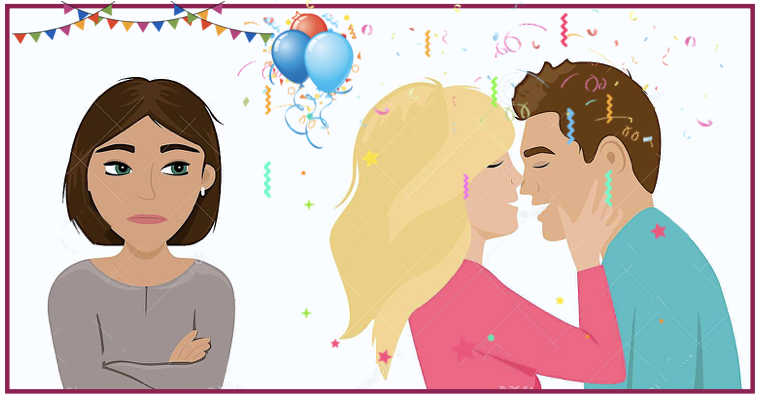
Scenario:  Staying- staying-staying, stuck in your chair – at a party where your alcoholic boyfriend is deliberately ignoring you while flirting with his ex! – you can’t bear to leave him behind with someone else.
Everyone sees what’s going on – making a fool of yourself by not leaving, but you’re paralyzed. While you can’t ignore one more indignity from him, the pain of betrayal & loss has triggered abandonment shock!

HEALTHY ‘Being in CONTROL’
It’s true that children in healthier families also have limited control over their life growing up, but sadly, ACoAs had almost none.
So – the KEY to healthy control (ta-da) is you HAVING a CHOICE!
IT
• allows us to know what our needs are, permission to get them met, AND find ways to meet as many needs as possible, under the realistic circumstances of our specific personality & current life
• comes from our True Self, which includes the UNIT’ , allowing us to be comfortable in our skin. It’s NEVER about being perfect!
IT
• requires that our childhood rage-level diminishes enough so we don’t take our hurt & desire for revenge out on others
• requires a lowered level of anxiety, having gotten a lot of our sorrow & rage out safely
IT’S
📍 about knowing when to do or say something & when not to, as in “Know when to hold ‘em, know when to fold ‘em”
📍 HOW, when & where  we express our emotions
📍 having good boundaries – inside ourself, how we treat others & how we ‘let’ others treat us
📍 taking responsibility for our life choices, without self-hate, picking the things that suit us from available options

• Sometimes it’s taking a risk to act on your own behalf, for someone you love, or for the greater good. This is not impulsive / compulsive
AND
• Sometimes it’s holding back, waiting, being patient, listening, taking time to process & plan. This is not passivity or waiting to be rescued.
Either way – it’s always about having a choice. It is wisdom. It is self-esteem. It is S & I.

NEXT: Self-control. #3

What is Self-Control ? (Part 1)

in controlWHO MOTIVATES ME – Others or myself?

PREVIOUS: Let go of Controlling -#3

POSTs:Personal Responsibility

☆ The UNIT:Healthy Adult, Loving Parent


SELF- CONTROL 101 (Normal)

Events or Thoughts —-> lead to —-> Emotions
Emotions ——-> lead to ——> Beliefs
Beliefs ——-> lead to ——> Decisions
Decisions ——-> lead to ——> Actions
Actions
—> lead to —> Rewards or Consequences

Def. of CONTROL, from the dictionary: to direct, command, exercise authority over -OR- to hold back, curb, restrain —> oneself or others.

PURPOSE of Self-Control (SC)
To gain a present reward or reach a delayed gratification
OR delay, reduce or eliminate punishment
DEF: ☀︎ to hold in check or curb (the WIC & PP ?)
☀︎ to exercise restraint or direction over something or someone
☀︎ to eliminate or prevent the spread of something (our damage ?)

ACoAs – Healthy S-C is very hard to achieve as long as:S-H
• the WIC is the ego state in charge of our daily emotions, actions & reactions
• we obey the Toxic Rules, suppressing our True Self
• externally, we stay symbiotically attached to our family
• internally, we continue to obey the Negative Introject (PP)

SELF-CONTROL (S-C) is about harnessing our willpower to accomplish things that are generally regarded as desirable & highly valued by society, including our personal long-term goals. As adults, we’re responsible for our thoughts, emotions & actions (T.E.A.) to the extent that it’s in our power, which is not always possible.

• People are born with varying degrees of tolerance for routine vs. change, patience vs boredom, social vs private interactions…. but the need for S-C applies to everyone. However,
it’s harder for us to maintain it IF we’re in the wrong environment, where others are not also willing to govern themself. (MORE…)

skillsHealthy families
help their children to develop this skill as part of their over-all training.  In adults – developing S-C requires a lessening of anxiety, & is motivated by a clear, conflict-free desire to stop harming oneself or others. Practice & perseverance are required, but it gets easier with repetition.
S-C  IS:
not an inborn character trait that would automatically allow us to govern our thoughts, emotions & behavior
a skill developed through education, social interaction & conditioning
✱ built up by the process of ‘stalling, distracting & resisting’ negative urges
✱ quite complex. It requires that we stay awake so our functioning is based in the present, not from trauma & Toxic Rules
S-C IS 
✱ internal mastery – by monitoring thoughts, regulating emotions, setting goals & making responsible choices. This allows us to moderate / manage competing activities, desires & urges
✱ the ability to make choices & decisions that benefit ourself, & then others. This requires knowing & honoring who we are – our abilities & experience, needs, preferences & tastes

✱ an important part of a cluster of fundamental internal resources (our core character, courage, determination, endurance, faith, purpose…. ) which do not disappear, even when tested by constant pressure or long-term deprivation
✱ requires motivation. In certain situations, such as a special celebration or an artificial psychological experiment, we may decide to briefly give up self-control for the occasion
S-C
✱ becomes self-discipline when we have to apply intentional effort. When practiced habitually for some time, it can become a character trait
✱ becomes a way of thinking because of the cognitive processes & mental discipline needed to use SC
✱ becomes a virtue when we resists temptations in order to achieve a desired goal, & can be considered a spiritual gift when it’s the result of spiritual growth & transformation.

VALUE of Self-Controlit allows us to:
• be a responsible & trustworthy human being
• be in charge of our moods & replace negative beliefs – to keep in check self-destructive, addictive behaviors & obsessive thoughts
• eliminate feeling helpless & having to be inappropriately dependent on others
• be in overall charge of our life = gaining self-esteem, confidence, balance, inner strength,&  a sense of personal mastery
• have enough mental & emotional detachment to give us peace of mind

NEXT: What is Self-Control (#2)

Letting GO of ACTING Controlling (Part 3)

 THE MORE I LET GO,
the more power I have!

PREVIOUS: Letting Go of Controlling -#2

Review: “Let Go of Control…Art of Surrender


MAKING CHANGES
“What we disown – we can’t change”.
Another Inventory: Consider the following points & write out as much as you can. Do a little for each point, then go back every few days & add more.
• If needed, get trusted people to make suggestions from their experiences with you. Try not to be defensive – just write them down & look at them later.
NOTE your patterns that crop up over & over, especially if mentioned by several people

EXTERNALLY
STAY AWAKE for ways you act Controlling:
⭐︎ When it happens    ⭐︎ What sets it off
⭐︎ How it shows up in your actions
⭐︎ Who is affected   ⭐︎ How does it affect them
⭐︎ How do others react to you   ⭐︎ How does that make you feel emotionally & what is the negative self-talk

INTERNALLY
Acknowledge that you are controlling, & identify the causes  behind it
Consider which ones :   • you’ve already been working on
• others you’re willing to tackle, & how you can change your reactions
• which you have to ‘put on the shelf ‘until you’re more healed
(review ‘Controlling & Abandonment posts)
list of needsMake a list of:
• all your unmet needs & slowly work at filling them
• your talents – develop, hone & get recognized for them
• backlogged old pain that causes anxiety, & gradually feel them

• the difference between assertiveness & aggression, controlling vs in control, connection vs symbiosis, humiliation vs.humility, rage vs anger, rescuing vs helping, possible vs impossible ….

Practice asking for legitimate needs & desires from others, without demanding or having unrealistic expectations. Know who can meet specific needs & who cannot – and to what degree!

The 3 As & T.E.A.
AWARENESS: Identify your unhealthy attitudes (Ts) towards situations, unrealistic expectations of others & beliefs about how life should be.
Also, life areas that are affected (work, home…) & which are more intense than others (more with spouse, less with friends ?…)

ACCEPTANCE: Then – write about the experiences growing up that fostered the need to be Controlling, especially emotions underlying the compulsion (Es).
Identify alternative or opposite beliefs (Ts) you can use when life-stressors set off the impulse to C. (Post ; “Heathy Helping”)
✶ Allow as much time as needed to make internal shifts. Acceptance is about staying in the process & not always trying to jump into Action

ACTION: List better ways (As) to act when feeling the pull to be C. & try them out a little at a time. Learn how to communicate with your WIC & do it consistently, to comfort & protect it (Ts & Es)

Keep these new thoughts & action handy, & in a variety of locations to remind yourself (home, car, office, fridge, wallet or purse …)

TEST-CASE: Pick one thing you feel a definite need to control, then DON’T make any effort what-so-ever to exert your will over that situation the next time.  Just do it & observe how the event unfold completely on its own, without any help from you. Notice you thoughts & emotionspeaceful

• You may feel shaky at first, as it may bring up anxiety from past trauma. HOLD onto to your WIC, & let it know it’s not in danger

• Use Bookending with the WIC, to prove that most things turn out much better that we anticipate – by writing how things turn out when you don’t C.

From “Losing Control, Finding Serenity” book by Daniel A. Miller
Daily Exercise:
• About your external children, listen attentively without offering advice, especially the older ones unless they ask. Recognize that they’re different from you in how they think & process things, and accept that your way may not be right – for them
• In your love relationship, lower your expectations of your mate AND of yourself. Focus on steps you can take to improve your love-bond. Appreciate the good things you have together.

• About creativity, focus on just enjoying the process, rather than thinking too much about the outcome. Don’t worry about making “mistakes.”
Start a piece (paint, crochet, a new song…) with the intention of not completing it, & see how it goes.
>> If you’re only partly successful, do not give yourself a hard time! Keep trying, try something else or get help if needed. You’ll see that letting go of control may bring success, or at least a sense of peace!

NEXT: Types of Self-Control – #1

Letting GO of ACTING Controlling (Part 2)

universeNEED TO HEAL THE FEAR –
to stop controlling

PREVIOUS: Letting Go, #1

POSTs : “Negative Benefits of…
☀︎” Discomfort & Comfort

Use Acronyms Page for abbrev.


Exercise:
 Write as much as you can about these 4 Qs.  Put it away for a week or a month & then go back & read it, adding more as ideas surface. Share about them where it’s safe

1. NEGATIVE BENEFITS (-+) of being Controlling
Q: What do you get from holding on to it?
• N.B. are patterns that keeps us attached to our damage, familiar but stunt our growth. It’s the narcissistic grandiosity of the WIC, as well as ‘entitlement’, which makes people temporarily feel powerfuldream control

• When in C. mode, we function from the underlying position that everything revolves around us – good or bad.
“My way or the highway // It’s late – I’ll let you go // I don’t understand why you don’t ____ (like what I like, think the way I do)….” .

This style lets us feel important & always : be right, get our way, never be vulnerable, be heard & paid attention to, have an effect on the world…. so many things we didn’t get as a kid. But they don’t actually heal us, because it keeps us totally dependent on others

2. NEGATIVE DETRIMENTS (–)
Q: How does it hurts you & others?in a vice
• This may be hard to answer at first, because Cs are not really interested in other people’s experiences, emotions or needs…
But we can remember how it felt when someone controlled us: resentful, stifled, belittled, disrespected….

• Being C. limits our options, keeping us out of the flow of life – preventing us from finding out the wonderful things that can happen if we stopped trying to force the world to conform to our narrow vision.

3. POSITIVE DISCOMFORT (+-)
Q: What are you afraid will happen?
Changing a deeply ingrained pattern like Controlling can bring up a lot of anxiety, especially if we’ve built our whole persona on ‘running things’, like Heroes. (although the other Roles alsocontrol in their own way).
It means giving up how we’ve been experiencing ourself, what we thought was our personality, but is actually the False Self

• We think we’ll be in some kind of danger, as if our actual life would be threatened! But it will only be the emotion of fear – feeling old abandonment pain & having to give up cherished illusions
OR
positive negatives• we’re afraid someone we love will be in danger. This may seem realistic if we’re dealing with an active addict bent on self-destruction.
We can present them with info & options for Recovery, but they have to want it. Sometimes formal interventions work, but not always. And sometimes, no matter what we do, active addicts die.

• When taking care of a very sick person we love, we may be the one responsible for many practical matters, but ultimately, we can’t control the outcome! Self-care becomes even more imperative!

• BUT – most of the time, the world goes on just fine without our two-cents! As we grow we can better tolerate the discomfort of not interfering with the natural order of things, which does gets easier.

4. POSITIVE BENEFITS (++)
Q: Why is it worth giving up?
• We get to find out who WE really are – talents, knowledge, gifts, experience… & finally take center stage in our own life, expressing a multifaceted Self, by being responsible for ourself – the opposite of being Controlled – instead of wasting energy on manipulating others

• Acceptance & gratitude! (not C.) lets us enjoy achievements & accolades, instead of cringing, or negating some success when it’s valued & acknowledged

• Recovery provides self-esteem, a genuine sense of freedom, the ability to connect with healthy people who respect us, & who we can trust to be OK without our constant vigilance!

REALITYimages copy 2
✶ Most people have more resiliency, depth, strength & flexibility than we give them credit for. That includes you. Believe you can handle all kinds of circumstances. Keep saying: “I know what I know – but I can’t know everything!”
SO – catch yourself in the act of being C. & stop as soon as you can. Remind yourself of the benefits of changing & give your inner kids a big hug!

NEXT: Letting Go, #3

Letting GO of ACTING Controlling (Part 1)

I CAN GET MY NEEDS MET –
without arranging everything!

PREVIOUS: Acting Controlling (#3)

SITE: Freedom & Control

See Acronyms Page for abbrev.


STOP Controlling

To change this dysfunctional pattern takes Willingness, Perseverance & Courage!  We have to be ready to look at ourself without intense judgement & S-H, or we’re not going to own the C. behaviors.

Reminder: You are not responsible for trying to make changes or correct problems which are beyond your competency, power, authority or responsibility – OR that ARE the responsibility of someone else!

The OLD Way: Being C. is to function from the assumption that the only way to feel safe in the world is by arranging everything OUR way, all the time.
But, the very act of Controlling is a betrayal of the True Self, shutting us off from healing our wounds & making loving connections with others, because of the fear & rage we carry from the WIC & PP.

Ironically, being a control freak never seems to include changing oneself! The Negative Introject (PP) keeps trying to deceive us, saying that the only way to proceed is to completely control every tiny detail of how & when things should happen, and/or how others should act.
At the same time the PP continues to tortures us so it won’t lose power over us – by making us believe that no matter how hard we work at it, we’ll never be good enough or do things right.

progress not perfectionBOTTOM LINE – BEING C. :
• can be called a character defect, but it’s imperative we don’t use that to berate ourself (vs. Being in Control of oneself)
• is NOT the same as having strong opinions. Rather, it’s a way to ‘force solutions’ by imposing our will on others

• is a form of grandiosity, a defense mechanism to defend against re-experiencing early vulnerability, powerlessness & daily neglect. NOTICE –
our style of controlling is likely a copy of someone in our family
• provides a temporary feeling of being powerful (not at the mercy of anyone!) but like all addictions, has to be constantly repeated, since it doesn’t heal our terror
GROWTH
 As the WIC heals & we strengthen our ‘Unit’, the need for C will diminish in intensity, but may never completely go away. This has to be accepted – with healthy humility & self-respect (opposite of grandiosity)
• Lessening it requires self-esteem, boundaries, making better choices & letting love in – wherever it may come from!
• Letting go of being C. can only be done in stages, & never perfectly!

LETTING GO 
There are many wise things to be said about ‘Letting Go’, but here are 2 main ones for ACoAs. To grow we need to —

1. STOP trying to win our parents’ love. We wouldn’t need to IF they had the capacity in the first place. Stop chasing them (or substitutes) for the nurturing every child needs but was simply not available because of their damage, even if they meant well & said they loved us

2. Relinquish the fantasy / illusion that doing things perfectly will get us that love & approval. All it does is increase our self-hate & fear, since perfection is unattainable AND our family’s mental or emotional health is not – and was never was – in our power to create.
People either can love us or not. We can not earn it!

A NEW Way
Freedom from Controlling comes from giving up the internal fight, to stop trying to manage everything, to stop trying to please the PP, & by staying out of whatever is none of our business!

self-fight✶ This does NOT mean being lazy, withholding or paralyzed.
• Rather – it comes from knowing that even in times of discomfort our inner foundation is built on solid ground – a support system made up of our Loving Inner Parent, the Higher Power & respectful / kind people.

• Being comfortable in our skin includes allowing OTHERS to be themselves, & letting many circumstances be – just as they are. There’s a time to act & a time to be still. The Serenity Prayer tells us:
✳️ Change what you can right now, & Accept what you can’t change at all, what’s not yet possible, or is not yet the right time.

NEXT: Letting Go of C. –  #2

ACoAs Acting Controlling (Part 3)

running things I’M NOT CONTROLLING –
I just like things done right!

PREVIOUS: Acting Controlling (#2)


REASONS for Controlling:
Angry – to express rage at our family – who we can’t get back at directly – for not loving us unconditionally
Needy – as adults, when we’re especially lonely, scared, vulnerable or desperate
Terrified – the anxiety & panic is so intense that our only goal is trying to force everything everyone to become as safe as possible

CONTROL FREAKS
Re. THEM
• Controllers (Cs) are not just opinionated – they always have to be right, not willing to accept or tolerate differences or disagreements between themself & others
• Cs are more likely to be moody (up & down), emotionally unpredictable. Because they’re unhappy with their own life they think C others will improve their experienceimages-1

• Cs use fear to keep others attached, because of their own FoA (very scared people don’t want to venture out on their own).
• Cs tend not to be friends with anyone more attractive, well-liked or intelligent, likely jealous & critical of popular, successful people

• Cs may or may not have close friends. If they do :
— it’s usually with the needy, easily bullied, with poor self-esteem & weak boundaries, who they can keep others under their thumb by focusing on negatives in the other’ Victim part
— OR they attach to someone ‘powerful’ they can feed off of
— OR treat ‘outsiders’ better than their own family, to be considered ‘wonderful‘ by anyone who didn’t grow up with them

• Cs can sense when they’re losing control, which can trigger psycho-somatic ailments (headaches, back or stomach pains, fainting, hives….). They can re-gaining control of a situation or relationship by getting attention, sympathy & concern from others

NOTE: Cs are very manipulative, playing head games to hide this character defect.
MY WAYThey can’t stand it when anyone stands up to them.  It’s imperative to their unhealthy ego to stay one-up. The stronger & clearer you are, the harder Cs will work to tear you down. OR dump you
✶ This is particularly true of severely narcissistic parents who will make every effort to destroy a strong-minded child so that he/she can not expose or defy the controllers.

EXP: They DENY doing any harm, while accusing us of causing someone else’s bad behavior which hurt us (being cheated on, yelled at, fired ….): “What did you do?”
Re. YOU
•  Cs play on your empathy to gain trust early in a friendship, like telling you what a hard life they’ve had – in great detail, AND saying they can only trust telling you, because you’re different, special!

•  Cs attempt to define your reality – telling you what you like & want – or not – according to their tastes
EXP: You can say you need to be alone but they insist on taking up your time… you save something & they throw it away, saying ‘you don’t need that or it’s not important!’…. I know you

• Cs remember all the sensitive info we give them about ourself. They’ll seem sincere & caring at first, then bring it up & use it to subtly belittle you, until you agree with them :
“Are you still crying about that? It was just a cat / a long time ago / not such a big deal…Right?”

•  Cs often assume they understand how you think & feel, and are not shy about telling you, BUT really don’t!
EXP: “Your unfriendliness is bringing everyone down” when actually you’re withdrawn because of feeling deep pain, shyness, confusion….!
OR they get frustrated & abusive when you don’t act the same way they are: “Do that in the morning when you’re fresh”- a morning-person mother said to her night-person teen
judging• Cs can also use excessive generosity to feel important, & make you feel indebted to them, so you’ll feel guilty if you don’t reciprocate or don’t something they want!
Controllers:
• are often late, but always prepared with what seems like a legitimate excuse – so you can’t object
• are unwilling to respect any boundaries
• get frustrated & annoyed with normal questions
• make you wait for them – to respond, for decisions, to fulfill plans or promises….
• regularly expect you to change plans to suit their schedule
• rarely give sincere compliments – so you won’t feel good about yourself or take attention away from them
• will cause trouble between you & your family or friends

NEXT: Letting go of Controlling (#1)

ACoAs Acting Controlling (Part 2)

look at meLOOK AT ME!
See how important I am!

PREVIOUS:
Acting controlling – #1

SITES: Take Control in Recovery
Recognizing a Manipulative Relationship

REVIEW: 5 LOVE Languages


LOVE vs. Control

✳️ Genuine love is concerned with the welfare of others, especially those people we’re personally connected to
👺 Controlling is all about us – what we can get, how we can change someone, how we can feel better (at their expense)…..

EXP: A woman is married to a genuinely good man, who lets her to be herself. She knows he loves her but it doesn’t fe-e-el right – for the very reason that he’s not controlling, the way her family was.
The connection between love & control was originally wired into her emotional brain, becoming the image of how relationships are supposed to be. Her WIC says “He doesn’t tell me what to do, so he must not care!” Fortunately her Adult self knows better!

controlPeople Misusing Emotional Power BELIEVE:
About Themself
• Because everyone is out to take advantage of everyone else (me), the best defense is a good offense
• I’ll always have to pay an emotional price if I open myself up to others, so I keep them at an arm’s length
• If I  open up to their point of view I’ll get mislead
• I have to make them see it my way or they’ll have an edge on me
• My feelings are what matter. I need to convert everyone to my way
aroganceAbout Others
• Dump on them before they dump on you
• It doesn’t matter how they feel or react as long as you keep emotional control over them
• If you keep them busy enough they’ll ignore you
• Take control of them before they take control of you
• There’s only one way for people in your life to think & feel – your way

WAYS to Control others:
GREED – insist others provide things you need in the world —
— even tho’ you can, but want to finally be taken care of!
— are afraid to try, can’t ask for help directly, don’t have permission
— OR, not sure how to provide for yourself but don’t want to learn

MANIPULATE – try to coerce others into being Good Parent substitutes, instead of developing your ownUNIT’
BY:
Over-giving (Love-Buying) : feel unworthy to receive unless you pay for love / respect, or to hide your rage at all abandoners
Perpetrator – take advantage of someone who’s needy or ‘easy’, to feel one-up, to make up for being helpless as a kid
Rigid – insist on Perfection, so have a hard time with negotiation & compromise
control freakBY:
Self-Pity – constant whining about how your life is so hard, you can’t do anything right, everyone is unfair & mean. It’s to force others to join in your misery (bring them down to not feel alone) & be moved to rescue you
Sickly – sick, needy, play dumb… so people feel sorry for you
Stubborn – won’t see anyone else’s point of view – fear of losing yourself, instead of having real boundaries
BY:
Superiority – over-inflated sense of your own importance, being detached & above everyone, being a know-it-all — making others feel stupid, vulnerable, insecure & worthless
Values – C. is sometimes rationalized / justified by claiming it’s simply wanting to do things the ‘right way’, having high standards, being helpful….
Victim – constantly asking for approval & validation, keep saying you’re sorry, asking for permission to do anything….

EMPATHY vs Control
Controlling is when our needs, requirements, feelings…. infringe on the rights of others. When we selfishly  or ignorantly step on someone’s boundaries, they are under no obligation to accommodate or empathize with us, since we’re being inappropriate & disrespectful.
⚠︎ This applies equally to anyone trying to control us!  Cs. are not in touch with their own Es, so can’t ‘understand’ the pain they cause others.

Empathy is the ability to identify with another person’s emotions, to put ourself in their place, without having to save or fix them. This emotion comes from the compassionate Healthy Parent ego state.  & is not needed to “feel” connected or visible.
This should not be confused with symbiotic fusing, which is from the WIC or PP.

NEXT: ACTING Controlling, Part 3

ACoAs Acting Controlling (Part 1)

comtrolling manEVERYONE HAS TO BE THE WAY I WANT – so I won’t feel so vulnerable!

PREVIOUS: Back-Lash for O-C – #3

POST: How ACoAs Abandon Others” #1


BEING HELPFUL
 (vs. Controlling – see Healthy Helping’ posts)

The opposite of being controlling is to be of genuine help – with 2 main REQUIREMENTS:
a. Be clear about what the other person needs and that they actually want your help
b. You have the real ability to provide that need, and that you genuinely want to

CONTROLLING (C) behavior is cause by the disowned, un-felt emotion of FEAR (FoA)!
No matter how optimistic & hard-working, all ACoAs are fear-based, from growing up in constant terror as kids. Because our fear was never acknowledged, comforted or talked about – it accumulated, & now sits like a poisonous fog layered over our experiences & determination.
🩸That’s not ‘being negative’ – it’s important to tell the truth. Then can we change it!

☆ Like most things in life, controlling comes in varying degrees of intensity
• Some Controllers are so tightly wound that it’s ‘their way or the highway’ & they’ll punish or ignore anyone who doesn’t fall in line with “the program” 
• Others are only Controlling when under a great deal of stress, especially if too many things go wrong at the same time

• Some are C. mainly when they’re with a certain category of people (children, a spouse….), so others don’t know what they’re really like in private  
☛  Even with Recovery, many ACoAs & addicts continue their C. patterns until they do FoO & Inner Child healing work.at arms length

ACoA IRONY :  Acting Controlling is one of many ways to keep others at emotional arm’s length. It prevents people from being able to connect with us, while at the same time guaranteeing that we’ll keep feeling abandoned ! It’s used as a defensive wall instead of developing real boundaries, which are flexible.

NOTE: Just because someone has a forceful personality doesn’t make them controlling. They can have strong opinions about everything, even insist they’re right, but not impose them on others.  
TEST : Do they allow you to be yourself? OR do they unduly influence your behavior (make demands, have unrealistic expectations, intimidate)?
Stay awake for the difference, in yourself & in others!

GENERALLY, Being Controlling IS :
Re US: • often copied from a C. parent
• a form of unhealthy pride – an unwillingness to back down & admit when we’re wrong, need help, don’t know everything….
• a sneaky, dishonest way to get taken care of
• driven by the WIC or internalized PP voices
• manipulating the outside world, instead of healing inner woundspride
• fueled by deep anxiety – specifically FoA (fear of abandonment)
• never being satisfied, always critical – our attention on what we don’t have rather than what is possible and what is actually available to us
• trying to ‘force solutions’ – because we assume otherwise we won’t get our needs met
• trying to get noticed, be respected, seen, valued, appreciated… the wrong ways
• used to avoid feeling helpless, powerless, vulnerable, needy

Re. THEM – it means we :
• don’t trust others – TO take care of themselves, be competent, dependable, honest ….  
• are disrespectful of other people’s autonomy, their right to learn from their own mistakes, have their own life path, their superioitytastes & moral values……
• are saying that someone owes you – because of what you’ve done for them, OR because of your title, for what you’ve accomplished, your social position…..

👺 Compulsive pattern : We keep trying to get people to be or do what we want, disregarding who they are, so we won’t have to feel abandoned, while picking the very people or situations that guarantee we will, because they’re just like our family.
“Where there is control there is no love, only fear”

P.M.E.S. WAYS to control / manipulate others
Physically : use intimidating or guilt-making body language (a fist, a pout), threaten harm or actively hurt someone
Mentally (negative communication): name-calling, be critical & discouraging, create unfair obligations …..
Emotionally : use guilt, pull on someone’s heart stings (cry) or be volatile (rage) – to get your way or to punish
OR – use Emotional Blackmail –  threaten abandonment if someone doesn’t do what you want
Spiritually : Anything which diminishes the human spirit. Includes false prophets & cult leaders, doomsday literature…. promoting false visions, such as ‘the end of the world will be on X date’….

NEXT: ACoAs Acting Controlling, Part 2