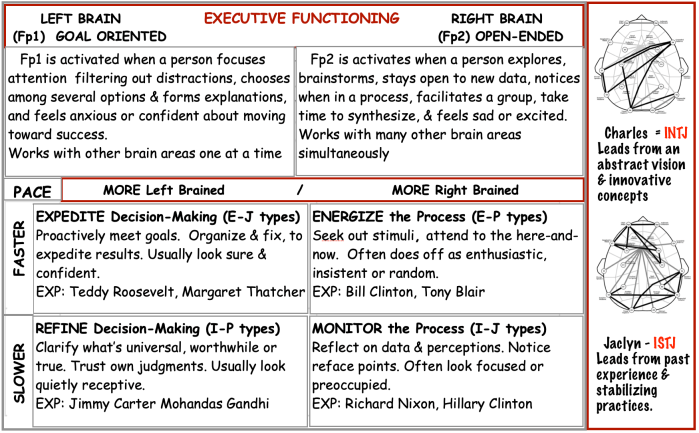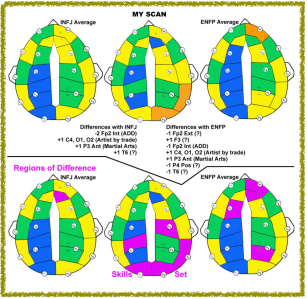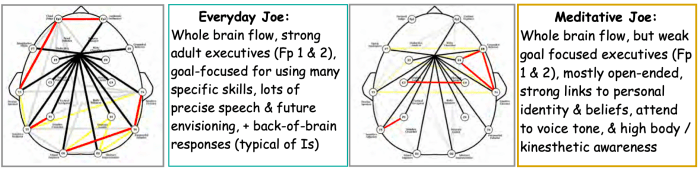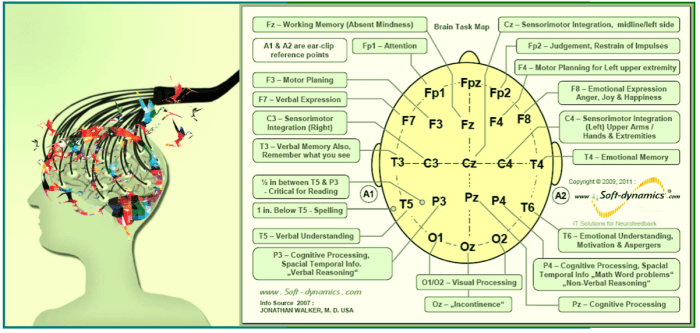
MBTI 4 Functions of ENFP & ENFJ (4b)

PREVIOUS: ESFP & ESFJ

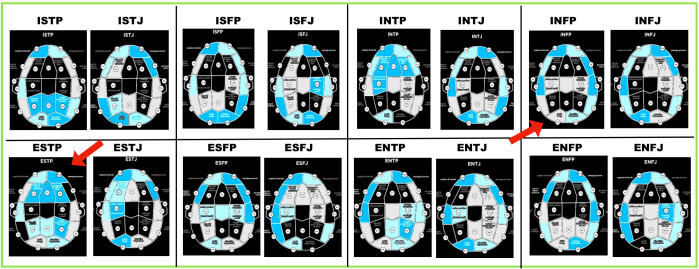
CHARTS below:
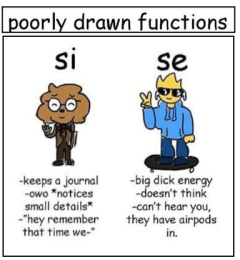
All SARCASTIC Functions 

Modified from VERYWELLmind

ENFP = The CHAMPION (Review)
Strengths:
 caring, empathetic, enthusiastic, fun, highly creative, spontaneous & warm – with strong people & communication skills

Weaknesses
: can be overly emotional, disorganized, needs approval from others, overthinks, struggles to follow rules, tends to get stressed out easily

DOMINANT = Ne
ENFP’s primary response is generally to focus on the world of possibilities. They’re good at abstract thinking, rather than concentrating on tiny details.
ENFPs are inventive, & focused on the future. They’re good at seeing things as they might be – rather than simply noticing what they presently are. They have a natural tendency to focus on relationships, & can easily find patterns or connections between people, situations & ideas.

AUXILIARY = Fi
As a support to the DOM, Fi is not about ENFP’s internal emotions, even when they experience a deep well of emotions, nor is the focus on logic & objective criteria, but rather on personal values. They have a strong need to be true to themselves & their beliefs. In their ideal world, its values would align with their own.

ENFPs tend to follow their heart, empathize with others, & let their feelings guide their decisions. This is based on their own moral code & what their gut instinct tells them is right, & how they would like to be treated themselves.

They tend to be very considerate of others, & are likely to be highly aware of how they think others see them. It can take them a long time figure out their beliefs, to make sure they feel right. This refining process requires mental solitude, which can make ENFPs seem very withdrawn at those times. Fi highly values authenticity, & is repulsed by anything that seems fake or shallow.

TERTIARY = Te
Less prominently, Ne in 3rd place is very logic-oriented, centered on organizing information & ideas, the side of the ENFP that naturally looks for a better solution to a problem, improve the efficiency of a process, or critique & refine what’s already in place.

When looking at info, ENFPs use Te to efficiently spot connections. EXP: They might ‘think out loud’ when working through a problem, laying out all the facts to form a train of thought that can be easily followed.

ENFPs tend to be balanced between this decisive & efficient way of making decisions, & the pondering, value-driven process of their Fi-AUX. While they prefer to take their time, as long as it doesn’t go against their values they can use their Te to make act when necessary.

INFERIOR = Si
Least preferred, here Si can be used to compare whatever the ENFP is experiencing in the moment with past experiences. In the process, they’re often able to remember emotions, events & physical sensations associated with those events. This also helps to find patterns, which allow them to have certain expectations for or make predictions about similar future events, based on those previous experiences.

However, under-developed, they can have trouble being consistent, reliable, & following thru on their ideas. As they grow & mature, this can greatly improve.

See: INTERNAL WORLD (scroll down)

=======================================

ENFJ = The GIVER (ENFJ)
Strengths
:
empathetic, encouraging, organized, outgoing and warm-hearted, with a wide social circle

Weaknesses: approval-seeking, indecisive, overly sensitive, self-sacrificing

DOMINANT = Fe

ENFJ’s primary response is expressed through their engaging social behavior (charm) & harmonious relationships. They’re in tune with other people’s feelings, often to the point of ignoring their own needs, in order to please

AUXILIARY = Ni
As a support to the DOM, Ni ‘pushes’ ENFJs to think about the future rather than the present. They can get so focused on the larger goal that they lose sight of immediate details. Ni makes their internal world very abstract.

While Fe-DOM gathers information about people, Ni is running internally in the background, forming it into constellations of data that merge to become an idea or thought. As they processes it to form impressions, ideas & conclusions, they can spot patterns & make sense of complex or hypothetical data.

TERTIARY = Se
However, Se in 3rd place encourages the ENFJ to stay in the present moment – which can push against the desire of Ni-AUX – but which helps to gather concrete details & sensory input from the environment. Because of this, they’ll often go after novel or interesting experiences & sensations. ENFJs tend to be very aware of their present surroundings, & want to create a pleasant environment for everyone

INFERIOR = Ti
While least preferred, here the Ti helps to organized & enjoy structure as well as careful planning. Sticking to a predictable schedule helps ENFJs feel in control of their world. But it may also keep them from having confidence in their own ability to be logical & organized.
— Neglecting this function can lead to relying too much on personal values rather than inclusions facts when appropriate
— Developing it can help them feel more balanced & in control of their decision-making.

See: INTERNAL WORLD (scroll down)

NEXT: —

MBTI 4 Functions of INFP & INFJ (4a)

PREVIOUS: INTJ P / INTJ Functions

CHARTS below: All SARCASTIC Functions 

POSTS modified from VERYWELLmind


INFP = the MEDIATOR (Review)
Strengths
: caries for & interested in others, good at seeing the ‘big picture’, loyal and devoted, sensitive to feelings, values close relationships, works well alone

Weaknesses: can be overly idealistic, difficult to get to know, overlooks details, sometimes loses sight of the little things, tends to take everything personally

DOMINANT = Fi
INFP’s primary response to life is with a great depth of feeling, but as introverts they mainly process emotions internally. They have an incredible sense of wonder about the world, with great compassion & empathy for others. While these emotions are strong, they tend not to express them outwardly, so they’re sometimes considered aloof or unwelcoming.

AUXILIARY = Ne
As a support to the DOM, here Ne encourages the exploration of events using imagination & ‘what if’ scenarios, often thinking through  several possibilities before acting. While INFP’s inner life is their main focus, extroverted AUX allows them to interact with others using intuition.  Ne flourishes when given new, interesting ideas to consider, & can find inspiration from the outside.

Ne-Aux paired with Fi-Dom likes to explore a wide variety of values & ideals. EXP: Having discussions with others also open to exploring possibilities of a topic, or by self-expression through various art forms. They focus on the ‘big picture’ that will shape future events, allowing them to be transformative leaders, excited about making positive changes in the world.

TERTIARY =  Si
Less prominently, Si in 3rd place gives INFPs a sense of solidity to their Fi beliefs, providing a structured & detailed inner world. Values that have had enough time to develop produce a solid sense of Right & Wrong.

Much of INFPs ‘understanding’ comes from their real-world experiences, which they highly value. They store interesting facts & vivid memories – associated with strong emotions – in an organized way for future reference. When less stressed, they can replay old events to assess new ones.

INFERIOR =  Te
Usually least preferred, here Te involves organizing & making sense of the world. While this is mainly unconscious, using it is more likely to show up then INFPs are stressed.

Then they suddenly become very pragmatic & detail-oriented, focusing on logic rather than emotion. Because they’re usually run more by intuition & emotion, INFPs can sometimes struggle to be productive & efficient.
Learning to develop their Te can help them create a better sense of balance.

See: INTERNAL WORLD (scroll down)

=======================================

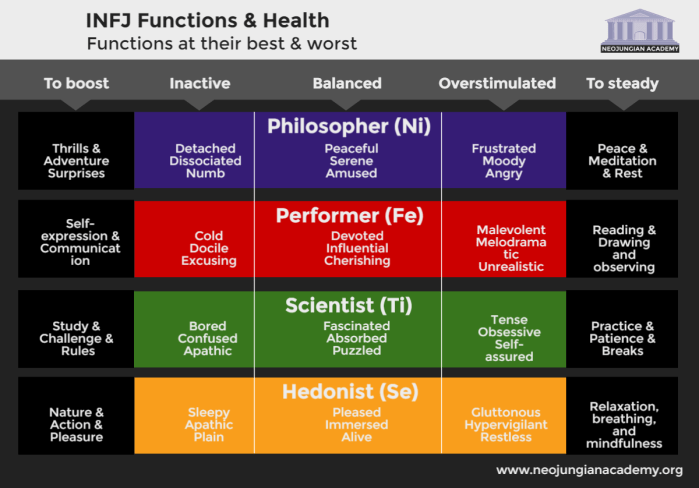
INFJ = THE ADVOCATE (Review)
Strengths
: enjoys thinking about the meaning of life, focused on the future, highly creative and artistic, idealistic, reserved, sensitive to the needs of others, values close & deep relationships

Weaknesses: can be overly sensitive, dislikes confrontation, expectations can bee unrealistic, sometimes difficult to get to know, stubborn.

DOMINANT = Ni
INFJ’s primary response is to be highly focused on internal insights. They store information spread out, but with all the pieces connecting to many others. This forms a dense web of knowledge too large to be seen all at once, but can be zoomed in on to show intricate clusters or threads of thoughts.

Ni can give them a dreamlike quality, providing both images or impressions, as well as concrete facts. INFJs may experience their inner world as constantly fluctuating, but once they’ve had an intuition about something, they tend to stick to it tightly, often to the point of being single-minded. This can make them seem stubborn & rigid.

AUXILIARY = Fe
Fe is INFJ’s first extroverted function, so it’s used when dealing with the world, the filter through which communication is receive, & how emotions are processed.

As a support to the DOM, here Fe helps INFJs be highly aware of what others are experiencing, but the price is to be less aware of their own emotions. They’re so tuned into others – they’re afraid of disappointing or hurting everyone. This makes it very hard to say no to people’s requests, even when those are unrealistic or outrageous.

TERTIARY = Ti
INFJs make decisions mainly using DOM & AUX (Ni, Fe) especially when around other people. But when alone, INFJs rely more on their Ti-TER to form ideas or theories based on their own insights.

It helps stabilize the shifting nature of Ni-DOM, & better understand the connections that Ni makes outside their conscious awareness. When stressed, INFJs will use emotion (Fe) to make decisions, especially if it means pleasing others. Under less stress, they’re more likely to rely on their intuition (Ni).them

INFERIOR = Se
Usually least preferred, here Se can help INFJ stay aware of their surroundings, to appreciate beauty, be fully present in the moment, & to stay connection to the physical world. Operating under the radar, it only gives them the minimum input needed for practical tasks.

Unfortunately, INFJs can get overwhelmed if they get too much outside stimulus, or if real world demands their full attention. But Se can also help them stay in the now rather than simply worrying about the future, allowing to enjoy physical activities such as hiking & dancing.

See: INTERNAL WORLD (scroll down)

NEXT: ESTP & ESTJ

MBTI 4 Functions of ENTP & ENTJ (3b)

PREVIOUS: ENTP & ENTJ

CHARTS below: All SARCASTIC Functions 

POSTS modified from VERYWELLmind


ENTP = The DEBATER (Review)
Strengths
: creative, enjoys debating, great conversationalist, innovative, values knowledge

Weaknesses : can be argumentative, dislikes routines and schedules, doesn’t like to be controlled, insensitive, unfocused

DOMINANT = Ne
ENTP’s primary response is to take in information quickly. They’re very open-minded, with an entrepreneurial mind, always coming up with new & exciting ideas

Once they’ve gathered information, they can make connections between  complex & interwoven relationships. They’re good at spotting connections that others might overlook, because they focus on possibilities.

 AUXILIARY = Ti
As a support to the DOM, Ti fuels ENTP’s drive for knowledge & general interest in intellectual pursuits, focusing on taking in information about the world around them. They can analyze ideas that Ne-DOM seems to pull out of thin air, all of which they understand, & so can come to logical & objective conclusions.

ENTPs don’t want to just understand that something works – they want to know the why-&-how behind how things tick. When making decisions, they put more weight on rational evidence instead of subjective, emotional information, which helps to make sense of many disparate ideas & pieces of information, balancing out their most fantastical ideas.

TERTIARY = Fe
Less prominently, Fe in 3rd place is the major reason for the drive to use their intelligence & creative problem solving skill – to help others & make the world a better place, rather than for purely selfish purposes.

Because it tend to run in the background, an undeveloped Fe-TER can leading ENTPs to be insensitive to others, even be experienced as aloof or unkind.

But when Fe is developed, ENTPs can encourage they hidden humanitarian side, be social charmers who get along well with others. In social situations, they then can be a more expressive & skilled conversationalist, making it easy for them to convince others to believe in their ideas.

 INFERIOR = Si
Usually least preferred, here Si is centered on understanding the past & applying lessons to current experiences & future events. ENTPs are more likely to focus more on possibilities than actions, without considering how past events & patterns can actually help predict future outcomes in similar situations.

As INF, Si also tends to make ENTPs ignore many of the more mundane details of daily life, especially when deeply involved in a project or plan. Undeveloped, they can struggle with being consistent, reliable, & actually putting ideas into action. However, as they grow & mature, they often learn to overcome these weaknesses.

See:INTERNAL WORLD (scroll down)

====================================

ENTJ =  The COMMANDER (Review)
Strengths
: assertive, good at making decisions, outspoken, self-assured, strong communication & leadership skills

Weaknesses : aggressive, insensitive, intolerant, impatient, stubborn

DOMINANT = Ti
ENTJ’s primary response is
expressed through the way they make decisions & judgments.

They have a tendency to speak first without listening, making snap judgments before really taking in all the information about a situation.

However, they are also be very rational & objective, while being focused on imposing order & standards on the world around them. Setting measurable goals is important to them

AUXILIARY = Ni
As a support to the DOM, Ni is how ENTJs understand their inner world, & dictates the way they store & evaluate information, heavily dictating the path their train of thought will take.  It gives them a future-focus, always considering options & possibilities when approaching a decision. Being forward-thinking, they’re not afraid of change, trusting their instincts – although they will regret jumping to conclusions so quickly

Ni tends to store a great variety of seemingly random info which they can connect up into a coherent web too big to be seen in detail as a whole, but can be zoomed in on to show intricate clusters or threads of thoughts & feelings, changing the perspective on a subject, so that their inner world seems to be constantly fluctuating.

TERTIARY = Se
Less prominently, Se in 3rd place gives ENTJs an appetite for adventure, enjoying playful new experiences & attracted to thrill-seeking activities.

Because of an outward sensory focus, they also appreciate beautiful things in life, often surrounding themselves with things they find attractive & interesting.

They enjoy living in the moment, & are good at dealing with things they can experience & touch, as well as the purely hypothetical.

This is because their Ni-AUX & Se-TER middle preferences, so they can flip back & forth to use each one as needed.

INFERIOR = Fi
Usually least preferred, here Fe focuses on internal feelings & values, helping to see if situations match their values & beliefs, using gut instincts.

Since emotions can be hard for ENTJs to notice, not usually aware of how much feelings effect their decisions. They can get uncomfortable or awkward in settings where some type of emotional response is called for.

If developed Fe-INF can be a good warning system to temper their logical side by listening to the small voice warning about making an unsound choice – instead of using into the first thing hey think of. They need to take the time to consider if their decision lines up with their personal values, or how their actions may affect the feelings of others.
See: INTERNAL WORLD (scroll down)

NEXT: ENFP & ENFJ

MBTI 4 Functions of INTP & INTJ (3a)

PREVIOUS : ISFP & ISFJ Functions

CHARTS below: All SARCASTIC Functions 

POSTS modified from VERYWELLmind


INTP = The THINKER (Review)
Strengths:
Independent, logical, objective, abstract thinker, loyal & affectionate with loved ones

Weaknesses
: Don’t like to follow rules, hard to get to know, insensitive, prone to self-doubt, trouble expressing emotions

DOMINANT = Ti 
INTP’s primary response is to try to understand how things work. They have an insatiable thirst for knowledge, often breaking down larger things or ideas to find the individual components & see how things go together

They make decisions based on logical analysis, done internally, over time.  Being highly logical, efficient thinkers, they like to have a complete understanding of something before sharing an opinion or taking action.

AUXILIARY = Ne
As a support to the DOM Ne is the main way INTPs take in information. They spend a lot of time thinking about the future, exploring all the what-if possibilities. Using intuition to find patterns & underlying principles, they can form theories & frameworks when talking, writing or creating.

Their insight, imagination & past experiences can lead to a flash of insight or inspiration into a problem. They can seem “rambley” at times, when they jump from topic to topic, as they make connections on the spot, rather than following more linear conversation

TERTIARY = Si
Less prominently, Si in 3rd place gives INTPs a tendency to be very detail-oriented, carefully categorizing all the facts & experiences they’ve accumulated. They compare & contrast new info with what they already know, to make predictions about what they believe will happen next.

Si makes their internal world structured & detailed, which can lead to a strong sense of stability, but can come across as arrogance. It drives them to have a high need for precise language, which helps them express themselves well.  As they get older, their thinking speeds up, so they won’t need to consciously consider every step, unless taking on a totally new problem or task.

INFERIOR =  Fe
Usually least preferred, here Fe is the INTP’s humanitarian side. They want harmony in groups, wanting to use their intelligence & creative problem-solving to help others by fixing the world in some way.
Even though an introvert, INTPs can be quite outgoing when around people they’re familiar & comfortable with.
ˆ
When stressed they shut down emotionally, & struggle to connect with others, relying instead on logic. Having Fe last means INTPs often start out life less aware of & less equipped to deal with emotions than other types. Even so, with growth they can develop all their functions to be used as needed.
See: INTERNAL WORLD (scroll down)

========================

INTJ = The ARCHITECT (Review)
Strengths
: Enjoy abstract & theoretical concepts, are good listeners, have high expectations, are hardworking & have self-confidence, taking criticism well

Weaknesses: Can be overly analytical, judgmental & perfectionistic, don’t like to talk about emotions, can be insensitive

DOMINANT = Ni
INTJs use introverted intuition to look at patterns, meanings & possibilities. Rather than simply looking at concrete facts, they’re more interested in what these facts mean.

They enjoy thinking about the future & exploring possibilities. When remembering events, they focus on impressions more than exact details of what happened. They’re good at ‘reading between the lines’ to figure out what something really means

AUXILIARY = Te
As a support to the DOM, Te allows INTJs to operate efficiently in all areas of life. They want order, control & structure in their world, so can be very deliberate & methodical when dealing with problems. When a decision is needed in the moment, they’ll choose what makes the most sense objectively, organizing thoughts to look for cause-and-effect relationships.
Because Te is the primary external function, it is usually the first thing other people will notice about NiTe’s.

TERTIARY = Fi
INTJs do use this function, but because it’s a third preference, they do so to a lesser degree. As a secondary decision-making process it can take longer for them to come to a conclusion than the Te-AUX part of them.
As an internal process, it likes to mull over all the details before deciding, especially since it tells an INFJ how they or others might feel about a potential action.

INFJs who develop this aspect pay more attention to values & emotions.  It can act as a warning system when Te thinks a decision makes sense but Fi knows it’s a bad idea. As a result, they’ll be drawn to people & activities that fit with those values.

INFERIOR = Se
Even though this is often the least developed function, it does still exert some influence. It allows people to process information through their senses. When activated, INTJs can sense that they’re living in the moment, energized by the world around them.

As a least preferred function, it is not as strong but SE provides a concrete side that lets the ISTJ connect to the world around them. But it can can easily them drained if they have to actively engage with the people or the world around them for long periods of time.

See: INTERNAL WORLD (scroll down

NEXT: INFP & INFJ

MBTI 4 Functions of ESFP & ESFJ (2b)

PREVIOUS : ESTP & ESTJ

CHARTS below: All SARCASTIC Functions 

POSTS modified from VERYWELLmind

ESFP = The PERFORMER (Review)
Strengths –
enjoys people & socializing, focused on the present, gregarious, optimistic, practical

Weaknesses: dislikes abstract theories, easily bored, doesn’t plan ahead, impulsive

DOMINANT = Se
ESFPs primary response is to focus on the here-&-now, rather than thinking about the distant future. They prefer learning about concrete facts rather than theoretical ideas.

ESFPs don’t spend a lot of time planning & organizing, wanting to keep their options open. When solving problems, they trust their instincts & their own ability to come up with a solution. While generally reasonable & pragmatic, they dislike structure, order, plans or schedules, acting spontaneously

AUXILIARY = Fi
As a support to the DOM, when making decisions – Fi places more emphasis on values that come from within, rather than logic & facts. ESFPs can experience deep emotions, but they’re mainly interested in following their own moral code & gut instinct that tells them what’s right, often based on how they themselves want to be treated.

They’re great at putting themselves in another person’s shoes, giving them empathy & consideration for others. It can take them a long time to mull over their own beliefs to make sure that’s right, which requires mental solitude. Fi generally puts great value on authenticity & is repulsed by anything that seems shallow or fake.

TERTIARY = Te
Less prominently, Te is a very logic-oriented way of problem solving. In 3rd place it’s focused on enforcing order on the outside world, centered on productivity & results. It helps ESFPs to look for a better solution to a problem, improve the efficiency of a process, or critique & refine what’s already in place.

This allows them to balance between a quick, decisive & efficient way of making decisions as well as the pondering, value-driven decision making process of their Fi. But because TERS tends to be a weaker aspect of personality, ESFPs may not always feel secure sharing their conclusions or beliefs, especially if it will disrupt the harmony of the group.

INFERIOR = Ni
Usually least preferred, here Ni Ni allows them to pull from every area in their brain to find valuable data, that helps ESFPs spot patterns & to make connections between things they’ve observed.

ESFPs are not usually very good at using logic to sort through abstract concepts, Ni can involve mentally jumping around, which can sometimes lead to flashes of insight & epiphanies about the themselves or the world. Ni might give them the sense that it’s okay to not have everything figured out. Overuse of an inferior function can be very draining, & can be unhealthy when constantly given priority over other functions.

See: INTERNAL WORLD (scroll down)

=======================================

ESFJ = The CAREGIVER (Review)
Strengths
: dependable, enjoys helping others, kind, loyal, organized, outgoing, practical

Weaknesses : approval-seeking, needy, overly sensitive to criticism

DOMINANT = Fe
ESFJ’s primary response is to make decisions based on personal feeling, emotions & concern for others. They tend to think more about the personal impact of their decisions rather than use objective criteria.

They usually evaluate people & situations using ‘gut feelings’, often making snap decisions as a result. They’re quick to share their emotions & opinions. This can be great in some ways, since it helps them make choices rather quickly. Negatively, it can also lead to making harsh judgments of others

AUXILIARY = Si
As a support to the DOM, Si focused ESFJs on the present rather than on the future. They’re interested in concrete, immediate details of any situation, rather than abstract or theoretical information

While Fe gathers information about people, Si is running in the background to keep track of these facts in an organized way – like in a filing cabinet or very organized library. Si helps ESFJs remember data that’s important to them, which allows them to determine if things are right or wrong – based on Fe’s observations.

TERTIARY = Ne
Less prominently, Ne in 3rd place fuels ESFJs instincts about the world around them,. It helps them make mental connections & find creative solutions to problems, exploring possible options. Ne can find patterns that provides insights into people & experiences, allowing them to navigate unfamiliar situations & see potential in others. Ne also helps keep their Si-AUX in check, so that when they use it the ESFJ doesn’t get too set in their ways, which may lead to isolating themselves.

INFERIOR = Ti
Usually least preferred, here Ti can provide the ability to be organized, wanting to plan things out in advance, which helps them feel more in control of the world around them.

ESFJ can analyze complex information, but as the INF, it’s often a point of weakness, especially when making sense of abstract or theoretical concepts.

Ti-INF combined with Si-AUX encourages ESFJs to examine & analyze information collected by Fe-DOM, with Ti checking to see if their ideas or opinions stand up to scrutiny. Since Ti is the weakest function, they might have trouble coping when asked to analyze complex theoretical problems in their head, such as intricate math equations.

See: INTERNAL WORLD (scroll down)

NEXT: ENTP & ENTJ

MBTI 4 Functions of ISFP & ISFJ (2a)

PREVIOUS : ISTP & ISTJ Functions

CHARTS below: All SARCASTIC Functions 

POSTS modified from  VERYWELLmind


ISFP = The ARTIST (Review)
Strengths
: action-oriented, easy-going, enjoys new things, learns by experience, logical, realistic,  practical, self-confident

Weaknesses: doesn’t like commitment, easily bored, hard to get to know, insensitive, risk-taker

DOMINANT = Fi
ISFP’s primary response is to care more about personal concerns rather than objective, logical information, & how they feel about them. They have their own value system, forming spontaneous judgments based upon how things fit with their own ideas.

AUXILIARY = Se
As a support to the DOM, Se helps the ISFP to be very in tune with the world around them, focused on the present, absorbing new information & then taking action.

They’re highly aware of sensory information, keenly aware of even small changes in their immediate environment, & notice small details that others might overlook. Because of this, they often place a high emphasis on aesthetics, & appreciate the fine arts.

When remembering events from the past, they can call up strong visual imagery and present day sights, smells & sounds can evoke powerful memories of previous time.

TERTIARY = Ni
 As Ni runs in the background, it feeds off of Se-AUX. As ISFPs take in details about the world, they often develop “gut feelings” about events. It allows them to pull from every area in their brain to find valuable data, looking for patterns, often skip 10 steps ahead to predict what will happen in the future.

While they generally don’t like abstract concepts, Ni can lead them to have epiphanies about themselves & others. It makes the Fi-led internal world very abstract, involving lots of intuitive leaps.

INFERIOR = Te
Usually least preferred, here Te can limit the ISFP’s organizing ability, but can kick in in certain situations – when necessary, rather than used to make all their decisions.
Since Te is fundamentally about looking for the most efficient way to do something, under stress ISFP might become obsessed with being too precise about details, or finding the most ‘perfect’ way to express an idea.
Overuse of any inferior function can be very draining, & when under-developed – can be unhealthy when constantly given priority over other functions.

See: INTERNAL WORLD (scroll down)

=======================================

ISFJ = The PROTECTOR (Review)
Strengths
: has an eye for detail, practical, reliable, sensitive

Weaknesses: avoids confrontation, dislikes abstract concepts, neglects own needs, uncomfortable with change

DOMINANT = Si
ISFJ’s primary response is to focus on details & facts, preferring concrete information over abstract theories.

Highly attuned to the immediate environment & firmly grounded in reality -with a tendency to focus on & protect what’s familiar, so they’re often considered very traditional. When making decisions, ISFJs compare their vivid recall of past experiences in order to predict the outcome of future choices & events.

AUXILIARY = Fe
As a support to their DOM, this Fe is the main way ISFJs interact with & understand people & the world around them, being focused outwardly. It place a great emphasis on personal responses – ie. developing social harmony & connection. This is accomplished through socially appropriate or beneficial activities, such as being polite, kind, considerate & helpful.

ISFJs try to fill the wants & needs of others, based on gut instincts they have about a person or situation, sometimes even sacrificing their own desires to ensure that other people’s happiness. They read or take in info about others, picking up on their vibes. Fe also helps ISFJs relate to & communicate with people in a way that others are comfortable with.

TERTIARY = Ti
Less prominently, Ti in 3rd place helps to take in new information & experiences, as ISFJs look for connections & commonalities in order to find useful patterns that can benefit their interactions. It encourages looking for truthful answers to all of life’s questions.

ISFJs are planners and tend to be very well-organized. Rather than simply trying to understand a small part of something, they want to see how things fit together and how it functions as a whole. Because Ti-TER is right after Fe-AUX, ISFPs can balance between their stoic mental side & valuing- people aspect.

This function tends to become stronger as people age, & involves using more logic to understand how the world works.

INFERIOR = Ne
Usually least preferred, here Ne is the small part of the SiFe that craves simple new experiences & ideas, can take in facts & then explore the “what-ifs” which may lead to new insights about problems.

But because it’s the weakest, it can only be used in simple ways or for short periods.
EXP: When coming up with an idea for a project, they can take many of the details gathered from previous experience & put them together to form a really great concept. But an idea not backed by relevant practical experience can fall flat.

While ISFJs tend to be focused on the present & on concrete facts, this largely unconscious function can help balance personality by helping them to notice a variety of options. Ne can fuel sudden “lightbulb” moments where an idea strikes them out of nowhere as they’re talking.

See: INTERNAL WORLD (scroll down)

NEXT: INTP & INTJ

MBTI 4 Functions of ESTP & ESTJ (1b)

PREVIOUS: INFP & INFJ Functions

CHARTS below: All SARCASTIC Functions 

POSTS modified from  VERYWELLmind


ESTP = The PERSUADER (Review)
Strengths
: action-oriented, adaptable, energetic, funny, gregarious, influential, observant, persuasive, resourceful

Weaknesses: competitive, dramatic at times, easily bored, impulsive, insensitive

DOMINANT = Se
ESTP’s primary response is to be interested in the sights, sounds & experiences immediately around them, with little use for daydreams or flights of fancy. Because they’re so focused on the present world, ESTPs tend to be realists.

As ‘sensors’, they wants to touch, feel, hear, taste & see everything that draws their interest. When learning about something new, it’s not just enough to read about it in a textbook or listen to a lecture – they want to experience it as well.

ESTPs also have a lot of energy, so get bored in drawn-out situations or when presented with too much theoretical information. They’re the quintessential ‘doers’ – getting straight to work, & willing to take risks to get the job done.

AUXILIARY = Ti
As a support to the DOM – when making judgments about the world – here Ti focuses inward, where information is processed in a logical, rational way.

Because this aspect of the ESTP is introverted, others may not immediately notice this quality. But their inner sense of control provides them a great deal of self-discipline. They’re great at working independently, being very goal-focused when they have an objective.

They have excellent observational skills, noticing things that others tend to overlook. As they take in information, their logical mind looks for practical solutions that can be immediately applied to a problem

TERTIARY = Fe
Less prominently, Fe in 3rd place gives ESTPs a great need for inter-personal connections, so they focus on creating social harmony.
While emotions are not their strongest suit, they enjoy being at the center of attention, & are good at forming friendly rapport with others.
Even so, they’re less comfortable sharing opinions & judgments. Rather than rock the boat, they’re more concerned about pleasing others, sometimes overlooking their own needs.

INFERIOR = NI
Usually least preferred, here NI focuses the person on looking at patterns i gathered facts, & to develop a gut feelings about situations. By noticing their impressions of incoming data, they can develop a sense of what to expect will happen next.

Since Intuition is not an ESTP’s strong suit, when undeveloped, they can form strong reactions that are completely wrong. So they may conclude they don’t have good instincts.
But developed, their intuitive impressions of incoming data come more accurate, which can help to form better decisions in the future.

See: INTERNAL WORLD (scroll down)

=======================================

ESTJ = The DIRECTOR (Review)
Strengths
: dependable, hard-working, practical, realistic, self-confident, strong leadership skills, traditional

Weaknesses: argumentative, bossy, inflexible, insensitive, not good at expressing feelings

DOMINANT = Te
ESTJ’s primary response is to rely on objective logic – skilled at making impersonal decisions rather than using their subjective reactions. While good at making fast & decisive choices, they can often rush to judgment before considering all the facts about a situation. Being very practical, they enjoy learning about things that have immediate, real-world use, not interested in abstract or theoretical info.

They’re mainly concerned with moving forward, & not interested in wasting time or energy nitpicking a solution to death before using it. Positively, this trait makes them good leaders, but it can sometimes make them harsh or abrasive.

AUXILIARY = Si
As a support to the DOM, Si helps ESTJs be good at remembering things with lots of detail. Memories of past events can be quite vivid, which are then used to make connections with current events.

Because Si is internally oriented, they tend to focus less on the new & more on the familiarity. They enjoy having habits & routines they can depend on, which gives them stability & predictability, but can sometimes make them stubborn & rigid.

TERTIARY =  Ne
Less prominently, Ne in 3rd place does encourage interest in new ideas or possibilities, & pushes ESTJs to explore their creativity. EXP: When thinking up a project, they combine details they’ve gathered from previous experience to form a really great concept. It can fuel sudden ‘lightbulb’ moments, & unexpectedly have them lapse into factual story-telling mode.

As they process new ideas & info, they’ll look for possible meanings, to help spot connections or patterns. This allows them to recognize that there may be more than one interpretation or possible outcome to a situation.

INFERIOR =  Fi
Usually least preferred, here Fi can cause ESFJs’ subjective feelings /opinions to override objective interpretation of experiences.
Under-developed, it can lead to having too-fast a reaction to a situation based on Te-DOM, ignoring the consequences – how their actions might affect other people, or whether a decision lines up with their own values.

ESTJs tend to give much thought to their own emotions, often as internal evaluations that lead to gut feelings. As they grow, they get much better at using Fi at the start of their decision-making. Although the most effective option will take priority, they become more aware & careful about not doing things that would hurt others.

See: INTERNAL WORLD (scroll down)

NEXT: ESFP & ESFJ

MBTI 4 Functions of ISTP & ISTJ (1a)


PREVIOUS: Functions

CHARTS below: All SARCASTIC Functions 

POSTS modified from VERYWELLmind


ISTP = The CRAFTER (Review)
Strengths
: action-oriented, enjoys new things, learns by experience, is logical, realistic & practical, self-confident & easy-going

Weaknesses: doesn’t like commitment, gets bored easily, hard to get to know, can be insensitive, is a risk-taker

DOMINANT = Ti
ISTP’s primary response is to spend a lot of time thinking about & dealing with information – in their own heads. This means that much of the time they don’t talk about that they’re into, so they’re considered ‘quiet’. It makes them hard to get to know, being focused on practical results rather than on feelings

It may seem like their approach to decision-making is haphazard, but actually their actions are based on careful observation & thought. They deal with the world rationally, their attention is on what’s useful. Because ISTPs mainly look at situations objectively, they miss important emotional considerations when making choices.

AUXILIARY = Se
As a support to the DOM, Se focuses on the present, taking things one day at a time. It can lead to avoiding long-term commitments, not wanting to think about future plans or possibilities.

ISTPs enjoy learning about how things work, like taking apart a mechanical device just to see how it was made. While they’re good at understanding abstract & theoretical information, they’re not particularly interested in it unless that info has some practical application.

TERTIARY = Ni
Less prominently, Ni in 3rd place operates indirectly, even unconsciously, – that ‘gut feeling’ they sometimes have. By synthesizing information gathered by DOM & AUX, they look for patterns, which may be responsible for sudden “aha” moments of insight, skipping 10 steps ahead to consider what may happen in the future. It allows ISTPs to turn abstract ideas into actions or come up with practical solutions

Because their internal world is very abstract & involves intuitive leaps it can be hard for ISTPs to fully explain how they reach certain conclusions.

INFERIOR = Fe
Here Fe is the least preferred, & while it tends to operate in the background, it can show up during times of stress. ISTPs often ignore their own femotions until things reach a boiling point, which can lead to lashing out in sudden inappropriate outbursts.

Fe is the ISTP’s humanitarian side, making them want to use their intelligence & creative problem-solving to help others & the world. Having Fe-INF means they start out life less aware of or equipped to deal with feelings than other types.

See: INTERNAL WORLD (scroll down)

=======================================

ISTJ = The INSPECTOR (Review)
Strengths
: detail-oriented, logical and practical, observant, orderly & organized, present-focused, realistic

Weaknesses: insensitive, judgmental, subjective, tends to blame others

DOMINANT = Si
ISTJ
‘s primary response is to focus on the present moment, taking in a lot of information about their surroundings. They also have vivid memories of the past, relying on those old experiences to form their expectations for the future.

ISTJs enjoy an orderly life & like to carefully plan things out well in advance, so they pay a lot of attention to details. When things are disorganized, they have trouble resting until they’ve set everything straight or the job is done.

AUXILIARY = Te
As a support to the DOM, Te encourages focus on details & objective data rather than abstract information or personal feelings. Because it’s the primary external function, it is usually the first thing others notice about ISTJs.  Being logical & efficient, they enjoy looking for rational explanations for events, & appreciate info that has an immediate, practical application.

Te is the ISTJs main decision-making process & how they interact with the world around them. Te makes them loves efficiency & accomplishments, & can enjoy healthy competition  if they think they can win. They’re more interested in moving forward than about finding the perfect solution.

TERTIARY = Fi
Less prominently, Fi in 3rd place leads to making choices using personal interpretations based on the ISTJ’s internal set of values, often called instinct. In spite of being sensitive to others’ feelings, they measure choices & actions using their own beliefs.

Their Te-AUX may want to make a decision using logic, only to have a strong intuition from Fi kick in – a warning system telling them something they’re planning is a bad idea & to trust the gut rather than just the facts.

Since Fi is internal, ISTJs need time to mull over details of a decision that will involve their values. This can help balance between their action-oriented analytical side & the part that considers the meaning behind things. So it would benefit them to strengthen this function.

INFERIOR = Ne
While generally a least preferred function, here Ne discourages truly radical or risky thought / behavior. INTJs are generally limited to ideas that don’t challenge their religious beliefs or core principles.

Many Si-DOM types spend a lot of down time playing games or working on puzzles. This lets them use creative thought & to look for possibilities in theoretically ‘safe’ ways. In most cases, Ne-INF indulgences doesn’t have negative consequences, as they’re generally self-contained.

Developing this function can lead to a more balanced personality.

See: INTERNAL WORLD (scroll down)

NEXT: ISFP & ISFJ

MBTI – e/i FEELING by stack position (4b)


PREVIOUS
: Feeling, 4a


A JUDGING Function

a. Extroverted FEELING
• as Dominant
It wants to understand what’s moral by identifying what others value, then re-enforce those values as a way to keep the peace in their external environment.

Fe-dom monologue: “I will make those around me feel comfortable & happy in a cohesive manner, by identifying what we are all mutually striving for.”

SARCASTIC Version: You’re the empathic charmer who can get anyone to do anything for you because it’s “for their own good

• as Auxiliary
It shows up as the urge to apply one’s understanding of a given situation in a way that will satisfy the needs & desires of others.

Fe-aux monologue: “I will analyze the information that’s available to me & see how I can use it to achieve inter-personal peace.”

SARCASTIC Version: You’re the empathic vampire who instinctively absorbs emotions from anything / anyone that breathes

• as Tertiary
It shows up as the ability to pick up on the motivations & emotions of those around the user. The immature Fe user may then take advantage by manipulating them in a way that supports their own ends. The mature tertiary Fe user will look for ways to incorporating the needs of others into their own plans & actions.

Fe-tert monologue (prior to maturation): “I will assess the feelings of those around me to determine whether or not I can get what I want from them.”

SARCASTIC Version: You’re the lovable smooth-talking douchebag who can convince anyone to believe your BS

• as Inferior
It shows up originally as the user being reluctant to dabble with or express emotional issues, as the user cannot logically make sense of many of their own emotions, so doesn’t feel able to moderate them.
As Fe matures, its user will feel increasingly comfortable making & keeping emotional commitments to others, as they grow more confident in what is expected of them.

Fe-inf monologue (before maturation): “Feelings make me freeze with anxiety because I don’t know how to moderate them. I’m terrified of accidentally offending someone.”

SARCASTIC Version: You’re the neglected awkward child who hates people but secretly wants to be liked

===========================

b. Introverted FEELING
• as Dominant
It shows up as a moral compass that points its user toward the direction they ought to explore next, based on how they feel about the information at hand.

Fi-dom monologue:“I must decide how I feel & where I stand on these issues before I can decide what to do.”

SARCASTIC Version: You’re the picky little kid who goes  “ooo… I like this!!” or “eww… I don’t like that!!” all day long

• as Auxiliary
It shows up as a way of reflecting on & assessing how the user feels about their past actions.

Fi -aux monologue: “I need to isolate myself to process how I feel about my recent the activities & decide whether or not to keep doing them.”

SARCASTIC Version: You’re the diva with the dramatic flair & a master repertoire of becoming hysterical on cue

•as Tertiary
It shows up as strong, unwavering set of morals & values which the user draws on to govern many of their major decisions.

Fi-tert monologue: “I must adhere to my values & morals at all costs – even if doing so is unpleasant.”

SARCASTIC Version: You’re the strict teacher with strong ethics who will glare at you for stepping out of line

• as Inferior
It shows up originally as a general disdain for emotional expression & a fear of being perceived as ‘weak’ by others.

As Fi matures, its user will begin to identify the role their own personal morals play in their life, & let those morals have more influence in their decision-making process.

Fi-inf monologue (prior to maturation): “Feelings are for the weak. I don’t have time to bother with such trivial matters in myself or in others.”

SARCASTIC Version: You’re the principles activist with a strong sense of duty who will steamroller anyone in their path

NEXT: 4 Functions of ESTP & ESTJ

MBTI – e & i FEELING Style (4a)

PREVIOUS: e & i Thinking, 3b

SITE:  Extensive portraits of each of the 16 types 

F – J : Communication Intelligence
F-P : Honesty

Fe : People Intelligence
Fi : Intro-personal Intelligence


Inner dichotomy STACK Preferences
(cont.)

A JUDGING option

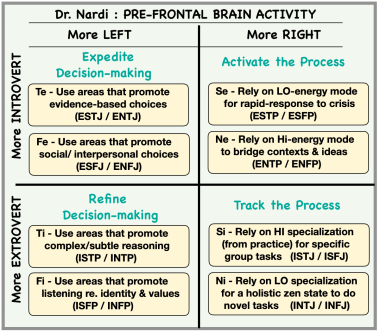
F = FEELING functions evaluate perception & determine importance of info holistically, based on harmony, to keep peace. It deals with making value judgements – whether things are good or bad.
EXP:  Feels that stealing is right/wrong

**It’s not mainly about emotions, but rather a reasoning process in the higher brain (cortex). This is in contrast to the lower brain’s limbic system which responds to stimuli we experience as emotion.

Fe – Extroverted FEELING, directed outwards
As DOM : ENFJ, ESFJ // Secondary Fe Users: INFJ, ISFJ
Nicknames: “Collective Ethics, Harmony”

Spot them by: A desire for harmony & politeness, with & between people

Q: “What does the group feel, or others’ values need?”
Potential STRENGTH: compassionate, accommodating
Potential WEAKNESS: judgmental, conforming

Basic Desire: Peace, maintain group values, do ‘what we need’,

Fe perspective: Harmony – “How are you feeling?”. Fe works to establish inter-personal rapport, harmonize values & feelings, & respecting social norms. It’s about sharing emotions, listening to someone share, adjusting & accommodating to others.
EXP: Feels that stealing is right/wrong based on how society views it

IMAGE: Like a hospital, caring for the hurt, fulfilling their every need, forgetting about it’s own, too busy with others
GIFT: Discernment – sensitivity to the rightness & values of a situation
Physically
: (As Dom) Proportional warmth, openness in eyes & mouth, attend to words

• DOM Fe users talk almost exclusively about what others are doing or thinking. THEY:
• actively try to provide others’ needs (made sure food was already prepared for guests, in case they’re hungry when arriving)
• tend to be warm & welcoming toward new acquaintances
• use confirming language when talking to someone (“Oh no / Aw”)
• make others feel comfortable by anticipating their needs & following social norms

• Their moods especially depend on the moods of those around them (genuinely & visibly cheer up after hearing someone’s good news)
• These types advocate keeping the peace, considering other’s points of view & accommodating loved ones
NOTE: Immature or unhealthy Fes are the harshest – & most vocal – judges of others

===========

Fi – Introverted FEELING, inner directed
As DOM: INFP & ISFP // As AUX: ENFP & ESFP
Nicknames: Individual Ethics, Authenticity

Spot them by: having Personal beliefs, moral code. Seek harmony of action & thoughts with personal values. May not always articulate those values

Q: “What do I feel or value?”
Potential STRENGTH: self-aware, principled
Potential WEAKNESS: selfish, isolated

Basic Desire: Cultivate & maintain personal values

Fi perspective: Value, Authenticity – “I’m feeling…”. Fi deeply explores & refines systems of tastes, preferences, values & morals, but can’t always articulate them.  It’s about getting in touch with one’s own emotions or beliefs & passions, in order to uncover deeper meaning. Analyzes ‘what is important’, SO – Feels that stealing is right/wrong based on whether it causes guilty or not

IMAGE: Like a compass, leading others in the right direction
GIFT: Presence – non-verbally radiating joy, peace & a standard of values
Physically: (as Dom) Glossy eyes, in a kind of personal bubble, tone of voice

• Fi Dom types tend to ‘zone out’ or daydream more than any other – even in the middle of a conversation
• generally Fis tend to use emotion-laden vocabulary (prefer “I feel like…” over “I think that…”)
THEY:
• are incredibly patient listeners, happy to let others talk as long as they need to, without jumping in to offer solutions
• connect with & show empathy by exposing their own experiences & struggles, as a way to let others know they’re not alone
• will almost always argue from a subjective or emotional standpoint – often using the way they feel to make their point
• make other people feel comfortable by having an inclusive, non-judgmental attitude
• usually advocate staying true to oneself, following your heart & doing what you know is right
NOTE: Fis are the easiest types to offend, especially if some part of their identity is questioned, or their morals are betrayed.

NEXT: INF Sensing