Passive Aggressives – Review for ACoAs (Part 2)


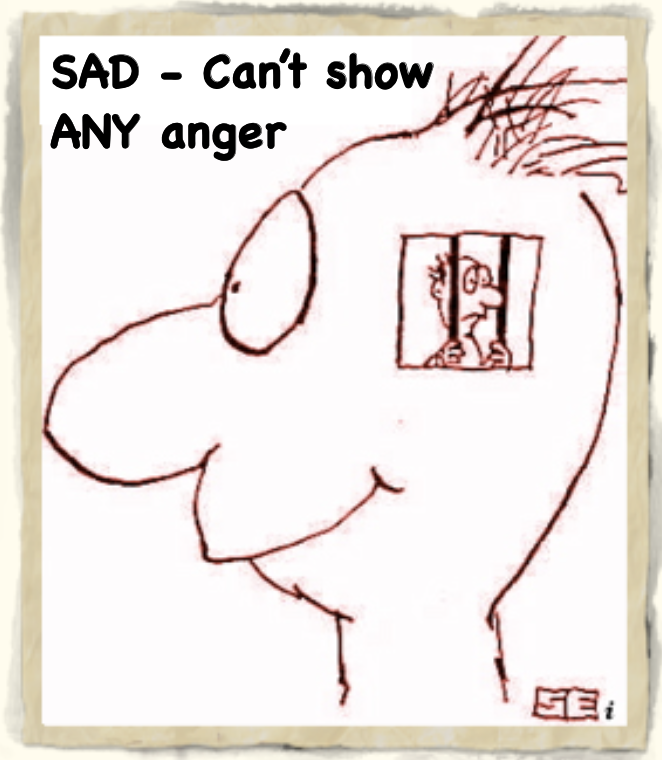
I’M NOT ALLOWED TO BE ANGRY
– but you are (lucky you)!

PREVIOUS: Passive-Aggressive ACoAs (#1)

SITE:When your Defenses lead you into trouble

REMINDER: See ACRONYM page for abbrev.


REVIEW –
(cont)
1.The GAME

2. WHO plays the game (Chart – slide #7)
a. P-As always look for & often find another person who is overtly angry / volatile* (V.) to play the game with – no fun being stuck with all that UN-expressed rage alone! (See: Inter-personal games, Eric Berne).

As adults, they desperately need to maintain their illusions of being perfect, in the faint hope of getting or keeping their parents’ approval, being taught that strong emotions are considered dirty, messy, dangerous – even murderous! Being P-A is another unsuccessful way of denying intense fear of abandonment

b. ✶ Volatiles need P-As (for their part, or the game wouldn’t work) :
• it gives them an excuse for letting out some of their rage ‘legitimately’
• it’s much safer than aiming the rage at the real target – their family
• the rage makes them feel powerful, to cover vulnerability & emptiness
• both Vs & P-As are addicted to finding someone they can act out their childhood ‘story’ with. Vs are used to being disappointed, too, & P-As do continually disappoint! It’s their trade-mark, & it can be used to identify them.
• sooner or later, usually later, it’s inevitable that Vs get angry, raging, even nasty at P-As – out of legitimate, intense, longstanding frustration at the P-As’ tactics!  Of course: Vs have to stick around for this! They’re part of the game.

DIRTY POOL – P-As unconsciously, sometimes knowingly, will find & use ‘available’ Volatiles as their own personal pressure valve – as if getting the V. to explode with rage would relieve their own pent-up hostility. When Vs get angry, P-As get very self-righteous. They feel victimized & cry: “I haven’t DONE anything!  Why are you attacking me?
SO THEY CAN
• Accuse Vs of being controlling, even though they set the V. up TO:
— take care of them emotionally & practically
— vent their anger/rage for them
— make all the decisions in the relationship!
— use the V a substitute for the original harmful parent

• Make Vs the crazy or bad one (instead of themself), of being abusive & unfair, of reacting to ‘nothing’. That way the Vs can be ‘the monster’ for pouring out that vile stuff (anger) which P-As are terrified in themself.
They can continue to feel superior & ‘clean’, keeping their ‘good-child’ status. After all, P-As can point to being easy-going, never raising their voice or letting out that ‘nasty‘ anger – right?
➼ BUT that is exactly the point – they don’t DO many things that are their responsibility.  P-As make other people responsible for decisions they should be making themself, (even if they like the ones being made for them). They neglect to ‘show up’, hold up their end, be an equal partner or peer – ie. an adult. P-As stubbornly – yes angrily – demand to be rescued, never not expressing their needs / wants.

• THEN, if /when something goes wrong – when they don’t like the choices the V. made for them, or are disappointed with the outcome – they can blame the other person & continue to play the victim.

• AND P-As can say to the other person: “YOU’RE so controlling!” (& unspoken: “I hate you”). Wow! How dishonest.
✶ BUT if the V. stops playing the game, the P-A may finally tip their hand – if only briefly – showing the true rage behind their mask

EXP: Mark (P-A) & Sandy (V.) meet at a classical concert & become art-loving, theater-going friends. Mark regularly says self-deprecating things that are clever & funny, & Sandy obliges by laughing.
After a few months Sandy becomes increasingly uncomfortable with her complicity in Screen Shot 2016-06-15 at 12.04.49 AMMark’s self-hate. The next time he makes a crack about himself – she doesn’t laugh & is quiet. He gets annoyed & indirectly insults her for not responding ‘correctly’.

Later he buys her a B/day gift which deeply offends her artistic & Christian values – an ugly-made goddess statue – knowing her religious background! She can’t imagine his intention – but is outraged. She instantly blows up at him & gives the gift back. Naturally he’s shocked & insulted. After all – it was well-meaning. Instead he mails her a self-righteous note, asking “Is that any way for a Christian to act?”.  End of friendship! Sandy feels ashamed for blowing up but also relieved to get away.

NEXT: Passive-Aggressive ACoAs, (Part 3)
Passive Aggressives – Review for ACoAs (Part 1)


YOU’LL NEVER SEE HOW ANGRY I AM –
I barely know, myself!

PREVIOUS: P-A ‘nice’ comments

SITE: Constructive, Passive & Aggressive Leadership styles


REVIEW
1.The GAME (Post: How its played)
a. DEF : Passive-Aggressive ‘Personality Disorder’ (PAPD)
A 2-handed ‘game’ which always requires the Passive-Aggressive (P-As) person & the Volatile (Vs) one to react (in ‘Games People Play’ – audio – by Eric Berne)

✰ web-MD …. apparently compliant behavior, with intrinsic obstructive or stubborn qualities, to cover deeply felt aggressive feelings that cannot be more directly expressed….

✰ Wikipedia ….. a personality trait marked by a pervasive pattern of negative attitudes & passive, usually disavowed resistance … expressed as learned helplessness, procrastination, resentment, stubbornness, sullenness, or deliberate/repeated failure to accomplish requested tasks for which one is (often explicitly) responsible….

✰ DSM VI …. the behavior often reflects an unexpressed hostility or resentment stemming from a frustrating interpersonal or institutional relationship on which an individual is overly dependent

✰ The Straight Dope …. people who suffer from PAPD expect disappointment, and gain a sense of control over their lives by bringing it about.Screen Shot 2016-06-14 at 11.09.50 PM.png

b. ACoAs: MANY of us grew up in one of 2 emotional climates :
emotionally volatile – being around loud, hyper, dramatic, raging parents / relatives – which has made some ACoAs emotionally gun-shy. We had to sit on our own anger – there was so much flying around, and we didn’t want to be like them, so we shoved our rage into a huge locked room & tried to throw away the key. But now it comes out sideways!

Screen Shot 2016-06-14 at 11.00.40 PMemotionally repressed – the other extreme found some of us in a family of uptight, buttoned down, emotionally cut-off, perhaps P-A types, who made a point of suppressing any intense emotion in their children. They may have believed it was ‘spiritually correct’, or they just didn’t want their own repressed pain to get triggered, &y didn’t have the skill/ tools to deal with ‘big feelings’ from their kids. We either copied their style or became ‘dramatic’ & over-reactive to everything.

• Both styles have deeply effected our relationship to anger & rage.
IMP: These are normal human EMOTIONS (Es), which are just forms of energy & by themselves are not dangerous or bad.
✶✶ What to watch out for are the ACTIONS we take to express these Es! If we express them safely, we don’t hurt anyone & in fact feel lighter & can function better. If they’re expressed badly we can cause pain to others, while adding to our shame, guilt & S-H.

c. Briefly:  P-As ACoAs have a huge amount of accumulated anger & rage (from childhood, as well as in adulthood), which we’re not allowed to feel, much less admit to – in order to be the ‘good’ one. We have cultivated such a facade of ‘niceness’ we’ve fooled ourself (but not everyone).  We may be the Hero or Lost Child from any dysfunctional family –  the Rescuers, the People-pleasers, or the Invisibles. (Toxic Roles”)


no, noP-As compulsively resent, oppose & thwart – indirectly – what we see as demands to function at a level others expect of us. We’re convinced that we’re still not allowed to have real power for  ourself,  afraid to admit our anger at being neglected & unloved.
We end up saying NO to our own needs & wants – and to many things that would be good for us.

So we live in a state of deprivation, expecting others to read our mind & provide what we won’t give ourself . P-As are rarely if ever able to state outright what they want & don’t want, or distinguish between actual bullying & appropriate requests.

hidden handsSuppressing our anger is a form of negative self-control, then put all the rest of our effort into trying to control other people’s actions & emotions..  In light of our self-imposed limitation, P-As are inwardly driven to push others toward our secret goals: to prove we can’t be pushed around, and to get back at anyone who’s hurt us OR their substitutes) – while seeming to not push at all. (re. controlling). It’s a way  to get our agenda across without risking negative consequences.

NEXT: P-A ACoAs – Review (Part 2)

OUTGROWING Co-Dep Niceness (Part 6b)


TO BE or NOT TO BE

willing to forgive myself –
that is the question!

PREVIOUS : Outgrowing P-P #6a

SITEs: 12 Ways to Accept Yourself
I Forgive Myself for……
from ‘Journey of Be’, scroll to 9/2015


RECOVERY from “Too Nice Syndrome”
(cont.)

TOOL 6aHealing our CHILDHOOD T.E.A. (cont.)
As we outgrow P-P we can clean out the underlying issue that permeates every part of our life : our Self-Hate, which is blaming ourselves for not getting our needs met. It’s anger/rage at our family turned in on ourself

Reminder : Healthy, compassionate families, teachers & other leaders guide children with clarity, kindness, patience & humor. They set good examples, teach boundaries & realistic limits, explain the way people & things work, & help each child develop their Natural Self. (Healthy Parenting)

That was not our experience. All our childhood emotions, words & actions which were called “too sensitive, disobedient, difficult, selfish, lazy, stupid …..” do not need to be forgiven. Instead, we can look back with sorrow & compassion for what we endured!

SO: The more S-H we clear out, the more we drop P-P, automatically. Rather than struggling with the idea of having to forgive our youthful acting-out & normal child-reactions, we can benefit the most from ACCEPTANCE

++ ACCEPT that every child is programmed to follow their upbringing.  If it was alcoholic, dangerous, neglectful…. we drowned in too many rigid, harmful laws – or were completely left to our own devices. Now we can slowly form a new set of rules, loving & flexible – which will eliminate much of the need for fake niceness, so we’re free to be genuinely kind  (“ACoAs – Healthy Rules

+ + ACCEPT reality: We can let go of the – usually unconscious – twisted belief we may still have, that we’re hopelessly bone-deep failures because we originally:
• failed to be the kind of child who was good enough to have elicited love & approval from our parents
• failed to soothe & heal our parents’ many wounds
• failed to stop them from hurting us, each other & our siblings

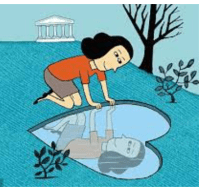
++ ACCEPT that the mirroring we got as kids came from cracked mirrors – forcing us to see ourself thru controlling, cruel, drunk, insensitive, neglectful, raging eyes! What we came to think of as our Self was mainly their sickness projected on to us – which became our Negative Introject. This psychological process – helpful or harmful – happens to every child & is not ‘forgiveness material’.  (Parental Mirroring provides child….)

++ ACCEPT our child’s narcissism as normal, which made us think we had the power to do any of those things. Not! We can understand why we had those misguided ideas, & correct our thinking now (the CDs), to stop blaming & attacking ourself for what we believe are inadequacies & deficiencies

++ ACCEPT that following the Toxic family Rules does not & never did keep us safe!  No matter how ‘good’, helpful & self-denying we were as kids, we still got the full brunt of our family’s damage!
“I have to obey them” is a lie we tell ourselves so we don’t have to be our True Self & take care of our own needs

++ ACCEPT that as physical adults (not yet ‘grown-up’) we do not ne-e-e-d them to be our parents. That’s our job now. We do need a lot of help to heal, but trying to appease & please the original abusers is self-destructive

++ ACCEPT & stop judging ourselves absolutely, totally –  for:
• not being perfect // not knowing everything // making mistakes
• being so scared inside // being controlling // nit-picking
• having depression & the need for medication
• procrastinating or never finishing anything…  basically opposite everything on the RIGHTS list

++ ACCEPT that at first we’re going to feel guilt churning in our gut whenever we disobey any Toxic Family Rule, but we will slowly outgrow it.  This is ‘good guilt’ – for the short-term – because it signals doing something healthy for ourselves, which goes against all our original crazy training

The Tibetans have no word for ‘guilty.’ The closest is “Intelligent regret that decides to do things differently.”

NEXT: Self-forgiveness as ADULTS

OUTGROWING Co-Dep Niceness (Part 6a)

THIS PART IS the hardest of all

◀️ ARTWORK from Tiny Buddha

PREVIOUS :
Outgrowing P-P , #5b 

QUOTE: “You’re the Average of the 5 people You spend the Most Time with”
Jim Rohn “The Art of Exceptional Living”


RECOVERY from “Too Nice Syndrome”(cont)

IMP :
‘Forgiving’
 OURSELF
This only applies to us as adults (Parts 7a & b), when the brain is capable of self-direction – when we can understand that the ‘character defects’ of the False Self were developed in childhood, which we had no control over.

TOOL 6a. = Healing our CHILDHOOD T.E.A.s is to:
1. LET GO of our Self-hate (E) & endless recriminations (Ts) re. the past
(See “Letting go means….“), and to:
2. GIVE UP the compulsion to keep punishing ourself & stay miserable (Es)

Review: As earlier posts have indicated, the underpinnings to co-dep / P-P ‘niceness’ is unexpressed anger / rage. And under that is a vast sewer of stuffed emotions, the majority being fear/terror, but also disappointment, loneliness, longing, sadness, despair…..
Cleaning out our damage includes facing & dealing with our anger at our family, as well as all our other T.E.As.
It means having compassion for ourselves & living in the present.

Judgements: Along with forgiving others who have wronged us, we are told to ‘Forgive yourself’– but it’s not always clear which part of our life that refers to. Presumably it’s for all our ‘bad’ behavior, at any age.

This is tricky, because ACoA co-deps can easily take this to mean that our self-defeating patterns prove what our family said all along – that our very essence is bad/evil, which is why we’re supposed to need absolution.

Those unloving messages get added to children’s minds who automatically combine Being & Doing into one thing.  So, still run by our WIC, ACoAs are plagued by the toxic rule: “I act bad because I am bad”, which we frantically try to hide with perfectionism & P-P.

REALITY:
If this Rule were true then there could be no Recovery, no second chances, no spiritual healing or growth!
We need to “come to believe” that we are not bad & therefore unlovable, but rather severely wounded, as well as perfectly imperfect!

The starting point for all Recovery is working to eliminate as much S-H as possible. See: Self-Hate & ACoAs, & counter it with ‘Emotional Needs & Resources, as well as ‘Emotional Maturity’ andACoAs & Self-esteem‘.

CHILDHOOD
(As)
ACTIONS: When encouraged to see that S-H is a destructive lie, many ACoAs will counter by pointing out how difficult or bratty they were as teens, or even younger – as proof of their inherent ‘badness’.
Yes, some kids are quieter & some more rambunctious. But much of what our parents considered ‘misbehaving’ was a combination of:
a. our copy of & direct reactions to all the craziness we were stuck in
b. many perfectly normal kid ways – but mislabeled by unhealthy parents
(“10 Ways Kids Appear to Be Bad but Aren’t“)

(Ts) THINKING: These 2 types of actions were based on:
a. the unique magical thinking of all children, who have a self-centered focus & a limited knowledge about how the world works
b. the many distortions & omissions fed to our growing brains by abusive parents, school, religion, our neighborhood & culture…..

(Es) EMOTIONS: (see list above in “Review”) ACoAs often say they “feel crazy”- which is actually a cognitive issue, not emotional – & we did think we were because most things truly didn’t make sense. That made our world chaotic & unpredictable, which is very scary to any child, who needs to feel safe as much as to feel loved.

THIS leads us back to self-forgiveness.
Forgiveness is always used in relation to having done something wrong. But as children much of what was labeled wrong about us was not! It doesn’t mean we were angels – far from it.  But we were reacting because every day we had to cope with extremely painful & frightening events.

So it’s not appropriate or relevant to use the concept of forgiveness toward ourselves as children – for the survival strategies we developed in dire circumstances.
There is nothing to forgive. ONLY ACCEPTANCE !

NEXT: Self-Forgiveness – in childhood (#6b)

OUTGROWING Co-Dep Niceness (Part 5b)


IT’S NOT EASY
to heal old wounds

PREVIOUS: Forgiving others #5a

SITEs: 15 things Forgiveness
DOESN’T mean….

• DECONTAMINATING ‘forgiveness

How to Forgive with NLP


RECOVERY from “Too Nice Syndrome” (TSN) cont.

TOOL 5a. FORGIVING OTHERS (cont.)
(
DEF. in Part 5a)

FORGIVING OTHERS is either:
1. for repairing relationships – to re-instate broken or lost trust
OR  2. letting go of the relationships because it cannot be repaired

NOTE: Forgiving in no way implies trusting another person, nor does it guarantee the continuation of the old relationship.

To repair a broken connection, both parties must participate.
• In some cases only one person has caused the problem – which they must own up to, & the aggrieved person will have to be willing to forgive. But forgiving a wound (to stop obsessing on the resentment) does not guarantee a reinstatement of trust. That has to be earned by the wounder, which is slow, & sometimes impossible.

Some relationships CAN NOT be fixed & some shouldn’t be. This is especially true when someone has persistently acted badly & continued to do so. Do not ignore this!
There are situations where it’s not worth the effort to reconnect. No matter how hard we try, it’s not going to work, because the other person is not willing to /capable of meeting us half way, not willing to consider what motivates their disruptive behavior. Without that, they will not change.
««
TOXIC people must be avoided whenever possible. If we’ve been exposed to one or more for any length of time, we need to get away from them as soon as possible, & then heal the aftereffects – using all our tools – so they don’t keep hurting us (inside) even once they’re gone.

• In other cases two people have butted heads, each hurting the other – reacting from unhealed damage. If the relationship is worth salvaging – to both – then each will need to go to their separate corners to figure out what in their own background set them off. Then eventually come together to share their awarenesses, using only ‘-I-‘ statements.

This too is usually slow. Sometimes each taking responsibility for their part will allow the relationship to continue – stronger – BUT it may not. While it means both know their side of the street is clean, which eliminates residual guilt & regret, they may rightly conclude they’re really not compatible, going forward. Then the parting can be sad, but prevents further hurt.

GROWTH
Letting go of anger (Es) & resentments (Ts) is internal, which must then be expressed externally by changing old patterns into healthy ACTIONS (As).

++ CHOICES – We’re responsible now for choosing to surround ourselves with people who are self-caring, positive & kind. Then there would be much less to forgive!  Recovery means being more discerning about who we trust. Since people tell us about themselves all the time – believe them!

So it’s not actually them we should trust, but ourselves. We can work our way out of denial by carefully listening to & observing what others express & then admit what we see & hear – especially when there’s a persistent pattern to someone’s erratic / cruel / narcissistic / unavailable behavior

++ SPEAKING UP – As we outgrow P-P we can be much less ready to automatically forgive & forget’ indiscriminately. It’s not in anyone’s best interest. Repeatedly overlooking bad behavior in others not only harms us, but can also seriously affect loved ones, friends & co-workers who are around the acting out, to everyone’s detriment.
Our Emotional maturity includes holding people accountable for their inconsistencies & incompetence, for not keeping their agreements, for the damage they create, for abusive or disrespectful things they say…..

++ SELF-PROTECTION – Avoid blaming others when we’re upset, but speak up. Now if someone hurts our feelings or injures us in some other way, we must ask them to stop. AND their reactions are their alone!
If they won’t stop, we can remove ourselves or at least keep a distance. We are not responsible for what the other person did or did not do – only for our Es & the way we respond (As).
EXP: If someone steps on your toes, that’s on them. Definitely say OUCH! & move your foot.  If they keep stepping on it, that’s on you, for staying close enough for them to do it again & again.

NEXT: Accepting ourselves – in Childhood #6a

OUTGROWING Co-Dep Niceness (Part 5a)

I DON’T KNOW
if I’ll ever be able to

PREVIOUS: Outgrowing P-P #3

SITEs: PMES forms of Self-Care
• 30 day challenge, to make changes


RECOVERY from “Too Nice Syndrome” (TSN)
cont.
TOOL 3. ASSERTIVENESS  //  TOOL 4. HAVING RIGHTS

TOOL 5a. FORGIVING OTHERS
DEF:  a. LET GO of our anger  (Es= the emotion), & resentments (Ts= angry thoughts /obsessions) toward anyone whose offenses, flaws or mistakes have seriously injured us   (See “Letting go means….“), AND
b.  GIVE UP the desire to punish, seek revenge or exact payment

ACoAs
Mental health, Recovery & religious communities keep telling us we must forgive others in order to move on, insisting it must happen before healing can occur. This may be true for some people, but doesn’t really work for most ACoAs.

Forgiveness is important, but it’s not that easy to extend it to all the damaging & crazy mates, friends, bosses…. we’ve collected along the way, & especially not toward the adults who tortured & neglected us as kids.
There are things done to us that are – or seem to be – unforgivable.

▶︎ For ACoA angry-nice people forgiveness IS about ‘letting go’ – but not first. Instead, it is the outcome of the process of gradually releasing layers of old pain, combined with developing the UNIT, so we stop needing all those ‘unavailables’.

This takes a lot of time & effort, & maybe forgiving our abusers will never be complete because of the amount & intensity of trauma we suffered. But we are worth the effort to try, & that effort ends up benefiting every part of our life.

Not getting our rage out (& the tears underneath) is what keeps us stuck in obsession, which we’ve covered over with denial & then express as P-P angry-niceness. It will continue to plague us as long as we’re still desperate for their (unavailable) love & acceptance. AND the WIC wants the Perpetrators to admit what they did, to genuinely feel sorry & to apologize.

This rarely happens, so don’t hold your breath! Our anger is appropriate, but it must finally be vented safely, away from them, so we don’t have to keep carrying its corrosive effect. (“How to forgive” – even if they never come through!)

ACoAs go to one extreme or the other about almost everything.
As adult we’re responsible for our Ts, Es & As, but as angry ‘nice people’ (P-P) we’re afraid to admit our emotions & opinions. Instead, we take on the burden of other people’s feelings, especially if we love or need them, & especially if they’re acting needy or aloof. This comes from a set of opposites, a double message that becomes our bind :
❗️ the WIC’s narcissistic desire to symbiose (be the same as me), AND
❗️ the compulsion to escape from being ourselves (from S-H)

So, as long as we’re being run by the wounded child,
✐ we either refuse to even consider letting go (forgiving), or
✐ we’re too easy on everyone who hurt us.  The co-dep’s “High Road” is more likely a way of staying in denial than of being emotionally free.

► Forgiving requires some mental/emotional distance from our wounds, BY HAVING:
🔅 done enough venting of our old pain in safe ways
🔅 had our childhood experiences validated by people who understand
🔅 gotten enough correct info so our thinking is clearer
🔅 good enough boundaries so we can take care of ourselves
🔅 developed a healthy Adult to be more in charge of our choices

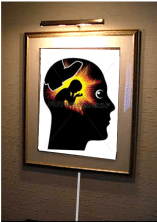
A VISUAL : We can think of our many painful memories as a series of pictures in a large gallery in our head – each one with an art lamp over it, the cord plugged into the wall at the baseboard. For us – the light is all the emotions attached to each memory, plugged into our nervous system.

A little at a time, by crying, raging, talking thru traumatic events, & being validated –  in safe places – the plug gets pulled out of the wall. We’ll still be able to see the images, but they will be in shadow because much of the pain will be gone. THAT is letting go. That is the forgiveness that benefits us.
AA saying : “Look back but don’t stare.”

NEXT: Recovery – Forgiving ourselves (#5b)

OUTGROWING Co-Dep Niceness (Part 4)

I WANT TO BE ABLE
to enjoy all my rights

PREVIOUS: Outgrowing …. #3

WOMEN:  What “She’s too nice” means
MEN : Break “Nice Guy” Stereotype


RECOVERY from “Too Nice Syndrome” (TNS) cont.   TOOL 2. SELF-WORTH
                      TOOl 3. ASSERTIVENESS
TOOL 4. HAVING RIGHTS
++ To outgrow P-P we need a replacement for the Toxic Rules that drive our co-dependence. We need to know our RIGHTS. This makes us less scared, giving us the courage to ask for what is rightfully ours, diminishing the grip of co-dependence

Instead of having to ‘sing for our supper’, we want to acknowledge & act on RIGHTS which are everyone’s birthright. They are strictly for our benefit, not in order to be ‘good’ or to take care of others.  As we start living by them, eventually they can become automatic!

❤︎ YOU have a RIGHT TO :
✑ Think, Feel, Speak & Act according to your True Self
✑ be treated respectfully, no matted the circumstance
✑ never say “I’m sorry” for being yourself, or just for being here & taking up space 😎
✑ discover your passions & pursue them without interference
✑ appreciate yourself whenever you stand your ground
✑ not feel guilty for taking care of yourself or saying ‘no’
✑ take time out to answer a Q or request (“I’ll let you know”)
TO :
not care – so much!  You can’t carry the burden of all the world’s problems – there are too many, just as the whole world can not care about yours. And since none of us has the power to fix another person, you can stick to handling the things that matter the most to you, to get the most out of your efforts

✑ offer no justification!  Don’t lie, but don’t explain. Trying to prove your point – to unreceptive ears – can easily become self-humiliating. When an explanation is required, keep your answers clear & short

❤︎ YOU have a RIGHT TO –
✑ make mistakes // to not know // to be incompetent (every so often)
✑ ask for help  // to change your mind // to ask Qs
✑ not be responsible for other people’s needs, actions or problems
✑ disagree with others & express your opinion // to not respond to ‘stupidity’
stop victimizing yourself

✑ be helpful & generous to others — IF you have enough PMES supplies of your own to share.  Only do what you are legitimately capable of, what fits with your own self-care needs & when you have the time (unless there’s an emergency that only you can deal with – which is rare)

✑ take time out for yourself, even a little every day – to dream, to imagine a new possibility or something creative, to process the day’s experiences, to revel in an accomplishment, compliment or triumph

✑  find & maintain contact with support systems in various parts of your life, the kinds that fit your personal tastes, your work concerns, family needs & social interests. Let others give you whatever help & encouragement they have to offer – if it’s what you need!

• Never chase perfection – there’s no such possibility for human beings. Only God is perfect. Focus on your actual qualities, natural talents & accomplishments
• Know when your kindness is being taken advantage of, speak up about it & pull back some
• Don’t compare yourself with others. Since each of us has a separate body & separate personality, we also each have our own life path. Live yours!

• Always be kind to yourself. Stop self-hating thoughts as soon as there pop up, checking to see what abandonment trigger set it off (BOOK: “Compassion & Self-Hate – An alternative to Despair“- T. Rubin)

As the Al-anon Closing says ” ……We aren’t perfect. The welcome we give you may not show the warmth we have in our hearts for you. After a while, you’ll discover that ‘though you may not like all of us, you’ll love us in a very special way – the same way we already love you.”

❤︎ YOU HAVE a RIGHT to assert all these rights! (‘My Rights – Qs’)

NEXT: Outgrowing co-dep #5a

OUTGROWING Co-Dep Niceness (Part 3)

IT’S A BALANCING ACT
but it’s worth it to me

PREVIOUS: Outgrowing Co-dep, #2

MEN:  Stop Being a “Nice” Guy
WOMEN – Don’t be so nice


RECOVERY from “Too Nice Syndrome” (TNS)
cont. TOOL 1. Facing FEARS /  TOOL 2. SELF-WORTH

TOOl 3. ASSERTIVENESS (cont.)
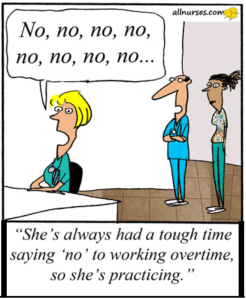
++ Practice saying NO to things you don’t want
Don’t automatically say yes to everything others ask for. If something is really not okay with you, say NO. Or let people know it’s something you’re going to have to think about & then get back to them.

You don’t have to give any reason for not liking something, even if it’s temporary – and it’s OK to change your mind. Remember that “NO.” is a complete sentence.

Some people will accept your new-found voice without a fuss, but others will not. If asked “WHY don’t you want to, why can’t you, why aren’t you…..” – know your reason & state it briefly in a declarative sentence. Never start with “I feel that….., I guess……, Well, …… Sorry…..”.
You can say: “Thanks, but I’m not available, That’s not for me, Not today, I have too much on my plate, That’s not my taste, Thanks for the offer – but I like it where I am, I’m finished with that………”
(MORE ways to say NO nicely – on Pinterest)

As we practice self-care & accept things the way they really are, rather than how we would like them, we can be more direct in protecting ourself. This makes P-P less & less necessary.

++ Don’t excuse your opinions (T), they are a part of you, even if only for the moment. However, to be sure of what we think & feel, we must first identify all those long-held ideas we had to swallow whole from our family, & separate them out from what we truly believe for ourselves.

There are some things we can be sure of, unequivocally: “I know what I know”. But we can’t know everything – certainly not what others are thinking or feeling, unless they say – & we don’t have to know everything. If you believe in yourself, you’ll always want to keep learning AND won’t be ashamed to correct any ignorance or misconceptions you may have

++ Identify your boundaries. We all have the need for personal space, a greater amount for some than for others. P-P generally deny this need, believing that not setting limits is the only way to keep people attached to us, (symbiosis). Trying to meld with each person we interact with means constantly taking on a new fake persona. At least when actors do that they get paid! And trying to be what others want or copying them – never gets us the pay-off we’re hungry for. Keeping this up year after year takes a lot of energy & creativity, but is ultimately exhausting AND ineffective! Remember “Zelig”?

++ Don’t shy away from conflict or confrontations. A basic philosophical tenet of martial art is to a) know how to defend yourself, if attacked, but b) never start the fight if you can avoid it. Following this 2-part principle psychologically is crucial to having a safer life. Books like “The Gentle Art of Verbal Self-defense” by S.H. Elgin, give us several excellent ‘weapons’.
When we start setting boundaries, some people will be confused & others will be angry & maybe give you a hard time – since they’re used to you automatically giving in to whatever they want from you.

No matter how scary it is at first to deal with push-back, if you’re sure of your beliefs or needs, stick to your guns. It can help smooth things if you tell the people who are important to you about your new policy. Some of those reactors might even apologize later.
Eventually the right people will get used to the new you, even admire & respect the changes. The ones who can’t get with the new program will fall away. “Man’s rejection is God’s protection.”

NEXT: Outgrowing P-P #4

OUTGROWING Co-Dep Niceness (Part 2)

THERE ARE MANY WAYS
to help myself ‘let go’

PREVIOUS: Outgrowing P-P #1

SITE : 45 Confidence Exercises…..

<—- IMAGE from : “16 Acts of Self-Care to Get You Thru 2017

See ACRONYM page for abbrev.

RECOVERY from “Too Nice Syndrome” (TNS) cont.
TOOL 1. Facing FEARS

TOOL 2. SELF-WORTH
++ Self-esteem is fundamentally the result of unconditional love! To outgrow the need to P-P we can work at providing that for ourself now, even tho’ we didn’t get it as kids. Our attention has to be internal – on who we are, what we need, what our rights are & how well we take care of ourselves

☁︎ Co-deps base a lot of their ‘value’ on how much they do for others. This is self-defeating, guaranteeing ‘failure’, because :
• it’s only about action rather than personal identity, external vs internal
• we’re selfishly using others as a prop for our WIC’s distorted self-image
• we’re dependent on the unpredictability of how others respond to us
• we can never do enough for some people, so we’ll always come up short
• we can never fix anyone else’s pain, & even if it were possible, the people we most want to ‘save’ (rescuing=false helping) are usually the most recalcitrant (absolutely UNwilling to work on themselves!)
• some people will never give us any appreciation or validation. Sadly those are the ones we chase the hardest & longest!

Self-esteem allows for INTIMACY. To be capable of intimacy we need to overcome a large chunk of our self-hate – by developing at least a working knowledge of our Rights, using good Boundaries, having access to a wider range of Emotions & a nodding acquaintance with our Inner Child, the UNIT & our True Self.PP voice

☁︎ If you’re an ACoA, your needs & emotions (Es) were stomped on & ignored. Being ‘too nice’ was one way you survived, even if your siblings chose a different way to protect themselves. What does this tell us?
That we used whatever we could to deal with an emotionally & physically dangerous upbringing.
We didn’t create that situation, SO this pattern is not an innate flaw in us. It’s correctable!  Outgrowing P-P is a combination of:
— rooting out abusive self-talk & correcting distorted ideas about life (CDs)
— consistently comforting & nurturing ourselves (self-care)

As we “get it” in our bones that we didn’t cause our need to develop co-dep – it will greatly quiet the self-hate & PP voices, which tell us that it is our fault. Then we slowly outgrow the old pattern of people-pleasing (P-P) which is one of many defense mechanisms. We are “Damaged, not defective”

TOOL 3. ASSERTIVENESS
++ Practice saying YES to the things you do want
• SUCH AS things you’ve had an interest in or passionate about since childhood, even if you never got to pursue them. Now you can pick them up, just for pleasure, or maybe to start a whole new career:
— Say yes to learning new skills that will improve your income
— Say yes to healthier friends & lovers, jobs, living space….
— Say yes to a new couch, better clothes, flowers….(when you can)
— Say yes to filling some of your down-time with ‘good, clean fun’
— Say yes to taking time out just for yourself, to rest & recharge

➤ Say YES to one thing you’ve been wanting to do (a small tattoo, a dance class, a Spiritual retreat…..), but are afraid others won’t like it or will make fun of it. Too bad. Do it anyway!

• There are other things you can be enthused about as short-term enjoyment, something or someone you’re only into for a while (maybe even a few years) and then : You got what you wanted from the experience // or you did as much with it as you could // or you’ve gradually become disappointed in it // or you, they or it has changed, & now it doesn’t suit you anymore….  You’re done, so move on & choose new PPT (people, places, things)

NEXT: Outgrowing P-P #3

Co-Dep EXTERNAL Negatives – from OTHERS

WHAT’S THE PROBLEM?
I’m just trying to be nice!

PREVIOUS: External negatives – in us

SITE: Negotiation & the ‘niceness trap (4 parts, re.

The HIGH COST of being ‘too nice’ (cont.)

NOTE: This is how others can react to co-dep ‘niceness’The ‘THEY’ applies to the unscrupulous, the walking wounded, or average joes/janes who aren’t malicious, but don’t have much psychological or personal insight.

NEGATIVE RESULTS – from OTHERS
• They take advantage of you
Being too available encourages depressed, passive-aggressive, addicted, lazy or narcissistic people (takers) to use you to their benefit – counting on your good nature, & giving nothing back! Once it’s clear that you’re ‘soft’, they’ll ignore any boundary or objection you try to apply. They’ll demand increasingly more from you, ignoring you limits

 They don’t trust you
Since most people assume that few people are genuinely kind, they’ll doubt your honesty, considering it a red flag of insincerity. This is true in many circles, where dog-eat-dog prevails. People assume you want something in return, & you do – but probably not what they think. So you risk being misunderstood, since your motive is to be liked & accepted into the ‘inner circle’, no matter how tacky or immature it is

• They have expectations
Because you always do too much, you actually train people to expect you to function way beyond what’s reasonable, or what the job calls for. This becomes their norm for you, at home & work. People actually appreciate you less, taking you for granted, & depend on you to take up their share of responsibilities

They will people-please you
If you’re too nice all the time, your friends – or employees if you’re a boss – will be reluctant to tell you if you have distorted thinking about something or come up with an unworkable idea.  It’s a form of ‘polite deception’, since they don’t want to hurt you , & maybe they think (or know) you won’t be able to handle disagreements or reality. This prevents people from helping you think clearer, make better decisions, be emotionally healthier & more successful

They don’t respect you
You may be seen as a wimp, a patsy, a fool, or just naive – not someone worth listening to.  If you’re a boss, they assume you’re weak, not to be looked up to or able to lead. Whatever your role (family, friends, work), you may in fact be under the delusion that you are building friendships, protecting yourself from ‘depressives’ & making yourself indispensable

HOWEVER: Most unhealthy people talk about others behind their back! Your over-niceness just gives them another topic, & when you find out – third hand – you get angry, but silently, of course!

• They don’t take you seriously
If you let others get away with their ‘crap’, if you give everyone the benefit of the doubt when they clearly don’t deserve it, if you forgive & forget too easily –  people will take your position of  taking the ‘high road’ as oblivion, stupidity or that you don’t care. They will ignore & disregard any opinions or valid suggestions you have to offer, since they assume (or know) you won’t object

They ignore you
If you find it hard to say no, people will eventually assume you mean Yes – even when you say No. That gives them permission to keep pestering, coaxing or manipulating you to do something you actually don’t want to do, because they know you’re a pushover. Also, there are always those who will guilt trip you if you try refusing them what they want, & some people will be able to talk you into helping them with everything – even when you’re not feeling well, or are busy with other things

• They take offense
If you’re doing too much, too fast & better than everyone else, it makes others look bad, which they will resent. If you’re too positive, pleasant, willing or too flattering, the higher-ups may find it acceptable or at least tolerable, but your peers will ‘not be amused’. This can also apply to parents vs children, siblings with each other, bosses vs co-workers…..

•  They only come or call when they need something
For most people you become nothing more than a means to an end – theirs. They only contact you when they need something, whether it’s a favor, a rush job or just someone to dump their woes on. You’re just a tool to be used, albeit very caring & full of helpful information

• They find you boring
 Your conversations are not usually very interesting. If you never push back, if you never have a clear opinion, if you don’t know what you want….. it’s as if you’re a blank, invisible, not someone others can connect with – which is unsatisfying. Plus it makes them do all the work in the relationship, which is tiring.

NEXT: EXTERNAL Neg. results #2