
 «
«
PREVIOUS : Signs of Abuse #3
SITE : “What are the effects of emotional abuse?”
AFTER-SHOCKS
Persistent exposure to emotional / psychological / physical trauma causes PTSD & C-PTSD. Long-term narcissistic abuse has many traumatic consequences, including one that may be the underpinning of all the other obvious symptoms, but is rarely considered.
It’s the devastating impact abuse has on the brain – especially to 3 key areas : ▼ shrinking of the hippocampus, & ▲ swelling of the amygdala, & ◘ limiting the use of the prefrontal cortex.
1. The hippocampus holds short-term memories that get converted into long-term storage. New neurons formed there extend themselves to make connections to many others areas. Everything we do, read & learn & understand – rests on it functioning properly.
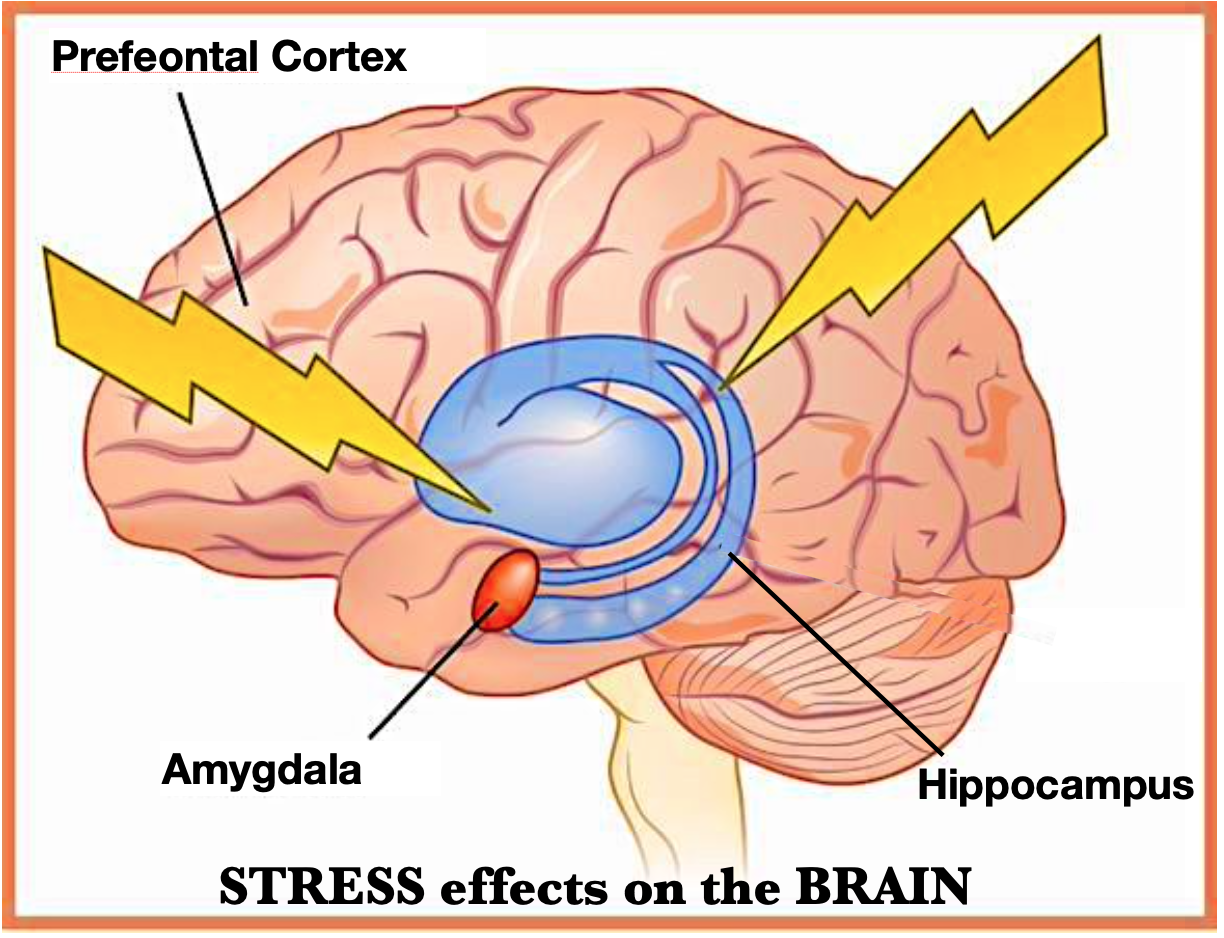 ► Hippocampal cells are especially vulnerable to ongoing emotional distress, damaged by the body’s releases of the stress hormone Cortisol. With constant exposure to abuse, this brain structure gradually diminishes in size.
As a result, N victims end up finding it hard to absorb new info, & easily forget things they used to know (not related to age).
2. The amygdala – the general emotion-centre of the brain, gets activated every time we’re frightened or agitated. It stores all the memories of abuse, which are triggered every time experiences are remembered, or when someone else talks about them. It forces your attention to painful emotions like envy, guilt, fear, shame…..
While it reduces the hippocampus, Cortisol stimulates the amygdala, so that traumatic stress increases its size, which manifests as mood disorders, decreased mental sharpness, & restricting our ability to take in new information.
3. The prefrontal cortex (PFC) is located right behind the eyes. This region controls attention, decision-making, memory, & planning. It too is shown to shrink with trauma. The neural highway for unhappiness runs from the amygdala to the right side of the PFC.
As this circuitry activates, thoughts fixate on the distress. Extremes of anxiety, anger & sadness push brain activity beyond its effectiveness. Some results : N victims find it hard to make decisions, have a shorter attention span, generate fewer new thoughts, are continually depressed &/or agitated & tend to neglect self-care.
PTSD (called RE-LIVING) – It’s the cerebral anxiety attack that makes your whole body react with old terrors – causing heart palpitations, intrusive thoughts & spinning emotions – as if the traumatic event is happening right now! Along with painful emotions, physical reactions include looking over your shoulder, shrinking back, wincing, walking on eggshells while waiting to be attacked….
What to EXPECT
1. You’ll need to cry – a lot. The more the tears flow the lighter the load pressing on your forehead, chest & shoulders
2. You’re going to be slightly paranoid – feeling the need to watch your back everywhere you go, no matter what state you’re in
3. The depression is real. It feels like your heart is being ripped into pieces, while the rest of your body doesn’t want to move – ever again!
4. You’ll blame yourself – taking on all the verbal, emotional attacks that came FROM the N, but are not you.
💖 Remember that ‘C.R.A.P’ = “I can’t speak up or I’ll be Criticized, Rejected, Abandoned, & Punished .” is no longer applicable.
(Review post: “What N’s need you to be“)

«
Insecure Attachment
The longer someone is exposed to trauma, the more distorted & fearful their world view becomes. Because N abuse is so de-stabilizing, it impacts the way we attach to & connect with others. This will have a serious effect on how we experience ourself, approach our life & react to others.
Insecure attachment happens when we repeatedly learn that it’s not safe to love or confide in someone we depend on (parent, mate, boss….). So we end up with intense anxiety about interacting with anyone, or avoid attachment altogether, which severely restricts our world, & makes most relationships difficult.
Narcissistic abuse is slow, subtle & insidious, undermining our sense of self & stability, making it extremely hard to establish healthy connections. Breaking free of PTSD symptoms is a long, tough process, but accepting the impact it has on us is a starting point. (See both versions of the Laundry List)

«
NEXT : After-effects, #2

