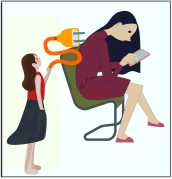
SYMBIOSIS & ACoAs (Part 2)

symbiotic trapIT’S SO HARD TO LET GO
I want to stay loyal to them!

PREVIOUS:  Symbiosis & ACoAs (part 1)

REVIEW: Ego States – Parent
Autonomy & Attachment” – opposite of symbiosis

SITE: Do you Love to be needed or Need to be loved?

IN CHILDHOOD (Part 1)

AS ADULTs
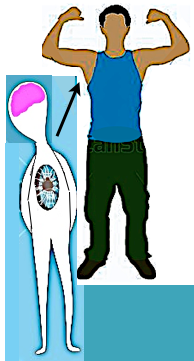
Emotional Symbiosis (ES) is the damaged part of us that tries to make any important “other” a carbon copy of ourself, assuming it will make us feel safe & loved. But it doesn’t work.
Because our mother was not able to emotionally bond with us from birth on – it created the original Abandonment, underpinning all our dysfunctions. It left us with a desperation for that missing connection – at any cost to self or others – which healthy infant-symbiosis would have provided.

SYMBIOSIS is narcissistic, appropriate for an infant – but NOT for an adult. It’s an futile attempt to get maternal nurturing & to gain self-esteem thru adult relationships

• It’s frustratingly unsuccessful, even if someone is willing to co-dependently try, because we know at some very deep level that it’s not a legitimate way to connect

• We’re trying to force others to give us the mother-infant love we never got, demanding they give us permission to be on the planet — rather than being with us out of genuine affection & respect, as equals.
And, if they do agree to “help” us, they are doing it to feel needed, to fill a hole in themself, SO it’s not really about you!

Unfortunately, ES not only affects the individual family unit, but is usually passed down through the generations, always with a negative impact. Family enmeshment is a form of psychic incest, as inappropriate cross-generational bondingego states
.

Characteristics :
• children are caught in up the needs of parents, having to ignore their own
• communication is triangulated (party line)
• everyone is in each other’s business all the time
• everyone must conform to the party line – whatever that is in that family
• kids must stick to narrow Roles (Scapegoat, Hero….)
• have poor or no boundaries between the various members
• member are punished for any non-conformity or trying to be a separate individual, by constant badgering, outright attacks, the cold shoulder or banishment

IN THE PRESENT – in us or our parents
The compulsion to symbiose now comes mainly from the WIC ego state , held in place by its attachment to our internal negative Introject & external damaging parents – who were either overly-out of focusattached or unavailable for us.  The compulsion comes from NOT:
• having appropriate role models for healthy ways to relate
• having a strong healthy sense of one’s True identity
• feeling safe on ones own
• not having boundaries
• not knowing ‘who I really am’, with a deep fear of abandonment, causing intense self-hate, shame, guilt

ES is a way to not acknowledge absorbing the family line which implied or blatantly told us that we’re worthless & unlovable. Denying childhood abandonment is maintained in many ways – such as trying to prove we’re nothing like them – while at the same time repeating the very family drama we claim to be escaping. So we unconsciously choose the old familiar PPT (people, place & things) ! Freud’s ‘Repetition Compulsion’

A person who craves & demands ES has a limited capacity to be aware of, appreciate, respect & acknowledge the inner experience of another. They need everyone to agree with their point of view – about everything – & tend to put others down when they don’t.

Symbiotic Attachment IS:
• taking someone emotionally captive instead of having equal, healthy, inter-dependence with others (“Alcoholics – & other narcissists – don’t have relationships, they take hostages”)

• USING others to take care of us instead of being our own adult, to not have to do the deep emotional work that can heal our damage & free up the real us

• the need to insist everyone be a carbon copy of oneself (mirror image) to validate one’s shaky identity – actually the False Self. We don’t have permission to be REAL, so – if others are just like us – then we’re OK (allowed to live).  (MORE….includes examples)

NEXT: Symbiosis – Part 3

SYMBIOSIS & ACoAs (Part 1)

mother/infantAM I ME, AM I YOU & ARE YOU ME?
I hate myself, but I also want you to be exactly like me!

PREVIOUS: Autonomy & Attachment (#3b)

REVIEW: Ego States – CHILD


SYMBIOSIS

• As infants, all humans are born with a built-in biological & psychological set of tendencies, which interact with & responds to their specific environment in their own unique way – but without a formed personality

The child’s first connection is to the mother (usually), not aware of a difference between itself & its caretaker. This one-ness is normal & appropriate. It allows the child to feel safe & protected while gradually becoming acquainted with itself & the big world it has come in to

• Regardless of the type of family, nature & nurture (how we’re treated) combine to form what we think of as our SELF.  If born into a reasonably healthy one, the child is allowed & encouraged to develop the pre-set template they came into the world with

This creates a sense of external & then internal safety. Having permission to be oneself gradually makes it possible to function in the world as an individual who is comfortable in their skin & with other people

IN CHILDHOODmother rejecting
a. BROKEN Symbiosis – BUT, if the mother is not available or unable to connect with the infant to nurture it from a deep place of love, the symbiotic bond is never formed or is too soon broken, before the child can tolerate it

This can be:
— because of’ illness or death, spousal abuse, external trauma such as an accident, natural disasters, war…..
OR most commonly
— personality defects like narcissism, anxiety, depression, rage at having to be a caretaker, not wanting to be tied down…..

This creates intense & long-lasting terror in the baby, with the message that there’s something fundamentally wrong with it. Such children spend the rest of their life trying to forge that missing link with someone – anyone – to stop that terrible, relentless anxiety, SO-
• they end up alone, never forming any intimate bond – OR
• find another wounded soul they can attach to & live together in isolation  – OR
• keep being attracted to emotionally unavailable people, reproducing the very abandonment they so fear (trying to symbiose with the ‘distant’ mother)

b. UNBROKEN Symbiosis : at the other extreme – the mother who didn’t get that bond in her own infancy, will try to get it now from her child – creating a captive who can never leave them! heli-mom
This mother will make every effort to negate the child’s individuality in favor of her own needs & wants, to make that little person her clone, & will punish any disagreement or separation.

If there’s no one else available or strong enough to interfere with this suffocating attachment (father, sibling or other…) the child never has the freedom to develop it’s own identity, but stays dependent on the mother (& family or substitutes) for it’s very existence throughout life.

This child grows up TO (some or all):
• never leave home     • not have any rights
• be depressed, isolated, suicidal
octopus mom• have weak boundaries
• be unable to have healthy, autonomous relationships
• be terrified of abandonment in any form
• be unable to support themself
• not trust their own judgment
• not have their own opinions about things
• have symbiotic relationships with domineering people….
OR
If the child does get away, then as an A-CoA, they’ll be terrified of any close involvement with others. The fear of being engulfed again is so unbearable that it’s expressed as fear of commitment.
Even when they are in some form of relationship, it will be with extreme emotional detachment, a need for total control, endless sexual conquests, come here – go away interactions, irresponsibility…. or just walking away & never looking back!

➼ Both the strayers & the leavers are ripe for addictions, to fill that big emotional hole inside – but it never works
INFO: Symbiosis can be understood through the ego state model. In a symbiotic relationship, both people use only some of their ego states to relate to each other, which they combine, functioning as if they only had one identity between them. They get stuck in rigid roles, resulting in less flexibility.

NEXT: Symbiosis (#2)

AUTONOMY & ATTACHMENT (Part 2)

I CAN CONNECT WITH OTHERScat/dog friends
and still be myself!

PREVIOUS: Autonomy & Attachment (#1)

SEE ACRONYM Page for abbrev.

AUTONOMY (Part 1)

ATTACHMENT

ABOUT.com – …. attachment “may be defined as an affectional tie that one person or animal forms between itself & another specific one – a tie that binds them together in space, & endures over time.”
“Attachment is not just a connection between two people, but a bond that involves a desire for regular contact with a special person, & the experience of distress during separation from them.” says psychologist Mary Ainsworth

💛 Healthy attachment is NOT fueled by anxiety, low self-esteem, fear of abandonment, weak boundaries or neediness.  RATHER, it’s grounded in the opposite:
• A clear sense & acceptance of our CORE personality, based on heredity, personal qualities, character, education, accomplishments, experience, tastes, & talents  – as well as lacks, limitations & defects
5 o'clock B.
• Having reasonable expectations of ourselves & others, in order to have mutually satisfying relationships, & not be devastated when others can’t be what we want them to be

• Having good boundaries – knowing what our needs are, how we’re the same or different from others, how we want to be treated. & be able to clearly state our needs & wants, when appropriate
THEREFORE :
• we can choose emotionally available people who are reasonably healthy, are generally compatible & don’t need us to take care of them
• can accept differences, limitation & imperfections in others

loss• know it’s OK to be attracted to people who have some traits like our family (it’s normal to connect with the familiar), but choose those who can treat us better
• when people act in ways that trigger us, we don’t react as intensely & can respond from our Healthy Adult (not from the WIC or PP)

• are able to tolerate disconnections with others, even outright losses, while keeping a sense of our own identity, knowing that no matter what, we are OK, lovable, strong, capable of taking care of ourselves & being on our own, if necessary.

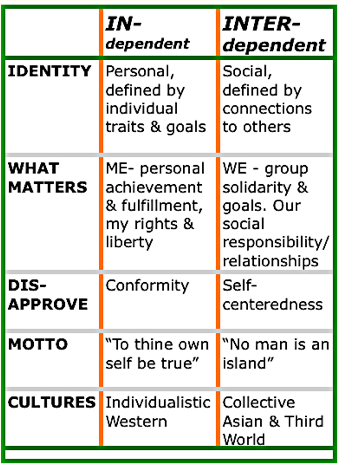
INTER-DEPENDENCE
Symbiosis ——> Autonomy ——-> Attachment —–> Inter-dependence
As ACoAs from wounded families – we need to slowly
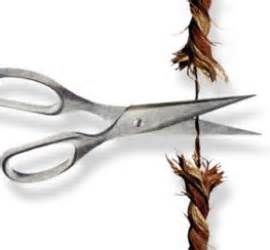
🔪DETACH from the damage we brought with us from childhoodcut damage, in order to —
🧲 ATTACH to the many gifts Higher Power has given us as our birthright, which makes it easier to identify & connect with peers !

Growing successfully thru the previous stages allows us to become more Inter-dependent. 
Of course, most of us are in flux, sliding back & forth between stages. The goal is to keep working at the process, & not get stuck for too long in any one.
(Article: Attachment & Adult Relationships”) 

SimilarMinds.com
Inter-dependent people tend to see themself as basically good. THEY :
ARE – More likely to be content, emotionally expressive, positive, trusting
ARE – easier to get to know, open & relationship-oriented, comfortable with or love birthdays. Less ‘in their head’, less rigid

TEND TO:  be traditional & value society, like some guidance, take advice & learn better with others, like to be part of a group & do things with others, feel grateful to parents.

inter-dependenceWikipedia ….(interdependence) is being mutually & physically responsible to, & sharing a common set of principles – with others…..

✶ INdependent thinking is not suited to inter-dependent reality.
Independent people who don’t have the maturity to think & act inter-dependently may be good individual producers, but not good leaders or team players. They’re less likely to succeed in marriage, family, or organizational life.
(Stephen Covey, ‘The 7 Habits of Highly Effective People’, 1989)

✶ INTER-dependence is & ought to be as much the ideal of humans as self-sufficiency. Humans are social beings. Without interacting with society we cannot realize our oneness with the universe or suppress our egotism. Social inter-dependence helps us test our faith & prove ourself on the touchstone of reality. (2020 updated version of 1929 Mahatma Gandhi)
Need we say more?

NEXT: SYMBIOSIS & ACoAs  –  #1

AUTONOMY & ATTACHMENT (Part 1)

gain autonomy
SERVANT or MASTER of YOUR CASTLE
Who’s the boss of you?

PREVIOUS: Being Visible (#3)


ACoA SYMBIOSIS   (see Post)
It’s an unhealthy attachment to others as a way to:
• compensate for emotional abandonment in childhood
• cope with deep anxiety of being a separate entity
• escape having to face the struggle of growing up emotionally
• mask self-hate & fear of abandonment

In the process of healing the past, we move thru layers of growth with the ultimate goal of being free.
Symbiosis ——> Autonomy ——-> Attachment ——> Inter-dependence

AUTONOMY
1. GENERAL – As part of the human life cycle, the normal, healthy psychological goal of adulthood is to become our True Self, be inter-dependent with others & contribute positively to society.
• A reasonably healthy family encourages children to be an accepted part of the family group, as well as developing as a separate individual, & then be able to function successfully in the larger world

• However, as ACoAs we were:
☼ not allowed to fully develop our own identity
☼ forced to stay in emotional & sometimes physical bondage to the family
☼ so ignored, neglected &/or tortured we couldn’t form a stable bond with anyone.  See  Attachment Disorder site

2. REQUIREMENTS woman w/ lotus
a. S & I  (Separation & Individuation) is required to connect successfully with others, the opposite of co-dependence & symbiosis, BY knowing:
• ourselves & being comfortable in our own skin
• what our needs & tastes are, & provide for them
• we’re OK, which is self-esteem & not arrogance or superiority
• we can be safe & at ease when dealing with others by having strong boundaries

b. Motivation
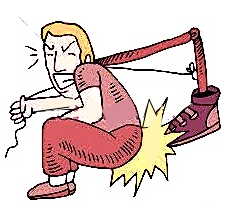
A hallmark of Personal Independence is being our own motivator** — not from egotism, but from being responsible for ourselves.  Spiritual & psychological teachers tell us that we need to look inside for the answers to our problems – that it’s an ‘inside job’, not what we have, but what we are. (‘Process, Part 2, b, iii’ )

in charge**Self-Motivation means we want to do things – for ourselves. It’s the reason behind our actions, our guiding principles.
NO – It does NOT mean ignoring or disrespecting our family, the needs of others or our spiritual connections
YES – It DOES mean is that, as adults, we’re not waiting for someone else to give us permission or a reason to act

➼ Pre-FoO Recovery, ACoAs can take many actions FOR others or because OF others, but rarely just because WE want to. (‘Responsibility’ )
Without someone pushing or pulling us, we’re like dormant trees in the forest or hibernating bears, waiting for the sun to shine on us, warm us up, give us a reason to move. This is the essence of co-dependence

Past motivators – Normal: Our parents & family, school, teachers, friends, peer groups, religion, our countryour damage

• Present day motivators

negative: PRIMARILY our damage – hidden from us in the subconscious (the Shadow side) – old unresolved pain, toxic beliefs, our allegiance to our wounded family system, our resentments, fears… all expressed thru the WIC’s behavior

SECONDARILY: by other people’s opinions, the needs & wishes of friends, relatives, mates, children, bosses, our community, a punitive religion, & a distorted view of God

☆ positive
: a loving H.P. & Ourself. All other reasons to act need to come second, evaluating them based on mental health, common sense, Recovery (not from the WIC or PP bad parent) – ie. emotional maturity

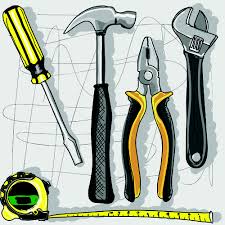
c. TOOLS to get to KNOW OURSELVES:
• a variety of psychological inventories & personality tests
tools• dreams, visualizations, prayer, spiritual literature
• feedback from reliable sources / meetings, therapy, body work
• listening to ourselves, mindfulness, staying in the now
• listing things we’re good at, ask others about our good / excellent qualities
• observing our behavior patterns, slowly over time
• noticing our emotional responses to every situation
• talking with the IC thru the day, listening to our intuition/gut
• written inventories, journaling, morning pages, I.C. writing

NEXT: Autonomy & Attachment, #2

ACoAs & BEING VISIBLE (Part 5)


PREVIOUS: Being visible #4

See ACRONYM page for abbrev.


Mental HEALTH
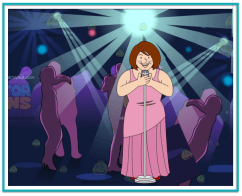
It’s important to know the difference between being in the public eye & true visibility.  
The former can be the result of being :
a.
an extrovert, so being sociable suits them
b. born a performer with the need to express their creativity
✒︎These 2 types are ‘normal’ & can be healthy people, but
★ don’t automatically assume they all have self-esteem just because they’re able to put themself out there
c. a narcissist / controller, who always has to hog the limelight
— Damaged & definitely not from self-esteem

REAL visibility means FIRST being seen by oneself.
It comes from Emotional Healthbeing our Authentic Self as a result of S & I work. It’s knowing who we were born as – minus the damage, even in spite of it!
It can be expressed outwardly with others, or quietly in the background. With boundaries —
= we can be noticed & not lose ourselves or be invaded
= and, not being noticed does not erase us!

Being visible to emotionally, mentally & spiritually UNhealthy people is not possible. Stop trying!
It can seem ‘dangerous’ to the WIC when we’re not seen, triggering old memories, but it’s better than repeatedly trying to plug into a blank wall!

As adults in Recovery we can choose who to associate with. We can decide WHO :
a. is already capable of ‘getting’ us
b. will only like us superficially
c. won’t like us at all, &
d. the majority – who are neutral toward us.
✳️ Learn to distinguish between them, accept all 4 categories, & do not feel bad when we don’t fit with someone

Ultimately, being Visible means taking center stage in our own life – replacing the Negative Introject! We have to de-throne whichever parent was the focal point of our world, everything revolving around them, WHO :
• became our obsession by their physical or emotional absence
• controlled us by constantly being needy & passive-aggressive
• overwhelmed & terrorized by their selfish aggressiveness.
NOW it’s finally OUR TURN.

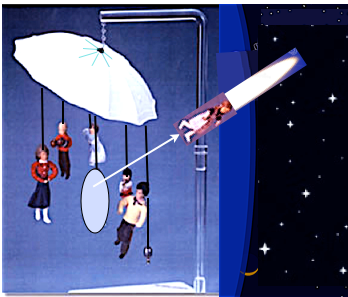
leave mobileResistance
Our WIC really believes that if we leave the family mobile – be separate, different ourself – we’ll surely be flung out into the endless emptiness of black space, alone & then dead! Without them we won’t exist

This is simply not true, because we were born with our very own pre-set tendencies & nascent identity. Yet the WIC believes that for us to become the center of our own universe is not possible, no matter how we act on the outside

REALITY : We can teach the Inner Child, with compassion & Adult actions, that being in charge of our life really is safe & fun, and that we’re NOT alone, when connected to ourself, Higher Power, & positive human support

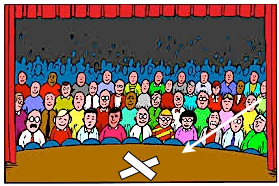
PROCESS – To be Visible heal&grow
• we have to gradually tease out our own identity (S & I)
• the more Separate we are, the less symbiotic
• the less symbiotic, the more we’ll feel the internal HOLE which should have been filled by a Good Parent

• the more we become aware of the hole, the more we feel the loneliness of not having had safe, loving parents
• the more we fill the loneliness with our personality, the more we own our True Self
• the more of our True Self we claim, the more genuinely visible we become!

With GENUINE VISIBILITY – YOU take center stage, by:
• being your Truest Self & let others see that – usincenter stageg good judgement as to where & when
• appropriately expressing what you really feel, need, want, don’t want…
• develop your talents & then put them out in the world
• find people & situations compatible with your personality
• ask for help when you need it & keep reaching for your dreams

Recovery allows us to always see ourselves, no matter who we’re around. The Unavailables no longer are a danger to us, even if it sometimes feels that way when a partially fading childhood button gets pushed.
• When we’re being truly visible, AND are seen by someone capable, we can reinforce that in our thinking & by staying where it’s ‘warm’. This may seem difficult at first, but the more often we are seen, accepted & valued – the more it becomes the new norm!

NEXT : Symbiosis (Part 1)

ACoAs & BEING VISIBLE (Part 4)

I CAN BE SEEN
without being in danger

PREVIOUS: Visibility (#3)

ARTICLES: “Psychological Visibility
and “Psychological Visibility as a Source of Value in Friendship”, by Shailushi Baxi

DEFINITIONS
To understand being truly visible we have to be clear about the differences between our misunderstanding of reality & what IS real.
Much confusion about it comes from distorted definitions & beliefs re. Arrogance vs. Having Rights, & Confrontation vs. Self-Assertiveness, Humility vs. Humiliation.

ACoAs often have the mistaken notion that being visible is arrogant, showing off, expressing hubris. NOT SO.
We’re so trained to not speak up, that we think any form of assertiveness is a confrontation. Not true.
Instead, when we speak from our Adult Ego State, use ‘I’ statements & don’t attack – we are in the right
🦚
1a. Arrogance
• Having (& showing) an exaggerated opinion of one’s own importance, value & ability, from an assumption of ones superiority over others
• Not being able to take correction, criticism or guidance. These are the WIC’s or PP’s narcissism & grandiosity

It stems from insecurity & a need to be validated – often trying to take credit for more than the person really did, in order to boost themselves. It tends to be expressed by not listening, dismissing others’ opinions, with ‘loud‘ energy, craving attention online, being pushy with coworkers, or just never letting someone else speak
vs.
1b.Having Rights” – review it, along with My Rights
When we know our needs & rights, we value ourselves. So acknowledging our beliefs, assets & accomplishments is HEALTHY!
Re. NEEDS :
1. Basic PMES requirements – same for all humans across the planet, listed on the Maslow Pyramid
2. Personality needs, based on our specific configuration – learning style, MBTI & Enneagram Type…..
3. Wound needs, from the repeated ways we were abused & neglected.
In the present it’s about finding the best ways to compensate for past trauma that may always be with us to some degree, but becomes much milder with Recovery
🦚
2a. Confrontation (aggressive): ALWAYS comes from anger.
It means approaching someone (in person or not) in a threatening way, assertiveness....being argumentative, wanting to unsettle them – especially with abuse, accusations, arrogance & defiance.
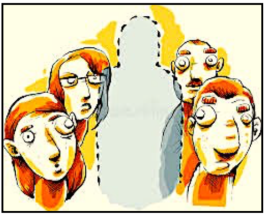
A hostile clash of opinions, ideas & power
vs.
2b. Assertiveness: being confident & direct in claiming one’s rights or putting forward one’s views, clearly & without anger, in an honest & respectful way, especially about difficult issues

It’s based on present-day reality. At work, such a person is confident about their identity & competence, so their energy level is quiet‘, whether they’re getting attention & recognition or not. They can also safely acknowledge the contribution of others & are able to share credit. Site: “How to manage conflict & confrontation
🦚
3a. Humiliation:  (not including degrading sexual interactions)
MUST involve 2 or more people – one who bullies, intimidates or socially embarrasses, although not always directly, AND the other as victim, usually not a willing recipient. It means TO:
• be reduced to a lower position in one’s own eyes &/or others, losing prestige or self-respect
• cause someone a painful loss of pride, self-respect, or dignity
• degrade, dishonor, disgraced, mortify, shame
vs.
3b. Humility / Humble : the quality of being courteously respectful, & modest, with a realistic opinion or estimate of one’s own importance, abilities, rank….
• Free from : boastfulness, egotism, great pretensions or vanity
• For some : retiring, unassuming, unobtrusive. May need to  be alone, to de-emphasizing & heal the wounded ego. (More…)

NOTE: Damaging parents, bad bosses & some religions use humiliation to control & make others submissive to their power.
HEALTHY people & institutions teach how to function well (actions), and encourage, or at least allow, others to develop their own natural way of thinking & feeling

IRONY: The more self-esteem we gain the more humble we become, comfortably! It’s what John Bradshaw called “healthy shame” – knowing what our actual human limitations are, without S-H, shame, guilt or toxic beliefs

🚴🏻‍♂️ Then we’re not afraid of making mistakes, of not know everything, of being imperfect. At the same time, we’re comfortable owning our God-given attributes – talents, knowledge & accomplishments.  Visibility is not dangerous to our welfare or identity!
REPEAT every day : “I know what I know, & I can’t know / don’t have to know – everything!”

NEXT : Being visible #5

ACoAs & BEING VISIBLE (Part 3)


PREVIOUS: Being visible #2


AS ADULTS (cont.)

Staying INVISIBLE
EXP: Zoe was an only child, raised mainly by a deranged alcoholic father from the age of 5, with the ‘help’ of her grandmother (until her death) for the next 5 yrs. Joe had once been a prominent business man, who lost everything because of his severe addiction, monumental self-loathing & a hatred of women. Early on he had divorced his wife Sara as an ‘unfit mother’, bribing a judge to gain custody of Zoe (so he wouldn’t be alone!).

After that. Joe never allowed her any contact with her mother. As he slipped deeper into the bottle, especially after his own mother died, they invisible Jo ended up on welfare, with no one to help Zoe deal with his paranoia & gradual psychosis. In addition to daily torturing her with his hatred & twisted thinking, Joe also systematically poisoned Zoe against Sara with half-true ‘horror’ stories.

He claimed Sara was stalking them & that if she ever got a hold of Zoe she would severely harm her. Actually, Sara was trying to connect with her daughter, but it turned out that she was an alcoholic too.
Joe so convinced his daughter of being in mortal danger that she spent many years trying to be as physically invisible as possible, wearing bland clothes, plain draggy hair& no makeup – always looking over her shoulder so she wouldn’t be kidnapped.

A few years after High School & some years into weekly therapy she began attending Al-Anon meetings, where she met another beginner & they formed an instant bond – Zoe acting out of her Child’s Child ego state (very bright but naive) & Jenny from her Child’s Parent E.S. (very protective but controlling).

In many ways Jenny was the opposite of Zoe – dramatic, tall, well dressed, outspoken, well-educated & traveled, with a more conventional family, but with a lot of early trauma from several sources.
They spent most of their time talking about their background, the ways they had been damaged, & Recovery. But their Inner Children also had a lot of fun playing – going places, being silly, running down the street giggling, being loud, funny & verbally clever.

The POINT: One day Jenny was reflecting on all the details of Zoe’s past & how she was still ‘hiding’ from her mother, as well as from herself & the world. HOWEVER, it struck her that Zoe (at 5’5”) was not doing a very good job of it since: her boyfriend of many years was 6’8” !! AND she was hanging out with the flamboyant Jenny! Clearly she was extremely visible – to all but herself!

STYLES of INVISIBILITY
A Adults ACoAs start out functioning from a False Self. We obediently hide the real one behind Toxic Roles, the most invisible being the Lost Child. The other 3 seem to be ‘out’ but are actually protecting a secret sense of weakness, vulnerability & insecurity, which we often deny even to themselves. Based on our native personality, we can fall into different categories:

a. Some are idealistic daydreamers, going along withScreen Shot 2015-08-05 at 2.00.59 PM everything & everyone – insisting that other people are OK & everyone is ‘nice’, especially when they treat us badly. We ignore their abuses & hide our anger & hurt behind a smile. We’re trying to be the ‘good boy/girl’ to not make waves…..shrinking violet

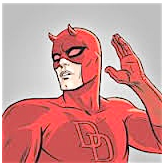
b. …. others are shrinking violets, hiding our light ‘under a bushel’, either doing very little with our life, OR being really good at things that are not our soul’s purpose & passion. Either way keeps us from the fear of losing what feels most important to our core. No risk – no loss!daredevil

c. ….. while others are the daredevil/ superstar type, “addicted to excitement”, who fall into several categories, including : showing off (performing), making lots of money (corporate) & ‘letting it all hang out’ (social), being gangsters &/or flamboyant addicts.
Being ‘seen’ in these ways come from narcissism, self-hate, lack of boundaries & need for external approval – rather than expressing an authentic Self – which is still mostly invisible.

NEXT: ACoAs being visible #4

ACoAs & BEING VISIBLE (Part 2)

invisibilityI DESPERATELY WANT TO BE ACKNOWLEDGED
but I don’t want to expose the real me!

PREVIOUS: ACoAs Being VISIBLE (#1)

POSTS: “Healthy Adult…andSeparation & Individuation

1. WOUNDED CHILD (Part 1)

2. AS ADULTS
STAYING Invisible
– In the present we have many options never available to us as kids – such as searching out people who are relatively ‘sane’ & already capable of seeing & hearing us.
However, as long as the WIC is still running our emotional & mental life, it is the Ego State in charge of the picking process. So we’ll continue to choose friends, mates, even jobs, whose abuse & incompatibility with us make us feel unsafe

This reinforces the WIC’s conviction that we should stay invisible, not just because of the unhealthy people we surround ourselves with, but because of the WIC unconscious connection to the Negative Introject (IT), which is our real source of threatplexiglass

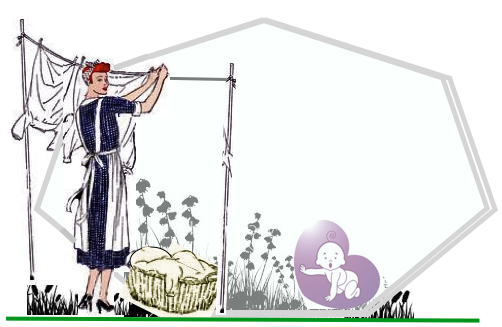
EXP: In doing early childhood visualizations, Tamara had an scene of herself as a 15 months old, sitting alone on bare earth in a big yard, only wearing diapers & a tiny top.

Near by her mother was hanging the wash on a clothes line, talking & laughing with another women, paying no attention to her little daughter.
It was as if there was an infinitely large sheet of plexiglass between Tamara & her mother – they could see, but not hear each other.
The infant sat there alone, unnoticed, neglected, unable to get thru to her mother – bewildered & scared! She had not created the wall, so she couldn’t tear it down & it was too vast to be gotten around. She WAS utterly alone!

🥀 This image represented her daily emotional experience growing up with a narcissistic mother, who was controlling & over-protective, while at the same time accused the child of being ‘difficult’, distant & disrespectful.  Tamara’s mother had made her feel invisible & then blamed her for the result!

Now, the only possible result of our True Self becoming visible is a feeling of danger. Our WIC is convinced that if we can be seen, well everyone else in the world will treat us as badly as our family did. toxic beliefs
So we continue to hide behind our glass wall**. We think that even if we tried to have a presence, we’d likely fail (not prepared, don’t know enough…)

The WIC says : “If I show who I really am & go for what I want”, then : • I’ll be made fun of, judged, criticized
• no one will want me or what I have to offer
• no one will pay me for what I do
• people will be jealous of me, & then attack / try to stop me”…..
AND even if I by some miracle manage, it will be taken away

**Glass wall: While we’re trying to hide behind a creative facade, we do NOT really go completely unnoticed. Depending on how we function in the world, other people see various aspects of us – both our good qualities & our damage.

• What all ACoAs** present to the world is our ‘defensive persona’, an outer shell housed in the PP or WIC ego states, & in some cases a clever but unhealthy Adult. The sad thing is that we believe this outer shell is the real us. Actually, it’s a mis-directed version of our natural personality, distorted by childhood abuse & neglect

While many of us are terrified of even that much exposure, those of us who tend towards the blatant are nevertheless suppressing or perverting the healthy Natural Child, trying to show the world (our parents) we deserve to be valued (“look at me – and – I hate you all”), as compensation

**This is not to diminish the accomplishments of many determined & talented ACoAs who have worked hard to achieve one or more goals. And not all successful people function exclusively from damage – it depends on how authentic they are in their personal life.
In PMES terms, most function out of their (P) Physical & (M) Mental aspects, but rarely (E) Emotionally or (S) Spiritually mature.

NEXT: ACoAs being Visible (Part 3)

ACoAs & BEING VISIBLE (Part 1)

stand outWITH ALL THESE PEOPLE AROUND
– why do I feel so alone?

PREVIOUS: Emotional Maturity

POSTS: Ego states”  and Toxic Roles


1. WOUNDED CHILD (the WIC)
Invisibility is a basic protective mechanism for any abused child.
Physical: kids in dangerous homes will often try to make themselves invisible by hiding in their room, under tables or beds, in closets… or spend a lot of time out of the house, at the library, in sports, at a neighbor or friend…..
Psychological: damaged parents give their children a strong message – spoken or not: “DO NOT BE YOURSELF” – only be what we are, what we want you to be, what we can tolerate & control, what we believe is ‘right’

ACoAs, having experienced both kinds of harm, learned early on to mask our True Self, so much so that we end up not knowing that we even have one! Our family threw our essence on the trash heap, so we learned to do the same. We needed to protects ourselves from family, school, church & neighborhood because
THEY:trashed child
• used our weaknesses/ feelings/ desires / sensitivity – against us
• made fun of & teased us, played mean or cruel ‘jokes’ on us
• punished us unfairly or unnecessarily
• ignored or belittled our skills & gifts (often from jealousy)
• didn’t back us up, take our side – anywhere (at home, at school…)
• physically hurt us (abused for not being perfect – or just for being there)
• expected too much of us (be a little adult, take care of them…)
• never gave us the right info to function successfully in the world….

Bad mirroring: The more severe the parents’ self-absorption is, the less they provide their children with positive mirroring, which all kids must have in order to forge a sense of Self & how we relate to other people. Without this pure feed-back from the start (“I get who you are, exactly the way you are”) it’s very hard to develop a true image of ourself. Our family’s narcissism created a kind of childhood black magic: “If they don’t see me then I must not exist!”

invisibleNo matter at what age, when we’re in the presence of a severe narcissist we are actually alone, since N. only recognize themselves as having reality or viability. We are in fact INVISIBLE to them as separate entities
For a healthy adult, being with someone & still feeling ‘alone’ is at best boring, at worst aggravating.

For a child, when it’s our parents – it’s life-&-death terrifying. We come into the world helpless & are totally reliant on caretakers to provide all the basic needs, as well as safety, information & emotional connections
• The only way a pre-verbal infant has of communicating is thru their emotions.  If the adults cannot tune into the child on that wavelength, the baby experiences such aloneness & frustration that it creates intense anxiety

• The baby then tries to ‘manage’ that anxiety in any modernchineseorphanage
way it can, with extremely limited options – sucking it’s thumb, crying a lot, clinging to mother / doll /  blanket, not responding to stimuli, being afraid of strangers …..

Studies in orphanages have shown how great the toll is on children who only get the minimum of care & are neglected mentally, emotionally & physically.  Also not being held, touched & comforted creates permanent personality damage. A common reaction is continual heads banging & compulsive rocking, & never developing the ability to bond with others.

For an infant, being left physically alone for too long is a death sentence. Being with a lot of others (family) without emotional connection is soul murder.

For ACoAs, growing up with adults who were supposed to be nurturing YET were NOT, was overwhelming to the point of powerless rage!  It felt like we might not survive. They made us feel so worthless & unlovable that we assumed they wanted us to be dead. Some parents even said so!  One narcissistic mother would say: “You’ll be the death of me yet!” – so even that was about her! but the child understood the translation: ‘You’re a murderer, you don’t deserve to live!’

NEXT: ACoAs & being Visible (Part 2)

Relationship FORM B. (Part 3)

WHEN I’M HURT I DON’T WANT TO ‘keep the focus on myself!’

PREVIOUS: FROM B. (#1)


REVIEW: KtFoY (keep the focus on yourself), in Part 1


Relationship FORM B

~~~~~~~~~~~~~~~~~~~~~~~~~~~~~~~~~~~~~~~~~~~~~~~~~~~~~~~~~~~~~~
WHEN YOU ___________________________________________
I FEEL  _______________________________________________
& BELIEVE THAT I AM ____________________________________
These are my thoughts & feelings, which are not your fault, and which
you’re not responsible for.
HOWEVER, I’D APPRECIATE IT IF YOU WOULD ______________________________________________________
WOULD YOU BE WILLING TO TRY THAT? ___________
~~~~~~~~~~~~~~~~~~~~~~~~~~~~~~~~~~~~~~~~~~~~~~~~~~~~~~~~~~~~~~

EXP 2.
WHEN YOU (As) – spend too much time talking to other people (especially to ___) when we’re out together
I FEEL (Es)  – invisible, disrespected, humiliated, angry, hurt, lonely
& BELIEVE THAT I AM (Ts) – not attractive, not desirable, boring, a burden to you
These are my …
HOWEVER, I’d APPRECIATE it if YOU WOULD (As) – pay more attention to me, include me in your conversations, show people I’m important to you, maybe even brag a little about me to others… 🙂
WOULD YOU BE WILLING….?

RESULTS
Re. US
• ACoAs unconsciously expect others to know our needs without having to say anything. This is ‘mind-reading’ & not kosher to expect. It comes from the WIC, whose needs were not met sufficiently at a very young age, when we genuinely needed mom, or someone, to consistently know what to do for us, especially before we could talk.

🗝 NOW we refuse to ask for what we want & need – not just because we’re not ‘allowed’ but because that wounded part of us insists (unconsciously) that if we have to ask – whatever we get doesn’t count!
What the WIC doesn’t realize if that ADULTS are supposed to ask.

• Although our intense anger & hurt is from inside, we can have a ‘legitimate beef’ if the other person consistently disappoints or abuses. It will take some work for ACoAs to know the difference – by identify our specific needs and human rights, speak up for the WIC from the UNIT

Re. THEM
• If you’re dealing with an older child or teen – the way to handle them will be quite different. You’ll need to be more assertive but not punitive, & may need to insist they ‘behave’ by your rules.

a. But if you’re dealing with a self-centered, immature, narcissistic adult, they’re not likely to do as you ask – even if they promise to.
With anyone who is that heavily ‘armored’, you probably won’t get anywhere.
They may not even be willing to look at the ‘dumb’ form you worked so hard to fill out!

In that case the purpose of the Forms A. & B. is for YOU to be clear about the issue, & stay awake to who / what you are dealing with.
You may have to decide to distance yourself, if not physically, then emotionally.
Save every form, & fill a new one out each time a new ‘issue’ comes up, for you or from them. Only show them to someone trustworthy, like a sponsor or therapist. The forms are NOT to be used to beat someone up, or to hold resentments

b. re. their annoying or harmful actions, such as —
• at home : ruining furniture, breaking objects, throwing important things out…..
• in public : revealing too much, over-explaining, not answering direct questions…..
• inter-personally : promising but rarely coming thru, not listening, not holding up their end of responsibilities…..

✒︎ ….  one possibility is that the person has ADD, OCD, dyslexia, serious depression… & isn’t getting the right treatment for it.  So they may not be able to stick to an agreement, even if they want to.

EITHER WAY: If the person balks – at listening to your request, at considering it or at actually doing something differently – it’s important to ask “why not”:
✓ is it the way you’re stating the request or need?
✓ what would it mean to them to comply? the personal cost?
✓ what worries them about your request?
✓ can they give you an alternative action they are willing to do – but only if it’s legitimate and acceptable to YOU – for you to consider?

• Of course, if they listen with an open heart, you have a chance at getting some of your needs met
• Even if the person’s response is favorable, don‘t expect miraculous shifts.  We all take time to change. Be willing to remind then, nicely!

Start the sentence with “Please, would you … / Do you remember you said you would be willing to…’ , rather than angrily:
“You never… / Why haven’t you… / You promised to…”!

• ALSO, you may need to be more assertive, more pro-active, more visible – to not be a victim of other people’s personalities & / or their damage.  🪒 ASK, ASK – nicely!

NEXT: ACoAs – Being Visible – #1