INTROVERTS – True or False (Part 2)

PREVIOUS: Myths #1

SITECaring for Your Introvert 
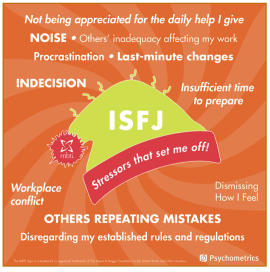
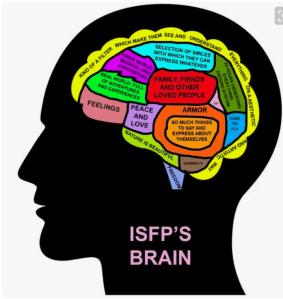
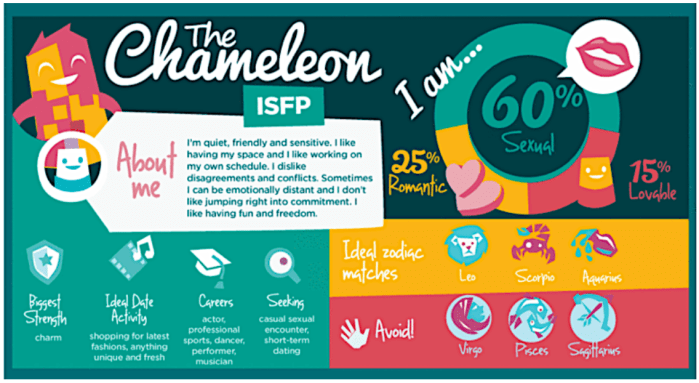
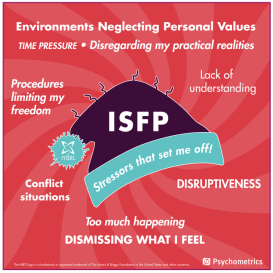
• Cartoons (re. Is) tell the story


PREJUDICES & Corrections (cont.)

Part 1 : General / Mental

😺 EMOTIONAL
FALSE: They’re not emotional
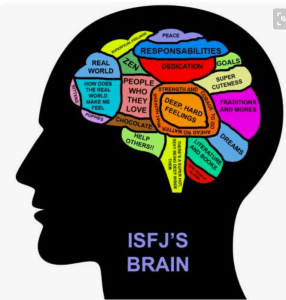
TRUTH : The opposite is true – Introverts tend to have very deep feelings, but keep then inside, preferring to control their emotions around others, & in fact are much more even-keeled than Es, even under stress. In conversation, they may not show feelings with facial expressions or gestures, but it doesn’t mean they’re not interested – they usually are

FALSE: They have low self-esteem
TRUTH : Both Es & Is can have S-H, which is be expressed in different ways, but being internally oriented does not inherently mean a lack of self-confidence

FALSE: They’re shy
TRUTH: Shyness is about being afraid of people, which has nothing to do with Introversion. Is need a reason to interact – not just for the sake of being ‘social’. If you want to talk to an Introvert, it’s up to you to get it started, without being impolite or pushy (Article)

FALSE: They’re isolators
TRUTH: Just as Is are not inherently shy (fear-based), they’re not isolators by ‘nature’, which also comes from fear, lack of boundaries & poor self-esteem. It’s just that they’re perfectly comfortable with their own thoughts, working out problems or solving puzzles. But they do crave someone to share their ideas & discoveries with, one person at a time who is authentic, intelligent & sincere

FALSE: Introverts aren’t happy (or – Es are happier)
TRUTH: Is & Es are happy in different ways. Is prefer low-arousal good feelings & like to be peaceful & relaxed. Es are happier with exciting activities & people

👥 SOCIAL
FALSE: They’re uptight party-poopers & can’t have fun (relax)
TRUTH: Because Es & Is have different dominant neuro-pathways, Is are not thrill seekers & adrenaline junkies. Their brains are too sensitive to Dopamine, which is generated by lots of activity.
Interesting: A 2006 Japanese study found Is to have lower blood pressure

• They just tailor their fun to suit their unique needs – like book clubs, blogging, designing web-comics, listening to frogs in a pond, quilting, throwing pottery, watching sports on tv….. They typically relax at home or in nature, not in busy public places, & will shut down if there’s too much talking or other noise.

FALSE: They don’t like to go out in public
TRUTH:  ‘OUT’ doesn’t always mean with people. They can wander the city on their own, or take long walks in the country. But Is don’t want to be around a lot of hubbub for too long. Turning down social invitations they know will drain them is simply a way to take care of themselves – not weird or insulting.
When they are out socially, they don’t need to be somewhere for long to “get it,” since they take in experiences & info quickly. They may well have enjoyed the time there, but if they always leave events early, it’s because their tank is full. They’re ready to go home, recharge & process it all

FALSE: They don’t like (hate) people & have no friends

TRUTH: Is are thoughtful & occasionally skeptical people, valuing calmness & intelligence. They don’t hate people, only too much hoopla (unlike the robot in “Short Circuit, begging for “More Input, more input…!”).

• They don’t want to be alone. They may struggle to form friendships because they’re selective, looking for people who’ll make valuable long-term companions.
While they may only have a few friends, they value them greatly. If you’re lucky enough to be one of those few, you probably have a loyal ally for life. If you’ve earned their respect for being a person of substance, be complimented.

NEXT: Introvert  T or F (#3)

INTROVERTS – True or False (Part 1)

PREVIOUS: Introvert Intro #2

SITEs: “How to piss off an Introvert” (a List)
Revenge of the Introverts (scroll down)

Es = Extroverts // Is = Introverts

PREJUDICES & Corrections
😱  GENERAL
FALSE: You are either an introvert or an extrovert
TRUTH: Introversion & extroversion is on a continuum, & complex. While some people land more at one extreme or the other, most people have some of both tendencies, are quiet in some situations & loud in others, alternating between grabbing the spotlight & standing in the wings….. Some studies indicate Is are up to 50% of the U.S. population, while others say that Es dominate western cultures. Ours definitely favors E behavior, considering it ‘better’ for success.
Not true – since both Types shine in many of the same areas of life, but with a different emphasis on style & interactions

FALSE: They’re all weird
TRUTH: Introverts are often individualists, ‘following their own drummer’, valuing eccentricity, not making most decisions by what’s popular or trendy. They think for themselves, often challenging the norm, & prefer being valued for their uniqueness

FALSE: They’re stuck-up nerds

TRUTH: It’s not that they don’t notice what’s going on around them (most are actually very observant), it’s just that their inner world is much more interesting & rewarding to them. Without Is there would be few artists, doctors, filmmakers, musicians, mathematicians, poets, philosophers, scientists, writers…. They need to be acknowledges for their inborn temperament, & respected for their contributions to humanity 
SEE: “Top 10 Benefits Of Being An Introvert

FALSE: They’re sneaky & devious
TRUTH: Because they go off by themselves a lot & don’t share themselves willy-nilly, Es can be suspicious, assuming they’re hiding something. Instead, Is simply need alone-time to revitalize – not making plans to swindle, steal or take over the world (like in “Pinky & the Brain”)

FALSE: Introversion is ‘wrong’, so Is need to become extroverted

TRUTH: There’s nothing to fix, because they’re not broken! Since it’s the way one is born, no matter to what degree, it’s as ‘normal’ as one’s height, gender, nationality……

🤓 MENTAL
FALSE: They’re mentally inept, even stupid
TRUTH: As a group they’re intelligent & insightful. Anyone willing to observe & listen to them will find them a fountain of useful knowledge, with well-constructed thinking. Being quiet does not = stupidity, just like being loud doesn’t = intelligence
One study (Silverman, 1986) suggests that people with higher IQ tend to be more introverted (along with curiosity, concentration, wide interests…..), but Introversion itself does not cause brainyness

FALSE: They are arrogant
TRUE: No more than some Es – arrogance is an equal-opportunity flaw. It’s normal for Is to be preoccupied with thinking & processing info internally, which can get them labeled as snobby, like they think they’re superior. Actually, Is are cool in the beginning with people they don’t know, waiting to see who they’re dealing with, but warm up if the other person is sincere

FALSE: They don’t like to talk
TRUTH: They’re more likely to be listen carefully, & to think before contributing.  If there are a lot of people around (mostly Es), Is can have a hard time getting a word in edgewise, so they’re quiet, but alert. They don’t see any point in voicing a well thought-out opinion if it will fall on deaf ears. But get an Introvert started on something they’re interested in, & they won’t shut up for days. There are some Is who talk to everyone they run into, but they keep it light, saving depth for a few intimates.

NEXT: Introverts T or F #2

MBTI : INTROVERSION – Intro (Part 2)

PREVIOUS: – Introversion Intro #1

SITEs: ◆ Seeking Pleasure & Avoiding Pain
 Sensitivity to Reward and Punishment

❇️ INTROVERTS (Is):
• Are deliberate, independent, & tend to keep emotions private
• Are seen as reserved but ‘centered’, which seems to have a calming effect on those around them (even if they’re boiling inside)

• Focus on inner mental activity. Tend to be self-aware, interested in self-knowledge & self-understanding
• Enjoy understanding details, learn well through observation

• Can spend too much time reflecting, & not taking enough action, or not acting quickly enough when needed
•  They sometimes forget to check with the outside world to see if their ideas really fit their internal experience or with reality (more on Es vs Is chart)

❇️  REWARD vs PUNISHMENT
The 2 halves of the brain control opposite physical & psychological functions.
😀 The LEFT frontal hemisphere is more active when we experience pleasant emotions (reward approach = BAS)
☹️ The RIGHT frontal is more activated by unpleasant emotions (punishment, withdrawal = BIS).
Also, anticipation of both reward & punishment is associated with the orbito-frontal cortex (BAS and BIS).

BAS: The Behavioral Activation System is a positive feedback device, based in the interactions between a dorsal & a ventral brain subsystem (see E & I brains #2).
The BAS response signals the end of punishment, & helps us recognize external PPT as potentially rewarding, which triggers a desire to move toward them.
A person with a very reactive BAS is especially sensitive to reward incentives (sex, money, prizes….), & their ability to stop their behavior decreases as they approach a desired  goal – making them progressively more impulsive.

Note: People with strong urges & desires (high BAS activity) are usually Es, while  with weaker urges & desires (low BAS) tend to be Is.

BIS: In contrast, Introverts (Is) are strongly influenced by the brain’s Behavioral Inhibition System, making them less externally active/reactive. It’s a negative feedback device (inhibiting, to stop behavior) generated by brain structures that are part of the septo-hippocampal system,
BIS activity increases a person’s attention & sensitivity to environmental cues that indicate frustration (lack of reward), uncertainty (novelty) or punishment (various forms).

«
In immediate or potentially dangerous situations, the effect of BIS activation is meant to increase anxiety, which makes us quickly limit, avoid or stop any behavior that can cause us trouble. It also helps us use & remember current events as predictors of future events that will most likely be unsafe.
How do we know Is correlate more with the BIS?
An MRI study of 30 ‘normal’ volunteers examined the possible connection between BIS reactions & the hippocampal structure. It showed that the
—  larger the hippocampus the — higher the scores were on the Sensitivity to Punishment scale, & this was found mainly on the brain’s Right side. ⬆️ (More….)

This is relevant because the longer acetylcholine pathway in the brain of Is includes the hippocampus, which is not part of the shorter Extrovert dopamine path. People with an over-worked Right fore-brain (intense BIS), are slower to act, & more susceptible to unpleasant emotions such as anxiety, fear & sadness. (see Post: Growth for Is – #1″) (More….)

Note: When the BIS is activated too often & for too long (as in a traumatic childhood), it causes emotional & physical damage, such as depression, PTSD, exhaustion, chronic illnesses….
Interesting: Psychopaths have high BAS & low BIS quotients

• More CHARTS from “Illustrations That Are All Too Real For Is”
posted by Anna Borges on BuzzFeed (8/12/15)


QUESTIONNAIRE

NOTE – Since we are all some mixture of E & I, it’s possible to answer True to many of these Qs but actually be an E. That could be true – not only because of the mood you’re in when taking the test – but because of your age, profession, state of health…. So if you’re mainly an E – while you need regular periods of down time like Is – you’re still very comfortable mingling with lots of people, & enjoys busy, complex places.
☆ To identify as either E or I – look for your most consistent preferences over a lifetime..     Review characteristics above & Part #1
«

«
ALSO: Extended QUESTIONNAIRE

NEXT:

MBTI : INTROVERSION – Intro (Part 1)

PREVIOUS: E/I Anatomy #2

SITE: MBTI historical info

BOOK: “Introvert Guide to Self-love” – by Luna & Sol


NOTE:
Introversion is NOT isolation.
Dr. Carl Jung identified it as an “attitude type” (inborn), observing that Introversion & Extroversion are both healthy variations of personality style. (See earlier posts)

DEF: Introverts (Is) are both energized and relaxed by drawing energy from their own thoughts & feelings, comfortable with solitary activities, & so they place less emphasis on ‘people skills’ & talking. They perform well in analytical roles that require focus & logic.

Based on Jonathan Cheek’s research, there are 4 styles of Introversion:
• Social: Prefer to stay at home with quiet activities, or hang out with a few close friends, instead of at events with lots of strangers (NOT shyness)
• Thinking: Very introspective, thoughtful & self-reflective, highly creative, often daydreamers with a rich imagination. Occasionally don’t mind a busy social scene
• Reserved: Operate at a slightly slower pace, think before acting, careful decision-makers & take time to start things

• Anxious: Generally – not confident in social settings, often worried about what could go wrong (projecting).
May ne painful shy around others, especially strangers or with new people. Nor does the anxiety always go away when they’re alone, because later they obsess about how they ‘failed’

EDITORIAL: Since Is are naturally wired a specific way, the last type may actually be one of the other 3, but wounded in childhood. Introversion does not by itself cause dysfunction!

Interesting: Researchers discovered that Introverted participants who acted like Es – when taking cognitive tests – had slower reaction times than Is who were being themself. The effort & time they wasted trying to be something they’re not naturally wired for – was distracting & depleting.  This especially applies to Is having to fake it for a long time.
REMINDER : They can give themself permission & the freedom to be the way they’re ‘built’, even if the rest of the world keeps trying to mold them into Es.

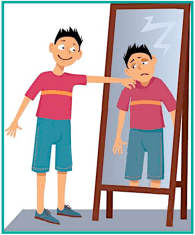
Misleading: Many illustrations & cartoons unfairly portray Is as awkward, misfits, fearful & unfriendly – which are signs of emotional damage. And Es often judge Is as isolators, but that’s caused by FoA, S-H & lack of Bs, not Introversion.
ACTUALLY – it’s not unusual for Is to be gregarious, helpful, charming, warm & prodigious talkers. It’s just that they need more alone-time than Es to recover from all that expended energy
)👄(
Using the O.C.E.A.N inventory, National Institute on Aging researchers Paul Costa & Robert McCrae expanded on the Big 5 characteristics, to include 6 facets within each dimension.
Introverts :
1. re. Activity Level – like to take it easy, are laid back & react slowly as situations develop
2. re. Assertivenesslet others lead the way, stay in the background & keep their opinions to themselves. Really don’t like to be pushy or demanding
3. re. Excitementneed peace & quiet, perfectly happy with daily routines. They make better roommates or neighbors since they prefer a steady, easy lifestyle
4. re. Gregariousnessare friendly but do just fine by themself, avoid crowds, preferring quiet activities such as reading or reviewing their day

5. re. Positive emotionare usually content without showing it outwardly. They’re not as likely to express strong emotions, but do feel them deeply
6. re. Warmthare hard to get to know at first, & can feel uncomfortable around people they don’t know well. They hold back in social situations, waiting to be approached, but may be the most interesting ones around

ACoAs
Most Introverts (Is) were not accepted by family, school & friends, the majority of whom are Es & think typical Is are weird or disobedient. But if only someone had understood their basic traits & been willing to accept & encourage them, it would have fostered self-esteem & made life much easier.

Now we can use this info helps us better understand & accept our mates, friends, bosses…., but especially ourself, so we can treat our WIC with greater clarity & compassion. And anyone who has an internally oriented son or daughter can help them flourish, no matter what age

• CHARTS : Illustrations That Are All Too Real For Is
posted by Anna Borges on BuzzFeed (8/12/15)

«
NEXT: Introverts = Intro #2

MBTI – Introvert vs Extrovert ANATOMY (Part 2)


PREVIOUS: E/I anatomy #1

SITE: “How to read body language…”


Es = Extroverts
Is = Introverts

1. NERVOUS SYSTEM  //  2. FACES

👁 👁 3. EYES
Some studies suggest that eyes of Es are drawn to warmer colors, like red & orange (exciting), while eyes of Is go toward cooler ones like blue & green (quiet). It may be related to Es finding their energy in activities, people & things, while Is are more energized from within.

There are 2 primary iris types – Jewel & Flower, modified by 2 secondary patterns – either Stream or Shaker. (longer descriptions). Personality styles are different for each, modified by other factors such as birth order, physical environment …..
Iris structure indicates a fundamental genetic tendency, rather than what someone has developed or learned throughout life. (shorter)

JEWEL: Thinking-oriented, analytical type // FLOWER: Feeling-oriented
STREAM: Kinesthetic type  // SHAKER: Extremist or movement-oriented

Using the structural indicators of a person’s heritage – irises of Is & Es were compared by looking at the ring of expression, based on variations in fiber density encircling the pupil. This physical ring suggests how far out from their core a person is psychologically willing to extend themselves (E vs I style), & how easy it is for others to pick up on their energy field.

For Extroverts – the ring is quite a distance from the pupil, (arrows), easily noticeable, showing a greater outward-orientation.
It’s considered a physical expression of the basic underlying E personality:
The wider the eye’s central aperture, the easier & ‘wider’ Es can express themself, since they’re more likely to extend themself to whoever’s nearby

With Introverts, the ring of expression is so close to the pupil that it’s much harder to find – one has to get very close & really focus to see it at all. This is considered a reflection of the I style – the tendency to be invisible – a familiar but irritating & perplexing condition (to Es). It’s especially noticeable in withdrawn ‘extreme introverts’. (see last ¶ in Part 1)

👍🏽 👎🏽 4. HANDS
Using the ‘BIG 5’ Dimensions, research exploring hand prints identified 6 different sets of ‘vertical’ patterns for Es & Is, consistent in both male & female groups. (Holland, 1992)
Recent studies have added a 7th vertical hand factor related to these dermato-glyphic lines, making it possible to separate all Es from all Is who were studied. Detailed phantom pictures made for the hand help to identify underlying biological mechanisms. (⬇ CHART info) (Also See Google Images)

NOTE that these finding represent averages – interesting but not definitive.
EXP:  Based on the charts, this female ENFJ has
• the long middle finger AND the head-line crease not quite touching the life-line of introverts, BUT
• the wider palm width of extroverts & the relatively straight unconnected heart-line of ambiverts                                                      

«
EXTROVERT hand indicators

Shape: • Shorter palm width, relative to breadth
• Hi mount of moon vs. mount of venus
Fingers: • short, relative to palm breadth
• Low 2D:4D digit ratio (thumb to ring finger)
Lines: • Sharply curved upward heart-line crease
• Heart-line crease connected to life-line

INTROVERT hand indicators are the reverse.

👄 5. LANGUAGE / Talking
People communicate differently because of the longer vs shorter brain-blood-pathway, which can lead to forming the wrong conclusions about each other, causing many misunderstandings
Es tend to engage by jumping into conversation, without enough reflection. Is are more likely to take the time to think, which can make them seem ‘slow’ or stuck-up

Es talk more abstractly, (“This article is interesting / Lets get some food”). Most are spontaneous, moving quickly thru their life, so are not as verbally accurate or detailed. People scoring higher in extroversion tended to use more words having to do with relationships

• Is are more concrete (“This article is very informative / Maybe we could go for dinner”). They tend to be more cautious (with words like: perhaps, maybe…), use more articles (the/a) – which refer to objects or events rather than people, & more quantifiable terms (#s, dates, times….)

Re. learning a second language, Es have the upper hand because they’re more willing to push whatever they know to the limit. Unlike Is, they take more risks in using what they learn – more willing to make conversation in the new language, in & out of the classroom.

NEXT :  Introversion, #1

MBTI – Introvert vs Extrovert ANATOMY (Part 1)


PREVIOUS
: Brains Overview

SITEs: Surprising things re our BRAIN 


Interesting:
Studies show that the average distribution of extrovert factors varies around the world.
EXP: people in Europe & the US score higher as Es than people from Asia

Es = Extroverts   //  Is = Introverts

1. NERVOUS SYSTEM (NS): The 2 branches (central, peripheral) produce the body’s involuntary functions – what’s normally not under our conscious control (circulation, breathing, temperature control, digestion).

a. Sympathetic NS response (Dopamine) = Fight or flight.
It produces a thoracolumbar outflow, from neurons starting in the thoracic & cervical areas of the spinal cord, mobilizing physical activities needed to deal with stress, potential /imagined threat, or actual /imminent danger (increased energy & cardiac output, dilating bronchial passages….)

b. Parasympathetic NS (Acetylcholine) = Rest & digest.
It produces a ’cranio-sacral’ outflow from neurons starting in the brain & lowest area of the spinal cord – responsible for the body’s ability to recuperate & return to a balanced state (homeostasis – conserves energy, increases intestinal & glandular activity)

Reminder: The RAS (reticular activating system) is at the top of the spinal cord – in the brain stem – essential to our alert conscious state. It determines the general level of arousal – indicating where someone fits on the extroversion-introversion continuum.
Broadly, the RAS in Is has a higher alert setting, making them much more aroused to start with, so need less input from the outside than Es do.

👩🏽 🧓🏼 2. FACES
Event-related potentials
(ERPs) are very small voltages generated from all brain structures in response to specific sensory, mental or motor events. (MORE…..)

Brain Fingerprinting is a new computer-based way to measure electrical brain waves reacting to words, phrases & pictures. It uses EEGs to identify the ERP known as P30o (P3) , a non-invasive way to evaluate brain functioning. This specific waveform is considered an indicator of human attention, i.e. how fast the brain notices that something has changed. It’s a reaction to decision-making, when doing certain tasks, or by a sudden change in the environment.   ( Dr. Lawrence Farwell)

One study was designed to see if Es are more sensitive than Is to stimuli in social situations (faces). Electrodes covering the parietal lobe of 28 subjects scanned for P3 waves.
Subjects were shown a series of male faces, & then every so often a female face. They were also shown pictures of purple flowers interspersed with yellow ones.

Those who had previously scored high for extroversion showed a greater P3 response to human faces, but no correlating reaction to flowers. It suggests that faces, & people in general, have more meaning to Es, which encourages them to be more interested in socializing.
Conversely, Introverts – shown the same series of images – had about the same level of P3 responses to both faces & flowers, suggesting their brains react to people about the same as to inanimate objects.

Another study focused on how the brain reacts to happy faces.
Research has shown that the amygdala ‘lights up’ in response to socially & emotionally meaningful images, & consistently so in reaction to fearful faces – compared to neutral ones.

But amygdala results in people looking at pleasant / happy faces was inconsistent. To account for that, Stanford scientists started by testing subjects on the Big 5 O.C.E.A.N. traits, specifically for Extroversion & Neuroticism, & then showed student volunteers pictures of fearful & happy faces, using brain scans.
FYI: Right amygdala generates ‘negative’ emotions like fear & sadness.
Left
amygdala can create both pleasant emotions, like happiness – & unpleasant ones.
FINDINGS
• The amygdala in people with high extroversion scores was “turned on” more by happy facial expressions, & more than to all the other ‘Big 5’ traits, but not significantly to other expressions, such as fear, sadness or anger.
It indicates why more-outgoing people find social situations pleasurable.

• Volunteers with test scores slanted towards Neuroticism (tendency to anxiety, worry or insecurity) had no significant amygdala reactions to any of the emotional expressions. This suggest why up-beat interactions are neutral or unfulfilling for Is – but not WHY some amygdalas under-react.

Reminder: Is are by definition not neurotic, but because of their normal inward-focus, when they are ‘wounded’, some are said to suffer from ‘extreme introversion’ (severe shyness or social phobia) – debilitating conditions preventing them from forming meaningful relationships.

NEXT: E vs I Anatomy #2

MBTI: E vs. I Brains – OVERVIEW


PREVIOUS: E vs I brains #2

SITE: ‘The Brain that changes itself” – Norman Daidge, M.D.


The Brains Behind ‘Grey Matters’   ↗️ Grey Matters Columbia University (CU), a joint Barnard and Columbia literary journal that premiered in spring 2021, seeks to make neuroscience more accessible to the public. #


Introverts & Extroverts have different levels of arousal – meaning the extent to which our minds & bodies are alert & responsive to stimulation

«
Es have a lower basic rate of arousal. They need to work harder to be up to the same ‘normal’ state that Is might reach quite easily, because Is‘ rate of arousal is much higher.
«

«
Hedonic tone
⬆️ is the degree of pleasantness or unpleasantness associated with a given subject, state or circumstance. Also known as positive or negative valence.

NEXT : E / I  ANATOMY, #1

MBTI – Introvert vs Extrovert BRAINS (Part 2)

PREVIOUS: E vs I brains #1

SITE: Surprising Brain facts

Es = Extroverts   //   Is = Introverts

FACTORS re. Biological Differences between I & E brains (cont.)
2. BRAIN QUADRANTS // 3. BLOOD FLOW – Front vs Back

4. Blood Flow & NEURO-TRANSMITTERS
Blood of Es & Is brains travel on different pathways in response to a wide variety of stimulation. Each style uses a completely different neurotransmitter, which take a different amount of stops in the brain along the way to processing ideas, info, experiences, interactions….. These chemicals direct where the blood goes, & regulate how much of it flows to various centers, influencing what parts of the Central Nervous System (CNS) are turned ON.
✳ Extroversion is linked with energy-spending dopamine/ adrenaline, while Introversion is linked with energy-preserving acetylcholine.

Energizing: Dopamine (D) is the ‘activating’ transmitter which produces good feelings that come from social interaction, physical activities & passion. The D-system affects how we learn & respond to novelty. Setting off an external response, it motivates us to go after situations that are rewarding.

The amygdala & nucleus accumbens (which encode new motor skills) are important components of the brain’s D-reward activation, responsible for processing emotional stimuli, & giving Es a rush when trying something highly exciting. And D’s sidekick Adrenalin makes more D when released from the sympathetic nervous system, needed for fight or flight reactions when we’re faced with real or assumed danger.

Calming: Acetylcholine (A) is the ‘inhibiting’ transmitter that also helps us feel good, but as a relaxing influence. When set off, it activates the parasympathetic nervous system, along with  the hypothalamus, providing an internal response that lets us slow down, to maintain or safeguard energy. A is like D’s alter ego, creating a sense of satisfaction & contentment, & plays a role in dreaming & imagination.

Acetylcholine fuels our ability to think deeply, reflect & focus for long periods of time on one thing. It rewards mental concentration by giving hits of ‘happiness’ – but not the charge of glucose & oxygen needed for physical energy.

Extroverts & D
 Research has shown that Es have more Dopamine receptors in their brains (than Is), so they need much more of this chemical to fill all those ‘slots’. More activity means producing more D, with then pushes Es to continue social interaction, activity & excitement.
Interesting: People born with a longer D-receptor gene are more likely to become thrill-seekers & adrenaline junkies – if stressed for too long.
Introverts & D
Is
 have fewer receptors in the same area that generates D, the substantia nigraso they need a very specific limited level of dopamine, but a greater amount of acetylcholine – to be comfortable. A normal amount for Es will easily be too much for Is, which can eventually lead to agitation, depression, or mental illness if Is don’t get enough stress-relief.

5. CIRCUITS
Both styles
respond to incoming info from activities picked up by the spinal column (SCS). From there, the I’s brain-path accesses memories or information. Es brain-path mainly accesses sensory info.

➡️ For E’s – when activities stimulate their brain, a Dopamine-response is trigger . The pathway makes a 5-stop circuit (shorter & less complicated) which runs through areas where taste, touch, visual & auditory sensory processing take place.

#2. Data from the RAS goes to the Hypothalamus (thirst/ appetite / temp) switching on the ‘Full Throttle’ system
#3. a relay station amplifying the stimuli
#4. the emotional center – & Es is associated with actions, the motor area being lit up
#5. connects movements to—> short-term memory access, to—> the center for learning, as well as processing sensory & emotional stimuli

↗️  For Is, activities trigger Acetylcholine, needed to balance out any potential or actual overwhelm. It makes a 7-stop loop traveling through areas of the brain dealing with info, meaning, planning, remembering & problem solving. This uses 40% more energy than the extrovert-dopamine circuit. 
#1. Stimuli enter the RAS at the top of the brain stem –  less active in Is
#2. data is interpreted & the brain placed in ‘Throttle down’ mode
#3. is the relay station turning sensory signals down
#4. where speech & activates self-talk is planned
#5. selects, plans & chooses ideas or actions. Forms expectations & evaluates outcomes
#6. is for environmental awareness & info sent to long-term memory
#7. the emotional center where feelings are attached to thoughts

⬅ In high activity situations, the 2 styles are opposite, because different brain areas are activated.

NEXT: E & I body parts

MBTI – Introvert vs. Extrovert BRAINS (Part 1)


PREVIOUS: E vs I brains #1

SITEBRAIN BASICS: Know your brain
NeuroScupting – to relieve anxiety
• Lisa Wimberger Explains Neurosculpting
Es = Extroverts  // Is = Introverts


FACTORS
: As already indicated in previous posts, no one is totally one extreme of the other.
However, there are very real biological differences between the brains of Introverted & Extroverted people. Advances in neuro-chemical research show they are more than just psychologists’ observations, but rather rooted in science. Several physiological components contribute to the overall variants.

1. The ARFS : In 1967 Hans Eysenck suggested that the disparity depends on our Ascending Reticular Formation System (ARFS) at the top of the brain stem. It connects the major nerves of the spinal column to the brain – sorting out millions of stimuli coming in every second – letting in the vital ones through, to alert the processing mind.

It’s purpose is to insure the brain receives an optimal amount of stimulation to be happy – at all times. We regulate that system by socializing. Too little & we’re bored, too much & we’re overwhelmed.
Is already have a fairly high level of brain-stimulation, so it doesn’t take as much external activity to be satisfied. Es start out with a lower level of stimulation, so need a lot more social interaction to feel good.

So, behavioral differences between Es & Is are due to predispositions in cortical arousal – the speed & amount of the brain’s activity. External circumstances together with these predispositions determine how a person responds to their experiences.

In Es the ARFS is ‘tight’, (Low arousal) making them less reactive to events, making them crave more input. (More….)
For Is the ARFS is wide open & so processes more incoming info per second (High arousal). Their risk is getting too much input, which drains them. EXP: Is are more likely to have ADHD because of a higher sedation threshold. 

Interesting: Some consider the ARFS the gateway to consciousness – an awareness of Self & one’s environment. If we mentally form a clear intention about something we want (specific goal, dream, need….), it is automatically programmed to filter for it!  BUT, damage to it from long-term over-stimulation (constant trauma) causes PTSD.

2. BRAIN QUADRANTS: The specialization differences between Front (Cerebral mode) & Back (Limbic mode) is much more pronounced than the differences between the Left & Right. Most of the areas that initiate action & speech are in the front, while the back gathers & processes data. (More def…) (4 Types def…)

Left & Right quads control different aspects of thought & action:
L1 = Working memory. Rational Self: analytical, defining, factual, prioritizing
L2 = Participation. Safekeeping self: experiencing, detailed, maintaining, organized, structural
R1 = Assimilation. Experimental self: conceptual, envisioning, interpreting, strategic & unorthodox
R2 = Motivation. Feeling self: harmonizing, interpersonal, relating, sensitive, social.

3. BLOOD FLOW – Front vs Back
Blood flow to any area of the body indicates its activation. A 1999 study focused on the differences between Es & Is, done by carefully measuring the cerebral blood flow in both groups, using PET scans. It found that:

• Introverts have more blood flow to their frontal lobes & anterior thalamus – causing more neuronal activity – than Es – the front of their brain highly stimulated by solitary activities – encouraging an inward focus.
Also, their premotor cortex absorbs external stimuli more quickly – more info coming in faster can flood the brain if not regularly processed. This may explain why Is need more private reflection-time, to analyze ideas & think things through.

• Extroverts get more blood flow to their temporal lobes, posterior (rear) thalamus & anterior (front) cingulate gyrus – mainly back of brain areas involved with interpreting sensory data, giving them an outward focus.

Interesting: A 2012 study of the prefrontal cortex (Fp), a highly complex brain region associated with abstract thought & decision-making, found that:
• People who identify as Is tend to have larger & thicker gray matter in certain areas
of the Fp, possibly because they devote more neural resources to abstract pondering.
• Es tend to have thinner gray matter in those same Fp areas, perhaps because they prefer to live in the moment (exercising other parts of the brain more).

NOTE: This is NOT a measure of intelligence but rather an indication of usage. Like our muscles, the more a body part is used the bigger it gets.

NEXT: E & I brains #2

ACoAs: PATIENCE vs Co-dependent Waiting (Part 3)


PREVIOUS:
Co-dep vs Patience #2

POST:  S & I: Healthy….(Part 3) Process, point #3.


HEALTHY PATIENCE (cont.)

Real patience :
is based on selfTRUST, an aspect of the True Self , rather than trusting others – too little or too much. This trust is the result of taking care of our needs & knowing what our destiny/ bliss/ passion’ is. It’s being willing to keep working toward them no matter how long it takes or how hard the path is to get there, believing we can last out the tough times.  This minimizes or eliminates envy & jealousy – because we have the right & power to provide for ourselves, so that needing to be Patient is not so frustrating

• requires a decent handle on boundaries, having learned what’s ‘my stuff’ vs. what’s yours – which can only come from knowing oneself well (inventories, Meetings, therapy, dreams, healthy adult mirroring….). Then patience is waiting to see what others can or are willing to do for themselves

• is working toward appropriate (do-able) goals, step by step, knowing it takes time to accomplish something worthwhile, knowing that some things take longer than others. (College was 4 yrs, meeting husband-to-be took going to singles dances for 7 yrs, Recovery – ongoing for the last 40 yrs!)

Real patience :
• comes from using our intuition, intelligence & experience to know when to “hold ’em & when to fold ’em” – letting things develop naturally
— Sometimes we just need to wait for a better (human) time, for a more appropriate location or person, for more emotional healing, for H.P.’s timing
— Sometimes we need to admit when something we want is not healthy, & let go of the original desire/demand, OR know when something is simply not possible – the way we want it – & then look for alternatives or change the goal

• is having realistic expectations – knowing how things actually work in the real world. This includes accepting that most setbacks are temporary.
EXPs: starting an online biz can take 3-5 years to become profitable
— calling a company for help or info usually takes 3-5 calls – long waits, no help, calling back, going thru several people – before getting THE answer or appointment
— having to wait for a physical injury to heal completely
— waiting in a line of any kind, a time to multi-task (context-switching, #3)……

• knowing what triggers our impatience – old childhood buttons from things that were done to us over & over – & still bother us, a lot!  Patience is a virtue because it requires self-control, so we don’t ruin things for others by anxiety & selfishness

It means accepting that we:
• can’t force an issue or project to go faster than possible – called process.   Planning, evaluation & measurement all take time
• don’t expect mates, children friends…. to be in the same place we are at the moment. Instead, we can continue our own life based on the principles of the Program (like Step 12, attraction not promotion) – allowing others their own timing
• not demand to be heard or understood in all situations & by everybody (stores, banks, service people…. loved ones…..)

BENEFITS
🍀 Reduces stress, minimizing anger & overwhelm
🍀 Develops understanding & compassion for others because we know what it takes to deal with life’s ups & downs
🍀 We make better decisions, avoiding as many mistakes, by taking the time to assess each situation, see the big picture, weigh the pros & cons, then choose the best option at the time

With patient, persistent effort, using everything in our Recovery tool box, we can apply the Serenity Prayer correctly & wrap ourself in love-energy as we wait for good things to come – while enjoying what we already have!

NEXT: MBTI – Introvert vs Extrovert BRAINS