Double BINDS – Escaping (Part 9)

escape DBs
I’M WILLING TO MAKE THE EFFORT
of finding a way out of this tangle

PREVIOUS: DBs – Part 8b


ESCAPING DBs – requires:

• flexible thinking – giving up either/or (B & W) limitations
• a capacity to see beyond the obvious
• being curious & creative, willing to take risks
• having the courage to let go of the past & it’s ‘training’

🌱Find your own ways to “leave the field of the DB”. Be creative.
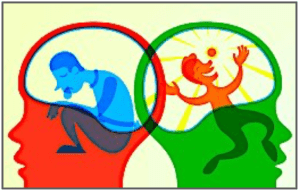
Use multiple visible & meta perspectives, which can make a difficult situation manageable. Distinguish between :
• ongoing life events (career – upper level meaning)
• a specific events (‘fight’ with boss – lower level) and
• the difference between them (the ‘fight’ isn’t going to end your career) you
Pick out positive parts of the DMs you can focus on & ignore the others: “Take what you like & leave the rest”, Al-Anon

🌱 Intense Emotional Attachment – The R’s anxiety of stepping outside the DB is the Fear of Abandonment – losing the symbiotic S&I from Sdependence on the S.

GOAL: become the center of our Adult universe (‘first position’):
• accept & love our Inner Child just as he/she is
• work to uncover our True Self
• practice emotional honesty
• own your strengths & accumulated knowledge

🌱 Doing vs Being – Separate your actions from your identity – they are not the same. We know this because there’s a big difference between how we act from damaged vs how we act from our Healthy Adult / Natural Self

🌱 Look for the Payoff – Our dilemma: while DBs really do trap us & we may complain bitterly about not ‘getting anywhere’, many ACoAs are so used to being stuck & uncomfortable they won’t do anything to change it. What’s familiar FEELS ‘comforting’ – & we hate feeling uncomfortable. SO – which is it? Are we comfortable or miserable in our DB world? Pick a side.

EXPWIC / ACoA ‘logic’ =: If I’m damned either way, that gets me off the hook. “I’m crazy & irresponsible because my hormones are out of whack OR I’m manic-depressive, OR just plain lazy….”
SO – I don’t have to do hard / painful emotions work, I don’t have to take care of myself & still get to be loyal to the family. Yipeee! – NOT

COMPROMISE – There are always options, & not all compromise is bad! AND not a sign of weakness. It shows you care about someone or something beyond yourself.
• We don’t have to like some that can make the needed shift, but if they help us get un-stuck, they’re worth it. If we stop seeing every situation as all-or-nothing, we often find at least the start of a solution.

Aristotle noted that doing ‘virtuous’ things isn’t fun at first, but can become fun once you get in the habit. And to create the habit we may have to push ourselves. Since many of us are not allowed to be self-motivating, outside help to get past the inertia can be the incentive to get our engine turning over

EXP: we might be given the DB: “Don’t be childish – do what you’re told!” MEANING:
1. act like an adult, AND at the same time
2. be a child & obey, sometimes sweetened with “Besides it’ll be fun / feel good / work out, once you get going”…..
Pick a side – or a 3rd option – & stick to it!

PARADOX – A positive use of paradox can also be an escape from a DB. The Inner Child loves to do the opposite of what it’s told. Right?
• Can’t sleep, but desperately want to?
Decide to stay awake all night, to remove the pressure. You may stay up as long as you want, OR —> just not having to will do the trick, & soon your eyes will close on their own
• Afraid to go to a party?
Decide to only stay for 15 min & then leave. Removing the pressure of having to be on & being acceptable allows you to go, & maybe even enjoy it enough to stay a little longer. Or not. (From “No way out? 3 ways to help….” )

NEXT:  DBs # 10

Double BINDS – Verbalize (Part 8c)


PREVIOUS: Verbalizing (Part 8b)

SITEs: “Psychological Edge : Own your Assertiveness

✦ Deconstructing Double Binds

❤️ SPEAK UP (Parts a, b)
1. Say what you HEAR and OBSERVE
🔆
D. Binded by OTHERS

2. SAY WHAT’S HIDDEN

〽️ DB-ing OURSELVES: We started out trapped by family experiences, then continue trapping ourselves because of the pain we don’t want to admit to or confront. (See DMs – Part 8b).

👩🏽 Remember – we’re human, with many of the same emotions & beliefs. When we speak our worries out loud, even if we think they’re trivial, it gives people around us a chance to say “Me too!”, which they may never have been able to do before. Now there’s 2 – or more – who understand, can commiserate & be supportive!

Start by identifying what you need & give yourself permission to do, to have or to feel it, even if others around you don’t agree. List all the things you want & don’t want. The contradictions will point out the DMs you’re telling yourself.

• Ask: “What do I really want in this particular situation?”
It may be one side of the DB, OR something completely different. List all the things you want & don’t want. It’s OK to be conflicted.say what's hdden

It’s also a way to sort out what has more weight.
• Do you want to go somewhere or stay home?
• Would you rather hang out or work on a project?
• See your family or go to a show?…..
Our personal DBs are about internal conflict – health vs disease, obedience vs disobedience to Toxic Rules, resentment vs letting go….

ADMITTING what we’re hiding from ourselves LETS us:get help wirh DBs
• talk to people as peers, rather than below or above them, or trying to go it alone
• be with reasonably clear-minded people who can help us face our underlying fears & confusion
• be more accessible (instead of invisible) to others, especially if we’ve been indirect or distant a long time
Saying what’s confusing will help them understand a little more about how us think & what we need.

RECOVERY EXP: In therapy Maria tackled the issue of feeling suicidal since early childhood, but never overtly acted on. She learned that the impulse partly came from her mother’s DMs:
A. “You’ll be the death of me – yet” (you’re a potential murderer, it’s only a matter of time, you terrible child)  – AND
B. “Of course I love you – you’re my baby!” (as long as you’re just like me – perfect! So don’t be yourself, ie. the Real You has to die.)

• Young Maria could never be ‘perfect’ (please mom), no matter how hard she tried. She was always doing/being something her mother couldn’t stand – because the child was not like her! By the time Maria was 10 she wished she were dead, but suicide was against her religious training.

• As a young woS & I man she ‘chose’ to date men who were not only emotionally abusive, but also physically dangerous. Maybe they would do it for her! But that never ‘worked out’ & she was left having to face the underlying problem

In terms of the DB, it came down to siding with her mother’s messages or her own sanity.
“Either she dies or I die”. Maria chose herself. Even so – her mother lived another 25 yrs, to age 90. No matter what – Maria didn’t have the power to kill her mother, and her mother had not succeeded in destroying her!

Trust your natural Resilience & Resourcefulness. Depending on how much S-H you have & how much you’ve been shamed for not ‘doing it right’, this may be really hard.  BUT it’s important for your Adult to believe “I know what I know” until the WIC can catch up.
These are not qualities we have to learn or work for. It’s something we’re born with as humans – & proof is that we’ve survived many traumatic events.
Self-trust will always demand courage, but that’s OK – we have a lot of that too.

NEXT : DBs – Escaping (#9)

Double BINDS – Verbalizing (Part 8b)


PREVIOUS: Double Binds (Part 8a)

SITE: NLP Logical Levels of Change

BOOK: Double Bind: A Guide to Recovery and Relapse Prevention for  Chemically Dependent Sexual Abuse Survivors

❤️ SPEAK UP about the Double Bind  (cont)
🗝 LANGUAGE components

1. Say what you HEAR and OBSERVE

🔆 D. Binded by OTHERS : When we speak up, some things can shift, if not in the relationship with the S, than for ourself – which is empowering. We can stand up for our rights, & say what we see & hear:
EXP a : “I’m confused! Can we slow down & figure out what we’re really talking about? You’re sending me 2 messages where one cancels out the other.
SO:
a. You say you love me, but in the same sentence tell me you can’t see me / can’t help me out / can’t go with me…. because you’re sooosay what you seeo busy.

If I say it doesn’t feel like you care about me, you ask how I could say such a thing
If I try to explain it, you get angry, insulting & belittling meSO – there’s no point in responding.”
> OR
b. You say you love me, but then you yell, call me bad names, support others against me, blame & shame me.
If I say it doesn’t feel like you care about me, you ask how I could say that
If try to explain it, you get all hurt & victimy. SO – there’s no point in responding” (More ….)

EXP b: “Please say something that will agree with your body language and facial expression”
• Right now you’re tense & frowning, but say you’re happy to see me. Which is it? Pleased or anxious? — OR
• Right now you’re insulting me but you’re smiling. Those 2 things don’t go together. What are you angry about? Be honest or don’t say anything!

✳️ TALKING to the Sender:
• If the S can’t or won’t talk the problem through with you – at all – work it out with someone else
• If they blatantly deny your observations & feelings, don’t second-guess yourself. Stick to what you know – then you’re free &  clear

• In some cases they may be willing to admit they’re being confusing / controlling, genuinely not realizing what they were doing. That’s good, but they may still not be able or willing to change
• If they are willing to listen, you can state your need for clarity & re-wording – as a wish, & as a desire to eliminate obstacles in your relationship

✳️ USE Re-Framing on Senders  (See Part 8a)
As we make the effort to avoid playing the DB game (DMs, Part 3), it’s important to recognize the S’s reactions when we oppose or ignore them:

• Re. themself: ”See how good I am”.
They’ll strongly protest that they’re not appreciated for the benefits they provide you / society. They may tearfully wonder why their benevolence goes unnoticed or undervalued, & ask to be understood as an active agent of ‘good’.
DO NOT fall for it!

• Re. others: “See how bad you are”.
The S will try to strike fear into the ‘closed heart’ of an R who mentally or physically wants to get out of their clutches, accusing the R of being out-of-control. And with fake alarm, pointing out the one who opposes them (R) to anyone who will listen, trying to enlist others in turning the resisting person around! (narcissist’s Enablers or Flying Monkeys = family members, co-workers, neighbors….)

• Re-framing lets us think of Senders as performing a serunmask trickvice – as gifts to help us grow. Their destructive talent is the ‘art of camouflage’, but a knowledgeable person is not fooled by this evil that masquerades as goodness. Stick with the winners & trust your gut instincts.

Since you can’t win with them anyway, don’t try to placate them or explain yourself!, nor be forced out of Abiding, even though the extremes of Fight or Yield are always available. (Changing DBs, Part 12)
“Being happy is the best revenge

NEXT: 〽️ D. Binded by OURSELF (Part 8c)

Double BINDS – Verbalizing (Part 8a)

say what you mean SAY WHAT YOU MEAN
but don’t say it mean!

PREVIOUS: Double Binds (# 7)

SITEs: Escaping from the BD
“Double Bind Insults”


❤️ SPEAK UP about the Double Bind (DB), because “You’re only as sick as your secrets.” (Al-Anon). DBs can only control us as long as we deliberately ignore our own contradictory beliefs and their contradictory messages (loyalty to toxic family, not trusting our perceptions….), or keep them out of unconsciousness altogether.

🗝 LANGUAGE components help us become aware of embedded “thought viruses” in communication distortions, (Chart in #6a). To stand up to internal or external D. Messages which put is in a D. Bind, we need to know something about the way people express themselves.
✅ Congruent communication – (matching)
All parts of the communication are consistent, agree with each other, fit together, make sense.
But if what you’re ‘Receiving’ is not self-congruent, make sure you do not participate in the S‘s game of control, so you can point it out the best you can
(Communication outlined – many types)

Meaning
Listen for obvious or subtle contradictions in what someone says – or you say to yourself – often in the form of CDs.
Where’s the focus? Is the speaker – or you – talking about Thoughts, Emotions, or Actions?
Do the statements make sense? Are there obvious & hidden meanings?
EXP : What’s being implied when someone says “Even Jimmy got an A on that test!”?

 Levels
The function of each level of meaning is to synthesize, organize & direct the interactions on the level below it (ANIMAL – higher, vs cat // Forrest vs tree). Processes on a behavior level are different than those on a mental level.
EXP: Tying someone up would stop them from physically taking revenge, but not from continuing to plan it. In fact, it will often
encourage it. (MORE….)

Learn to discriminate between messages directed to different levels of experience, which automatically helps distinguish different levels of distortion (DMs, #1)
EXP of LEVELS, from highest to lowest
(1) identity (2) beliefs & values (3) capabilities (4) behavior (5) environment (6) spiritual = a type of ‘relational field’ that forms a sense of being part of a larger system beyond one’s individual identity.
EXP: “It’s a sin to lie” (2)
but “Don’t tell dad what I bought today” (4 or 6) = implied lying.

Meta-messages – a special type of communication, info provided that can be unspoken but always implied, which the R picks up on but can’t prove.
These come in the form of non-verbal signals – tone of voice, body language, vocal sounds (sigh, grunt…) or facial expressions – which contradict the spoken words (incongruent), sending a D.Message

Notice the small visible changes in unspoken cues when someone’s talking (a frown, inappropriate smile or voice tone, clenched fists, stiff posture …)
IF they’re at odds with the words being spoken. EXP: ACoAs are notorious for telling horrific childhood events while smiling, even laughing!

Paying attention can help identify mixed messages by tracking & sorting various types of verbal conflicts. It will free us to respond differently to Metas that confuse, reducing the power of the DB, & possibly allowing us to give the other person feedback, if desired & appropriate.

ALCOHOLIC RULES: don’t THINK, don’t FEEL, don’t TALK
ACoAs stay trapped in DBs when we hide our fear – from shame, S-H & feeling crazy, assuming others will laugh at or belittle us, cut us off…..

Instead, questioning our beliefs & talking about them weakens the hold DBs have over us.
We can’t afford to let fear & shame stop us! Rather than being lonely & passive victims, speaking THE ‘truth’ (not just our personal beliefs) lets us actively help ourselves, by not isolating with our emotional pain & mental confusion.

• Given the nature of D. Binds, it’s absolutely appropriate & necessary to need other people’ perspective to help us sort out the mess – those few we know to be safe & not caught up in the dilemma we’re fighting to escape. At the very least they can provide company & encouragement! “A burden shared is a burden halved.”

NEXT: DBs – Verbalizing (Part 8b)

Double BINDS – Re-Framing (Part 7)

sharng food
I CAN SEE THIS ‘MESS’
in a whole new light! 

PREVIOUS: Double Binds (Part 6b)


RE-FRAMING (NLP)
• A frame is the focus of attention we give to something (DBs #4a & b).
❖ Re-Framing (R-F) assigns another meaning to any upsetting situation, which helps us identify, interpret & respond to it in new ways.
It’s a powerful tool for solving problems based on assumptions that insure stuck-ness. (See ‘AGREEMENT Frame’)

• Dealing with DBs requires making cognitive leaps by using a broader perspective, by putting toxic communications into a larger context. While re-framing by itself seldom resolves a problem, it offers a way to “softening it” so a solution can be uncovered that’s acceptable, if not always always liked.

Re-framing asks “How can I think about or respond to this differently?”
This shift leads to self-empowerment, which leads to higher functioning & satisfaction, taking us from no-win to no-lose. (MORE…)

ACoAs are used to feeling trapped (‘Learned Helplessness’), but eventually in Recovery we can come to value the inherent freedom of dealing with OR resolving DBs. (also: Seligman – slideshare ). While we originally experienced DBs as a horrible trap, we can now see them as opportunities to choose what works for us.

As adults we have access to many different feelings (Es) & perspectives (Ts) to life’s events – like how each of us grieves a death differently, or how we show love. This means we can’t be “wrong” when expressing our True Self.
★ Damage is the same for everyone, but our essence is specific to us, so we can learn about & pursue our own style! (Grieving & DBs)

TYPES of Re-Framing
🧩 Context
Figuring out where a ‘problem situation’ or reaction would fit better – the context most appropriate for it, that would make it useful, an asset or skill
EXP: Dancing in the isles in a conservative church / synagogue / mosque would be severely frowned on, but not at a Pentecostal or African-American Baptist church!
🧩Content
Shifting the focus, either to a different part of the problem, & asking: “What else could this mean?”
OR seeing that the same situation can have a variety of meanings – good, bad or different

EXP: Someone was frowning ‘at me’. Were they annoyed with me? OR maybe they were :
• worried about a loved one
• thinking about a problem to solve
• looking at someone/ thing past my shoulder that upset them….—> none of which had anything to do with me!

🧩Value
Changing the meaning of a word or term, often done in marketing, where the same product is given a totally new purpose, a different use &/or presented to new markets.
It can also be the way a phrase is accented, as in the picture
EXP: Many pre-Christmas retailers will say they’ll help you “Pay less” with special deals, but the Berlin lingerie store Blush recommends a ‘smaller’ holiday gift: “Make your loved ones happy with less!”

DB QUESTIONS
Sooner or later we may run into someone who loves to ask unfair or impossible DB Qs – the kind that try to force the answer the (S) wants, no matter which way you answer.
Unless we can step outside the Bind, we’ll be in a catch-22 – angry & possibly humiliated.
These Qs are usually made up of 2 parts: Reference to a ‘bad’ thing or an assumed action PLUS the issue of frequency (★ MORE…. )

The S starts with an accusation OR assumption about you, then asks if you’re ‘still at it’ or ‘will be doing it’.
By framing the Q as closed, you’re expected to only give a Yes/No or other one-word answer, without a chance to address the actual topic
EXP: “Are still lying? / Have you stopped beating your wife? / When do you want to help us? / How much money can you contribute?”….

RE-FRAMING: The only sane & self-respecting way to handle this kind of verbal trickery is to treat it as if you heard an open question, so that you respond to the underlying assumption rather than the closed question.
EXP: “What makes you think I’m a liar? / I’ve never beaten my wife & never will / I don’t have time in my schedule to help / I’ve already contribute all I can”…. (Open vs Closed Qs)

NEXT: DBs – Part 8a

Double BINDS – STAYING AWAKE (Part 6b)


PREVIOUS: Double Binds (Part 6a)


📣 IMPERATIVE
❗️ VERBALIZE
CHART

❇️ TEASING OUT Double Messages (which lead to DBs)
They’re not just very confusing, they’re devastating – as long as =
= we don’t recognize ‘craziness’ when we hear it, AND
= try to make sense of another person’s over-reaction or distortion of reality, which never has / had anything to do with us.unraveling DBs
Without a clear understanding of LOGIC (mental clarity), & still believing we’ve done something wrong – we’re kept under the Sender’s mental / emotional spell.

EXPs of power-less people
Children : threatened with punishment for speaking about abuse or bullying. BUT If they don’t tell, the abuse continues.
Women can be penalized in the workplace for lack of assertiveness AND lack of femininity, with no approved middle ground
African-Americans identifying racist words & actions are told to “watch your tone”, no matter how gently & respectfully they’re pointed out
(From “Step Away from Double Binds” ∼ Sonia Connolly LMT)

Re. ANGER 
1. If you’re consistently very angry or uncomfortable by the way someone talks to you,
they may just be mean, dismissive or unavailable.
2. But if you’re also very confused & ‘feel’ crazy, you’ve probably absorbed in the hopelessness of being put in a DB.

3. A totally different reason for being very angry at the Sender (E) comes up when you finally get what they’re really doing. This anger is not from intense frustration but rather that your ‘new’ awareness has causes a crack in some deeply held denial about them, which you we’re ready to face before.
You can tell, because this emotional reaction (E) does NOT include mental confusion (T). It’s clear. it just hurts!

The IFs
👶🏼 In any case, first ask your Inner Child what it’s saying about itself. If you hear any form of self-bain greementlame, (“I can’t do anything right, I’m such a mess….”), the WIC is definitely agreeing with the family’s Toxic Rules.
However, if you’ve been subjected to a DB, the WIC is twisting what it heard, using it against itself rather than hearing the twist in what the other person actually said / meant

🧔🏻 If you do catch on, then check in with your Logical Adult ego state for a rational evaluation of what is being said. It’s absolutely OK to ask some healthy people to help you clarify & verify your conclusions
IF the Adult’s version of the DB communication is quite different from your WIC’s, and others agree that you’re NOT crazy – you can help your Child unravel the confusion & eliminate S-H

👨‍👦 IF the Adult & the Inner Child are both saying there’s something wrong with the messages you’re getting, you’re a lot closer to being free! The less internal conflict between parts of yourself (ego states) the easier it is to protect yourself.

IF you still feel emotionally confused & mentally lost, test the rules / demands / statements….for D.Messages, by first boiling them down to their underlying implications, to see where they’re contradictory, as in ‘DMs,#2’.
EXPs to get you started:
👀 “It’s a good thing that X is….”, AND “It’s a bad thing that -the same- X is….” (both must be accepted)
👀 “You should/must do/be X (sing)… to please me” AND “You should/must not do/be X (sing)… in order to please me”

👀 “You’re bad when you X….” AND “You’re good when you X…”
👀 “I love it when it is X….” AND “I hate it when it is X….”

teasingEXP: Someone teases you & your feelings are hurt. If you complain, an S-type will say: “You’re too sensitive. What’s the matter, can’t you take a joke?”
But, if YOU tease someone else, those same people will say: “That was a mean, cruel, vicious thing to say. No wonder nobody likes you.”
Lose-Lose Meanings:
A – You’re bad (weak) when you don’t like my teasing, AND 
B – You’re bad (mean) when you tease others
Said another way:
A – I disapprove of you when you’re over-sensitive – AND
B – I disapprove of you when you’re under-sensitive

NEXT: DBs, Part 7

Double BINDS – STAYING AWAKE (Part 6a)


IF I’M GOING TO GET MYSELF FREE

I’m going to have to pay close attention

PREVIOUS: Double Binds (Part 5b)

BOOK: “Switch: How to Change Things When Change Is Hard” ~ Chip & Dan Heath (review…..)

GETTING STARTED
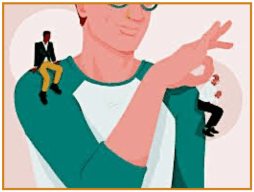
D. Binds, created by D. Messages, are like being called over to someone who is crooking their index finger, meaning “Come to me, my darling,” – but when you get there they slap your face.
Or being told, “Darling, tell me how you feel,” but then when you do, they sarcastically sneer that you’re being dramatic, hateful, over-sensitive, crazy, ridiculous, immature…. (More…..)

📣 IMPERATIVE : We can not afford to mentally blank out when dealing with controlling, narcissistic, double-binding people – which is what the WIC does when terrified & trying to disappear.
It will make a big difference to your well-being if you stay awake for how you feel around people who do the come-here-go-away dance or give other kinds of DMs.

🔺Identifying the specific D. Messages you’ve been getting is crucial so you know what you’re dealing with, & then figure a way out.
If one specific person you’re around is a S, you’re probably angry a lot of the time, but may not recognize it as that specific emotion. And underneath the anger – you’re really scared of displeasing or losing them – whether you can feel that deeper layer or not.

❗️VERBALIZE what’s going on. You’re only in a full Double Bind while the contradictory statements you’ve been subjected to remain unconscious. Once they’re articulated, they lose some of their force. Questioning AND objecting to the contradictions, & getting external support, can often help with our own internal distorted beliefs

EXP
of self-hating D.Message (More….. )  Also DM Part 7b)
a. Having many PTSD symptoms means I’m broken, worthless -AND-
b. Admitting to only a few symptoms means the abuse wasn’t that bad
c. I’m not supposed to notice what really happened, or help myself out of it

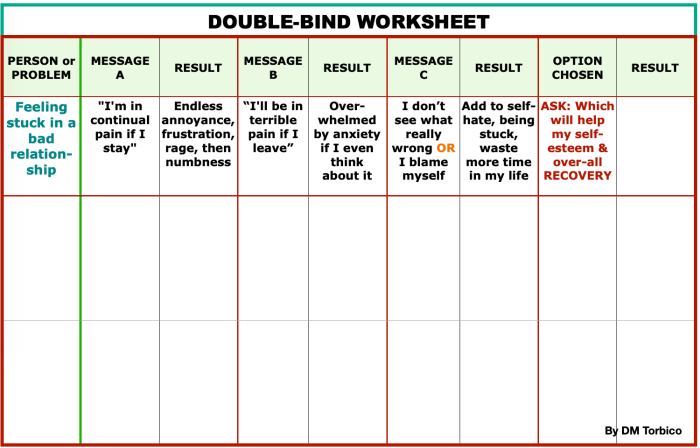
❓CHART: Use it for your own DBs, to figure out what were imposed on you by another person or institution. 📕 Expand & add columns as needed
Re. RESULTS: Internally – what’s already happened
Externally: what you fear will happen
Re. OPTIONS: The one best suited to your personality & current circumstances
Final RESULTS – of your choice, in T.E.A. terms

Fill in columns for each part of the Double/Triple BIND you’re in, in as much detail as you can. DO a little, then add as you figure more out. Include:
🔸 (A,B,C) Conflicting commands & Consequences, from yourself or others
🔸 Blatant & subtle Punishments
🔸 Any attempts to unhook yourself, successful or not
🔸 What happened – in yourself or from others / overall outcome
🔸 If still stuck, why you’re still in it (internal reasons)….
Step Away from DBs and post “Negative Benefits

• Since DBs are often stacked together, it’s necessary to unravel them statement by statement – like parsing a sentence. See how many parts you can identify in the following abusive, distorted manipulative communications:
EXPToxic Parent to actual Child
“Now you want my help! Hah! I never got into this kind of trouble when I was a kid. Surprise me by doing something right for a change, I’d like that!”
“You should be ashamed of yourself. Listen to me, you’ve got to take control over your life. Stop questioning what I tell you. I’ve been around a lot longer than you have, you know.”

EXP Authority to ‘Problem’ Person / Patient
“You have to accept that you are X (mentally ill, addict, out-of-control, raging, self-destructive…) before we can help you. We’re only doing this for your own good, out of love and compassion for you, even though you are X (the label).”

“When you say that — “we have the problem, that we’re doing this to suit ourselves because we don’t like the way you are — it only proves that you are indeed X (the label)”

NEXT: DBs, Staring Awake, Part 6b

Double BINDS – Options (Part 5b)


PREVIOUS: DB – Options (Part 5a)


OPTIONS in dealing with DBs (cont)
1. DO LESS
2. INTERMEDIATE option

3. PICK ONE: Eventually, as you get emotionally stronger & with the right support, the most common option is to choose one of the 2 opposing positions presented to you, & stipick oneck to it – the one you prefer & can live with.

EXP : SO – between “I encourage you to go back to school” and “I discourage you from going back to school”
– YOU choose the one YOU want, even if you understand & maybe even sympathize with the other person’s needs & fears (of abandonment or envy) ….

4. “And now for something COMPLETELY DIFFERENT” (Monty Python): Look for a 3rd alternative which suits you but does not deal with either part of the DB, like cadet James T Kirk did on the Kobayashi Maru test.

There may be a middle way between compliance & escape, especially important when you’re in a relationship with a S you’re not ready or willing to leave (boss, spouse, parent, adult-child….).

a. It can be done by directing the S’s attention to a point outside the DB.
In the medical example from ‘Double Messages’ Part 4b, instead of getting angry, defensive or wounded, one could say: “Let’s just focus on understanding my present symptoms & how to treat them.”

b. It can come from noticing a missing part of the DB – a loophole – as a possible exit from the trap.
EXP: Carla on Cheers always turned an insult aimed at her – back on the speaker, by changing the meaning of their words. No matter how obvious the slur, her response would usually be “So what’s your point?” LOVE IT!

EXP
: from the Calvin & Hobbs cartoon, using Tropes:images
> Teacher: “Explain Newton’s First Law of Motion in your own words”.
> Calvin: (writing) Yakka foob mog. Grub pubbawup zink chumble spuzz. (to camera: “I love loopholes!”).

c. It can be done by changing one part of the pattern. Helping yourself to feel differently about an apparent double bind can be a starting point to escape the claustrophobic prison of a ‘no-win’ situation

EXP : An artist was commanded to paint a flattering portrait of his one-eyed king. He would be executed if he failed to show a faithful likeness, but would meet the same fate if it revealed any imperfections in his majesty. All was well when the royal portrait was finally unveiled. It showed the king taking aim with bow and arrow – with the bad eye firmly closed.

EXP : A woman wanting to stop smoking but not gain weight afterward, was encouraged to find a food plan that would ‘protect’ her. She re-tooled her diet & exercise style first – & then quit the cigs. Changing one part of her life-pattern made room for other parts to shift more easily.

5. SLIGHT of MOUTH** – If physical detachment is not possible, the pattern can be dented if not broken, by commenting on or questioning the essence of the D.Messages leading to the DB.
EXPs of what to say:
• “Thinking in no-win terms creates no-win results. Is that your goal?”
• “What are you trying to accomplish? You can’t have both, so which do you really want?”
• “You only believe that because you haven’t considering the impact or consequence of what you’re saying”
• “Have you noticed that your statements put me in a no-win situation?”
• “How do you figure out or explain the difference between those opposing ideas?”
• “If those ideas belong together, do they only apply to you or to everyone?” (More)

**Slight of Mouth, a cousin of the magician’s slight-of-hand, was created in the 1970s by founders of NLP as a tool for persuading people to change their beliefs or actions. It’s a powerful set of re-framing patterns, consisting of 14 precise ways to speak to others, which can create or force a particular outcome.
EXPs of “Sleight of Mouth” patterns

NEXT: DBs – Facing ourselves (#6a)

Double BINDS – Options (Part 5a)

wash the brain 

I NEED TO SCRUB MY BRAIN
until I’m free of this poison

PREVIOUS: DB – Frames (Part 4b)

SITE: 4 Double-Binds psychiatrists use on mental patients


OPTIONS in dealing with DBs
Once you – the R – have gotten caught in a Double Bind (DB) you’re going to have to accept that ‘getting away’ may be painful & slow, especially if the S is important to you & you’re afraid of loosing them.

Remember, people who use DBs need to control others & are NOT safe, most likely a severe narcissist, & therefore not truly loving. That’s an illusion they create & you buy into.
🔴 Feeling angry, frustrated & ‘crazy’ – about yourself & toward someone else – are your HINTS that they’re pulling a fast one on you, whether deliberate to not. It might be necessary to move out of their range, which is not easy, but it’s also not the only option.

• Getting relief from a DB situation starts by recognizing & addressing the Conditions which are required to produce it (see “How It Works”= DMs #3 and DBs, #2).
THEN – know that you have to ‘chose your poison’ & that there will be some repercussions for whichever side of the D.Bind you reject (disobey).

You will need the ego-strength (self-esteem) to bear whatever reaction you’ll get from the Sender you’ve known a long time, which can include raging, insults, threats, silence, shaming…. Since Ss are control freaks, they’re more likely to hang on & keep trying to keep you hooked rather than dump you. If you stick to not playing along, they’ll either adjust, withdraw or separate / leave

1. DO LESS: At first, if the pattern of interaction with a special person is so deeply ingrained & your connection to this S is like your childhood & probably symbiotic – you’re likely to be too mentally confused (T) & emotionally scared (E) to make radical changes (A).

The best thing is to DO LESS of whatever they’ve trained you to do/be, & see what happens. Naturally it will be uncomfortable – not just because of their reaction, but from your own feelings of guilt & fear of abandonment. Remember that guilt is the E. that comes from breaking a Toxic Rule or law.

EXP: No matter how much effort Anna puts into cleaning & prepping for Mother-in-Law’s visits, the older woman will always find something to find fault about!
IMPLIED MESSAGES: “I disapprove of you when you haven’t cleaned your house ‘perfectly’” (you’re such pig) and “I disapprove of you when you think you’ve cleaned everything thoroughly (I can always find something you missed)

So, finally Anna decides to only do the most needed cleaning & storage, & let the chips fall where they may. (Maybe – give mom something ‘legit’ to criticize?)

2. INTERMEDIATE option
– If you’re young enough to not care what your parents say,
– OR know yourself well enough to have a sense of what works for you, you can alternate between the ‘options’ presented in the D.Messages, with the understanding & acceptance that you’re going to get flack either way, BUT YOU’RE OK

EXP a : SO – between “I disapprove of you for not socializing (dating)” and “I disapprove of your choice of boyfriends when you finally do”
– YOU can choose BOTH – when you want to go out & with whom, & when you’d rather stay in to read (or secretly text with friends)

EXP b : MASH’s Klinger tried to get out of the war on medical grounds, SO –
X: he pretended to be crazy – BUT was told that –
Y: only crazy people would want to be in a war
Result – he was never allowed to be discharged
NOTE: This is a DM – the word “crazy” being used on two different logic levels. However, Klinger did not fall into the trap. In an impossible situation he chose the ‘crazy’ that suited him & went merrily on his way.

NEXT: DBs – Facing ourselves (#5)

Double BINDS – Frames (Part 4b)

PREVIOUS: BDs – FRAMES (4a)

SITEs: 32 Double Binds

FOR the DATING Man : “Rock-Solid Frame Control with the Women You Like

Framing ISSUES
Frames define / explain the immediate moment & overall interaction – NLP’s frame vs meta-frame. Whoever is setting the frame is controlling the interaction by creating the context for everything that happens within it.
Double Binds (DBs) are basically a way of forcing a frame on the R that the Sender (S) wants to exist in an interaction

❖ ‘Normal’ FRAME CONTROL : The S’s legitimate degree of expectation-setting (what they want), AND the degree of the R‘s understanding of those expectations.
🔸Frames take time to develop since they’re based on repeated experiences, which form our assumptions about how things will turn out or how we think they’re supposed to be.

The effects of normal framing are like optical illusions. Do we see the glass half full or half-empty? Did you illusion& your ex ‘break up,’ or did he/she ‘dump you?’ You hear a noise at the front door – are you scared (you’re all alone) OR feel happy (expecting your lover)?….

◽️D.Binds rely on the Victim’s (R) desire to figure out & then try to obey what the Perpetrator (S) seems to want, who then thwarts that possibility

❖ PARTS : One of the ways we figure out our environment is by deciding what to include in each experience: which parts are relevant & which can or should be ignored?
◽️ D.Binds take away our ability to make those decision or have options

❖ WORDS : The specific words used, when combined with the setting (DMs – #1), create a feedback loop that guides & shapes our interaction with others. The choice of language for each type of basic frame is crucial, because its verbal images, story lines & emotions can evoke higher-level moral & theoretical frames.
◽️ D.Messages include lower level components but disregard logic & morality, leaving us at the mercy of the puppet master

VALID frames are made up of a group of logical & related ideas, & all the pieces must be known in order to understand the whole. (If you only hear one side of a phone conversation you can’t know what it’s really about.)logic frame

• Equally – to understand any one piece of info, the whole system (context) has to be understood. (If you only hear the word ‘whore’ you don’t know if it’s an insult, a metaphor, part of a story, a religious reference….).

• On the other hand, individual words can represent a whole category of information, so introducing one idea (a past ‘moment’) can form a complete picture from our store of memories & experiences. But the words, phrases & images have to be understandable & logical.

EXP: ‘Dope’ can mean a narcotic in one frame, & “that’s great” in another. In one frame both meanings are positive (by who’s speaking), but in a completely different frame ‘dope’ is harmful, & using the word to mean ‘great’ makes no sense (to ‘straights’)

◽️ D.Messages juxtapose opposing concepts as if they belonged together, making them both irrational. This misuse of language sets the stage for confusing & then controlling another person

❖ INVALID frame: In group therapy Lina complains that after only one year of marriage, her husband ‘unfairly’ divorced her, even though they love each other, because his teenage daughter from a previous marriage violently objects to their union.
The group is confused. Why didn’t she fight for her marriage? Why couldn’t they work it out? Why is the father so affconfusionected by the girl?….

What Lena LEFT OUT of her story – is that:
a) her husband is an active alcoholic, & won’t get ‘help’ of any kind
b) his first wife is Lena’s older sister, so she’s known him for many years
c) her husband’s daughter is also her niece, whom she helped raise from infancy!
No wonder the girl is upset! AND why Lena was in a BD!

◽️D.Binds are neither meaningful nor valid, because they create unsound frames that violate the rules of logic, totally slanted to only suit the Sender. (“How we think…)

NEXT:
 DBs (Part 5a) – Options