ACoAs OVER-Doing : CHILDHOOD Causes (#1b)

PREVIOUS :  CHILDHOOD Causes (#1)

POSTs : Review the 2 LAUNDRY LISTs (soft & hard)


OVER-DOERS / over-functioning (O-D)
😨 Hypervigilant
Over-doing children develop a hyper alert nervous systems from constantly scanning their social environment for danger.  With an increased sense of awareness & alertness, it becomes almost impossible to stay in the moment in their body, or to relax & rest.  As children & then later on, they’re either obsessing about the past, or projecting danger in the future, waiting for the next crisis.

🙀 Anxious
Given the many painful experiences that Over-doing kids go thru, it’s no wonder that chronic anxiety is common. Forever scanning for anything that can & will go wrong, they’re worried about what they can do to feel safer.  That leads to constantly being in fight-or-flight mode, elevating stress hormones like adrenaline, which ends up severely depleted, with many side effects, including a weakened immune system.

🫂 Blurred boundaries
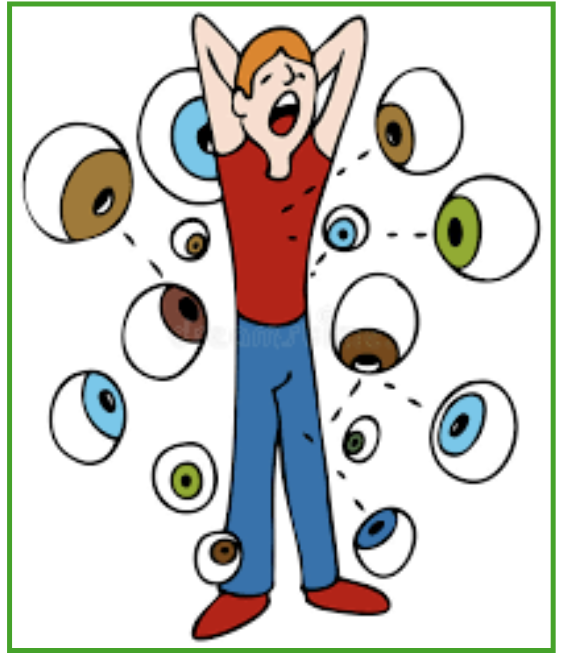
In dysfunctional families, any form of healthy boundaries is practically unknown. They violate each others’ space, privacy & rights.  Parents expect & demand the child take on the roles of adult caretaker, lawyer, nurse, shrink…. but only for themselves.

Spending much of their upbringing focused on other people’s needs, children don’t get to figuring out what they actually want, need or even feel. They never know where the PMES lines are, when others end & where they start.
IMP : to form & maintain appropriate Bs, one must first know what one’s needs are, neither of which Over-doing children are allowed. (ACoAs & Bs)

😜 Need to feel ‘in control’
Being in constant turmoil the child in a dysfunctional home becomes hyper-responsible as the only way to keep everything functional & hopefully to gain approval. Hyper-vigilance conditions the nervous system to assume ‘inevitable’ danger, physical & emotional.

That becomes the need to be controlling – taking over, managing people or situations (PPT) by anticipating others’ needs & trying to provide them as best as the child can.  Control is an attempt to ‘fix’ problems, as well as handle both day-to-day details & larger tasks – even trying to manage things out of the child’s control. The effort can feel physically calming – temporarily – so becomes compulsive.

🤐 Emotional Suppression
Children consumed by Over-Doing don’t have the space to be quiet & calm inside, to find out what they’re feeling emotionally, even physically. Some may be obviously angry, but most drown in terror (unidentified anxiety).  Any form of pain has to be ignored & suppressed.
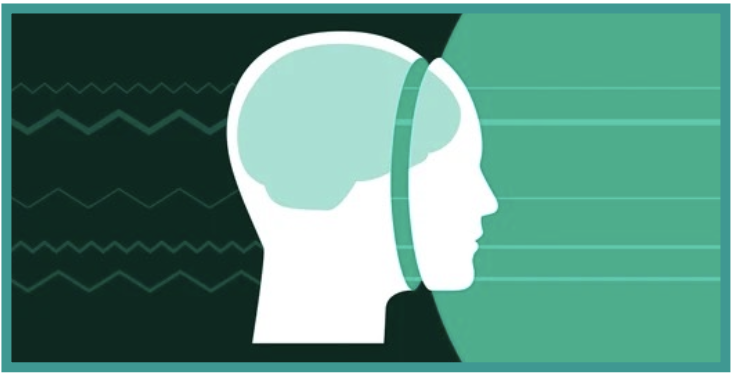
Children learn their emotions are never to be acknowledged – it’s just a huge annoyance.  But while never admitted, dysfunctional parents ‘bleed’ their emotions all over the place – anger, depression, worry, neediness.…   For the children, the message is “Do, do, do, but do NOT feel.”

😇 Over-Responsibility
Children become Over-doers because to survive they’re compelled to make up for the lack of parenting skills in the damaged adults round them. It’s made clear that any problem – big or small –  is somehow the children’s fault & their responsibility to fix. With limited knowledge & little or no support, they try to do the impossible.

They realized early on that ‘everything’ depends on being able to figure out how to stay alive, manage the chaos & neglect, & compensate for being unacceptable to their family.  So they use every ounce of determination & creativity to be ‘little’ adults, carrying on their thin shoulders all the burdens that should rightly be on the caregivers.

👣 Codependent
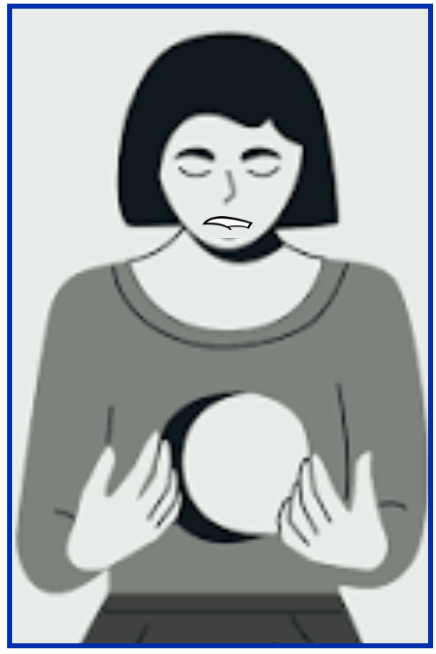
This is one of several defense mechanisms developed in unhealthy families, where there’s usually one adult who is intensely narcissistic & hard, & if there is another – are likely the softer co-dependent one, perhaps who is withdrawn, with low self-esteem. In this case, children will copy one or the other, not having the right to form their own identity . This leaves them very vulnerable, & one way to compensate is by Over-doing, trying to stave off loneliness, anxiety & a scary sense of emptiness.

🥸 High-achieving
This characteristic builds on perfectionism & wanting to feel in control. Fixing things at home then extends to school, & eventually to work & career. The rebel kid make a point of not doing well, even though they’re smart & creative too, but have decided “Why bother”.
“Book-smart” types do well in school, going as high academically as possible. They’re quietly trying to be totally prepared for all inevitable negative outcomes, or fulfill some demand & expectation of a parent so they’ll be recognized as ‘good enough’.

To cope with the lack of love & acceptance from family, they develop incredibly high standards & expectations of themself, & external rewards may soothe the anxiety – a little. But like any addiction, the satisfactions is never enough.  Over-doing has to be maintained at a fever pitch, until burnout stops the treadmill.

NEXT : ACoA UNDER-Doers
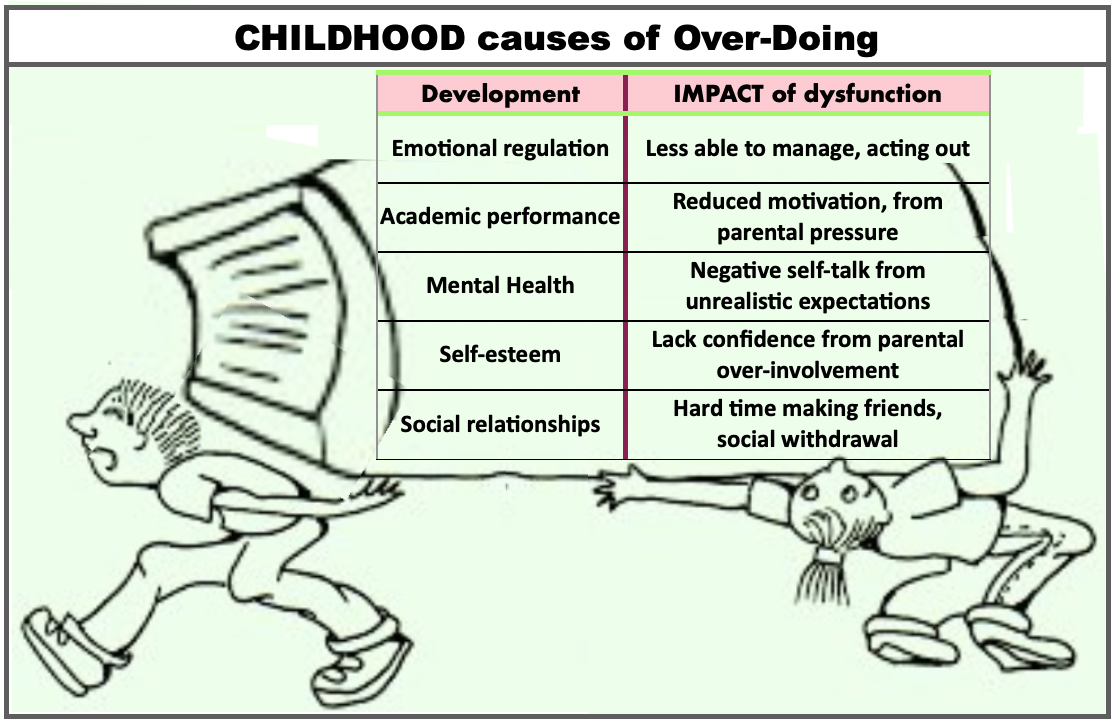
ACoAs OVER-Doing : CHILDHOOD Causes (#1a)

PREVIOUS :

POST : Toxic Family RULES  // HERO family ROLE


DEF: Over-doing (o-functioning) is when someone takes on emotional &/or practical responsibilities in life areas which are way beyond what is appropriate or expected for a particular role (parent) or developmental level (child), especially to the point of causing negative physical or psychological consequences into adulthood.

Over-doing can act like a dog whistle to under-doers, narcissistic, & other exploitative types. It’s a power-play. Damaging parents just assume children are to be used to their own advantage, They benefit from the child’s built-in deference & attachment to them.  These Kids are prematurely pressed into taking on adult responsibilities to meet the emotional needs & lacks of their parents & siblings.
So, many become domestic slaves, doing everything the adults can’t or don’t want to. The Over-giving child feels impelled by desperation & panic, not just expressing themself or being empathic ….

IRONY : Emotionally immature parents rely too heavily on their children yet also resent them. They’re ‘fed’ by the power dynamic BUT feel the child’s needs as a source of irritation & inconvenience . The child is experienced as a competitor for resources & attention, rather than as an innocent being  legitimately entitled to their love & support. (Role reversal ↗️ )
💥 This puts them in no-win double bind: the child must suppress their humanity to preserve attachment needed for survival.

EARLY LIFE ‘ACEs’ : Adverse Childhood Experiences
❤️ In healthy families, parents carry the emotional & practical responsibility for the household. Kids get to be kids — free to play, make mistakes, & be cared for.

🩶 BUT : Over-functioning (O=F ) in children comes with an underlying agenda, & is a learned behavior . It’s about adult-child imbalances, inappropriate expectations & excessive demands.

🖤 Years of early trauma** can lead children to become Over-doers as a way to manage the anxiety of not feeling accepted & loved. They try anything & everything to stay connected to a parent, no matter how abusive, hoping to get their approval – even permission to exist!  The terror is that if they don’t take care of the adult(s) – they’ll be thrown away as useless. I
It’s one of many forms of abandonment. To a small child this feels like life & death – & may be. 

** NOTE – Trauma is experienced in every PMES area, some more severe & long lasting than others
√ Abuse – all the painful things done to you or to someone near you
√ Neglect – all the good, helpful, wonderful things you did not get

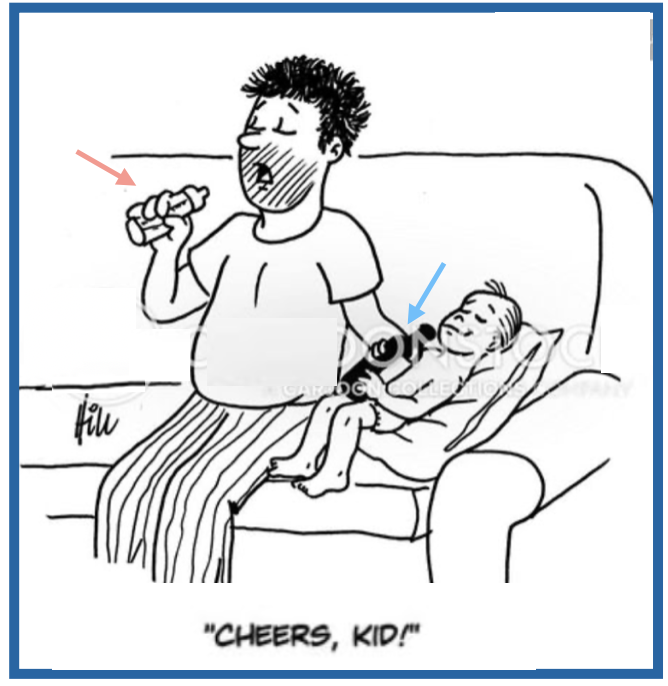
In dysfunctional families, parent-child roles often get blurred or even reversed. When forced into the caretake role (even as young as 3yrs old !) they’re said to be a parentified child,

This is common where the adults don’t provide many of the basic needs every child has, because of parents’ mental illness, substance abuse, severe narcissism …..

EXP :  if your parent is passed out drunk, can’t get out of bed from  depression or grief , is away a lot, divorced or dead…. the child will have to perform all the household & family duties – by themself – or they won’t get done.

👫 Being ‘parentified’ forms powerful & lasting – toxic – messages, not true but distortions, based on real lived experiences. EXP :
☔︎ If I don’t give more, I’ll be invisible
☔︎ I’m only a good person if I take away someone’s worry & pain
☔︎ My worth comes from actions that keeping things going
☔︎ If I don’t control & manage this, the family will fall apart
☔︎ It’s my job to meet other people’s needs instead of my own
☔︎ They need so much….. I don’t need a lot & I can do without

☢️ And, these beliefs are held in body-memory from those times when NOT Over-doing was actually dangerous. EXP :
♝ Being accused of being manipulative or demanding for having developmentally-appropriate emotional needs (fr0m birth – on)
♝ Harsh or cruel dismissal when bringing attention to oneself
♝ Shamed, mocked, or humiliated when upset or asking for help

SO – You became the over-doer. YOU :

🌪️ learned to read the emotional weather in the room so you could prevent a blow-up
🌪️ handled household tasks, (shopping, calling the repairman. even dealing with money problems)
🌪️ stepped in to calm down fighting or volatile parents
🌪️ took care of younger siblings while parents were distracted or absent….

NEXT : Childhood effects on Over-Doing (#2)

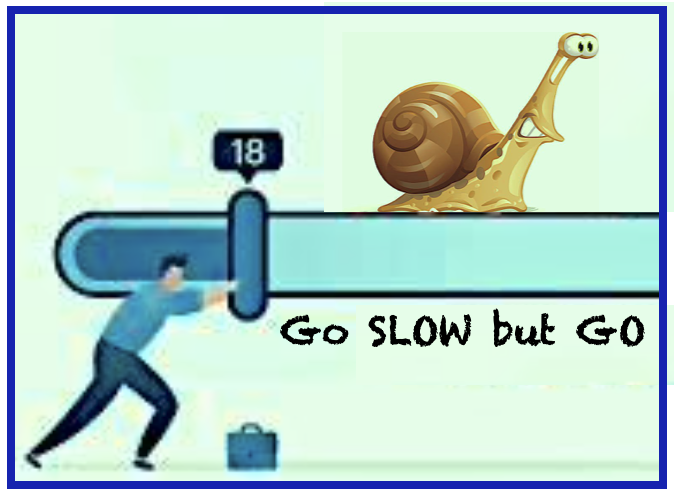
ACoAs – SLOW DOWN

PREVIOUS : Grief ADVICE

SITE : Tortoise & Hare Story – 7 Powerful Lessons


This topic is all about TIME. ACoAs come in 2 flavors, either —
√ wasting ‘free time’ not knowing how to self- motivate when no-one or nothing from the outside is pressing them to act (fear of Empty Time)
OR
√ filling in very second of the day with activity with no free time – ever, reacting to external pressures, real or imagined. (see Toxic Rules)

The Illusion of Faster
Slowing down may be the hardest but most urgent skill we can develop since the world is operating at warp speeds, so the challenge of keeping up can be overwhelming. There’s too much to be done, & all done yesterday.
The days are too short, the nights barely exist. Alerts, messages, deadlines, decisions. Screens blinking. Phones pinging. The only way to keep up is to run faster – and even if you do, you still fall behind.

However- If we want to build organizations, relationships & personal lives that are meaningful & resilient, we must reject the myth that faster is better.

The Myth of Multi-tasking
When we have a lot to do & not enough time, a natural response is to multitask. We quickly reply to emails while we’re preparing a presentation. Shoot off a message on WhatsApp while juggling a Zoom call. Listen to a podcast while skimming an article we need to read for a meeting later in the day…. It seems like we’re getting a lot done.

But we’re mistaken. Research consistently tells us that multitasking significantly reduces our efficiency. For example, a 2011 study found that people “who are forced to multitask perform significantly worse than those forced to work sequentially.”

EXCEPTION 1. These examples are all activities that require mental attention at the same time – therefore the warning is correct.
However,
limited multi-tasking is possible if one action is physical while the other mental – neither being too strenuous or emotionally tasking.
EXPs : Being on an exercise bike & watching a movie //  walking, ironing, knitting, cooking … while talking on the phone

EXCEPTION 2. to the rule : women’s brains are provided with the ability to multi-task for motherhood!

Slowing Down to Speed Up
When we try to do too much all at once, or try to do too much too quickly, we don’t do anything well. And, curiously, we do it more slowly, too. We need what we might call the practice of “slow attention – the practice of focusing fully on one task, one moment, one breath at a time. It’s the practice of being fully present for what we do.

When faced with overwhelming demands, with multiple competing claims on our energy & attention (alerts & pings…), the most efficient way of responding is to slow down. Instead of trying to do 10 things at once, it’s best to do one thing at a time, sequentially.

In the movie TOP GUN, Maverick – an elite Navy fighter pilot – says: “I feel the need. The need … for speed!”. However- there’s another actual famous saying attributed to the Navy SEALS : “Slow is smooth, and smooth is fast.”

Reclaiming Our Life
Beside managing our practical life better – what’s even more important is our humanity. Instead of being present to our feelings & experience, we drown in a sea of distractions & deadlines. When racing through life, we lose more than IQ points. We lose the connection to ourself,  just reacting rather than living intentionally, letting everything external dictate our agenda rather than choosing how we want to spend the very limited time we have.

To be truly present we need to slow down, not just performing like a puppet. If we stay in our body, with our current emotions & thoughts (PMES) it transforms how we relate to ourself & others. It allows deeper listening, authentic engagement & greater empathy so we’re able to genuinely connect.
For ACoAs – one huge benefit is that living this way helps us FEEL SAFER in the world! which is the WIC‘s deepest desire & need.

AND it’s a skill we can develop, one choice at a time.
SUGGESTIONS :
1. Counter procrastination by rejecting perfectionism. (Attend Al-anon regularly).
2. Limit Digital Noise – mute non-essential notifications & schedule screen-free time. Protect sacred spaces in your environment for in-person connection.
3. Anchor with recovery sayings from the Healthy Adult : I can handle what you Little One can’t & shouldn’t have to”.  Repeat  “I am enough just for today” or “Presence over pressure” during moments of stress. These aren’t just affirmations – they help signal safety to your brain.

4. Intentionally Single-Task . Choose one task & give it your full focus. Practice No multitasking. This reduces cognitive overload & increases fulfillment. You get to see positive results!

5. Pause with Purpose. Take 5 minutes a day to breathe deeply & scan your body. This helps move your nervous system out of fight-or-flight mode & into calm awareness.

6. Reflect Daily. Spend a few minutes journaling or simply asking: What mattered most today? (10th Step) This helps align actions with values.

NEXT :  ACoAs OVERDOING (1a)

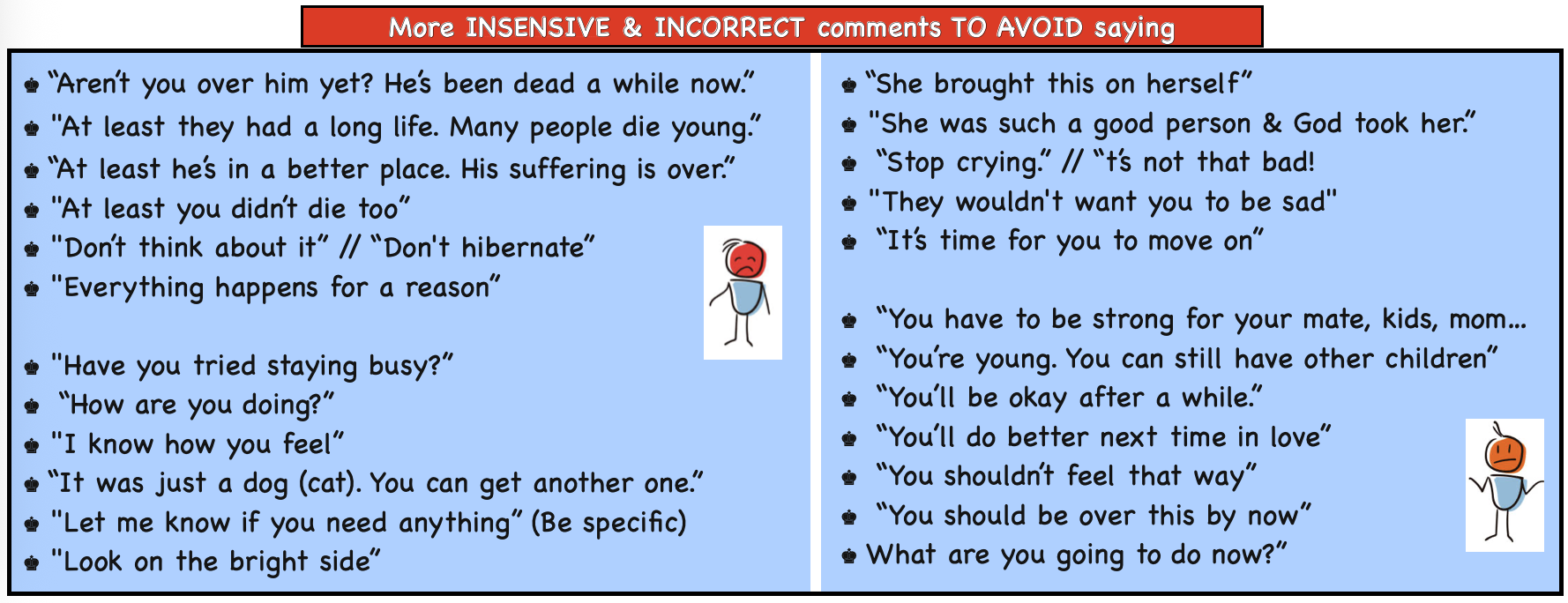
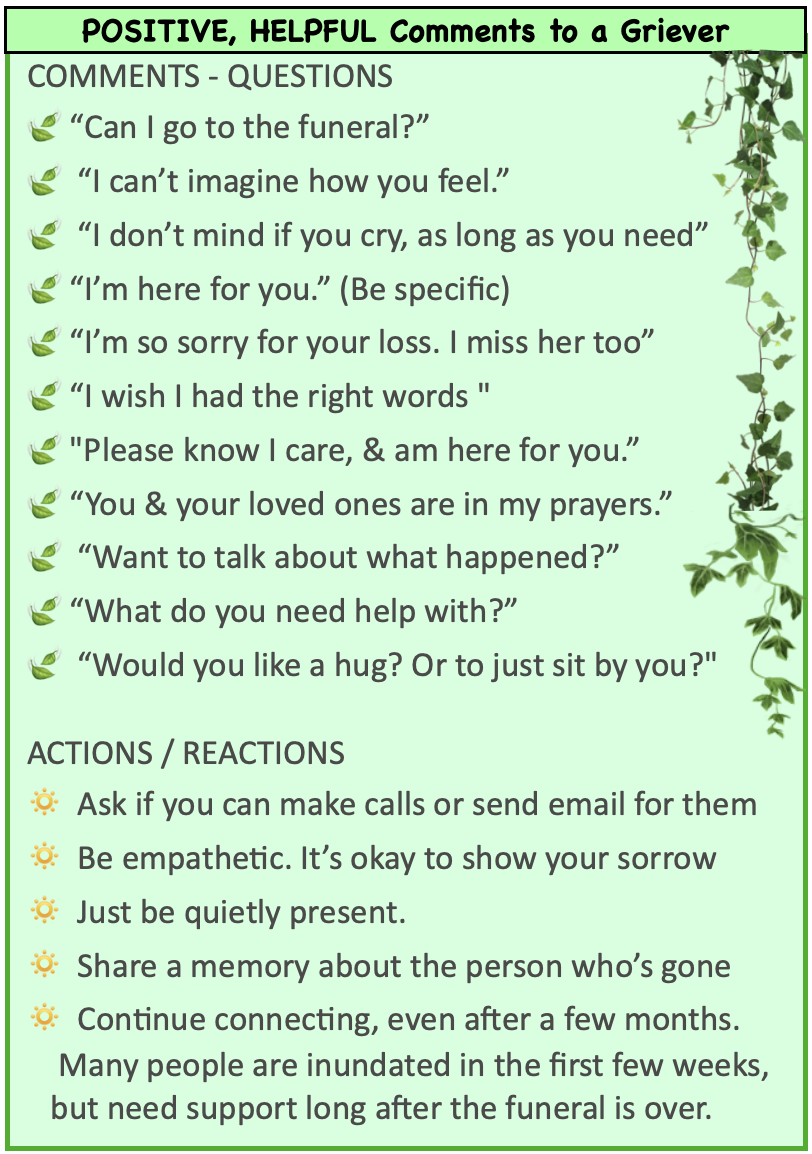
GRIEF – BAD & GOOD ADVICE

PREVIOUS : GRIEF – 

SITE :


1. NEGATIVES

♦︎ “I see you’ve moved on to the _____  grief stage”
The reality of grieving is that we will go thru the many stages higglety-pigglety, never in a straight line.
The common distortion is that you’re supposed to be on the right track to closure.
So – if the bereaved person doesn’t react at all, or slips back & forth between the stages, even overlapping them – they’re not on that imagine path to the ‘correct’ way of healing. They’re considered to be doing grief wrong, & somehow resistant, weak or stubborn.
If you treat them that way – you cruelly add stress to the already overwhelming pain of their loss.

♦︎ “I haven’t seen you cry, so I didn’t think you were that upset”
How dumb – like you can read the griever’s heart! Unfortunately – in our culture many people judge how well others are doing only by outward appearances (EXP: If you’re successful & happy – you must have grown up in a healthy loving family! BUT Recovering people know there’s no correlation)
This ‘rule’ then gets applied to anyone experiencing a loss – if they’re acting fine, they must be fine. It’s another way for observers to reinforce the message to not feel emotions, & definitely not to show the ‘unpleasant’ ones.

♦︎ “If you ignore it, it will get better”
No it will not! Anyone who has ignored physical signals for a long time that something’s not right – is later shocked to find themself with a long-term debilitating immune-deficiency or terminal illness. Suppressing grief emotions also have severe physical effects.

♦︎ “Time is a great healer”
While there is truth in this, saying it to someone who’s feeling miserable is insensitive & unhelpful. Grieving is a process and yes, it does take time. But how long is individual to the person, & will be affected by who has died, & how they died.

♦︎ “You’ll get over it”
There are some losses one will never be able to get over – like the murder of your child….. & other events that will take many years to recover from – like your home burning down around you, where you lose everything, especially devastating is losing the things that can never be replaced….. At best you’ll have to “learn to live with it”.

♦︎ “You must be strong”
This advice is meant to sound encouraging (like a pep talk) but again – it actually means you should NOT have any of those ‘weak’ things called emotions (about this horrendous loss).
You wouldn’t want to embarrass yourself – in public – would you? Besides, if you fall apart – I’ll have to take care of you, which I can’t/ don’t want to. So be strong!

«
2. POSITIVES
Whether you’ve been bereaved yourself at some point, or are with someone who’s just lost their soul mate, child, sibling or friend, there are things you can do to be comforting.

Sometimes silence is good.  Don’t feel the need to fill every moment with sound.  Touch can say just as much as words, sometimes more.  Simple actions such as making a cup of herbal tea, leaving a bunch of flowers….  or harder ones, like going with them to the mortician, to identify the body or to the memorial service. …. can speak volumes. You can’t take the pain away, but you can share a little in the acceptance of being human.
««
NEXT : GRIEF –

GRIEF – Helping to HEAL

PREVIOUS : GRIEF – & Children

POST :  “Resilience & Humor
📌 Developing Resilience : Spiritual, #2

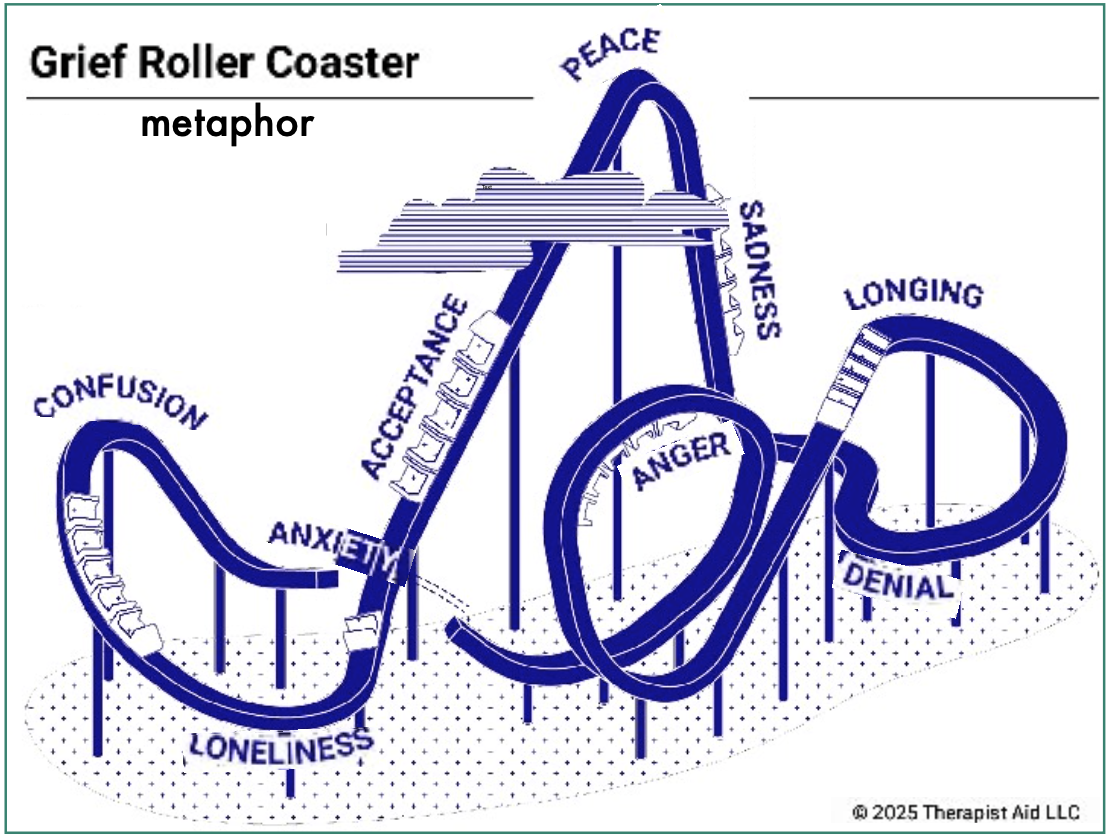
↗️ ARTWORK : Grief is a journey through emotions that can change from day to day, even moment to moment. These twists & turns feel unsettling, like being on a roller coaster.  Grief upends our life & makes us feel disoriented & directionless. Common are frequent setbacks & feeling lost.
But like being on a roller coaster, grief is manageable if we stop trying to control the experience, & surrender to the ride ⤵️ . With time, the right help & connecting to Higher Power, we eventually get to a better place.

1. For yourSELFto start healing from a loss
√ Attend group therapy : A trained therapist as guide & your peers – who are all going through something similar – will understand as no one else can. An excellent option if you want more friend-like experiences or are nervous about one-to-one with a counselor.

√ Be patient & kind to yourself : Because grief is not linear, and there’s no timeline for how long the process takes, life events can trigger layers of distress, so accept with compassion how hard grief-healing-tasks are.

√ Get fresh air daily : Being outside in the sun (when possible), taking a 30-minute walk & moving around at home (instead of doom-scrolling) – resets sensory experiences that can help with circadian rhythms, that will clear & calm the mind.

√ Journaling : Put your thoughts on paper, as long as they’re honest, unsanitized & without self judgment. You don’t have to share them, or only with someone you fully trust.

√ Practice a hobby : Do things just for fun & not to get a specific end-product. The goal is to be therapeutic without DO-ing something practical. Playing, that gives you moments of happiness, strengthens resilience.

√ Practice self-care : Being prepared for whatever comes your way needs space to develop. Self-care shift the focus off all the other essentials in life – so you can just be you.

√ Visit with the deceased : Even if you don’t have access to a physical location where the deceased lived or where you spent time together, you can picture it & talk to them in your mind. It’s not crazy & can feel very grounding.

√ See a therapist: In place of -or- along side of ‘group’, find an experienced grief-specialist who fits your needs & personality so you don’t have to ‘reinvent the wheel’. Doing grief therapy as soon as possible could save you a lot of heartache in the long run.

💚 DAILY Actions
⭐︎ Prayer & reading a modern version of The Psalms are very healing & soothing (some for sleep or as Dramatized Audio)
⭐︎ Mindfulness can train you to focus on the present moment instead of reliving the past or dissociating about future threats
⭐︎ Crying
is a healthy release , releasing feel-good hormones such as oxytocin & endorphins.
««
2. For OTHERSto support a bereaved person
🔅Ask how you can help : Check in & remember not to feel pressured to ‘fix’ anything. Listening & being kind is enough.

🔅Attend the memorial service with the bereaved’s permission : Be a presence & a contact – for sharing & reminiscing at the event.

🔅Do more of what works: Maybe take them out to lunch, or for long walks, or other positive distractions, to help their mood.

🔅Plan a grief ritual : Making meaning during grieving is a great way to be supportive. Help create an intentional Ritual to be repeated once a year for several years, in remembrance.

🔅Listen to their stories, even if you’ve heard them before or don’t want to hear them at all : Repetition with someone who also knew the deceased is a common way to be comforted, describing the same situation from several points of view each time.

🔅Normalize odd behaviors : The mourner may believe they’re hearing from the deceased, or may start wearing their clothes. Ask what the meaning is for each behavior, to help the survivor connect with themself & with you.

🔅Offer help for tasks : Grievers can have a hard time completing daily activities. So offering practical help is a life saver, making their days a little easier.

🔅Refer to counseling : Also, remember that doing too many ‘avoidance activities’ for them could lengthen their journey. Suggest counseling, because you can only do so much, & admitting your limits can keep you from getting burnt out.

NEXT : Grief – Giving Good or Bad advice