‘TRYING TO LEAVE YOU’ Stages (Part 2)

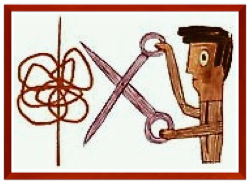
cutting strings

I GUESS THIS IS GOODBYE : (How could this happen to me!?)


PREVIOUS: Leaving
 (#1)

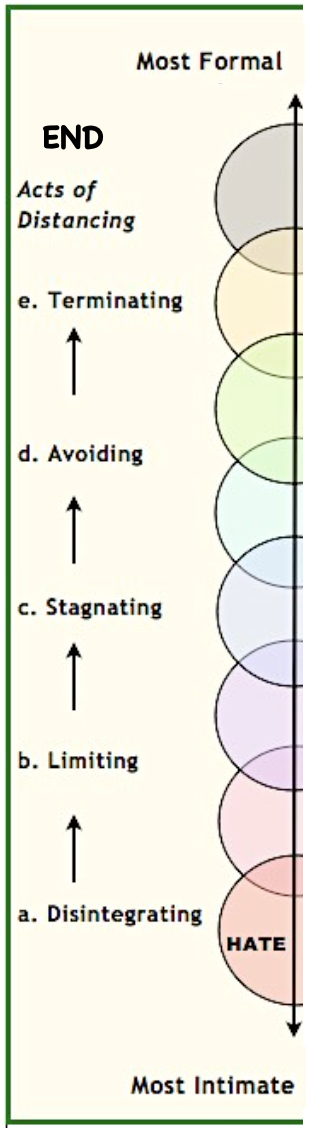
ACTS OF DISTANCING ▼  (cont)
5. DIFFERENTIATING
4. LIMITING

3. STAGNATING
Normal: They’re still together, but with a feeling of being stuck & not knowing how to make it better or how to get out. There’s not enough meaning or nourishment to keep it alive, but being in a long-term or committed relationship makes it harder to consider leaving.

They feel disconnected & depressed/ but stay together to avoid the pain of separation
Some form of talk is needed, but if either hints at starting an unpleasant conversation, they’ll find a way to prevent it so they don’t have to invest any feelings

stagnating• They have little to say to each other, are bored with the same old stories, don’t want any confrontation, & won’t talk about the relationship because it feels pointless

“Do you want to watch that program?” <> “No, but you go ahead” , “I don’t want to hear that again” <> “I know, you’re not interested in what I have to say!”

• One or both may be experiencing personal problems & possibly blame the other, rather than facing their own issues. But when people are no longer getting their needs met from their partner, they shut down the lines of communication & turn elsewhere

• People can start punishing each other for their own disappointment & loneliness: Well, she/he hasn’t helped me in a long time, so I’m not doing this for her/him”
– may be the kind of thinking behind further withdrawal.
💔

2.  AVOIDING

Normal: Now these 2 people who have been in a committed relationship, no longer see themselves in the dyad. They’ve withdrawn their emotions & are ‘spending‘ them elsewhere. Deep emotional distance is an indicator that the union is no longer salvageable. Each person knows in their mind  & heart they’ve detached, & need to protect themself

• They reorganize their lives to avoid being together & may even verbalize it: “I don’t want to talk to ____”.
It can also show up by sleeping in separate beds or rooms, & one or both looking for a new place to live

• People not living together will avoid calls, emails & texts.
“Leave me a message & I’ll get back to you” , “I’m really busy, so I’m sure you’ll understand if we don’t get together this week”

Usually there’s less fighting, but what’s left may be sniping, sarcasm, put-downs. Otherwise, communication is only about practical necessities, if at all
💔

1. TERMINATING (Final)
Normal: This stage can be done rather quickly or be dragged out for years.
• It’s the actual physical leaving of the relationship, with a little or a lot of psychological finality. If both parties can accept this, it makes it much easier to move on.

I can’t do this any more. This is the end for me.” <> “Yeah, sure, whatever separationyou say.”

• When one partner has come to their ending point, it’s important & respectful (be ‘clean‘) to actually tell the other person.  This is more likely with a longer-term connection.  Often with less developed ties, one person just stops taking calls, emails…..

• Verbal messages are used to prepare for the end by only using ‘I’ or ‘me’ statements, & meant to create finality & permanent distance “This relationship isn’t working for me anymore” , “Please don’t call me again” .

• It’s not uncommon for one or both people to have another relationship, job, even a new city… waiting in the wings, even if the new ‘love’ is temporary, to get them thru the transition.
✶ Leaving may actually be a benefit to both, even if it hurts. They may need the relationship to end so they can continue their career, their personal growth or to start a more suitable lifestyle.
♥               ♥                ♥

NEXT: “Trying to Leave you” (Part 2) – Clingers
Victimizing OURSELVES (Part 1)

OH NO, I’M AGREEING – with my Bad Voice (again)

PREVIOUS: Abuse of children   


OLD PAIN vs. NEW PAIN
Old Pain (Abandonment) is made up of the daily misery we lived thru as kids, with no way to process or get help dealing with it.
It accumulated in our body & in our spirit, much of which eventually went underground, into our Shadow (the unconscious).

New Pain (Self-Hate) is the suffering we now do to ourself & allow** others do to us – acting-out our family’s training. This layer gets added to the old abandonment & the accumulation wears us into the ground.
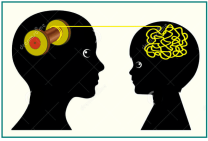
**Re. “allow” : Denial makes it hard for us to recognize abuse as it’s happening, so we do not consciously choose to let others hurt us, but unconsciously gravitate to the familiar – & then stay!

• So it’s important to keep awake for what’s happening to us & around us. Having been exposed to rage, fear, neglect, disrespect, torture …. as kids, ACoAs are both drawn to AND are more deeply affected (badly) by negative people, places & things.

It’s like having an open wound that keeps getting bumped – it’s injured more & more, so it hurts worse, AND never has time to heal. We’re hyper-sensitive to uplifting and deflating energies, & need to stay away from harsh environments even more than ‘normals’ who are much less damaged.

EMOTIONAL ABUSE (E.A.)  to Ourself
Keeping PMES in mind, most people think of abuse only in Physical terms (beatings), but the damage we originally sustained was first & foremost Emotional. From earliest childhood ACoAs were trained to tolerate abuse in both subtle & blatant forms, which then became our default position.
In order to stop being tortured unnecessarily – now, observe how you Victimize yourself in ways that keep wounding your feelings.

 1. Self-HateS-H heads
As adults the most violent source of E.A. is our own inner Pig Parent (PP) voice, which generates relentless negative beliefs & demands we listen to & believe. Many of our troubles come from the WIC obeying this Introjected part, not wanting to let go of old ways which represent loyalty to our family system.
Monster : “Self-Hate” expressed in T.E.A. forms
E.As : Terror, hopelessness, self-pity, FoA, loneliness, desperation

2. Addictions
Again, most of the focus is on the Physical damage & results we experienced, & not enough stress is put on the Emotional devastation . OUR addictions (food, sex, spending, work, relationships, exercise….) are specifically designed to repress / suppress painful Es & memories – to silence the PP voice which tortures the WIC!
E.As: Shame, S-H, guilt, hopelessness & abandonment fear – from Toxic beliefs, AND from the immature / harmful / crazy things addictions ‘make’ us do.

3. Going to the wrong people….
…. to share personal issues, secrets or deep pain with – as well as marry! Their worthless or harmful reactions make us feel worse – betrayed, alone, enraged, hopeless, suicidal.bad people
The key point here is that we often go to people we already know from experience are not safe, but refuse to acknowledge it!
We’ve been disrespected, blown off, controlled, told what to do – before– by these people, instead of just listening to us & being sympathetic, YET we keep going back!

☀︎ Our denial of past & present reality has turned into self-abuse!
At best those unsafe people are out-to-lunch, at worst they’re assaultive. ACoAs say: “But they’ve been there for me in the past, so I owe them gratitude & loyalty”.

Maybe they were OR or maybe we just thought they were because of our own level of ignorance & denial. But the clues to their real & potential abandonment were always there. Being mentally & emotionally unawares (not our fault) made it easy for us to not recognize other people’s limitations or cruelty.

To quote Toni Morrison (& Oprah) – “When you know better, you do better”
As adults we are responsible for being in situations to be Emotionally Abused by certain people. In essence we’re letting our PP or the WIC keep drawing us back to empty or poisonous ‘wells’ for comfort, guidance & support! Not going to happen!
E.As: Confused, abandoned, angry, longing, demeaned, depleted

NEXT: Victimizing Ourselves (Part 2)

TRAITS of VICTIMS (Part 3)

TOO PROUD to ASK FOR HELP
AND I don’t trust anyone to come thru

PREVIOUS: Traits of Victims, Part 2

QUOTE: “I am a victim, I have no qualms with this word, only with the idea that it is all that I am.”
Chanel Miller, Know My Name: A Memoir

VICTIM (V) CHARACTERISTICS Preconditions (cont)
1. PSYCHOLOGICAL / SPIRITUAL (cont.)
a. re. Self  – Part 2

b. re. Abusers (P=perpetrator)
VICTIMS
• consistently compromise their ethics, values & beliefs in favor of the P.
• gain a sense of worth by care-taking the abuser. With a deep need to be needed, they become the P’s parent substitute or domestic slave
• have the illusion they can do something to fix the P. to make them less unhappy & therefore  –> be less dangerous, AND be well enough to take care of & love the V
Vs
• live in a fantasy world of “If only ____ (Perp) would do / be_____”, things would be OK between us
• pick inappropriate mates & friends – men & women both have a strong need for a relationship to validate themself, but expressed it differently
• use the P as their Higher Power, but often deny the reality of a Loving God or Benign Universe

social anxiety2. PHYSICAL
a. re. Self  – They :
• avoid almost all social interaction OR can’t stand to be alone
• are compulsive: get stuck in a course of action & can’t seem to shift out of it, even when given a good alternative
They
• have one or more addictions, used as self-medication (food, sex, drugs, alcohol, exercise….)
• have various phobias (of dirt, of going outside, of being noticed…)
• may exhibit obsessive-compulsive behaviors (pulling out hair, rocking, excessive cleaning…..)
They
• often have -very real- long-term stress disorders (auto-immune disease, back pain, migraines….), OR psychosomatic complaints (not physically based)
• afraid to start something positive, OR start things but never finish
• think about, plan or attempt suicide, or periodic self-harm (cutting, hitting / banging their head…..

b. re. Abusers — Victims
• allow Ps to invade their physical boundaries
• are available to be told what to wear, what to eat, how to sit, how to behave in public, where to look (eyes down)…
• ‘make it easy’ for & be available for the P to insult their speech, accent, vocabulary, tone of voice….
• put up with their physical appearance & body characteristics being made fun of or disparaged
• tolerate physical abuse OR physical neglect

chained to perp3. EMOTIONAL

a. re. Abusers – Victims are :
• likely to blame all their problems on others, both Ps & non-Ps – to not have to take responsibility for their own life – BUT (ironically) — they’ve ‘learned’ that no one is safe, so they say they can’t trust anyone
deeply loyal to the abuser, even with constant proof that the P. does not deserve it, & is never loyal to the V.
• emotionally dependent on the good-will & validation of others (just like the P), while believing that NO one can love them
• terrified of any form of disapproval, anger or threat of being left

b. re. Self – Victims are:
• afraid to see any good in themself, take in compliments or value their accomplishments
• convinced they’re incapable of ever being able to love others
• depressed (overtly or covertly), even numb, &/or visibly nervous, subject to periodic anxiety attacks
are :
• driven by guilt (not doing everything right) & shame (not being sin-less)
• intensely fear-based, but hidden under a facade so can become control-freaks
• not allowed to be comfortable or comforted
• overwhelmed by S-H & FoA (fear of abandonment)
have:
• a submissive attitude & style of interacting (not the True Self), always feel inferior to others even when it’s hidden by competence or bravado
• great difficulty expressing anger, tend to internalize it & then act it out indirectly (passive-aggressive)

OUTCOME : Not being allowed to feel or think clearly for themself, Vs become gullible & therefore easily deceived, cheated & controlled. They attach to bullies, or hide from everyone. Not all look like Vs on the outside. They can act weak & incapable, or hide their vulnerability behind anger, hyper-activity & head-knowledge. But their personal life will usually tell.

NEXT: Victims #4

GRANDIOSITY and ‘NORMAL’ (Part 1)

I CAN HANDLE EVERYTHING –
I’m not weak or wounded!

PREVIOUS: Victim or not? #2

Review posts:Rescuing”  //  “Process


DISTORTED  COPING 
(P = Perp / V = Victim)
As long as ACoAs have trouble facing the trauma of being a Victim IN childhood, we can’t outgrow that state -because it lives in our WIC & keeps getting acted out all over our life.  Another ‘backwards’ ACoA pattern :
while we do many destructive victim-y things to ourself & let others do them to us, we also are masters at trying to cover up the inner wounds, the same way battered people try to hide broken bones & external bruising.

1. NORMAL
a. Normal can mean what is average for any location or situation, but may be positive or negative & is never absolute
EXP
– It’s the norm for :
▫️people in a bar to drink a lot
▫️men in prison to be raped
▫️children of addicts to be scarred
OR It’s the norm for :
▫️country air to be healthier than city air
▫️money to make life easier
▫️great teachers to produce some excellent students.

b.
Normal can also mean anything that is the opposite of unhealthy, & is only positive.  NORMAL is being:
▫️a whole human being, by taking care of ourself
▫️part of a community & helping others
▫️happy & productive, with satisfying relationships
Normal is for Love to heal broken hearts & minds…..

ACoAs desperately want to be ‘normal’, as in ‘b’, while not wanting to admit being damaged / wounded (NOT defective), with all it’s weaknesses, so not having to do the hard work of Recovery to become healthy.  This false-normal is a facade to cover our lack of self-esteem & to quiet the bad voice (the PP), rather than being genuinely OK at our core.
normalMany of us don’t want to ask for any kind of help, or be in groups that focus on healing, because “They’re all crazy & I’m not like them!”  But Al-anon reminds us that “You’re only as sick as your secrets.”  It’s one thing to feel empowered & be able to face life’s difficulties with equanimity & guts. It’s another to over-compensate for our un-acknowledged & unhealed history with grandiosity.

EXP: Trish was never taken care of as a child, even in basic ways, & was eventually left by her weak father to take care of her violent, mentally ill mother. In spite of not having any self-esteem or knowledge about self-care, in her early 20’s her talent as a performer got her periodic jobs in small venues.

One day she found out she was pregnant, but wasn’t ready for motherhood & scheduled an abortion – for the same day that she had a gig in a local mountain club. She went to the doctor in the am – alone, & that afternoon drove up to the resort to sing – still alone & in pain.
It never occurred to her to have the operation on a different day, to have someone go with her, or that there was anything amiss about combining the 2 events – until pointed out to her by a therapist 20 yrs later. To her it was all normal !

2. GRANDIOSITY – at its simplest, it’s how a person sees themself as bigger, better, more capable than they really are. It often leads to putting oneself in jeopardy, as big as extreme physical activities, taking unprotected financial or sexual risks, or as ‘small’ as always crossing the street just as the cars start moving forward, smoking for years….
They act as if they’re invincible, magically untouched by the laws of nature or common sense.
BTW : ‘Normal’ grandiosity does include the person having a degree of insight into their overblown ideas – aware their behavior is unusual or unrealistic – just not crazy. But those with grandiose delusions lack this capability for reality-testing.

MAIN CHARACTERISTICS
IRONY: It’s typical of many ACoAs, using it as defense to hide intense unworthiness. Gs:
1. believe they don’t need other people
2. don’t recognize normal human limitations, nor their own
3exaggerate talents, capacity & achievements, are boastful or pretentious
4. feel unique, special or superior, compared to others. May not admit it even to themself, because it’s not part of S-H
Gs :
5. live in grand fantasies, without taking realistic actions
6. look down on others who won’t take the same chances – as weak or cowardly
7. generally criticize, nit-pick & downgrade other people’s projects, achievements, ideas & dreams – as ‘small’

IMP: Grandiosity hurts ourself AND is abusive to others

NEXT: Grandiosity #2

Considering Abuse

I’M SO UNHAPPY BEING WITH THEM
but it must be my fault!

PREVIOUS: Principles of    Character

SITE: re. Categories of abuse

NOTE: This series will have many lists of abusive behaviors, in many categories, & from different perspectives, so there will be a lot of over-lap in headings & examples. This is deliberate. As kids we HAD to ignore, trivialize or forget what was done to us, & then act out those self-destructive patterns in our adult life.

We must identify exactly what happened before we can change it, & repetition is useful in breaking thru our denial. Also, reading or hearing something in different wording & context can more easily get past our defenses. The main (but not exclusive) focus of these posts is on Emotional Abuse.

DEF : Abuse – are all the painful things done to us & around us as kids, & comes in each of 4 PMES categories,
and Neglect – are all the good things we didn’t get, growing up

ABUSE : In general, it’s any communication or behavior designed to control & enslave someone. In alcoholic & narcissistic families it was to keep us ‘in our place’, to prevent us from leaving home, to punish us for not being who or what the Perpetrators expected, or wanted!
It is & was done by causing continual fear, humiliation, intimidation, guilt, coercion & manipulation.

Its any form of intrusion into another’s psyche, including :
• a desire to to denigrate, to ignore, to causes pain
• financial, intellectual or spiritual tactics, ranging from mild to lethal
• ignoring or making fun of another’s basic needs & interests
• verbal, physical, sexual &/or emotional attacks
• not respecting privacy, being brutally honest with a sadistic sense of humor, consistently tactless, expect too much

⚙︎ Most people automatically assume ‘abuse’ only refers to physical harm – yelling, hitting, beating, broken bones …. so will firmly state: “I was never abused growing up”. However, because human beings are made up of 4 interlocking categories (PMES = Physical, Mental, Emotional, Spiritual) we can be wounded OR encouraged in many ways at each level.

Being abused can happen just once with someone, or when subjected to a bully for a short time. But usually it’s a long-term pattern of behavior by a severely damaged, cruel, angry &/or mentally ill person who uses their position (as parent, boss, teacher, mate, older sibling or friend, community leader…. ) to:
▷ intimidate others who have less personal or social power, OR
▷ take advantage of those who by nature or training are more accommodating, compliant & sensitive

While most people on occasion act unkindly, even cruelly, when provoked or under great stress, what we’re looking at here is ongoing attitudes & actions that tear us down, body & soul. Even when they seem intermittent, over time they wear at us !
Therefore ACoAs can honestly say that we were severely & regularly abused by our damaged parents (& other authority figures) , especially re. emotions (Es). Genuine Es are NOT widely recognized, valued or encouraged in our society, much less in dysfunctional families. So we ended up ignoring or minimizing them in ourself, as well as in others, especially if we didn’t get physically or sexually attacked as kids.

Most of us never felt loved but blamed ourself for the lack. Regardless of what our parents said or how they felt about us in their own mind & heart – their distorted way of treating us was not an expression of healthy Love.
So to compensate – as adults – we look for it everywhere we go, & from everyone we deal with.
This can make us vulnerable to a subtle form of abuse – being ‘over-loved’, needed & depended on too much, OR being over-protected & infantilized, OR controlled & used.

These are actually ways to treat us as an extension of the person who claims to love us, as an object rather than a separate being, or a means of their personal gratification. It’s never about what the way the ‘beloved’ really needs or wants.
BTW,
LOVE is the emotion with the highest energy vibration. IT:
🔅feels good, because it’s the absence of fear
🔅is an action, not just a feeling, so requires attention
🔅is unconditional, understands & accepts differences
🔅has empathy, no room for jealousy, has wants but is not needy
🔅means putting other people’s needs equal to, or before our own
🔅varies in how it’s expressed & accepted, which can include letting go, so doesn’t demand continuing a relationship that no longer works.

NEXT: Victims or not?

Emotional MATURITY – General

I INTEGRATE ALL PARTS OF ME
while still working on the ‘old stuff’

PREVIOUS: Emotional Immaturity (Part 3)

SITE : True Happiness (Emotional Maturity Questionnaire)

QUOTES: 🔅 “Maturity consists of no longer being taken in by oneself” Anon.

🔅 “Maturity is the ability to think, speak & act your feelings within the bounds of dignity. The measure of your maturity is how spiritual you become during the midst of your frustrations.”  Samuel Ullman (American businessman, poet & humanitarian)

EMOTIONAL MATURITY (EM) means having a healthy self-concept: not thinking too highly or too lowly of ourself, being part the world but realize we’re not the center of it

Characteristics can be identified in relation to AGE :
a. Social  – can relate well socially for our physical age
b. Emotional  – can handle emotions appropriate for our age
c. Spiritual  – can behave in a spiritually mature way

In ACoA language, EM develops slowly by minimizing the damage in our WIC & quieting / limiting the PP voice, as much as possible. Ultimately it’s about no longer having S-H & living from our True Self.
Maturity comes from growing the Unit (Healthy Adult & Loving Parent), who are regularly (but not always) in charge of the WIC, encourage the Natural Child to blossom, & keep in touch with our Higher Power.

• Maturity does NOT mean having eliminated all our damage, but rather to lessen the grip of the Introject, diminish accumulated old pain & be able to deal with our core wounds when they do surface, so they don’t take over & we can bounce back faster.imperfect

ACoAs are quite capable of developing mental, emotional & spiritual maturity – as long as we don’t strive for perfection*.  Actively using the “Principles of the Program” helps to outgrow the worst of our damage so we can live more comfortably in the present, instead of in our tortured past.  When psychological health takes root, we carry it with us even under stress, & express it in ‘all our affairs’

Perfectionism is a sign of immaturity, based in FoA & S-H,- a belief (CD) rather than an event or action.
To be human is to be IMperfect, & to be mature is to be OK with that!
Fortunately there are times when everything works out well = we’re successful at a task, reach a goal, or feel empowered. These do NOT come from perfection.
Basically, they’re just events without mistakes. Those moments are the result of our knowledge, effort, practice & persistence, help from H.P, our faith, & perhaps some ‘luck’.

KEY QUALITIES of MATURITY
confidence1. Emotional
Emotional Responsibility : identifying them, AND know they come from inside, rather than caused by other people, places or things
Self-control: accept & control our passions, impulses & desires. Can handle stress well, ‘let go’ & detach, know when we’re powerless over a situation
Self-esteem: have inner fulfillment, enjoy life, experience ourself as one source of love.  Have understanding of & insight into current reality.

2. Psychological / Mental
responsibleCognitive Responsibility: be accountable for our thoughts – beliefs, opinions & prejudices. Handle finances, have good work habits & are reliable
Mental Clarity: able to think clearly & rationally. Process information based on general reality, know how to gather & communicate information
Independence: make appropriate decisions & observe consequences in order to make better choices. Learn & grow from experience.

mental clarity3. Practical
Action Responsibility: know what we want & can make it happen
Function: make the effort to learn what we need to know in order to accomplish our goals
Participation: join group & community activities that encourage creativity, collaboration & empowerment, perhaps volunteer for a relevant cause

4. Relational / Social
Inter-personal Responsibility: treat people as separate entities with the right to their own needs, wishes & dreams (not use people)
relationalRespect: understand & tolerate different views, cooperate with peers or teams, care about others & support their concern
Connections: make connections easily, sustain intimate relationship, take in friendship & love, share decisions & resources

spiritual5. Spiritual
Moral Responsibility: have a healthy value system / code of ethics. Choose what’s right for ourself first & then in relation to others
Congruence: Act honestly, live by our principles & listen to our intuition
Altruism: have concern for all humanity, do what we can to help others – realistically!

NEXT: Emotional Maturity (Part 2)

“FEELINGS AREN’T FACTS” (Part 2)

heart talkWHEN THE HEART TALKS….
… I should listen

PREVIOUS
: “Feelings aren’t facts” (#1)

SITEs: • How to listen to the heart
• Diff between feel, think, believe

POSTs : Use THINK instead of Feel


1. FEELINGS (Part 1)
2. ‘FACTS’:  The other problem with this platitude is that these 2 words don’t really belong together (feelings & facts).
a. Facts – are only actions, quantifiable, with measurable results. Simplified – facts come from the head.
b. Feelings – as pointed out in Part 1, has 3 different uses, 2 legit, 1 not.

For people who use this term – ‘feelings’ means Emotions (Es) and Es are never ‘facts’ – they are internal experiences – from the gut.  Yes, it’s a fact that we have emotions. Even Vulcans have those pesky things, underneath. For humans, to be cut off from them turn us into narcissists or worse – sociopaths!

• Eventually someone in Al-Anon added what they thought was a clarification: “Feelings aren’t facts, but it’s a fact that I’m having these feelings”.  OK – this does refer to Emotions. This was encouraging for many of us to hear, because as CoAs we were taught to repress some or all Es – to deny them as irrelevant or unacceptable.  So this version gave permission to FEEL emotions.
But this is not what the phrase “Feelings aren’t facts” actually means.
circular

c. Thoughts (Ts) are not technically facts either, but rather ‘constructs’ of the mind – not tangible in themselves. They are:
• the cause of emotions (in the present) :
EXP : T ⏩ “I can’t believe she never called me back. What a b— I’m so angry!” ⏪ E
Unrealistic expectations, cruel toxic rules, scary projections, unfounded assumptions & S-H … lead to distorted thinking & obsessions, which cause us great suffering, & often lead to unfair or harmful actions toward others!
OR
• the cause of actions, healthy or unhealthy, depending on the type (may not be conscious, but the real reason for behavior)
✒︎ NOTE : Watch out for people who ONLY talk about what they or other people are doing, where they’ve been, who they know, what they’ve accomplished…. Facts, facts, facts!  That tells us they’re NOT in touch with their emotions, which makes them unsafe in relationships, for anything other than giving information – if that!

CONCLUSION: Based of these distinctions, what does “Feelings are facts” really mean?
ANS: In this case ‘Feelings’ are obsessions, circular repetitive thinking built on negative, distorted beliefs, and NOT emotions at all! which are not telling us the truth (facts) about a situation.”
✒︎ In other words : “What my obsession is telling me is most likely a lie.”

And what do most ACoAs endlessly obsess about ? :
bad thoughts☁︎ EITHER Self-Hate
”I don’t know why he won’t talk to me – why is she ignoring me – was it something I said? Maybe I should have been nicer to her.  I probably sat in the wrong chair… I know he doesn’t like me… what can I do to change their mind… “  –  bla, bla, bla….
OR
👺 Rageful thoughts towards others
“How dare she treat me like that… Why didn’t he call me…. I never did anything to her… I’m going to give her a piece of my mind… I hate her, she’s a witch…. no I’d better not… what should I say… I don’t want to get fired…”  grrrrr , grrrrr

❖ Healthy THINKING is imperative for us to function well in the world & in personal relationships. This requires :
• accurate, reasonable & present-day information about how everything really work   • what our needs, goals & dreams are
• what is positive about oneself (character & abilities)
• what it means to be human (determined, imperfect) images-4
• universal spiritual truths about Higher Power.

EXRESS  thoughts
, opinions & beliefs, directly:
• “I think that the government should…”
• “That’s not my opinion”   •   “I wouldn’t say that…”
• “I suspect he’s not going to honor his agreement”
• “I’m convinced there’s a better way to do this project”

❖ Healthy EMOTIONS are NEVER good or bad, but rather range from the very painful <———–0————> to the very joyful.  ‘0’ is neutral.
✒︎ We’re most successful & comfortable when we live within a range of +5 to -5 on either side of center, most of the time, although not exclusively. Times of great stress OR great joy will push the range much higher or lower, but not get stuck at either extreme.
☆ This medium state can only happen when healing diminishes accumulated anxiety so we don’t have to alternate between the ‘outer limits’ of misery or fantasy/illusion!
(REVIEW all posts on Emotions)

NEXT: Getting to Our EMOTIONS – Under

ACoAs: Deserving vs. Rights (Part 1)

Screen Shot 2015-07-10 at 5.43.38 AM

PREVIOUS: My Rights Qs, 25-48

Posts: “Self-Hate & ACoAs
•“People should treat me better, but….”

SITE: Restructuring life in recovery


DEF. of ‘Deserving’
⚙︎ Receiving something – good or bad – which you’ve earned, based on your actions.  It always carries a sense of balance or justice.
🌹This is why we can not deserve love, because we can not earn it. It is either given freely or not.

REPEAT : “I cannot earn love!” – a hard concept for ACoAs to believe, based on our childhood – since ‘being loved / accepted / approved of’ was conditional. BAD PARENT : “Do what I want, or else.”

1. The PROBLEM of NOT deserving
a. Family
In dysfunctional families ‘deserving’ ONLY refers to earning their acceptance. The adults who raised us did not feel worthy which was rigidly held in place by their low self-esteem (S-H), depression & deprivation mentality — so could not model deserving for us
b. Spiritual
Many religions teach us to feel ashamed, guilty & unworthy. Rigid non-Biblical teachings instill guilt, & control by fear. Anyone from a fundamentalist faith was taught that because we were born in sin “we are not worthy” of God’s love, period.  We are bad, bad, bad! This dogma is used to control & discipline children, & keep the ‘faithful’ in line.

✶ What’s left out of these teaching is the KEY to the message: God has given the world many gifts, first & foremost salvation from eternal separation from Him in the afterlife, in spite of our imperfections  ( John 3:16 & commentary)

NOTE : AA Steps 2 & 3  ” Came to believe that a Power greater than ourselves could restore us to sanity. ” “Made a decision to turn our will and our lives over to the care of God as we understood Him”

The definition of ‘grace’ is unmerited favor – being given what we don’t deserve & cannot earn! (“A Bridge to Life & Bible verses)
We did not & cannot EARN grace or any of life’s benefits & beauty – they’re simply here for us to enjoy & partake of! Enjoy the lyrics to “Amazing Grace”,  a hymn universally beloved even by the non-religious.

🙆‍♀️ Too many people no longer consciously agree with the concept of original sin, BUT whatever our personal belief is now – as long as we live in deprivation – we’re agreeing with the introjected bad voice that keeps us trapped in a culture that has perverted the accurate meaning of spiritual teaching.

🙎🏽‍♀️ Some of us were not raised in any specific faith, so our sense of unworthiness would have more directly developed from unhappy & cruel interactions with parents & community.

2. ACoA DAMAGE
IMP: Parents are either capable or not capable of providing acceptance, love, compassion & validation – which has nothing to do with the personality, behavior, or gender of the child.
AGAIN: Love cannot be earned – it’s either given freely or not. And our family either did not at all – or only conditionally! We were taught by family & religion to feel UNdeserving of all kinds of good things.
Instead, we still believe that :
• asking for what we want & need is ‘selfish, sinful, arrogant, childish’…..
• other people (sometimes siblings) are definitely allowed to have good things – but not us, especially if we were scapegoated in our family
• we don’t even deserve to be alive, which we concluded —
— indirectly by being constantly ignored, put down & criticized, or
— directly from the messages about how they felt:  “You’ll be the death of me yet , Why did I have to have a kid like you , I never wanted kids anyway , You’re killing your mother/ father, You ruined my life”….

• ALSO – we’re afraid to improve ourself & our circumstances – beyond what our parents are or have accomplished, as if it would somehow diminish them (show them up).
» That would be breaking our symbiotic bond with them & no longer taking responsibility for their life-choices.
✒︎ Actually, healthy parents (& many immigrants) want the opposite – for their kids to do better than themselves & be the very best they’re capable of!

ACoAs DON’T DESERVE
 the BASICS – TO: CONTROL-ABOUT ME
• be ourself, have clear & strong opinions
• be talented, funny, creative, imaginative, intuitive
• be competent, functional, clever
• be appropriately visible, take our own center stage
• feel safe, respected as a person & for our ideas
• have all of our emotions, without judgement
• have & maintain our boundaries, & say ‘no!’ if needed
• shine, get attention, admiration, recognition, complements

NEXT: ‘Deserving’ vs. Having Rights (Part 2)

ACoAs: OVER-Controlling Ourselves (Part 4)

sileced

I LET THE PP BEAT ME UP – to keep me in line

PREVIOUS: Emotional Over-Control #2

SITEs:  Self-Control (Wikipedia)
▪︎ Over-Controlled Primary Aggressor

See ACRONYM page for abbrev.

AS ADULTS (cont)
• ACoAs
were not raised on the handbook “How to be a Healthy, Happy Human Being”, which left our Inner Child-part impulsive, anxiety-ridden, only able see itself & the world thru distorted alcoholic / narcissistic lenses. So, one way to deal with our trauma is to do what they seemed to want – for us to be dead! Some ACoAs try literal suicide, but most do it by PMES forms of self-destruction & emotional starvation.

Being Over-Controlled is NOT related to being Introvert or Extrovert, which are inborn, but rather about ignoring qualities we all share to varying degrees (intuition, intelligence, being perceptive, artistic…) – which were unacceptable in our family.
At the time, it would have made our lives even more miserable if we hadn’t suppressed those characteristics – although some of us couldn’t hide them well enough to escape being attacked or ignored.

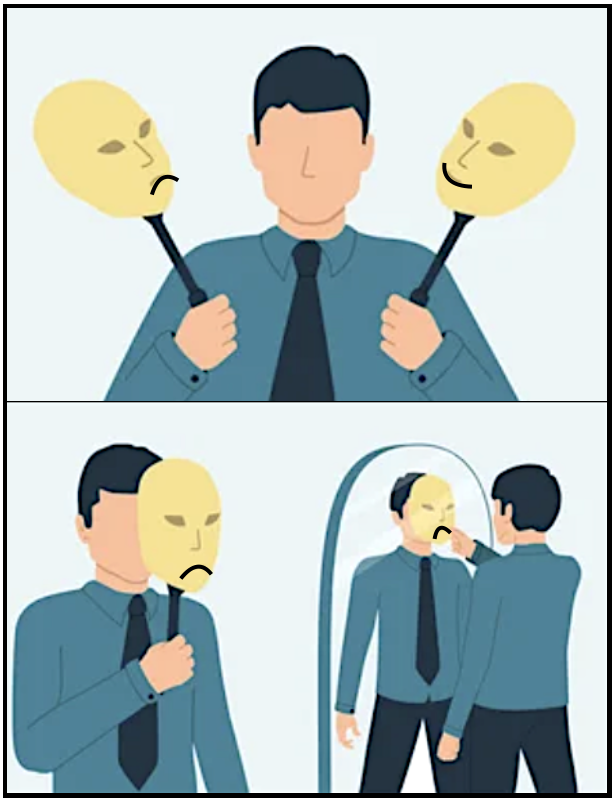
Unhealthy BELIEFS of Over-Controllers 
• Everyone is out to rape me mentally & emotionally
• Don’t trust anyone with your feelings, thoughts or dream
• Never let others know how their behavior or actions effect you
• Never show your anger so you won’t get abandoned
• There’s only one way to survive a crazy world – climb into your shell, & stay there!
SO
• I have to keep control of my feelings so I don’t go crazy
• If I lose control, there will be no sanity in my home (or on the job)
• Losing my cool is unsafe, so I avoid conflict at all costs
• No matter what happens to me, I’ll never cry or need anything again
• No one’s ever going to get under my skin or hurt me again
► Do you hear the voice of the Toxic ROLES?)

HOW we Over-Control ourself
a. DEFENSES – Rigidly held defense mechanisms are used to hide from emotions we’re afraid to experience, but the ‘protection’ ends up running our lives:
Addictions – used as a way to numb the cruel PP voice & to ignore our WIC the same way our parents did, but which actually adds to our suffering

Counter-Phobia – being attracted to things that are scary while not fully aware of the accumulated terror underneath. Dangerous relationships & activities are seen as fun, which keeps the adrenalin pumping. We’ve stuffed the anxiety into the unconscious, but it needs an outlet, so we rush towards unhealthy ‘excitement’. If we stopped running we’d have to feel all that fear

Fear of Engulfment, feeling suffocated & over-controlled by someone else’s need & demands. Not allowed originally to develop our own inner boundaries, we end up erecting a very thick wall against emotional closeness so that we won’t get swallowed up again. It keeps everyone at a distance, while longing for connection. The wall gets activated whenever anyone wants genuine intimacy with us, even if it’s what we say we want

Guilt (post What is guilt?’) – an emotion that controls us TO:
— ensure we never disobey our family’s Toxic Rules
— keep us from learning healthy rules that could improve our life
— prevent us from developing our True Self via S & I, which would unhook us from the family dysfunction

Over-activity, such as workaholism, controls how much & what kinds of emotions we allow ourself to experience = staying so busy that we don’t have to feel anything ’real’, & using it to cover up S-H & a sense of powerlessness

Paralysis, mostly our voice – stopping ourself from saying & doing things that would be good for us, because of fear of punishment, fear of abandonment and fear of visibility…..  which prevent speaking up to stop others from hurting us, enhance our self-esteem & move us toward our dreams

Vagueness / dissociating – staying in ‘la la land’ to not face any reality we’re too terrified to deal with, starting with how badly we’ve been treated by family / school / religion / mates / work…. AND that we’re responsible now for having to care for ourself.
So – we don’t notice how much we spend / eat / drink… how others treat us, how we feel, what we need, how we treat others….

NEXT: O-C Ourselves – Part 4

ACoAs Being Controlled (Part 1)

beggingI’LL BE & DO WHAT EVER YOU WANT –
just don’t leave me!

PREVIOUS: “Controlling” & Abandonment (#2)

SITE: Recognizing…..Control” – extensive list of tactics used by Controllers

See ACRONYM page for abbrev.

BEING controlled by others
People who are easily controlled don’t know there’s a difference between –
a. Natural, appropriate authority. Being IN control is using our power in a positive way – for oneself, or as good leader. The person in control is the main decision-maker, in charge of communication & makes things happen. People choose to listen & follow appropriate authority because they want to learn, connect &/or be taken care of —
— vs.
b. Un-natural, abusive control (mental/emotional coercion). Controllers (Cs) misuse power – they force us to obey them, against our will. They have no regard for our rights, needs or individuality. They use their position to suppress our identity so only their’s is visible. Their main weapon is negative anger, aimed at making us afraid, so we’ll be more compliant

ACoAs ‘letting” ourself BE controlled
• Most ACoAs were negatively controlled as kids by very wounded parents & teachers, & without Recovery we continue playing out the victim role we were originally forced into.
As adults, allowing others to control us copies our earliest experiences. It keeps us symbiotically attached to the ‘source’ of our wounds & therefore emotionally immature, AND ‘protects’ us from having to face our own fear of intimacy (“ACoAs & Boundaries, Part 1 & 2”),
NOW
controlledFirst: We have to be around someone who is a controller – who belittles, embarrasses us in front of others, treats us like a child, tells us what to do or how to be….who is manipulative & intimidating, however subtly.

Second: We have to be available.  While dealing with such a person is unpleasant for anyone, for ACoAs it’s emotionally debilitating – but also emotionally addictive!  We fall into a black hole, regressed to an old familiar space of being a powerless child with no options. We’re trapped & become mute! We’ve been programmed to instantly surrender – as if we have no rights or identity of our own. And then we stay, & make excuses for the controller’s behavior!

T.E.A. (thoughts, emotions, actions)
Many teachers & groups insist that we choose to “feel” the way we do, which is an unfair judgment. Of course the word feel is being used to mean thoughts rather than emotions, which is confusing & harmful, as it leads to believing we should ‘control’ our Es! (see “Feelings Aren’t Facts”, & Using THINK, instead of Feel“)

This is not accurate or realistic. No one chooses their Es, only what we Think & how we Act! And even those are pre-programmed by family. Yes, sometimes changing Ts & As can shift our Es, but not always, especially not when the pain we’re feeling is old & therefore cumulative. That takes time to vent & process out of the body.

• Being controlled is the outward proof of Toxic Family Rules we internalized from childhood. And when we consider those beliefs (a sub-category of Thinking) we find them indeed very hard to change.
As adults — 
— allowing ourself to be controlled is not a conscious choice! It’s a knee jerk reaction to specific people or events that are carbon copies of our family experience.
— it’s a clear indication that capitulating to the will of another means our WIC is in charge

🩸To ‘accuse’ us of choosing to be manipulated (Action) or be miserable (Emotions)…. only adds to our S-H, & is in fact a subtle form of abuse & abandonment.

YES – we are responsible for changing our training – learning new ways of thinking & acting to take back the power we give away.
BUT we can only do this if WE:
— understand what’s actually going on inside
— have compassion for ourself (we didn’t cause the wounding)
— remember that changing deeply-etched brain patterns takes time
— learn what our needs are & use them to practice having boundaries
— ask for help whenever we need it, especially when regressed (child ego-state of being a victim, lost child, scapegoat…)
— develop & continually strengthen the Loving Parent voice

NEXT: ACoAs Being Controlled (Part 2)