
 I USE WHATEVER I CAN
to escape my fears
PREVIOUS: Enneagram Humor #4
REVIEW posts: “Abandonment Pain“
SITE: Defense Mechanisms Quiz
BOOK:”In sheep’s Clothing” (re. manipulative people) go to slide 50 ++
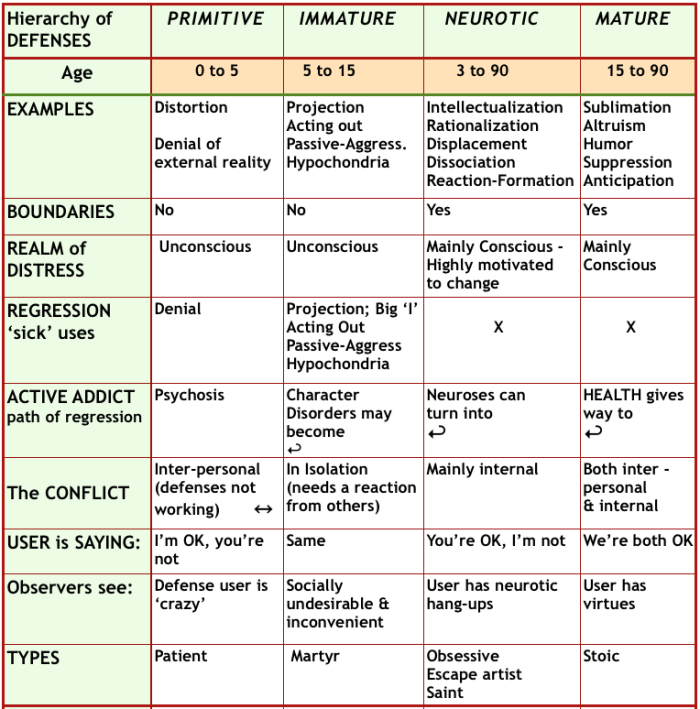
DEF: Unconscious & conscious processes to defend against or escape from conflicts, frustration & depression, so that the person can make useful adjustments to be able to live in their society.
REMINDER – as such, defenses are NOT bad. They’re needed to cope with life’s difficulties, as when we use humor to lighten our mood or altruism to lighten someone else’s load.
At best – most are delaying tactics, giving us breathing room to take a break & re-group.
The problem comes when any one of them become ‘land-locked’, so deeply ingrained that it can’t be given up easily, so rigid that it’s used like a hammer on every problem, regardless of size or importance.
• In that case they become “Negative Benefits” – used to avoid childhood or other trauma which the person does not want to face & deal with. To better understand what these are, we need to know about Defense Mechanisms, which were first identified by Freud, & then added to over the years by others.
He noted that people have wishes, desired & impulses that are either unacceptable to their society, religion or family – or their own sense of self
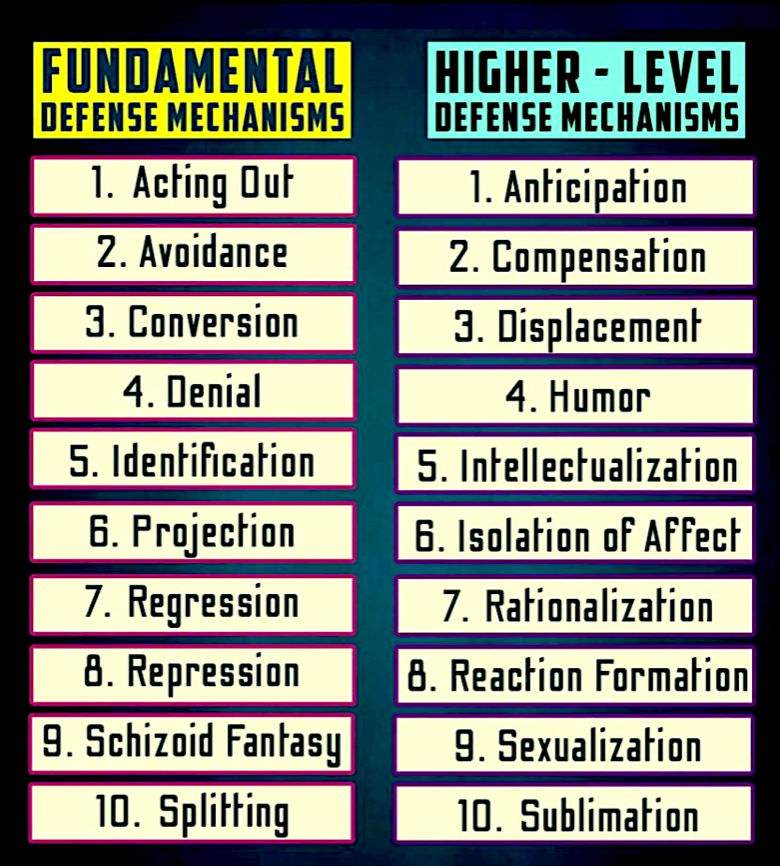 • The fact that the impulses don’t go away, but are usually hidden in our unconscious, leaves a residue of anxiety* (like at the bottom of a bottle).
Keeping the impulses pushed out of awareness takes a lot of energy – which is exhausting, but considered by the ‘user’ to be safer than admitting them
EXP: wanting to kill one’s parents or oneself). We do this by using Defenses. Which ones we pick will depend on our upbringing & our native personality.
*ANXIETY types, according to Freud
1. Neurotic – the unconscious worry that we’ll lose control of the id‘s urges, resulting in punishment for unacceptable behavior
2. Moral – the fear of violating our own principles
3. Reality – the fear of real-world events, usually easy to identify.
EXP: Fear of being bitten when near a menacing, snarling, barking dog is appropriate …. So it’s best to avoid genuinely dangerous situations (PPT) that we know about, if at all possible.
Defense Mechanisms distort reality
In proper proportion & with limited use they can be adaptive, allowing us to function normally in very difficult situations, where there are no better options
The big problem comes from over-use, as a way of life, especially when they’re no longer needed. What was once a way to cope will then become the problem. A goal in Recovery is to make the extreme / harmful use of defenses conscious so the we can develop healthier ways of handling anxiety & stress – without eliminating defenses altogether.
«
NEXT: 27 Defenses

