ACoAs MANIPULATING Self & Others (Part 2a)

heart-conned

PREVIOUS: Manipulation & Needs (Part 1)

SITE:   8 Negative Thoughts That Manipulate Your Mind

REMINDER: See ACRONYM page for abbrev.


ACoAs MANIPULATING OURSELVES

While we think of ourselves as victims – which we were as children BUT are no longer – we are now victimized internally by our Negative Introject as well as our damaged Adapted Child, who desperately clings to the old ways. Fed by the PP & constantly reinforced by the WIC, Self-Hate carries a powerful energy – to prevent us from being able to S & I, in order to have a better, more satisfying life.kid-whipped

Even in Recovery, some of find it very hard to shift out of paranoia, self-destructiveness, hopelessness & procrastination. These & many other ‘character defects’ are expressions of our WIC, who is looking for parents to take care of her/him,
& is adamantly opposed to having our own positive UNIT be that caretaker! (inner parent & adult). In truth, the WIC only wants the original parents – to love us unconditionally.

A kids, because we were continually around addicts, abusers – Wounded Children themselves – in our most vulnerable years, we had no choice but to absorb their distorted view of us, themselves & the world. Most of what they passed on to us are manipulations – anything to not look at themselves or take responsibility for their words & actions. Sadly, we are doing exactly the same thing – which many of deny & are insulted at the very suggestion.

WIC-PP alliance
Program & others Personal Growth modalities tell that all Recovery & emotional maturity is “an inside job”, yet many of us keep focusing outside of ourselves. So, while we only think of Manipulation as something done to others, for us as ACoAs, the most intense manipulation is internal, coming from the PP who controls the WIC.

The WIC who in turn constantly tries to convince our rational self of what the PP is saying. The PP is especially loud when we try to take the power away from it – to take care of ourselves, by loving our Inner Child (wounded & healthy parts) in all the ways our original family never could.

PP’s Manipulation (Negative Introject)
Everything the WIC believes originally came from the people we grew up with. Now the PP is in our head, continuing the barrage of lies. To keep us attached to the toxic family system, it uses every dirty trick in the book to paralyze us.  It’s made up of the ‘us/we’, a composite of the adults who programmed our thinking & outlook on life.
It says to the WIC:
• you’re crazy, over-reacting, too sensitive
• you don’t know what you’re talking about
• you can’t do it without us, you’re too weakStep on the WIC

• WE NEED you, only WE count, we’re suffering
• you don’t really feel that way
• you’ll be sorry when we’re gone
• you’re ungrateful – look at everything we’ve done for you
• it was never that bad, you’re just being a dram queen/king
• you owe us, we did the best we could

PROBLEM: Physically an Adult, but still emotionally immature:
1. We believe these manipulative lies, so we consistently, persistently don’t counter the lies the WIS & PP are selling, perpetuating our S-H

2. In reality we do have intuition, we’ve accumulated a great deal of knowledge & experiences, had moments of clarity, have very real choices & opportunities…. which the WIC ignores, forgets or completely negates

3. There have been a few people who have helped us along the way, we have had a few pleasurable moments, there have been a few opportunities to heal & grow, but we undervalue or deny them completely! And for some us – there have been more than a few. Yet we let the underlying Toxic Messages keep winning out.

NEXT: Manipulating OURSELVES (Part 2b)

ACoAs & BEING VISIBLE (Part 4)

I CAN BE SEEN
without being in danger

PREVIOUS: Visibility (#3)

ARTICLES: “Psychological Visibility
and “Psychological Visibility as a Source of Value in Friendship”, by Shailushi Baxi

DEFINITIONS
To understand being truly visible we have to be clear about the differences between our misunderstanding of reality & what IS real.
Much confusion about it comes from distorted definitions & beliefs re. Arrogance vs. Having Rights, & Confrontation vs. Self-Assertiveness, Humility vs. Humiliation.

ACoAs often have the mistaken notion that being visible is arrogant, showing off, expressing hubris. NOT SO.
We’re so trained to not speak up, that we think any form of assertiveness is a confrontation. Not true.
Instead, when we speak from our Adult Ego State, use ‘I’ statements & don’t attack – we are in the right
🦚
1a. Arrogance
• Having (& showing) an exaggerated opinion of one’s own importance, value & ability, from an assumption of ones superiority over others
• Not being able to take correction, criticism or guidance. These are the WIC’s or PP’s narcissism & grandiosity

It stems from insecurity & a need to be validated – often trying to take credit for more than the person really did, in order to boost themselves. It tends to be expressed by not listening, dismissing others’ opinions, with ‘loud‘ energy, craving attention online, being pushy with coworkers, or just never letting someone else speak
vs.
1b.Having Rights” – review it, along with My Rights
When we know our needs & rights, we value ourselves. So acknowledging our beliefs, assets & accomplishments is HEALTHY!
Re. NEEDS :
1. Basic PMES requirements – same for all humans across the planet, listed on the Maslow Pyramid
2. Personality needs, based on our specific configuration – learning style, MBTI & Enneagram Type…..
3. Wound needs, from the repeated ways we were abused & neglected.
In the present it’s about finding the best ways to compensate for past trauma that may always be with us to some degree, but becomes much milder with Recovery
🦚
2a. Confrontation (aggressive): ALWAYS comes from anger.
It means approaching someone (in person or not) in a threatening way, assertiveness....being argumentative, wanting to unsettle them – especially with abuse, accusations, arrogance & defiance.
A hostile clash of opinions, ideas & power
vs.
2b. Assertiveness: being confident & direct in claiming one’s rights or putting forward one’s views, clearly & without anger, in an honest & respectful way, especially about difficult issues

It’s based on present-day reality. At work, such a person is confident about their identity & competence, so their energy level is quiet‘, whether they’re getting attention & recognition or not. They can also safely acknowledge the contribution of others & are able to share credit. Site: “How to manage conflict & confrontation
🦚
3a. Humiliation:  (not including degrading sexual interactions)
MUST involve 2 or more people – one who bullies, intimidates or socially embarrasses, although not always directly, AND the other as victim, usually not a willing recipient. It means TO:
• be reduced to a lower position in one’s own eyes &/or others, losing prestige or self-respect
• cause someone a painful loss of pride, self-respect, or dignity
• degrade, dishonor, disgraced, mortify, shame
vs.
3b. Humility / Humble : the quality of being courteously respectful, & modest, with a realistic opinion or estimate of one’s own importance, abilities, rank….
• Free from : boastfulness, egotism, great pretensions or vanity
• For some : retiring, unassuming, unobtrusive. May need to  be alone, to de-emphasizing & heal the wounded ego. (More…)

NOTE: Damaging parents, bad bosses & some religions use humiliation to control & make others submissive to their power.
HEALTHY people & institutions teach how to function well (actions), and encourage, or at least allow, others to develop their own natural way of thinking & feeling

IRONY: The more self-esteem we gain the more humble we become, comfortably! It’s what John Bradshaw called “healthy shame” – knowing what our actual human limitations are, without S-H, shame, guilt or toxic beliefs

🚴🏻‍♂️ Then we’re not afraid of making mistakes, of not know everything, of being imperfect. At the same time, we’re comfortable owning our God-given attributes – talents, knowledge & accomplishments.  Visibility is not dangerous to our welfare or identity!
REPEAT every day : “I know what I know, & I can’t know / don’t have to know – everything!”

NEXT : Being visible #5

Emotional MATURITY – Emotional

maturity 3I’M WILLING TO GROW –
beyond my early training!

PREVIOUS: Cognitive & Practical (#1)

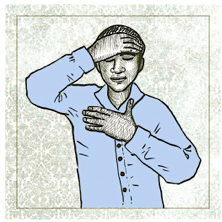
SITE: Self-Soothing Hand positions Exercises (helps with PTSD)

See ACRONYM Page for abbrev.

QUOTE: “We grow sometimes in one dimension & not in another, unevenly….. mature in one realm, childish in another. The past, present & future mingle, pulling us backward, forward, or fixing us in the present. We’re made up of layers, cells, constellations.” Anais Nin


Def: Emotional Maturity (EM)
is expressed in ways that appropriately fit our chronological age – with increased adjustment, stability & self-regulation.  Psychological Wiki
PURPOSE – is TO:
1. acknowledge healthy qualities we’re already developing, based on personal growth – to appreciate our Recovery progress
2. know what personal goals to work toward
3. know what to look for in others* – lovers, mates, friends, family (adults), bosses…..

✶ ACoAs will say they wouldn’t know a healthy person if they fell over them.
WELL – here are some guidelines – for YOURself & about others! Keep a copy on your phone, desktop & bathroom mirror
PS: As emotional wounds heal & distorted beliefs are corrected, we can claim these EM characteristics, & see many areas of our life gradually improve

soothing handsEMOTIONAL GOALS & ACHIEVEMENTS – YOU:
• accept yourself unconditionally, even for the things that are incomplete, unattractive or need improving
• accept & tolerate anxiety & other uncomfortable Es
• accept & face guilt when breaking family rules
• accept that some stress is part of life, rather than trying to hide, without creating drama.  Can meet emergencies with poise
YOU:
• admit & are able to work through Es (fear, anger, pain…) from traumatic events in your life (divorce, major illness, death, disasters….) rather than pretending nothing’s wrong
• are comfortable expressing Es in a healthy way, from the Adult ego state
• are in touch with a full range of Es. Not afraid to find out what they are at any given moment, but not overwhelmed or driven by them
• aren’t afraid to feel sadness & cry, as well as explore the reasons for it
self-pity• can handle disappointment, so are a good loser, deal with defeat without whining or blame
YOU
• have a reasonable amount of patience at reasonable delays, & have self-control in adversity. Accept you sometimes have to adjust to other people’s convenience, needs or limitations
• have Es in perspective, from a balanced internal place rather than B & W extremes. Accept that “If it’s hysterical it’s historical”
• have mostly outgrown envy & jealousy, being honestly glad when others have success or good fortune
• know how to manage & cope with old or new pain
• let yourself be vulnerable without shame or terror, & can let others see your unsuccessful / soft side, but only when appropriate & with safe people
• recognize anger or rage & express them appropriately, in a way that leads to your growth
YOU
forgive• aren’t overly ‘sensitive’ or touchy, can feel your Es but not so easily hurt
don’t have to “show off” in socially unacceptable ways to feel important
• don’t require approval from others to feel good about yourself
• don’t need to constantly find fault, but also aren’t idealistic & unrealistic (in denial) about things that are genuinely harmful
• don’t worry about or try to fix things that are beyond your control
• don’t indulge in self-pity (“woe is me”), understanding the law of compensation* operates in all of life.
IMP: Having compassion for ourself & our misfortunes, which are not of our making, is not the same as self-pity, which only blames others for our pain without taking any responsibility for having to heal our wounds

*Compensation: All life is about trade-offs – good for bad, & bad for good. It’s an amend or reward for loss or deprivation. Anything that makes up for the lack or limitation of something else
“As there is no worldly gain without some loss, so there is no worldly loss without some gain:
• If thou hast lost thy wealth, thou hast lost some trouble with it
• If thou art degraded from thy honor, thou art likewise freed from the stroke of envy
• If sickness hast blurred thy beauty, it hath delivered thee from pride
• Set the allowance against the loss and thou shalt find no loss great.”
English Metaphysical poet Francis Quarles (1592 ~ 1644)

NEXT: Emotional Maturity – Relational, Spiritual