What ACoAs Know & Don’t Know

SO MUCH TO KNOW –
I’ll never get it!

PREVIOUS: Ennea-Triads (3b)

SITE: Self-esteem – the problem behind the problem


ACoAs are some of the smartest, most intuitive people around.
We had to be – to survive our childhood!  But we:
a. don’t acknowledge it (taught to not trust our judgment)
b. are ashamed of it (taught to not think so highly of ourselves)
c. are missing basic, ‘normal’ info about ourselves & the world

1. LACK OF INFO
a. About Alcoholism in the family, denial. THAT:alcoholism
• they were drunk, or that their drinking effected us
• we were abused & neglected (abuse is perpetrated on one or more of the 4 levels: physical, mental, emotional, spiritual)
• we were molested, sexually or physically abused
• we carry deep pain, from all that abandonment
• their damage & our was not our fault or responsibility
• we don’t have to suffer any more
• we have a right to be here
• we can trust our intuition   -etc.

b. About Healthy Living
• what process actually is & how to use it
• what clear, sane thinking ‘sounds’ like
• that we have options & what they may be
• what we want to be / do, when we ‘grow up’ – some of us do
know, but are not allowed to go for it & we’re too scared to failno crisis
• how to live without constant crisis, abuse, anxiety
• that we don’t have to manipulate to get our needs met
• that we can take care of ourselves, if we grow a Healthy Adult
• how to be kind to our Inner Child – grow a Loving Parent!
• what mental health is  (see posts on ‘Recovery’)

c. General
• how the rest of world actually functions
• what reality is – mental, emotional, physical
• what to SAY to people when they say hurtful or outrageous things
what healthy people are like EXP: ACoAs think they don’t get angry, overwhelmed, make mistakes, love relationships…
• why other people do what they do (get away with things, are entitled, can function well…)

• what is NORMAL – which has 2 meanings:
i. the opposite of crazy.  Our S-H says we are crazy & everyone else is normal.  Yes, we do have distorted thinking, which can be corrected – but that doesn’t make us nuts.
It’s normal to: have emotions, to succeed via process, to mourn losses, to not get along with every one, all the time, to have some damage….

ii. what is average – for humans, & in your society
It’s about the behaviors & attitudes common to the majority. But in this meaning, normal is not always healthy! It’s what the norm was where you grew up, in your religion, in your neighborhood & school… 
SO – normal could have been – drinking to excess, physical danger, verbal abuse, insensitivity, lack of education…OR being up tight, having to succeed, always looking good, doing the ‘right thing’…
It’s normal to: laugh when someone gets hurt or makes a fool of themselves, to not help strangers in trouble, to stare at an accident on the street…
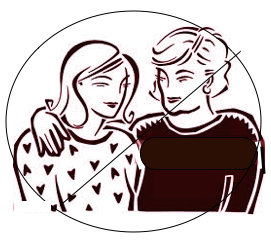
no happy reunion
a. Not possible or unlikely
• our parent to love us, unconditionally
• to be free of all pain & suffering
• to have relationships that never end
• to be liked & wanted by everyone, all the time
• to be a star, be famous, be adored, worshiped

b. Can be worked towards & accomplished
• diminish S-H & gain self-esteem
• be heard/ listened to/ get healthy attentionScreen Shot 2015-07-11 at 11.53.34 AM

• healthy friends & mates
• improved health & appearance
• an enjoyable career, creative outlets
• to belong & be accepted
• respected, treated well
• feel comfortable, safe, secure
• have fun, relax, enjoy life   – etc.

3. What ACoAs DO Know
• what really happened to us as kids (abuse, neglect, coercion, torture) – BUT don’t want admit or deal with
• some of the things we want in life – BUT are not allowed to have
• what we’ve learned and accomplished since we left home – BUT not allowed to admit or own it
• ALL the things we figured out on our own, as kids and as adult – BUT don’t value or validate, because of:
— S-H – we deserved anything bad that happened to us (then and now)chinese S-E
— shame – not allowed to have our need or our value our accomplishments
— lack of healthy mirroring – our real self wasn’t validated by our family, so we negate our natural abilities

SELF-ESTEEM comes from validation & unconditional regard / love.
Validation means admitting what we know & learning what we don’t. Regard is being kind, patient & respectful toward ourselves. It’s never too late to have a happy life!

NEXT: Ennea Development Levels #1

RECOVERY – What it IS & IS NOT (Part 1)

in with the new
OUT WITH THE OLD, IN WITH THE NEW
Dismantling the old patterns

PREVIOUS: What Self-esteem IS

SITEBenefits of a Gratitude List

RECOVERY
IS NOT…❖…expecting to get unconditional love and perfect sanity from any human. It’s unrealistic, but the Wounded Inner Child demands it anyway. Now – when we don’t get it, we accuse others of abandoning us!

IS…❧…understanding that in adult relationships –  each person has their own needs.  Since our parents couldn’t give us unconditional love, when it would have been ‘normal’ & needed, we can only look for it now from ourself, our pets & our Higher Power.  As we interact with healthier people we will receive more appropriate companionship – be mirrored, understood, respected, considered, loved…but never perfectly!
🦋

IS NOT…❖…being free of emotions (Es) that were unacceptable in our family, controlling our Es or trying to have ‘appropriate’ Es. Those are signs of damaged thinking – (CDs) – NOT the same as being in control of our behavior!

IS…❧…accepting all emotions as legitimate. Humans are built with the capacity AND the need to feel. Es are the natural indicators of our reaction to any experience – to let us know whether something is good or bad for us. Re.T.E.A. —
Actions may, or may not, be good, & can be corrected, over time
• Unhealthy Thoughts can be reframed & replaced, when harmful or incorrect
Es just are. They can go from very joyful <–to–> very painful, but are never good or bad! We need to have access to a wide range of Es, with many shades. It gives us a sense of vibrancy & allows us to connect with others.

Only seeing everything in B & W = tv, paintings, walls, clothes….. can become quite boring. Suppressing or narrowing down Es (to 1 or 2, like rage or fear) will make us one-dimensional, possibly cold, hard, distant & ultimately limited.
The intensity & depth of our emotional reservoir of old childhood pain is so great that it will never be completely empty.  Accept this & learn how to manage Es rather than trying to spiritualize them away!
(review “Feelings Aren’t Facts” posts) (MORE re. hand-emotions)
🦋

IS NOT…❖…trying to permanently ‘fix’ our childhood damage, eliminating all character defects, doing is easily it & quickly.  Any effort to fix ourself means we think we’re bad, & that our badness is our own fault, SO we’re responsible for doing anything we can to eradicate it. (BTW, this is one of the reasons why many ACoAs are suicidal & want to be dead)

IS…❧…accepting that alcoholism & co-dependence have left deep scars & emotional hangovers. (Good / bad parenting @ ACoA site). These will take our life-time to gradually heal. Being human means we’ll never be perfect – but Recovery IS truly possible!  Many have proven it.

Humility (not humiliation) is acknowledging our human limitations, with a consistent willingness to evaluate ourself with compassion, in honesty & reality, modifying our thoughts & action when needed to reach our own goals
🦋

IS NOT…❖…being ‘serene’ all the time.
• To always be pleasant, kind, honest, thoughtful…is a disguise for a wide range of emotions we don’t find acceptable (anger, envy, greed….)
• To still be the good boy / girl, in the present, is the symbiotic need for our family’s approval, rather than becoming our own person
• Forever trying to be ‘so good’ is a negation of our legitimate rage & pain of childhood abandonment

IS...❧…gaining genuine serenity, based on a solid emotional, mental & spiritual foundation – from the inside.  This creates the unshakable knowledge that we are ok even when we’re in pain, under pressure, not understood or supported.
We can have upheaval, express intense pain / anger… and still be at peace, deep down.  Serenity is the by-product of knowing & accepting ourself in the moment, trusting our gut, having a great support system & a loving H. P.

NEXT: RECOVERY IS / IS NOT #2

“They Did the BEST They Could” (Part 1)

they did the best... 

YES, I WAS HURT BY MY FAMILY,
but they were hurting too, poor things!

PREVIOUS: Results of abuse – #2

REMINDER: See ACRONYM Page for abbrev.


1. GENERAL
This is a commonly used phrase – in & out of Program – mainly in the service of the speaker’s denial!
You may at first think this post is harsh or unfair, BUT please remember that everything our parents were  – WE internalized into our Negative Introject.
As long as we deny how harmful their actions were toward us – we will continue doing the same to ourselves, mistreat others AND let others mistreat us in many of the same ways! ( Self-hate’).

How is this phrase usually meant? That that no matter how cruelly, crazily…. our family may everything's OK ??have continually acted, to each other & us, even to this day – it was the ‘best’ they could manage.
It implies that they :
• used all possible resources to cope
• could NOT have done any better
• meant well, even if they didn’t show it
• really tried, in spite of falling short
• didn’t have any other options ….

In most of our families NONE of these are true – OR if true in part, it was a very small part – not enough to help us as kids!

2. DENIAL
a. THEM: This phrase is usually said by adults, about their parents – but only by people who had painful childhoods! You won’t hear a happy, well-adjusted person needing to even think this, much less say it!

The BEST they could? If our parents were verbally cold, controlling, cruel & insensitive, narcissistic, neglectful, not comforting, drunk, demanding, abusive, addicts, raging….  That was the BEST they could DO? Really?

NO. The most we could say is that they:
chose the ‘easiest way out’,  just didn’t care enough to bother, or were self-righteous about their parenting style (“Spare the rod, spoil the child”) – anything to not take to look at themselves & the effect they had on their children & others
did what any addict would (not just alcohol, but also food, shopping, raging, gambling, exercise, TV, sports, religion….) – everything possible to not deal with their responsibilities & emotions

did what was done to them. Yes, but most never bothered to change. One mother, when confronted, kept saying – “But there weren’t any books about this stuff when you were little”! Except the daughter knew mom never bothered with anything deep, ever. She only read ‘Readers Digest” & watched soap operas! AND, there were some books, & people she could have asked to help. But she ‘was never wrong’!

refused to get whatever help that was available to them at the time (AA & NO to helpAl-Anon have been around for over 50 yrs, psychologists even longer).  One mother admitted she wouldn’t be caught dead going to a therapist. Another was begged repeatedly by her daughter to go to Al-anon, but always blatantly refused

were neglectful – some of us had a parent with a genuine mental illness – but others in the family denied the problem & did little or nothing to seek out solutions that were possible at the time, if not for the sick adult, then at least for us kids
EXP: More than one CoA was left alone for years to deal with a drunk, suicidal or psychotic parent

b. US: On the surface, when ACoAs say this phrase we mean the ‘General’ qualities listed above (from denial).  Under that, we’re really saying that we :
• can’t afford, emotionally & mentally, to admit how badly we were treated
• still believe we caused or deserved the terrible things they did / didn’t do
• “understand” why they acted that way, intellectually – so we don’t have to FEEL the hurt, sadness, frustration, rage, disappointment….

—–> And here’s the kicker:  we’re saying that – since “they did the best they could” – we can’t possibly be angry at them! Saying that we forgive them is actually our way of exonerating them. – not holding them accountable.

OK, so what’s wrong with that? Yes, it is the ultimate goal of mental health to let go of our anger, detach with love – or indifference, to forgive, outgrow our need for them… BUT…… (cont. in #2)

NEXT: “They did the best they could” (Part 2)

ARE YOU AN ACoA?

WHY AM I THE WAY I AM?
From being raised by alcoholics,
ACoAs & other narcissist!


50 Qs: A Self-evaluating List for Adult-Children of alcoholics, abusers, abandoners….
Answer: Y = yes, N = no, S = some, D = don’t know

DO YOU…?….
___find that you seek out tension or crisis, & then complain about it
___become anxious around angry people or authority figures
___defend or excuse people when they abuse you, implying you deserve it
___get locked into a course of action without seeing alternatives or outcomes
___react to people & situations, instead of choosing your responses
___worry that your emotions may overpower or hurt you, or others
___tend to lie or exaggerate, when it would be just as easy to tell the truth
___find the needs & wants of others more important than your own
___prevent yourself from experiencing the joy of your successes
___frequently anticipate that situations or life won’t work out for you
___isolate yourself when problems arise, or when you ‘feel bad’hiding
___find yourself in one or more survival ‘roles’ (hero, lost child…)
___mistrust your feelings, thought, perceptions
___tend to see issues in life as B & W, right or wrong
___have a fear of abandonment, especially when criticized
___strongly criticize yourself when not being perfect
___defend or excuse people when they abuse you, implying you deserve it
___get locked into a course of action without seeing alternatives or outcomes
___react to people & situations, instead of choosing your responses
___have trouble relaxing, playing, having fun
___had trouble with close, intimate relationships
___feel responsible for the feelings & actions of others, & try to fix them
___stay in relationships even tho’ you’re being constantly hurt, neglected, lied to, manipulated, hit… not getting any of your needs met
DID YOU…?….
___fight with your family members over a parent’s drinking
___your parents make promises to you & then not keep them
___lose sleep at night due to a parent’s drinking
___take on some of the jobs or responsibilities belonging to your parents
___ever get sick, or worry a lot because of their drinking
___ever do anything to prevent your parent’s drinking
___always believe that no one knew your parents were drunks, when you were growing up
ARE YOU…?…
___able to recognize situation that you have no control over
___super responsible or super irresponsible
___unable to work thru crisis & conflict, or do you aggravate it
___seeing a pattern in your relationships similar to your family of origin
___unable to enjoy your successes & accomplishments
___afraid others may ‘find out’ you’re not good, or that you’re a fraud
___afraid of your emotions, & afraid to express them   get help
___unable to complement yourself
___ashamed of or feel guilty for being who you are
___afraid of going crazy, or becoming a bag lady or bum
___uncomfortable with your life when it’s going smoothly
___unable to ask for help, or do so apologetically
___constantly seeking approval from others
___uncomfortable with being liked, admired, approved of
___always mentally looking over your shoulder to see if you’ll be punished
___out of control with: food, chemicals, work, sex, spending, exercising…
HAVE YOU…?…
___been blaming everyone else for your life’s problems
___staunchly defended your parents’ ‘innocence’ in hurting you as a kid
___had trouble following thru on projects, or never finishing
___tried to hide the fact that your parents drank a lot, beat you or others in the family, incested you or your siblings
___concerned about your mate, children, friends’…use of chemicals
___developed fantasy beliefs about how loved ones may treat you some day
___considered what ‘normal’ is, & believe you’re not
___found yourself sabotaging your success & then feeling ‘more alive’
___been loyal to others (parents, siblings, lovers, children, friends, employers) – even tho’ your loyalty was undeserved, unjustified, un-returned
___been fired more than once & never really understood why
___* learned to have dialogues with your ‘inner child’, & consistently take care of yourself in loving ways ?
♥                            ♥                            ♥
IF you’re even taking this test, it’s likely you come from a damaged, angry, abusive, traumatic, neglected, unhappy backgroundanswers
TOTALS:   ____Yes   ____ No   ____ Some  ____ Don’t Know
IF you answered YES to:
✶ 10-20, you’re either not an ACoA, in denial or in long-term recovery
✶ 20-30, you’re a co-dependent, even if there was no alcoholism in the family
✶ 30 or more, you’re definitely an ACoA (adult-child of alcoholics and other narcissists), which includes mentally ill &/or narcissistic family members

• If you said NO to Qs in the ‘DID YOU…’ section, but still scored high, there may be alcoholism/ drug addiction in some other part of your family, even if you didn’t experience it directly
• You may also be an active addict, yourself – alcohol/ drugs, food, money, sex, relationships…

Look thru this blog (2010 – 2016) and go to Heal & Grow SITE MAP – for info covering issues in this questionnaire at: http://www.acoarecovery.com

• If you are not yet in Recovery from your childhood trauma & present day difficulties, you can seek out 12-step Programs. THEY’RE BASICALLY FREE, & are available on the internet & by phone, for anyone not able to get to these meeting in person.  See pg 55 or some of the 12-step groups.

• Also, there are many recovery books, site, blogs & of course therapy, with someone very familiar with ACoA / addiction issues.
✶  If you are in Recovery, keep up the good fight. It pays off! I know because I’ve been at it for 35 yrs, & it works.

NEXT: Variations of the L.L.