Ego States – CHILD (Part 1)

Inner children
I CAN FEEL ALL MY EMOTIONS
when I connect with my Child part

PREVIOUS: ADULT E.S. (Part 3)

CES = child ego state
AES = adult   ”     ”
PES  = parent  ”    ”
NC = natural child / AC = Adapted C.

GENERAL
Everyone has a CHILD Ego State (CES) – the earliest stage of our development, forming our personality in the first 5-7 yrs of life. Similar in many ways to the Freudian concept of id, it operates on the pleasure principle, automatically & persistently aimed at gratifying & fulfilling needs – but available on a conscious level.

We continue in child mode well into our late teens & early 20s, through 7 developmental stages.(“Cycles of Power” by Pamela Levin). For the rest of life the CES is both an influence (what we think & feel inside) & a state (looking & acting like the little person we once were).

CHILD e.s.🌺 It’s called “archaeo-psyche” because it’s a collection of taped & stored info – behaviors, thoughts & feelings held over from childhood.
In T. A. terms, it’s made up of the Natural /Free Child (NC) – our fundamental identity – overlaid by the Adapted Child (AC), healthy or unhealthy, developed in response to our environment which are ‘understood’ as filtered through our natural tendencies (Part 2,3)

Its goal is to feel pleasure & avoid pain – no matter how or at what cost. It’s focused on Self needs only, even when relating to others or trying to being helpful : “I want, Don’t leave me, I refuse, You can’t make me, I don’t wanna, I want you to….”

This does not mean it’s a bad aspect, to be gotten rid of. We need it, since it holds the seeds of our native qualities, as well as the wounds that influence later behavior. It’s just that as adults it’s not healthy to be ruled by the Child. (See ‘Contamination’)

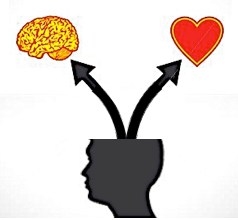
✦ This E.S. is mainly the domain of the ‘felt’ – the Right brain. Before we were able to talk (Left), our whole world was about feelings & sensations!
So most, but not all, of our emotions (Es) – including all the old stored up ones – reside in the C. part of us
brain sidesFor ACoAs, it is our NC that has mainly been suppressed, ignored, almost crushed. Early on it had to go into hiding to preserve itself from overwhelming harm.
However, it shows up anyway, perhaps sideways – when we use our natural talents – in business, in the arts, in science…. BUT without Recovery we don’t believe they have value, assuming we’re frauds. ◎ Healing works to help us own & happily appreciate them.

▶ In CHILDHOOD
Before we have the grown-up components of the Adult & Parent, we develop rudimentary aspects of them – the Child’s versions of them (+FC), along with the basic tendencies we’re born with – the C’s C. Eventually these 3 parts become the essence of the Inner Child E.S. no matter how old we are. (see Second Order E.S. Map).

C. e.s.C’s Parent – sometimes called mother’s ‘Little Helper‘.  Kids, even very small ones, will help a drunk parent up the stairs, rock their dolly to sleep, care for a pet… OR be bossy, lecture other kids, copy their parents’ way of treating their younger siblings…
Electrode (zaps you with a toxic command, causing a knee-jerk reaction), Witch Mother or Fairy Godmother

C’s Adult – trying to do ‘grownup’ things, even before they’re ready, going to the store or school – alone, ‘being in charge’, showing off their cleverness & knowledge… trying to figure out how things work…. BUT without enough info or mature ego states to process everything correctly
The Little Professor

C’s Child – our most basic self, the core of our identity, the most vulnerable part, aspect of ourself which, as adults, has often been suppressed to the point of being invisible.  This part is composed of our physical self, instincts, biological urges, genetic recordings, and how we learn, our level of sensitivity, social preferences, the full range of emotions – from great joy to great pain, down to how we like our eggs cooked! 
Magical Child or Little Fascist

NEXT: CHILD E.S. (Part 2)

Ego States – ADULT (Part 2)

inner girlI NEED TO WATCH OUT FOR
ways the Child or Parent take over

PREVIOUS: ADULT Ego State (#1)

ACRONYMS :
H.A. – Healthy Adult
G.P. = Good Parent
H.C – Healthy Child

PURPOSE of ADULT  (cont)
b. Regulating  //  c. Accounting
d. INTEGRATING
🔻Unintegrated Adult – the rational, competent part of us which many ACoAs use to get along at work & in a variety of relationships, but which doesn’t connect with the Inner Child, is easily swayed or blocked by old damage & can’t ally with a Loving Parent, because there is no LP

🔺Integrated Adult – is expressed in many of the same ways, but mainly as the primary ‘executive’, interacting with both P & C ego states, to form a whole personality. It prevents the WIC or the PigP from running our life

Adult FUNCTIONS
✦ The Adult E.S. can be compared to a computer or regulator, in charge of un-emotional activities such as decision-making & problem-solving
✦ it lives in the present, is able to be spontaneous & adaptable
✦ is intelligent, logical, organized, evaluates facts based onScreen Shot 2015-09-02 at 5.34.10 PM available data

✦ has a keen sense of awareness, understanding, insight – knows what’s possible & what’s not in the real world

is fully awake to the environment, constantly updating itself through every-day experiences, to keep on top of things
✦ estimates probabilities, observing & processing information dispassionately

can ask for help & apply practical problem-solving strategies when things get tough
✦ determines appropriate actions with enough rational input, & draws from recorded ‘tapes’ of a Positive Introjected Parent

looks for information rather than staying scared or making assumptions. Makes an effort to search for knowledge, both from necessity as well as for pleasure (curiosity)
while not focused on emotions, is balanced, not over-or under-reacting
funadult ESctions from understanding that most things are done with a medium level of importance or intensity (not dramatic)

allows the Healthy Child & Good Parent to have intimacy because it provides good boundaries, as a result of knowing what its rights & personal needs, so is not afraid to connect with others
knows who is safe & who’s not, because it can see people as they truly are, rather than idealizing or undervaluing

takes the best from the past & uses it appropriately in the present by integrating its strengths with the G.P. & H.C.
✦ Is not overly influenced by harmful childhood experiences, does’t project personal or family damage onto others

NOTE: When ACoAs function too much from the Adult E.S., we live ‘in our head’, not in touch with feelings & can’t relate to others emotionally

Eric Berne (T.A.) wrote that coming from an Integrated Adult E.S. does not only mean being rational / reasonable, but also provides access to feelings, values & attitudes. It allows the 3 parts to work together as a whole, in current reality – internally as well as externally. The Adult ego state is “principally concerned with transforming stimuli into pieces of information, then processing & filing them on the basis of previous experience” (Berne, 1961).

🔸 The healthy Adult-in-the-adult (rather than the Child’s version of an adult) is fully in contact with Healthy P & C, allows us to see all current options & possible resources – given who we are, in relation to what we need & what’s going on now.

❥ When in the A. ego state – we’re aware of what’s real and what isn’t, & act accordingly.
So when we experience emotions in response to something in the moment – like feeling sad when a friend moves away – our behavior is consistent with how we actually think & feel, (T.E.A.) rather than reacting from our unhealthy past (raging, attacking, withdrawing….).

structure❥ With the A. in charge – we communicate that “WE are OK”, able to choose which mode to switch into depending on what’s called for, without giving up the A. ‘in charge’ position. (see Overview of E.S.)

EXP: As long as the Adult is ‘on’, Child can have fun at the beach or at a nightclub without getting into trouble or hurting others…. & Parent can help someone or run a work project – without overstepping boundaries or taking on too much responsibility….

NEXT: ADULT E.S. (Part 3)

Ego States – ADULT (Part 1)

PAC male
A HEALTHY ADULT INNER VOICE
helps me function well in the world

PREVIOUS: Ego States – Summary

SITE: T.A. tests & definitions

REMINDER: Ego states (E.S.) are in our conscious mind, & only one can be in the foreground at any given moment. Whichever one is on the ‘front burner’ is called The Executive  – for the length of time it’s in charge.
Healthy people can switch between ego states, as needed – most of the time.  It’s NOT supposed to be a rigid framework, but many ACoAs are trapped in the Wounded Child E.S.

All E.S. function on a continuum, from mild to severe … AND a person can go from OK to NOT OK & back again more than once throughout a day. We can catch this by noticing physical & verbal characteristics
Parent : Language is made up of value judgements, lecturing, scolding, controlling….  About ‘You…’ or ‘One…’ rather than “I or me”. Posture tends to be leaning forward

Child :  Words are direct & spontaneous. Physically, the person can be sullen from anger, stiff w/ fear…. If in the Adapted C. = may cry silently. In Free C. = have fun & maybe be excited-noisy
IF comfortable – they’re engaged, attentive, use hand gestures….
ADULT
PhysicallyPosture is erect, maybe with tilted head (listening). Attentive, interested, straight-forward, non-threatening & non-threatened
VerballyTone is measured, clear, precise, crisp, rational, logical.  Words are clear, definable, factual: “It’s a cold day so we’ll need extra clothes”.
Talks in terms of: why, what, how, who, where & when, how much, in what way. Uses comparative expressions, reasoned & accurate statements

PURPOSE of Adult E.S. = “Neo-psyche”, for survival of the Self
a. FACTUAL: This part of us concentrates on Reality, lives in the present & holds the accumulated data of all our experiences.
It begins forming around age 6 to 10 months & is assumed to be fully developed in a normal person by age 12 (from T.A.), but its actual function is not related to a person’s age.
The A. deals with external facts (“It’s 5 pm, the train is late…”), analyzing & solving problems, also using information from Parent & Child states, giving us the ability to successfully deal with the world

b. REGULATING: The A. is in charge of supervising & managing the activities of both adult vectorsInner Parent & Child, AND intervening between them when necessary.
It allows us to keep control of those other 2 states – to not let the P. become too rigid, controlling, pontificating (“Do as I say not as I do”) nor the C. too out of control, selfish, hurtful ( “I’ll kill that so-&-so!”)

EXP: When PigP beats up IC : “You’re no good, look at what you did wrong again, you’re useless”, the WIC will agree: “I’m no good, look how useless I am, I never get anything right”.

🔸 However, if we’ve developed a Healthy Adult (free of C.D.s) then when the PigP acts up – it will step in, first to stop the Introject from doing any more damage, drawing the Child away from it, & work on correcting its Toxic Beliefs. Then the A. can make space for the Good Parent to comfort the abused Child

c. ACCOUNTING Mode is part of the ADULT (A.) – the only E.S. that gives the ability to actually solve problems which can not be successfully done by either the P. or C. This is because when trying to correct things from those 2 states, the problems keep coming back.

In the present, the A. makes balanced choices & decisions, based on stored info from a wide range of reality-experience, rather than from dysfunction.
To have a rounded view & consider future actions, potential outcomes are weighed against the reactions of Healthy Parent & Healthy Child, as well as real-world consequences  (MORE…. re. Accounting – scroll way down)

Accounting Mode interacts with other E.S. without energy blockages. When it’s available & stable (uncontaminated by PigP or WIC), we operate appropriately in the here-&-now, having absorbed any positive parts of our Historic Parent & Archaic Child experiences. This allows us to choose which mode to draw from, depending on the current situation, without regressing into either negative Historic or Archaic states.

NEXT: ADULT Ego States (Part 2)

Ego States – SUMMARY

e.s. summaryBOSSY, RATIONAL or FLAKY

Which E.S. do you present to the world?

PREVIOUS: Process – Recovery – #2

WATCH: On YouTube – TA, Ego-states 1, 2 & 3

SITEs: EgoGrams in couples counseling
EgoGrams” – Graphs of Professions
  Using the 5 ego states

EGO STATES: “The hypothesis that there are several different, coherent functions of the ego that find a parallel in brain structures are shown in the findings of neuro-anatomists & evolutionary psychologists, who refer to them as ‘mind modules’.

Mind modules are structures that specialize in certain functions such as attachment, emotions, empathy, language, movement….. Research has presented a great deal of corroborative material, especially where the are 3 major mind modules parallel the 3 ego states.

One ego state – the rational Adult – is a well-validated function that can be found in the human prefrontal lobe” (MORE….)

Some CHARACTERISTICS
5 ego states
AT OUR BEST

The Intelligent Heart (IH) schematic 🔽, developed by Dr. Frohlich, combines models by Freud, Jung & Berne, shows the underlying energy-flows similar to parts of NLP.
Included are our spiritual underpinnings, the essential energetic elements in all forms of communication. This is based on solid research data showing the psychological & neuro-physiological effects, given a spiritual perspective. (MORE…..)

HANDS represent the neurological functions of each side of the brain
Right hemisphere – corresponding to the left side of the body, provides the imagery, musical & artistic capacity.
ALSO higher consciousness & actual experienced spirituality
Left – in charge of the right side, provides structured & analytical thought processes, ie. mental concepts (the dogma).

ENERGY POSITIONS
1. Universal Wisdom of Love
It’s the personal experience of connecting to a Higher Power / Spiritual Source, either part of or separate from a Religion. The spiritual realm is the overall framework of life, uniting all things in the universe, putting our personal experiences in a bigger context, which allows us to broaden or change our perspective
(CHART & Story by Claude Steiner : Warm Fuzzies & Cold Pricklies

#1 CONNECTS TO :
2a. Nurturing Parent (NP) – “Mother-Father energy channel“ which internalized positive parental messages (good Introjects), including those from other healthy figures (relatives, friends, teachers, neighbors…..). It provides nurturing to oneself & others, based on reality check from the R.A. (#4). “I can put myself in someone’s else’s shoes, while recognizing our differences” (Integration & Differentiation)

#1 & 2 CONNECT TO :
3a. The Inner Child (IC) – authentic Self, the essential Being within every person (regardless of one’s age) – our intuition, but requires constant reality checks to not turn into paranoid fantasies).
HAS:
• a life affirming attitude towards self & others, & explores otherness
• the ability to sense the difference between love & hate
• the capacity for a  wide range of authentic Es (see post)
• curiosity & a fascination for whatever life has to offer
• a need to personally experience things, rather than follow others’ thoughts & rules

#1 also CONNECTS to :
4. Rational Adult (RA) – the capacity for logical thinking & decision-making, grounded in the present & can cooperate with others. Makes regular reality checks, knows when things make sense – or not, assumes available resources are for everyone’s benefit, & knows that together, people can achieve better results.
✦ Responsible for interfacing with the world to get our needs met AND interfering with the PigP’s connection to the AP 

“OUTSIDE
2b. Pig Parent (PigP) – The Negative Introject, not always overt or verbalized. It’s OUR:
• self-persecuting, fear-based attitudes : “Mo one will ever want you, you’re stupid / ugly…. , you’re just like your mom / dad, all men are dangerous / weak…. ”.
• culturally formed prejudices, in-group/out-group thinking:”I have to be IN to belong”
• perceived / assumed need to assert power over others

3b. The Adapted Persona (AP) – starting at birth, conforming to actual or perceived reality, as an emotional survival mechanism.
• If healthy, it allows us to be ‘well-behaved’ in society
• If unhealthy (False Self) it makes us rationalize away traumatic experiences, or over-inflate our role in them, which impairs realistic appraisal of adult situations
• It included the conditioned responses to the PigP (internalized negative parental messages) : “If I sacrifice my True Self I’ll be acceptable. If I stay cute (childlike), they won’t expect to much. If I do everything right, they’ll finally approve of me…..”

NEXT: Ego States – Basics – #1

EGO STATES – ACoAs


PREVIOUS: Ego states Basics #3

SITE: T.A. – Transactional Analysis lesson


ACoAs
 & EGO STATES
Carl Jung is credited with the concept of the “Divine Child”, but the term broke into the mainstream mainly with the book “Your Inner Child of the Past” (1963) by Hugh Missildine, MD. Modern IC work is an outgrowth of ‘Ego Psychology’, ‘Family Systems Therapy’ & Transactional Analysis

In the 1970s the concept of the Inner Child & co-dependence became popular.  In the ‘80s & ‘90s John Bradshaw did an excellent series of TV specials focusing on ACoAs & the IC.
This chart is from Eric Berne’s breakthrough book “Games People Play“. In its simplest form it’s the basis for all modern Inner Child work. For Berne, an ego state is ‘A system of feelings accompanied by a related set of behavior patterns.’

💜 When we’re grown-ups, our E.S. are meant to be built-in resources we can call on as needed, but for ACoAs — aspects of the basic states are distorted (WIC), deficient (poorly functioning Adult), even missing (Loving Parent) due to our upbringing

Under stress we revert to old patterns, which for ACoAs is either the WIC or PigP getting activated. It takes over, while the others recede, having less control, less able to help

Our immature ‘Parent & Adult’ parts are expressed mainly (or only) from the WIC’s point of view – with a child’s emotional range, & only with a child’s limited, perhaps twisted, knowledge of reality.
SO :
• Internally – we mistake our parents’ beliefs, rules, slogans…  for here-&-now adult reality (PigP voice), so that toxic beliefs are taken as facts
• Externally – we may easily be convinced that everyone’s laughing at us because “they” always laughed at us (WIC’s thinking from past experience).

That’s even true in spite of years of education & a wide variety of positive experiences! In Recovery we can find more constructive ways to protect the total personality (PAC).
Current reality is contaminated when overlaid with unresolved emotions & memories of early experiences which became psychological weeds. Our E.S. growth becomes stunted, emotionally & mentally stuck in Child Mode – not our fault, but has to be corrected

Unmet childhood needs which are disallowed – are often disguised by behavior opposite to what’s actually required, like beating oneself up as way to force oneself to ‘behave better’. The original need was to prevent punishment, BUT is now turned into self-abuse!
EXP
Bad PARENT : “Why can’t you do anything right?”
Victim CHILD: “I know I’m dumb. Nothing I do every works out!”
Disconnected ADULT: “Let’s see, next I need to __, & then I’ll go __, and then I can __ …..

It’s normal for each E.S. to act differently when trying to accomplish something, no matter what the goal is. How the Adult part will handle a situation is not the same as an Inner Child or Loving Parent. This is not a problem for a healthy person, since appropriate actions are chosen to fit the situation EXP: Screaming at a concert (IC), being serious at funeral reception (A)….

But when a ‘sane’ Executive E.S. is not available, some internal Voices are frozen in terror, or all are out of synch with each other.
Each wounded state then pulls in a different direction, trying to fill needs that are at odd with each other – especially under stress. This makes it hard to feel emotionally grounded & mentally stable, so we feel like we’re going crazy. We are NOT!
EXP:
👨🏽‍🦱 The WIC’s version of an adult (A) can make us intelligent & very hard-working, but most of our efforts are meant to quiet some secret anxiety (FoA, guilt, S-H, shame…)

👮🏽 The WIC’s version of a parent (P) – actually the Introject – is:
✎ internally very harsh toward the C’s child
✎ externally dedicated, clever & kind – but only towards others
✎ OR very mean to others, while feeling scared & vulnerable

Because the Inner Child is ALL of our history, we can speak of it in the plural, having to do with more than one version of the wounded part – different ages, possibly of both genders, & each one holding an aspect of our early self – sad, angry, scholarly, defiant, carefree…. the suicidal one, the determined one, the caretaker, the bully….

NEXT: Ego states – Adult #1

EGO STATES – Development & Trauma

I HAVE DIFFERENT ‘VOICES’
for different situations

PREVIOUS: ES Basics (@2)

YouTubeTransactional Analysis, Ego-states 1-3


DEVELOPMENT & TRAUMA
Ego States seem to develop from normal differentiation (separating general concepts into specific meaning – good vs bad….), the introjection of significant others, & a child’s reactions to trauma

According to Dan Siegel, E.S. can become fixed when a positive OR negative event is experienced repeatedly, or when a traumatic event is overwhelming. In general, they become parts of the Self, some by reacting to other people, some by internalizing them

a. Integration = Combining & incorporating previously unconnected ‘objects’ into one larger entity. Through this mental skill a child learns to group concepts together, such as combining Dog and Cat into a complex unit called ‘Animals’ //  Mother and Father becoming ‘Family’.

A healthy identity is made up of combining all conflicting reactions in Personality (needs, instincts & habits), gradually organized & then harmonized into a whole.
According to Jung, it’s the process by which the individual & collective unconscious are fused, which then becomes ‘maturity‘, & can help a person move past negative behavior patterns.

When conflicting ‘reaction tendencies’ are not resolved, the resulting internal stress will be expressed as unhealthy activity, but may be so disruptive it leads to dissociation, potentially even the disintegration of the Self into separate parts (More….)

b. Normal Differentiation = A separation of general concepts into specific meaning (opposite of Integration). Children slowly separate out their own identity from that of other family members – by having different opinions & values, while still being able to stay emotionally connected to them.
They learn to discriminate between what they like & don’t like, which become entire patterns useful for dealing with parents, teachers & playmates. Eventually it makes S & I possible. (More…..)

EXP: This mental skill helps us understand that one set of actions is appropriate during a sporting event but not at a business meeting.
If this separating process become excessive & self-defeating, it’s usually called ‘dissociation‘ – withdrawing from current reality

c. Introjection of significant others :
Children automatically accumulate groups of beliefs, emotions & behaviors from their caretakers. Some will be acceptable to their True Self, but for ACoAs, most will be harmful.
▻ If YES, the behaviors get included into their sense of identity (this is me)
▻ If NO (qualities of abusive / neglectful parents) the behavior ‘clusters’ become Inner Objects (not me) which have to be managed by creating defense mechanisms
d. Trauma
To survive overwhelming neglect, rejection & other kinds of abuse, children form internal E.S. which:
✎ end up in constant conflict (PP vs Natural Child… // PigP vs Healthy Adult //  WIC vs Natural Child…. ) OR
✎ get cut off from each other (dissociated) to save the child’s sanity

♥︎ Sadly, these choices prevent a feeling of security, & therefore the ability to extract & enjoy the best from the outside world

EXP: Healthy children can create a imaginary playmate, but eventually don’t need it, replacing it with real-life friends.
BUT a lonellonely childy, isolated child may cannibalize part of its True Self to produce such a ‘friend’, so the imaginary companion feels very real & is hard to give up. It would feel like killing a part of oneself – instead of getting re-integrated

💔 When such a child is forced to push aspects of the Self out of awareness because of conflict & environmental pressure :
☀︎ those disowned parts can eventually be channeled into Work/Career, Research, Creative expressions….. but the person will still be emotionally crippled
☀︎ but more often the result will be social awkwardness, isolation, procrastination, unfulfilled dreams
☀︎ & in a very few, this mutilation of the human soul can show up later in life in a different, more damaging form as multiple personalities. (“We, the Divided Self”, Watkins & Johnson, 1982).

Watkins & Watkins, at Montana U, worked with people who had deep inner conflicts between various ego states which make up the “family of self” – using behavioral, cognitive, analytic, or humanistic methods to create a kind of internal diplomacy.
Applying their “Ego-state therapy” showed that complex psycho-dynamic problems can be resolved in a relatively short time, compared to more analytic approaches. (More….)

NEXT: Ego States – Intro (#4)

EGO STATES – Basics (Part 1)

inner child
I HAVE SEVERAL PARTS INSIDE
& I feel best when they get along!

PREVIOUS: Process, Recovery #2b

REVIEW: S & I – Healthy Individuation

EGO STATES (E.S.)
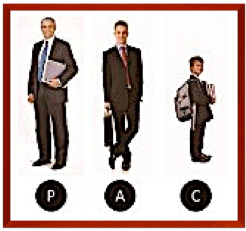
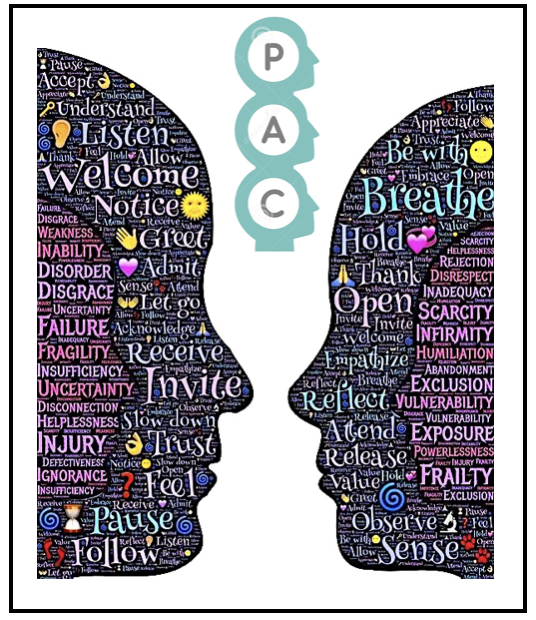
• We’re all born with the potential for 3 basic personality components – Parent / Adult / Child (P.A.C.) which vary in size & importance. They show up early in life in immature form, & are supposed to keep developing throughout life.
They’re called ‘ego states’ – because whichever one we’re in at the moment we think of as ‘me’, our sense of identity (ego = Self). Each is internally consistent, having its own Thoughts, Emotions & Actions (TEA).ESs-Basic part 1

Experiences & activities from childhood become grouped into these ‘clusters’, also called the “Family of the Self” (NOT schizophrenia), which are neural pathways in the brain forged by chemical connections as a result of thinking, feeling or doing (TEA) the same thing over & over, year after year.
How well these internal parts get along among themselves – in order for the individual to function effectively – can vary greatly from person to person

These clusters contain our conscious beliefs, opinions, inner ‘voices’, attitudes… & include memories, roles, physical feelings & postures, mental rules….
They become our habitual way of responding toward ourself & the world, each cluster formed around some point of view or common ‘truth’, either healthy or not – depending on upbringing & native personality
Healthy =  P : “I protect” / A : “I get things done”/ C : “I play”

Unhealthy (P) may organize around rigid rules
“I have to rid the world of all wrong-doing / It’s my way or the highway”
Wounded (C) may base it’s sense of identity on —
“I have to be perfect to be loved / I have to hide all my needs”
Limited (A) may focus on self-importance
“I want everyone to be impressed // I have to do___ no matter what”

E.S. are conscious aspects of our psyche which we can shift in & out of – one minute acting like a kid, the next handling a problem in Adult mode…. Unlike 2 of Freud’s 3 states (superego & id), ego states are visible, making it possible to notice, value, work with & modify aspects of them, if desired. Even so, most people are not aware of having different states, much less which one they’re expressing at any given moment.

However, they can be noticed by others, just by listening to or watching how someone acts, even if they don’t know the terminology. Whichever E.S. is ‘on’ has its own reactions to events : “Boy, is he being a brat!”(C),  “You’re not the boss of me! “(PigP), “Yes, your suggestion is workable” (A)

🔴 General rule: Most people you deal with are either coming from their Wounded Child (WIC) or Negative Parent (PP) ego state

NORMAL – Childhood parts become integrated into a larger whole, with the Healthy Adult in charge. They work well together internally, partly because they include Adaptive Introjects of caring, supportive caretakers & teachers, as healthy role models.

This allows such people to function successfully in the world because they :
• act in appropriate, productive ways
• experience & manage a full range of Es
• have flexible rather than rigid thinking
• hold positive beliefs about Self & the world
• live in the present (instead of all in the past or all in the future)

HEALTHY ego states form in childhood in response to positive, affirming relationships within a family that’s loving & able to connect to the child in all 4 PMES ways (physical, mental, emotional, spiritual)

EXP of a mature internal dialogue
Healthy ADULT: “Hmmm, it’s Saturday. I want my place to look, feel & smell nice, so I’m going to clean today”
Playful younger CHILD: “NOOO, I want to play. I want to go to a movie with my friends & have fun!”

Loving PARENT: “I know little one, but the place is not in good shape right now, & you know how much better you feel here when it’s all clean & fresh.
We can do something you like tomorrow, & then we’ll have even more fun knowing we’re coming back to a nice clean home”
Older CHILD : “Ugh! I know you’re right & I won’t stop you, but you’d better keep your promise!”

NEXT: Ego States – basics (Part 2)
PROCESS – Recovery (Part 2b)

good lifeRIGHT ACTION
makes life easier

PREVIOUS: PROCESS – (#1)

Posts: Toxic Beliefs” // Risk
Why Are You Stuck?

See ACRONYM page for abbrev.

BOOKsRecycles of Power” & “Cycles of life”, ~ Pam Levin

REVIEW: ‘Emotional processing happens when we can cope with distressing events – over time, so that new experiences can occur (stressful or not) without a return to the previous upset. Everyone goes through things that cause pain, but for most people those emotions don’t last.

Why do some look at a situation without fear while others are gripped by a fear or anxiety so strong they are paralyzed? Scientific research has identified  the cause as cognitive-emotional processing, in which both feelings regarding the incident and thought processes were involved — not just an overly emotional response or a lack of normal emotional processing ability.’ (“Anxiety & T.E.A.“) feed the mind
🌺
HEALTHY PROCESS  (2a cont)
a. Awareness  //  b. Acceptance

c. ACTIONS
i. WHAT – Present-day behavior patterns are :
• based on how the real world works & our many experiences
• motivated by self-respect & permission to act on our own behalf
• the result of S & I – taking center stage in our own life
• considering our effect on others, without being co-dependent

ii. HOW
• always looking for possible, appropriate options
• asking for, gathering & using a variety of help
• considering realistic consequences
learning by trial & error, & never giving up
• taking appropriate risks, then observing the results

iii. WHO – Definitely by the “UNIT”
• Healthy Adult – the competent, objective part of us that has accumulated knowledge & experience about ourself & the world
• Loving Parent – the mature care-taking part of us that has both kindness & boundaries, patience & limits, compassionate but realistic

vi. ABOUT
• acting on our needs & in accordance with spiritual beliefs
• always give ourselves & others enough time to get things done
• it’s based on sound planning, & knowing our current limitations
• choose activities that are pleasurable but not self-destructive
• consider both the ‘price’ & rewards of our actions
• do things for our own growth, not just for others

• know timing – don’t force or try to control but don’t wait too long, don’t try to do too much at the same time or schedule things too close together
• NOT use activities to cover up self-hate, loneliness, avtimingoiding painful emotions & relationship difficulties
• some actions need to be repeated many times, to be effective
• sometimes NO action is the best option
• stop to decide what to say or do, before ‘jumping’ (not reacting)
🌺

RECOVERY – 2 major ways to change our actions:
1. Do the opposite of our old behavior patterns (“Actions: Healthy Opposites post). The trick is knowing what rational, healthy opposites are

2. Doing the same activity for an opposite reason.
The basic issue here is motive. This is even trickier, unless we are clear what our reasons are for taking actions. And, others may not understand, so some people will give us a hard time, or walk away frustrated & disgusted

EXP:  We may repeat an old behavior : staying in bed a lot, sleeping longer than usual, spending more time alone than with others (assuming we’re not physically ill), eating ‘family type’ foods
a. Old Motivation: To escape, to not feel old pain, not deal with difficult life situations, fear of ‘people, places & things’

b. Healthy Motivation (same action, new reason)
self growth• to recover from re-experiencing deep emotional trauma (childhood pain)
• to process a major stressor in the present (death, divorce, moving, marriage, a baby, new job, a fire…), when too many things are happening at once, especially if we have no control over those events
• recover from Introject attacks – because we’re doing so well (back lash)
• catch up on a lot of positive, new input – internally or externally
• resting up after a big event (wedding, surgery, travel….)

Also: IF we can NOT take some positive actions we would like to. YET – we can practice patience – keep working at it & never give up!

NEXT: Ego States – Summary

PROCESS – Recovery (Part 2a)

 YOU MEAN PROCESS WORKS?
Yes. And it’s not a dirty word!

PREVIOUS: Process – ACoA version

BOOK:  PASSAGES, ∼ Gail Sheehy

  1. ACoA PROBLEM (part 1)

2. HEALTHY PROCESS – using Al-Anon’s 3 As
a. AWARENESS (Aw) – mainly ‘head’
i. What: Process is usually about information, based in reality
• something about ourselves, our past, the people we do/did interact with – those ‘AHA‘ moments that makes sense of something confusing or distressing
• it can be the end result of years of study & self-examination or by making an intuitive leap
• can also be about buried emotions which surface, sometimes unexpectedly, as a shock or as a result of conscious Recovery work
• a moment of ‘Spiritual Awakening’ – which lights up our inner worldawareness

ii. How: Aw. can come from:
• books, TV, movies, songs, websites, blogs
• therapy, 12-step programs, ministers, other healers
• talking to family, friends – even strangers
• meditation, journaling, drawing, Inner Child Writing or visualizations…

iii. Who – is comes mainly from the Healthy ADULT ego state, which observes & learns from everything in the present, accumulating & putting pieces of info together – in our own unique way
• It does not include information coming from fear, self-hate, shame, guilt… So, NOT from the bad parent or the wounded child ego states

vi. About
• accepting that self-esteem is not arrogance, selfishness or ‘ego’
• active addicts made poor parents, friends, mates, bosses
• following the toxic family rules is soul murder
• knowing that perfectionism is an expression of self-hate
& THAT:
• it takes a certain amount of Recovery to realize just how damaged self-confidencewe really are! – as denial diminishes, & we can handle the truth about our family
• no matter how hard we try to improve ourselves, some people will never like us or be comfortable around us
THAT:
• some people won’t see us or agree with some strong belief we hold — IF agreeing would cost them their sense of personal equilibrium (unhealthy)
• our identity cannot, must not, depend on having everyone like or approve of us
• some people will not appreciate the changes & improvements that come from our growth
• we won’t convince others of our point of view or beliefs — IF it contradicts their Inner Truth (healthy), AND we shouldn’t try!

b. ACCEPTANCE (Acc) – mainly about Feelings & Process
☆ covered extensively in posts : ’Acceptance & ACoAs
i. What:
• it takes time to thaw out (lessen rigid defenses) enough to allow old accumulated emotions to surface.  Still hidden in the unconscious, all that pain powers the engine of our S-H & lack of clear identity
• the opposite of our WIC’s alcoholic grandiosity, which makes us think we have impossible powers, over everything, all the time
• taking responsibility for our own lives, while thoroughly acknowledging what happened to us as kids
• the essence of the Serenity Prayer
• Al-Anon’s 3 Cs “I didn’t Cause it, I can’t Control it, I can’t Cure it’ good group

ii. How – by:
• a conscious effort to deal with reality, as much as we can
• being willing to consistently be there for our IC
• having a loving, safe & smart support system
• persevering, no matter how long it takes
• understanding what to acc. & what not to put up with
• connecting with an H.P. of our understanding, to heal us

iii. Who – mainly acc. the Wounded Inner Child (WIC)
• psychically, we have a huge ‘trans-atlantic’ multi-stranded steel cable, with one end attached to our solar plexus & the other to our family (dead or alive), AND
• that in Recovery we have to snip away at each strand that feeds us their damage, while keeping any that are safe, healthy & useful. This takes time, effort & repetition

vi. About self-love
• all emotions give us legitimate information about our experiences & what’s bad or right or us
• we are damaged, NOT defective. Damage can be healed
• S-H is a defense against feeling the original abandonment pain
everything self-hate tells us is always a LIE
❗️transferring personal power from the WIC to our developing UNIT
normal = human = imperfect = OK / acceptable

NEXT : Healthy Process – “Actions” (Part 2)

PROCESS – ACoA Version (Part 1)

process 1


WHO NEEDS PROCESS?
I’ll just jump to the end. Much faster & less hassle!

PREVIOUS: Book version cancelled


ACoAs HATE process!

Process is the practical HOW TO of living well
, something ACoAs barely learned, or not at all.
Our FAMILY (& other adults) :
• were not good role models (incompetent, drunk, controlling, bossy, weak, procrastinating, fearful – or just unavailable / absent)
• expected us to know what to do automatically (read their mind?)
“behave, make us proud, always look good, never mess up, learn a skill, go to college, be a good son or daughter / student / Christian…’

• wouldn’t let us help them do things (so we thought it meant we were hopelessly inept – even of we were only 6 or 10, or a teen…)
• either gave us incomplete or incorrect info, or didn’t help us figure out the process, expecting too much while getting frustrated & angry with us for not getting it right away, & ended up disgusted & abusive

✒︎ Did I mentioned? ACoAs HATE process & will do anything to avoid it, including not even notice we’re avoiding it!  We want to get THERE as fast as we can, like yesterday. We’ll see why.

goalsSO – what is it? A series of action steps or growth stages, between where we are now & where we want to be = HERE ——>/——>/——>/——> GOAL
The overall procedure is a series of –
A – Actions
Each step also has 2 major aspects –
T – (thoughts) ie. Information
E – & emotions

1. PROBLEMS : This looks simple, no? But nothing is simple for us!  (3 CHARTS…..)
a. ‘HERE’ : wherever we’re starting from. Seems obvious? Well, not always for ACoAs. We’re often either in lala land or in S-H about our current status. What’s needed is a fair assessment of our strengths, weaknesses AND outside resources/ support
So we ask: QUO VADIS? (Where are you going?)

b. ‘GOAL’: Another hitch. Because –
• many of us don’t know what we want, need, like, feel… so how can we have goals?
• we’re not allowed to think for or about ourself without interference, so we deny knowing what goals we may have
• some goals are only those we were programmed to take on
• some of us have very clear goals & strong desires – BUT are not allowed to pursue them (form the PigP),who am I
and the WIC is too terrified of failing or losing, if we tried

• other of the WIC’s goals aren’t within our capacity, not realistic or just plain unhealthy. If we focus on something that’s not feasible, naturally we’ll never achieve it, which just adds to our sense of hopelessness. (“Weak Decision Styles)
So we have to carefully think through what we’re aiming for

c. The STEPS: Next problem –
• we don’t know what the steps are – for many types of process
• we want to skip the ones we can’t handle instead of asking for help
• our family didn’t go thru process-steps, so we don’t know what stages ‘look like’
• we were expected to be little adults – so they wouldn’t have to be real adults – forced to skip the process of normal childhood developmental growth levels.  So we think that’s how it’s done:
“ACoAs get their MSW first, & their Birth Certificate later!”

Process is about ACTIONS. Each step is made up of:
 c1. Information (facts) – like how to make a resume, fill out forms, think thru a problem….. ACoAs are VERY smart, but we’re a human version of HAL, in ‘2001’.
Think: millions of data crystals fitted into the slots of our processing core – some are missing, many are there but corrupted & others are in perfhead & heartect working order BUT not linked to the recognition software! ie. – we don’t OWN all the good & accurate things we DO KNOW!

Even so, ACoAs are avid learners, book junkies, always searching, trying  to figure out how ‘normal’ people function. So this point is more manageable.  We can easily find info, especially now, on the net.

c2. Emotions – mainly FEAR (anxiety) like when we have to cold-call, interview, talk to a stranger at an event…. This is the real sticking point. We brought with us from childhood:
• OLD Emotions: so many painful experiences which never got validated or processed, so there’s a deep well of terror – which we now project on to anything that seems hard

• CURRENT Emotions from toxic beliefs : that Rolodex of negative Rules in our head which we obsessively repeat, insuring we won’t be able to take healthy actions if at all.
Negative thinking (CDs) creates high anxiety!  It’s not just the old fear that cause problems. It’s what we’re still believing right now that’s scaring us!

NEXT:  Healthy PROCESS (Part 2a)