ACoAs & LISTENING (Part 1)

 I’M GOOD A LISTENER, BUT….
… I have to make them feel better!

PREVIOUS: Healthy Opposites #3

POSTS: How ACoAs Abandon Others


LISTENING
can be passive or active, but basically – the less said the better!
Wanting to be listened to is not always asked for directly. When someone starts talking & then keeps going & going – they want to be heard.

• The following 3 examples cover T.E.A. In each case, if the WIC or PP are the ones listening, then what we think are ‘helping’ responses will actually be our own narcissism – the compulsion to tell them what WE would do or say – but is actually NOT about the other person & so not useful. Don’t get in the way of someone else’s process!

LISTENING ‘situations’ 
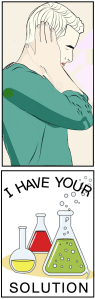
1. (E) When someone wants you to listen to them, AND they’re having intense emotions (sadness, anger, fear…),

🔓AND you tell them they shouldn’t feel that way – “Don’t be upset”
💚OR automatically tell them how to fix their problem – “You can….”

👣👣 then you’re trampling on their right to feel & express their emotions without interference.
EXP: After my fire, when I told people how sad I was that both my cats were killed by the smoke, some people said: “Well then get new cats”!

HARMFUL
ACoAs who react from their WIC to another person’s emotional expression will over-identify with their distress. Since we didn’t get the support as kids that we needed, we project that on to others, & decide (usually unawares) that we’ll never be like our parents – to leave someone in the lurch. We compulsively have to ‘help’.

PROBLEM with this WIC-logic (T)
When we were originally abandoned, we were very young! But the people we’re usually trying to rescue to now are adults who have many resources & capacities no child can possibly have. So they don’t need us the way we needed someone to soothe us when we were in pain as kids. (See posts: “Rescuing – False helping” and “Healthy Helping“)
ALSO, we’re not their parent, no matter how immaturely they may act!

🖤 Negating a person’s emotions or trying to make them ‘feel better’ wastes everyone’s time because,
• the listen-ee may just shut down & not be able to continue, OR
• they’ll waste a lot of energy convincing you how & why they feel that way
HELPFUL
Rule #1 : YES, zip the lip!
OR if you can’t :  ASK them what they’re feeling – emotionally.
Don’t settle for HEAD answers. Ask what they’re feeling emotionally vs. what are they’re thinking. Anything more than one word (E) is a thought (T). (“Feelings Aren’t Facts”)

If they’re not sure, maybe you can help them identify the words, such as fear, self-hate, frustration OR excitement, joy, love… If you also aren’t clear about what they may be experiencing, be quiet.

• If you’re in the ‘mood’ to respond to their comments, always start by validating whatever emotions they can verbalize. It doesn’t mean that you identify with the feelings or the situation, nor is that necessary. You can say brief, comforting things like:

“Wow, that’s tough, I know what you mean, Sorry to hear that, I’ve been there too….”
Screen Shot 2016-06-19 at 5.06.00 AM“Sound like you’re in a lot of pain, That must really make you angry. Ouch!”.

But, DO NOT assume you’re sure you know how someone feels. If they disagree with your opinion, drop it.

A POSSIBILITY – with their permission
If you know them well, have experienced something similar AND you feel like it – you could help them figure out what’s behind their big emotions: old beliefs, the WIC over-reacting, family patters, current similarity to childhood experiences….
Then if they’re willing & able to go deep, the solution to their problem may be obvious to them without any more help from you.

NEXT: ACoAs & Listening (Part 2)

“ACTIONS – Healthy OPPOSITES” (Part 3)

2 ways I HAVE TO DO IT ALL DIFFERENTLY –
it’s such a big job but I’m not giving up!

PREVIOUS: Healthy Opposites -#2

See Acronyms Page for abbrevs.

SITES: Healthy Helping  // Healthy Boundaries  // Recovery – Is
My Rights  // ACoAs & Healthy Rules

“REVERSING self-defeating Behavior IMPROVES our Life” (cont)
A. UNHEALTHY Patterns

B. UNHEALTHY Opposites
(cont.)
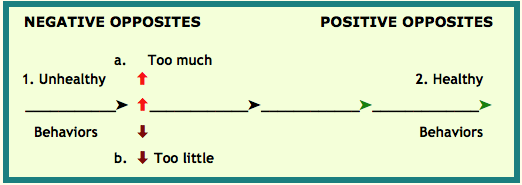
• Recovery is about moving from being unhealthy (#1) to gradually becoming healthier (>>>#2), from doing self-harming things to becoming more self-caring. All wounded people start out on the far Left side of this chart, taking mostly unhealthy actions. Unfortunately it’s where many ACoAs stay – although we don’t have to

healthy oppositesThere’s a saying in AA: “Alcoholics dig themselves into a rut, & then they decorate it”! —- instead of climbing out.
Since many of us were raised by alcoholics we learned to do the same, & find it very hard to outgrow.
It’s also true if our parents were some other kind of narcissist, abuser, depressive…. no matter what their drug-of-choice – food, money, exercise, relationships, workaholism, rage, religion….)

• Naturally, if we don’t know what Healthy Opposites are we can’t work towards them.  So we settle for Unhealthy opposites without even realizing what we’re doing.  Because they don’t work either, we go back to our original coping style, caught in a vicious cycle between the extremes of the Left end ⬆️, never making it over to the RIGHT side!

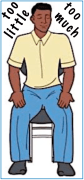
Some Negative Opposites (a –> b –> a….)
• Feeling hurt
Too Little: backing down, suffering in silence (& rage), being a victim…
Too Much: rude, hostile, insulting, giving the cold shoulder….

Disappointing “relationships”
Too Little: isolating, depressed, not saying how we feel or what we need, ignoring our needs, waiting to be taken care of…
Too Much: clinging, chasing, verbally attacking, demanding….

Work Stress
Too Little: being late, going on strike, not finishing projects, making lots of mistakes, taking too much time off….
Too Much: trying to please the boss, doing everything immediately, staying late, worrying about getting fired…..

• In the Home
Too Little: being lazy, sloppy, careless, dirty
Too Much: compulsively cleaning, obsessively putting things in ‘order’, not wanting anything moved….
More Examples:
FROM clinging to bad relationships, family, jobs… TO isolating ourselves to the point of emotional starvation

FROM not being able to get out of bed, totally goofing off, not using our talents …. TO running around like a headless chicken, taking on too many projects, becoming a workaholic

FROM being so poor we end up living Ion the street or with drunks & crazies, TO overspending every cent we have as a way to sooth ourselves
FROM physically being undernourished TO stuffing oneself, especially on unhealthy food & drink
FROM promiscuity TO total sexual / sensual deprivation
FROM living in daydreams TO being hard-nosed & controlling – and back again….

C. HEALTHY Opposites
Moving forward in life includes taking healthy productive actions, although doing things is not the only aspect, & sometimes taking no action is wiser & more effective.  In terms of T.E.A., all our actions are motivated BY our thoughts & emotions, whether healthy or not, whether we admit this or not.

So, what can we do?

• In order to make desired changes we need correct info. Like any new language, we have to learn the vocabulary, grammar, syntax & rhythm of healthy actions. Actions that lead to any type of success are usually the exact ‘Positive-Opposite’ of our life-long patterns.

Yes, we’ve tried to do things differently, but to no avail because we’ve been doing the ‘Negative-Opposite’, with great effort & sincerity, but always ending in disappointment or failure

• We know it’s hard to change. ACoAs hate change! It triggers the WIC’s lack of safety from our dangerous childhood.  Taking positive actions can temporarily make us feel crazy, in danger & we can temporarily regress to immature behaviors – as if we haven’t grown at all!

Recovery asks us to let go of old ways of thinking & doing – which seems very threatening – but ends us actually healing us!

NEXT: Reader request

“ACTIONS – Healthy OPPOSITES” (Part 2)
 I’VE BEEN DOING THE OPPOSITE!
 why isn’t it working?

PREVIOUS: Healthy Opposites #1

POST : Letting GO of ACTING Controlling (#2)


“REVERSING self-defeating Behavior IMPROVES our Life” (cont)
A. UNHEALTHY Patterns
(cont.)
ACoAs have a tendency to:
do everything based on B & W thinking (‘always, never, no one, all’…)
• be afraid to do anything that’s against the Toxic Family Rules
• only do what we think others want us to, or what others expect of us

behave in much the same way that our dysfunctional parents did
• use the same type of actions in every situation (no nuance, no variations, no risks, no innovations or what actually works …)

• not learn from our mistakes, just repeat bad patterns & then complain
• blame others for our mistakes, emotional distress or lack of action
• react from a wounded, anxious or angry emotional place (the co-dependent triangle = victim / perpetrator / rescuer)

Here the focus is on the way to choose what category of actions to take. It’s not a guide to what we should do, but rather correcting what seems to us a quite logical – yet misguided – way to solve our problems, which has been to:
➡️ periodically reverse our usual way of handling things – but only knowing how to choose its Unhealthy Opposite!

B. UNHEALTHY Opposites
• From the very beginning of life we’ve been trying to figure out how to survive, fix our family & get our needs met – mostly with corrupted info (G-I / G-O = “garbage in – garbage out”).

ACoAs are very smart, creative & determined – even though we don’t realize or own it. As kids all out talents went into a valiant effort to save our parents & siblings – maybe even friends.
Now we find other dysfunctional people to ‘rescue’ – desperate to make them well enough to be there for us!

EXP: The 4yr old trying to help her drunk father up the stairs that he’s passed out on, the teenager hopelessly trying to convince her mother to go to Al-anon or leave dad, OR as adults – trying to get a heavily addicted lover /spouse sober, or to keep them from killing themselves – whealthy oppositesith little or no success.

• As unrecovered adults we stumble around without mental or emotional clarity – in spite of our high intelligence, because of convoluted & warped info we were fed in childhood.
The ACoA Laundry List says: “We guess at what normal is”, so we obsessively watch normals to figure out what to do (how do they talk, how do they eat sushi, what makes them happy, how do they make friends?…).

Even so, we can only copy them but so far, because we’re still in the grip of our childhood / family templates – used as the foundation for new actions.  It doesn’t work. This is to be expected – it’s how every brain is programmed from birth.
So we always end up in the same old place, defeated & hopeless, thinking that it’s: a) somehow all our fault, & that b) the universe is against us!
Either way, it hurts!
EXP: Afraid to be in social situation because we don’t know how to make small talk, convinced we’ll be boring or sound stupid…..

• And how do we use all our native cleverness & determinatioakwardn for ourselves?
There are many convoluted ways UNhealth can manifest itself. From that mess we choose a set of patterns that most suits our specific personality & our background. We keep trying them out in complex variations & with lots of different people. (Chart in Part 4)

When we get too frustrated by not getting what we need or want, we unconsciously pick through the mental rolodex of distorted options that were forced on us, looking for a better way to handle things, hoping another ‘opposite’  way of behaving will solve our problems.

So we try obvious reversals, BUT all our action-choices are taken from the ‘disease’ end of the spectrum. From a. to b. & back again! (in above chart)
EXP: “I always say the wrong thing, so now I’m not going to talk at all! OR
// My last 3 girlfriends were nightmares, so I’ll never trust another woman….”

NEXT: Healthy opposites #3

“ACTIONS – Healthy OPPOSITES” (Part 1)

 I TRY & TRY –
but I still don’t get anywhere!

PREVIOUS: Self-Esteem – IS

POSTWhy are you stuck?

See Acronyms Page for abbrev.


“REVERSING self-defeating Behavior IMPROVES our Life”
A. UNHEALTHY Patterns
• Many of us know how we would like our life to be:
To HAVE a fulfilling career, loving relationships, less pressure, a little fun… and we’ve been trying, struggling, obsessing – year in & year out – but not much has changed.  We feel stuck, frustrated & depressed – still run by our false beliefs (CDs) & un-processed emotions.

We grew up with years of abuse – around chaos, addictions, criticism, rage, depression, neglect & illness. We learned to survive by adapting to what ‘they’ seemed to need & want, so we cobbled together a set of behaviors as best we could, with very little guidance, which allowed us to survive – but not thrive. We became a ‘human doing’ instead of a Human Being.picture-13We often hear advice like – “Just do it!, Just start somewhere, Do the opposite of what you normally do”, even “Take the action & let go of the result”….  America was built on hard work, perseverance, risk taking & chutzpah.  All of these qualities are action-based.

Anthony Robbins, famous athletes, business moguls & business coaches focus us on taking the next action & the next – no matter what.
➡️This has value, up to a point, but ACoAs know it’s not that simple, because depression gets in the way, & besides – we didn’t have early role models for what right actions actually are.

Dysfunctional Functioning:
a. Some ACoAs have a daily struggle to function at all – maybe from being chemically challenged, not having the vitamins & nutrition needed to be ‘level’ & / or being so devastated by emotional pain that we have little or no passive victimwill to act

b. Some of us waste years of our life just drifting along, not knowing what we want to be ‘when we grow up’!  We’re unhappy & unfulfilled, but don’t have a direction to focus on. Or we fall into whatever jobs that allow us to earn a living.

This is not blame – only identifying the result of being wounded, not from personal defect!  Various forms of Recovery can help us find our True Self, which includes our dreams, goal, talents & abilities

c. Others of us have a strong sense of what we’d like to do – if only we had the support, the education, the opportunity, the connections…..
But we don’t go for it because it would require going against every message we picked up at home, such as – “Don’t out-do us, Don’t be successful, Don’t be the real you….” all of which feels like life-&-death to disobey!
✶ This is not an exaggeration to the WIC, so don’t let anyone tell you you’re being dramatic!

d. An alternative to not doing anything is to either take up a profession that was dictated by our family or a secondary interest of ours (doing stage makeup instead of acting, being a nurse instead of a doctor….) – sometimes even becoming very skilled at it, but without enough satisfaction.
➡️ It’s not unusual for ACoAs to do quite well at what we like to do the least!

e. Many ACoAs fail to take the beneficial actions we absolute need to have a decent life – at the very least, always choosing the worst relationships, the most unsatisfying jobs, isolating ourselves, refusing to take advantage of growth opportunities (personal or material), not caring for our health – not to mention continuing with any number of addictions

f. And then there are the Hero ACoAs, who over-DO all the time. Action is their god, their escape, their addiction. Keeping busy is the only thing keeping their emotions at bay.  ‘Heroes’ are so good at everything they DO, but are hard on themselves & hard on everyone else.  They may or may not be working at a job that suits them, but they’re going to prove they can do anything! What gets ignored is being vulnerable, showing heir softer side.

NEXT: Healthy Opposites – #2

ACoAs being Scapegoated – GOWTH (Part 1)

empowerment

I CAN & AM OUTGROWING
this toxic victim role!

PREVIOUS: Scapegoating #6


FOR ALL ACoAs
Emotional damage: Scapegoats (SCs) are forced undeservedly to carry the family’s burden of disowned defects. They drown in the pain of those closest to them, & later in the collective pain of the society – with no one to comfort or understand them

In the process SCs are robbed of experiencing their own pain, denied the opportunity to learn how to contain, endure & grieve the suffering they’ve had to ignore & bury. (What is Scapegoat child abuse?)

No matter what our toxic family role was as kids, many of us tried to bring attention to the family’s dirty laundry,
so it would get corrected, but in most cases that never happened. (This is true even if parents or siblings eventually get into 12-step Programs, but still have not done their own FoO work).
We assumed that if we could make the adults own their emotional baggage, our torment would stop & life would be great.
And so we pushed & pushed – but it only got us more abuse.

• ACoAs desperately want justice / fairness! Failing at this childhood goal, some continue trying to ‘fight injustice’ as adults, especially those of us who were scapegoated. We may become ‘expose´journalist, prosecuting attorneys, ‘church ladies’, public service advocates or whistle blowers….

However, most of us live more conventional lives, with little social or political clout. Even so, we compulsively insist that dishonest & hypocritical friends, relative, mates, bosses (& elderly parents)…. admit their flaws. It didn’t work at home, & rarely works in the adult world either. It still brings negative feedback & so another layer of abuse

TO HEAL
Ask: “Am I willing to do whatever it takes to give up my Scapegoat role?” That’s not always an easy Yes, but do-able. Remember, if you continue to be :
😠 belligerent,  demanding, controlling
-OR-
😔compliant, over-agreeable, too silent, submissive or unclear
THEN
👎🏽 it’s easier for others to end up avoiding, making fun of, manipulate or attacking you
That’s even true coming from people who are not usually scapegoaters!  It’s a normal human reacpull out toxic roletion toward someone acting out their WIC’s damage.
BUT – as you heal the inside, you’ll get better reactions from others! Who knew??

• Once you acknowledge this toxic role that was forced on you, & truly believe it was not your fault (Al-Anon‘s 3 As), you can observe how you perpetuate the syndrome, & slowly change the pattern

❇We can bear to re-feel our old pain IF & when we’re comforted, understood & treated with respect by one or more safe & caring people. Then apply that treatment to ourselves.

TO WORK ON 
a. BOUNDARIES: • Don’t expect others to respect your boundaries. You have to set the standard that’s right for you. “This ____ works for me, this ____ doesn’t, I want to do this, I don’t want to do that…..”

• Practice saying NO – at first in your head – a lot! Then try it out on small things you don’t like or don’t want to do – with people or situations that don’t feel TOO ‘dangerous’ if it doesn’t work out the way you hoped.

• Don’t over-give. Offer a little, & then see what & how much the other person can reciprocate. If the can only give 10%, you give only 10-15%, etc. It’s up to you to not get taken advantage of

b. PRESENTATION: ✦ Walk into every room with head held straight, look at people directly, don’t slouch, walk ‘confidently’ – as if you believe you have a right to be here – even if you don’t feekind peoplel like it.
✦ Dress appropriately for the situation you’re in
✦ Look around & notice what’s going on, notice who’s NOT safe (using your inner radar) ….

c. RELATIONSHIPS: Whenever possible, stay away from the people who originally set you up, or who still treat you as the black sheep in any situation.
Look for people who are already kind, or at least respectful.
If you aren’t getting any of your needs met or are treated shabbily, you can walk away.
We MUST keep the focus on ourselves – owning & correcting our own character defects, AND appreciate & cherish our talents & skills.

NEXT: Scapegoated GROWTH #2

ACoAs ‘FEELING SORRY For’ (Part 3)

I CARE ABOUT OTHERS IN PAIN –
but my first responsibility is to my own!

PREVIOUS: “Feeling Sorry For” #2

See ACRONYM page for abbrev.

1a. For OTHERS – POSITIVE
1b. For OTHERS – Negative

2. For OURSELVES
FEELING SORRY for oneself can be healthy or unhealthy.

HARMFUL, coming from others
When we express genuine pain, we often hear cruel reactions 
from ‘authorities’, family or so-called friends (some 12-step members, religious communities, various self-help gurus / books), saying :

“Get off the pity pot , You’re JUST feeling sorry for yourself , Don’t wallow in your pain , Don’t live in the past , That was a long time ago , Are you still going on about that? ….”

These comments come from wounded people in denial about their old wounds (even some in Program) & not working to heal them. Instead, they’re clinging to & protecting their own defense mechanisms & don’t want to be reminded of their damage by our sadness.

However,
we have our own version of “feeling sorry for”, in 2 forms.
a. Negatively (self-pity) endlessly rehashing old traumas, as a way to :
• not care for ourself & stay in damaged-child modeself-pity
blame others, instead of focusing on what we can do now
• stay in the anger – which is ‘safer’ than feeling the pain underneath
• not have to grow up & ‘leave home’ (S & I) — escaping the responsibility of being in charge of our life.

b. PositivelyFirst & foremost, we need to have great compassion for ourself – for what we endured as kids, & also as adults. Feeling sad for & comforting our WIC is NOT selfishness, as we were told. Gaining the trust of our WIC is the main way to heal.

As kids, our suffering was ignored or punished & we were expected to suck it up. Even then, ‘they’ said we were being a baby, too sensitive, over-reacting, making things up, being crazy….

This left us with a tragic inability to be kind & understanding toward ourself!  We’re as unsympathetic as our family was – indeed, just as cruel in the way we talk to & treat ourselves! (Self-Hate)

SO, ‘healthy’ feeling sorry for -ourself- includes:
gain WIC's childrenclearly understand exactly what happened to us in childhood. As long as we don’t / won’t identify & acknowledge it, we’ll keep repeating it
• having others validate our experience, without blame or judgment, because we never got the right kind of mirroring growing up (a crucial aspect of our damage)

• going over & over the traumatic events of childhood in order to get to the emotional pain which they caused – to process it & get it out of our body
• crying, raging & mourning – in safe places, with safe people – so we don’t have to carry it around anymore or take it out on others

This process can take a long time, because there’s such a huge backlog of pain which can’t be accessed quickly or easily, plus our resistance to change.

EXP:  Rob was working on connecting with his Inner Child for several years.  While sharing in an ACoA 12-Step meeting, he suddenly visualized his kid sitting on the floor, hunched over – with knives sticking in him, all over. That’s what all that early verbal abuse had felt like! Rob started to cry.
compassion for WICIn that moment he saw & felt the terrible distress his kid was in but which he hadn’t been allowed to object to or express.
Now his Loving Parent self was able to feel a great rush of sorrow & compassion for his younger self.
After that he couldn’t allow himself to linger in cruel self-talk from the PigP or WIC any more.
It was a turning point in his Recovery.

• Remember : The only source of self-esteem is unconditional love. Having a strong, positive identity means treating ourself with loving kindness, patience & perseverance.
We do need to ‘feel sorry for’ our wounded part – the real-life child we were, who suffered unfairly & alone thru endless days & nights, in our home, school, church & neighborhood – without people noticing, caring or helping!

• If we – as the Loving Inner Parent to our WIC – can feel genuine sorrow for what we endured, through no fault of our own, we can begin healing those wounds.  The child part of us is waiting to be heard!

NEXT: Fear of commitment- #1

ACoAs ‘FEELING SORRY For’ (Part 1)

THEY NE-E-E-ED ME! How can I turn my back on them?

PREVIOUS: HUMOR #6

SITE: Meditation for compassion (“loving kindness”)

1-a. For OTHERS – POSITIVE
Feeling sorry for” someone may be generated by any situation we personally identify with, or simply caring about the plight of others who are less fortunate. We may or may not be able to do anything practical for the millions who suffer, but on a one-to-one basis, at the very least we can LISTEN to someone who needs a caring heart & ear, without advice or judgment

☆ Empathy : a visceral / emotional experience of another person’s emotions – an visceral mirroring, like tearing up at a friend’s intense sadness or deep loss

☆ Compassion:
  “a human emotion prompted by the pain of others. More vigorous than empathy, it gives rise to an active desire to alleviate another’s suffering. It is often, though not inevitably, the key component of altruism ….”rescuing

☆ Altruism: an action that benefits someone else without expecting repayment.
BUT – does not automatically include personal empathy or compassion, like making an anonymous donation for tax purposes

DEF : ☼ Doing good to others, regardless of self-concern, a behavior that costs the Giver while benefitting the Receiver.
☼ A traditional virtue in many cultures, & a core aspect of various religious traditions”, it’s considered the highest form of love (Agape) – putting aside our own needs to help someone else.

For this type of ‘feeling sorry for’ to be legitimate – the recipient of our concern must be truly in need of help AND not have the ability to do for themselves – at least temporarily.
This is not always easy to determine, especially is it’s someone we care about, if they’re still acting out of the victim role.
SeeRescuing” -vs- “Healthy Helping.
💙

1-b. For OTHERS – Negative
For ACoAs, the core problem is that we feel sorry for the wrong types.
While we may have a strong caring & compassionate side, which we use for others instead of for ourselves, we misplace our sympathy by focusing it on narcissistic people (parent, spouse or lover, BFF, sometimes a boss, teacher…) who are a bottomless pit of needs.

i. WHO: Anyone who is
☛ emotionally & practically irresponsible. This can not be emphasized enough!  These are people who are unwilling to use available resources needed to help themself, hooking us into do it for them! This can be in practical ways, but most often they want to be taken care of emotionally

☛ abusive, abandoning, narcissistic (but often charming) – because they prey on our desperate need to stay attached & feel special. It allows them to “feed on” us without having to give back.

☛ who acts like they need / love / value us, but if we take care of ourself before them  by setting boundaries or disagreeing, they’ll throw us under the bus in a heartbeat!
This way of being treated is so familiar from childhood, we think it’s normal & there’re acceptable, so we suppress our angry at the betrayal!

• POTENTIAL does NOT count – when it has to do with others!  We’re attracted to selfish people because they’re familiar, & we can rescue them & feel superior.
BUT as long as they refuse to develop their latent capacities – we end up drained, feeling inadequate, disappointed & angry – just like we did as kids.

ii. CAUSE
• our damaged need to feel special (counter feeling powerless)
• copy what we learned from a para-alcoholic parent (usually mom)
• don’t want to face who this (current) person really is, because then we’d have a different relationship with them, or have to leave

iii. WHAT
Their unhealthy behavior patterns TRIGGER our WIC to:
• (E) feel sorry for them (they’re manipulating this), the way we felt sorry for family members who we tried & tried to fix, but never could

• (A) act out our pre-programmed training to rescue & enable them
• resonate our WIC with theirs, feeling their pain – so we take on the Good Parent role, for them – but not toward ourselves

Instead, we need to be with people who are ALREADY in the process of taking care of themself, & therefore can be available to us without causing a lot of drama & stress.

NEXT: Feeling Sorry for – #2

REBELLION vs Compliance (Part 1)

 YOU CAN’T MAKE ME! (OR)
I’ll do whatever you want, so you won’t leave me

PREVIOUS: Wanting Revenge #2


REBELLION

1. HEALTHY

• This is normal for the teen years, when you’re trying to figure out who you are, what you want to do ‘when you grow up’, so you’re not a carbon copy of your parents (yuck), wanting to be part of your peer group….

• In a reasonably healthy family you’re given a certain amount of leeway in this, to grow & stretch. Healthy parents are not threatened by this stage – even if it makes them uncomfortable & a little nuts. They know you’re a separate person & will find out for yourself
• It does not mean they neglect you, ignore what you’re doing or just can’t be bothered. It means they’re watching & waiting, and caring, not overly imposing themselves – but also not OK letting you get into trouble!Screen Shot 2016-06-12 at 5.16.58 AM

• When you’re allowed to be different from your folks, can disagree with their politics, religion, philosophy of life, or just plain – what to wear – eventually you get to find out what you really like & don’t like, who the real you is!

• Kids with this kind of freedom eventually (usually by their 20’s) find they do in fact agree with much of what they grew up with – the values, tastes, lifestyle… even if expressed in their own personal way.
AND ways they are different from family is accepted & maybe even admired – or at least respected.

2. UNHEALTHY
However – if you’re reading this, you probably didn’t grow up in that kind of family!  As ACoAs:
a. Neglected : if we were ignored, unguided, un-nurtured – we would, of course, be left with a lot of anger, sadness, loneliness & a deep sense of hopelessness. As kids, we would Screen Shot 2016-06-12 at 5.16.16 AMconclude that we didn’t matter, were invisible, had no reason to do anything for ourselves, & are incompetent anyway.

• Maybe a relative, a neighbor or teacher took an interest in us & helped some – but it’s not the same as having our parents explain things, show us by example & help us try out things. Everything from personal hygiene, cooking, house repairs, arts & recreation, social skills – to homework, relationships, spiritual practice….

Our Reaction
THEN
: We spent a lot of time alone, daydreaming, hiding out, reading, studying, maybe hanging out in the library, with a friend – but not likely.
NOW: ACoAs in this group don’t accomplish as much as they could, have trouble pursue dreams, goals, talents, interests … in spite of being just as talented, intelligent & capable as any other human being.
After all, if our parents couldn’t be bothered to teach us how to do all the things kids need to know, so how can we possibly manage anything ourself ? !

• This may not seem like rebellion – but it is.  It’s passive resistance: “If they didn’t take care of me, I’m not going to take care of me!”.  True, there’s fear, a deep sense of not knowing how, but the refusal to try comes from rage, which underpins the passivity.

Even so, some of us were told that they love us – even though they rarely or never acted like it. In stead, WE are the ones who love them – desperately, no matter how cruel & neglectful. We’re the ones who don’t want to let go!

b. Over-Coerced : At the other extreme, many of us were bullied, over-controlled, Screen Shot 2016-06-12 at 5.15.41 AMmanipulated – forced to do & be whatever one or both parents (& other caretakers) wanted, with little or no regard to our individual personality.

• As kids we were considered ‘tabula raza’ – that’s Latin for blank slate. Parents of the baby boomer generation (& before) were taught that children come into this world with no identity or personality OR that they’re born bad, & it’s up to the parents to form them according the what’s ‘right’ – to write on the slate as they wished.

• Alcoholic & other narcissistic parents, who by definition had low self-esteem & fear of abandonment (FoA) themselves, could not tolerate any sign of individuality in their children, ⚡️which they stubbornly assumed to be disobedience, deliberate disrespect, even perversion!
☀️Such parents / family ruthlessly suppressed the reality that every child is born with their own specific personality type, & genetic makeup (even twins) which needs to be acknowledged & nurtured.

NEXT: Rebellion vs COMPLIANCE (Part 2)

ACoAs WANTING REVENGE (Part 1)

little devilsMAKE THEM SUFFER !
The same way they made me suffer!

Post: ANGER CATEGORY #12 – Retaliatory

POSTS: Parents Blaming Us / ‘Shame’ / ‘Guilt’


DEF: REVENGE
, Vengeance, Retribution, – injury inflicted as punishment in return for abuse received
• To plot revenge – the bitter desire / obsession / plannimg to injure another for a wrong done to oneself, a loved one or others like oneself
• To avenge – actually exact satisfaction for a sense of injury, following a wrong received. Any form of personal action against an individual, institution, or group for some perceived harm or injustice.

1. AS CHILDREN
😡 Many of us hated one or more parents for their neglect & cruelty – but that was to-o-o dangerous to admit! We wished they were dead or that we were.
BOOK: “So the Witch Won’t Eat Me” by Dorothy Bloch (NY psychoanalyst) gives an excellent explanation in her intro.

a. External CAUSES
Growing up, our parents & other adults:
• neglected, attacked & humiliated us, assumed the worst of us… blamed us unfairly for everything
• AND didn’t allow us to defend ourself, never bothered to ask for our point of view or experience, didn’t believe us, weren’t on our side nor defended us

b. Internal –
As children WE:
• are vulnerable to & at the mercy of our caregivers
• think in B & W, simple cause & effect, so a believe in JUSTICE – that the world SHOULD be fair
• AND, assume we’re the center of everything, therefore everything that happens to us is about us (good or bad)!
SO
It makes sense to a kid’s mind that, when our parents hurt us —
• they were justified in what they were doing to or not doing for – us
• somehow we caused it, even if we couldn’t figure out what we did wrong
• we deserved whatever was dished out: “The gods punish us for our own good (a lesson) & because we deserve it (being bad)!”
BUT
• we were in constant, intense pain.  Even though we had no choice but to accept blame, still – we wanted it to STOP! Of course.
• no one else seemed to notice or care – no one helped (maybe someone did try, but it didn’t work out & we stayed trapped)
• we couldn’t get any justice from them (they didn’t care how their abuse effected us)
• they got away with it – were never held accountable! UNFAIR
AND
• we tried & tried – to figure it out, to change ourselves and get them to change, to protect ourself & others in the family
• but nothing got better, so we got more & more frustrated and hopeless
• failing to MAKE adults stop hurting us, our sense of danger never left

whivoodooch led to getting angrier & angrier. Being powerless in an unsafe family, especially one that was actually life-threatening – will always generate RAGE
• and after all – fair is fair – eventually we began to have fantasies of REVENGE, to even the score, so the world would be in balance again.

Without help, comfort or a way of escape, we had to suppress the pain as best we could, but our fantasies scared us.
We could’t attack our parents directly, because —
– we were too dependent on them
– they had some positive qualities we used so as to deny the bad ones
– it wasn’t safe to rebel outright (severely punished if we did try)

We needed to deny our fury at them. We weren’t big or strong enough to punish ‘those mean, stupid adults’ the way they deserved, so we did the next ‘best’ thing :
• Masochism, Revenge in REVERSE – some took it out on ourself (self-mutilation, fantasies of being hurt/ tortured, tried suicide either directly or by dangerous activities….) as a way to punish our abandoners

Sadism – directly abusing others : As kids, some of us hurt smaller, younger, weaker things, such as:
— an older child hitting, hurting or even killing a new child in the family
— physically torturing birds, cats….
— stealing, hiding or breaking other’s toys & possessions
— bullying (at home, neighbor kids, at school, later – on line….)
— making fun of someone’s disability…

NEXT: Wanting Revenge #2

PARENTS BLAMING US (Part 1) 

being blamedWHY IS IT ALWAYS MY FAULT?
No matter what I do, it’s wrong!

PREVIOUS: Rebellion vs Compliance #2

SEE posts : What is Guilt?
What is Shame?
• ACoAs’ Need for Revenge


INTRO

There is a lot of talk in the ‘spiritual’ community about forgiveness, ie – that we should not be blamers.
Not blaming ourself (S-H) or others (attacks) is a good rule for us in the present – now that we’re adults. And that’s a discussion for another post.

However, those same teachers & preachers never talk about what was done to us as kids – that among many other types of harm, our parents unfairly, inappropriately blamed us for all kinds of things – and what that did to our tender & vulnerable developing sense of identity!

This post is about what happened TO US as children. A hallmark of alcoholic & other emotionally unhealthy families is the mistreatment of their children in all 4 of life’s aspects: Spiritual, Emotional, Mental, Physical (PMES).

😿 Parents blaming their children for ANYTHING is ABUSIVE. Blaming us is the same as holding us responsible for their deficiencies & unhappiness.

Remember – abuse is not just Physical, in its various forms. Abuse encompasses all the ways people harm others – especially their children – by injuring another’s rights, self-esteem, mental clarity, sense of safety, emotional equilibrium & boundaries. So Blame fits into the other 3 categories – M, E & S..

👥 A variation on parental Blame is a constant and negative COMPARISON of a living child to a dead or other living sibling, another relative, a famous person….  “Why can’t you be more like ____”

1. IN OUR CHILDHOOD
✅ Damaged parents blamed YOU for things WHICH :
a. were NOT your fault
• your difficulties because of a learning disability, like dyslexia or ADD
• the illness or death of a parent; a parent being left by a lover or spouse..

b. was a projection
of what the parents were guilty of being (fearful, irresponsible, lazy, feeling unlovable, risk-averse….)

c. you were not doing
what you were accused of
• being a ‘whore’ when you were too young to have had sex at all OR
• of seducing a parent’s lover/ spouse, when that adult was actually sexually abusing the child
• of using drugs when you never did – at least not at the point…) Screen Shot 2016-06-12 at 5.07.37 AM

d. you could not do, especially without any instruction, & then accused of being stupid
• when you legitimately couldn’t know something (fixing a car or other machinery, shopping by yourself, def. of a big word…)
• ‘getting’ a hard school subject
• expected to know how to fix a parent’s personal, sexual & financial problems
• forced to take care of a drunk or crazy parent, alone…
WHICH
e. were truly no one’s fault. EXP :  • an act of God
• being born with a physical or mental limitation
•  getting severely ill or having an accident…

f. you were held responsible for –
 something one of your siblings or other child did, especially if you were the Hero or Scapegoat (start a fight; steal or break something; get into trouble at school…)

g. your parents were jealous of, because they couldn’t do something you could, even as a youngster (a natural skill or gift), so they made that ability stupid or a bad thing

h. was mostly not true
always lying (“Kids always lie so we can’t believe anything they say”)
always being stubborn, selfish, too sensitive, difficult, disobedient, stupid….

➼ This last category are a group of normal childhood characteristics which:
√ sick parent cannot tolerate because of their own issues
√ occur sometimes as a defense in the child because of family abuse & neglect…
√ happens occasionally because kids are human ie. imperfect.
Those behaviors & attitudes then get demonized – which make them a ‘sin’ and more likely to continue, causing the child to TRY becoming perfect’. We CAN’T WIN in a sick environment.

NEXT: ACoAs’ need for revenge