ACoAs & Time (Part 4)

White rabbit 

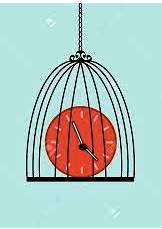
I’M LATE, I’M LATE !
The Red Queen’s going to have my head!

PREVIOUS: ACoAs & Time (Part 2)


4. ON TIME?
a. Compulsively early – fear of punishment, of being left behind (abandonment), of missing out, of not being the ‘good’ one, WANTING to be special, noticed, to brown-nose, for extra attention, showing off……

b. Always Late
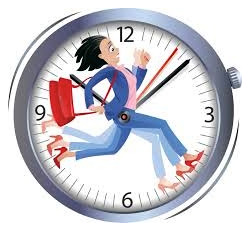
There are legitimate reasons for lateness – once in a while, but this is about a compulsive pattern, not always conscious, as the result of some or all of these :late, late
DAMAGE
• lack of clear identity – not knowing what ‘outfit’ to put on – who am I supposed to be in this situation / who do they expect me to be….
• being a perfectionist, or obsessive compulsive – have to do everything or finish something before leaving the house

CHAOS
• can’t find important things at home because of disorder, clutter, not paying attention, not ‘filing’ things…. so often looking for things at the last minute
• don’t plan ahead, over-book, not able to prioritize, be in IC mode (Part 1, #2.a.)
• regularly stay up too late & can’t get going in the morning

RESISTANCE
• a general rage at having to be responsible, make decisions, show up
• passive aggressive – “I don’t wanna” do something, but not allowed to admit it
• getting a secret kick out of making people wait for me – gives me a (false) sense of power out of timeto make up for never feeling important

• don’t want to deal with a particular person or event (breaking up, a stressful family event, a business meeting)

OVER-DOING
• rushing from crisis to crisis, mine or someone else’s
• co-dependence – saying yes to something I don’t want to do, but now you have to; people-pleasing – doing too much for others, staying on a phone call too long, worrying about others’ problems….
EMOTIONS
• depressed, don’t want to leave the ‘safety’ of my house
• high anxiety from intense shame – afraid to ‘be seen
• social phobia, from CDs & weak boundaries: “don’t know what to DO when I get there, afraid to talk to people, no one will like me, I don’t fit, not smart or accomplished enough”….
…. AND ALWAYS compulsively worrying, anxiously looking at your watch as you run to the next thing on your list

RESULTS
• stay immature, keeping us at the mercy of & vulnerable to others
• makes others frustrated & mad at usresults
• stay anxious, scared, uptight, addicted to adrenaline
• can’t relax & enjoy people, places, things
• never feel empowered, maintain S-H (feel like a f—up)
• mess up or miss out on personal, social or biz opportunities
• don’t get many of our own needs met, always behind on tasks

GROWTH
To change our ‘acting out’ around time, we need to build both aspects of the ‘UNIT’ —-> the Healthy Adult who stays in touch with reality & —> the Loving Parent to deal with the WIC’s need for nurturing & guidance,
SO we can:wake up

• hear the toxic beliefs, excused & justifications in our head & actively counter them
stay awake for the consequences of our patterns – how does it feel? How do others react? What price do we have to pay?
• change our behavior. Eventually healthy actions will become more integrated & natural.
We will feel better & others will have respect for us as well.

Unfortunately, WE
— don’t have much control over how long it takes to become willing to change a particular pattern. Some resistance melts father than others. We just need to keep the goal of Wellness in our mind’s eye
— only have limited control over how fast or slow recovery takes – until WE feel our progress, altho others often do see it sooner

• These depend on many factors, including how strong our resistance to change is, & how consistently we’re willing to use the tools of growth (reading, journaling, therapy, 12-step meetings, sponsorship, workshops, body work, dream interpretation, talking & writing with the IC every day!….)
➼ The more often we regularly use them, the deeper our healing will go. Patience & Perseverance!

NEXT: Variations of ACoA ‘Laundry List’

ACoAs & TIME (Part 2)

slow timeWHY DOES EVERYTHING
take so much longer than I think??!!

PREVIOUS: ACoAs & Time (Part 1)

SITEs :  Kids, ADHD & Time
✦ Time Management Tips

Take back control of your time

QUOTEs : “Your time is limited, so don’t waste it living someone else’s life.” ~ Steve Jobs
❥ “Until you value yourself, you won’t value your time. Until you value your time, you will not do anything with it.” ~ M Scott Peck
⌛️  ⏰   🕔
1. Lost Time and 2. Wasted Time  (Part 1)

3. REQUIRED TIME
a. Much more time than something should normally take
Our damage makes any action an insurmountable project. ACoAs will put off taking actions because WE :
• are convinced it’ll take forever. Whether a task is it’s a big or small, we:
a– don’t divide it into manageable chunks, –b– don’t have an realistic time sense & –c– hate the slowness of process
WE
• have to obey the rule “No play ‘till all your work is done” which of course will never happen, so we go on strike instead, & do nothing!
• have to obey the rule “You have to struggle but never get there” so why start?stuck in time
• (think we) don’t know how, & can’t ask for help, so why bother?
AND
• we’re afraid of making the wrong choice, & the get punished or be terribly disappointed – again
• we can’t decide what to do first – everything is equally big, important, scary… because as a kid the same amount of emphasis was put on large or small events, mistakes, tasks… so we never learned to prioritize

▪️ re. ACTIONS – While these reasons are ‘hangovers’ from childhood, the root of the procrastination is our inner conflict now, between:
• what we want & what the Introject (PP) wants or won’t allow (or with others in the present)
• our damaged part (WIC) & the emerging Healthy Adult voice

These internal arguments have to be resolved by the ‘UNIT in order to proceed. The exciting thing is that when the WIC is on the same page with the Healthy Self, we find that many actions take very little time, are not a big deal AND we actually did know how. No conflict = No delay!

T.E.A. suggestions
Thoughts: write out the opposing points of view (sometimes 3 & 4 different ones) of the argument you’re having with yourself about a situation you’re stuck on
Emotions: list the emotions related to each ‘voice’- they can be different

Actions: identify the actions you want or need to take, & what you think the results will be, depending on the voice you decide to follow
✍️ Actually try out which ever side you choose (As) & then later write down the results. Evaluate (T) the outcome & see how it feels (Es).
This is “Bookending” & is very effective
✍️ You can also use the 2 forms on the post “Why Are You Stuck?

b. Much less time than is realistic
In this care we consistently underestimate how much time is needed to get something done. This can come from unreliable people we have to depend on, who give up inaccurate time-estimates,  but mostly from our own unrealistic expectations.
This relates to the ACoAs who:
♦︎ always over-book, plan things too close together, don’t allow enough time to get places or time for possible delays – and don’t allow for process…
Like: underestimate how long it takes for – a renovation, a doctor visit, to taking a trip, developing a friendship, waiting for a delivery, a check, an email or the return of a text! (it pushes our Abandonment button)
OR
♦︎ those of us who try to do several things at one time. This is not about multi-tasking, but rather expecting, magically, to be able to be in more than one place at a time
Like: attending 2 conflicting events, such as making plans to go shopping alone and having lunch with a friend – at about the same time!
—> not doing things consecutively, OR picking one & letting the other go.
It’s one of the reasons some ACoAs are habitually late (cont. in Part 3)

NEXT: ACoAs & Time (Part 3)

ACoAs & TIME (Part 1)

slow time
TIME IS SUCH A DRAG!
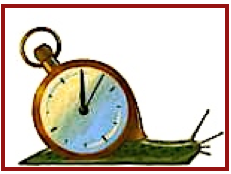
Everything takes forever

PREVIOUS: Over-Feelers (#2)


REVIEW: Pre-FoO work, ACoAs are run mainly by 2 internal ego states – the WIC, who is listening to the PP. One of the signs of this is the unrealistic way many of us deal with time, and timing.
The Inner Child:
 IS still confused by not having been taught process, nor given age-appropriate limits by neglectful parents, which resulted in not knowing how long things take.
Now, depending on the size of a project, there may be many steps between setting a goal & achieving it, yet we don’t allow for the realistic stages of the process.
OR it:
IS reacting to too many constraints imposed by controlling parents who interfered with our natural internal rhythms & time sense.
Now, we either follow the training & become rigidly time conscious, OR rebel by taking our own sweet time, OR do nothing as often as possible

1. LOST TIME
a. To our damage – years spent in S-H, with the wrong lovers, friends, jobs, apartments, the wrong neighborhood or city for us, still involved with abusive &/or uncaring family members….
In Recovery, we need to mourn the loss of time stolen by living in our False Selflosing time

b. Dissociating 
from anxiety. ACoAs are fear-based, which is backlogged from childhood. When faced with any situation that pushes a button or bumps an old wound, we may temporarily ‘go blank‘ & lose track of time, for a few minutes, or much longer.

EXP: Janie desperately wanted to study fine art, but couldn’t afford it. She had to work in an office, which didn’t suit her temperament & where she was not liked. At some point she was reprimanded for always being late. Trying to change that, the next day she got up 30 minutes earlier & started her ‘automatic’ morning routine BUT found herself standing in the middle of her room – completely blank – not knowing what to do next. Eventually she snapped out of it & finished getting ready, but by then knew she’d be late – again!  Her unconscious had sandbagged her – she clearly didn’t want to be going to that job.

lost time from ADD, dyslexia. Many ACoAs have learning disabilities. This does NOT indicate intellectual deficiency – on the contrary, it usually correlates with high intelligence, but creates varying degrees of difficulty in learning, communicating, & dealing with time accurately

• Keep in mind that many ACoA characteristics mimic ADD symptoms in adults. They’re both caused by stress & affect the brain, but ADD is genetic, so treatment is different for the 2 problems. The healthier we get emotionally, the more we can tell the difference. In recovery, the ACoA symptoms will diminish or disappear, while the ADD ones will not, which need the right medication & some behavior-mod training

2. WASTED TIME
Many ACoAs don’t know what to do with chunks of free time:wastw time
• too much anxiety – from perfectionism, toxic rules, fear of commitment & decision-making, avoiding disappointment, fear of risk…
• not self-motivated (Autonomy & Attachment, Part 2)
• wanting to do too many things at once, so don’t choose anything, puttering around, not accomplishing much
• too tired from all the daily stress we put ourselves under so need to veg out but then feel gypped, frustrated, angry at ourselves…

▪️ REQUIREMENTs for growth : a willingness to break some Toxic Rules, like the ones listed in “Part 1, 2a
• Plan ahead, write on a monthly or weekly calendar things you can schedule ahead.
Stick to your plans, whenever possible, & notice how it feels afterwards. When things don’t work out, try something different
• Make a list of activities you’d like to do or might like to try – during ‘free time’, & when the time comes (weekends?) look at it when you can’t think of anything to do OR you have too many options
• Fun time is NOT about priorities. You don’t have to know what to do FIRST! Just pick something you know you like & focus on enjoying it.

NEXT: ACoAs & TIME (Part 2)

Unrealistic Expectations – UNDER

 YOU MEAN I’M ALLOWED?
I can really ask for what I need AND get it?

PREVIOUS: Unrealistic Expectations – OVER #2

See ACRONYM page for abbrev.

IRONY (also in “Over”, Part 1)
There are many things ACoAs do not expect THAT WE SHOULD!  In reality…
… we all need images (dreams, goals) of that is possible for us, which are supposed to be formed in childhood, by watching our family accomplish their goals, & thru school, friends, books, TV…
… without those images (possibilities) – we don’t have something ‘concrete’ to work towards, using process.  Goals have to start with a mental picture of what we want to accomplish or receive, in order for us to pursue them.

⚠️Some of us don’t think we have any dreams
We’re so beaten down by childhood trauma that we don’t even dare picture what we might try for. We can’t go after anything that would be important to us, much less outstrip our family – we just drift & do whatever we fall into. We can’t imagine having any dreams come true for us.

🚫 Others have dreams, but we’re not allowed

We may know what we’d like to do, when we “grow up” – but are just too scared to go for it.  What IF : I’m not good enough, I fall flat on my face, I don’t have the talent, I can’t follow thru, or mess it up some other way… AND the PP is saying “Who do you think you are, anyway?

➼ ACoAs UNDER-EXPECT basic human rights, many if which were denied us as kids.
NOW we can / must look for appropriate treatment from everyone. We know that not everyone is capable, so it’s important to “Stick with the winners”!
We need to keep away from, or severely limit, our contact with people who are too damaged to treat us with at least a minimum of courtesy. Not everyone will like or love us. That’s normal. But we can gravitate towards those who will!
So, we have a RIGHT to EXPECTbe safe
1. FROM LIFE
a. The right to BE here
• to heal from childhood damage
• to get the help we need in any situation
• to have as full a life as possible
• to get to know ourselves, thoroughly & like who we are
• to be safe in the world & to be comfortable in our skin
• to have our own dreams, to follow them & be successful

b. The right to be WHO we are
• to be happy, feel pleasure, be drama-freehave fun
• to express our creativity, in whatever form
• to be part of a community of our peers
• to have a safe, loving Higher Power
• to have a full support system, for healing & for fun
• to be acknowledged for our innate abilities, our learned skills & our actual achievements

We have a RIGHT to EXPECT
comforting2. FROM OTHER PEOPLE, that they:
a. treat us with respect  (not use us!)
• able to listen to us, be present, be thoughtful
• are ok with all our emotions (crying, anger, joy…)
• take us seriously – not make fun of us, dismiss us in any way
• tell the truth (not lie), be forthcoming
• talk to us as adults, at the very least with civility

b. have (some) mental health
• sobriety : chemical, mental & emotional (but not perfect)
• not be physically, menchurch-familytally or emotionally abusive
• have their own money, living space, career/ work they like…
• capable of intimacy, honesty, enjoyment, peacefulness
• have a spiritual belief (if it’s important to us)
• know how to act in public, be sociable (not withdrawn)
• have decent boundaries, know how to communicate

c. have the capacity to love (already)be accepted
• be supportive, encouraging, helpful
see the real us, value who we are
• able to commit to us, & not be symbiotic
• be loyal, sexually faithful
• admire us without being jealous
• want the best for us, even if they don’t agree or understand everything

These are only SOME of the things we SHOULD EXPECT!

REMINDER: In order to believe this & go for it, ACoAs need to imperfectly have:  • greatly reduced self-hate  • developed a rapport with our wounded AND healthy child aspects  •  decent boundaries • a good support system • major detachment from the bad parent voice in our head!

NEXT: ACoAs & RISK – Intro #1

Unrealistic Expectations – OVER (Part 3)

PREVIOUS: Unrealistic –

<— “OUT IN THE COLD” by DMT


What ACoAs SHOULD NOT expect…. (cont.)
B. ….of OTHERS (cont.)
1. To be Rescued
2. To be Symbiotic

3. To Mind-Read :  WE WANT / expect that people will automatically know what we need & magically come thru for us, without us having to ask! We’re not allowed to know what those needs are, & if we do, not allowed to get them met. So – we have to “depend on the kindness of strangers”.

💚 We want them to do things that we :
• never learned how, & resist doing so now, even tho there’s more help & info available in the world than ever beforemind reader
• really can do for ourselves, but it would feel too lonely & sad if we did, reminding us of the original A/A (no one to help)

• are terrified of trying / risking, believing we’re too stupid, incompetent, slow…AND what if we fail?
• know it will take a lot of time (process) & we’re impatient. As kids, having to wait usually meant it would never happen. So, don’t ask us to wait – some more!
• have trouble with (meeting our needs) because of a disability, like ADD or dyslexia, depression or other disorders, so we don’t make the effort to learn how to manage them – just keep being their victim

4. To be Healthy : WE WANT others to be something they aren’t or can’t be (ever – or not yet), because they’re pushing our abandonment button, activating our wounds – so we’re impatient, even desperate.  We’re afraid if they don’t change we’ll be trapped with them & continue to be hurt, OR have to leave them.

That puts us in a double bind : 💔 it’s painful to stay, it’s painful to leave. However, for most ACoAs, our FoA is greater than our tolerance for loneliness & sadness – so we stay!
a. Maybe we keep trying to explain what we want & what they’re doing wrong – at great length, as if they’ll ‘get it’.  angry woman
When it doesn’t work!!! we act like:
• bullying control freaks – trying to make them give us what we want
• raging, abusive crazies – as if yelling would get thru to them
• sullen, complaining victims – expressing all our childhood powerless & hopeless feelings in the form of passive anger
• punishing, vengeful harpies – probably like one of our parents, to express our extreme frustration and anxiety
• people-pleasing doormats – overly helpful, solicitous, care-taking, to insure we’ll be indispensable, & then they’ll never leave …..

❎ We are NOT fundamentally any of these things, which come from the the PP or the WIC. It’s our FS damage, which is repairable.
OR:
b. We (silently or loudly) WAIT & WAIT, all the time desperate & in a panic. When others don’t take care of us, we hate them for not coming thru, BUT also blame ourselves for not being good enough to deserve it. We get depressed, ashamed, resentful & even more hopeless.
We say: “I knew it. No one can be trusted”!  or “See, the universe doesn’t want me to have anything!”  Can you hear the kid screaming?

5. To be Available (re. Relationships) : WE WANT people who we like – to like us back, regardless (is Cupid in your pocket?). We assume:
that we’ll be able to win over that one person in the room who is giving us the cold shoulder
that someone we feel deeply connected to will be our friend, mate, mentor… always & forever, as long as we’re both alive cupid

that the party, event, date, trip… with someone we care about – will turn out exactly the way we fantasize / plan it to be – usually without letting the other person know what we’re expecting/ wanting!
that if a new acquaintance is very friendly, & we spent a nice time together, once or twice, that they’ll make an effort to continue the association (It just doesn’t happen with some people – & it’s no ones fault!)

that someone will do what they said they would – for sure!, like, call us back, bring us something they promised, keep their word, help us out, give us some info we need…
A lot of people say they’ll do things & mean it at the time, but maybe they’re just people-pleasing, or they forget, or change their mind, or get too busy

C. What ACoAs SHOULD NOT expect…. re. TIME: See posts on unrealistic expectations about how long things take, both too long & not long enough –ACoAs & TIME”

NEXT: UNDER expect

Unrealistic Expectations – OVER (Part 2)


WHAT DO YOU MEAN
you don’t know what I need?

PREVIOUS: Unrealistic Expectations (Part 1)

See ACRONYM page for abbrev.

REVIEW post: “Symbiosis & ACoAs


What ACoAs SHOULD NOT expect….
(cont)
A. ….of OURSELVES (cont.)
1. Unrealistic Recovery beliefs  (Part 1)

2. Staying Attached : WE WANT to stay connected to even the most abusive family members & believe it’s our fault when that never seems to work out in our favor
• many ACoAs still have the illusion that if only we are perfect, ‘good’, successful, smart, care-taking of them…. enough – our addicted, self-centered, self-hating, severely damaged parents or substitutes (spouse, boss, adult-child….) will finally accept & love us just the way we are – so we never have to let go & grow up (love ourself)barren tree

• even the smartest of us may harbor a secret hope that one day our parents &/or siblings will ‘get well / ‘see the light’… for themselves. We want them to get better, because we know they’re suffering, BUT we also want it for them so we can stay safely connected

• some of us have a parent who does eventually enter AA, & may become less abusive in some ways – but unless they also do at least some FoO work, their narcissism still shows, so they’re not going to be the parent we always wanted

• we’re so desperate to get their approval that we refuse to see how incapable of love many of them really are – especially if they throw us a crumb once in a while.  Walking away or pulling back from such people entails “Crumb withdrawal”!
• when they hurt us yet again, we either suck it up & use our own addictions to numb the pain OR we turn it completely on ourselves & become depressed, non-functioning & suicidal – for some time after any encounter with them

B. (not expect) ….of OTHERS
1. To be Rescued: WE WANT too much from others, which is the WIC’s demand that somebody make up for what we didn’t get from our parents. Yes, demand. We know this because of the hurt & rage that comes up when we don’t get the care & attention we so desperate long for – but rarely verbalize. The bigger the disappointment, the greater the helpless rage
• This seems obvious with Compliers, by hooking up with Rescuer ACoAs, who will do way too much for the ‘poor helpless victims’, so we don’t even have to ASK
• It’s less obvious with Isolators, who don’t seem to need much, if anything. They have the same longing, if not more so, but are even more afraid & filled with shame to let anyone see how weak & needy they are. So they keep ‘starving’.
And waiting – for a miracle – which they think they don’t deserve anyway, & don’t really believe will ever come. But they still wait – instead of getting some of what they need for themselves

• Even harder to see is that Rescuers also want to be rescued. They’re not allowed to be given to – either, but under all their care-taking is the intense demand they secretly have of the rescuee: “Pay me back for all the hard work I’ve put into you…make me feel appreciated, capable, loved, needed, smart, valued…. and most of all – get well so you can take care of ME!”

2. To be Symbiotic: WE WANT / expect others to treat us the way we would treat them (a symbiotic wish) – as if everyone is our identical twin. ACoAs will often say things like:
• “But, I would never do that to them!”
• “I don’t understand how she could have said that?!”
• “They can’t really be that dumb/ mean / selfish/ careless…”
• “I don’t understand how she could not like that!”symbiosis

🔎 “Excuse me”? They’re not you!
It should be obvious, but clearly it isn’t – that they have separate bodies, separate experiences, separate minds, separate tastes … so why do we still expect them to be like us?!
• When we think that way we’re reacting the same way our parents treated us – as extensions of themself, rather than as separate beings. That’s our narcissism.

NEXT: Unrealistic – OVER #3

Unrealistic Expectations – OVER (Part 1)

 I DEMAND MAGIC!
After all, reality bites, doesn’t it?

PREVIOUS: THEIR Attitudes – #5

See ACRONYM page for abbrev.

ACoA IRONY
POINT 1: Basically – ACoAs concluded that we can’t be anything, can’t have anything, can’t get anywhere! From years of suffering, a deep part of us gave up early in life: “What’s the use, I should be dead anyway”.

➼ A reminder about Abuse & Abandonment (A/A)
• Coming from THEM: A/A may or may not have been deliberate but was very real – not imagined, & the effects last a lifetime.  We got all sorts of abuse – things that no child should ever have to endure!

• For US to deal with: Because A/A happened on all 4 PMES levels – Physical, Emotional, Mental, Spiritual, & not just about someone going away, we have to work on healing each area, from going to the bathroom to our relationship with H.P.

POINT 2: As a result –  ACoAs want everything done for us – equally true for the Hero as for the Lost Child.
Experiencing so much hurt & loss as kids – we want it to be made up to us, one way or another. To compensate, we hang on to the magical thinking of a child, having ‘great expectations’ of life & people, which is not just wishful thinking but a raging need, including the absolute conviction / expectation / assumption – about how of a date, event, relationship, meeting… should turn out – or we’ll die!

• On the surface we say: “I don’t know how, I’m not allowed, it’s too hard …” but the real, real truth – deeply buried – is that we don’t want to take care of ourselves.  If our family didn’t do it for us, then we’re not going to do it for ourselves now!. So there! We’ve suffered enough so we’re understandably resentful & petulant. We want ours! (But we will do it for others)

What ACoAs SHOULD NOT expect…..
A.   …..of OURSELVES

While having wildly unrealistic expectations (U.E.) of others, we can start by seeing how off-center ours own are :
• Being the victim – that because we were abused as children, we don’t have to be responsible for ourselves or forge a life of our own

Our narcissism – that we have the power to always make things go our way, AND that who others victimare or what they want doesn’t really count – if it gets in the way of our needs!
Most ACoAs, especially Rescuers, would never admit this, at least not out loud

• “Fairness” – that if we make enough of an effort (perfect), we’ll definitely & automatically get a payoff!
• Instant gratification – that when we have to wait for anything – we’re confused. After all, we did our part. And if the wait is too long, we despair, assuming it means NO, never

1. Unrealistic Recovery beliefs:
a. WE WANT to be ‘better’ fast – as in NOW. Some want it to be magic – recovery without having to do the hard work

b
. We WANT magic: if we just work hard enough, we’ll overcome all damage – as if we were never wounded at all!  When that never seems to happen, or Recovery is soooo slow – we become discouraged & worse – defeated, then give up.
• Reality : some damage can heal completely, some things will be a lot less troubling & some things may never go away – but we can manage them, with self-compassion!

c. WE WANT to well enough so that :
• our character defects will vanish (I’ll never be angry again / I’ll never date that kind of person again / I’ll never feel that bad again”…..
• we’ll never again be hurt or effected by other people’s insensitivity & abuses, especially from our family – at all, ever again!

🎹 However – Health is a combination:
• Some unhealthy things which others do will bother us less, especially if we have a lot less self-hate & much better boundaries
• BUT many abuses or abandonments we were numb to or ignorant of before – will absolutely no longer be acceptable. Bad behavior & bad energy will become so uncomfortable to be around that we won’t tolerate it

NEXT: Unrealistic Expectations – OVER (Part 2)

WHY ACoAs LIE (Part 2)

hide self
IT’S NOT SAFE
to let anyone know the real me!

PREVIOUS: Why ACoAs Lie (Part 1)

See ACRONYM page for abbrev.

2. Pathological Lying

3. UNTREATED ACoAs
FROM the ACoA LAUNDRY LIST :  “We lie when it would be just as easy to tell the truth”.
However, this does not imply that all of us are pathological liars, although some are.
a. UNDER-HONEST
Yes, everyone lies sometimes & occasionally it’s the only safe recourse, but ACoAs tend to lie when it’s not actually necessary, useful or wise.  We can lie by making up untruths OR by omitting important info at crucial times (may be considered passive-aggressive)

COMPULSION: Compulsive liars (CLs) do so as a reflexive way of responding to questions. They bend the truth about most things, important & unimportant, since honesty feels awkward & uncomfortable to them, while lying (hiding) feels right.

• Lying usually develops in early childhood, growing up in an environment where telling the truth was dangerous or unacceptable. For the most part, CLs are not overly manipulative or cunning (unlike sociopaths). They do know they’re not being honest, but it’s a hard pattern to break & one that takes its toll on every relationship

hiding childPAST: Lying was often the only way to protect ourselves & get some needs met in a stressful environment. We were constantly told our emotions & observations were wrong or crazy, so we learned to hide them from others & sometimes even from ourselves.  We understood very early that our parents really did not want to hear the truth, & so could save ourselves a lot of grief if we lied to them

EXP: Terry’s parents were restrictive & controlling, while being emotionally abusive & abandoning.  As a teen she fell in love with a man she knew they would be violently opposed to, so she came up with a plan to see him whenever their scheduled meshed.  From time to time she told her mother a few days ahead of a rendezvous – that ‘next Tuesday’ she’d be at the library after school to study (which she often did anyway).

Then every other day until then, she’d remind her mother about it so there would be no questions about her being late on that day. When Tue came Terry would get together with her guy. She was finally able to receive some desperately needed love & positive attention throughout her Senior year  – by lying!

b. OVER-HONEST – another ACoA irony is that while we found lying to be a survival mechanism in our dangerous & chaotic childhood, we also have a compulsion to over-disclose (TMI), by telling:
• every little detail of a situation      • the bald truth to everyone
• what we know about others (can’t keep a secret)
• everything that’s wrong with us (S-H)
• exactly what we think of someone, no matter how insensitive, inappropriate, cruel of self-destructive!

🔳 As children —> some of us tended to be quiet, trying to be invisible for safety, pretending we went along with the craziness.
— > Other of us just couldn’t tolerate being stifled, nor bear the constant hypocrisy. So we just said whatever we thought, without considering the consequences to ourself or others : “She fat, their food tastes bad, he’s ugly, why is she crying….”)

🔊 IN THE PRESENT : For the more ‘blatant’ ones of us, our Wounded Inner Child truly believes that to not tell someone what we know about them (their flaws, bad behavior, annoying ways…) or what we really think about a situation we’re upset about — is being untrue to ourselves! because:
• we want to letyour flaws them know that we know (to not be ignored & to cut thru their obvious denial)
• we want to rub their face in it (our rage at their deception)
• we want them to get the message & change! (as my dear mother used to say “Wake up & die right!”)

❇️  In the present, on one level, TMI really represents is lack of boundaries, lack of good judgment & letting the WIC run amok with its outrage!
BUT behind that is an attempt to compensate for all the lies, secrets, denial & ‘mind-fucking’ we were drowning in as kids.

NEXT: ACoAs – LYING #3

WHY ACoAs LIE (Part 1)

lying childYOU MEAN I’M NOT BEING HONEST
when I tell people how awful I am?

PREVIOUS: Adult Play Benefits – #2

IRONIC & Humorous article : How to Lie – 14 ways

See ACRONYM page for abbrev.

QUOTEs: “I’m not upset that you lied to me, I’m upset that from now on I can’t believe you.”  — Nietzsche
▪︎ “If you do not tell the truth about yourself you cannot tell it about other people.” — Virginia Woolf
▪︎ “Things come apart so easily when they have been held together with lies.”  — Dorothy Allison, Bastard Out of Carolina

1. GENERAL
Everyone lies, sometimes, in varying degrees – even knowing that it causes problems. This universal reaction is tied to self-esteem. People want to look good to themselves & to others. The higher the threat to ones self-image, the bigger the lies.
TO SELF
Many animals engage in deception, deliberately misleading another, but only humans are wired to deceive both themselves & others. Lying to oneself (denial), mostly unconscious, is used by anyone who believes they can’t bear to acknowledge (not accept) what they truly know about themselves or their loved ones
TO OTHERS
• to cover one’s butt when they’ve done something wrong & don’t have the courage to admit it
• to make themselves feel smarter & superior to everyone – a way to have the power to fool, or to make fools of others, who they disrespect for swallowing the lies
• to cover feeling inferior, because they believe others won’t accept them for who they are, so they “enhance / embellish / exaggerate” their accomplishments…. in conversation, on resumes, dating sites….lie to protect

SOMETIMES lying is necessary, IF —
• is saves you from more abuse (as a child / or by spouse)
• your reputation, your rights or your life are in danger
• it could save your job, your home, your community
• it protects your family from harm by another
• it’s the only way to protect your privacy
This is not an endorsement of lying, only acknowledging certain realities

2. PATHOLOGICAL
Pathological -grossly abnormal- liars (PLs) suffer from habitual dishonesty they can’t seem to control, which can be part of other ailments such as Manic-depression, Paranoia, Conduct Disorder, Antisocial Personality Disorder…… and can be a reaction to childhood incest, torture, constant beatings……They’ve created a fantasy world that’s ‘better’, so they may actually believe their own lies, not consciously realizing what they’re saying is mostly fiction. It’s a persistent & pervasive compulsion, motivated by survival rather than some kind of reward or other external factors (social pressure, family obligation, loss of job…)

• In some cases, an important factor in pathological lying is the difference in the brain. A study by Yang et al., published in the British Journal of Psychiatry in 2007, found that brain scans of PLs  showed structural differences in the prefrontal cortex. This area of the brain controls morality, honesty and remorse
compulsive liar
PLs show less gray matter, associated with the controls needed for moral behavior (less inhibiting factors) & more white matter, which is possibly associated with increased brain activity (more lying). (More…. )

• Some PLs may be Sociopaths – people who lie incessantly to get their way, are goal-oriented (lying is focused on self-gratification), having no regard or respect for the rights & feelings of others. They are often charming & charismatic, using their talented social skills in manipulative and self-centered ways, & have no remorse for their illegal or immoral activities

SITE:  Pathological Liar vs. Straight Shooter

NEXT: Why ACoAs Lie (Part 2)

2012 WordPress Review of this Blog

HAPPY NEW YEAR to all my Readers.

Read on to see what you’ve participated in!

The WordPress.com stats helper monkeys prepared a 2012 annual report for this blog.

Here’s an excerpt:

19,000 people fit into the new Barclays Center to see Jay-Z perform. This blog was viewed about 120,000 times in 2012. If it were a concert at the Barclays Center, it would take about 6 sold-out performances for that many people to see it.

Click here to see the complete report.