Enneagram Type 7 – Flaws in us ALL

type 7


PREVIOUS: Type 6 flaws

IMPORTANT
Review explanation for each category in the INTRO post 
Associated Type is inside the ( )


Type 7 COWARDICE
because of CDs (#6)
• re. pain: you think that all ‘pain’ is a waste of time, unnecessary & something you’re not equipped to deal with
• re. restraint: believe that freedom is the absence of any limits, & that no one has the right to restract you
• re. standing (sitting) still: see it as worthless or as an opening for a flood of despair, which you’re terrified of

Type 7 FLATTERY (#2)
• Think about a possible activity someone suggested merely because it keeps you all doing something, not because it’s a very good idea at all
• Re-frame a put-down by someone, making it seem kind & generous
• Think (often unconsciously) how to befriend authority figures with flattering attention, as a way to neutralize their potential ability to limit your freedom in any way

Type 7 LAZINESS / Indolence (#9)
You almost always seem to be energetic, but a person can be highly energetic & still be indolent
• Think about pleasure but rarely about pain, if ever
• Not notice what you physical sensations are telling you
• Re-frame potential negative information into a positive, as a way of not paying attention to what’s actually happening

patienceType 7 MOODINESS (melancholy & resulting separation) (#4)
• Wonder why, with all you joy, you don’t feel full inside
• Feel an emptiness inside you don’t know what to do about
• Think that even your mild feeling of pain or suffering are catastrophic (mainly because you’re so unused to them)

Type 7 PLANNING – as compulsion (#7)
• About positive possibilities: reacting immediately to stimuli (positive or negative), so your mind goes into a “hyper-gear” of associations, where one idea follows another in rapid-fire succession

Type 7 RESENTMENT (#1)
• If you feel restricted, think that no one has the right to do that to you
• Think negative thoughts about another when they cause you pain
• Rationalize away when having actually done something wrong, or something others may see as unacceptable or below standard

Type 7 STINGINESS (#5)
• with slowing down: Believe “down time” is boring & a waste
• with patience: Think that others are terribly slow because they can’t follow your line of thinking or mental pace
• with introspection: Don’t consider your interior world as fascinating or enjoyable as external experiences

Type 7 VANITY (#3)
• Think you’re not only quicker minded than others, but that you also catch on to new ideas better than most
• Believe that most of your ideas have merit
• See yourself as capable of enjoying life more than others do

Type 7 VENGEANCE (#8)
What sets you off is thinking someone has –
• tried to limit you
• not listened to or taken your ideas seriously
• been insincere and, therefore, can’t be trusted
• acted abusively (or is considering it) and needs to be stopped

REACTION: think about how to keep yourself & others safe from this person, which may include disarming them
GROWTH: Ask “Am I willing to deal with & stay focused on painful or difficult issues?”

ALSO
Type 7 DISTORTED LENS
Tainted color (Rosy) – looking through colored lenses makes everything seem brighter than it really is
Lesson: Everything is not nearly as rosy as we might want it to be, & just thinking / wishing doesn’t make it so!

Type 7 HANGING ON
Hold on to: being fun-loving, completely free, pleasure-oriented, & your unalterable right to avoid restrictions or painful experiences
Why: to maintain your ‘sense of self as a person who’ lives in a world where anything is possible, & there are no limits unless you create them
Let go of: the belief that freedom means having no limits

Type 7 get OFF-BALANCE by:
• anyone or anything bursting your bubble of enthusiasm
• feeling trapped or cornered in any way
• someone treating you as if you shouldn’t be taken seriouslyhole-in-soul

Type 7 MAYA (delusion)
Think that you’re forced to live forever with a deep hole inside, when in fact all you need to do is go inside – because you are there!

Type 7 WORRY
“Why do they want to bring me down? Why am I not taken as seriously as I desire? Are they trying to trap me? How can I fill that empty hole inside me? Why don’t I seem to feel as deeply as others when I do feel deeply about some things?”

NEXT: All flaws – Type 8

Enneagram Type 6 – Flaws in us ALL

type 6

PREVIOUS: Type 5 – All flaws

IMPORTANT
Review explanation for each category in the INTRO post 
Associated Type is inside the ( )


Type 6 COWARDICE because of CDs (#6)
• re. others: believe you can’t really trust or count on others (except a few you’ve tried & tested)
• re. yourself: believe you can’t fundamentally trust or count on yourself (even though experience shows you can, in most cases)
• re. authority: think that authority figures can’t be trusted or, at least must be carefully & continuously watched

Type 6 FLATTERY (#2)
• Mentally idealize people you want to think of as all “good”
• Think & say “nice” comments that aren’t completely true, to placate others or keep the peace
• Think it’s not OK to say what you really think to someone – if you’re anticipating a negative reaction

Type 6 LAZINESS / Indolence (#9)
You seem to be very energized (in motion), but a person can be & still be indolent (not paying attention), which is most obvious in 6s
• Think only about the things that scare you
• Believe you can’t let yourself relax into ‘fun’ (truer for self-preserving & social sub-type 6s than one-to-one 6s)
• Can’t or don’t want to take the time to separate your projections from your motivations, hopes & fears

Type 6 MOODINESS (melancholy & resulting separation) (#4)
• Believe you’re alone because no one can truly be counted on
• Project that others will always leave you at some point
• Blame yourself when things don’t go well, but also blame others, which ends up hurting your relationships, leaving you worried about loneliness

Type 6 PLANNING – as compulsion (#7)relaxing
How to anticipate problems before they occur: • often automatically calculate what might be an obstacles for getting what you think is both possible, desirable, plausible or dangerous

Type 6 RESENTMENT (#1)
• Wonder why others are treating you badly (supposedly)
• Angry about how someone in authority could treat you badly after being consistently dutiful & loyal
• Project bad things will happen to you

Type 6 STINGINESS (#5)
• with trust: Believe you have to be really careful about who you trust, thinking you have to continuously “test” the integrity of others
• with self-confidence: Think that if you constantly question yourself, somehow the best/ safest answer will emerge
• with relaxing: Believe that if you relax too much or too long (or at all), something will inevitably go wrong

Type 6 VANITY (#3)
• Believe you’re the best problem solver
• Think that no one but you is reliable, & others are not trustworthy
• See yourself as the one who’s most able & willing to stand up for the group, if others don’t seem to be aware or courageous enough to do so

Type 6 VENGEANCE (#8)
What sets you off is thinking someone has :
• put pressure on you
• been deceptive & is therefore, dangerous
• appeared insincere & therefore, can’t be trusted
• acted abusively, & needs to be stopped

REACTION: think about how to keep yourself & others safe from this ‘bad’ person, which may include disarming them
GROWTH: Ask “Am I accurately separating projections & insights?”

ALSO
Type 6 DISTORTED LENS
Tainted color (grey) – vision is clouded by a grayish overlay
Lesson: Not everything is as cloudy, confused, or complex as we imagine when we’re anxious

Type 6 HANGING ON
Hang on to:
• always having to be the person who raises difficult issues
• to the assumption that everyone & everything in your environment is harmful to you & others
• not being able to trust others, especially anyone in position of strong influence or authority 


Why
: to maintain your ‘sense of self as a person who’ understands the risks & uncertainty of being in the world, & can overcome this with your mind
Let go of: the belief that true authority only ‘lives’ outside yourself

Type 6 get OFF-BALANCE by:
• authority figure acting unpredictably or rashly, that could harm you people or ideas/ causes that matter to you
• seemingly high-risk situations that take you by surprise
• any outside pressure to do something when you’re not preparedhard work

Type 6 MAYA (delusion)
That if you focus & work very intensely on an issue or problem, that effort will definitely get the issue solved or resolved. This is not always the case.

Type 6 WORRY
“Why do I worry all the time? What should I do here? What dreadful thing might befall me? Why do I feel not fully part of things? Why do I hold onto my concerns for so long? Why do people have so many hidden agendas”

NEXT: All flaws – Type 7

Enneagram Type 5 – Flaws in us ALL

type 5

PREVIOUS: Ennea Humor – #4

IMPORTANT
Review explanation for each category in the INTRO post   Associated Type is inside the ( )


Type 5 COWARDICE because of CDs (#6)
• re. intrusion: Think that others are going to invade your time, space & privacy
• re. feelings: Fearful of expressing emotions in real-time, & highly uncertain about what you do feel or even how to know it
• re. attachments: Believe you must not be attached to anything or anyone, because if you are, your energy will be sapped & your autonomy threatened

Type 5 FLATTERY (#2)
• Think there’s something wrong with you for not liking “small talk” when others seem to like it just fine (like there’s something “right” with others)
• Continue a conversation about a topic you have little interest in
• Decide to not share information you actually do have, being sure you don’t know enough about the topic, yet still listen to others who know a lot less than you about it

Type 5 LAZINESS / Indolence (#9)
• Confuse thinking with feeling, so you don’t pay much attention to your emotional life
• Don’t consider your emotions much at all. In fact, think that they have limited value, & that it takes too much energy to figure them out
• Believe that only your mind matters, so ignore (be indolent about) physical sensations that are a source of important information

Type 5 MOODINESS (melancholy & resulting separation) (#4)
• Think you’re depleted, drained of sufficient resources & life force
• Believe you don’t have truly deep relationships like others seem to
• See yourself as an island adrift from the major continent of people

Type 5 PLANNING – as compulsion (#7)resources
• Plan how to prevent draining situations by limiting intrusions, demands on your time & energy, or emotionally charged interactions
• Strategize ways to overcome potentially dangerous situations

Type 5 RESENTMENT (#1)
• Focus on the intrusiveness & aggressiveness of others
• Imagine / assume harmful actions you think others are up to
• Wonder why someone has the right to make demands on you for personal information, your time….

Type 5 STINGINESS (#5)
• with resources & knowledge: Think the world has limited resources, so you have to conserve almost everything
• with interpersonal engagement: Believe you don’t need or want to fully engage with others because they’ll drain you or want too much
• with sharing: Believe you have to withhold info about yourself with almost everyone (except a few you trust), otherwise your privacy will be violated

Type 5 VANITY (#3)
• Think that others are inferior for having too many needs, being dependent & not autonomous (like you)
• Believe you have a superior intellect
• Think that others’ expression of emotions is inferior to your own reliance on reason, logic, emotional self-containment & detachment

Type 5 VENGEANCE (#8)
What sets you off is thinking someone has –
• violated your privacy, such as breaking a confidence
• kept information from you, especially if it’s important to you
• lied, such as said they’d deliver work on time and then didn’t
• made unreasonable or not-agreed-to demands on you

REACTION: think & plan how to neutralize that person or keep them at a distance
• strategizing how to get that person removed & harmless (if they’ve really scared you or violated a deeply held value)
GROWTH: Ask “ Am I expressing my real feelings in the moment?”

ALSO
Type 5 DISTORTED LENS
Too far: missing the nuances of what’s close up
Lesson: When we create too much distance, we don’t see the finer detail, including ourselves & how we interact with a situation

Type 5 HANGING ON
Hold on to:
• to being autonomous, needing too much privacy, using up limited space and resources
• and under-explore feelings & needs

Why
: to maintain your ‘sense of self as a person who’ doesn’t need to rely on anyone or anything other than yourself
Let go of: your false belief in scarcity (of energy, resources….)

Type 5 put OFF-BALANCE by:
• someone standing too close for too long
• having to put out energy & effort when already feeling depleted
• expecting to share personal information when you’re not clear why this matters or what don't feelsomeone will do with it

Type 5 MAYA (delusion)
You think that you either don’t know or don’t experience your emotional states, when in fact your emotions are extremely pure

Type 5 WORRY
“What do they want from me? How can I get away from this? Why am I feeling so drained and depleted? Why can’t I express myself?”

NEXT: All flaws – Type 6

Enneagram Type 4 – Flaws in us ALL

type 4


PREVIOUS: Type 3 flaws

IMPORTANT
Review explanation for each category in the INTRO post 
Associated Type is inside the ( )


Type 4 COWARDICE because of CDs (#6)
• re. rejection: Worry about & interpret events as rejecting you
• re. closeness: Think that if you get too close to someone they’ll find your intrinsic defects, be critical & leave
• re. affirmation: Think mainly about what’s wrong with you, & a reluctant to consider what’s just fine

Type 4 FLATTERY (#2)
• Comparing yourself negatively to others, making them so much better
• Act interested, make conversation, & pay attention to another when what you’re really rather leave
• Believe what other says about you, as if it were more real than what you actually know about yourself (honor someone else’s opinion over your own)

Type 4 LAZINESS / indolence (#9)
You can seem distracted even under normal times, especially when distressed
• Spend too much time & effort on how to express yourself so you’ll be understood, or not misunderstood, that you lose track of what you really meant to say
• Think that your most recent emotions are the realest, being too lazy to go deeper to find what’s underneath
• Think about how to shift your hurt onto others so you won’t feel quite so upset, without taking the time to consider what motivates this tactic, or what effect this has on yourself & others

Type 4 MOODINESS (melancholy & resulting separation) (#4)
• Think only about what you don’t have, instead of what you do have
• See yourself as fundamentally inferior to or less than other
• Recycle negative thoughts about yourself, other people & situation

Type 4 PLANNING (as compulsion) (#7)
• about how to avoid feeling deficient
• about how to prevent getting into situations that’ll trigsharingger your sense of being not being good-enough
• about how to directly fight situations that might cause you feeling inadequate

Type 4 RESENTMENT (#1)
• Obsess about what you’re missing, what’s wrong with you & others
• Wonder why others seem to have or get what they want, but not you
• Think about how reality comes up short compared to your internal dreams & ideas of how you want things can be

Type 4 STINGINESS (#7)
• with sharing qualities, accomplishments… that are very important to you: Think that if others have something of value, you need to have it too, & even wish the other person didn’t have it (greed/envy)

• with attention: Convinced you always need attention from others, & if someone else is getting it instead, you have to either attract more focus on yourself or diminish the other person in some way
• with self-affirmations: Think mainly about what’s deficient in yourself, rather than your excellent qualities

Type 4 VANITY (#3)
• Think you’re superior to others because you’re ‘deeper’, more sophisticated, or more in touch with a higher reality
• Believe you have a more advanced capacity for understanding emotions, symbols & esoterica than everyone else
• Think that ‘authentic relating’ is the absolute best way of interacting & that you’re the best at it

Type 4 VENGEANCE (#8)
What sets you off is thinking someone has –
• ignored, slighted or demeaned you in any way
• implicitly compared you to another to make you “less than”
• misunderstood or violated your values

REACTION
:
decide that person is a ‘perpetrator abusing innocent victims’
• convinced they have an over-inflated sense of self
• think of all the ways to bring that person “down to size”
GROWTH:  Ask “Am I displaying my objectivity and emotional balance?”
ALSO
Type 4 DISTORTED LENS
Too close – you’re can only see what’s right in front of you instead of the bigger picture
Lesson: We can take things too personally, focus on unimportant details & our reactions to everything, so we miss other info that would let us be objective

Type 4 HANGING ON
Hold on to: • to being different from everyone
• feeling constantly slighted
• identify with our shifting emotional states
• long for an idyllic “dream-world” where everyone feels the deepest sense of beauty & inter-connectivity

Why:
to maintain ‘your sense of self as the person who’ is different & unique from others because you’ve chosen to be that way, which lets you feel in control of a sense of existential deficiency
Let go of: the belief that there’s something wrong with you which is not wrong with others

Type 4 get OFF-BALANCE by:
• having intense, shifting emotions & not understanding them
• feeling rejected by anyone, but particularly someone you care about
• wanting to manifest you dreams, but not knowing how

Type 4 MAYA (delusion) Screen Shot 2015-08-26 at 12.00.37 AM
Think that being so in touch with your feelings, & pondering them with such great intensity – it makes them real, when in fact the emotions you ‘explore & express’ are neither your deepest nor the most real

Type 4 WORRY
“Why do I feel so continuously hurt? Why did he/she/they act that way toward me? What’s wrong with me? Why do they keep doing those things to me? I must be doing something wrong, but what is it? Why don’t they understand me?”

NEXT: Ennea Flaws Type 5

Enneagram Type 3 – Flaws in us ALL

Screen Shot 2015-08-25 at 1.16.26 AM


PREVIOUS: Type 2 flaws

IMPORTANT
Review explanation for each category
in the INTRO post 
Associated Type inside the ( )


Type 3 COWARDICE because of CDs (#6)
• re. failure: think that failure is simply not allowed in you vocabulary, or is something you’ve never experienced first-hand
• re. being unmasked: worry, often unconsciously, that you’ll be found out to be a fraud in some way
• re. intimacy: think you can’t get too close to others emotionally, because it would make you too vulnerable, be less able to function/ achieve, or reveal your inadequacy in this area

Type 3 FLATTERY (#2)
• think about how to create a positive impression in another’s eyes – by pretending to be more interested in the others than you actually are
• think through how to engage famous or important people, so that some of their celebrity rubs off on you
• never share your real thoughts about another person – especially negative ones – so you won’t ruin your image or your relationship

Type 3 LAZINESS / Indolence (#9)
You’re often thought of as very focused (or over-focused), but many 3s use their Arrow Line to Nine as a break from stress. YOU:
• don’t want to think about anything serious, so get into relaxing routines (soc-med, jogging, food…), more as a way to not pay attention to yourself
• believe that emotions are a distraction from work, then escape into activity that will avoid them
• don’t reflect on who you really are. Instead, see yourselfshare success? as the persona you’ve created

Type 3 MOODINESS (melancholy & resulting separation) (#4)
• Think of yourself as a fake who pretends to be something you’re not (or not fully) & eventually will get ‘caught’
• Believe you’re totally without value when something you’ve tried to do doesn’t work
• think you’re completely adrift & a nobody when you have no goals or plans

Type 3 PLANNING – as compulsion (#7)
Plan how to achieve a specific goal you’ve set for yourself, how to get from point A to point B as efficiently & effectively as possible

Type 3 RESENTMENT (#1)
• Obsess about why someone disrespected you for your abilities, then treat them in a way that shows a lack of respect
• Obsess about how someone in authority changed the rules of the game on you in mid-stream
• Can’t understand why other team members are so incompetent or show such a lack of commitment to your joint activity

Type 3 STINGINESS (#5)
• with time: think yours is more valuable than that of others
• with sharing success: Believe you must compete with others to be successful and win, or else you’ve failed
• with sharing certain information about yourself: think that opening up would make you seem less confident or not accomplished

Type 3 VANITY (#3)
• Decide, consciously or unconsciously, to delete information about yourself that would make you look bad
 to yourself & to others
• Think you can accomplish just about anything you set your mind to
• Believe you’re the image of success which you’ve created – confusing your Real Self with that image

Type 3 VENGEANCE (#8)
What sets you off is thinking someone :
• has made you look bad or sabotaged you
• blamed you for a problem that was not you responsibility
• taken credit for your work

REACTION: dismiss the person as a ‘loser’ & think of ways to ignore them
GROWTH: Be willing to disclose information that may not make you look good or may not conform with my ‘public’ image – IF safe or appropriate

ALSO
Type 3 DISTORTED LENS
Narrow focus : embellish reality by assuming your accomplishments & qualities are better than you imagine them to be
Lesson: ‘Blinders’ on any part of your vision can make you miss the most important elements of a situation

Type 3 HANGING ON (need to let go)
Hold on to:
• under-expressed sadness, anxiety, anger
• being competent, resourceful, goal-driven, effective, successful, confident

Why
: to keep your ‘sense of self as the person who’ can accomplish whatever you want by being goal orientated, & intensely focus
Let go of: the belief you must follow societal (or your social-referent group) standards of success to feel good about yourself

Type 3 put OFF-BALANCE by:
• having goals changed on you by an outside factor or individufalse freedomal
• not knowing what you want to do
• being ‘forced’ to discuss strong emotional reactions in depth

Type 3 MAYA (delusion)
Doing what you think you want is actually doing what you think you should want, & not understanding the difference between them

Type 3 WORRY
“What if I can’t really do this? What if I don’t live up to expectations? How do I know what I really want (rather than what I think I should want)? Will I get found out?”

NEXT: All Flaws – Type 4

Enneagram Type 2 – Flaws in us ALL

type 2 EVERY HAS TO LIKE ME
or else I’m wither away

PREVIOUS: Type 1 – all flaws


IMPORTANT

Review explanation for each category
in the INTRO post 
Associated Type inside the ( )


Type 2 COWARDICE,
because of CDs (#6)
• re. being alone : when you’re alone for long periods of time (or could be as short as an hour) you think something’s very wrong, becoming anxious & at a loss for what to do
• re. admitting your dependency needs: believe you don’t depend on others, but rather that others need & depend on you

• re. not being “nice”: you believe everything you do is & must be thoughtful & considerate. So when you’re not, you try to come up with reasons that your thoughts, feelings or actions weren’t all that ‘bad’, or were just a reaction to someone else’s ‘poor’ behavior

Type 2 FLATTERY (#2)  THINKING –
• about what each person might need from you
• that you should do something you really don’t want to do, then doing it, so you won’t feel like a selfish person
• how to engage another in conversation about them, & not at all about you

Type 2 LAZINESS / Indolence (#9)
You may seem a little distracted & vague, or focused & extremely alert. But all 2s are indolent in specific ways. YOU
• pay so much attention to others & their needs, instead of your own – so are indolent about yourself
• neither identify nor acknowledge your true emotions & thoughts, to preserve relationships & avoid conflict with anyone important to you

no selfie• think about what is or isn’t OK to express – WITHOUT being clear enough about who you are – your honest opinions or true desires. You believe they’re not legitimate or too dangerous, so you’re not up to leadership

Type 2 MOODINESS (melancholy & resulting separation) (#4)
• Wonder why you’re not happy since you do so many good things for others
• Believe no one really appreciates you, or that a specific person doesn’t value you, because they hurtful your feelings
• Wonder why your relationships are troubled when you put so much energy & effort into them

Type 2 PLANNING (as compulsion) (#7)
• Plan out how other people should connect & behave
• Obsess about what others should do that’s in their best interests, how they should ideally behave toward themselves, others or projects
• Plan out how you can be useful or add value to others

Type 2 RESENTMENT (#1)
• Obsess about all you’ve done for others, when there has been little or no reciprocation
• Play over in your mind (obsess) why your opinions/ suggestions were not listened to as much as someone else’s
• Think about times when your or others have been ill-treated, & wonder why people do that

Type 2 STINGINESS (#5)
• with acknowledgment: considering someone who’s wronged you, you feel they no longer deserve anything from you, so you stop providing or cut back on any further resources, attention or acknowledgment
• with self-care: believe you don’t deserve the kind of care & attention you so willingly give others, so are stingy with providing them for yourself
• with generosity: assume you’re entitled to give some people or groups but not others (subjective-giving), while also having the self-delusion you’re actually generous to everyone

Type 2 VANITY (#3)
• Wish & hope that others would be as considerate as you are, & wonder why they pay so little attention to this important way of interacting
• Think you can get anyone you want to like you
• Believe you’re so good & selfless, while others seem to give into the baser motivate of self-serving self-interest

Type 2 VENGEANCE (#8)
What sets you off is thinking :
• someone’s taken you for granted or used you
• not listened to or dismissed you
• when they’ve hurt other people

REACTION: you label them in negative ways – from being rude to having deeply rooted character flaws, AND decide to make someone ‘invisible’ by completely ignoring them
GROWTH – Practice expressing your own needs & feelings directly, & in real-time

ALSO
Type 2 DISTORTED LENS
Embellished focus: Exaggerate reality by adding elements not really there
Lesson: False-abundance you ‘picture’ is only potential, not reality

Type 2 HANGING ON (need to let go of)
Holding on to:
• being thoughtful, considerate, responsive, unselfish, without needs
• slights, when others have wronged you in some way (ignored or insulted you, accused you of bad intentions….)

Why:
to keep ‘your sense of self as the person’ who is so good that you consistently put others above yourself (false modesty)
Let go of: the belief that your only value comes from how much you do for others

Type 2 put OFF-BALANCE by:
• When someone you care about (or want some sort of relationship with) moves away or avoids you for unknown reasons
• Putting yourself first, so you don’t do something for someone else, leading to great anxiety & guiltperfect
• Being in a social or business situation where no one responds to you

Type 2 MAYA (delusion)
Think that being so focused & intent on others means you can really do no wrong. Wrong!

Type 2 WORRY
“Will I be accepted? Have I hurt someone? Did I express myself too strongly or too weakly? Do I respect myself? Why am I so effected by other people’s reactions to me? Will the people I care about be OK? Who really cares about me?”

NEXT: Type flaws, #3

Enneagram Type 1 – Flaws in us ALL

type 1 flaws
EVERYTHING HAS TO BE
just so!

PREVIOUS: ALL Type flaws – Intro

IMPORTANT
Review explanation for each category in the INTRO post   Associated Type is inside the ( )


Type 1 COWARDICE because of CDs (#6)
• re. hurting others : only worry about having done something really bad – been harshly judgmental, projected your anger on to someone who didn’t deserve it or ‘stepped on your toes’….
• re. making mistakes : obsessed with getting everything right without any errors, being correct & appropriate
• re. spontaneity : believe it’s not OK – even dangerous – to not have tight controls on your impulses & actions

Type 1 FLATTERY – by: (#2)
• ‘Forget’ your legitimate objections to someone you despise, as a way of suppressing your anger (‘reaction formation’)
• Make logical excuses for the poor character or behavior of another because this person exhibits something you admire
• THINKING about how to be polite & well-mannered toward others at times when you really don’t want to

Type 1 LAZINESS (Indolence) (#9)
You may not seem lazy at all, since you’re so precise & action-oriented. But on closer examination i’s there but re-directed.
Indolence is actually one of your disowned characteristics, a not-me quality that gets projected onto others. (‘Nine Lenses on the World)
EXP:
√ Focus too much on getting one thing ‘just right’ leads to ignoring other factors or events that are equally or much more relevant & important
√ Taking on so much of your #7 Arrow qualities, you only focus on chasing pleasure, at the expense of important activities & responsibilities, being blind to the consequences of slacking off
√ Paying so much attention to your own opinions that you ignore other people’s ideas

Type 1 MOODINESS (melancholy & resulting separation) (#4)
• Believe that another person is really bad or without value because they made a mistake
• Obsess on what’s missing in your life because something’s imperfect, or didn’t live up to your expectations
• Think you’re really bad or worthless for having made a mistake, or done something you’re not proud of (being human)

friendlyType 1 PLANNING (as compulsion) (#7)
When stressed – obsessively thinking about how to re-structure & organize a task in a normal situation, as if your life depends on it

Type 1 RESENTMENT – by: (#1)
• Constantly judgmental, dividing the world into all-good vs. all-bad, right-wrong, appropriate-inappropriate, should-should not
• Keeping mental track ONLY of what’s wrong in most situations
• Noticing other people’s ‘mistakes’ & not letting it go – “How could he do that?, Why can’t people be more responsible?”….

Type 1 STINGINESS (#5)
• re. Appreciation: focused so much on mistakes that you’re stingy about offering compliments to yourself & others
• re. Openness: Assuming you’re THE “holder” of rules & standards, the ‘correct’ one, stingy about acknowledging opposing viewpoints
• re. Sharing: not willing to share or give away something lovely & unique, as if that would lessen the value of the “precious” object

Type 1 VANITY (#3)
• Assume you’re superior because you have ‘higher’ standards
• Believe you’re the arbiters of excellence – because you can ‘recognize’ quality better than most
• Convinced your commitment to being responsible in every way is so much greater / deeper than in others

Type 1 VENGEANCE (#8)
What sets you off is thinking someone has :
• criticized or lied to you
• not acted responsibly
• taken arbitrary control

REACTION: make accusations & blame them, or be disapproving & dismissive, which shows in obvious body-language (turn your back, frown, sneer, silence…..)
GROWTH – Ask: “Am I willing to listen with an open heart & mind, & to forgive?

ALSO
Type 1 DISTORTED LENS
Too tight, squinting – Only see some things around you while missing others
Lesson: If you only look for what’s precise, right or clear, you can mistakenly assume something that looks great is worthwhile – when it isn’t, OR ‘see’ everything as flawed – when it’s actually fine as is

Type 1 HANGING ON TO
Hold on to: Resentments (which build up), being right or in control, not making mistakes, compulsively keeping your structured life ‘just so’
Why: to keep your sense-of-self as someone who’s faultless, responsible
Let go: of the belief that everything must be perfectly ordered & executed

Type 1 put OFF-BALANCE by:
• Being convinced you’ve made a mistake or that you inevitably will
• Being criticized, either by yourself, a respected person, or both
• Not dealing with your anger / resentment.
SO become overly upset with someone else’s minor ‘infraction’ (real or imagined). Then – feel remorse & guilt / S-H for getting so angry at them
perfectionism reward

Type 1 MAYA (delusion)
Think that being so completely self-controlled will give you the joys & pleasures you want, as a reward for being so good. Not always!

Type 1 WORRY
“Will I get this right? Will I be fully prepared? Have I offended someone or been impolite? Will I lose control of myself? Will I feel incompetent? What if I did something wrong?”…..

NEXT: All Type FLAWS – Type 2

Enneagram Flaws in us ALL – INTRO

sisyphus  PREVIOUS:
Ennea-Language = Growth (each type)


EXPLANATIONS
Ginger Lapid-Bogda (Enneagram author, trainer, keynote speaker) on her site “The Enneagram in Business”, provides a variety of ways to understand how each Type handles the many positive & negative aspects of being human.

🤔 This series of posts includes the way each Type exhibits each of the Fixations (Habits of Mind) normally associated with only one of the Enneagram styles – each in our own specific way.

◆ Included are the 3 Instinct sub-types of Self-preservation, Sexual & Social groupings (Def. & QUIZ) which effect the strength & style of how each Type expresses each of their fixations
NOTE: Virtues / Gifts for each Type in 2024

DEFINITIONS – basic for each characteristic flaw
◼︎ Cowardice – typically associated with SIXES. It’s the fear of taking actions, from doubt & worry caused by continual thoughts of worst-case scenarios. It’s found more strongly in the Self-Preservation version of any Type who is more concerned with safety, security, & least trusting / most wary.

◼︎ Flattery
– typically associated with TWOS, because they’re trying to be accepted by a specific person or group. 2s manipulate by giving others compliments, gifts or other forms of attention

◼︎ Laziness / Indolence = avoidance of activity or exertion, typically associated with NINES. It’s the process of mentally diffusing their attention so they forget what’s important, & keeping them from stating their own opinions, in order to minimize conflict with others

◼︎ Moodiness / Melancholy
: typically associated with FOURS. It’s thinking about what’s missing in oneself or one’s life, along with feeling disconnected or separate from others

◼︎ Planning – typically associated with SEVENS. It refers to the mental process by which the mind goes into “hyper-gear,“ moving in rapid succession from one thing to another, without peaceful consideration, ignoring consequences

◼︎ Resentment
– typically associated with ONES. It’s paying attention to flaws in oneself & others, so that nothing ever seems good or good enough

◼︎ Stinginess
– typically associated with FIVES. It’s a scarcity paradigm that leads to an insatiable thirst for ‘knowing’, and a reluctance to share – info, time, space & personal information. Often strategize about how to control their environment

■ Vanity
– typically associated with THREES. It’s strategic thinking / planning about how to create an idealized image, being self-absorbed about how they seem to others

■ Vengeance
– typically associated with EIGHTS. It’s the mental process of wanting to balance out wrongs done to themself (real or imagined), with angry thoughts of blame, & plans for intimidation & punishment

ALSO:
■ Distorted Lens – difficulty listening to & accepting many points of view, or being able to objectively evaluate different aspects of a problem or situation, when colored by the focus of your Type’s specific version of the world

■ Hanging on
– to anything that keeps us stuck, so that energy can’t flow through us. It skews perspective & limits options, which can lead to disappointment

■ Off-Balance
– whenever we can’t see people & situations in perspective, OR without a fixed point of reference in life, adding more distortion to our specific Type

■ Maya (illusion/ delusion
) – when positive it can mean the “power by which the universe is manifest”, BUT used here to mean the appearance of or illusions in the physical world.
Illusion (Maya) = unreal vision // Delusion = false belief

■ Worry – mental obsession on past distressing actions / events, OR projecting negative outcomes into the future – to the point of dulling our awareness to real danger in the present.
Habitual, unconscious worry blocks us from direct contact with something greater than ourself (H.P.) & limits our ability to be whole.

NEXT: All type FLAWS – Type 1

EnneaTypes Language – GROWTH (Info)

Screen Shot 2015-05-18 at 12.10.08 AM


I CAN CHANGE HOW I TALK
& also use it to own my True Self

PREVIOUS: Talk Types #5

REVIEW: Intro explanations 1-4


GROWTH for all Types
Everyone wants to be understood, yet in most cases both senders & receivers have built-in limitations they bring with them to any interaction, which includes their Enneagram Type.

Listeners have ‘hearing distortions’ – prejudices in their way of thinking & feeling, that prevent receiving someone’s intended message
• Of course, Senders can distort their presentation, which interferes with how well they’re understood.

BOTH express themself from unconscious habits
√ Body Language: face, hand & body movements, voice & energy level…
√ Blind Spots : ways of acting & sounding we’re not ware of but others can be (clear throat, say ‘um’ all the time, don’t look others in the eyes…)
√ Filters : our own distorted listening, so our responses will be inaccurate, unhelpful, over-reactive ….

CORRECTIONS
We can start by asking trusted friends & co-workers what they think our communication style is. If possible – tape yourself giving a talk, or when just hanging out, & then listen to / watch it, alone or with others, to identify your patterns.

◆ Actively listen to yourself all the time (NOT critically) to identify tone of voice, & possible CDs (cognitive distortions).
When listening to others, paraphrase both the facts & emotions you hear from them, as a reality check on your accuracy

◆ Because most people tend to live in their head, improving your style of communication bad communicationcan be helped by moving from most conscious to least conscious behaviors:
√ Observe & rework your Speaking Style —>
then notice your Body Language —>
then correct your Blind Spots —>
& clean up the Distorting Filters.

Once you’ve identified your bad (verbal) habits – review the Negatives of your EnneaType. Make a written list of them & periodically thru the day ask yourself: “Which action, belief or talk style did I just express – again?”

◆ Find a knowledgeable & trustworthy person as your ‘talk coach’ to give feedback & respectful suggestions for improvement.
SITE: Chomsky’s Theories on Language

MATCHING our Communication to others
In NLP-speak, the thinking patterns that influence our language & actions are called Meta-programs, the way we perceive & filter our experience of the world, rather than objective reality.

Our language patterns – the words we choose & the way we say them – are all expressions of our internal image & dialogue (emotions, beliefs & experiences), that add up to how we act & react to any current event.

◆ Some people use very ‘specific’ language (lots of words) when describing something, paying lots of attention to the details of a situation or location.
EXP: The dress was black, white & red, sleeveless, with a long skirt, a V neckline, buttons down the front…..

Others use ‘general’ terms, which convey an overview, with few words.
EXP: Her dress was sexy & brightly colored.

Noam Chomsky found that most people modify & distort the information they’ve gathered – sobasic triads what gets passed on to others is only 1 or 2% of the original experience.

Roger Bailey’s “Words that Change Minds” LAB profile (Language And Behavior) shows how & why people make these transformation.
It teaches how to Listen, Reflect & Communicate effectively, developing the skill to match what we convey —> to another’s preferred way of receiving info, which then influences their response & behavior.

◆ No matter who we’re interacting with, but especially when dealing with someone who is psychologically unhealthy, matching has to do with understanding their thinking process & their language pattern, rather than being sucked into their negativity or falling into a fight.

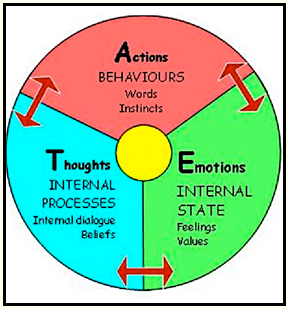
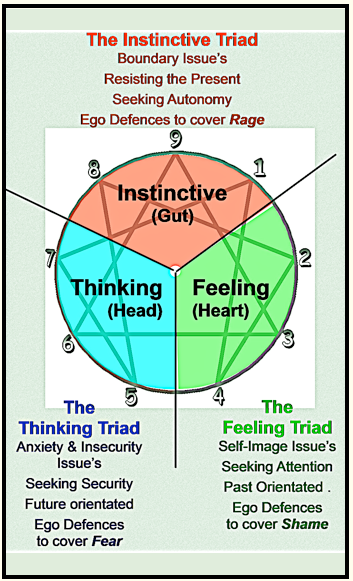
triads expandedThis can be done by taking careful note of someone’s TEAs ⬆️ – which follow the outline of the Enneagram’s main triads – as each has its own language peculiarities. Then we can use similar words & images to get our point across in a way the other person can ‘hear’ us. (Charts….)

EXP: Amy is a thin, blond, pretty AND fussy woman, very concerned with her image (a Leo & Ennea-type #3).
Her friend Elaine (fashion designer, F.I.T. graduate) is helping her look for fabric to make a new dress.
💜 Amy makes some inappropriate choices (for her physical type) & asks for an opinion.
🧡 Rather than saying those fabrics are ‘loud’, ugly or dowdy, Elaine says they are not elegant. Amy immediately moves toward a few that Elaine suggests. 🙂
NEXT
: Language – GROWTH (#2)

EnneaTypes – Language STYLES (Types 8, 9)

type 8 boss


I CAN INFLUENCE OTHERS

by how I communicate

PREVIOUS: Talk Types 6-7

REVIEW: Intro explanation in # 2


TYPE 8s give COMMANDS, DIATRIBES, LAY TRIPS

Self-talk: ‘Do this my way’
Words : chain of command, ground zero, rally the troops, remember
are about: bossing, control, justice, in charge, my way or the highway, power, right/wrong, strengths / weaknesses
Public Speaking Manner: Commanding

Style: 8s speak confidently & clearly, with boldness & authority, not holding back their opinions. They like arguing as a way of asserting dominance. They often take the opposing stance, not necessarily because they care about the topic, but just enjoy the clash.
THEY:
type 8 • Blame others if they feel accused or blamed unjustly

• Easily use profanity or body-based/crass humor
• Express anger directly, & as a defense
• Look at the big picture, impatient with detail
• May say very little or be talkative
• Use statements to structure or control situations
ARE
• authoritative, direct & firm, but also zestful
• oriented toward fairness, justice & truth
• strategic thinkers & can see the big picture

Pitfalls: Can get too confrontational, insense & pushy. Too attached to “My truth is The Truth” with no room for disagreement or argument. Go too much on gut, without enough facts to back up reactions

Use language to
: argue, debate, oppose, make parting shots, score points, take aim, use military metaphors
Others can experience 8s as intimidating, loud, controlling

MANIPULATE / create CONFLICT by : throwing their verbal weight around, bluffing, making big gestures – to dominate, demanding others think & act their way. Can also be sentimental, a teddy bear
BLOCK others by : intimidation – scaring people into agreeing, capitulating or submitting to them

CONFLICT style
: Blustery, dismissive, rageful, unemotional, uncaring, vengeful, violent.
8s are triggered by feeling controlled or dominated by others,
OR by disloyalty, & feeling abandoned. Then can become domineering, aggressive or incredibly cold

For BOUNDARIES: need ‘intimidation’, actually – assertion, to forcefully end a conversation on the spot when it’s not going well (not argue)
To FLOW in conversation, need TRUST : by fostering equality & with benevolent leadership

To RESOLVE conflicts with 8s:
• Stand your ground & don’t waver in your opinion. They’ll ‘joust’ with people they love – to test their strength. They want someone who can hold their own against them
• Set ground rules in an argument with them, & don’t be afraid to let them know if they hurt your feelings (this often surprises them)
• Try not to react to their intimidation tactics, but don’t egg them on either

✥ ✥ ✥ ✥ ✥ ✥ ✥ ✥ ✥

TYPE 9s give CHRONICLES, EPICS, SAGAS
Self-talk: ‘Nice ’n easy’
Words : listen, mediate, mindful, negotiate, reasonable, responsible
are about : being calm, different points of views, process, procedures,  systems
Public Speaking Manner: Epic or Conciliatory

Style: Like their appearance, 9s usually use a soft voice, relaxed & friendly, though they can easily take on qualities of those they’re around for a while, so can sound silly & giggle or proper & stiff, or…. type 9

THEY:
• Are warm, other-focused, non-confrontational
• Give highly detailed info in a sequential style
• Make an effort to be fair by presenting all sides
• Often say yes – but mean no
• Talk about both feelings & facts
• Use agreeing words : of course, sure, yes, uh-huh

Pitfalls: When giving a talk or in conversation, 9s use irrelevant details & unimportant info, which clouds their message. It may have no focus, holding all points of view, & without a conclusion.
Some 9s can have a slow, boring way of talking that puts people to sleep. Passive, indirect phrases that don’t seem to mean anything will lose the listener (“How leadership happens to you”) ??

Use language to
: day-dream out loud, generalize, launch into epics & sagas, verbally meander, voice vague notions, wonder
Others can experience 9s as indecisive, overly agreeable, scattered, unclear

MANIPULATE / create CONFLICT by: “checking out”, passive-aggressive resistance, shirking responsibility, barely talking at all, use one-word answers or talk in an air of resignation
BLOCK others by: withdrawing rather than staying engaged / connected

CONFLICT style
: clueless, occasionally explosive, pacifying, placating, sleepy, stubborn, unaffected.
9s are triggered by feeling internally chaotic or can’t escape painful emotions. They may go to sleep re. a problem, or suddenly become angry & belligerent like 8s or scolding like 1s (their ‘wings’), & then calm down soon after

For BOUNDARIES: need to ‘withdraw’ physically, emotionally or mentally when faced with discouragement or distress
To FLOW in conversation, need ACCEPTANCE: being available, present & welcoming

To RESOLVE conflicts with 9s:
• Acknowledge that you know they want to find some point of agreement with you
• Assure them your ‘upset’ doesn’t mean you don’t like/ love them anymore (unless of course you don’t) but what’s important is to resolve this issue
• Don’t attack or use a blaming tone, or they’ll tune you out. 9s will be afraid of your anger, so can become stubborn or withdraw if you get aggressive.

NEXT: GROWTH – Intro