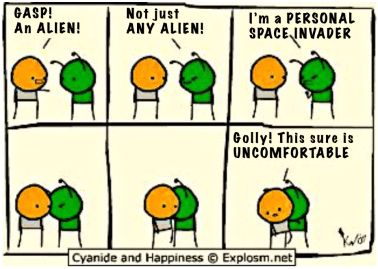
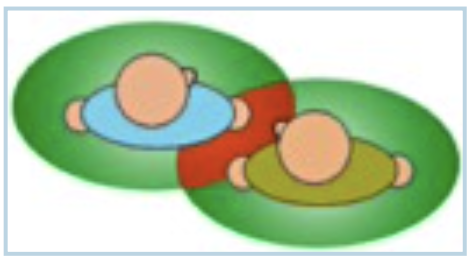
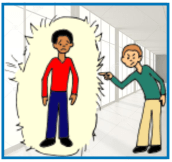
ACoAs & Boundary INVASIONS (Part 3)

invisible THEY’RE SUPPOSED TO PROTECT ME
So why do I feel invisible?

PREVIOUS: B. Invasions (#2)

BOOK: Healing from the Trauma of Childhood Sexual Abuse: The Journey for Women~Karen Duncan

BOUNDARY INVASIONS (cont)
5. INCEST / sexual abuse (S.A.)
a. Overt
One of the great sorrows & tragedies of toxic families is the high incidence of sexual abuse. This is an abuse of power, not of sexual desire.
Any adult who perpetrates sexual abuse on a child is screaming their sense of powerlessness & is trying to compensate for that in a totally deviant way!
Not all are strictly pedophiles. Many abusers have unwanted sex with both adults and children, but their need to dominate a weaker person is at the very heart of their actions.sexual harassment
Sexual abuse is :
• any type of sexual contact between an adult & anyone under 18
• between a significantly older child & a younger child (sibling or non-family)
• when one person overpowers another, regardless of age

Generational Boundaries should never be blurred.
— In healthy families there’s a firm parental coalition with NO evidence of competing with their children. Each generation should have clearly marked territory. When they have a need, they seek out other peers.

— Shame-bound families are multi-generational, insular & loyal to toxic rules that demand control, perfectionism & denial.  They create chaos by promoting vague personal Bs & secrets, binding members together with fear of abandonment, trapping them in co-dependent alliances.
b. Covert
• In any form of sexual inappropriateness, the key is intension. Some actions may seem like ‘just being affectionate’ when in fact they’re not innocent, like a father who pays way too much attention to a daughter, attention which should rightly be directed to his wife or girlfriend.

Any parent who uses a child for their own gratification – either because of insecurity, being too isolated or their adult relationships are unsatisfactory – is only concerned with their own needs, so they are in no way loving!hug too tight

• Children crave & lap up attention, so having an over-attentive parent makes it easy for them to get caught in a web of lies & denial.
But they also know when something doesn’t FEEL right, even if they don’t have the words until they’re much older.
When a parent’s sexually-based attention is indirect ⏬️ (no penetration or other genital stimulation), it can be much more confusing for the child to identify as abuse, even when feeling creeped out.

ASK: Was there proper conduct at home (reasonable modesty)?
EXP – In many alcoholic & other dysfunctional homes, parents don’t bathe or groom themself … and are sexually indiscreet in their dress —> mother’s robe open to expose breasts, drunk father in loose shorts exposing private parts….

ALSO when a parent :
seduction• always paws at you, follows you around
• calls you ‘dirty’, a whore
• compulsively gives unnecessary enemas
• encourages sexually activity too early
OR
• hangs on to you in public, kisses on the mouth (esp. if you don’t want to)
• leaves pornography around
• listens in on your intimate conversations with a peer

• takes over your date or lover, making flirting comments
• talks about sex all the time, makes lewd jokes, refers to you in sexual terms
• watches you when you’re dressing or undressing, going to the toilet or bathing (you can tell when it’s not ‘clean’), or make you watch them
• walks in on you naked / often sleeps cuddled up to you
OR • having to sleep in parents’ bedroom for several years — subjecting you to see & hear parents having sex….

PRESENT: Our difficulty with Bs is a direct result of the atmosphere in our family, (review points 1 thru 5).
Boundary Invasions also occurred in school, on the playground, at church, in our neighborhood, with baby sitters….. SO, never blame yourself!

Naturally, now we’re responsible for correcting Bs, with the 3 As :
AWARENESS – how we were B invaded (add your own)
ACCEPTANCE – how we were damaged by it & act it out
ACTION – use whatever appropriate tools, groups & healthy people available to help our Recovery

NEXT: WEAK Boundaries – #1
ACoAs & Boundary INVASIONS (Part 2)

no limits

PREVIOUS: B. INVASIONS (#1)

ARTICLES: ‘Sexual Abuse / Trauma’
The Incestuous Family” – Roles re sexual abuse


BOUNDARY INVASIONS  
(cont)
2. MENTAL Coercion

3. Family SYMBIOSIS

a. Insecure parents :
push for an ‘us against the world’ attitude, hoping to increase family solidarity, powered by denial of dysfunction, & an unbearable threat to their sense of identity
can be over-protective.  On the surface it may look like love, but they’re only trying to keep us attached by dis-empowering us
📲 The underlying message is that we’re incompetent, weak & have to be afraid of everything

• may attribute the wrong motive to other kids or adults’ unpleasant/ abusive treatment of us, no matter what we actually did (cause trouble or not, be friendly or withdrawn….)
When we complained about the bullies, Mother may say: “Those kids are just jealous of you because you’re so much better than everyone else in the class”, which becomes the twisted thought “The boss doesn’t like me because I’m smarter than her”…. distortion

b. Distortions
 CDs cause many problems for children. IT :
• gave us a distorted view of how the world works, making it hard for us later on to take responsibility for our motives & action
• prevented us from – becoming fully socialize, taking normal risks & learning about the many options available in life
• severely increased our inappropriate school / social behavior, making it easy to be a target for bullying, insuring distance from peers, & forced to stay dependent on the family

Familiar phrases: Blood is thicker than water Never air our dirty laundry in public  ~  No one else will love you like we do
~ You’ll never make it on your own so we’ve got to stick together ~ We’re better than ‘those’ people
OR a childhood taunt:  “You have a face only a mother could love, & she died”!

c. Family Insularity is an attempt to feel safe BUT built on fear-based rules that inevitably lead to constriction, intolerance & an inability to collaborate / cooperate well with others.
Ironically it also creates isolation, scapegoating, unhealthy alliances & splits inside the family, which then get repeated in adulthood.
EXP: A  part of the dysfunctional family mobile, being trapped in a toxic ROLE, (Scapegoat. Lost Child….) had “negative benefits.” It seemed useful by ‘protecting’ a parent from their emotional problems, the consequences of their addictions, & whitewashing outright abuses.
As adults we look for the same kind of payoff when playing out our Role in the larger world (protecting a mate, boss….), which doesn’t work now either, only reinforcing our sense of being a failure.

4. Parental NARCISSISM (N)
a. Boundary invasions
• Ns require that everyone be their carbon copy, with no room for children to develop their individuality
• children need mirroring (reflecting back who the other person be like meis, without adding anything of oneself), but Ns can’t do that since they’re only projecting themself on to the child

Narcissists don’t recognize there are such things as Bs, that others are separate & not extensions of themselves. People either exist to meet their needs or may as well not exist at all. Anyone who provides narcissistic ‘supply’ will be treated as if they’re part of the controller, who demands the victim live up to their expectations (think: spider & fly).

• Some N. phrases:
“What’s yours is mine & what’s mine is nobody’s business”
“Do as I say – not as I do”, “Put a sweater on, I’m cold”
“No son of mine is ever going to…..”
“This is the thanks I get – after all I’ve done for you”
“Do that in the morning when you’re fresh” said by a mother always raring to go at 6 am, to her child who was born a dyed-in-the-wool night person!
Watch ‘Angry-martyr Narcissist” on YouTube

b. Role Ambiguity
Parental N. spawns much identity confusion. Since only their needs count, the children take on a parent role – “I am them”, & many a parent acts like a needy kid – “They are me”.

Family members aren’t sure who’s in or out of the clan, who’s performing what tasks or legitimate roles : Dad acts like a ‘girl’ , Sis is the ‘mom’, little Brother is the family shrink…..

Al-anon IMAGE: A co-dependent decides to kill himself by jumping off the roof of a tall building.  As he’s falling, someone else’s life flashes before his eyes!

NOTE: If you have firm boundaries in the face of a narcissist, the relationship won’t usually last! Good – better for you!

NEXT: B. Invasions (Part 3)

ACoAs & Boundary INVASIONS (Part 1)

B invasion

GET OFF ME!
You’re in my space!

PREVIOUS: B.Distortion (#3)

See ACRONYM page for abbrev.


FoO = Family of Origin

1. BEING INVADED
EXP: Picture someone across a room that interests you & they seem open to being approached. You start walking toward them but something is slowing you down :
tightly gripped around your neck & hanging heavily down your back is the invisible putrid body of your whole FoO (or maybe just one parent or certain sibling…). You realize you’re not free to have a one-to-one relationship with anyone, dragging around all that rotting baggage!

Some basic ways we were violated
1. PHYSICAL Boundary (B) invasions by parents & siblings
Starting in childhood – everyone needs their own private things, their space & time to be respected – as one way to find out who we are & be able to function autonomously as adults. Many of us did not have that opportunity. What were you allowed to have that was not violated?
Did you have ?
• to sleep in the same room as parents, allowed to sleep in their bed too often, shared a bedroom with a sibling…. – or too long
• no personal privacy : walked in on in the bathroom, opened your bedroom door or had to sleep in a common area, your mail & diaries read, listened in-on phone conversations, room ransacked ….
• forced enemas, constantly being poked or pulled at, ‘fixed up’, had to wear clothes you hated….
• others using your clothes & personal items without your permission
• to give a parent full recounting of everything you did whenever / wherever you were out, or what you were reading….

EXP: The PARTY LINE
With blurred boundaries, it’s quite common for person (A) in a toxic system to be the ‘communications hub’, in charge of hearing the grievances, messages, worries… of one member (B) about another in the family (C).
Then (A) passes the info on to (C), instead of (B) talking to C directly.

a. It makes the ‘hub’ person feel needed, important, in control, be in charge, to manipulate everyone, be the buffer, above it all….
b. It re-enforces everyone’s lack of good communication skills, fear of confrontation, of speaking their truth, of hurting others’ feelings or getting blow-back, of standing up for themself….

2. MENTAL Coercion (ongoing enmeshment)
a. Manipulations
Even our inner thoughts were invaded, usually by one parent, just like those African army ants! This is psychological bullying, “…. a poisonous form of parenting, compelling children to act or to choose” the adult’s way, never the child’s, with such tactics as:
• arguing, to convince child how wrong they are
hopeless• criticism or fault-finding
• sarcasm, ridicule
• verbal force – shouting
• distorted ‘logic’ – to totally convince child of parent’s point of view
• threats or warning of punishment if not quickly obeyed…..

RESULT of being bullied: the child will inevitably end up feeling despair, beaten down, out of control, hopeless, & eventually stockpile rage

b. Over-coercion
• This is a more intense form, coming from a rigid, narcissistic** &/or active-addict parent. In the ‘a’ category, bullies are aware their victim does not want to comply, but they don’t care.
In the ‘b’ form the perpetrator is not even aware that others – even their own children – have a mind or will of their own. They’re only interested in total compliance to their own narrow view of reality!
BTW, they treat everyone the same way if they can get away with it.

no way** Any difference of the child in taste, needs, opinions, style, way of doing things…. any sense of self not a carbon copy of the egotist – is labeled arrogance, defiance, disobedience, stubbornness…. So the child is constantly punished for not conforming to someone else’s personality! & will eventually become totally brainwashed or violently defiant.

• It would never dawn on an over-coercer that their child may legitimately:
— be too young to do or be exactly what the parent wants
— have an inherently different personality, with its own set of functional requirements
— have the developmental task of becoming a separate being, which includes disagreeing with ‘authority’ from time to time
— know some things the parent doesn’t. Narcissists think they’re never wrong!
EXP: Mom always said, literally: “I’m perfect” & meant it!

NEXT : = Boundary Invasions #2

ACoAs: Detaching with Boundaries (Part 2)

PREVIOUS: ACoAs & B. Distortion (#1)

BOOKs: Genograms links

SITE: “Codependency Within the Family System”


TRYING TO LEAVE a dysfunctional system (cont)

• For many recovering ACoAs the process of outgrowing our childhood damage is hard enough, but often we have the added burden of dealing with reactions from family & long-time friends who don’t want us to change.
We need to be prepared for being ignored, attacked, even disowned by some, when we rock to boat.

In recovery we’re dislodging the precariously constructed patchwork of these long-standing relationships. This scares everyone – our family, mates & friends, including our Inner Child – so we can expect some internal backlash & external complaints, anywhere from whining or guilting, to outrage, to punishment!

In Social Psychology, researchers have used various birds & animals to study how we learn (think Pavlov’s dogs). (INFO….)
EXP: Once a pigeon had figured out that to peck a lever will get it one pellet of food each time, the scientists began withholding the food in stages to see what would happen (how we un-learn).
Gradually the bird had to peck 2…6…10…. times more to get just one pellet. As the food became scarcer the bird began to peck more & more frantically – to get its reward. Eventually, as the food was dispensed rarely & then not at all, the bird finally stopped trying.

🔐 We notice a similar pattern in symbiotic families – they can’t tolerate the loss of a member on the mobile, so they too become frantic. At first they try whatever they can think of to hook us back into the fold – guilting, shaming, getting sick, attacking, begging…. BUT the most dangerous tactic is when the anxious parents say “But we loooove you! we want to hear from you, we miss you….” sometimes sent with cute emojii, or money??  Anything but giving us space, especially if we’ve asked for some ‘time out’!

✶ It’s important to remember that – even though our parents may believe they feel love for us, for the most part it’s a narcissistic emotion! It’s all about THEM – their need to keep up the fantasy of being good parents, their fear of being alone, their sense of identity, an image in their community, their overt or covert demand to be taken care of….
selfish momIf their love had been healthy, they would have treated us very differently from the very beginning!
Read: ‘They did the best they could’

• Their pull on as as we begin S & I is seductive because ACoAs are so desperate to hear that we’re wanted & loved, AND we can’t stand feeling the guilt of upsetting others, especially family. Under such pressure we often find it easier to fall back into the toxic whirlpool. If we’re in Recovery and we do succumb, even temporarily —
— afterward, maybe for days or weeks, we can end up paying for that moment of illusion with depression, crashing down into S-H & hopelessness, getting physically sick, feeling suicidal…. We went back to the hardware store for a loaf of bread, because the WIC still wants to believe we’re part of a loving family.

Eventually we start to see the truth & have to mourn the loss of our fantasy – again – the false hope that some day, somehow magically they will be healthy & kind. They rarely do, & that HURTS!

progress• BUT if we steadfastly persist on the path to PMES Health, in most cases the family’s desperate grabbing will stop, or at least abate.  Someone once said in Al-Anon (not officially): “This program will fuck up your fucked-up-ness”.

So the longer we stay in Recovery, the harder it is to tolerate those old fractured ways of interacting. Because of that, when we do re-engage with anyone who is still reacting in the old familiar style, we can:
— observe the noxious quality of it more easily, being less in denial, armed with new info, validation & support
— feel the pain, sadness, anger & disappointment in our whole body, of how empty, shallow & abusive the relationships really are & always have been! without S-H!
♥️ AND as we heal we’ll feel OK! even when around them – not happy about who they are, but accepting, without anxiety.

NEXT: B Invasions – #1

ACoAs : Detaching with Boundaries (Part 1)


PREVIOUS: B Distortion (#3)

SITEs: Healthy vs Unhealthy Parenting
• ‘Healthy Family Characteristics
(ACoA website)

Co-dep HUMOR: I Think I’m Codependent With My Cat – And I wouldn’t have it any other way – Jessica Olien, Cartoonist


TRYING TO LEAVE a dysfunctional system
To outgrow Boundary Distortions, we have to detach Emotionally, Mentally & Spiritually (PMES), first from our family of origin (FoO) & then other unhealthy relationships – but not always Physically.
We can love someone, see them & still outgrow our symbiotic way of connecting. For other ACoAs, staying away for a time – or longer – is the only way to have the space to develop our True Self.

Detachment includes letting the addicts AND the non-addicts experience the consequences of their choices, instead of taking responsibility for them. It’s a core requirement for Recovery. Redirecting focus away from their self-destructive or victim drama will allow us the opportunity to develop self-care. But it’s difficult & comes with a price!

In “GAMES PEOPLE PLAY”, Eric Berne warns that when one person in a symbiotic / addictive relationship chooses to end a psychological ‘game’ before the other person is ready to disengage – the latter will become highly agitated, demanding, clinging, enraged, even suicidal (See 4 of the games).
DEF: “Games are a series of complementary ulterior transactions progressing to a well-defined, predictable outcome”

• Many ACoAs have shared about their active addict or depressed co-dependent parent committing suicide once the adult-child withdraws from the family drama, rather than be left alone with their loss.
Unless someone is physically in terrible pain & dying, the reason for suicide is almost always the person’s rage at others for abandoning them, as a punishment.  Yes, the person is depressed, affected by chemicals, isolating, not getting any help… but their narcissism has them blaming everyone else for their misery, & it’s often their children!

Favorite Game, with “Alcoholic” in the lead Role
b. Persecutor : most often the mate, but can be a sibling or another adult in the house  (usually the opposite gender). Their assignment is to judge,  list & criticize all the Alcoholic’s disgusting behaviors

c. Rescueroften the same gender – may be a doctor or psychiatrist, uneducated in the ritual of alcohol’ism. They congratulate each other that the Alcoholic’s been sober for 6 months, who then wakes up the next morning with a terrible hangover

d. Patsyoften the Alcoholic’s mother, who sympathizes with the addict, providing money or booze, while blaming the Persecutor for not understanding their stressors
e. Connection : any professional, like a bartender, who understands the language of alcoholics, supplying them with liquor for a while, but knows when to stop ‘playing’

In “LOVE & ADDICTION”, Stanton Peele (videos) says about Relationship Addicts:
“….they are people who never learned to deal with their world, who look for stability & reassurance through some repeated, ritualized activity. The addict’s lack of internal stability or purpose creates the need for programed escape….
The love-object is their drug. Attaching to another person (anxious, preoccupied style) gives them an artificial sense of safety, which eliminates the small motivation they may have had for complicated or difficult tasks (like Recovery). When there’s an interruption of the addict’s supply, a major feature of the addiction cycle is withdrawal in anguished reaction

• Yes, we can become addicted to another person just as much as to a physical substance. We can tell this because when we’re without our ‘drug’, temporarily or from a break-up – we experience many of the same cold-turkey symptoms others do when detoxing from a chemical :
—> anxiety & panic attacks, listlessness, physical aches & pains, sleeplessness, trouble focusing thoughts…. with feeling despair, S-H, hopelessness, terror & rage.love addict

• In relationships based on symbiotic attachment – each person is overly dependent on the other for their sense of identity & safety. SO if one of them needs to get away for their psychic survival, the other will be deeply threatened. Whether it’s adult-children & their parents, or love partnerships, amicable separations are rare.
Often the only way will be through an explosion – fights, yelling, threats, stalking, harassing texts & calls, even violence….

As ACoAs, to grow, we have to brace ourselves for feeling guilt  & anxiety when detaching because it’s breaking toxic family rules. Don’t let those emotions stop you from continuing to S & I, which is what’s needed to become free & empowered.

NEXT: Detaching with Boundaries (#2)

ACoAs & Boundary Distortion (Part 3)

I GOTTA GET OUT’a HERE –but I’m stuck in YOUR mud!

PREVIOUS: B Distortion (#2)


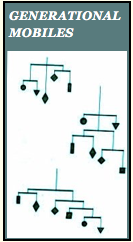
The Family MOBILE
• All of us grew up as part of a larger generational inter-connected mobile – even if we were cut off from actually spending time with various relatives.
A mobile is a collection of objects that is in constant motion within a framework. A family is the most complicated, ever-changing one that exists, made up of human personalities.

The stability of a mobile depends on all the parts being in balance, in a specific relationship to all other parts.  But balanced does not automatically mMobiles-aquean it’s beautiful, safe from falling apart, nor having lots room to move.

IN unhealthy families, everything may look fine on the outside, but the mobile is barely holding together, or is so rigid it can’t move at all.  In the ARTICLE : “My 10-year-old says no one cares about him, and talks of suicide – the mother is shocked because she thinks everything is fine!

EXP Addicts upset a mobile’s very delicate symmetry. Their unpredictability, violence, contempt & self-focus distorts much of the family’s interaction. To keep the mobile’s skewed ‘balance’ other members try to adapt by:
— absorbing the addicts anger, & suppressing their own
— denying the effect of the addict’s behavior on everyone in the family
— avoiding the addict, while trying to cover up the dis-ease to outsiders
—> forcing each one to become progressively more skewed to make up for the addict’s constant disruptions, causing long-term damaged & being co-dependently trapped in that state.

• Dysfunctional families are always crammed full of confusion & chaos. But there are also rules that must be followed to keep the mobile from totally collapsing.
a. Equilibrium
On the one hand, no matter how distorted the mobile, each person has a part to play in keeping the status quo, called homeostasis. And just like an inanimate mobile returns to its normal state after being shaken up, so do families.
So if the addict goes into treatment to get clean & sober, their return to the family is often met with great resistance – & anger. They’ve changed too much – the role they originally played isn’t available, undermining the shape of the familiar structure, sending the whole setup tilting uncomfortably off its normal axis.

• If it’s the father – the most common way to regain the old balance is for the spouse, & even the kids – to manipulate the recovering person back into their original role by sabotaging their growth & getting them to drink or use again

• A better way would be to form a new mobile. But this is much harder, met with a lot of anger & may never work : every member of the family – still living at home – would have to face their own damage & make serious changes

EXP: Picture a broken arm that was never set professionally – it ‘heals’ crookedly & is only partially useful. To make it fully functional again it will have to be re-broken & set, then patiently wait for it to heal, maybe needing rehab & re-learning how to use it correctly!
It’s scary, painful & tedious. Broken lives & broken families are like that too, so people would rather keep to the twisted well-known ways than having to fix the problem in Recovery

b. Fragility
On the other hand, we learn how precarious the dysfunctional mobile actually is. Because members of a wounded family are bound by symbiotic needs rather than healthy egos – with self-hate, fear of abandonment & distorted boundaries – there’s little room for ‘error’ in the system (newness, difficulties, unexpected changes, expansion…). This mobile, with all its convoluted problems, has been jury-fragle castlerigged, held together by Toxic Rules & Toxic Roles.

• While it appears solid & inflexible / rigid, it’s actually too fragile to withstand any major shift, such as one person becoming sober or another going into Al-Anon / ACoA Recovery.
Unless other members are also willing to grow & be supportive, like at least one of the adults doing some deep soul-searching…. the family unit will fall apart. This is particularly threatening when there are small children, so members will do almost anything to keep the (sick) status quo.

NEXT: DETACHING w/ Boundaries, #1

ACoAs & Boundary Distortion (Part 2)

no one caresI CAN DO WHATEVER I WANT
because nobody cares about me

PREVIOUS: ACoAs & B. Distortion (Part 1)

SITEs: ▪︎ GENOGRAMS – def
 ▪︎ Genogram explained


PARENTS with distorted Bs don’t know how to connect with their children in a fair & balanced way.  In Boundaries – Defined”, we saw they can be either intrusive or uninvolved . Then children are either:

a. Being watched: Some of us grew up with an intrusive parent who needed to control everything & everyone in their environment (not just their kids). They were always on our back about something, overly critical, perfectionistic & boundary-less , sticking their nose in our business when we needed respect & some privacy. This was not a sign of loving concern!

• As a result these ACoAs continue to feel a creepy sense of having a camera over one shoulder – always judging, criticizing… assuming everyone else is also watching, watching, watching – waiting for our next ‘stupidity’ or mistake

d's mouseEXP: Sophie is 5 & it’s the first day of kindergarten. Her mother is fussing, worried that her daughter won’t behave perfectly, which will make the family look bad, & she won’t be there in person to make sure….

She gives all sorts of instructions – how to sit, what to say, what NOT to say…. Sophie is already scared & now she’s overwhelmed, so all she can do is stare. As they leave the house she hears her mother say – almost to her self: “I wish I could be a little mouse on the wall !”

• Sophie’s on her own for the first time, in a big room with other kids, all sitting in their little chairs, listening to the teacher – except for Sophie who is anxiously looking around the bottom edges of the walls, actually expecting to see a little mouse watching her from its hole, maybe with her mother’s eyes!

b. Being ignored: Other parents left us adrift – too much alone, unsupervised, unguided. Yet even as small children we were expected to know how to behave, & participate correctly in all sorts of social events, without being taught directly or setting a proper example. And they were oblivious to the burden they put on us!

hiding in publicOne result is that externally – now we don’t have Bs with others, & internally – we haven’t learned to set Bs with ourself, so we do whatever the WIC feels like, no matter how unhealthy, using unsuccessful ways to get needs met (needs we’re not supposed to have!)

Another result is that many of us who were neglected, are uncomfortable in public, especially with groups. We feel ill-equipped to socialize, sure we don’t know what to say or how to act. We watch other people to see how they manage, & even though we’re great mimics, we still don’t trust ourself to be acceptable. Extroverts will at least try but feel inadequate, & introverts don’t even bother!

EXP: Sheila was a bright, sensitive girl, living in a family that moved many times because of her father’s career. A talkative extrovert, she’d grown up mainly in the company of adults, so even tho’ there always were people around, she was very much alone.  She was expected to be sociable, charming, well-behaved & polite to the grown-ups, but she was deeply lonely, angry & hurt.

To cope, she found escape & solace in all kinds of books (before internet & cell phones) – in the library after school, reading while walking down the street!!, under the covers at night….
Once, when her mother wanted her full attention she commented sarcastically: “I can see it all now – you’ll be reading a book as you walk down the aisle!”

PS: Obviously, the mother’s passive-aggressive anger was showing:
a. her unconscious abandonment buttons got triggered
b. her narcissism kicked in, since she wasn’t a reader & didn’t see what was “so interesting”
c. she was oblivious to her daughter’s need for comfort & for a buffer when around her controlling mother
d. her lack of intellectual interest was obvious, or she would have encouraged the girl’s passion for knowledge

EXT: Boundary Distortion (Part 3)

ACoAs & Boundary Distortion (Part 1)

BIG BROTHER IS WATCHING
Then why do I feel so alone?

PREVIOUS: How ACoAs B. Invade #2

SITES: Balance Theory – Wikipedia
Balancing points (Mobile exercises for students)
• re. Family Systems Theory,  M Dombeck & J Wells-Moran


DYSFUNCTION

Unhealthy parents with rigid or weak boundaries automatically invade the PMES space of their children – they can’t help it! As a result ACoAs grow up co-dependently enmeshed, not just with a specific parent but the whole toxic family system.
From that early model, we recreate our work & personal relationships in similar ways – invading & being invaded or keeping everyone at bay, because we don’t have the ability to enforce our personal space.

• For ACoAs, developing healthy Bs is a long, arduous & imperfect journey.  Remember – as long as we’re consistently reacting to people, places & things from damage (lack of Bs), we’re in the Child ego state – still not emotionally mature.

For those of us well on our way to a Whole Self, whenever we too react without Bs, we’ve regressed to an earlier stage of childhood, but are able to come back to the present more easily & quickly

• A sure sign of not having healthy Bs is when we habitually, compulsively consider ourself only in relation to others (co-dependence).  ACoAs are enmeshed with everyone – not just people we love, or even know. It’s so much a part of how we relate, we don’t recognize it as damage.

• One way it shows up is when we disagree with or disapprove of anything another person says or wants. We get really scared – especially if they don’t like our opinion. We’re confused, talk ourself out of dealing with it, OR we rant about it to others, obsessing about what we should have said or what we will – next time, but never do! The focus is on the other person, rather than ourself.
EXPs:
✓ “I want to tell her I didn’t like what she said last week, so she’ll understand (get it) & not talk to me that way again…..”
✓ “I can’t tell them I don’t want to do that anymore because they will be upset / hurt / angry”
✓ “I’d like to tell him what I think about what’s going on between
use othersus, but he won’t get it, so why bother”….

SINCE we’re not allowed to know what we need, we use others:
— to ‘complete’ us (review symbiosis) AND
— to set limits for us, as if we were still infants!
Their agendas & desires become our blueprint for responses & activities. Without boundaries we’re at everyone else’s whim.
OR use others :
— to have someone to copy (symbiose with). Once we figure out what they want or what they’re doing, we mold ourselves to that, even though very often it’s not what suits us nor that we actually want!

• Since the WIC is looking for a definitive outline of what’s expected of it, in a desperate (usually unconscious) desire to stay connected, to avoid feeling abandoned, to be taken care of – we will do anything to please others, usually at our expense, so they won’t be angry or be hurt, & then go away!

Therefore, ACoAs can get very upset when ‘significant’ people:
— change their minds a lot, are undependable, unpredictable
— expect us to “just know” what they want. Since they don’t say it directly we’re constantly trying to guess
— lie, are chaotic, hard to read, drugged, crazy…..
Without Recovery, we then freeze, run around in circles, get angry or depressed…. because we don’t have our own core to guide us.

RECOVERY
One of the important thing for ACoAs to do on a regular basis is to speak up on behalf of our Inner Child – because the WIC can’t.

With good Bs we can practice saying what’s truly on our mind — we do not need everyone to validate our thoughts, feelings or existence!  and
— it is not necessary for the other person to see us, understand, or change their behavior. Some will & some won’t.
And when dealing with self-centered controllers, we can be sure they will NOT get it. An Al-Anon saying is: “Take the action & let go of the result!”

NEXT: B. Distortions (Part 2)

How ACoAs Boundary Invade (Part 2)


PREVIOUS: ACoAs INVADING Boundaries – #1

OUR DAMAGE (cont)

☛ “Space Invaders” don’t have an ‘edge’ to their sense of Self – everyone is assumed to be in the realm of their personal space .
Most of us have such intense FoA that if we give the other person breathing space, it feels like we are going to die. We won’r, but it sure hurts!

ACoAs invaders can be:
controlling – who like to tell others what to do, say & feel – all the time
hyper-responsible – carrying the weight of the world on our shoulders. We assume no one else is as competent as ourself, so we must take charge – just ‘trying to get the job done’
insensitive – rude, self-absorbed, unaware – like in the movies “What about Bob?” & Mr Bean. We intrude with no sense of the effect on others.

WAYS ACoAs cross boundaries (add your own):
PHYSICAL / SEXUAL
• stand too close to others
• use physical intimidation
• talk loudly on cell phones, in movies…. talk over others
• barge into a room without knocking, like bathrooms, bedrooms…
• touch others without asking
OR:
• eat from someone’s plate without asking
• force sex on someone who does not want it, with or without physical / emotional abuse during sex
• look thru others’ documents, rooms, drawers, medicine chest….   • don’t allow others their privacy
• use sex to manipulate emotionally, as a reward or punishment

MENTAL / EMOTIONAL
• are needy, taking too much – by being passive & dependent
• are not able or willing to respect the rights of others – to have different needs or opinions from our own
• assume others know what we feel or need, & expect them to automatically provide them. When they won’t or can’t – we get depression & feel endless resentment (obsessional anger)
• butt in on others’ emotions, pressing them for info, insisting
they tell us how they feel, trying to fix their pain
• insist we know what others need – constantly giving advice & expecting others to follow it
• say whatever we want, whenever – with no regard to place, time or others’ feelings
• tell secrets we promised to keep (triangulating)
• try to define limits for others (what they can or can’t do)
• use verbal abuse & psychological intimidation, make threats

It’s important to ask permission to enter someone’s personal space, whether mental, physical, emotional or spiritual (PMES).  We can picture everyone as having a fence around them & learn to knock at the gate before barging in.
If they say NO, walk away!
If our Wounded Inner Child feels rejected we can comfort ourselves for being sad & scared, & explain to the WIC that everyone has the right to their privacy – including us!

Do you making others Uncomfortable? Did you even notice? Here are some Subtle Signs that others have REACTIONS to your narcissism (B INVASIONS).. THEY:
1. 
blame themselves when they’re uncomfortable or mad at you (don’t hold YOU responsible)
“It’s my own fault that my co-worker takes credit for my work”
2. justify your bad behavior toward them
“Yes, Sheila makes fun of me, but it’s all in fun & I know she loves me.”
THEY:
3. feel ashamed for no apparent reason
EXP:  You agree to babysit every Wednesday night so the Mom can have some personal time, then keep texting her to say her child misses her
4. start doubting a decision that suits them, second-guessing it when you keep questioning it – insinuating it might be too much for them, the wrong option, or just plain dumb
THEY:
5. sense something’s “off” with you, which feels ICKY. They can’t pinpoint what’s wrong, but their internal warning system keeps pinging. Until they figure it out they’re going to be confused & indecisive
6. have their decisions disregarded & ignored – you’ve taken away their power to choose or have an effect
EXP: You come up with alternate suggestion to what your friend wants to do for their B/day, & say “Lets try____ 
you’ll love it!”

(A VARIATION on article by By

NEXT: B. Distortions #1

How ACoAs Boundary Invade (Part 1)

LET ME BE CLOSE TO YOU –
whether you like it or not!

PREVIOUS: ACoAs & Boundaries – #4

REVIEW: “How ACoAs ABANDON  Others”

QUOTEs  : 👩‍❤️‍💋‍👨 ” If a person loves only one other person, & is indifferent to his fellow men, his love is not love but a symbiotic attachment, or an enlarged egotism” — Erich Fromm

REMINDER: All forms of Boundary invasion are expressions of narcissism.

OUR DAMAGE
• It’s only natural that IF our parents —-> invaded us, then we never learned good Bs, so we in turn —> boundary invade others.
We unconsciously assume this is a form of expressing love, & don’t see anything wrong with it. In fact, to many ACoAs it’s not boundary invasion but ‘connection’.  The deep-seated reasons for continuing this pattern are familiar:
to follow our family training, stave off our fear of abandonment, deal with loneliness, feel needed & desired, have a sense of purpose (for Rescuers)….

• SO – when we’re told to back off (even in a nice way) or anytime a person we want to be with – won’t let us be symbiotic – we feel hurt, ashamed & ostracized.
It doesn’t matter that we may feel uncomfortable, even angry, when others violate our Bs.  We want to be able to violate theirs – without objection!
As long as the WIC is running our life, we still want to have that familiar “feeling” of attachment – even when we don’t actually like someone!

• It’s true that some ACoAs, particularly Introverts, find it hard to be in large groups – like shopping, special events or the subway. They can’t handle being ‘space invaded’, while Extroverts are much less bothered, if at all.
However, all humans & even many animals become physically & psychologically stressed when personal Bs are violated, whether they’re aware of it or not – especially over long periods of time.

In his work on Personal Space, Robert Sommer says “The violation of personal space increases tension levels enormously.” He conducted experiments in public places by getting much too close to strangers & observed that it provoked tension-releasing responses — they started tapping their toes, pulling at their hair & getting completely rigid.

• In general, people either shut down (to be polite) or get aggressive (react angrily) when someone is invasive. For those of us with WEAK Bs it’s important to notice when we insist on being the perpetrator, whether intentionally or not. We many think we’re just being ‘friendly’.
We may not like to see ourselves in that light, but need to admit the truth about ways we act out our damage.
• It’s also important to have as much info as possible that will help us change ingrained patterns, if we’re willing, to help us counter the Bad Introject voice. It’s so hard to convince the WIC that what he/she feels most comfortable doing is actually not a good thing for ourself or for others.

EXPL: A attractive, intelligent but terribly insecure 23-year-old has finally found a charming, handsome boyfriend with a good job & a great motorcycle. She can’t believe her luck! Because he lives in another city she doesn’t get to see him very often, so every minute with him is precious. She’s waited her whole life for someone to love her & now she’s ecstatic to spend an occasional weekend in his big apartmeFoAnt.

• On her first visit, that Saturday morning is wonderful – making love, snuggling, listening to the birds chirping & the Country Music station playing.  Desperate to not lose that warm feeling, she follows him into the bathroom, & as he’s sitting on the john she perches on the edge of the tub to talk to him, their knees touching.

It doesn’t take long for him feel uncomfortable being watched, & shoos her out. Over the next few months they go on fun road trips, go dancing & have great sex. But her insecurity, clinging & boundary invasions overshadows all the good times & eventually he has enough. She’s devastated when he backs off, but doesn’t understand what really happened!

NEXT: ACoA Boundary Invading – #2