Emotional MATURITY – General

I INTEGRATE ALL PARTS OF ME
while still working on the ‘old stuff’

PREVIOUS: Emotional Immaturity (Part 3)

SITE : True Happiness (Emotional Maturity Questionnaire)

QUOTES: 🔅 “Maturity consists of no longer being taken in by oneself” Anon.

🔅 “Maturity is the ability to think, speak & act your feelings within the bounds of dignity. The measure of your maturity is how spiritual you become during the midst of your frustrations.”  Samuel Ullman (American businessman, poet & humanitarian)

EMOTIONAL MATURITY (EM) means having a healthy self-concept: not thinking too highly or too lowly of ourself, being part the world but realize we’re not the center of it

Characteristics can be identified in relation to AGE :
a. Social  – can relate well socially for our physical age
b. Emotional  – can handle emotions appropriate for our age
c. Spiritual  – can behave in a spiritually mature way

In ACoA language, EM develops slowly by minimizing the damage in our WIC & quieting / limiting the PP voice, as much as possible. Ultimately it’s about no longer having S-H & living from our True Self.
Maturity comes from growing the Unit (Healthy Adult & Loving Parent), who are regularly (but not always) in charge of the WIC, encourage the Natural Child to blossom, & keep in touch with our Higher Power.

• Maturity does NOT mean having eliminated all our damage, but rather to lessen the grip of the Introject, diminish accumulated old pain & be able to deal with our core wounds when they do surface, so they don’t take over & we can bounce back faster.imperfect

ACoAs are quite capable of developing mental, emotional & spiritual maturity – as long as we don’t strive for perfection*.  Actively using the “Principles of the Program” helps to outgrow the worst of our damage so we can live more comfortably in the present, instead of in our tortured past.  When psychological health takes root, we carry it with us even under stress, & express it in ‘all our affairs’

Perfectionism is a sign of immaturity, based in FoA & S-H,- a belief (CD) rather than an event or action.
To be human is to be IMperfect, & to be mature is to be OK with that!
Fortunately there are times when everything works out well = we’re successful at a task, reach a goal, or feel empowered. These do NOT come from perfection.
Basically, they’re just events without mistakes. Those moments are the result of our knowledge, effort, practice & persistence, help from H.P, our faith, & perhaps some ‘luck’.

KEY QUALITIES of MATURITY
confidence1. Emotional
Emotional Responsibility : identifying them, AND know they come from inside, rather than caused by other people, places or things
Self-control: accept & control our passions, impulses & desires. Can handle stress well, ‘let go’ & detach, know when we’re powerless over a situation
Self-esteem: have inner fulfillment, enjoy life, experience ourself as one source of love.  Have understanding of & insight into current reality.

2. Psychological / Mental

responsibleCognitive Responsibility: be accountable for our thoughts – beliefs, opinions & prejudices. Handle finances, have good work habits & are reliable
Mental Clarity: able to think clearly & rationally. Process information based on general reality, know how to gather & communicate information
Independence: make appropriate decisions & observe consequences in order to make better choices. Learn & grow from experience.

mental clarity3. Practical
Action Responsibility: know what we want & can make it happen
Function: make the effort to learn what we need to know in order to accomplish our goals
Participation: join group & community activities that encourage creativity, collaboration & empowerment, perhaps volunteer for a relevant cause

4. Relational / Social
Inter-personal Responsibility: treat people as separate entities with the right to their own needs, wishes & dreams (not use people)
relationalRespect: understand & tolerate different views, cooperate with peers or teams, care about others & support their concern
Connections: make connections easily, sustain intimate relationship, take in friendship & love, share decisions & resources

spiritual5. Spiritual
Moral Responsibility: have a healthy value system / code of ethics. Choose what’s right for ourself first & then in relation to others
Congruence: Act honestly, live by our principles & listen to our intuition
Altruism: have concern for all humanity, do what we can to help others – realistically!

NEXT: Emotional Maturity (Part 2)
ACoAs : OVER-Controlling Ourselves (Part 1)

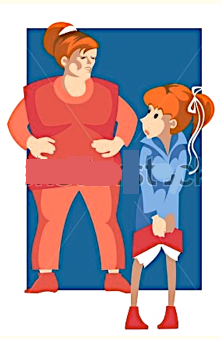
bad voiceTHE BAD PARENT VOICE –
doesn’t want me to outgrow it

PREVIOUS: Self-Care around Controllers #3

SEE:  Toxic Family Roles

❖ S-C = self-control


AS CHILDREN

Normal / Healthy: since children are not born with boundaries it’s a parent’s job to help them learn self-control (S-C), which is about setting limits for oneself & with others, but forming them is a long process. S-C is closely linked to:
• how children feels about themselves, If they delay self-esteem, that can only come from proper guidance, stability & unconditional love
• being taught how to deal with everyday frustrations & practicing those skills by helping them make their own age-appropriate choices & decisions

 2 MENTAL Abilities for healthy S-C : Be ABLE TO
a. estimate time correctly, in order to make reasonable decisions, based on immediate as well as future outcomes.
❖ Young children cannot do this because they live completely ‘in the present’, so it’s not rational to expect them to have the same S-C as older kids & adults (post: ACoAs & TIME)

b. direct one’s attention away from a current event. This is needed in order to have the time to evaluate situations, make better choices & weigh possible consequences.
Since young children’s attention can be easily distracted, they aren’t able to stop-to-consider alternatives or potential outcomes, so it’s inappropriate to demand it of them

• Children do best when guidance & boundary setting are given with consistent, age-appropriate expectations & realistic consequences, AND without constant punishment or power-conflicts with parents.
Children do need the security of knowing the rules & limits of behavior – otherwise they feel uncared for & at a loss. The healthy goal for parents is to guide & nurture them so they feel supported & valued, rather than judged or rejected

Alcoholic PARENTING extremes
In most cases, ACoAs had to be totally obedient to survive & later to fit in – first with parents, then in school, a religious community & then work. (Posts: Parenting styles & Results)

OVER: Many of us were given too many rules, assumed to be ‘little adults’, demanded that we be competent & self-sufficient way beyond our years.
We were bullied & manipulated into being compliant on pain of suffering & death. There was no fairness, or any leeway for our individuality. We submitted – or else.

This created great anxiety, knowing we couldn’t fulfill their spoken & implied expectations, while desperately trying to please.
✏︎ For some of us the rules kept changing, arbitrarily.
✏︎ For others they were rigid & unrealistic.
✏︎ For all of us, no matter what we did, it was never good enough!
Eventually we either rebelled or caved.

UNDER: Others of us received little or no guidance – left too much on our own, so that we basically raised ourselves, which also created great anxiety. It left us:
• without knowing how to pay attention to other people
• with no respect for, willingness or need to obey legitimate authority
• with no sense of boundaries, limits, discipline or self-trust
✦ not knowing what is expected of us or how to function in the world.

This may seem heavenly – to a teen, but a child without rules or expectations not only is being severely neglected – but will likely suffer from lack of motivation & direction for years to come!neglect

EITHER WAY – we were deprived of the opportunity to learn healthy self-control – which requires a SELF to implement!
Since having a True Self was not allowed much mess encouraged, the only thing we could do was to over-control ourself. We had to hide our true emotions, needs, as well as our intelligence, competence & talents – except as those gifts were needed to take care of sick, abusive, drunk, depressed & crazy parents &/or siblings – but never for ourself!

▶︎ Since over-controlled adults are generally responsible & reserved, they don’t get much attention, suffering loneliness & chronic depression in silence, which may include anorexia, or being obsessive-compulsive.
An evidence-based therapy Radically Open Dialectical Behavior Therapy (RO DBT), was developed to help “over-controllers” activate the brain’s neurological systems which help regulate smoother ways of interacting with others. SKILLS include:
social spontaneity, taking it easy, making true friendships, correcting rigid thinking & minimizing perfectionism. (MORE….)

NEXT: O-C Ourselves – Part 2

ACoAs Being Controlled (Part 4)

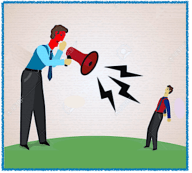
door matI FOLLOW ALL THE RULES,
so why am I still being walked on?

PREVIOUS: Being Controlled (#3)

SITE : Dealing with Manipulative people – from “In Sheep’s Clothing”

🎯 WHO / WHAT we LET Control us
Controlling patterns are the same as Emotional Abuse.  All but one of the following groups can influence us positively OR negatively. It’s up to us to know what suits us best & stick to it!

INNER DAMAGE – everything this blog covers. Also read “Bitchlifestyle” blog : Who Controls You, Your Bitch or Your Brat? (PP or WIC). The more we try to please everyone, we become:
• MORE angry, disorganized, exhausted, frantic, overwhelmed, unhappy
• LESS focused, rested, peaceful, satisfied, pleasant to be with
AND the fewer people we actually do please!

Letting ourself be controlled is giving our power away. Yet we think it will actually:
• GAIN us acceptance, love, continual attention, protection
• PREVENT being ignored, made fun of, punished or left. Unfortunately, it’s an illusion!

 THIS LIST is about how negative relationships can controls us :
CHILDREN – expressing your love for / attachment to them can go too far, being afraid to set boundaries or they won’t love you, or not teach them discipline so they won’t be angry at you

ENEMIESA) people who dislike or hate us for their own reasons. We didn’t cause it, but we can end up wasting way too much time, energy & money trying to win them over or placating them, instead of leaving them alone, praying for them or being neutral
-OR-
B) those we hate – which eats us up year after year – wasting time trying to get even, obsessing about telling them off (but never doing it), or actually putting nasty plans into motion

JOBs/ Bosses – their expectations, demands … especially the ones we think have to be fulfilled but actually are unreasonable. After all, aren’t we used to doing the impossible ? – or at least trying like crazy

NEMESES – (people we’re jealous of or in competition with) – we can do many foolish or self-defeating things to stay ahead of them or keep them from winning over us, whether the ‘prize’ is important to us or not. We become obsessed, over-work, cheat, connive, worry… just to shore up our weak ego

PARENTS – wanting their love & approval at any expense, we often twist into distorted versions of our True Self – & still never please them or get what we need from them (see Part 3)

PARTNERS – our fantasy beliefs about what a good relationship or marriage is supposed to be (especially that women have to be the ‘giver’) makes us into servants or slaves

PEERS / FRIENDS – trying to keep up with or out-do them, keep their approval, get their admiration, be in the ‘IN’ group, use them to____ ….

HEROES – because we don’t know the real person, they’re usually one-dimensional, yet we put them on pedestals – so they’re not fully human. We think we could / should be like them, but it’s not automatically true that if they can do or be something, we can too.

• And even if we follow their lead in some way, we may not be able to do it right away, or it may be a lot harder that we thought, or we may not have the same talent or resources…. which can leave us discouraged & self-hating.
We have to be realistic, without giving up, working toward goals that fit who we are!

• We may find positive qualities to emulate, but only with careful assessment & background research. THEY must be people:
— who are actively living the qualities you admire and fit your values, not just talking a good game
— you are genuinely similar to (not just matching damages). REMEMBER – Just because someone else can do or be something does not mean you can or should want to!

NO GUARANTEE:  Being psychologically healthy does not prevent damaged people from trying to hurt us. Also – we know there have been some good people in the public eye that have been vilified, even killed!
Self-esteem + correct info are our best protection – recognizing the people who are very unwell & removing ourself from them.

NEXT: Being Controlled (Part 5)

BOUNDARIES & ACoAs (Part 1)

Screen Shot 2015-06-25 at 12.05.31 AM 

I HATE YOU – DON’T LEAVE ME!
I need you but you’re too close – I can’t breathe

PREVIOUS:
Bs – Healthy Source ( #2)

REMINDER: See ACRONYM page for abbrev.

1. Normal Development – Stable Core (previous 2 posts)

2. ACoAs
Unfortunately, growing up – ACoAs did not originally have that all-important stable core to rely on, so weren’t able to form our own, because of:
• being overstimulated by chaos, emotional volatility & conflict
• being over-controlled, expected to be perfect, judged harshly
• not having role models for self-esteem & appropriate Bs
• not being loved & supported unconditionally

a. Wounded Adults
• Many un-recovered PARENTS are symbiotically enmeshed with their children, to cover their own FoA – ie. both the adults & the kids have similar immature mental drama & temperamental intensity, so they overlap each other, which is emotionally abandoning & terrifying for the children

• These parents function from their WIC’s ego state, so have:
— weak or no Adult & missing Loving Parent aspects
— weak or rigid boundaries, overlapping child’s feelings, as if the child were only an extension of themselves
— a narrow range of emotions available, w/ few nuances
AND
— their focus was on their addictions, bad relationships, financial worries, depression, mental illness, relatives, sickness ….
— often changed the rules arbitrarily or made them unreachable, so no matter how hard we tried to obey, it was inevitably going to be wrong – & then we got attacked & punished! We could ‘never win’.
As kids, this kept us off-balance so we wouldn’t become independent (& eventually be ‘separate’), which requires being sure of oneself.

Al-Anon visual: the alcoholic has their arms around the bottle & the co-dependent has their arms around the alcoholic!
In these households, children are just pawns to be used & burdens to be neglected, ( Games Alcoholics Play’)

b. Limiting our Emotionsnegate Es
• In an alcoholic, narcissistic family, one or both parents limit or repress the type of emotional responses allowed the children, who are expected to act like adults, both mentally & emotionally, long before maturation.
ACoAs were blamed for not behaving ‘right’,  even thought we were not experienced yet in social etiquette or subtleties, didn’t have enough motor co-ordination, weren’t old enough to actually act like adults!….

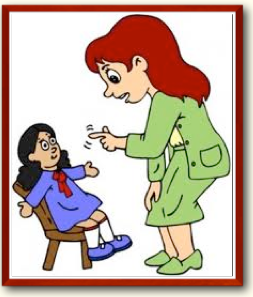
EXP: Beth was a pretty little girl who grew up in church. On one occasion her mother was at the dais addressing a Ladies Group. Beth was left all alone in the front pew & expected to sit for 2 hours like a perfectly groomed doll. But she was a normal 4-year-old – bored, lonely & fidgeting. Her mother was annoyed at her child’s ‘misbehavior’, confident it would make her look bad.

She gave Beth ‘the look‘, who immediately froze – terrified – knowing the dire consequences of displeasing her mother, but quick obedience saved her this time.
For years afterward her mother proudly liked to tell how the group afterward complemented heron having such a well-behaved child. Sadly – neither the mother or anyone else ever had a clue of the intense terror that was generated that day!

• We learned very early that our emotions & behavior had global impact – they effected the ‘gods’ badly. Our parents let us know blackmailin various ways that we harmed them just by being ourselves (kids). EXP: A mother repeated remarked : “You’ll be the death of me yet!”

• Many ACoAs experienced being emotionally blackmailed controlled using fear, obligation or guiltOur parents’ narcissism & lack of boundaries made it easy for them to:
— treat us the same way they had been – the ‘kick the dog syndrome’, ie. passing on their rage at their parents’ neglect & abuse
— project their self-hate onto us – they couldn’t face that they were considered ‘bad’ children’ so they made us bad instead – to preserve their fragile self-image

EXPs: “If you loved me…. I made that just for you…. If you don’t do your chores, dad will get really mad at me….
BOOKs: “Emotional Blackmail”  & “Toxic Parents“~ Susan Forward

NEXT: ACoAs & Bs (Part 2)

ACoA EMOTIONS re. Painful Events (Part 1)

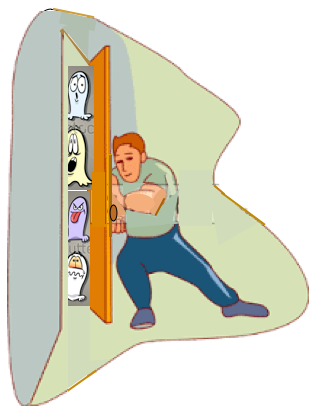
  notice feelingsI DON’T WANNA FEEL!
besides, I’m not supposed to

PREVIOUS: CONCLUSIONS re. painful Events (2c)


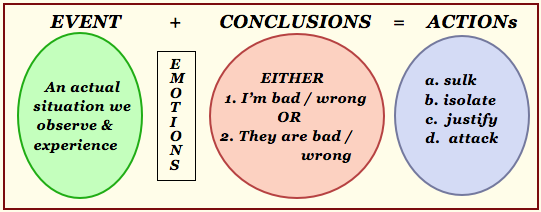
Q: So – what’s being ignored in this CHART’s equation ⬇️ ? (E + C = A):  ANS: our EMOTIONS! 


Each EVENT (green oval) that upsets us generates several emotions. We can
• be very upset (anxiety or rage) without ‘hearing’ the thoughts behind it (pink circle), OR
• only have ‘squirl-in-a-cage’ mentality (pink) without connecting it to emotions underneath (blank), and
• often not even connect our reaction to an Event (green) that set off the obsession!

Even though something or someone has hurt us, we minimize or deny it. We may not be clear what emotions come up because of a stressful Event, but we certainly don’t want to focus on them. Think T.Cause & EffectE.A. Without doing FoO & emotion-release work, we act out** those Es by:
🌀 constantly complaining, dissociating, districting ourselves, endless worry, (T), forgetting an important appointment (A), getting sick, verbally attacking someone / anyone (T), or just being paralyzed

** ACTing OUT : compulsive behavior (A) (action or non-action) which expresses emotions not consciously experienced at the time

ACoAs were taught from infancy to negate or suppress our Es, especially any that weren’t acceptable in our original home.
⚒ for some – anger/ rage was the norm
⚒ for others – only being emotionally UP was allowed! And,
⚒ for many – having no emotions was the absolute rule – “DON’T FEEL”

So, what Emotions should we be aware of, when something affects us?
If the WIC is the one reacting to an Event, we’re likely to feel the same ones we had as kids – only more intensely, because of accumulation. That’s ok – it gives us important info about our past

What’s important is allowing ourselves to have the feeling, understand what button is being triggered, comfort the WIC, AND practice healthier ways to behave that will benefit us

Re. NEGATIVE THINKING (Parts 1a-b and 2 a-c)
ACoAs are not usually in touch with what’s hiding behind the screen of negative self-talk (pink circle). These underlying emotions (Es) fit into the space between ‘Event’ & ‘Conclusion’ on the chart.

They remain invisible to the person in the grip of a regression – which is when we’re automatically thrown back into our traumatic past, as if we’re still a powerless child in a scary family

Being regressed in the present means the Event touched a hot button of damage that’s still raw.  So when anything or anyone bumps up against a particular wound formed back then, we react with intense anxiety or rage, such as when we’re being:
• ignored, not responded to right away, waiting too long
• accused wrongly – of anything
• stood up, or being let down (we take people too literally!)
• controlled (told what to do)….

EXP: If you’re walking around with a physical sore that’s very painful but not visible, and someone accidentally pushes hard against you in rush hour, aggravating the ache, how do you react?
ACoAs will typically – go into a rage at the person and the whole world, OR apologize to them, OR feel sorry for ourselves, sulk & wonder why this is happening to me!

• The same kind of intensity to certain Events are emotional over-reactions (“If it’s hysterical, it’s historical”). We really hate to be told this, because it sounds like our experience & pain is being negated – just like at home!  This is NOT what is meant.
❥ We can tell the difference by checking our level of awareness when an unwounded part of us is bumped into – we barely notice, or we don’t mind, or just don’t care

• Yes, unpleasant encounters do cause us pain, but it’s often out of proportion to the situation. Any intense reaction to normal, imperfect human situations (not pleasant BUT not really awful) comes from our Wounded Inner Child —
who is not actually living in ‘present time’, has unhealed emotional wounds, is still taking things personally, feels unloved & unprotected – at least about that particular issue.

NEXT: ‘ReACTing Negatively to Events’

Our Wounded INNER CHILD (Part 2)

OW>OW<OW EVERYONE’S HURTING ME!
Ow, Ow, Ow!

PREVIOUS: OUR WIC (Part 1) Raising ourselves

POSTS: The Introject /  Negative Benefit

SITE:”When Your Inner Child is Running the Show


WHO IS this INNER CHILD ?
Our Adapted Child
(which everyone has) became our WIC by absorbing the Toxic Rules of our family, and is now determined to keep acting out the patterns we learned in our family & society (Repetition Compulsion), no matter how sick or self-destructive, by either being:

Compliers – who are the good obedient adult-children, (over-responsible / people-pleasing) who are desperately trying to earn the family’s love they never got, who suffer a variety of stress-related illnesses from suppressing their own needs & emotions  (POSTS :” Secretly Angry ‘Nice People
OR
Rebellers – who feel compelled to copy their terrible training, but hate it & desperately try to resist. They are oppositional (always say NO, even when they want to say YES) in a futile attempt at disobeying the Toxic Rules & having some personal boundaries. But they do it in such self-defeating & self-destructive ways that end up causing even more harm!

Wounded Inner Child’s (WIC) in charge
We never learned from our family INTERNALLY to be a Healthy Adult or Loving Parent (The UNIT) to ourselves – our role models being mainly other people’s PP and WIC!
So when CoAs become adults, our Wounded Inner Child, in symbiotic slavery to the Bad inner Parents, is still the main persona running our life, in the form of the False Self.

The WIC in charge has kept us alive so far – but not well :
• it doesn’t really know what it’s doing, so it’s always faking it
• has learned to trust no one, even people who are OK
• is in endless terror, (consciously or not), from birth – on
• is stubbornly loyal to the family, even if it kills us
• is smothering the Natural Child with S-H & shame

✶ AND – is secretly very proud of it’s ability to survive the odds, which gives it a strong determination to keep the reins of power! Since it has no better inner guide to rely on, it is not going to let go just because we ask it to!
These are some reasons why Recovery is so long & difficult.

This cannot be stressed enough:
Without family-of-origin Recovery (FoO work), the WIC ego state still dominates our life** in all T.E.A. ways, with the deadly combination of S-H & fierce loyalty to the Negative Introject (PP), via Cognitive Distortions (CDs).
This is true even though, for many of us, our various defense mechanisms which are layered on top of the original damage – make it seem as if we’re managing ok.
But no matter how externally talented, successful, competent, & accomplished we may be – if our thinking & emotional reactions are mainly coming from an old place – we are still not Screen Shot 2016-06-11 at 9.45.08 PMpsychologically free.

** So it’s inevitable that much of the time we’re emotionally immature in how we respond to people, places & things (PPT)!
Keep in mind: As long as we don’t have a fully functioning Loving Parent, plus a stronger Healthy Adult, the real voice in charge of us is the PP.

The easy way to tell which is which is by listening to how we talk to ourself —
a. the PP belittles us in the “YOU” form : You should have known better. Why didn’t you_____
b. the WIC in S-H always talks in the “I” form: “I’m such an idiot. I should _______ ”
The WIC consistently carries out the attitude & commands of the Screen Shot 2016-06-11 at 9.43.08 PMPP. So whether we’re in Rebel / defiant mode or playing Victim, we’re hooked into the family dynamic.

Without a Healthy Adult in charge:
• we don’t handle our life properly
• we let other people’s WIC or PP mistreat us
• the healthy Natural Child doesn’t get to develop & shine
• we can’t be the best we were born to be

Without a Loving Parent always available, the WIC:
• is at the mercy of our PP, with the damage it causes us
• is’s run by its S-H & distorted thinking
• feels constantly scared & vulnerable
• is terribly lonely & desperate to be rescued

NEXT: Abandonment Pain, Now #1

Our Wounded INNER CHILD (Part 1)

all alone I’M ALL ALONE
I’m desperate, but no one is safe!

POSTS: “Are you an ACoA?
•“Variation on Laundry List


See ACRONYM page for abbrev.

FIRST: The Inner Child (IC) is the repository of all our childhood experiences, from birth until we left that environment – our memories, emotions & immature thinking. It includes our True Self, which did show up in some ways, but was mostly suppressed or distorted. Our IC now holds all our own wounds PLUS the wounds of our parents.

The ACoA DIS-EASE
Our childhood damage is housed in the Adapted Child ⬇️, who is intensely loyal to family & culture. In order to know how to heal ourselves, we must first get to know our wounded part as thoroughly as possible**.
➼ Remember, we are DAMAGED, NOT Defective. Damage can be healed – ‘defect’ can not.

** Learning about & connecting with our Inner Child is not a waste of time & effort, or wallowing in the past, as some people believe. It IS a means of breaking thru our denial about how traumatic our childhood was. If there is any doubt, we simply have to look at the areas in our present life that don’t work – to tell us how our family (& other sources) damaged us.

• To heal we need to know specifically what our negative thoughts are telling us, because it is the basis of all self-defeating behavior patterns. These toxic beliefs are our version of our family & community, called the Negative Introject.
So no matter how much we may ‘know’ about our past, we need to do deep emotion release work as well as correct our beliefs.

Otherwise the old pain we’ve stored up from the past will keep driving us toward harmful ‘people, places & things’, & make us strongly react to events whenever our buttons get pushed (wounds get activated).

HOW DID WE GET LIKE THIS?
While growing up, kids are never supposed to be fully in charge of themselves or other family members. This only happens in dysfunctional families, sometimes out of necessity, but mostly because the parent(s) are not mature themselves.

• ACoAs were both criminally neglected AND forced to be hyper-functional – with is also abuse: not be allowed to just be a kid. It left us terrified & confused. There was too much we were never taught, left to figure out on our own, the best we could.  We managed to survive, but now we always feel incompetent & fraudulent – no matter how well we do!

We had to ‘raise ourselves’ because:
• being the eldest (the Hero) meant being the parent substitute –  for younger kids & sometimes for a drunk / non-functioning parent
• one parent was absent & we had to take over some or many of their ‘adult’ responsibilities
• one parent or sibling had a serious mental &/or physical disability, so our needs were neglected, & used as servants / slaves… (‘do’ for them)
• mother had 1 or more boyfriends /mates, a family member or best friend(s) who were always more important than the kids (symbiotically attached)

• parents were only interested in each other (addicted / worried) so we were mostly ignored
• parents were too overwhelmed by their own difficulties to notice us
• their focus was on drinking, fighting, chaos, rage ….
• there was only one parent & she (usually) was working, depressed….
• there was constant physical upheaval – moving, loss of jobs, trouble with the law, school, neighbors….
• we were expected to grow up very fast – ‘little adults’- so they didn’t have to deal with us.

NEXT: Our Wounded INNER CHILD (Part 2)