ACoAs – HUMILITY (Part 2)

Screen Shot 2016-05-26 at 8.16.17 PM

 THE MORE SELF-ESTEEM
the more humility!

PREVIOUS:  HUMILITY (#1)

SITES: ‘’HUMILITY – the most beautiful word in the English Language’’

Intellectual Humility (extensive)

BOOK: So, I’m not Perfect! – A Psychology of Humility ~ Robert J. Fury (not religious)

QUOTEs :  “We are what we repeatedly do. Excellence, then, is not an act, but a habit” ~ Aristotle
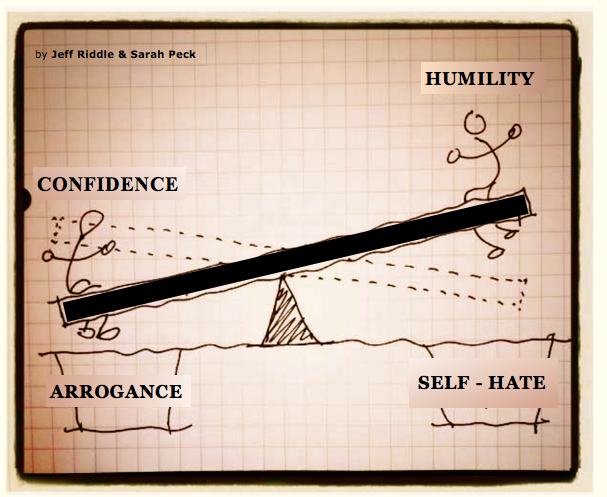
• “Confidence without Humility is arrogance. Humility without confidence is self-deprecation” Anon.

1. HUMILITY MARKERS re. ONESELF
YOU:
• know your inner worth, not dependent on out-performing others, nor having to always be ’the first, the best, the most…. ’
• don’t have to frantically chase some intangible or unrealistic degree of importance, success, fame or power
• do have a clear perspective of present-day reality, respecting your place in whatever context you’re in
YOU:
• have an honest, accurate assessment of your actual talents, your limits & areas that need improving
• can admit mistakes, & ask for forgiveness when in error
• can handle frustrating situations with a genuine sense of inner ‘serenity’, since your respond, rather than react, to life’s challenges.
ARE
• able to control your temper
Screen Shot 2016-05-26 at 7.46.19 PM
• able to value but not spoil yourself (give in to every whim of the WIC)
• courteous, respectful, not pretentious, not boastful nor gloating about accomplishments
ARE
• good for the sake of being good, admitting you’re as human as everyone else
• happy to work behind the scenes when required or appropriate, knowing your work is as important as any done in the spotlight
• not attracted to superficial or unhealthy behavior
ARE
• OK with being an ordinary / average person (even if ‘special’, gifted, ‘important’), not needing to be part of some in-crowd to feel acceptable
• teachable – assuming there’s always more to learn about & from all PPT
• willing to give up your right to be right. Do not demand your rights

2. MARKERS re. OTHERS
ARE

• able & willing to forgive others, letting go of grudges & bitterness
• comfortable with others’ success. H prevents embarrassing yourself in competitive situations
• compassionate & look for the best in others (realistically). Give others the benefit of the doubt
• motivated to help people, aware that others have needs too
YOU
 • ask Qs & love dialogue (not assume you know everything), & use conversation to explore new worlds
• ALSO put energy & effort into listening

• don’t gossip, especially about faults you see in others
• don’t pre-judge others’ behavior, knowing that everyone has their own reasons for doing things which you may find annoying, even if you don’t know or never find out what those are
YOU
• know you need others, so allow yourself to be open & vulnerable rather than closed & ‘distant’
• respect those in authority, & pray for them to have wisdom
• speak simply, not trying to manipulate or trip others up
• show honest interest in others by asking about their lives & accomplishments
• treat each person as someone of value, regardless of their position in society, profession, age or economic status

a. Social Activism: One form of H regards reform, such as in thhelp otherse 2013 workshop by Melanie Marie Tervalon’s  “Cultural Humility: Working in Partnership with Families & Communities”.
Included topics were: Reversing health disparities in the US / Using tools of cultural competence & cultural humility at work

b. In Business: Humility is studied as a multi-dimensional trait, which includes awareness, self-understanding, openness & perspective ability. People with these qualities are valued because they tend to be more generous, selfless & altruistic

• Jim Collins, in “Built To Last: Successful Habits of Visionary Companies” (1994), says humility is a key ingredient at the highest level of executive ability. “Humility + Will = Level 5 leaders, who are a study in duality – modest and willful, shy and fearless, patient yet express fierce resolve.” (MORE….)

humble leadersc. Confident leaders succeed, but not at the expense of others. They have a broader sphere of influence, attract better talent, inspire more confidence, loyalty & respect. Truly H people are quietly self-assured, giving them more determination & commitment

Humble LEADERs come from a position of strength, & are more persuasive – WITH the:
• courage to set aside personal gain to benefit others
• character to respond charitably when attacked
• candor to be honest, & ability to change course if necessary

SITEs: 3 Reasons to Be Humble: People, Agility, and Growth”, re. entrepreneurs
Humility: The Foundation Value of Innovation Leadership”

NEXT: BLOG Celebration – 500 posts (2015)
Being CONFIDENT (Part 2)

confidence balance    

I BALANCE the EXTREMES BETWEEN
healthy & unhealthy,
too much & too little….

PREVIOUS: Being Confident (#1)

QUOTE: “When you are content to simply be yourself, & don’t compete or compare, everyone will respect you.
Kindness in Thinking creates Profoundness.
Kindness in Words creates Confidence.
Kindness in Giving creates Love.”  Lao Tzu

REMINDER: Do NOT let yourself get overwhelmed by this list. It’s meant to be a guide, qualities to work towards. Looking at the cup half full – or more – notice & then acknowledge when you have expressed a little of any one of these in your daily life, give yourself a pat on the back, & remind your Inner Child of your progress!

CONFIDENT People (cont):
take responsibility for their thought, emotions & actions (TEA) . This includes all their positive parts, as well as the less ideal ones. They don’t need to blame others when things don’t work out, but also don’t take on blame for things that have nothing to do with them

can be alone with their own thoughts. They know that mental GIGO means thinking, reading & listening to positive, healthy, enjoyable things, which can improve their knowledge & lift the spirit.
Their inner dialogue is not harsh from S-H, nor confused by the PP, or fear of abandonment & lack of self-awareness.
So they don’t have to fill every minute with conversation, technology (TV, e-mail, cellphones, texting, web surfing, playing games….) & other drugs & time-wasters, in order to numb out

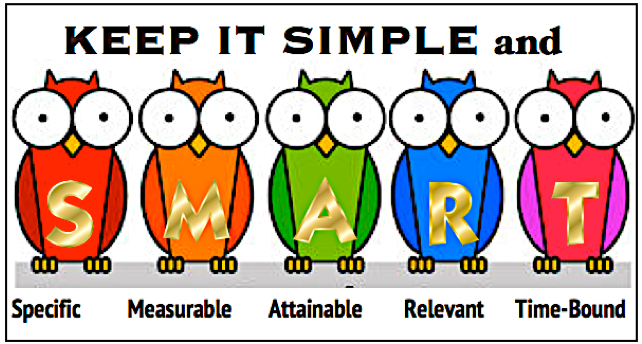
S.M.A.R.T.

‘keep it simple’. Whenever possible they find the simplest, sanest way to do things, no matter where they are or who they’re dealing with.
They’re not attached to ‘drama’,  never have to re-invent the wheel, & don’t hang out in convoluted, torturous thinking, or awful-izing. Knowing who they are & what they want, they can think clearly, so don’t easily get sidetracked or manipulated

THEY:
trust their instincts.  They pay careful attention to their environment, pick up on non-verbal cues, listen to the feeling in their gut & the still small voice in their head. They do not ignore these cues, even though they can’t be explained logically. Instincts are an important tool in their bag of life skills, guiding them on their path, helping to make the best choices

accept help whenever they need it. They’re not ashamed of not knowing everything, or of not being able getting helpto do everything themselves, so are not afraid to ask for & receive emotional support & practical help.
Confident people are secure enough to admit having limitations, & don’t see that as a sign of weakness.
They know that when searching for help they pay someone a huge compliment – it shows genuine respect for that person’s expertise & judgment, or wouldn’t have asked them. They’re eager to learn from others

• take care of themselves. They don’t wait for others to do for them what they can do for themselves.  They’re willing to learn easier & better ways to do things, & find procedures to make their life less complicated or stressful

are optimistic. They have a realistic view of their future, knowing from experience that bad situations eventually right themselves, & that many stressors can be overcome with sensible plans. They have the ability to see the light at the end of the tunnel, & plan their journey toward it.
Optimism allows confident people to believe they’ll be OK, no matter how bad the current situation may seem. They never give up, but know it’s good to regularly take a break

In reality, everyone experiences an occasional knock to their self-worth. In those cases, confident people take time out to question their motives & review their choices, but don’t get paralyzed. Their mind is focused on solutions, so they take actions as soon as possible, or keep working towards a better outcome in the future. One antidote to doubt is an increase in productive activity. (CHART – confidence vs doubt)


NEXT: Confident People (Part 3)

Principles of Character – Outline

self-awarenessTHESE ARE THE QUALITIES
I aspire to, a day-at-a-time

PREVIOUS: “Keep the focus on yourself” means? (Part 2)

POSTs: What is Character ?


PRINCIPLES  —> Values —> Comments useful for Character Education

1. ATTRACTION: Courage, Discernment, Self-awareness
We attract whatever we put our attention to, which makes it bigger. If we don’t do anything to limit destructive impulses, life becomes increasingly difficult for us to control. By staying awake & using discernment, we can see the difference between what’s helping or harming us. Then we need the courage to take steps toward health, by eliminating negative desires that attract chaos into our life. (POST  : ACoAs & Risk“)

2. CAUSE & EFFECT : Accountability, Good Intentions, Restraint
According to the ‘law of the universe’ – for every action there’s an equal re-action. When we realize that we’re accountable for our thoughts, words & actions, we can own what motivates our actions, & recognize the wisdom of reasonable restraint
. calmness(POSTs : “Keep the focus on yourself” and “Fear of Responsibility“)

3. DEVOTION : Concentration, Calmness, Focus
We can connect with Creative Intelligence by taking the time to find our True Self, not the false ego. This can be done by being calm, & concentrating on deeper thoughts, whether through prayer, song, meditation or a walk in the woods. When we focus on Spiritual Principles & actions, we glimpse the Divine

4. FAITH : Trust, Hope, Patience
There is a Loving Intelligence that pervades all things. What’s needed is to hold on to our trust & hope, even when living in the midst of uncertainty. Faith is the willingness to take the next step required without fear or looking back, with the patience to allow Divine Order to work-through our situation without trying to force solutions.. (POST “Lack of Trust and Healthy Trusting“)

5. FORGIVENESS : Compassion, Mercy, Understandingforgiveness
Forgiveness frees us from the damaging image of ourself as a victim. It dissolves the poison of resentment which blocks healing & growth. Choosing a new understanding of our pain & trauma, it gives us the freedom to treat ourself with mercy & compassion, as well as to those who have wronged us. This reconnects us to our Real Self. (many POSTs : …. Forgiveness)

6. GRATITUDE: Generosity, Magnanimity, Appreciation
True Universal Reality provides abundance. When we’re grateful & appreciate what life has to offer, it shows H.P. that we accept whatever’s been given to us, & therefore lacking nothing essential.
To attract more prosperity, feel generous toward all life. This opens the flow of supply into our world – because whatever we give to life returns to us.

7. HARMONY : Optimism, Co-operation, Enthusiasm
copoperationA Universal law : We can choose what attitudes we want to focus on, such as optimism & cooperation, rather than being a victim of painful experiences, It allows being in control of ourself, & having inner quiet.
Enthusiasm means to willingly, happily perform all types of jobs (large or small) which generate beneficial energy, making us far more likely to succeed.

8. HUMILITY : Modesty, Unpretentious, Gentleness
Being modest & un-pretentious keeps us from puffing ourself up with self-importance. God in His own way & time provides us with whatever we need, as we rid ourself of pride, & maintain an attitude of gentleness & acceptance. (POSTs “Humiliation“, and “Arrogance vs Humility”)

9. INTEGRITY : Truthfulness, Courage, Sincerity, Honesty
“Earning future trust by accurately reporting past facts.”
It means to act according to the values, beliefs & principles we claim to hold (internally consistent, opposite of hypocrisy).
The connection to our Inner Self is strengthened when we align our thoughts, words & actions with Truth, & have the courage to act with sincerity & honesty. It’s letting go of “our will run riot”, & honor the Divine Will.   (POSTs Why ACoAs Lie)

10. LOVE : Compassion, Kindness, Nurturing, Self-Esteem, Self-Respect
serenityAll living things need love to survive. We must first take care of our own need for it so we don’t become emotionally toxic. When we shift self-talk from the Inner Critic (Introject) to the Inner Companion (Loving Parent), we increase self-esteem & self-respect. Then we’re free to be the helpful, caring & thoughtful people we want to be.

11. SURRENDER : Acceptance, Freedom, Contentment
When we accept what’s happening to us in the moment as part of a grander plan needed for our growth – we experience a new freedom. We welcome whatever comes into our life, surrendering to a Higher will. This awareness provides contentment & peace.   (POST :Acceptance & ACoAs”)

NEXT: Considering abuse

RECOVERY – What it IS & IS NOT (Part 1)

in with the new
OUT WITH THE OLD, IN WITH THE NEW
Dismantling the old patterns

PREVIOUS: What Self-esteem IS

SITEBenefits of a Gratitude List

RECOVERY
IS NOT…❖…expecting to get unconditional love and perfect sanity from any human. It’s unrealistic, but the Wounded Inner Child demands it anyway. Now – when we don’t get it, we accuse others of abandoning us!

IS…❧…understanding that in adult relationships –  each person has their own needs.  Since our parents couldn’t give us unconditional love, when it would have been ‘normal’ & needed, we can only look for it now from ourself, our pets & our Higher Power.  As we interact with healthier people we will receive more appropriate companionship – be mirrored, understood, respected, considered, loved…but never perfectly!
🦋

IS NOT…❖…being free of emotions (Es) that were unacceptable in our family, controlling our Es or trying to have ‘appropriate’ Es. Those are signs of damaged thinking – (CDs) – NOT the same as being in control of our behavior!

IS…❧…accepting all emotions as legitimate. Humans are built with the capacity AND the need to feel. Es are the natural indicators of our reaction to any experience – to let us know whether something is good or bad for us. Re.T.E.A. —
Actions may, or may not, be good, & can be corrected, over time
• Unhealthy Thoughts can be reframed & replaced, when harmful or incorrect
Es just are. They can go from very joyful <–to–> very painful, but are never good or bad! We need to have access to a wide range of Es, with many shades. It gives us a sense of vibrancy & allows us to connect with others.

Only seeing everything in B & W = tv, paintings, walls, clothes….. can become quite boring. Suppressing or narrowing down Es (to 1 or 2, like rage or fear) will make us one-dimensional, possibly cold, hard, distant & ultimately limited.
The intensity & depth of our emotional reservoir of old childhood pain is so great that it will never be completely empty.  Accept this & learn how to manage Es rather than trying to spiritualize them away!
(review “Feelings Aren’t Facts” posts) (MORE re. hand-emotions)
🦋

IS NOT…❖…trying to permanently ‘fix’ our childhood damage, eliminating all character defects, doing is easily it & quickly.  Any effort to fix ourself means we think we’re bad, & that our badness is our own fault, SO we’re responsible for doing anything we can to eradicate it. (BTW, this is one of the reasons why many ACoAs are suicidal & want to be dead)

IS…❧…accepting that alcoholism & co-dependence have left deep scars & emotional hangovers. (Good / bad parenting @ ACoA site). These will take our life-time to gradually heal. Being human means we’ll never be perfect – but Recovery IS truly possible!  Many have proven it.

Humility (not humiliation) is acknowledging our human limitations, with a consistent willingness to evaluate ourself with compassion, in honesty & reality, modifying our thoughts & action when needed to reach our own goals
🦋

IS NOT…❖…being ‘serene’ all the time.
• To always be pleasant, kind, honest, thoughtful…is a disguise for a wide range of emotions we don’t find acceptable (anger, envy, greed….)
• To still be the good boy / girl, in the present, is the symbiotic need for our family’s approval, rather than becoming our own person
• Forever trying to be ‘so good’ is a negation of our legitimate rage & pain of childhood abandonment

IS...❧…gaining genuine serenity, based on a solid emotional, mental & spiritual foundation – from the inside.  This creates the unshakable knowledge that we are ok even when we’re in pain, under pressure, not understood or supported.
We can have upheaval, express intense pain / anger… and still be at peace, deep down.  Serenity is the by-product of knowing & accepting ourself in the moment, trusting our gut, having a great support system & a loving H. P.

NEXT: RECOVERY IS / IS NOT #2