
I LOSE MYSELF IN ESCAPE
when I can’t face my ange
PREVIOUS: Ways to react (#2)
LEVELS of anger – Variations
4. Three TYPES (cont.)
a. Hidden Type (Part 1)
b. Habitually IRRITATED Type // c. EXPLOSIVE (Part 2)
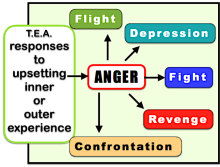
5. Anger EXPRESSIONS (CHART by Don Lehman Jr ↘️)
e. Last – Compassionate Confrontation – in next Post (#4)
a. Flight = (internal) running away from someone who is angry or is triggering our anger. This starts internally – shutting down emotionally, but can also take the form of temporary physical paralysis, leaving the situation as soon as possible, or permanently avoiding angry people / situations (isolation).
 Sometimes the Flight response encourages aggression in the other person, if they feel disrespected or abandoned, adding to our Fear/Terror
Flight in adults is:
√ most often an inappropriate response to a current event – which may in fact not be abusive at all but is experienced that way – as a PTSD reaction from long-term childhood trauma
OR
√ appropriate when there’s a very real present-day abuser we need to get away from, which can be emotional & psychological, or a threat of imminent physical danger
b. Depression = (internal), when anger is not dealt with, & gets turned inward on oneself
• Lashing out can cause guilt & alienation, leading to depression OR
• Long-term depression creates isolation, make emotions overwhelming, & increases the likelihood of anger outbursts. Breaking this cycle usually requires therapy & sometimes meds. Al-Anon & Spirituality helps too.
c. Fight = (external) a verbally or physically violent confrontation, either to what’s ‘causing’ the anger or to the angry person. Usually a Fear cover-up reaction, the other half the Fight-Flight response hard-wired in our brain for protection.
— Appropriate when we or someone / something we love is threatened
— Not appropriate in most current cases (also part of PTSD)
NOTE:
• Someone can accidentally step on our emotional toes (land-mine) & get blasted
• Unhealthy people who know us well, know our buttons & can always push them to manipulate, punish or get back at us (sibling, boss….)
• Some are perpetrators who use anger to get ‘a rise’ out of others, which many ACoAs will fall for, since we have hidden reservoirs of anger easily tapped into
• Narcissists can easily get us riled up because of their inability to consider us at all, as if we didn’t exist…….
d. Revenge = (external, indirect) can start as a retreat, in order to attack later (Passive-Aggressive), & can be habitual but unconscious.
When it’s deliberate, it includes obsessive planning, made between injury & retaliation. IMAGE 🔽 : “Cycle of Revenge”
Considered consciously, these angry people start by evaluating the possibility of winning or losing. Because of the emotional intensity, 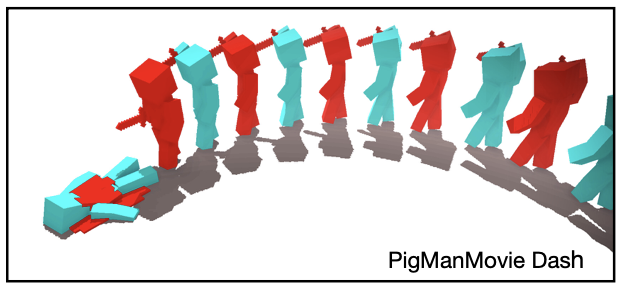 they can easily overestimate their personal power – getting into unnecessary losing battles (Fight).
Revenge & Fight responses from an anger-victim are linked:
– Revenge as a desire foo regain control over a situation
– Revenge as retaliation for an injury (real or not). If someone is truly in a powerless position, it may seem the only option to express ‘displeasure’.
Both can lead to increasing external damage, as each pours gasoline on the emotional fire
Abused children:
– may vow to never again let themselves be vulnerable, so become hostile toward others on the theory that “a good offense is the best defense”
– may over-generalize & want to take revenge on an entire group (all men, all authorities….), only some of whom may have actually harmed them
– may be reinforced & rewarded by becoming a bully, finding that it helps raise their ‘street cred’. (CHART + good info)
• However, if a perpetually angry person’s emotions do not completely overcome their reason so that they figure they’ll lose by using a frontal attack, (Fight) they’ll resorts to the P-A Revenge response.
Punishment is then dealt out just as in Fight, but done later – when the victim least expects it,  maybe in small doses & anonymously, or may come in disguised form. (2 Posts : “ACoAs wanting Revenge“)
◀️ NOTE: Not Included in Lehman’s Chart, but part of the reactive sequence:
Freeze – Blanking out / dissociated, can’t talk, muscles get physically “scared stiff”.
Freezing is fight-or-flight on hold, preparing to protect yourself even more. It’s also called ‘reactive or attentive immobility’. It involves similar physical changes, but instead you stay completely still & get ready for the next move.
Fawn – a 4th F has been added, which is basically co-dependent people-pleasing .
NEXT: Ways to react (Part 4)


 being argumentative, wanting to unsettle them – especially with abuse, accusations, arrogance & defiance.
 HEAL & GROW for ACoAs