Being CONFIDENT (Part 2)

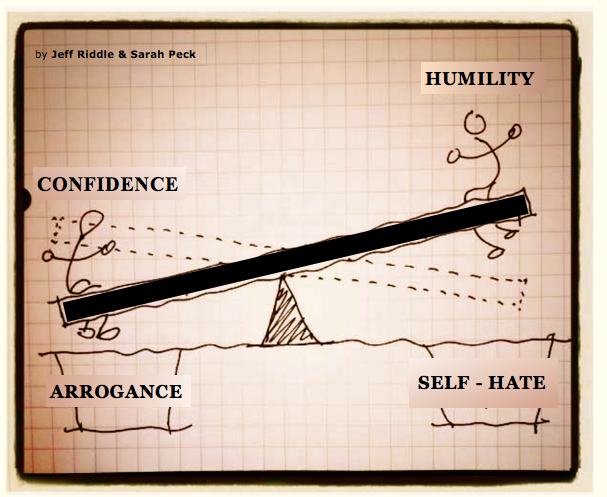
confidence balance    

I BALANCE the EXTREMES BETWEEN
healthy & unhealthy,
too much & too little….

PREVIOUS: Being Confident (#1)

QUOTE: “When you are content to simply be yourself, & don’t compete or compare, everyone will respect you.
Kindness in Thinking creates Profoundness.
Kindness in Words creates Confidence.
Kindness in Giving creates Love.”  Lao Tzu

REMINDER: Do NOT let yourself get overwhelmed by this list. It’s meant to be a guide, qualities to work towards. Looking at the cup half full – or more – notice & then acknowledge when you have expressed a little of any one of these in your daily life, give yourself a pat on the back, & remind your Inner Child of your progress!

CONFIDENT People (cont):
take responsibility for their thought, emotions & actions (TEA) . This includes all their positive parts, as well as the less ideal ones. They don’t need to blame others when things don’t work out, but also don’t take on blame for things that have nothing to do with them

can be alone with their own thoughts. They know that mental GIGO means thinking, reading & listening to positive, healthy, enjoyable things, which can improve their knowledge & lift the spirit.
Their inner dialogue is not harsh from S-H, nor confused by the PP, or fear of abandonment & lack of self-awareness.
So they don’t have to fill every minute with conversation, technology (TV, e-mail, cellphones, texting, web surfing, playing games….) & other drugs & time-wasters, in order to numb out
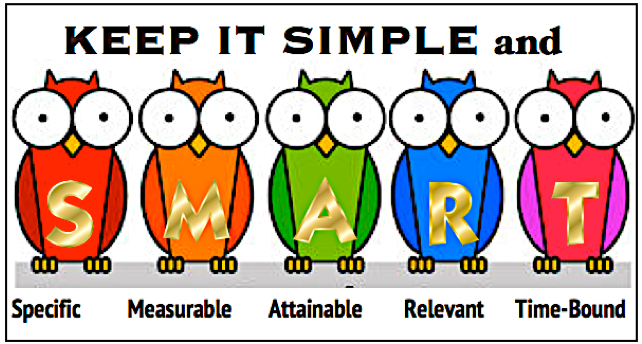
S.M.A.R.T.

‘keep it simple’. Whenever possible they find the simplest, sanest way to do things, no matter where they are or who they’re dealing with.
They’re not attached to ‘drama’,  never have to re-invent the wheel, & don’t hang out in convoluted, torturous thinking, or awful-izing. Knowing who they are & what they want, they can think clearly, so don’t easily get sidetracked or manipulated

THEY:
trust their instincts.  They pay careful attention to their environment, pick up on non-verbal cues, listen to the feeling in their gut & the still small voice in their head. They do not ignore these cues, even though they can’t be explained logically. Instincts are an important tool in their bag of life skills, guiding them on their path, helping to make the best choices

accept help whenever they need it. They’re not ashamed of not knowing everything, or of not being able getting helpto do everything themselves, so are not afraid to ask for & receive emotional support & practical help.
Confident people are secure enough to admit having limitations, & don’t see that as a sign of weakness.
They know that when searching for help they pay someone a huge compliment – it shows genuine respect for that person’s expertise & judgment, or wouldn’t have asked them. They’re eager to learn from others

• take care of themselves. They don’t wait for others to do for them what they can do for themselves.  They’re willing to learn easier & better ways to do things, & find procedures to make their life less complicated or stressful

are optimistic. They have a realistic view of their future, knowing from experience that bad situations eventually right themselves, & that many stressors can be overcome with sensible plans. They have the ability to see the light at the end of the tunnel, & plan their journey toward it.
Optimism allows confident people to believe they’ll be OK, no matter how bad the current situation may seem. They never give up, but know it’s good to regularly take a break

In reality, everyone experiences an occasional knock to their self-worth. In those cases, confident people take time out to question their motives & review their choices, but don’t get paralyzed. Their mind is focused on solutions, so they take actions as soon as possible, or keep working towards a better outcome in the future. One antidote to doubt is an increase in productive activity. (CHART – confidence vs doubt)


NEXT: Confident People (Part 3)

HEALTHY RISK

healthy risk
RISK IS NOT A DIRTY WORD!

as long as I’m realistic

PREVIOUS: Risk Addicted #2


COMMENTS

Risk of any kind usually entails some type of action (T.E.A). When average-functioning people are deciding what to do – ahead of time or if they only have a few seconds to consider – they use a reasonable thought process.
Thinking RISK thru :
• consider your aspirations – hopes, dreams AND level of wishing welldesire
• the short or long-term goal
• do you have the skill or knowledge to at least try
• know your expectations (to succeed or fail)
• weigh pros & cons of the situation
• consider possible consequences, both for yourself, & what’s socially acceptable
• “how important is it”! (whether to push or not)

😲 However, many ACoAs’ thinking about Risk – is either faulty or missing. Anxiety pushes some to act impulsively (R-addicted), & terror holds others back from even trying (R-averse).
❖ Which type you are now – & how you reacted to constant chaos & abuse as a kid – is based on your native personality

• ACoAs are trained to be perfectionist – only Actions counted in the family – but we could never be good enough, since nothing satisfied them.
EXP: Even raising my hand in class felt like too much of a risk. What if I don’t know the answer? What if I’m made fun of?

We’re bound tofall down fall down or become paralyzed from setting the bar for every accomplishment so high we can’t possible reach it (such as trying to make everyone like us!),
Sadly, to the outside world it can look like we don’t set the bar high enough, labeled lazy, stupid or crazy. We are NOT. It’s our terror (E) & CDs that stop us, or cause mistakes & procrastination.

SCIENCE: re. taking actions, we can generally be divided into
— ‘sitters’, who observe & then act, or
— ‘rovers
’ – who act more randomly.
In our culture it’s “Just do it” (Action) vs. “Look before you leap” (Thinking).
We’re born more as one than the other, but when mixed with damage it gives us the -averse or -addict style. Each Personality Type has it’s advantages & disadvantages, & neither should look down their noses at the other!  (MORE… w/ examples)

HEALTHY RISK
Appropriate risk-taking, like all other aspects of mental health – is rooted in balance & goals. What are you specifically trying to achieve in each situation?
Finding a balance between —> considering all possible outcomes (T) vs. —-> just taking a leap of faith (A) requires knowing ourself well, & also how the real world works.planning
a. IT IS
• moving forward in any aspect of your life. Do something!
• NOT about perfectionism (a form of S-H)
• usually not something physically dangerous, AND not as emotionally dangerous as your WIC or PP think it’ll be
b. ARE
• evaluated for realistic advantages & disadvantages
• mostly small ones (sending a text, talking to a stranger at an ‘event’, asking for help)
• occasionally bigger ones (moving to a different state, changing careers, getting a divorce…)

c. EVALUATE
• which negative extreme is your False Self ‘norm‘? What would it be like to swing to the opposite unhealthy side, & what would be middle ground ?
decide what changes you can handle & what’s currently too much – based on self-knowledge about your emotional capacity

get help• who can help you over a hump (of fear) : ask a safe friend to sit with you, go with you, let you be at their place… while you try a new, scary action
• think through the consequences (outcome) of your actions, not using self-hate, co-dependence or fear of abandonment (FoA) as a guide
• consider what the result might be of not taking any action – to you or others
• try out something small & see what happens. It may turn our OK or great. If it doesn’t, figure out what the problem is & try something else.

GROWTH : One of the benefits and joys of healthy risk-taking is finding out that positive outcomes are possible, when guided by our ‘UNIT rather than by the WIC or PP.
Use Book-Ending with your Inner Child to find out what’s possible & what’s not.
MOST IMP: No matter the outcome – catch & stop any form of S-H.
ONLY : Acceptance, Acceptance, Acceptance

NEXT:  MIND-READING vs Intuition – #1

ACoAs & SELF-ESTEEM – what it IS

self-evealuationI KNOW WHO I AM
– & I approve!

PREVIOUS: What Self-Esteem is NOT


SELF-ESTEEM IS:
1. Knowing Ourself well (with + & – characteristics), accepting & genuinely enjoying who we are, without denial or arrogance
** Some years after both her parents had died, one woman Recovery said about herself: “It’s sad that they missed out on experiencing the wonderful person their child has matured into, & always was  from the start.”

2. Knowing that all our Emotions (Es) are legitimate, valid & a part of the complete personality.  There are NO negative Es – when referring to painful or “unacceptable” ones – because anything that is considered a negative should be gotten rid of. Reality : ALL emotions are part of being human and are valuable, because they tell us what’s right or wrong for US! So the term does not apply to Es.

3. Knowing that all our Needs are normal & acceptable, but understanding that not all of them will be met, all of the time. That some will take longer than others to achieve, & that some which we didn’t get in childhood may never be fully realized.  But the more we reach for them, the more we’ll get. mistakes

4. Being OK with being Human – realistically knowing what our limits & limitations are. That to be human will always mean making mistakes, not knowing some things, being imperfect, having weaknesses – as well as having the gifts of abilities & talents, which we can hone & enjoy

5. Accepting that no matter how ‘Good or Spiritual’ we are, life can still be unfair, bad things can happen to us, other people will sometimes mess us up… but that does not mean it’s personal or that we’re not trying hard enough.  Having S.E. means we have a right to be here – on the planet – & that our H.P. wants the best for us

6. Being willing & able to take Responsibility for ourself (all our T.E.A.s) without guilt, shame, fear of punishment or of being abandoned (FoA). We’re able to be our own motivator, rather that using others to give us permission to be or act.  We can protect ourself from other people’s damage, but also own all our reactions, especially to upsetting eventsbalance Es

7. Being able to live in Balance between extremes, most of the time (minimizing drama / trauma). Part of S.E. is knowing how to think clearly & accurately, which lowers anxiety
✏︎ Being peaceful does not mean standing still
✏︎ Being calm is not the same as being bored
Living between +25 & -25 is the best option, rather than -100 hopeless or +100 fantasy high.

8. Accepting that Process is part of all accomplishments & personal growth. Delays do not mean failure or being abandoned (never reaching a goal). Process takes time & with S.E. we know we can do a great deal.  When we fail, we have the ability to learn from mistakes, improve ourself & keep reaching for our dreams

9. Always looking for new things to Learn & explore, curious about ourself, other people, including all the newest developments & difficulties in world.
We can take time to research topics we don’t know about, especially relating to problems that come up with ourself or family. As we age – our brain stays functional longer IF we include something new & different every so often

relax10. Being able to freely Express ourself artistically, using all our talents, knowledge & special gifts. S.E. allows us to pursue our dreams, no matter where they lead us. Knowing that we can’t be perfect, we’re not afraid to share those talents with others

11. Being able to Relax, Enjoy, have fun, take time off, rest, ‘veg’ – regularly.  These experiences are necessary to increase ‘good’ chemicals in the brain, which elevate mood. It also give us time to process our daily experiences on internal conscious & sub-conscious levels & to heal from past wounds. We have a right to healthy pleasure!

NEXT: RECOVERY – Is & is NOT (Part 1)