Procrastinators Anon TOOLS

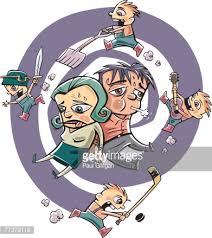
putting it off 

PREVIOUS: RE-ORGANIZED pages


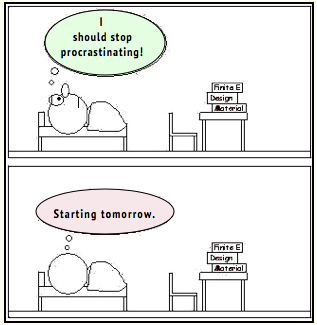
THESE TOOLS ARE GREAT.
I’ll try them later!

PREVIOUS: ACoAS & Procrastination (#5)

POSTS“ACoAs & Procrastination” / / “Weak Decision Styles

Procrastinators-Anonymous.org – “a fellowship of men and women who share their experience, strength and hope with each other that they may solve their common problem and help others to recover from chronic procrastination.”
TOOLS for RECOVERY
1. Break It Down: Break down projects into specific action steps; include preparation tasks in the breakdown.

2. Visualize: Plan what to do, then imagine yourself doing it. The more specific and vivid your visualization, the better. See yourself doing the task, and doing it well.

3. Ask Yourself Why: While you are visualizing doing the task, see if you can detect what it is about the task that feels odious to you, what uncomfortable emotions you are avoiding. Knowing what’s behind the avoidance can help you get past it – for example, address real problems or ignore irrational fears.

4. Focus on Long-Term Consequences: Procrastinators have a tendency to focus on short-term pleasure, and shut out awareness of long-term consequences. Remind yourself how panicked and awful you’ll feel if the task isn’t done, then imagine how good it will feel when the task is finished.

5. Avoid Time Binging: One reason procrastinators dread starting is that once they start they don’t let themselves stop. Plan to work on a task for a defined period of time, then set a timer. When the timer goes off, you’re done.

6. Use Small Blocks of Time: Procrastinators often have trouble doing tasks in incremental steps, and wait for big blocks of time that never come. When you have small blocks of time, use them to work on the task at hand.

7. Avoid Perfectionism: Procrastinators have a tendency to spend more time on a task than it warrants, so tasks that should be quick to do take an agonizingly long time. Notice this tendency and stop yourself. Some things require completion, not perfection.

8. Keep a Time Log: Increase your awareness of time by logging what you are doing throughout the day. This is a great diagnostic tool for discovering where your time went, and an excellent way to become better at estimating how long tasks take.

9. Develop Routines: To help structure your day and make a habit of things you always need to do, develop routines for what you do when you wake up, regular tasks of your workday, and what you need to do before going to bed.

10. Bookend Tasks and Time: Use the Bookending board on the P.A. Web site to check in throughout the day, or at the beginning or end of specific tasks you are dreading.

Please visit Procrastinators-Anonymous.org for more info.  Details are at the top of the Bookending board.  AS A REMINDER:

putting off cartoon
NEXT: WEAK Decision Styles, #1
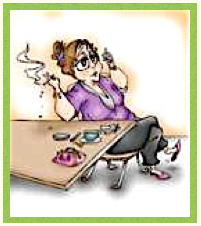
ACoAs & PROCRASTINATION (Part 5)

make notes I CAN GET THINGS DONE –
& feel good about it!

PREVIOUS: Putting things off #4


SITE: Overcoming Procrastination

BOOK: “Willpower: Rediscovering the Greatest Human Strength” by John Tierney, New York Times science writer, & psychologist Roy F. Baumeister.
An unconventional “self-help” book that, much like Timothy Wilson’s ‘Redirect’, grounds its insights & advice in 30 yrs of serious academic research into willfulness & self-control. While the book is fascinating in general, its 3rd chapter “A Brief History of the To-Do List, From God to Drew Carey,” is particularly interesting.

5. BOTTOM LINE
“WHY BOTHER?” underlies all our indecision & procrastination. We don’t take genuine care of ourselves, no matter how busy or cocky we seem to others. On a deep level we’re paralyzed by:
a. Not knowing or having access to our healthy True Self, so we believe we don’t know what we want or like, nor what our rights are!

b. Not being allowed to be our own internal motivator – so our only reason to take actions has to come from outside. We have to use family, a boss, teacher, a cause, religion, a career, friends & lover relationships, AND ultimately our terror of abandonment & punishment to push ourselves. Left to our own devices, we just collapse inward

c.
Our Internal Conflicts:conflict
• losing someone, being hurt or punished vs. feeling ‘safe’ (even if that safety is an illusion or self-destructive)
• WIC & PP vs. the Healthy UNIT
• obeying vs. disobeying the Toxic Rules
• old patterns vs. new ways of doing things
• what we want vs. what we’re ‘supposed’ to be, do, think, feel

d. Double messages, originally forced on us by one or more adults, we had no choice but to internalize the resulting Double Binds* (simultaneous but opposing demands, with a penalty for whichever one we can’t fulfill).
EXP:
• As kids they expected us to do for them (which may still be going on with an elderly parent), taking advantage of us to be their parent substitute – using hints, guilt, shaming, manipulation, demands, threats…. AND were angry / abusive if we did nothing (the penalty)

• BUT THEN were totally dissatisfied with & critical of (the penalty) whatever we did do for them, no matter how much effort we put in, what it cost us, what we had to sacrifice, how clever we were at it….

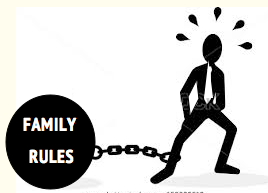
*EITHER WAY we were/are punished. If they’re still live we compulsively keep trying – to please them,chained to rules over & over. If they’re not around anymore we often find some other needy, critical person to satisfy – always with the same impossible, painful results!
YES, we’re addicted to the rejection, while maintaining the illusion that we have the power to change them, if only we try hard enough, long enough!

Ultimately, we stopped trying – but only for ourselves, because:
• we’re still waiting for them to approve of us, & give us permission to have a life of our own life (free us of their bondage because we don’t believe we can do it ourselves!)
• we’re convinced that if we failed with them (the family, also school, religion), it’s inevitably that we’ll fail with everything & everyone else, so there’s no point in trying
• we’re waiting for someone – anyone – to come & rescue us so we don’t ever have to be our own parent!

6. FACING our INNER REACTIONS
• Unfortunately, delaying inevitable responsibilities (as well as ones we’ve taken on voluntarily) creates endless obsession & self-recrimination. “”I’m just lazy by nature”, “I can’t do anything right” , “I’ll just mess it up – again” ….procratination

So why would we rather worry ourselves sick than ‘just do it’?
• we SAY it’s just a habit – but it’s really our self-hate
• we’re used to longing for things, rather than having them
• we’re waiting to be taken care of
• we think we don’t know how, even tho we actually do
• staying loyal to the family by copying how those adults ‘handled’ daily actions & problems
• we’re not allowed to do things easily because suffering is the norm (if it’s too easy it doesn’t count)

NEXT: Procrastination #6

ACoAs & PROCRASTINATION (Part 4)

self-motivationTHERE REALLY ARE THINGS
I can do to get going

PREVIOUS: Putting things off, #3

See ACRONYM page for abbrev.

SITE: ‘Beating Procrastination


2. NOW we put things off because of…. (in Part 3)
3. WHAT makes it HARD to act
a. Internal FEAR of // b. External FEAR of….

Internal & external fears can show up as: (cont.)
Putting off tasks. Many of us find that our whole life is permeated with the ‘habit’ of waiting to the last-minute to do things. It doesn’t seem to matter whether the ‘thing’ is something we would like to do or something we dread. We just put it off & off & off.

— Then comes crunch time – the deadline has caught up to us. We’re in a panic, scrambling to do the task, but now it’s going to be half-baked. We don’t have enough time to do a thorough job, don’t read the instruction correctly (or at all), leave out or miss something. And by leaving it tot he lat minute it can never be done right
— OR the deadline has past & we don’t get the benefit of a discount, miss a class or a needed product, a reunion, a party….

▶ Of course we’re painfully aware of all this, but as long as we’re stuck: worried
— we’re full of anxiety & S-H for not doing it Perfectly
— we scare ourselves with dire projections & predictions about how we’re going to get judged, punished, fired….
— hate ourselves for letting a desired or favorable opportunity pass by

But, like any good addict, we’ll do it the same way all over again, & again! WHAT? How can this be an addiction? WELL…. in this case it’s the addiction to: Fear + Adrenalin + S-H = Drama. This formula has become so much a part of our lives since childhood that we keep doing things (or not) to re-enforce the chemical surges it creates.

Yet under this self-inflicted ‘excitement’, the WIC is just trying to protect itself the only way it knows how – by NOT doing anything. Yet it’s not enough to just label it as part of our ACoA damage, which it is. We need to know how it all got started (Past) & how we perpetuate it (Present).

4. GOOD Stuff can deter us too – we often sabotage when things get too good!
• fear of success, as that would disobey basic Toxic Rules, and we’d have a lot of responsibility which the WIC believes it can not handle – even tho our adult can/could

• not allowed to be happy, based on the belief that life is hard, exclusively, AND that we aren’t worthy of having good things anyway
• stay loyal to the family by not out-doing them – we must also be a failure, don’t show them up, stay in the family mobile, don’t rock the boat…

• can’t be decisive: sometimes there are places we thinks we should go to, but really didn’t like, or we don’t feel well, or want to do something else, or do nothing at all…. even when it’s potentially pleasurable or valuable.

But we aren’t allowed to say NO to the inner Pressure-er (“what will they think if I don’t show up? / what if I miss out on something / maybe this will have the perfect answer to all my problems?….”). So instead of firmly deciding Yes or No, we dither & obsess, do nothing & then hate ourselvesindecisive

• are never supposed to say NO to what someone else suggests, offers, wants – especially if it’s good for us. Besides “Why do they want to be with me? Why are they being so nice?” So for those times we don’t rush to people-please, we make promises we eventually flake out on, make excuses or just lie, until people get angry &/or give up on us.
— That comes both as a relief – of pressure, and a big pain – of yet again feeling ‘abandoned’! Trapped in our own no-win game, we blame others AND are filled with self-abuse

NEXT: ACoAs & Procrastination #5

ACoAs & PROCRASTINATION (Part 3)

mananaMAÑANA, MAÑANA
I want to, but just can’t get going!

PREVIOUS: “Putting things off” Part 2

POST:Why are you Stuck?”


2. NOW we put things off because of: ❓Feelings  // ❓ Knowledge
✳️ ULTIMATELY – we put things off :
a. so we won’t feel so alone – that inner loneliness of not having nurturing parents growing up! Being our own caretaker, being competent – even in small things – is an emotional reminder of how terribly alone we always felt as kids – no one to guide (only bully), no one to comfort (only control), no one to encourage (only shame)…. inner aloneness

• Instead of doing something positive, all that wasted time spent worrying, obsessing about things we’re not getting done actually serves a purpose for the WIC : it fills up the emptiness inside – where a good parent should be – the Inner Supporters we never had (early abandonment).

EXP: Pre-Recovery, Tina needed to replace a knob for her radio that had fallen off & was lost. She knew she had the manufacturer’s purchase list in her files, but felt a general lethargy about taking the action = all of 5 minutes to find, make the call & order the tiny part. It was several months before she did this simple task.

• In the mean time Tina had to turn the radio on & off by awkwardly using 2 fingers on the sound stub. When the part arrived, in a little pouch, it sat on her night table several more weeks. Eventually she ‘faced’ the great task of taking the knob out of the package & clicking it into place = all of 1 minute!

b. because we have a deep (usually unacknowledged) feeling of hopelessness. After all – the WIC believes that our actions are supposed to get us the love & attention we’re always craved, specifically from our parents (dead or alive!). The Child’s logic says – “since they hurt me & hated me, it has to be my fault, so I have to find a way to fix it.”

But no matter how hard we work at being the perfect son or daughter, we rarely achieve this wish. So eventually drowningtaking actions gets harder & harder. Scapegoat & Lost Child ACoAs give up trying a lot sooner than Heroes & Mascots, but they never give up wanting to be loved & accepted! They just pretend they don’t care!

c. we feel powerless to have any effect on our environment (being efficacious). We could never get our parents (& sometimes siblings) to notice us, listen to us, take us seriously, consider or feelings & needs. So why would we be able to influence anyone else in the world? If we have no ability to influence, then why even try to DO anything?

3. WHAT makes it HARD to act
a. Internal FEAR of —
• not doing everything Perfectly (a form of S-H)
• not knowing how to do something (even tho we’re actually very
smart, clever, creative, knowledgeable)
• not knowing what to say when challenged or attacked
• looking weak, needy, incompetent, lazy, stupid…..
• having to stand up for ourselvesstandup
• making the ‘wrong’ choice, when having several options, or many demands on us at the same time
• having to feel the loneliness & pain of our original abandonment

b. External FEAR of —
• getting disappointing, hurting or angering someone
• being judged harshly (the way we do to ourselves)
• asking for help when we really need it
• having to deal with difficult people
• being interrupted & lose our train of thought /activity
• having to make everyone else happy (not be in pain) but resenting it

These can show up as:
• Not being able to decide what to do first, when we have several options, or what to do at all (like with free time)
Starting things (refinishing a pc. of furniture, art work, a book, even relationships…) but never / rarely finishing anything – IF for ourselves
• Can’t motivate ourselves – to have a life of our own, as in following our dreams, leaving bad relationships, moving to a better location….!

NEXT: Procrastination  Part 4

ACoAs & CONFUSION – as Kids (Part 2a)

CHILDHOOD CONFUSIONI MUST BE CRAZY
I can’t decide anything!

PREVIOUS: ACoAs & CONFUSION (#1)

SITE: Erikson’s Developmental Stages

QUOTE: “Until otherwise proven wrong, assume confusion.”
FromJudgement on the Front Line’~ C. DeRose & N. M. Tichy

📙🖌️ OVERVIEW (Part 1)
📕🖌️ CHILDHOOD confusion

ACoAs grow up with so much distorted, incorrect or missing information that we end up feeling crazy! WE were never crazy – it was the environment. We tried our very best to make sense of what we heard & saw, but that simply was not possible. That was NOT our fault or any lack in us!

• Damaged, narcissistic & addicted parents use many defenses to keep their carefully constructed life-mobile from crashing, so they don’t have to face themselves & change. Consciously or otherwise, they figured the more they could confuse us & keep us off-balance, the less chance we’d have to call them on their crap.

Even so, there’s often one child in the family who really gets what’s going on, who can’t be conned. They’re not confused, but if they let that slip they get severely punished.
In this case you’re in a Double-bind – you=the Receiver & they=the Sender. As a kid this is at best confusing, at worst crazy making.

projectionOne tool sick parents use is Projection (NOT Projecting the worst outcome) when they or anyone else attributes negative qualities – to you – that are only their own.
It can be called emotional dyslexia (getting things backwards) – when they label or accuse you of being something they unconsciously disown or know about themselves, but refuse to admit.

Children want & NEED to understand what’s expected of them – how to behave, where the boundaries are, their chores, their place in the family & the world, how to deal with each other & outsiders….
They’re highly intuitive & focused on their environment, with great curiosity about everything, & to understand what’s going on, so they know how to act & fit in.

Ideally, clearly knowing these things allows children to act appropriately, which leads to staying connected & feeling safe, to mature & flourish, based on what the healthy adults can provide & teachildhood Qsch them.

BUT – If the messages kids receive are crazy, garbled, contradictory, incomplete…. there’s no way they can figure out:
• who they are (identity) and how to behave
• how to correctly follow the adults’ demands, expectations & rules
• why they’re being punished or neglected
• what’s right & wrong, re. their own values or those in their world
• how to interact with others in a reasonable way (can cause isolation)
• when it’s safe to let go, not worry & just have fun

Children’s perceptions aren’t as clouded by years of conditioning as adults. They’re very concrete & literal, with little emotional or verbal filtering. They tend to say exactly what they think & feel, much to the chagrin or rage of adults – until awareness of their environment is beaten & terrified out of them, who then rebels or goes into hiding.

– The ‘good’ child (Hero) will carefully go along, following the script even when it doesn’t make any sense

– The ‘problem’ child (Scapegoat – who sees thru the confusion, but only for a while) will try to cut into the distortions by throwing the ‘truth’ in everyone’s face – without success. NOT quite the same as being scapegoated.

confused man– The ‘invisible’ child (Lost C) simply hides itself, closes it’s ears & tries to escape by physically isolating & staying in its head

– The ‘cute’ child (Mascot) tries to lighten the heavy painful atmosphere by playing dumb but amusing

• So we cobbled together some kind of view of ourselves & the world out of the many forms of twisted communication we were subjected to. It’s like having to weave a tapestry with only old tattered cloth, dead flowers, prickly vines & invisible yarn – forming a nightmare design.

We ended up deeply perplexed about who we are, how things work, what’s possible…. while at the same time having only one way of being/ doing things (according to the Introject), so we don’t realize there are other options in the real world – for us.

NEXT: ACoAs & Confusion (Part 3)

ACoAs being Scapegoated – GOWTH (Part 1)

empowerment

I CAN & AM OUTGROWING
this toxic victim role!

PREVIOUS: Scapegoating #6


FOR ALL ACoAs
Emotional damage: Scapegoats (SCs) are forced undeservedly to carry the family’s burden of disowned defects. They drown in the pain of those closest to them, & later in the collective pain of the society – with no one to comfort or understand them

In the process SCs are robbed of experiencing their own pain, denied the opportunity to learn how to contain, endure & grieve the suffering they’ve had to ignore & bury. (What is Scapegoat child abuse?)

No matter what our toxic family role was as kids, many of us tried to bring attention to the family’s dirty laundry,
so it would get corrected, but in most cases that never happened. (This is true even if parents or siblings eventually get into 12-step Programs, but still have not done their own FoO work).
We assumed that if we could make the adults own their emotional baggage, our torment would stop & life would be great.
And so we pushed & pushed – but it only got us more abuse.

• ACoAs desperately want justice / fairness! Failing at this childhood goal, some continue trying to ‘fight injustice’ as adults, especially those of us who were scapegoated. We may become ‘expose´journalist, prosecuting attorneys, ‘church ladies’, public service advocates or whistle blowers….

However, most of us live more conventional lives, with little social or political clout. Even so, we compulsively insist that dishonest & hypocritical friends, relative, mates, bosses (& elderly parents)…. admit their flaws. It didn’t work at home, & rarely works in the adult world either. It still brings negative feedback & so another layer of abuse

TO HEAL
Ask: “Am I willing to do whatever it takes to give up my Scapegoat role?” That’s not always an easy Yes, but do-able. Remember, if you continue to be :
😠 belligerent,  demanding, controlling
-OR-
😔compliant, over-agreeable, too silent, submissive or unclear
THEN
👎🏽 it’s easier for others to end up avoiding, making fun of, manipulate or attacking you
That’s even true coming from people who are not usually scapegoaters!  It’s a normal human reacpull out toxic roletion toward someone acting out their WIC’s damage.
BUT – as you heal the inside, you’ll get better reactions from others! Who knew??

• Once you acknowledge this toxic role that was forced on you, & truly believe it was not your fault (Al-Anon‘s 3 As), you can observe how you perpetuate the syndrome, & slowly change the pattern

❇We can bear to re-feel our old pain IF & when we’re comforted, understood & treated with respect by one or more safe & caring people. Then apply that treatment to ourselves.

TO WORK ON 
a. BOUNDARIES: • Don’t expect others to respect your boundaries. You have to set the standard that’s right for you. “This ____ works for me, this ____ doesn’t, I want to do this, I don’t want to do that…..”

• Practice saying NO – at first in your head – a lot! Then try it out on small things you don’t like or don’t want to do – with people or situations that don’t feel TOO ‘dangerous’ if it doesn’t work out the way you hoped.

• Don’t over-give. Offer a little, & then see what & how much the other person can reciprocate. If the can only give 10%, you give only 10-15%, etc. It’s up to you to not get taken advantage of

b. PRESENTATION: ✦ Walk into every room with head held straight, look at people directly, don’t slouch, walk ‘confidently’ – as if you believe you have a right to be here – even if you don’t feekind peoplel like it.
✦ Dress appropriately for the situation you’re in
✦ Look around & notice what’s going on, notice who’s NOT safe (using your inner radar) ….

c. RELATIONSHIPS: Whenever possible, stay away from the people who originally set you up, or who still treat you as the black sheep in any situation.
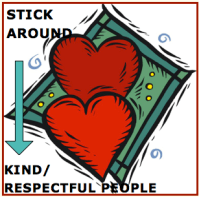
Look for people who are already kind, or at least respectful.
If you aren’t getting any of your needs met or are treated shabbily, you can walk away.
We MUST keep the focus on ourselves – owning & correcting our own character defects, AND appreciate & cherish our talents & skills.

NEXT: Scapegoated GROWTH #2

PARENTS BLAMING US (Part 1) 

being blamedWHY IS IT ALWAYS MY FAULT?
No matter what I do, it’s wrong!

PREVIOUS: Rebellion vs Compliance #2

SEE posts : What is Guilt?
What is Shame?
• ACoAs’ Need for Revenge


INTRO

There is a lot of talk in the ‘spiritual’ community about forgiveness, ie – that we should not be blamers.
Not blaming ourself (S-H) or others (attacks) is a good rule for us in the present – now that we’re adults. And that’s a discussion for another post.

However, those same teachers & preachers never talk about what was done to us as kids – that among many other types of harm, our parents unfairly, inappropriately blamed us for all kinds of things – and what that did to our tender & vulnerable developing sense of identity!

This post is about what happened TO US as children. A hallmark of alcoholic & other emotionally unhealthy families is the mistreatment of their children in all 4 of life’s aspects: Spiritual, Emotional, Mental, Physical (PMES).

😿 Parents blaming their children for ANYTHING is ABUSIVE. Blaming us is the same as holding us responsible for their deficiencies & unhappiness.

Remember – abuse is not just Physical, in its various forms. Abuse encompasses all the ways people harm others – especially their children – by injuring another’s rights, self-esteem, mental clarity, sense of safety, emotional equilibrium & boundaries. So Blame fits into the other 3 categories – M, E & S..

👥 A variation on parental Blame is a constant and negative COMPARISON of a living child to a dead or other living sibling, another relative, a famous person….  “Why can’t you be more like ____”

1. IN OUR CHILDHOOD
✅ Damaged parents blamed YOU for things WHICH :
a. were NOT your fault
• your difficulties because of a learning disability, like dyslexia or ADD
• the illness or death of a parent; a parent being left by a lover or spouse..

b. was a projection
of what the parents were guilty of being (fearful, irresponsible, lazy, feeling unlovable, risk-averse….)

c. you were not doing
what you were accused of
• being a ‘whore’ when you were too young to have had sex at all OR
• of seducing a parent’s lover/ spouse, when that adult was actually sexually abusing the child
• of using drugs when you never did – at least not at the point…) Screen Shot 2016-06-12 at 5.07.37 AM

d. you could not do, especially without any instruction, & then accused of being stupid
• when you legitimately couldn’t know something (fixing a car or other machinery, shopping by yourself, def. of a big word…)
• ‘getting’ a hard school subject
• expected to know how to fix a parent’s personal, sexual & financial problems
• forced to take care of a drunk or crazy parent, alone…
WHICH
e. were truly no one’s fault. EXP :  • an act of God
• being born with a physical or mental limitation
•  getting severely ill or having an accident…

f. you were held responsible for –
 something one of your siblings or other child did, especially if you were the Hero or Scapegoat (start a fight; steal or break something; get into trouble at school…)

g. your parents were jealous of, because they couldn’t do something you could, even as a youngster (a natural skill or gift), so they made that ability stupid or a bad thing

h. was mostly not true
always lying (“Kids always lie so we can’t believe anything they say”)
always being stubborn, selfish, too sensitive, difficult, disobedient, stupid….

➼ This last category are a group of normal childhood characteristics which:
√ sick parent cannot tolerate because of their own issues
√ occur sometimes as a defense in the child because of family abuse & neglect…
√ happens occasionally because kids are human ie. imperfect.
Those behaviors & attitudes then get demonized – which make them a ‘sin’ and more likely to continue, causing the child to TRY becoming perfect’. We CAN’T WIN in a sick environment.

NEXT: ACoAs’ need for revenge

ACoAs – “Being Negative” (Part 5)

positive thinking

 EVERY DAY I REMEMBER TO FOCUS
my thinking on the good things I already have!

PREVIOUS: Being Negative (Part 4)

SITE: The science of Happiness (“Happify” Website)


TROUBLE letting go
of negative thinking /talking – WHY?
• it’s strongly imprinted in our brain from years of ‘practice’
• it would require S & I from the family, which is never easy
• denial: we have a hard time noticing how often we think / talk that way

• it gives us a sense of false ‘control’
• no one would know how bad we had it growing up
• we get something out of it (Post: Negative Benefits)

• we don’t see the value in thinking/speaking positively, believing it’s for wimps, pollyannas or dummies (who don’t know what’s real!)
• we think it would be denying / our pain & suffering
• we use it to punish ourselves for being imperfect

CONSEQUENCES of Negative Thinking (NT
a. MENTAL: • it leads us to assume that any mistake is a failure, which will expose us to criticism/ judgment, like in our family
• tells us we should be able to make big strides quickly & easily, & that since we can’t – we lazy, stupid or hopelessly stuck
• it prevents being able to think of alternative solutions to problems
• when the brain tries to deal with a complex task, being inundated with NT slows down its capacity to process information & think clearly – by as much as 50%  (More…)

b. EMOTIONAL• can easily lead to depression, assuming we have to be perfect, & to being trapped by our own unrealistic standards
• can cause anxiety, leading to unhealthy coping mechanisms

c. PHYSICAL: • it’s harmful to the body, since negativity lowers its defenses & subtracts from our energy
• because NTs are so painful we can easily turn to addictions to escape (food, money, sex, alcohol/chemicals, relationships….)

d. PSYCHOLOGICAL: • is an obstacle to personal growth, making any change feel too overwhelming & painful
• it makes it hard to see & acknowledge the small steps in progress we DO make
• it denies or ignores possibilities that would improve life, & prevents receiving abundance
• it wastes time & energy, which could be used to heal old wounds & pursue healthy goals
• it convinces us that any form of risk is ‘life-threatening’

e. SOCIAL: • causes many personal, social & work problems
• has a downer effect on others we’re regularly around
• prevents us from relaxing & let our guard down, always second guessing ourselves  (Cognitive Therapy Guide

OUTGROWING NTs – change/modify things that contribute to it:change to positive
• start with AWARENESS of what you’re saying to yourself, what’s causing the ‘stinking thinking’, & the harmful effects it has on your life (& on others)

• slowly clear up practical problems which you have some control over (changing college course, job, spouse…., pay off debts, go to 12-Step meetings, do something creative/artistic….)

• try not to actually speak any negative thought out loud (develop personal boundaries instead of giving in to S-H).
If you feel the urge to criticize or get angry about something, shift to another topic if you NEED to talk

• accept/believe that positive thinking/speaking is a big plus, personally & socially. It does NOT mean being mushy, drippy, girly, sacrificing your opinions/ tastes/ values, or never objecting to something ‘wrong’
•  if you’re depressed, get the help you need to deal with it

• become acutely sensitive to the fact that some topics you’re interested in are intensely emotional (illness, jail, abuse, death, loss, war, politics, putting anything or anyone down….)

By your logic, these topics may be ‘perfectly normal’, interesting, current…. .
But when they’re inherently unpleasant, it is not respectful to foist them on others. It can easily sour the mood of a group, bring up old pain for someone or hurt someone’s feelings.

Naturally, such topics are appropriate in a group specifically designated for that (therapy group, 12-Step programs….)

• Notice how you feel when around another person who’s always a ‘downer’. Be willing to admit you may sound like that, & work on changing your own pattern – from the inside out.

NEXT: Being Negative #6

ACoAs – Being Negative (Part 4)

negativityISN’T IT CRAZY TO TALK TO MY BODY? 

PREVIOUS: NT (#3)


Negative Thinking (NT)
(cont)
1. re. OURSELVES
2. re. Personal RELATIONSHIPS

3. re. Our BODY
UNREALISTIC
a. At an extreme some ACoAs are hypochondriacs —  with the disorder that makes a person believe that body ‘feelings’ are signs of a serious illness —-> even when medical science can prove otherwise.
It’s their preoccupation with health, misinterpretiimagined illnessng a physical sensation (gas, muscle ache, headache….),  making it something it’s not.

Illness becomes a part of the hypochondriac’s identity, causing relationships & work problems. It occurs in men and women equally.
Relentless NT about the body is a substitute for / defense against feeling the huge backlog of hidden painful emotions we’ve buried. And long-term, it harms our immune system (Psycho-Neuro-Immunology).

b. Body Dysmorphia (BBD) – the distorted, unrealistic image of one’s physical appearance (ugly, fat, too thin… ). Most often it’s the result having been sexually abused as a child. In extreme cases the person cannot “see” their body, only their head, even in the mirror.

ACTUAL – However, many ACoAs suffer real physical problems, FROM :
• years of addictions, self-abuse & neglect
• being under constant emotional, mental & spiritual stress as kids, plus physical/sexual abuse, later creating very real medical conditions = the auto-immune diseases

• hereditary factors in alcoholic families: birth trauma, childhood ailments, mental illness, bad teeth & gums, depression, bipolar disorder, dyslexia, ADD, SAD, EDS, severe food allergies (wheat, sugar, nuts…), environmental illness & other chemical imbalances
SITE:“…severe childhood trauma can alter developing brain”

➼ Whether inherited or self-inflicted – it’s imperative to not use NT toward our bodies. We must never, ever curse our cells or wounded parts!
If we stay fearful, worried, & project the worst, OR rage at our organs, limbs, nervous system… the body absorbs that negative energy & may take longer to heal or maybe not at all. (Cartoons re. responses to Physical vs Mental illness)

Healthy EXP: Jody had a motor-bike accident which damaged a muscle group just above one knee & caused a limp. Along with Feldenkreis & Brain Gym, she spent time doing Positive Inner Dialoguing. Pictured the injury, she talked tenderly to her leg – “I love you & am so sorry you’re hurt. I can see the cells repairing themselves using the healing energy I’m sending you. You’re important to me & I need you. I want you to be strong again… ” While the muscle took longer to heal, the limp cleared up right away & all of the damage was eventually repaired.

5. re. THINGS
• This is a more subtle form of NT – saying bad things about objects, places, events…. anything not alive. Many people think it’s perfectly ok to call things insulting names : ‘Damn that stupid chair! I stub my toe on it every time!’ or ‘My car is such a piece of shit. It’s always breaking down.hate things

• What’s wrong with that? They don’t have feelings, so what’s the big deal? Well, it’s more of the same – projecting our painful childhood experiences onto objects, putting out more negative energy, which can get reinforced by others around us.

NOTE : Negative Reciprocal Attraction :  one person does something harmful to someone else, who then returns “the favor” with an action that’s similarly harmful (attack<–>revenge // glare<–>frown // ignore<–>snub… ). This explains why some people keep moving in the wrong direction, ie. away from ease, comfort & safety.

Reality Check
• Since the chair is inanimate, stubbing your toe may have to do with where it‘s placed, and/or the way you move thru space. In her autobiography  Nancy Friday tells of constantly getting black & blue from bumping into things. In therapy she learned that she was unconsciously punishing herself for her (repressed) rage at her mother

• And the car may be old & breaking down, but it’s not the car’s fault – maybe of the manufacturer, or yours for not taking better care of it – or it’s time to replace it but you’re mad & ashamed because you can’t afford to!

ACoAs tend to get things backwards, blaming things instead of identifying the real source of our pain. To be emotionally & mentally clean we need to identify & own:
😣 our disowned emotions (anger, hopelessness, disappointment, fear…) which then deny / ignoreget projected on to PPT

😡 that we ignore experiences which actually were harmful, then redirect our anger & hurt back on to ourself or at innocuous objects

Blatant negativity is hard to miss, but ours can be so hidden that others may never realize how often we’re thinking that way.

NEXT: “Being Negative” (#5)

ACoAs & Being DISAPPOINTED (Part 2)

disappointedEVERYONE LETS ME DOWN – so I stay away from everyone

PREVIOUS: Disappointment – Part 1

SITEs: • “How to Cope with Disappointment

▪︎ Psychology of Disappointment

EXPECTATIONS (Review posts – Over and Under)
No matter which form it takes, expecting others to fill our empty heart & mind, instead of being pro-active, means:Screen Shot 2016-05-31 at 10.13.44 PM
• the WIC is still running our life, waiting to find the ‘right’ parent – magically – so we don’t have to care for ourselves

• we’re functioning from our narcissism – always from the point of view that “Everything is about me!” (and against me)
This assumption was not true about the abuse we grew up with, & it’s not true about what people do to us & around us – now. (ACoA 3 Cs : I didn’t cause – the chaos & trauma”)

We know this because when WE change, in Recovery, those same hurtful responses from others seem to bother us much less!
ARTICLE: “Managing Negative Expectations” w/ chart

ACoAs get disappointed (D) by so many things, because the WIC desperately wants the world to be a certain way (to meet all its needs) rather than our Adult noticing AND accepting the way things are – both good & bad – in our environment.

IRONY: With reality in clear view, we can get our needs met by choosing among the many options that are actually available in the present!

1. COVERT Types of Disappointment
Because we’re not allowed to know our wants, needs & emotions, NOR to ask for anything, we imagine (silently expect, demand) that others will read our mind & provide for us – which comes from the WIC

• We truly believe that if we want something a certain way – without saying it – it will automatically happen
EXP: Your B/day (or any holiday that’s important to you) is coming up & he hints that you’ll do something together. You have it all planned out – exactly what you want to do, how it will look & feel.
But you never say any of it.

Then the day comes & it turns out Screen Shot 2016-05-31 at 10.12.55 PMvery differently – maybe not bad, but not what you imagined. Now you’re angry at him, unappreciative, cranky, attacking – OR you decide he doesn’t really love you at all, you don’t feel the same about him…..
OY! You’re deeply disappointed, but how was he supposed to know?

• We naively assume that everyone means what they say, OR will do what they promise. To ‘feel’ safe we need to believe that others are as literal (& ‘responsible’) as we are
EXP: Josie says she’ll bring the book to work tomorrow that you’ve been wanting to borrow. You not only believe it, but count on it, looking forward in anticipation. Tomorrow comes & she’s ‘forgotten’ the book. You’re angry. You’re convinced she’s messing with you, she lied, she…..

• When going into a new situation (class, work, relationship), the WIC presumes they will be safe, needs the people to be helpful, informative, consistent, appreciative, respectful…. & then they’re NOT. Sometime it/they turn out to be very ‘bad’, but most of the time they’re just not what we secretly (unconsciously) needed & expected.

We’re disappointed, so we get depressed or really mad.
📢 If you’re an introvert, or still in Victim mode, you’ll just sulk, withdraw, not participate, sit in misery, or leave without saying anything

NEXT: OVERT

Positive  HUMOR  from Grant Snider

NEXT:    ACoAs  & CONFUSION