Relationship STAGES

GOOD RELATIONSHIPS TAKE TIME!
You mean I have to wait?

PREVIOUS: Results of abuse (the LL)

STAGES    
These 8 stages show the ‘normal’ progression for people to move from stranger to long-term partners, & apply to all types of relationships.

NOTE: The columns are not about ROMANTIC connections (as developed in Stage 6), which is given below the chart

Stages 1 & 2 are the ones most people fall into – in relation to each of us. They have to do with the people we pass every day & barely notice

#2 thru 5 are the stages we should go thru to form any connection, regardless of gender or sexual interest.  This can take anywhere from a year, to 4 or 5 ys, depending on how often you communicate, actually see each other & each person’s level of emotional availability

#6 should come after some of the other steps have been worked thru, but with sex added in, steps 2-5 usually come later, if there’s enough to hold our interest. Those stages should still be given lots of time

#7  As we becomes more aware of others (moving further down the continuum), the more of ourself comes onto play. This level of commitment needs to be the result of other steps, rather than the beginning – like how ACoAs do it!

#8 If the other stages have been worked thru as honestly as we can, this one will be a mostly functional & happy one, because we’ve done our due-diligence, picking a more suitable partner & being less reactive ourselves.


ROMANTIC RELATIONSHIP STAGES
1. “HONEYMOON”  (2 mths – 2 yrs.) When we idealize the other person. It’s wrapped in an air of excitement & optimism, when anything seems possible

2. POWER STRUGGLE – The couple begins to see the differences between them & notice things they don’t have in common. This is when people can easily pull apart, even divorce

3. STABILITY – This is available if the power struggles (“Who’s in Charge?”) can be resolved amicably & fairly, so neither partner is the underdog

4. COMMITMENT – If marriage has not already occurred, it’s likely to occur at this stage. Partners know each other well, & realize they don’t ne-e-e-d each other, but want to be together

5. CO-CREATION – When partners move out into the world, from having children to participating in joint business or other kinds of ventures.  (MORE….)

NEXT: Relationship CONTINUUM chart

Victimizing OTHERS (Part 1)

office gossipI HAVE TO BE VERY CAREFUL –  to not let out my damage on others!

PREVIOUS: Victimizing Ourselves (Part 3)

SEE: ACRONYM Page for abbrevs.

TOWARDS OTHERS  – From us
a. Abandoning (5 posts : “How ACoAs Abandon Others” )
•  CONTROLLING : An outward manifestation of our disowned fear that has accumulated from childhood into the present
• IGNORING : Not hearing what someone is telling us about themself, their needs, their tastes, their point of view, their current availability

• REPRESSING Others’ Emotions:  To the extent we are still repressing our own Es, we try to suppress that of others
• IDEALIZING: Putting anyone on a pedestal – not being able or willing to acknowledge someone’s real personality, including their human limitations & their damage
• UNDERVALUING: At the other extreme are the ACoAs who find fault with everyone, all the time, OR when someone gets too close, emotionally (Posts “How ACoAs Abandon Others” )

b. Jumping (projecting our issues / pushing our opinions onto others)
✶ What does it mean to “Keep the focus on yourself”?  Many people misuse this phrase. They think it gives them license to say mean, insensitive, invasive things, as long as they start with “Well, it’s just my opinion, but I …”.  Expressing Emotions does NOT mean saying or doing what ever we want, because it can too easily become a form of violence.

WRONG WAY – If we are emotionally dishonest or unaware, we may say:
• “I think you should….”  – negating who they are, what they need or what they know how to do for themselves
• “I know I said I’d help you, but I can’t do it” – AT the last-minute, when they were counting on your promise!
• “It’s just my opinion, but your problem is….”  – & then tell them what’s wrong with them, unsolicited, of course, AND not helpful or even accurate!🔅

• “I don’t t h i n k so!” – when someone tells us an emotional truth or personal insight about themselves
AND if they object, we repeat “Well I have a right to my opinion…”
This is not an opinion, it’s negating our reality in favor of their own
• “I don’t understand how you could…..” – implying that since their action / opinion /emotion is different than yours, it’s not legitimate

RIGHT WAY –  while you can refer to what someone has said or done, you own your reaction to the other person BY :
I statements🔅 taking responsibility for your own feelings, thoughts & actions – “I’m sorry for what I said – a button of mine got pushed & I reacted!”

🔅knowing yourself well enough to identify what motivates you then be willing to say it, in an appropriate situation:
• “I didn’t do ____ because I wanted to be numb for a while / I fell into an old pattern / I’m not allowed to say what I really want

🔅 dealing with your own anger, disappointment or hurt, without blaming or attacking the other person:
• “I’m really angry that you lied to me – I trusted you!”
• “When you said _____, what I heard was ______, & it really it upset me!”
• “I don’t talk like that way (harshly) to myself!
BY
🔅
making ‘I’ statements about yourself in an uncomfortable situation:
• “Even if you 2 are OK with this, it so painful for me to hear you insult each other that I need to leave…..”
• “I feel abandoned / hurt / angry / sad that you’re so rarely available to see me, but I know you’re genuinely busy & it’s not personal”
• “I’m getting tickets for —– & I’d love your company. NO? Well, I’m disappointed but understand if you don’t like it, & don’t want to go
OR

🔅 knowing what you need and asking for it, BUT not trying to force the outcome. Al-Anon suggests: ‘Take the action & let go of the result’

• “I stay in that bad job / marriage / friendship… because I’m too afraid of being alone / not having an identity without them / of the abandonment pain I’d have to feel….”

• “That ___ doesn’t work for me because it hurts me too much / it’s not who I am / it goes against my principles….”

NEXT : Victimizing others #2

Victimizing OURSELVES (Part 3)

I DON’T KNOW WHY
they give me such a hard time!

PREVIOUS:
Victimizing Ourselves (#2)

SITE:  re. Emotions

See ACRONYM Page for abbrev.


EMOTIONAL ABUSE (E.A.) to Ourselves (cont.)
4. Confusion // 5. Staying Ignorant // 6. Letting others USE us

7. Lack of Self-Care
♟ We were originally subjected to many different kinds of PMES “care” – some parents were too rigid, some too lax.
a. In some families too much was expected of us (little adults) – to fend for ourselves &/or take care of others – way too early. We did what we could, but even if it was OK, we never believe it’s right or good enough (More….)

b. In others, the hero/martyr parent did too much, without teaching us how to do things – making us naive, ignorant or stupid – & dependent on others
c.  In yet others, they did way too little daily care & maintenance for us, so again we had to fake it – but trying, never learning to do things easily, correctly, efficiently, or at all.  (See Part 1 & 2)

♟  Now we don’t know adult self-care (balance a check book, make a resume, fill out forms…), or we do them sometimes but inconsistently, or simply refuse to do what we really do know how (brush teeth, go to the bathroom before bursting, get enough sleep, eat right, put laundry away …. )

ALSO, ACoAs keep putting off doing certain things we’d actually like to have (a clean house, mended clothes, a better education, shed weight…). We obsess about them, but ‘refuse’ to act – even though procrastinating makes us feel bad about ourselves. We can’t win for losing!
E.A.: disgust, frustration, guilt, shame, S-H

8. Repressing
It may seem strange at first, but shutting off emotions or trying to sit on them is definitely a form of E.A.! 
Unfortunately for the deluded part of us (PP & WIC) we can’t actually change or control Emotions by repressing, ignoring or denying them. We can only freeze them – but they’re still underneath, causing anxiety or painful numbness!

The more we try to control our Es, the stronger the unconscious counter-reaction, making us more & more frightened of ‘loosing control’. This leads to a vicious cycle of :
🥁 Having intense Es —> pushing them down (repression) —> then maybe acting them out – badly —> then having a negative internal reaction —> then shutting down again….. adding a mountain of stress to our already overflowing emotional pressure-cooker

EXP: Some of us can go day after day functioning normally on the outside, seemingly even-tempered & pleasant.  Then all of a sudden we over-react to something relatively trivial or harmless – as if out of nowhere. We can’t figure out what happened & everyone around us is shocked.
It’s one sign that we’re been stock-piling Es (old &new), instead of dealing with them as they come up.

Eventually suppressed Es fill our energy capacity to the brim (emotions = energy to act) & we explode in rage, in a panic attack &/or physical illness OR implode into depression, mental confusion & immobility (T.E.A.)repression explosion

• Unfortunately for our Inner Life, Western society was founded on Puritan stoicism, which included hiding emotions, being ashamed & afraid of them. This has been translated into political correctness – especially about showing Es in public, which are judged as ‘loosing it’ & a great sign of personal weakness.

People feel uncomfortable with anyone who expresses pain overtly!  Yet we are all born with Emotions, for good reasons, & need to accept & deal with them – appropriately
E.As: cut off – from amusement / humor, joy, love, sympathy….

9. Hurting others  (How ACoAs Abandon Others” posts)
Here we’re talking about how we victimize ourselves by beating ourselves up  (S-H) for hours, days or years – for having been controlling, hostile, negligent, unfaithful, selfish …. to someone.
This is not the same as taking responsibility for our actions. While our behavior may have directly or adversely affected another person (or not), the internal backlash we suffer afterward is not worth the short-term satisfaction we got from acting out on them in the moment.

NEXT: Victimizing Others

Victimizing OURSELVES (Part 2)

PREVIOUS: Victimizing ourselves #1

Review posts:
Toxic Beliefs //
our WIC   the Introject


EMOTIONAL ABUSE (E.A.) to Ourselves (cont.)
1. Self-hate // 2. Addictions // 3. Going to the wrong people

4. Confusion” (Posts)
♟ HARMING others
• Sometimes we don’t even recognize we said / did something hurtful. So we don’t understand why someone blew us off – we lose a friend, a job, a lover, even a child…. without a clue how we contributed to the loss. OR…

• …. we’re angry, controlling, manipulative…. with someone close to us because they aren’t who or what we want them to be. We’re so desperate to get what we need from them – even though it’s impossible!stay/leave
▫️ If it’s to an external child, we have to accept the reality of their age & personality limitations
▫️ If it’s toward another adult, we have to accept them too, BUT can also distance ourselves, or leave

🔅 NOT HARMING = At the other extreme –
• many of us agonize about hurting someone, when we were not abusive – just taking care of ourself, being assertive, protecting our WIC, or legitimately stopping someone from stepping on us. The other person :
🔸 may get hurt or angry that we set a boundary – which is theirs to deal with
🔸 OR they may not have been affected at all, so we’re just mind-reading, projecting our own WIC on to them.  Either way we’re confused

BTW, feeling angry is not at all abusive. How it’s expressed is the issue. As long as what we say is truthful, and we use ‘I’ statements (‘That’s not what I meant”, “I will not be talked to like that!!”….).
Reminder : “Say what you mean, but don’t say it mean”.
E.As: agonized, anxious, ashamed, guilty, obsessed, S-H, worried

denial5. Staying Ignorant
• It’s both being in Denial (don’t know you don’t know something) – but also not willing to ‘go inside’ to find out what’s keeping you stuck, by digging up the mental & emotional garbage we accumulated from childhood on
• AND deliberately choosing Suppression / Distraction – to ignore unpleasant truths about ourself we do know but don’t want to face or correct (our wounds)

While it may seem safer either way, it’s guaranteed to slowly starve our heart, mind & soul – never finding out who our True Self is. Ignorance is NOT bliss!
E.As: frustration, stubbornness, powerlessness

6. Letting others Use us
Whether we’re new to Recovery, & have self-hate, or have been working on ourself a long time (& still have low self-esteem), family patterns show up in our life from time to time, but especially in intimate relationships. It happens even when our self-confidence has improved in other areas.hooked helping
WHAT
We let people take advantage of us – even offer to be used – with our body, our time, money, talents…. feeling ‘happy’ that someone wants to be with us!
• It’s the sneaky ways we get sucked in to being used by others (co-dep, people-pleasing, passivity….) whether they mean to or not. Before we know it we’re in deep & may spend years in disadvantaged positions, giving our power away – anything to not face FoA!
THEN
Because our parents were incompetent in so many ways, we were forced to or felt obligated to take care of them (run the household, not have needs, act as therapist…)
They took advantage of our intelligence, creativity, love, generosity – and desperation – so they wouldn’t have to grow up & be responsible for themselves – never mind for us!
NOW
• We choose people to be with or let them pick us. who are as immature & dysfunctional as our family (or worse), & then proceed to fill the role we know, as caretaker-victim. OR….
• ….we project our parent’s immaturity & craziness onto everyone we deal with, assuming they ‘neeeed’ us the way our family did, even people who are obviously functioning well – because we don’t know how to relate to someone who doesn’t actually need us in a twisted way

• We clearly got the message at home that our needs don’t count – only those of other people. So we can do miraculous things for them, getting to use our intelligence, ingenuity & drive – as long as it’s not for ourself!
E.A.: disappointed, betrayed, enraged, exhausted, frustrated,  S-H

NEXT: Victimizing ourselves #3

Victimizing OURSELVES (Part 1)

OH NO, I’M AGREEING – with my Bad Voice (again)

PREVIOUS: Abuse of children   


OLD PAIN vs. NEW PAIN
Old Pain (Abandonment) is made up of the daily misery we lived thru as kids, with no way to process or get help dealing with it.
It accumulated in our body & in our spirit, much of which eventually went underground, into our Shadow (the unconscious).

New Pain (Self-Hate) is the suffering we now do to ourself & allow** others do to us – acting-out our family’s training. This layer gets added to the old abandonment & the accumulation wears us into the ground.

**Re. “allow” : Denial makes it hard for us to recognize abuse as it’s happening, so we do not consciously choose to let others hurt us, but unconsciously gravitate to the familiar – & then stay!

• So it’s important to keep awake for what’s happening to us & around us. Having been exposed to rage, fear, neglect, disrespect, torture …. as kids, ACoAs are both drawn to AND are more deeply affected (badly) by negative people, places & things.

It’s like having an open wound that keeps getting bumped – it’s injured more & more, so it hurts worse, AND never has time to heal. We’re hyper-sensitive to uplifting and deflating energies, & need to stay away from harsh environments even more than ‘normals’ who are much less damaged.

EMOTIONAL ABUSE (E.A.)  to Ourself
Keeping PMES in mind, most people think of abuse only in Physical terms (beatings), but the damage we originally sustained was first & foremost Emotional. From earliest childhood ACoAs were trained to tolerate abuse in both subtle & blatant forms, which then became our default position.
In order to stop being tortured unnecessarily – now, observe how you Victimize yourself in ways that keep wounding your feelings.

 1. Self-HateS-H heads
As adults the most violent source of E.A. is our own inner Pig Parent (PP) voice, which generates relentless negative beliefs & demands we listen to & believe. Many of our troubles come from the WIC obeying this Introjected part, not wanting to let go of old ways which represent loyalty to our family system.
Monster : “Self-Hate” expressed in T.E.A. forms
E.As : Terror, hopelessness, self-pity, FoA, loneliness, desperation

2. Addictions
Again, most of the focus is on the Physical damage & results we experienced, & not enough stress is put on the Emotional devastation . OUR addictions (food, sex, spending, work, relationships, exercise….) are specifically designed to repress / suppress painful Es & memories – to silence the PP voice which tortures the WIC!
E.As: Shame, S-H, guilt, hopelessness & abandonment fear – from Toxic beliefs, AND from the immature / harmful / crazy things addictions ‘make’ us do.

3. Going to the wrong people….
…. to share personal issues, secrets or deep pain with – as well as marry! Their worthless or harmful reactions make us feel worse – betrayed, alone, enraged, hopeless, suicidal.bad people
The key point here is that we often go to people we already know from experience are not safe, but refuse to acknowledge it!
We’ve been disrespected, blown off, controlled, told what to do – before– by these people, instead of just listening to us & being sympathetic, YET we keep going back!

☀︎ Our denial of past & present reality has turned into self-abuse!
At best those unsafe people are out-to-lunch, at worst they’re assaultive. ACoAs say: “But they’ve been there for me in the past, so I owe them gratitude & loyalty”.

Maybe they were OR or maybe we just thought they were because of our own level of ignorance & denial. But the clues to their real & potential abandonment were always there. Being mentally & emotionally unawares (not our fault) made it easy for us to not recognize other people’s limitations or cruelty.

To quote Toni Morrison (& Oprah) – “When you know better, you do better”
As adults we are responsible for being in situations to be Emotionally Abused by certain people. In essence we’re letting our PP or the WIC keep drawing us back to empty or poisonous ‘wells’ for comfort, guidance & support! Not going to happen!
E.As: Confused, abandoned, angry, longing, demeaned, depleted

NEXT: Victimizing Ourselves (Part 2)

ABUSE of CHILDREN (Part 4)

PREVIOUS: Abuse of Children (#3)

SITEs :What is Child Abuse & Neglect ?
• “When Parents are too Toxic to Tolerate

Child Abuse in Hong Kong
• Child abuse is a global epidemic


ABUSE STYLES (cont.)
7. INCONSISTENCY // 8. HARASSMENT // 9. DOMESTIC VIOLENCE

10. EXPLOITING – EXPs:
• expect child to be ‘caregiver’ to the parent, & young child expected to take care of even younger siblings
• give unreasonable responsibilities for jobs around the house
• give a child / youth responsibilities that are far greater than their age can handle, or using a child for profit
• hold responsible for or blame them for misbehavior of siblings
• require or encourage participation in sexual exploitation, such as pornography
• require / demand the youth supports family financially
• sexually abuse child or youth, revealing private body parts
CHILD SELLING
Buying, selling or trading for legal or physical custody of a child.
Does not apply to legitimate adoption or domestic relations planning.
💔
11. CORRUPTING
DEF:  To morally contaminate, to ruin utterly in character or quality, change the original form of, destroy or subvert the integrity of…
✶ From Canadian Criminal Code:  (S.C. 1953-54, c. 51, s. 157)
“In the home of a child, everyone who participates in sexual immortality, or indulges in habitual drunkenness or any other form of vice – thereby endangering the morals of the child, or renders the home an unfit place for the child to be in – is guilty of a indictable offenses & is liable to imprisonment for 2 years.”
Such children will grow up unfit for normal, healthy social interaction – when parents model, teach or force children to engage in antisocial behavior that’s harmful to themself & others, such as:
• encourage or allow criminal activities
• encourage & reward child for lying, cheating, stealing
• ignore or reward child for substance abuse
• reinforce inappropriate sexual activity; force or promote child prostitution
• reward child for bullying & harassing behavior
• supply child with any form of illegal substance
• teach hatred, racism, ethnic or religious bias
• teach “Win at all costs”; encourage violence in sporting activities

12. CRUELTY
DEF: To cause the suffering of another, indifference to the pain caused, even feeling pleasure in inflicting it.
Can be direct (cruel comments, physical torture….) or indirect (any form of withholding). MORE….

1st degree : intentionally causing a child under 18 “cruel or excessive physical or mental pain.”
2nd ° : this is when someone causes physical or mental pain by “criminal negligence” instead of a specific intent to cause harm
3rd ° : when an adult is fighting or acting in some other violent way – in the presence of a child

• Results are similar to ‘coldness’, but more severe.
Children need to feel safe & loved in order to explore the world around them, & to form healthy relationships. Treated cruelly by caretakers prevents their world from making sense – so the child’s social, emotional, & mental development are hindered or prolonged
💔
13. TERRORIZING
DEF: continually terrify a child/teen by threats & other intimidation, including any form of exposure to violence in the home, threatening to walk out forever…. often locking child in closet, in their room, in basement…(especially for long periods),  OR lock child out of the house, especially when quite young…..

The result is that the child lives in constant intense fear, left to her/his own psychological imaginings – assuming only the worst outcomes in life.
In strict-religion families (fundamentalist, cults….), children can be terrorized by parents putting “the fear of God” in them, or threaten with the devil’s wrath – when they don’t follow the rules perfectly, BUT more likely for just being a “sinful, evil child”.

ALSO:  make extreme verbal threats to / or actually :
• abandon them (send them away or leave them behind)
• harm or destroy a favorite object or pet
• kick teen permanently out, disown them
• ‘promise’ to give a beating – later (but then forget)
• reveal child’s intensely embarrassing traits to peers or other adults

INFO:  A 1995 phone survey, re. types of emotional abuse, showed that in the previous year 90% of families had used one or more forms of psychological aggression – toward a child by age 2. (Straus, Vol. 15)

NEXT: Victimizing ourselves (# 1)

ABUSE of CHILDREN (Part 2)

I NEED SOMEONE TO PROTECT ME
but there’s no one around to do that!

SITE : ✓ ACAs ACOAs ACODF Blog, re. the effects of childhood abuse on the brain

How to Deal With Being Rejected by Your Parent


ABUSE STYLES
(cont)
1. REJECTING  // 2. NEGLECTING // 3. EMOTIONAL Abuse

4. CONTROLLING
DEF: Over-firm or restrictive, where parents intrude into the child’s activities without regard to their emotional state, needs or current activity.
Tend to be motivated by parent’s own personal needs or wishes rather than a realistic need to monitor the child’s actions.
• Inappropriate control takes several forms :

Over-control – Robs child of opportunities for healthy self-assertion & self-development –  by preventing them from exploring the world around them.  Authoritarian parents (“My way or the highway”) are more likely to raise disrespectful, delinquent children who don’t see them as legitimate authority figures.
Can also cause child’s over-compliance, social anxiety & isolation

Lack of control – not proving the child with attention, boundaries, guidance & realistic information. Puts a child at risk for causing danger or harm to self, & robs them of the knowledge handed down generationally.
Can cause disobedience, fighting or being withdrawn & socially phobic

Inconsistent control – can cause children to feel anxiety, depression, confused self-identity & mental confusion, leading to a variety of inappropriate behaviors & impaired intellectual development

Over-protection – stunts a child’s growth as a person, & prevents them from learning to successfully deal with fear & life stresses. Makes the child unable to trust their own abilities – because they were never tested.

Severely over-protected children eventually have a hard time going out into the world to finding a spouse, job or place to live, since they’re not used to having to do things on their own.  May find a controlling mate to replace parents
💔
5. COLDNESS
💠 Expressed in all 3 T.E.A. forms. Some parental characteristics:
act superior, angry, critical, distant, guarded, indifferent, little or no empathy or compassion, passively withdrawn, self-absorbed

• When parents are consistently unavailable, emotionally cold & also don’t allow or ignore the child’s own emotions, they deprive them of the necessary ingredients for intellectual & social development. It can be giving the form of the “silent treatment’, not being affection, leaving them with an unfamiliar, uncaring, or molesting caregiver….

Children subjected to consistent coldness grow to see the world as a ‘dangerous’ uninviting place, likely have seriously impaired relationships in the future, AND may never feel confident to learn or explore. They can become too independent & ‘self-reliant’ from being shut down, un-involved, un-trusting….

6. ISOLATING
a. Leaving young children alone to fend for themself. NEGLECT – Part 1
b. DEF: “Separate or cut the child off from normal social experiences (friends & family), resulting in extreme aloneness”.
Usually includes emotional & physical abuse :
🤍 done seductively (“Stay with me, I need you, you’re my special one”)
🤍 or brutally (“Everyone knows you’re bad. No one else wants you”)
EXPs
• keep C. away from one parent or other family, if parents are separated
• insist C. study, practice, do chores…. excessively or to exhaustion
• lock in closet, in their room, in basement…(especially for long periods)
• OR lock C. out of the house, especially when quite young
• make C. look & act differently from peers (weird or inappropriate clothes, not groomed….)
• prevent C. from having friends & participating in activities outside the home, while praising / rewarding C. for withdrawing from social contact

Purpose & Result:
• keeps child dependent on the caretaker, to the point of being afraid to interact socially, sometimes for the rest of its life
• limits child’s knowledge of the world & any healthy options it may have – depending on severity & duration
• prevents the child from forming its own identity
• serves to keep the child attached to the caretaker – used as a companion, spouse substitute, punching bag &/or slave
• equally important, it keeps the child from telling others about their abuse
Emotionally, the child is left confused, terrified, lonely, depressed & hopeless.

NEXT: Abuse of Children (Part 3)

ABUSE of CHILDREN (Part 1)

WHAT DO THEY EXPECT?
I’m just a little kid!

Previous: Partner Abuse

SITE: “Emotional Trauma in the Womb


Abuse PATTERNS
: the following categories come from several Child Abuse sites. These 13 categories are mainly perpetrated by immediate family, but can also come from other caretakers, teachers & peers.

1. REJECTING
DEF: Absence or withdrawal of parents of warmth, affection, care, comfort, concern, love, nurturance, support or warmth

Expressed in various physically & psychologically harmful actions & emotional reactions (disgust, anger, disappointment…) :
🔸indirect (lack of emotional validation, encouragement, feedback…) or
🔹direct (“I never wanted children in the first place”). Negation tells the child it has no value as a human being.

• Children rejected from the start develop a range of disturbed self-soothing behaviors. Such infants have very little chance of developing into a healthy adult.
Rejecting child’s Actions, Needs, Worth – BY:
• constant criticism – nothing is never good enough
• excluding child from family activities or expel child from ‘inner circle’
• expressing regret the child wasn’t born the opposite gender
• frequent teasing about child’s body type or weight
• physical abandonment, deny child’s existence
BY:
• regular verbal humiliation, name-calling with : demeaning jokes, labels such as geek, over-sensitive, selfish, stupid, ugly, worthless ….
• refusing hugs & other loving (non-sexual) gestures
• not allowing the teen to make own reasonable choices
• treating a teen like she/he is still a young child
• yell, swear at or verbally attacking the child

FACT:  Rejection is the most insidious form of emotional abuse.   In the Baumeister: Rejection’ study students were randomly assigned ‘rejection experiences’. It found that subjects’ IQs dramatically dropped, disturbing their ability to reason, while increasing aggression.
💔
2. NEGLECTING 
DEF: “An ongoing pattern of inadequate care (4 types) – the parent not providing many fundamental, age-appropriate childhood needs (education, emotional nurturing, health care, nutrition, safe housing, supervision….) — even though financially able, to such a degree that the child’s health & safety are endangered (NCANDS, 2007)….

• Neglect can be the result of parents abusing drugs & alcohol, being physically incapable, depressed, hospitalized… but more often because they don’t want to deal with the many PMES needs of their children.
EXP: Anger at a young child for not meeting parental expectations re. a developmental stage (walk, talk, potty train – by a certain age. Infant not ‘allowed’ to cry …)

They may provide the Physical basics (food, clothing, shelter), but NOT▫️ Emotional  = love, comfort, acceptance, admiration …
▫️Mental  = general conversation, specific info, teaching, what to expect in the world…
▫️Spiritual needs = moral & spiritual modeling…. ( “7 Spiritual needs”  )

😪 Often, neglected children don’t want to go home at the end of each school day, are constantly tired, depressed & feel like they don’t belong anywhere.
IGNORING children deprives them of all the essential stimulation & interaction necessary for emotional, intellectual & social development. (RESULTS….)

3. EMOTIONAL Abuse (E.A.)
DEF: ✒︎”Acts of omission by parents or other caregivers that have caused, or could cause  – serious behavioral, cognitive, mental, or emotional disorders  (Nat. Center on Child Abuse & Neglect)
✒︎”When a child is regularly threatened, yelled at, humiliated, ignored, blamed or otherwise emotionally mistreated”.  (AMA)

❖ E.A. is a type of brainwashing which leaves deeper & longer-lasting scars than physical ones, eventually showing up as problems in all 4 PMES levels. E.A. includes:
• excessive teasing of infant or child, ridicule youth in public
• repeatedly tell the child it caused the divorce or death of a patent ….
• telling a child it’s adopted (when it’s a lie) as a punishment
• threaten to give them away or send them to an orphanage

Belittling – one of the most common forms, when the caregiver acts as a extremely distorted mirror – so the child sees themself described as : lazy, selfish, unlovable, worthless….
This slows the growth of the child’s talents & skills, or inhibits them altogether, severely limiting the child’s own sense of identity & what they can accomplish

E.A. systematically wears away the child’s :
• ability to judge situations realistically
• ability to take in compliments & trust positive reinforcement from others
• belief that anyone else could ever want or love them
• self-confidence, sense of self-worth, value & identity
• trust their own perceptions, thoughts & experience
• willingness to try new experiences, or to take appropriate risks
SEE posts on E.A.

NEXT: Abuse of Children (Part 2)

TRAITS: PARTNER Abuse

NO MATTER HOW HARD I TRY
we never seem to get along

PREVIOUS: STYLES (#3)

SITE: Lilac Lane’ re. Partner Abuse


CATEGORIES of Abuse

🩸Does the person you love hurt you?  Just because they don’t mean it – doesn’t mean it’s not happening!
This list focuses on live-in relationships with a spouse / partner, but you may have witnessed these patterns happening with your parents, siblings or friends
• The loved-one may be alcoholic or another kind of addict, mentally ill, have a chronic physical illness &/or a severe personality disorder (NPD, rage-aholic, psychopath, paranoid ….)
OR
• they seem like the ‘normal’ one & you’re labeled the crazy one

♟ Since abuse is not gender-specific, h/h (him/her) or an underline is used to indicate a specific Perp – so, fill in the initial of yours!

1. EMOTIONAL 
YOU (as victim) =  I….
• feel guilty about ___’s resentments toward me or anyone else
loss• feel depressed, anxious & are often or always afraid of ___
• give in to ____’s controlling because of their constant harassment
• have become extremely dependent on ____
• I’m nervous, anxious or worried about:
🔸 ___’s attitudes, moods or anger, even when h/h’s not around or is quiet
🔸 ___’s sarcasm, criticism, frowns, glares, gestures (finger-pointing….)
🔸 setting ____ off or getting the silent treatment

• my relationship is at a cold stand-off (few disagreements, but with a wall between us), but I won’t or can’t leave

THEY = HIM /HER (as perpetrator)
• blames me for all h/h problems & suffering
• constantly puts me in no-win situations (double binds)
•  ____ humiliates me in public, flirts with others in front of me
alcohol/abuse• is always needy & makes me wait on h/h hand & foot
• refuses to be happy or pleased – with anything, especially about me
• periodically threatens to kill h/h self & says it will be my fault
• poisons the emotional atmosphere in the home with constant negativity
• uses the children to get control by undermining my parental authority

2. COGNITIVE (mental)
YOU the V. = I….
• am automatically defensive & reactive, even in ‘neutral’ situations
• edit my thoughts before saying anything, as self-protection
• hide intelligence & information I have, to not threaten ___
• know it’s not safe to discuss with ___ what’s bothering me
• think if I just tried harder, things would be alright

THEY = HER /HIM verbal abuse
• constantly berates, belittles & intimidates, under the guise of “helping, guiding, teaching, just giving advice”, destroying my self-esteem
• ___ is ‘perfect’, never wrong, knows it all, talks AT me
• ___ is ok one minute & into a tirade the next, over seemingly nothing, or always about the same old things
THEY
• make all major decisions: where to live, furnishing the home, type of car
• teases or ridicules me for lack of specific info, how I express yourself, my vocabulary, accent….
• trivializes, insults or negates any of my accomplishments
• treats me like a helpless & stupid child, refusing to listen to my ideas or suggestions

3. PHYSICAL / PRACTICAL 
YOU = I….
• am accused of being unfaithful if I just talk to someone of the opposite sex (or same-sex – if applicable)
• don’t have the energy to fight back, set boundaries, object to anything
• feel obligated to have sex, including doing things I’m uncomfortable with – to prove my love, OR just to avoid an argument about it
anxietyI….
• get a pain in the pit of my stomach, have headaches, muscles pain, twitches…. that don’t come from physical exertion
• get criticized for any action I take unless it’s exactly suits ___’s taste or whim
I….

• have come to believe that nothing I do is good enough, so I constantly second-guess my actions before doing anything
• have to live too much in the moment – can’t plan ahead for fear of ___’s negative response to any of my plans or ideas
• tense up when I hear the door open, or ___ comes into the room
• AND when I walk by ___, my shoulders tense until we pass each other
(Article: “Being hated, Feeling hated, Overcoming self-hatred)

THEY = HIM /HER 
• constantly criticizes my weight, looks, they way I dress…
• controls all financial decisions, withholds important financial information
criticizer• ___ denies or limits my access to work, further education or other growth opportunities
• ____ has given away, destroyed or thrown away my belongings
• isolates me from friends, family or other groups
THEY  
• limit my financial or other material resources ($, food, clothes)
• steals from me, runs up debts & leaves me to handle them
• threatens to harm or get rid of pets
• threatens to harm the children, or leave with the children
• withholds sex as punishment instead of talking openly about something they don’t liked / are mad about

ADD your own experiences!

 NEXT: Abuse of children #1

Types of ABUSERS (Part 3)

PREVIOUS: Types of ABUSERS (Part 2)


ABUSER STYLES (cont.)
1. EMOTIONAL PREDATOR
2. MENTALLY / EMOTIONALLY ILL
3. PARENT SEEKER


4. SECRETIVE /
Has a Double Life
▪️Criminal – THEY
• are currently or in the past have been on probation or parole
• get mysterious phone calls, pages, email / texts, & secret meetings, appointments or ‘jobs’
• may be unreachable directly, only have PO box, voice mail / text
• use aliases, hide info or details about where or how they make money
• won’t answer direct questions about where they go, what they do, or who they’re with
• 
won’t say where they were raised, who they’re related to, where they went to school
🧩 Eventually you may find out some of these things, which you suspected but didn’t want to admit.

▪️Cheater (unknown) THEY :
• are secretive, tell ‘stories’ that don’t line up with their actions or what you know about them
• go through periods of time without contacting you, often unreachable directly – never know when you’ll see or hear from them
• hide important info, like about previous or current wives / girlfriends, how much money they have, where they live, work….
• won’t make plans or say when they’re available. If they do make plans, they ‘forget’, leave you hanging, & then lie about it when confronted
🧩 You may or may not find out latercheater

▪️Cheater (known)  THEY :
• are still married, engaged, dating, or involved with someone else
• aren’t ‘quite broken up yet / separated’ but are ‘unhappy’
• don’t take time between the ending of one & beginning of the next relationship  “Men replace, women mourn” is not always true, but applies here
• have a history of affairs or indiscretions 🧩 which you may know about
• often promise to end the other relationship, but keep coming up with reasons why they can’t do it – yet!
• tell you they need someone who “understands” them (you), implying an immediate connection, as someone who gets them the way “she/he doesn’t”
😢 And you put up with the crumbs, while hoping for the whole cake.

5. VIOLENT – THEY
🔹Verbal : insult, scream, yell, belittle – even if carrying on a “normal conversation”
🔹Psychological : work at controlling or dominating all your life choices, including dictating spiritual or religious belief
🔹Physical
• are violent or out of control when using drugs or alcohol. Sent to substance abuse treatment (by their company or court order) , but it didn’t ‘take’
• fired from work for angry outbursts, or suspended from school for fighting
• have a history of assaulting people, cruelty to animals, setting fires….
• preoccupied with violent movies, TV or video games &/or hang around other people known to be violent
🔹Mental
• Idealize acts of violence & destruction, uses words like “killed, smashed, kicked” in daily language
• refer to previous partners in demeaning ways
• talk down, criticize, call you names or other belittling language
• threaten harm to self, you & loved ones
🔹Emotional **
 • are often irritable & have angry outbursts – when confronted, questioned or corrected
• blame you or others for their unhappiness & rages. Been sent to anger management training because of outburst at home, at work or in public – without any change

** EMOTIONALLY UNAVAILABLE
All persistent abusers are emotionally unavailable. Just because they have ‘feelings’, may tell you they love you, need you, cry, rant…. doesn’t mean they are actually capable of being present for you & with you!

For that to be real they would have to be reasonably healthy, able to own & feel a wide range of their own emotions, without heavy-duty emotional armor (rigid defense mechanism) or some severe (untreated) mental illness
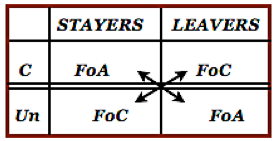
stay/leaveAll these types can be generally divided into Leavers & Stayers (See Post).
🤠 Leavers are terrified of real, deep, long-term commitment, emotional & practical.
They may be avoiders & isolators, OR always needing to be ‘with’ someone.
So they keep moving to new partners, or if they stick around for any length of time, always have ‘one foot out the door’ emotionally

🤗 Most Stayers, as many of us know, are attached from Fear of Abandonment, rather than as equals, from self-esteem & free choice.
REMEMBER: Wounded Stayers always pick wounded Leavers, because of their own (dis-owned) fear of commitment!

NEXT: Partner abuse