ACoAs & PROCRASTINATION (Part 5)

make notes I CAN GET THINGS DONE –
& feel good about it!

PREVIOUS: Putting things off #4


SITE: Overcoming Procrastination

BOOK: “Willpower: Rediscovering the Greatest Human Strength” by John Tierney, New York Times science writer, & psychologist Roy F. Baumeister.
An unconventional “self-help” book that, much like Timothy Wilson’s ‘Redirect’, grounds its insights & advice in 30 yrs of serious academic research into willfulness & self-control. While the book is fascinating in general, its 3rd chapter “A Brief History of the To-Do List, From God to Drew Carey,” is particularly interesting.

5. BOTTOM LINE
“WHY BOTHER?” underlies all our indecision & procrastination. We don’t take genuine care of ourselves, no matter how busy or cocky we seem to others. On a deep level we’re paralyzed by:
a. Not knowing or having access to our healthy True Self, so we believe we don’t know what we want or like, nor what our rights are!

b. Not being allowed to be our own internal motivator – so our only reason to take actions has to come from outside. We have to use family, a boss, teacher, a cause, religion, a career, friends & lover relationships, AND ultimately our terror of abandonment & punishment to push ourselves. Left to our own devices, we just collapse inward

c.
Our Internal Conflicts:conflict
• losing someone, being hurt or punished vs. feeling ‘safe’ (even if that safety is an illusion or self-destructive)
• WIC & PP vs. the Healthy UNIT
• obeying vs. disobeying the Toxic Rules
• old patterns vs. new ways of doing things
• what we want vs. what we’re ‘supposed’ to be, do, think, feel

d. Double messages, originally forced on us by one or more adults, we had no choice but to internalize the resulting Double Binds* (simultaneous but opposing demands, with a penalty for whichever one we can’t fulfill).
EXP:
• As kids they expected us to do for them (which may still be going on with an elderly parent), taking advantage of us to be their parent substitute – using hints, guilt, shaming, manipulation, demands, threats…. AND were angry / abusive if we did nothing (the penalty)

• BUT THEN were totally dissatisfied with & critical of (the penalty) whatever we did do for them, no matter how much effort we put in, what it cost us, what we had to sacrifice, how clever we were at it….

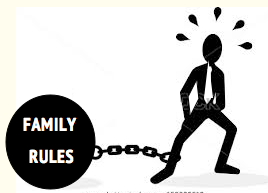
*EITHER WAY we were/are punished. If they’re still live we compulsively keep trying – to please them,chained to rules over & over. If they’re not around anymore we often find some other needy, critical person to satisfy – always with the same impossible, painful results!
YES, we’re addicted to the rejection, while maintaining the illusion that we have the power to change them, if only we try hard enough, long enough!

Ultimately, we stopped trying – but only for ourselves, because:
• we’re still waiting for them to approve of us, & give us permission to have a life of our own life (free us of their bondage because we don’t believe we can do it ourselves!)
• we’re convinced that if we failed with them (the family, also school, religion), it’s inevitably that we’ll fail with everything & everyone else, so there’s no point in trying
• we’re waiting for someone – anyone – to come & rescue us so we don’t ever have to be our own parent!

6. FACING our INNER REACTIONS
• Unfortunately, delaying inevitable responsibilities (as well as ones we’ve taken on voluntarily) creates endless obsession & self-recrimination. “”I’m just lazy by nature”, “I can’t do anything right” , “I’ll just mess it up – again” ….procratination

So why would we rather worry ourselves sick than ‘just do it’?
• we SAY it’s just a habit – but it’s really our self-hate
• we’re used to longing for things, rather than having them
• we’re waiting to be taken care of
• we think we don’t know how, even tho we actually do
• staying loyal to the family by copying how those adults ‘handled’ daily actions & problems
• we’re not allowed to do things easily because suffering is the norm (if it’s too easy it doesn’t count)

NEXT: Procrastination #6
ACoAs & PROCRASTINATION (Part 3)

mananaMAÑANA, MAÑANA
I want to, but just can’t get going!

PREVIOUS: “Putting things off” Part 2

POST:Why are you Stuck?”


2. NOW we put things off because of: ❓Feelings  // ❓ Knowledge
✳️ ULTIMATELY – we put things off :
a. so we won’t feel so alone – that inner loneliness of not having nurturing parents growing up! Being our own caretaker, being competent – even in small things – is an emotional reminder of how terribly alone we always felt as kids – no one to guide (only bully), no one to comfort (only control), no one to encourage (only shame)…. inner aloneness

• Instead of doing something positive, all that wasted time spent worrying, obsessing about things we’re not getting done actually serves a purpose for the WIC : it fills up the emptiness inside – where a good parent should be – the Inner Supporters we never had (early abandonment).

EXP: Pre-Recovery, Tina needed to replace a knob for her radio that had fallen off & was lost. She knew she had the manufacturer’s purchase list in her files, but felt a general lethargy about taking the action = all of 5 minutes to find, make the call & order the tiny part. It was several months before she did this simple task.

• In the mean time Tina had to turn the radio on & off by awkwardly using 2 fingers on the sound stub. When the part arrived, in a little pouch, it sat on her night table several more weeks. Eventually she ‘faced’ the great task of taking the knob out of the package & clicking it into place = all of 1 minute!

b. because we have a deep (usually unacknowledged) feeling of hopelessness. After all – the WIC believes that our actions are supposed to get us the love & attention we’re always craved, specifically from our parents (dead or alive!). The Child’s logic says – “since they hurt me & hated me, it has to be my fault, so I have to find a way to fix it.”

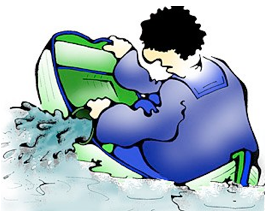
But no matter how hard we work at being the perfect son or daughter, we rarely achieve this wish. So eventually drowningtaking actions gets harder & harder. Scapegoat & Lost Child ACoAs give up trying a lot sooner than Heroes & Mascots, but they never give up wanting to be loved & accepted! They just pretend they don’t care!

c. we feel powerless to have any effect on our environment (being efficacious). We could never get our parents (& sometimes siblings) to notice us, listen to us, take us seriously, consider or feelings & needs. So why would we be able to influence anyone else in the world? If we have no ability to influence, then why even try to DO anything?

3. WHAT makes it HARD to act
a. Internal FEAR of —
• not doing everything Perfectly (a form of S-H)
• not knowing how to do something (even tho we’re actually very
smart, clever, creative, knowledgeable)
• not knowing what to say when challenged or attacked
• looking weak, needy, incompetent, lazy, stupid…..
• having to stand up for ourselvesstandup
• making the ‘wrong’ choice, when having several options, or many demands on us at the same time
• having to feel the loneliness & pain of our original abandonment

b. External FEAR of —
• getting disappointing, hurting or angering someone
• being judged harshly (the way we do to ourselves)
• asking for help when we really need it
• having to deal with difficult people
• being interrupted & lose our train of thought /activity
• having to make everyone else happy (not be in pain) but resenting it

These can show up as:
• Not being able to decide what to do first, when we have several options, or what to do at all (like with free time)
Starting things (refinishing a pc. of furniture, art work, a book, even relationships…) but never / rarely finishing anything – IF for ourselves
• Can’t motivate ourselves – to have a life of our own, as in following our dreams, leaving bad relationships, moving to a better location….!

NEXT: Procrastination  Part 4

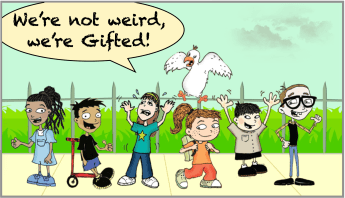
Gifted Children – Types (Part 1)

WE WANT TO UNDERSTAND
our child & help her/him blossom

PREVIOUS:
 Multiple Intellig. #3e

SITEs: “Characteristics & Behaviors of the Gifted (excellent)

12 Lessons about GIFTED KIDS from MATILDA

BOOK: “The Drama of the Gifted Child”~ Alice Miller (Comments)

UNIQUENESS
Parents know that their children are different from each other – but not all are aware of it consciously. We can tell this by how differently they treat each child – because of birth order, gender, inborn characteristics, & the Type most like each parent.

Healthy
:
In reasonably functional homes parents notice & respond appropriately of the variations in their children’s personalities. While trying to be fair & balances, they form their relationships & type of guidance based on what’s best suited to each child’s style.

Unhealthy: Damaged parents don’t even try to be fair or balanced with their various children. Instead they ONLY use those existing differences in the service of the family dis-ease & their own sick personal needs – especially the very smart & perceptive children, who are either:

a
. scapegoated in order to dis-empower them because their sensitivity & intelligence is a threat to maintaining the abusive structure, & so are systematically destroyed, OR
b. their strength & cleverness is used to take care of everyone else, while the child’s needs are neglected & negated. OR both.

ACoAs: Even though we are in fact quite smart – to have figured out how to survive so much chaos & cruelty – we don’t know who we are inside. So it’s not surprising that we seem oblivious to fundamental differences in the personalities of people we meet or live with. We act as if they are all the same – but more specifically – the same as us (symbiosis).

This is the crux of our emotional & psychological blindness: Our WIC narcissistically wants everyone to be a carbon copy of ourselves, as if that would validate us & give us permission to be ourselves. It’s the only way it thinks it can be safe.

▶︎ Studying the various Styles of children & adults allows us to distinguish ourselves from others, & be better able to interact with them based on who they are.

RECOVERY: But first we need to find our who we truly are (via our inventories, plus mirroring & validation from others) to get comfortable with ourselves, so that it’s OK to see who other people are, without it threatening us. Another irony – the more we can do that the safer we actually feel!

REVIEW
: As listed in many other posts – there are a number of ways to find out who we are, such as: Al-anon, Dream Interpretation, Enneagram, Journaling,  Myers-Briggs Inventory, MMPI, Multiple Intelligences,  Personality tests, Prayer & Meditation, Psychotherapy, Numerology & Astrology, 2-handed Inner Child dialogues, Trauma Release body work…..

For ACoAs – all these tools are needed in various combinations in oder to form a rounded picture of our Inner Self, since we are complex beings and because our upbringing gave us a very distorted view of ourselves.

Re. very bright children – the next 2 posts list the categories drawn from many year of observation by George Betts & Maureen Neihart (Davidson Institute for Talent Development), based on Howard Gadner’s 1983 proposed Multiple Intelligences.

Re. this List (Part 2 & 3) : As with other kinds of descriptions, a child may be a combination of 2 or more, & their Type will develop with time as they grow. Healthy parents will want to stay aware of their gifted child’s progress, to keep up with changes needed to give practical help & emotional support.

NOTE: Some Gifted Children have hidden learning disabilities that often go undiscovered, fearing ridicule & the ignorance of others. Their cleverness allows G&Ts to compensate for problems in their early years. Untreated, eventually it becomes harder & harder for them to excel, which can lead to behavior problems, depression & giving up.

NEXT: Gifted Children (Part 2)

SAYINGS that MISREPRESENT (Part 3)

I’M NOT SURE –
what to ask for!

PREVIOUS: SAYINGS…  (#3)


REVIEW Intro in Part 1 

7. “Be careful what you ask for – you may get it”
❤️ YES – said as a warning
if you’re superstitious, self-destructive, have a habit of choosing badly….

GROWTH : There’s a different YES – not as a negative – but can be stressful at first. This is when we determine to make a positive change in our life, & perhaps ask HP for help – to be released from a bad relationship & find a good one, be provided with a new job/career, to live in a bigger, safer, more suitable location …..

And then it comes our way, not magically but because we did the foot-work and were in the right place at the right time.
BUT – if we’re not fully prepared to receive these blessings, we can feel uncomfortable, scared, unworthy….
That’s OK. If we ride it out & get validation from the right people, eventually we’ll be able to relax into it.

💜 NO – As ACoAs, we don’t want to be so ‘careful’ that we don’t ask, since many of us have a poverty/deprivation approach to life. It’s imperative we give ourselves permission to ask for what we NEED, first & foremost. This requires knowing who we are + knowing what our human rights are + being able to deal with the risk of not getting.

Also it requires that we never go to people who have already proven – a hundred times over – that they’re not capable or willing.
THEN we can begin, slowly, to ask for bigger & better things, healthy things, fun things….. and when we get them – take them in, be happy, be grateful. Enjoy!

8. “A good beginning makes a good ending”
💜 NO –
in most instances for ACoAs before Recovery. If we start by marrying an alcoholic &/or other addict, it’s for-sure going to cause years, even decades of great pain. It’s not uncommon for these to end with a bang.
OR – if we enthusiastically start an unsuitable job, try to do too many things at once, idealize a new partner, be great caretaker….. it’s likely to end in disappointment, frustration, exhaustion & rage

OR – if we start a good thing, such as exercising, a diet, an advanced degree, a recovery book, a 12-Step program or therapy…. all with the best of intentions, but it goes against our Toxic Rules, it’ll peeter out with a whimper. (“Anxiety & T.E.A.” ).

❤️ YES – if we pick the right kind of job/careers, or healthy & suited-to-us friends, mates, therapist, doctors….. then it’s likely that a good beginning would predict at least a neutral if not a good ending – when appropriate or necessary.

9. “Forgive yourself
❤️YES for harmful things you did as a result of your damage
💜 NO for being damaged in the first place!
POST: “Outgrowing Co-Dependent Niceness #6a

10. “Everything that has happened to me is OK because it’s made me the person I am today”.
There are a couple of ways this is wrong. Yes the things that happened in childhood naturally molded us, & for some people that was beneficial.

BUT for ACoAs, saying that what happened to us was OK – is cruel. Was it OK that you were beaten all the time? That you had to take care of everyone but not yourself? That you were mind-f–ed, punished for having emotions? That you were molested, raped, neglected, starved???? 💜NO!
If some or all of these were part of your early years, then all they accomplished was to form a False Self, which we mistakenly believe is who we are. (Our Wounded Inner Child

All the horrifying things that happened to us made us who are today – all right!  – into frightened, self-hating, over-working, ego-less wrecks.
But anyone in FoO Recovery knows that our healing work is to strip away the layers of defenses (self-destructive messages) to get to the person we actually are inside & would have been a long time ago – without the abuse!! (POST: “They did the best they could”)

NEXT: Sayings #4

SAYINGS that MISREPRESENT (Part 2)


WE KEEP PASSING ON – half correct ‘helpfulness’

PREVIOUS: SAYINGS… (#1)

REVIEW Intro in Part 1
3. “I don’t have to be perfect.
What’s wrong with this statement?
💜 NO – Unfortunately, people in Recovery who say this actually consider it a sign of growth, but is in fact one of those sneaky ways our ‘damage’ keeps us hooked. Why? Because:
It implies we COULD be perfect, we just don’t have to be. NOT true!

No one can be perfect except God. So, what is true & accurate is that “Humans are not perfect, & I am human, so I can’t be perfect!” That’s normal. To think otherwise is arrogant. We can only do the very best of our ability given where we are in our life-progress right now.
It means that “To err is human”,  so we must accept the reality of having limitations. This does not minimize our accomplishments or gifts! We can say: ‘There’s nothing wrong with being imperfect, because it’s a universal Truth”

4. “Feelings aren’t facts” is 💜 not about our emotions, as most people assume. The confusion comes from the reality that we use the word ‘feeling’ in 3 completely different ways: As physical sensations, as emotions AND as thoughts.  See POST

5. “The way you do one thing is the way you do everything.”
💜 NO – It’s the word “EVERYTHING” that’s the problem. Taken literally, this is a blatant inaccuracy. Always keeping PMES in mind, how we do the various parts of our life depends on many factors.
It will depend on your fundamental personality, such as indicated by their MBTI or EnneaType – whether you’re more left or right-brained, (scientific vs artistic) Introvert vs Extrovert, AND above all what areas of childhood experiences were allowed & praised or ignored & punished.

So, I can be meticulous about how I dress & do my makeup, but sloppy about keeping my house orderly.  I can be a brilliant scholar & writer, but neglect my family. I can be very talented & dedicated to my native art form but irresponsible if I have to do office work…. .READ article – a Lesson
▶︎ None of us do everything the same way!

(❤️YES) However, if we take this phrase more psychologically, we can use this woman’s experience to indicate where we’re stuck. Each of us can have the same kind of ‘aha’ connections – between everyday ways of doing (or not doing) things & how they’re a reflection of our fears & resistance to change. Such discoveries help us remove blocks which will improve our life.

6. “If you hate a flaw in someone else it means you have that flaw yourself, otherwise you wouldn’t be upset by it”
💜 NO – the things that bother us the most in the present, that push our buttons or ‘trigger us’ are actually the abusive / neglectful things that were done to us by our family (& other perpetrators) over & over throughout our childhood.
They are wounds we need to clean out, but they are not our character defects.
EXP: I’m almost never late anywhere, but I will definitely be angry at anyone who’s consistently late to dates / appointments, because of all the times as a kid I was left waiting to be picked up by my drunk parent….

❤️ YES – Al-Anon says that when we point a finger at someone else, 3 fingers point back at us. So the statement is true to the degree that our denied ‘character defects’ get projected out onto others, & we don’t like what we see of ourselves in them. These flaws are the emotions, beliefs & behaviors (TEAs) we internalized from our family & society, rolled into our Negative Introject’s voice (PP).

BUT that is not who we are. It’s the False Self we developed in reaction to our unhealthy upbringing.
Even so, our True Self sneaks thru in spite of early brainwashing – sometimes indirectly, sometimes obviously.
EXP: a secret interest, types of addictions we chose, our career path, the way we dress, places we love to go….. So the goal is to find out who we really are & live it!

NEXT: Sayings #3

SAYINGS that MISREPRESENT (Part 1)

I WANT TO BE CLEAR
about what I’m saying

PREVIOUS: Growth for the Scapegoat #3

SITE:Use of Language (Many links re. the meaning of words & phrases)

INTRO
CONFUSING
: We all use short-cuts in daily conversation, which is understandable, but sometimes this can do us a disservice.
There are truisms we take for granted, phrases & sayings we repeat without considering what they really mean. We assume they are correct, & that they apply across the board  (the latter is B & W thinking – a CD).

It is said that the unconscious has no sense of humor & is completely literal. It’s the reason affirmations need to be said in the positive: “I have a right to be happy…. rather than “I don’t want to suffer any more”, and stated as if our goal had already happened; “I am making / have made $100,000 in sales this year”, rather than “I wish I could make….”.

Language is so important, not just to connect well with other people, but mainly to connect with ourselves in the healthiest possible way. The Inner Child is always listening to everything we say to others, & at the same time is listening to the Bad Parent voice shouting or whispering in the background.
It’s up to the UNIT (healthy adult & loving parent) to make sure our language is kind as well as accurate.

In terms of having good mental boundaries, “Accuracy is more important than agreement”. Just because everyone else believes or does something – doesn’t mean we have to. Don’t let others confuse you. Don’t follow the crowd!

☁︎ NOTE: How we use Language is as important in the quest for ‘sanity’ as other factors. The words & phrases we choose either help or hinder our progress.

1. “I deserve to / You deserve it…..”
The problem is the word ‘deserve’. Sounds OK? Well, in terms of actual meaning, ‘deserve’ refers to something given as a reward for acceptable, special or difficult behavior (as in: “Here is your A+ / medal / Oscar / gold watch…..you deserve it”). It’s something earned, which is OK, since it’s good to be recognized & honored for accomplishments.

So it’s a ❤️ YES if you’re rewarded for earning a living, getting a good grade, winning at a sport or climbing a mountain….

BUT it’s a definite 💜 NO when speaking of our rights as a person. We’re not supposed to deserve them. They’re ours no matter what. Using ‘deserve’ in the context of personal growth is misguided, because it implies that our worth is based on how much & how well we DO things.

This reinforces our difficult childhood, when we were only acceptable (if at all) based on the condition of how well we conformed to dysfunctional rules, instead of being loved unconditionally for just being here.

So, connecting “I deserve …..” with self-worth is a subtle distortion, disguised as Recovery, which ignores our BE-ing. The implied message is: “Produce or lose!” It sneakily tells us that we have to keep on earning validation & permission to have things which are in fact universal Human needs (love, freedom, respect, identity, guidance, dependability….), & therefore should not have to be struggled for.
This deep-rooted negative assumption is why we keep trying to be perfect & please everyone.

2. “Well, at least you’re alive, You’ll be just fine, You’re strong”
❤️YES – of course. We want to affirm life & let people know we care about their existence.
❤︎ However, without making this a NO, there is a way in which these phrases are a kind of insensitive throw-away. With many people it’s just a polite standard.

But if you just had a devastating loss & may even be injured – like a serious accident with a death, a full-scale house fire, a near drowning, a severe physical assault, a major illness…. You’re in pain, in mourning, in shock! so those comments are not comforting or uplifting.
Without looking for pity or to be rescued, some indication of empathy or sympathy would be welcome, rather than a glib pat on the head.

NEXT: Phrases #2

ACoAs being Scapegoated – GOWTH (Part 1)

empowerment

I CAN & AM OUTGROWING
this toxic victim role!

PREVIOUS: Scapegoating #6


FOR ALL ACoAs
Emotional damage: Scapegoats (SCs) are forced undeservedly to carry the family’s burden of disowned defects. They drown in the pain of those closest to them, & later in the collective pain of the society – with no one to comfort or understand them

In the process SCs are robbed of experiencing their own pain, denied the opportunity to learn how to contain, endure & grieve the suffering they’ve had to ignore & bury. (What is Scapegoat child abuse?)

No matter what our toxic family role was as kids, many of us tried to bring attention to the family’s dirty laundry,
so it would get corrected, but in most cases that never happened. (This is true even if parents or siblings eventually get into 12-step Programs, but still have not done their own FoO work).
We assumed that if we could make the adults own their emotional baggage, our torment would stop & life would be great.
And so we pushed & pushed – but it only got us more abuse.

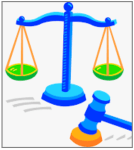
• ACoAs desperately want justice / fairness! Failing at this childhood goal, some continue trying to ‘fight injustice’ as adults, especially those of us who were scapegoated. We may become ‘expose´journalist, prosecuting attorneys, ‘church ladies’, public service advocates or whistle blowers….

However, most of us live more conventional lives, with little social or political clout. Even so, we compulsively insist that dishonest & hypocritical friends, relative, mates, bosses (& elderly parents)…. admit their flaws. It didn’t work at home, & rarely works in the adult world either. It still brings negative feedback & so another layer of abuse

TO HEAL
Ask: “Am I willing to do whatever it takes to give up my Scapegoat role?” That’s not always an easy Yes, but do-able. Remember, if you continue to be :
😠 belligerent,  demanding, controlling
-OR-
😔compliant, over-agreeable, too silent, submissive or unclear
THEN
👎🏽 it’s easier for others to end up avoiding, making fun of, manipulate or attacking you
That’s even true coming from people who are not usually scapegoaters!  It’s a normal human reacpull out toxic roletion toward someone acting out their WIC’s damage.
BUT – as you heal the inside, you’ll get better reactions from others! Who knew??

• Once you acknowledge this toxic role that was forced on you, & truly believe it was not your fault (Al-Anon‘s 3 As), you can observe how you perpetuate the syndrome, & slowly change the pattern

❇We can bear to re-feel our old pain IF & when we’re comforted, understood & treated with respect by one or more safe & caring people. Then apply that treatment to ourselves.

TO WORK ON 
a. BOUNDARIES: • Don’t expect others to respect your boundaries. You have to set the standard that’s right for you. “This ____ works for me, this ____ doesn’t, I want to do this, I don’t want to do that…..”

• Practice saying NO – at first in your head – a lot! Then try it out on small things you don’t like or don’t want to do – with people or situations that don’t feel TOO ‘dangerous’ if it doesn’t work out the way you hoped.

• Don’t over-give. Offer a little, & then see what & how much the other person can reciprocate. If the can only give 10%, you give only 10-15%, etc. It’s up to you to not get taken advantage of

b. PRESENTATION: ✦ Walk into every room with head held straight, look at people directly, don’t slouch, walk ‘confidently’ – as if you believe you have a right to be here – even if you don’t feekind peoplel like it.
✦ Dress appropriately for the situation you’re in
✦ Look around & notice what’s going on, notice who’s NOT safe (using your inner radar) ….

c. RELATIONSHIPS: Whenever possible, stay away from the people who originally set you up, or who still treat you as the black sheep in any situation.
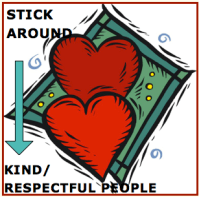
Look for people who are already kind, or at least respectful.
If you aren’t getting any of your needs met or are treated shabbily, you can walk away.
We MUST keep the focus on ourselves – owning & correcting our own character defects, AND appreciate & cherish our talents & skills.

NEXT: Scapegoated GROWTH #2

Enneagram Type 9 – Flaws in us ALL

type 9


PREVIOUS: All flaws – Type 8

IMPORTANT
Review explanation for each category in the INTRO post 
Associated Type is inside the ( )


Type 9 COWARDICE because of CDs (#6)
• re. self-assertion: believe it’s not OK to assert yourself in most situations. Instead, assume it’s best to not “make waves” or create controversy
• re. opinions: believe that either they don’t matter or that it is not worth the effort to express them
• re. conflict: think that it creates disharmony in relationships, & worry when someone is upset with you or when you’re upset with others

Type 9 FLATTERY (#2)
• Get into conversations with people you don’t like or are not interesting to you. Stay far longer than you’d like, while wondering how to continue so you won’t be considered rude
• Think of a way to draw out opinions from others, even when they’re boring, not knowledgeable or not very bright
• Think about how to offer time, energy & resources to someone you don’t think highly of or care about, just to be “nice” & avoid conflict

Type 9 LAZINESS (of mind or action) (#9)
• see only the positive side of your beliefs about people, situations, world events – as a way of maintaining harmony
• forget what matters to you, or what you truly think – as a way of not making waves or calling attention to yourself
• ignore or forget what you’re supposed to be doing (priorities) as a way to de-stress & not cause conflict – though it often creates more conflict later

Type 9 MOODINESS / melancholy (#4)
• believe that you don’t really matter
• see yourself as notable to stand up for yourself the way others can
• think you’re going to lose everything & everyone if you express your anger

Type 9 PLANNING – as compulsion (#7)
• about how not to plan
• how to not allow others to make demands or put pressure on you because of their plansambition

Type 9 RESENTMENT (#1)
• slow-burning angry thoughts when your opinions have not been taken seriously, & which has been building for a while
• think that others should be more open-minded & less judgmental when you’re in the middle of highly unbalanced thinking & actions
• ‘ugly’ thoughts that come up after you feel taken advantage of for being so nice & accommodating

Type 9 STINGINESS (#5)
• with expressing your ideas, believing what you have to say doesn’t matter as much as what others think
• with acknowledging your ambitions, seeing yourself as someone who’s humble & not competitive (even though it’s not always the case)
• with expressing anger, thinking that expressing your anger will damage or sever all relationships

Type 9 VANITY (#3)
• believe you’re above being ambitious
• see yourself above mere mortals who get reactive & angry
• think that when you muster the energy to state an honest opinion, it’s absolutely correct

Type 9 VENGEANCE (#8)
What sets you off is thinking someone has –
• chronically disrupted your peace & harmony
• been rude to you or others, particularly more than once
• ignored you, especially in a disrespectful way
• pressured, demanded or tried to control you
.

REACTIONS: try to keep others at a distance & from trying to control you, because of their plans
GROWTH: Ask “Am I taking a clear stand on issues, by expressing my thoughts & feelings directly, especially anger?”

ALSO
Type 9 DISTORTED LENS
Too loose lens (Type 9). Looking at things too openly & loosely means we miss the granulated nature of things (details). OR think that everything in our lens is equally important without enough distinctions
Lesson: When we observe in too broadly, we may see everything that’s there, but completely miss what’s most important.

Type 9 HANGING ON
Hang on to:
• being in positive resonance with others around you, at any cost
• not asserting or expressing yourself directly, & believe you don’t really matter as much as others

Why
: to keep a sense of ‘self as someone who’ can bring reconciliation / harmony to disruption, rapport to discord, & agreement where there’s disrespect &/or misunderstanding
Let go of: the belief that the way you matter is to not matter

Type 9 get OFF-BALANCE by:
• feeling angry but not being willing to express it
• being pressured or have a demand to do something, especially something you don’t want to dohelping?
• being put in the middle of an unresolvable conflict between others for an extended period

Type 9 MAYA (illusion)
Think you’re so consistently kind & nice, without recognizing that your under-experienced & unexpressed anger has painful consequences for self & others

Type 9 WORRY
“What do I really think? Why was I ignored? How can I get rid of the external tension? Where is my passion? Why didn’t I say what I really thought?”

NEXT: Ennea Humor #5

Enneagram Type 8 – Flaws in us ALL

type 8 

PREVIOUS: Type 7 flaws


IMPORTANT

Review explanation for each category in the INTRO post 
Associated Type is inside the ( )


Type 8 COWARDICE
because of Cognitive Distortions (#6)
• re. asking for support: believe that only the weak ask for support, & that others aren’t strong enough to support you anyway
• re. appearing weak: think that showing any vulnerability or anxiety is a chink in your armor, which others will take advantage of
• re. being completely honest: think that you’re always truthful, even though it’s not always true (nor possible)

Type 8 FLATTERY (#2)
• Think strategically about how to “win over” potential opponents, by flattering them & appealing to their ego or self-interest
• Think it’s better to not say something that could be construed as negative, so you use deletion as a form of flattery
• Act completely interested in someone, then abruptly or completely withdraw – a good hint you weren’t really interested in the first place

Type 8 LAZINESS – Indolence (#9)
You don’t seem indolent – in fact you often seem to be in touch with reality, but…like all of us, you can also:
• Obsess about whatever you lust after (8’s excess) as a way of avoiding feeling vulnerable
• Believe your ‘truth’ or sense of reality is accurate, so can be too lazy to think through all other possibilities that are valid
• Go into mental denial that something’s wrong, even your health

Type 8 MOODINESS (melancholy & resulting separation) (#4)
• Convinced there isn’t anyone who can or will truly support you
• Believe you can handle everything, big & small, so when you can’t, you can get lost in mental gloom & doom
• Think about the tremendous suffering & abuse in thvulnarablee world, which you believe you should be able to stop from happening

Type 8 PLANNING – as compulsion (#7)
• THINK about how to take charge
• how to not be taken advantage of
• how to get things under control
• how to expand you territory

Type 8 RESENTMENT (#1)
• be disgusted with & dismissive of someone who you believed in, when they – waste, misuse or not use – their potential
• confuse & obsess about something important you can’t make happen
• outraged when you’re not in control of something you believe you have a right to be in charge of

Type 8 STINGINESS (#5)
• about sharing power, because of assuming it’s limited. So if others have it, your own power is diminished
• about sharing your vulnerabilities, believing if you do, others will take advantage of it
• about your protectiveness, think you should & can protect others from abuse. But are highly selective about who you choose to ‘help’, & have trouble seeing when some of your behavior is abusive

Type 8 VANITY (#3)
• Think you’re stronger than other people
• Believe you can make happen anything you want to
• Think that your truth is The Truth

Type 8 VENGEANCE (#8)
What sets you off is thinking someone has –
• stepped on the down-trodden
• illegitimately challenged your authority
• not taken responsibility for their own negative behavior
• been untruthful and untrustworthy

REACTION: think about how to gain control & authority, as a way to dis-empower the other person and put them in their place
GROWTH: Ask “Am I sharing my sense of vulnerability, by showing my softer sides to both myself & others?”

ALSO
Type 8 DISTORTED LENS
One-dimensional – only seeing one version of reality
Lesson: A limited view of the truth/reality usually ignores all the other possibilities. Assuming we know exactly what’s happening doesn’t make it so, because Reality happens simultaneously as well as sequentially

Type 8 HANGING ON (Need to let go)
Hold on to: avenging wrongs done by others, being able to move mountains through your extraordinary will, energy & power, always being in command or in control
Why: To maintain your ‘sense of self as a person who’ is so strong you can protect anyone you choose, never showing weakness or vulnerability
Let go of: the belief you have to be big & strong all the time and under all circumstances

Type 8 get OFF-BALANCE by:
• someone standing up to you without backing down
• feeling highly vulnerable & not have the strength to hide itbe defended
• feeling exhausted and depleted

Type 8 MAYA (delusion)
Think that you don’t dare let your guard down because if you do, something terrible will happen to you. Most of the time – not.

Type 8 WORRY
“Who’s really strong enough to help or support me? What if I’m too strong? What if I’m not strong enough? What advantage will they take if I show my vulnerability? Why did they let me down?”

NEXT: All Flaws – Type 9

Enneagram Type 7 – Flaws in us ALL

type 7


PREVIOUS: Type 6 flaws

IMPORTANT
Review explanation for each category in the INTRO post 
Associated Type is inside the ( )


Type 7 COWARDICE
because of CDs (#6)
• re. pain: you think that all ‘pain’ is a waste of time, unnecessary & something you’re not equipped to deal with
• re. restraint: believe that freedom is the absence of any limits, & that no one has the right to restract you
• re. standing (sitting) still: see it as worthless or as an opening for a flood of despair, which you’re terrified of

Type 7 FLATTERY (#2)
• Think about a possible activity someone suggested merely because it keeps you all doing something, not because it’s a very good idea at all
• Re-frame a put-down by someone, making it seem kind & generous
• Think (often unconsciously) how to befriend authority figures with flattering attention, as a way to neutralize their potential ability to limit your freedom in any way

Type 7 LAZINESS / Indolence (#9)
You almost always seem to be energetic, but a person can be highly energetic & still be indolent
• Think about pleasure but rarely about pain, if ever
• Not notice what you physical sensations are telling you
• Re-frame potential negative information into a positive, as a way of not paying attention to what’s actually happening

patienceType 7 MOODINESS (melancholy & resulting separation) (#4)
• Wonder why, with all you joy, you don’t feel full inside
• Feel an emptiness inside you don’t know what to do about
• Think that even your mild feeling of pain or suffering are catastrophic (mainly because you’re so unused to them)

Type 7 PLANNING – as compulsion (#7)
• About positive possibilities: reacting immediately to stimuli (positive or negative), so your mind goes into a “hyper-gear” of associations, where one idea follows another in rapid-fire succession

Type 7 RESENTMENT (#1)
• If you feel restricted, think that no one has the right to do that to you
• Think negative thoughts about another when they cause you pain
• Rationalize away when having actually done something wrong, or something others may see as unacceptable or below standard

Type 7 STINGINESS (#5)
• with slowing down: Believe “down time” is boring & a waste
• with patience: Think that others are terribly slow because they can’t follow your line of thinking or mental pace
• with introspection: Don’t consider your interior world as fascinating or enjoyable as external experiences

Type 7 VANITY (#3)
• Think you’re not only quicker minded than others, but that you also catch on to new ideas better than most
• Believe that most of your ideas have merit
• See yourself as capable of enjoying life more than others do

Type 7 VENGEANCE (#8)
What sets you off is thinking someone has –
• tried to limit you
• not listened to or taken your ideas seriously
• been insincere and, therefore, can’t be trusted
• acted abusively (or is considering it) and needs to be stopped

REACTION: think about how to keep yourself & others safe from this person, which may include disarming them
GROWTH: Ask “Am I willing to deal with & stay focused on painful or difficult issues?”

ALSO
Type 7 DISTORTED LENS
Tainted color (Rosy) – looking through colored lenses makes everything seem brighter than it really is
Lesson: Everything is not nearly as rosy as we might want it to be, & just thinking / wishing doesn’t make it so!

Type 7 HANGING ON
Hold on to: being fun-loving, completely free, pleasure-oriented, & your unalterable right to avoid restrictions or painful experiences
Why: to maintain your ‘sense of self as a person who’ lives in a world where anything is possible, & there are no limits unless you create them
Let go of: the belief that freedom means having no limits

Type 7 get OFF-BALANCE by:
• anyone or anything bursting your bubble of enthusiasm
• feeling trapped or cornered in any way
• someone treating you as if you shouldn’t be taken seriouslyhole-in-soul

Type 7 MAYA (delusion)
Think that you’re forced to live forever with a deep hole inside, when in fact all you need to do is go inside – because you are there!

Type 7 WORRY
“Why do they want to bring me down? Why am I not taken as seriously as I desire? Are they trying to trap me? How can I fill that empty hole inside me? Why don’t I seem to feel as deeply as others when I do feel deeply about some things?”

NEXT: All flaws – Type 8