INTERNAL HIGH COST of Angry-niceness (Part 1)

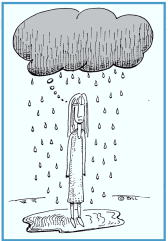
P-A wifeI’M SO STRESSED OUT
& no one will help me!

PREVIOUS: Co-dep angry-nice (#2a)

BOOK: “The Book of No:
250 Ways to Say It – & Mean It, & Stop People-Pleasing Forever”
Susan Newman, PhD (book review)


INTERNAL
 High COST of angry-niceness
✔︎ Abandoned – as an adult.
To totally depend on others (especially on narcissists) to be ‘seen’ & for a sense of worth – will always leave you disappointed & even more alone. Yes, we need other people to help, encourage & validate. But self-esteem is an inside job, a combination of taking care of our WIC, growing the UNIT & relying on a Higher Power to heal our wounds.

✔︎ Addicted – Constantly depriving ourselves of needs, wants, dreams, goals…. makes the hole-in-our-soul** bigger & bigger. But since nature abhors a vacuum, we try to satisfy the longing for comfort & security with any addiction that fits our personality type. And it’s often a witch’s brew, engaging in several all at once or sequentially. If we’re constantly over-giving, we may escape by over-spending, over-eating, over-working…..

✔︎ Beleaguered (surrounded by troubles), yours & everyone else, until you just want to scream, but that’s too unacceptable, so you swallow the anger & collapse inward. Always saying “I’m sorry”- for things that are not your fault OR beyond your control, tying to placate the monsters inside & out

✔︎ Burnt out – run yourself into the ground, a workhorse – or should we say ‘work like a dog’!? BY – try to do more than everyone else
– never ask for help (including spouse & kids)
–  have outrageous expectations of yourself (perfectionism)

✔︎ Confused – “I don’t know how to____, I can’t seem to ____ // Why don’t I get any better? Why am I not appreciated? What am doing wrong? Should I have ____? Why don’t I ever get picked for ____? // I’m not sure who to listen to, who to believe. Isn’t my family right? What if my husband /wife is right about me?”…..

beleaguered

✔︎ Desperate – your frantic efforts to get your needs met in round-about ways always end up in disappointment & disaster. Sadly, no matter how much effort you put in & how determined you are, just like you can’t fix others, they can never fix you. Even so, you keep PMES starving, but refuse to feed yourself. You just get more & more desperate, often to the point of being suicidal

✔︎ Distrustful – if others do actually like you, it doesn’t count because:
– you don’t believe you’re worthwhile
– you don’t trust your own judgement as to who is sincere & who isn’t
– you idealize others, BUT are secretly sure no one is safe
– you know you’re not emotionally honest, so assume they only like your fake front
– you don’t realize others can see your good qualities, even tho’ you can’t

✔︎ False Self – that you had to develop as child – continues to get reinforced & dominates our life.  Only focusing on your outsides, waiting to be rescued / taken care of guarantees disappointment, wastes decades of your life. You miss out on drive & spontaneity, ignoring opportunities to be creative, to use your natural gifts & to accept all aspects of yourself
✔︎ Frustrated – from never getting control over others to make them be what you want, & do what you need – so you can feel safe. From trying so hard to get it right but never ‘figuring it out’. From longing for the love you don’t think you deserve or have a right to. From living in the fantasy of how thing would be, if only……

✔︎ Gilt-ridden – any time you’re less than chipper, any time you have an angry thought about someone, any time you just can’t do something you think you should or what someone else wants, any time you take a minute out for yourself, anytime someone’s angry at you, any time you’re not perfect……

✔︎ Obsessive – endlessly ‘chewing the cud’, going ’round & ’round about:
– something you did or didn’t do, that you’re sure is going to make others turn away from you in anger or disgust – OR
– about what someone said that hurt, or what they didn’t do that you wanted….. wasting time & energy trying to figure out why?
SO you can fix it & not be abandoned!

NEXT:Internal Negatives #2
Co-Dep Angry-Nice UNDERPINNINGS (Part 1)

love-buyingscreen-shot-2017-02-24-at-12-13-36-pmTHEY WON’T LIKE ME
unless I try a lot harderrom : New-Life

PREVIOUS: Co-dep #1

SITEQs @ Co-dep
Anger
 
False beliefs @ being angry

✒︎ 7 ways to say NO (for People-pleases)

From New Life Spirit Recovery 
Codependency is much broader than simply being involved with a substance abuser. In fact, that is a symptom, not the actual problem at all.  Codependency reflects an inner brokenness & a foundation that is people-based rather that God-based. This foundation drives a codependent to find someone or something outside of themselves to meet their deepest emotional & spiritual needs. It puts people in the place of God.” (See their list of characteristics)

Co-dependence UNDERPINNINGS (all at the same time!)
YOU ARE:
• Hero – of your own story, but not really. Your sense of importance & value is totally dependent on what you can do for others, whether they want it or not, and on how others react to you. If they respond positively, you can breathe. If they don’t – even once – you feel like the rug’s been pulled out. So you have to keep running from the monster (the Introject), to make sure you always do the right thing – for others – but never for yourself

• Jelly – inside. A quivering mass of terror & self-flagellation, always waiting for the other shoe to drop! The least little thing that goes wrong – you blame yourself – whether others hurt your feelings, or heaven-forbid you don’t know something, or make even a tiny mistake – all reasons to condemn yourself

• Mind-reader – sure you know what everyone else is thinking  – about you. Your shame & S-H ‘knows’ it’s never anything good, so you never bother to actually find out by asking, lest your suspicions prove to be true, which you couldn’t bear

• Martyr – taking on the burdens of everyone else, carrying their suffering for them (as if you actually could!), assuming they are weak & you’re so much stronger

• Secret Superman/ Wonder-woman – able to leap tall buildings with your determination to march on alone in spite of all your hardships, proving your ability to save others, while never needing any help yourself

YOU HAVE:
• Antennae – that constantly swivel back & forth towards everyone else, overly- attuned to your assessment/assumption of other people’s emotions & needs – whether accurate or not. Your focus is for external approval, rather than internal self-appreciation & fulfillment. Left to your own devices, you feel lost, purposeless, even empty

• Brakes – like on a car – but only the emergency one, keeping you locked in place, stuck in the mud of your pain, so you can’t take care of yourself. You think if you stand perfectly still you’ll be safe, but all you’re doing is trading real freedom & enjoyment for fake-protection

• A Committee – a dangerous ’round’ table in your head of warring factions – most with opposing points of view, vying for the upper hand – AND all negative. They’re so loud, you can’t find your own voice, & they drive you crazy, because you’re trying to make sense of craziness!

• Distortions – of thinking (CDs) that warp the way you see & interpret the world – thru the haze of Toxic Rules, FoA & S-H. This includes a skewed idea of Higher Power/God. ACoAs automatically assume that “God is an Alcoholic Parent”. We either:
— hate the whole ‘spirituality’ issues because God didn’t rescue us from very real childhood trauma, or
— try to earn love & acceptance by good works (people-please HP) or
— assume the ‘universe’ is against us, no matter what we do, just like it was at home

NOTE: John Bradshaw (Psychotherapist & ex-priest)said  : “Before age 7 we deify our parents. After that we parentalize our deity”.

NEXT: Co-Dep UNDERPINNINGS  (#2)

Hidden ISSUES for Angry ‘Nice’ People (Part 1)

P-A issuesAS LONG AS I’M ‘GOOD’
I’ll be OK (I 
hope!)

PREVIOUS: Intro b

SITE: Danger of Suppressing Anger

QUOTE: Unexpressed emotions will never die. They are buried alive and will come forth later in uglier ways”.  Sigmund Freud

ISSUES for “Secretly angry” people
GREAT DESIRE
• to be loved  //  to not be attacked // to not be alone or lonely

BASIC FEARSsad girl
• of self-reflection //  being abandoned //  being punished

UNDERLYING ISSUES
• feel inadequate, not entitled, self-hating, shame-bound
• not allowed to be assertive or angry, always assume rejection

WELL-BEHAVED, But ALSO:
• controlling, critical, unforgiving // indirectly cruel, attacking, vengeful
• depressed, fussy, hard to please, moody, shy, thin-skinned, withdrawn

PAY-OFFS for using defenses (ie. Negative Benefits)
1. False Weakness (see Original LL)
a. Avoid facing childhood pain
• Connecting with the pain of past & current emotional injuries makes us feel vulnerable, out of control, small & helpless. Anger is energizing – but not allowed – so we end up in constant anxiety, & don’t know why

bCreate physical pain (real or not), as substitute for #a.
• If we’re workaholic (do, do, do) and not allowed to rest / relax / have fun, we can get sick to slow us down
suffer• If we’re not allowed to be given empathy, sympathy, emotional support…. then physical ailments become a way of eliciting some of it ‘legitimately’, since they are tangible & considered acceptable, while emotional hurts can’t be seen & are often considered a weakness or ‘dramatic’
• If we’re not allowed to be/feel taken care of or to find the right kind of help, practically or psychologically, then being weak, sick, incapacitated…. can get us some attention

cContinue being mistreated & abused

• Some of us are so used to being in the victim role – which we really were as kids – that we don’t want to give it up as adults, because it would create separation anxiety from the family & our bad-parent Introject.
Being a victim is about the ‘poor MEs’, staying emotionally immature, waiting to be taken care of. While there is a lot of anger under this position, it’s not supposed to show!

dGet approval for a role
STOIC:
Not letting ourselves experience & deal with jealousy, anger, sadness, fear…. is often incorrectly considered ‘strong’, & gently admired in many parts of our society, including the religious community.  They tells us it’s not OK (weak or un-spiritual) to admit to or show unpleasant ‘negative’ emotions, especially anger. It’s called  ‘loosing it, being emotional’. 
We’re even told that all emotions ‘cloud our judgment’.
Unfortunately obeying these dictates is harmful physically & psychologically  (CHART)

DOORMAT: Being such a ‘nice’ person that you have no opinions or boundaries may make it easier on some people to be around us – especially narcissists – & superficially satisfies our WIC’s desperation to never be abandoned by others, but it insures that we abandon ourself  (MORE….”Recovering Doormat”)

2. False Strength (See Reverse  LL)
a. Superiority
• Admired – as martyr, ‘good guy’, saint, ‘spiritual’
• One-up – needing others to be needy, sick, dependent, not successful

b. Controlling
• Emotional blackmail, to keep others fearful, attached to us
• Demand our own way (always) – ‘nice’ is only superficial
• Hamper or destroy ‘loved ones’  – if they try to be free, happy, themselves

c. Punishing / manipulating
• When we, in the guise of ‘good’ GIVER (G), continually help / rescue / dominate – another person, then the Receiver/ victim/ inferior / weaker (R) must:
— have unquestioning, blind loyalty, never object or question
— always provide affection & total attention, care-take

• If the R. objects, withdraws or rebels, then:
— Giver (G) sees R. as selfish, ungrateful, abusive
— G. will punish R. overtly or covertly, attacking or withdrawing

NEXT: SYMPTOMS of Hidden Anger (#1)

MULTIPLE Intelligences – Logic (Part 4)

music / mathI’M GOOD AT CALCULATING
the odds & ‘hearing’ patterns!

PREVIOUS:

 Multiple Is (Part 3)

SITE:World needs all kinds of music
~ TED talk by Temple Grandin

See ACRONYM page for abbrev.

MULTIPLE INTELLIGENCES (cont)
4. LINGUISTIC (word-smart)

5. LOGICAL-MATHEMATICAL (number/ reasoning-smart) – learn by reasoning things through.
This group has the ability to look for patterns, making connections between many & diverse pieces of information. They can then calculate & quantify that info to carry out complex mathematical operations, & create hypotheses or propositions. To foster creative problem solving they analyze, predict & manipulate real-world models.

They ask lots of questions, are always curious about natural events & the world around them, like to carry out studies & can handle long chains of reasoning to predict ‘local progressions’ (an increase in something). As young adults they’re drawn to arithmetic problems, strategy games & experiments. This is a less commonly seen Intelligence – since not everyone is automatically good at math, or they don’t give themselves the chance to develop their math-reasoning potential.
They:
math / logic — are better at budgeting, balancing the checkbook
— can reason their way into winning every argument
— comfortable w/ numbers, logic, reasoning, abstractions
— enjoy putting things in order, creating schedules
— generate and use abstract thoughts
— get frustrated by disorganization
— have a sense of cause & effect
— like reading about scientific discoveries
— like to solve mysteries & ask cosmic questions
— try to find logical solutions to problems
— use inductive & deductive logic
— use sequential reasoning skills
— usually good with computers & lots of gadgets
— will try to figure out how broken things work or untangle messes

ENJOY: calculating, experimenting, logic puzzles, questioning, science museums, things to explore and think about
LEARN: through logic games, investigations, mysteries. Need to learn & form broad concepts before dealing with details
TOOLS: pencil/paper, computers

CAREERS: accountant, programmer, detective, engineer, mathematician, researcher /scientist (MORE….)
INCREASE ability: books of logic games, knit a sweater, watch a video movie & stop it to predict what will happen. Learn computer programming languages, try critical-thinking activities, linear outlining, Piaget’s cognitive stretching exercises, science-fiction scenarios, logic puzzles. Article: “Your brain on numbers

TECH ideas: Excel, Numbers, Logo, create a survey with Survey Monkey
FAMOUS People: Albert Einstein, Niels Bohr, John Dewey, Stephen Hawking,
Leonhard Euler, Alan Turing (WWII computer genius)

* * * * * * * * * * * * * *
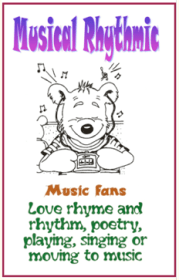
6. MUSICAL/RHYTHMIC (musical-smart) – think in rhythms & melodies.
This group can recognize, reflect on, create & reproduce music. It’s the capacity to discern pitch, rhythm, timbre & tone. As young adults they’re usually singing or drumming to themselves, very aware of sounds others may miss.
There’s a connection between music and emotions, & between music and math – which share thinking processes. Playing, singing, dancing or even listening to music can help the brain form or combine ideas in new ways.
Moving to music is beneficial, since music moves brain waves. At Karaoke, our brain anticipates songs on CD we’ve chosen, so “excitatory signals pass from the prefrontal cortex to the premotor cortex, preparing the body to act”.

Playing an instrument improves associative thinking, helping to choose our actions from a variety of options – which requires accessing stored info about a great many ‘sequences’ of activities (crystalline – Part 1a), allowing us to predict possible outcomes.
Music can be used to improve work productivity or change our mood – any time. Interestingly, some rhythms trigger brain enzymes to give an amazing feeling of well-being. Other tunes leave us punchy, unable to focus. (Different types of music produce.….)
They:MUSIC:Rhythm
— can read music, play a variety of instruments
— can tell if music is off-key or ‘off’ in other ways
— can naturally figure out how to play a tune on an instrument
— easily remember scores & melodies
— enjoy & respond to many types of music
— know the structure of songs to symphonies
— like to hum or sing when on their own
— may study better with music in the background
— more effected by noise & sound than others
— remembers info better if in rhyme or rhythm
— use all the sense to identify musical patterns

ENJOY: humming, listening, singing, tapping hands & feet, whistling
LEARN: by turning lessons into lyrics, speaking rhythmicall.
TOOLS: musical instruments, musical scores, multimedia

CAREERS: audio recording, disc jockey, composer, conductor, musical performer, (MORE….)
INCREASE ability: attend concerts, play an instrument, hum melodies, sing to iPod or with others. Listen to a wide variety of music, be quiet & listen to all sounds everywhere

TECH ideas: iMovie, GarageBand, Audacity, iTunes, iPod, Media Player
FAMOUS People: Beethoven, Mozart, Stevie Wonder, Joni Mitchell, Louis Armstrong, Senegalese musician Youssou N’dour, Yo-Yo Ma

NEXT: Multiple intelligences (Part 5)

ACoAs MANIPULATING Self & Others (Part 3c)

in your head PREVIOUS: Manipulation #3b

SITE: 8 Ways to spot Manipulators

See ACRONYM page for abbrev.


Manipulative TACTICS (cont.)
Foot-in-Door
Start by asking someone for a small favor they don’t mind doing, then when they’re in the middle of it, add on other things or ask for the big thing you really wanted – making it hard for them to say nofoot in door

Guilting
Telling a conscientious victim they don’t care enough, are too selfish or have it easy, to keep them in a self-doubting, anxious, submissive position. OR make someone feel bad that you don’t have qualities, people or things the way they do (you’re jealous /envious), so they’ll feel sorry & volunteer to help you

Judgmental – the (T) form of T.E.A.
— all the time about everything, which is narcissistic
— occasionally, when old abandonment terror is triggered by a person or situation, but you don’t recognize it’s a reminder of childhood neglect & abuse

Mirroring (negative)
Physically &/or verbally copying someone you want to influence, by using their same body language, intonation pattern, language, preferences… making them feel ‘seen’ – so then they’ll copy you (symbiosis)

Over-promising
Saying yes to anything asked of you even when you’re not interested or it doesn’t suit you, & you don’t have time anyway – just so you’ll be liked. You over-book & then forget or cancel at the last-minute

One up-One Down
a. Feel superior – morally better with more value as a person, rather than being better at certain things (not just having a higher IQ), in order one upto keep everyone away, & not acknowledge your need for connection, help, comfort….

b. Feel inferior, believing you’re worse than everyone else (weaker, dumber, less capable….)
— to stave off assumed inevitable abandonment, disappointment AND
— obeying Toxic Rules “I am unlovable” / “I’m too much trouble” / “Don’t have needs”….
— living in deprivation, trying to get others to meet your needs

c. Fake humility – hiding the compulsion to dominate – by being the servant, helper, assistant, perhaps to serve a ‘higher cause’…. while controlling things from the wings

People-Pleasing / Perfectionism
Constantly trying to be or do whatever others want, or what you think they need/want, going above & beyond what’s called for or expected. Make yourself indispensable so they’ll approve of you & never ‘go way‘

Victim
Put a burden on others to be the ‘good parents’ you never had, BY:
• dismissing your own ‘voice’ & not taking up enough spacevictim
• going along, suffering in silence – but others can feel it
• give up what you want to avoid conflict, but are quietly resentful
• don’t ask questions, but always trying to explain or defend yourself
• talk in indirect or convoluted ways, instead of declarative statements
• withholding, as a form of silent disapproval
• believing you have nothing worthwhile to contribute……

COMBINED Manipulation of Self & Others
Taking on the Scapegoat Role as a child (NOT the same as being scapegoated by the family). It’s the child’s attempt to spare the obvious narcissist / addict their pain, by taking it on & acting it out for them – assuming this will alleviate the heaviness it can feel in others.
It’s a way the child denies admitting that the abandoning adults are as sick as they are & not willing to change

This manipulative tactic (usually unconscious) continues into adulthood – the ACoAs continuing to sacrifice their own needs, good name & protect familystanding in life – if it will make others ‘feel better’ by avoiding responsibility for their own damage

On one level this Role is genuinely taken on in the name of love, but at a deeper level it’s about the fear of losing connection, the ultimate childhood terror.
Unfortunately, the sacrifice is never successful or unappreciated, only being disrespected & dismissed. So when the Scapegoat is treated badly or ignored, this ACoA gets very angry at anyone they’ve been trying to ‘save’.

Adult Scapegoats only focus on being rejected or & invisible, left outfeeling unloved, excluded, attacked – BUT not seeing that they
— allow themselves to be used & toyed with by unscrupulous types
— experience real or imagined slights as a direct rejection, as if others are focus on them, or hell-bent on hurting them
— perpetuate childhood environment of fear, loneliness & abandonment BY not having a strong core identity based on self-esteem & self-respect.

NEXT: Manipulation #4a

ACoAs MANIPULATING Self & Others (Part 3b)

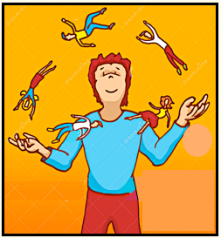
juggling peoplePREVIOUS: Manipulation #3a

SITEs:☀︎ 20 Subtle Signs of Workplace Bullying
☀︎ “Workplace Danger – Manipulative People”

BOOK: 30 COVERT ways of M. ~ Adelyn Birch


FORMS of Manipulation (cont.)
1. Direct / Overt (Part 3a)

2. Indirect / Covert
A more subtle form, tactics (Evasion, Diversion, Blame….) are effective because they carefully hide aggressive & exploitative intentions, while putting the other person unconsciously on the defensive.
— Sometimes all it takes is a particular facial expression, non-verbal gesture, glance, glare, stare, or shrug
— Sometimes the manipulator will send a carefully veiled “Now there’ll be some hell to pay!” message without making any kind of direct threat

ACoAs
As stated in Part 1, M is an attempt at getting our needs met, but only indirectly, because we’re not allowed to HAVE them (shame is what we feel about each need never provided by our family). Back then, trying to get anything we needed always ended in being made fun of, punished or completely ignored.
BUT since needs are NORMAL & therefore don’t go away, we look for alternative ways of meeting them, while still obeying the toxic rules – putting ourselves in a double bind.

Manipulative TACTICS
Avoid Asking
Expecting others to guess what you need & then provide it. When they don’t – not being mind-readers – you feel very angry, get depressed & assume the ‘universe’ doesn’t want you to have the needs

Bribery
First you reward someone by identifying what they want/need & give it to them, acting like a ‘genuinely’ nice person. Then later pleasantly suggest you’d like something in return. They’ll usually feel compelled to return the favor

Bugging / Pushypushy
At the other extreme, always nagging to get what you want, repeating the question, requesting or demanding, insisting…. to wear others down until they finally give in. Can’t tolerate NO as an answer, & constantly over-step boundaries

Charm / Good Looks
Use your best assets to encourage people to favor you over others (work, dating, purchasing…) by being positive, cheerful, self-confident, well-groomed, with approachable body language – to make them feel special for having your full attention

Conditional Approval & ‘love’
You’re kind, pleasant, helpful – but only if they’re just like you. Want what they can do for you, let you control them…. But get angry or withholding if they disagree, set limits on you, stand up for themselves, won’t go along with your agenda….

Dishonest watching & listening
Pay close attention to what people tell you about themselves & their body language, figuring out their psychological/emotional makeup, in order to identify weakness or strength you can exploit

Distorting Facts
Manipulate info & reality by making it seem better than it is. OR leave out crucial info in an explanation, use info against the person, overwhelm with facts & statistic, lie, make excuses, exaggerate, act like you know everything…. to avoid responsibility & feel more powerful

double-BDouble-Binding
Keep someone who wants to please you in bondage (paralyzed) by subtly giving opposing messages they must obey or accept without question, to keep them confused & off balance (EXP: smile while insulting)

Exploiting
Use other people’s time, energy, money, talents – only for your benefit – by convincing them it’s for a good cause, will make them feel good, will provide ‘spiritual benefits/rewards…. or by promising some big reward while ignoring their rights & interests

Fake Emotions
Use contrived emotions to get what you want & have the upper hand, by acting angry to scare someone, solicitous to soften them, caring to keep their attention, weak & needy to get taken care of, insulted to create guilt…..fear & relief

Fear-&-Relief
To get someone to do what you want but is resisting, you artificially create sudden mood swings, by first working on their fear (disapproval, threats to leave, withhold money….). When when they’re weakened & disarmed, ready to give in – you stop the pressure, tell them it’s OK…. which makes them so relieved they’ll do whatever you want

Flattering / Kissing up
Making others feel good by complementing them, acting totally interested in their lives…. so they’ll want to please you. It makes it hard for them to say NO, even against their better judgement, so you won’t be disappointed or think badly of them

NEXT: Manipulation #3c

OUR SENSES & Learning – Smell (#3b)

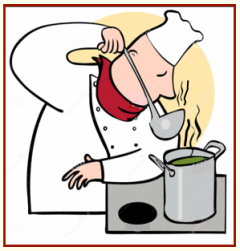
chef smelling soup

PREVIOUS: Olfactory Learners (#2d)

SITEs: The World Though our Senses

Learning Styles Affects How You Play GOLF


OLFACTORY Learning

According to Dr. Ira Greene, of “The Nose Knows: A Nasal-Based Curriculum Development Guide”, there are 3 distinct types of nasal learners:, which need to be treated differently: goal-oriented, activity-oriented & learning-oriented.

EXP
: “…while activity & goal oriented learners may be sufficiently motivated by the prospect of an olfactory reward at the end of a task, the learning-oriented students needs something more to sustain their interest.”

Few people appreciate the range of info provided by the sense of smell.
Anosmia – the clinical term for the inability to smell – is a little-known & invisible but serious problem. We do notice it’s loss when we have a cold or allergies, but rarely consider what would happen if it disappeared altogether. Olfaction is a vulnerable sense, & smell disorders or total loss are more common than realized. (“A Sense of Hope” – Monell Center. PA)  (SMELLS: Consumer preferences)

smell & imagesResearch also shows that smell has a unique relationship to words & images. Scents are normally experienced as purely visceral, subjective experiences, hard to put into words, yet writers often describe them.

The “Proust Effect” – from Marcel Proust’s influential multi-volume novel “In Search of Lost Time” – names smell’s ability to trigger involuntary memories, illustrating literature’s crucial role in shaping our understanding of how smell works.

Since 2000, Scholastic Scents in Cambridge, MA. has been working to fill the void in materials geared towards nasal learners, by providing scratch-and-sniff textbooks & variety of educational packets such as the Oregon Trail fragrance set, & “Speak and Smell” language workshops.  (Scented Children’s books)

L. Stanley’s article “What does purple smell like?” (Child-Ed) describes one of the few studies to examine smell as part of a multi-sensory approach to helping children learn – by investigating & discovering the world around them.happy grapes

EXP
: In one study, teachers of 2-year-olds matched colors to familiar objects, like purple with the smell & taste of grapes, & then played the blindfold game “Smell the Color.” The children enthusiastically & successfully learned those colors presented, & paid closer attention to other colors in their environment.

L. Burmark, in “They Snooze, You Lose: The Educator’s Guide to Successful Presentations “, recommends going beyond auditory or visual forms to more engaging lessons to keep students interested. Studies show that multi-media presentations increase in effectiveness by 300%.

Burmark is particularly interested in incorporating smell. A powerful tool for gathering info, it’s strongly related to memory & emotion, with 75% of emotional responses being based on smell. This connection makes it possible to use scents for memory improvement

In July 2003, the Summer School on HUMAN OLFACTION was held in Dresden, Germany.
Its aim was to provide participants with up-to-date info on various aspects of human chemical senses, through lectures, practical demonstrations & experiments carried out by participants.

EXP: 6 Vehicle Warning SMELLS  (from the Car Care Council, in MD.)
1. Burning Carpet – often a sign of brake trouble, a serious safety hazard, noticeable even under normal driving conditions

2. Burnt rubber – could mean slipping drive belts, or a misplaced loose hoses that could be rubbing against rotating accessory drive pulleys.
Note: don’t reach in if the engine is hot

3. Gasoline – likely sign of a gas leak, possibly from a fuel injector line, or the fuel tank. Check right away, as any gas leakage is a potential fire hazard

4. Hot oil – could mean oil is leaking on to the exhaust system. Signs will be oil on the pavement, or smoke from the engine area

5. Rotten eggs – could mean the catalytic converter is not properly converting hydrogen sulfide into sulfur dioxide in the exhaust. Can cause converter to overload & break down.

6. Syrup – could be a sign the car is leaking engine coolant from some component of the cooling system. Note – don’t open radiator cap when hot

NEXT: Taste (Part 2f)

OUR SENSES & LEARNING – Touch (#2c)

kinestheric learningPREVIOUS: Auditory (#4b)

SITEs: Learning Style Preferences & ESL Students (Study)

6 important things you should know about how your brain learns


KINESTHETIC  (somatic/physical actions) Learning

About 35% of children &  5 – 15% of Adults learn most easily while moving (kinesthetic) or handling (tactile) things, which helps them understand the world around them.
Physical movement: The Cerebellum & motor cortex, at the back of the frontal lobe, are mainly in charge of much of the body’s activity
Kinesthetic thought: lets us experience bodily sensations, feelings & emotions, which come from immediate experience, memories or imagined situations

“Children enter kindergarten as kinesthetic/ tactile learners, moving & touching everything as they go. By 2nd or 3rd grade, some have become visual learners. During the late elementary years, others – mainly girls – become auditory learners, while many males keep their kinesthetic/ tactile strengths throughout their lives.” Rita Stafford and Kenneth J. Dunn; Allyn and Bacon, 1993)

antsy in schoolWhen young, these learners are life’s little wiggle worms, often mis-diagnosed with ADD or ADHD.
They’re smart & eager to learn, but first need their attention captured. Then their energy can be directed by drawing on their natural curiosity & offered hand-on activities.
They do best when they have something in front of them they can physically touch, and even better if they made it themselves.

They come to understand how to use their bodies & how to communicate with others by touch, most of which comes through feet & hands. So activities that focus on those body parts help them learn how to write, share their toys, button shirts, tie shoes, hold a fork…

Kinesthetic learners express themselves through movement, with the distinct ability to control the body’s actions & handle objects skillfully. Through interacting with the space around them, they are able to remember and process information, which allows for a good sense of balance & eye-hand co-ordination.

learn by doingDOING something active allows them to learn, which helps them stay focused & retain information. This can include taking note (an action), but use their own language to express what they’re hearing.

They need external stimulation, otherwise they may lose interest, preferring to think broadly before going in-depth. It doesn’t mean they act before thinking or are reckless, but that they understand things better by getting immersed in a situation or lesson, in order to evaluate facts for themselves.

Learning a physical skill by first visualizing the activity (dance, a sport, driving…. ) is known to be very successful.
EXP:
Focus on the sensations you would expect for each activity or experience. So, for a tack (turn) on a sailboat, feel the pressure against your hand as you turn the rudder & the tension lessening on the ropes. Feel the wind change to the other side, feel the thud as the sail swaps with the wind, feel the boat speed up as you start the new leg….

Phrases used by Kinesthetics :
” I can’t get a grip on this // Stay in touch // That doesn’t sit right with me // I have a good feeling about this // My gut is telling me // I get your drift….”

Re. INTUITION (Clear sensing)
 This is actually getting vibes in the body such as Tingles, goosebumps, electricity, lump in throat, tickle in ear….

Gut Instinct
(Clear knowing)
Harder to describe – more of a crystal clear ‘I just know!”, like a ring or ping, but coming from the belly rather than the mind. Not so thick or dense as many deliberate thoughts.

abuse muscle painNOTE: All experiences of physical, sexual, verbal & emotional abuse are stored in the body (muscles, organs, energy centers….), and need to be released in movement, taking & crying.
Such history can be from childhood battering &/or incest, domestic abuse, war-time trauma, severe physical-illness-treatments or accidents…..

The physical expression of stored pain (getting it out) is necessary for all learning types, but especially for Kinesthetics – using experiential modalities, such as
Core Energetics, Psychodrama,
Trauma release exercises……
ASLO: Some books & LINKS to many therapies

General KINESTHETIC Characteristics
Remember, you’re not going to identify with every characteristic. which will depend on other factors, such as mixing in other learning styles, education & basic personality.

kinestetic char
NEXT: SMELL (4d)

OUR SENSES & LEARNING – Vision (#2a)

visual learning
I GET MOST OF MY INFO
through my eyes

PREVIOUS: Sensory Learning #3

SITE: MANY links re learning
• “5 things to know about how the brain learns”

QUOTE: “To develop a complete mind, study the science of art and the art of science. Learn to see. Realize that everything connects to everything else.“ ~ Leonardo DaVinci

VISUAL Learning Style
According to Dr. David Sousa, 45% or more student in most American classrooms prefer to receive information visually. This includes pictures, video tapes & charts, as well as reading, because the interpretation of symbols translate into mental pictures (“How the Brain Learns”)

Our brains give preference to processing vision, compared to our other senses.
EXP: Imagine being in an open field. How far can you see? About 50 miles. How far can you hear? Maybe a mile or two. How about smell? 10-20 yards, assuming that the wind is not blowing. How about touch? Just an arm’s length. Taste? A couple of inches.

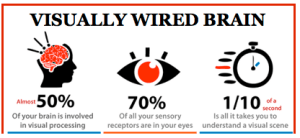
The Visual Cortex, in the Occipital Lobes, is the largest system in the human brain, responsible for higher-level processing or visual images. It’s at the back of the brain, above the cerebellum. It interprets info from visible light to build model of the world around the body. As the eyes gather information, the brain interprets & makes sense of what we take in. Both occipital & parietal lobes manage spatial orientation.

The eyes & the Visual Cortex form a massive parallel processor that provides the highest band-width channel into human cognitive centers. At the higher level of processing, perception & cognition are closely interrelated, which is the reason why the words “understanding & seeing’ are synonymous.” ~ Colin Ware (slide 17) attention span

The average human attention span is 8 seconds, & our brain processes visual images 60,000 times faster than a text, in roughly 1/10 of a second.

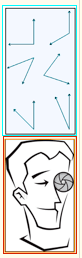
Hubel and Weisel showed that the primary visual cortex consists of cells responsive to both the simple & the complex features of whatever we’re seeing. Interestingly, most of these cells have a preference for one edges of an angle over another, called ‘orientation preference’, & to inputs from one eye over the other, called ‘ocular dominance’.
These 2 patterns (preference & dominance) are not fixed genetically, but develop from visual experience, mostly soon after birth.

80-90% of children use their eyes to learn about their world. They’re used to gathering information nearby (what can be touched) & at a distance (beyond arm’s reach). Visual stimulation helps to shape children’s minds in powerful ways.eye preference & dominance

Science tells us the neurons that handle visual processing make up about 30% of the brain’s cortex – more than double that of hearing & touch combined. Via this method we store both negative & positive impressions in the brain (images of AK-47s & beautiful waterfalls), at conscious & subconscious levels. All imprints have a deep & lasting effect on the way we learn & think.

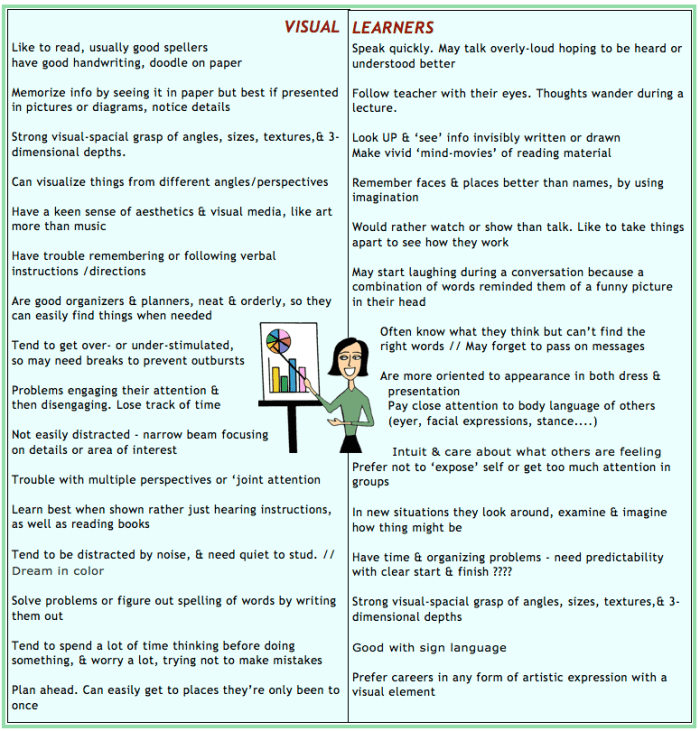
Most of our activities involve ‘seeing’, so the importance of this sense can easily be taken for granted, yet sight is crucial to learning. Visual learners take what is spoken or heard & make it into something they can see in their mind’s eye. They get the most out of visual aids, & put a lot of effort into observing / listening so they can turn info into notes, charts, graphs, pictures….

Re. INTUITION (Clear Seeing) Being able to visualize possible scenarios in the mind’s eye, as if recalling a memory or imagining an actual picture.

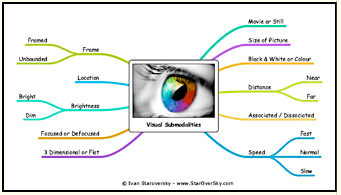
SOME general VISUAL Characteristics
KEEP IN MIND that whichever style is your preference you’re not going to identify with every single characteristic listed. That will depend on other factors, such as mixing in other learning styles with your primary one, your educational background and your native personality.visual Lern - charact
NEXT: Auditory Learners (Part 4b)

Procrastinators Anon TOOLS

putting it off 

PREVIOUS: RE-ORGANIZED pages


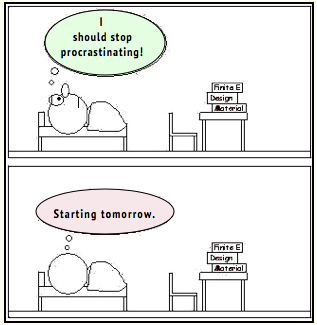
THESE TOOLS ARE GREAT.
I’ll try them later!

PREVIOUS: ACoAS & Procrastination (#5)

POSTS“ACoAs & Procrastination” / / “Weak Decision Styles

Procrastinators-Anonymous.org – “a fellowship of men and women who share their experience, strength and hope with each other that they may solve their common problem and help others to recover from chronic procrastination.”
TOOLS for RECOVERY
1. Break It Down: Break down projects into specific action steps; include preparation tasks in the breakdown.

2. Visualize: Plan what to do, then imagine yourself doing it. The more specific and vivid your visualization, the better. See yourself doing the task, and doing it well.

3. Ask Yourself Why: While you are visualizing doing the task, see if you can detect what it is about the task that feels odious to you, what uncomfortable emotions you are avoiding. Knowing what’s behind the avoidance can help you get past it – for example, address real problems or ignore irrational fears.

4. Focus on Long-Term Consequences: Procrastinators have a tendency to focus on short-term pleasure, and shut out awareness of long-term consequences. Remind yourself how panicked and awful you’ll feel if the task isn’t done, then imagine how good it will feel when the task is finished.

5. Avoid Time Binging: One reason procrastinators dread starting is that once they start they don’t let themselves stop. Plan to work on a task for a defined period of time, then set a timer. When the timer goes off, you’re done.

6. Use Small Blocks of Time: Procrastinators often have trouble doing tasks in incremental steps, and wait for big blocks of time that never come. When you have small blocks of time, use them to work on the task at hand.

7. Avoid Perfectionism: Procrastinators have a tendency to spend more time on a task than it warrants, so tasks that should be quick to do take an agonizingly long time. Notice this tendency and stop yourself. Some things require completion, not perfection.

8. Keep a Time Log: Increase your awareness of time by logging what you are doing throughout the day. This is a great diagnostic tool for discovering where your time went, and an excellent way to become better at estimating how long tasks take.

9. Develop Routines: To help structure your day and make a habit of things you always need to do, develop routines for what you do when you wake up, regular tasks of your workday, and what you need to do before going to bed.

10. Bookend Tasks and Time: Use the Bookending board on the P.A. Web site to check in throughout the day, or at the beginning or end of specific tasks you are dreading.

Please visit Procrastinators-Anonymous.org for more info.  Details are at the top of the Bookending board.  AS A REMINDER:

putting off cartoon
NEXT: WEAK Decision Styles, #1