OUR SENSES &LEARNING – Hearing (#2b)

auditury learningPREVIOUS: Visual (2a)

SITEs: Complex learning dismantles brain barriers

What’s my learning Style? – Auditory


AUDITORY (Aural) Learning

It’s estimated that about 30% of Americans prefer either listening or discussing/talking as the main way of receiving information, & retain up to 75% of what they hear. The Temporal Lobes handle aural content, the right lobe being especially important for music.

The human ear can detect pitch changes as small as 3 hundredths of 1% of the original frequency in some ranges. Some people have ‘perfect pitch’ – the ability to name any musical note heard or sung correctly, without help = to map a tone precisely on the musical scale without reference to an external standard

It’s estimated that less than 1 in 10,000 people have perfect pitch, but speakers of tonal languages like Vietnamese & Mandarin show remarkably precise absolute pitch when reading out lists of words, as pitch is an essential feature in conveying the meaning of words in tone languages.

Sound plays a crucial role for everyone when learning, but especially so for auditory learners. In a typically developing child, hearing & vision work in tandem, to take in information about things around them. This helps them absorb their environment better, providing another layer of understanding that sight alone can’t offer.

Like other skills, listening takes practice. Developing good listening habits helps children get important information from family, teachers & friends.
EXP: Using tapes with pictures, names & sounds are best. Children may know what an animal looks like, but also hearing the sound it makes allows they a fuller experience.lestening learners

As a group, strong auditory learners are somewhat difficult to describe.  Some learn best by listening, & some by talking, but most combine them, with strengths & weaknesses in each. This style is considered a difficult way to learn new material.

Auditory Listeners learn mainly by hearing. When listening to a new topic, or overhearing conversations – they focus on what’s being said, often remembering key words and phrases, directions & descriptions – in great detail. They may like to hear stories, or learn the context of a subject, while others may actually find off-topic background confusing.

Since listening requires more concentration than seeing, they’re usually slower at reading than other learners, preferring plays & dialogue to lengthy passages. Hearing an overview of a lesson is helpful, allowing them to better absorb subsequent info. Some auditory learners find it hard to listen & take notes, or to listen & watch something at the same time.
Also, some study better with ambient sounds (TV, music, people talking….) – to block out distraction, while others find noise breaks concentration.

audotory talkersAuditory Talkers need to discuss what they’re learning. They ask a lot of questions to solidify new info, & helps them pass it on to others. By discussing what they understand about something new, they form links between that & what they already know, clarifying their grasp of a topic.
Speaking also gives a chance to learn by listening – to themselves. When studying on their own they’ll move their lips or talk to themselves. Because of a fine-tuned ‘ear’ they may find learning a foreign language relatively easy.

Strong verbal skills allows them to express ideas clearly, carry on interesting conversations, have an appreciation for words & with a well-developed vocabulary. Auditory learners become skilled at interpreting info & reproducing it. This giving many a knack for deciphering the true meaning of someone’s words – from tone of voice, pitch, speed & other vocal nuances.

Speech patterns include phrases “I hear you // That clicks // That rings a bell // That sounds about right // It’s coming through loud and clear // Tune in to what I’m saying // That’s music to my ears…..”

Those with an Auditory Numerical Style understand numbers best if spoken or heard. They’ll say numbers to themselves when mentally figuring math problems, learning a phone number, or add 3 numbers together without writing them down – & then easily remember sequences later.

listen 7 studyAuditory learners often have Musical talents & like to work with sound – with a good sense of pitch & rhythm, hearing tones & individual notes.
Many can sing, play or at least identify musical instruments, find themselves humming or tapping a song or jingle, that pop into their head without prompting. Some music will invoke strong emotions in them.

EXP: Research shows that playing certain classical music while studying, such as a Baroque Largo, is highly beneficial. This is because its BPM (beats per minute) is the same as alpha brain waves, providing our most receptive & alert mental state. Also, waltzes have a BPM that are in tune with the natural rhythm of our body, creating positive mental energies & consciousness

Re. INTUITION (Clear hearing)
This is hearing in the mind’s ear as if remembering a sound (words, letters, music….), although sometimes it’s so strong you think it’s real.

General AUDITORY Characteristics
Regardless of which style you prefer, you’re not going to identify with every characteristic. That will depend on other factors, such as mixing in other learning styles, education & native personality

auditory characteristics

NEXT: Kinesthetic Learning (Part 4c)

OUR SENSES &LEARNING – Intro #1c

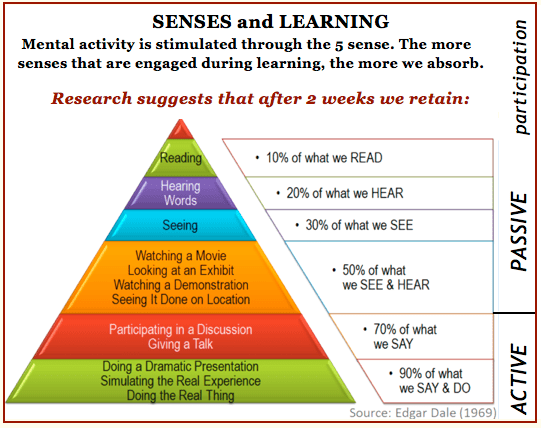
sense learning %


PREVIOUS: Sensory Learning (Part 2)


SITE: Sight, Scent & Sound: The Role of Senses in Retail Marketing

QUOTE: “Live as if you were to die tomorrow. Learn as if you were to live forever.” ~ Mahatma Gandhi

OLD CHINESE PROVERB: “When I hear, I forget. When I see, I remember. When I do, I understand.”

🌺      🕺🏼     🧤     🕶    👂🏾
MAIN SENSORY INPUTS

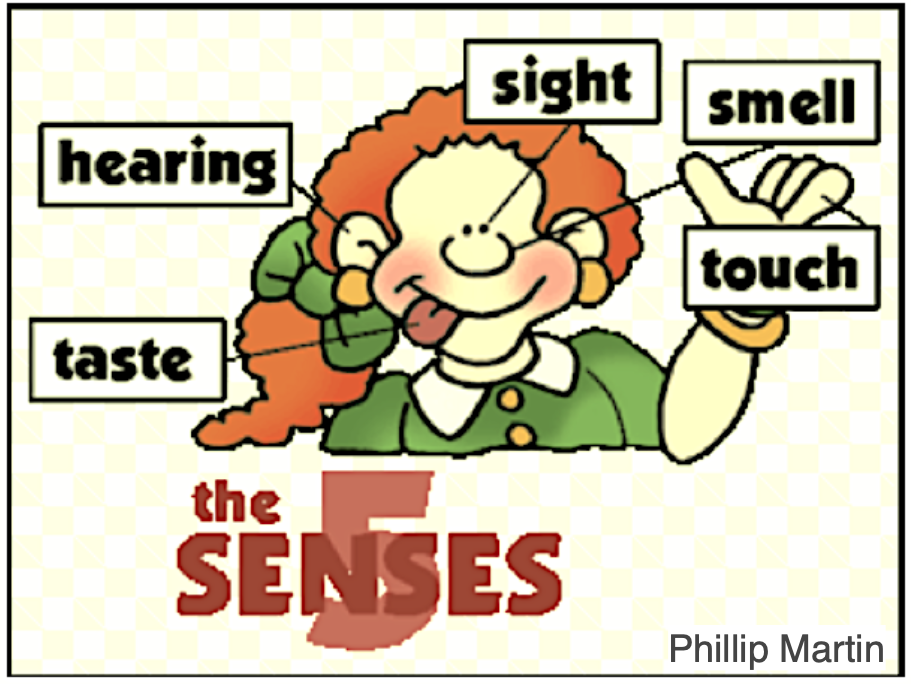
We express ourselves internally & externally from VAKOG forms of gathering knowledge & understanding:
1. Visual = SEEING 🌀 2. Auditory = HEARING
3a/b. Kinesthetic/Tactile = SENSING/TOUCHING
4. Olfactory = SMELLING 🌀 5. Gustatory = TASTING

Only the first 3 are widely used as major input channels for collecting data about our surroundings. 1, 2, 4 & 5 are obvious. #3a refers to whole body experiences involving sensations, emotions & motion itself. #b refers to learning by touch – such as the blind reading in Braille.

Summary of stimulus-to-response pathwayssensory process


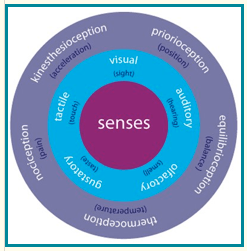
OTHER sensory sources (equally important sources of internal/external info) : senses circle
1. Chemo-receptors:  These trigger an area of the medulla which detect blood-born hormones & drugs. Also involved in the vomiting reflex

2. Equilibrio-ception
: This helps to keep our balance & a sense of physical movements, such as acceleration, directional changes, & a sense of gravity.
It’s the Vestibular Labyrinthine system. located in the inner ear. When malfunctioning, we can’t tell up from down, so moving from place to place without help is nearly impossible

3. Hunger
: This system allows the body to detect when we need to eat
4. Itch:  A distinct sensor system, part of other touch-related senses

5. Magneto-ception
: This gives us the ability to detect magnetic fields, providing a sense of direction, based on Earth’s magnetic field. It’s not strong (like in birds), but experiments show that we do have some

The mechanism is not clear, but may have to do with deposits of ferric iron in our nose. It could be, since humans given magnetic implants have a much stronger magneto-ception than those without (MORE…. )

6. Noci-ception:  i.e Pain – once thought to simply come from overloading other senses such as Touch. Actually, it is its own unique sensory system.  with 3 types of pain receptors: cutaneous (skin), somatic (bones and joints) & visceral (body organs)
7. Pressure: Identifying shapes, softness, textures, vibrations….

8. Proprio-ception
: Gives the ability to tell where our body parts are, relative to each other. Police test this when checking for a potential DUI driving drunk, by asking: “Close your eyes & touch your nose”.
This sense is used regularly in small ways, such as scratching an itch without having to see where the hand needs to goear structure

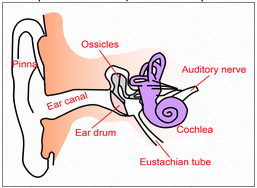
9. Sound: Detecting vibrations along some medium in contact with the ear drum, such as air or water
10. Stretch Receptors: These are found in the lungs, bladder, stomach & the gastro-intestinal tract. One type, which senses dilation of blood vessels, is often involved in headaches
11. Tension Sensors: These are found in places like muscles, allowing the brain to monitor muscle tension
12. Thirst: This system allows the body to monitor its hydration level so the body knows when we need to drink

13. Thermo-ception: a specific brain system, plus a combo of senses, for monitoring internal body temperature. This includes the ability to notice heat & cold, using the 2 hot/cold receptors

14. Time:  This one is debated, since no single mechanism has been found that allows people to perceive time. However, experiments have definitely show that humans have a startlingly accurate sense of time, particularly when younger.

This seems to come from some combination of the cerebral cortex, cerebellum & basal ganglia.
— Long-term time-keeping seems to be monitored by the supra-chiasmatic nuclei, responsible for the circadian rhythm
— Short term time-keeping is handled by other cell systems

15. Touch: Rather than located in one or more specific areas, this sense is our whole body – made up of a very fine network of receptors in our skin, forming our largest sensory system. (More….)

HIDDEN Senses automatically, unconsciously help to:
• control bodily functions, such as temperature & bladder fullness
• control timing & movement of food through the body (digestion)
• measure the amount of sugar & salt in the blood
• regulate the amount of oxygen that’s taken in, for breathing…..synesthesia

SYNESTHESIA – when 2 or more senses combine / overlap, such as seeing numbers in color, tasting words….
It’s hereditary, estimated to occurs in 1 out of 1000 individuals, in various forms & intensity.
(MORE…) // (Science of Synesthesia chart)

NEXT: Visual Learning (Part 2a)

OUR SENSES & LEARNING – Intro – #1b

SO MUCH TO SEE & DO
so much to learn


PREVIOUS:

 Sensory Learning (#1)

SITE: “Sensory Integration”
• “Understanding Temperament – Sensory Sensitivity ”
• “ Arousal & Anxiety”


STYLES:
Everyone uses all sensory channels to some degree, but the most valued are those we use on a regular basis – from birth – to bring information into conscious. While we all have the same basic brain structures, how these parts work can vary greatly.
EXP: One person sleeps better on their side, another does better on their stomach…..
If we diligently pay attention to how our brain ‘likes’ to receive information & in what form, we can better understand & make sense of what we experience, which helps to improve learning.

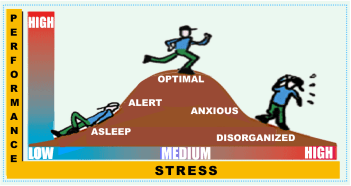
AROUSAL: Successful sensory processing (gathering info thru the senses) is strongly linked to emotional well-being, governed by the ’Sensory Threshold’ – our point of initial contact with a stimulus.
‘For most of us, this threshold is high enough that we can tolerate the complexity & stimulation of our environment, & low enough that we can notice new input & subtle changes around us.’ (INSIDE OUT, slide 21)

A suitable amount of sensing allows us to achieve & maintain optimal arousal levels – a combination of alertness, situational awareness, vigilance, level of distraction, stress & direction of attention. (See “Inside Out” slide 18)

In effect, it’s how ready a person is to perform appropriate tasks in a timely, effective manner:
• Top-down (cortical inhibition) – uses strategies such as thinking & self-talk to stay on task
• Bottom Up (cerebellum inhibition) – heavy work with muscles & joints, which regulates arousal & so promotes focus & attention

LOW arousal will limit general interactions, cause depressed emotions & prevent forming primary attachments (parents, mates, children, friends….)
— Extreme under-arousal can cause unconsciousness, possibly from tiredness, fatigue, hypoxia, poisoning or illnesses.

HIGH arousal can show up as hypersensitivity from too much input (especially for Introverts), such as noise, touch, crowds, social anxiety….. Also, low self-confidence, feeling inadequate, constant frustration…..

— Extreme over-arousal can be seen in a range of symptoms peculiar to the individual, the environment, the task and other factors. This may include: panic, aggression, submission, resignation, withdrawal, irrational behavior, mood swings, or unconsciousness. (MORE….)

Learning STYLES vs MULTIPLE Intelligences (MI)
Both are considered ways we learn. However,
INPUTLearning Styles identify the broad-strokes way we gather & store information, using our 5 senses, while —
OUTPUTthe 9 MI posts identify specific ways we express ourselves, having absorbed information via the various senses. (MORE…… excellent comparison)

Learning Styles identify how each of us is most comfortable learning & retaining new information. They indicate how we gather, sift through, interpret, organize, come to conclusions about, & “store” information for further use. Everyone has their own mixture of strengths & preferences, but usually one is dominant.

Info gathered thru our specific style of sensory input affects the way we internally ‘see’ our experiences, & the way we recall facts, even to the words we choose. It allows for more efficient ways to learn, whether formally in school, or in daily from relationships or at work.

Research shows that each learning brain & senses style uses different parts of the brain. By involving more of the brain during learning, the more we remember.

FAST learners incorporate all 3 main modalities (eyes, ears, body). Even so, our dominant style can help us excel, & can compensate for the less developed ones.

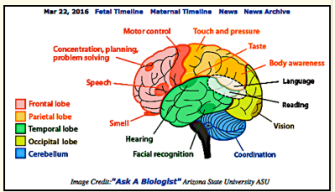
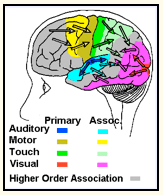
Brain-imaging has found the relevant brain areas:
Aural: Temporal lobes. The right lobe is especially important for music
Logical: Parietal lobes drive logical thinking, especially the left side

Physical
: Cerebellum & the motor cortex (back of frontal lobe) handle much of our physical movement
Social: Frontal & Temporal lobes handle much of our social activities. The Limbic system (with the Hippocampus) also influences both social & solitary styles, as it deals with emotions, moods & aggression

Solitary
: Frontal and Parietal lobes, & the limbic system
Verbal: Temporal & Frontal lobes, especially 2 specialized areas = Broca’s & Wernicke’s (left side of these two lobes).
Visual: Occipital lobes at the back of the brain. Both Occipital & parietal lobes manage spatial orientation.

NEXT: Sensory Learning (Part 3)

OUR SENSES & LEARNING – Intro #1a

learning styles


I USE MY WHOLE BODY
to understand the world

PREVIOUS: “They did the best they could”#3


SENSORY EXPERIENCES for Learning
We’re born with 2 essential skills: our reflexes & our senses.
We learn when the mind is able to put together input from all senses, which make connections with past learning. The brain is always working, just as lungs breathe automatically, not stopping unless there’s major interference.

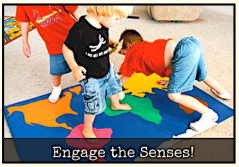
Children are active learners who need to be involved in activities using as many senses as possible. They listen to & watch adults around them, language being the glue that helps them make sense of it all. This complex of sensory information allows us to create relationships with our environment  – physically, mentally & emotionally. So children need to grow up in a world that’s beautiful to smell, hear & look at.

multi-sensory gameJean Piaget, a 20th century Swiss psychologist, described the learning process of babies & toddlers:
• From the moment of birth onward, information comes in to the brain through firsthand experiences with things, people & feelings, depending entirely on the senses of vision, hearing, touch, smell & taste.

• The brain continually assimilates (gathers & digests) information, adding all new input to what it already knows.  Around 12-18 months old, children become able to form mental pictures of things, people & feelings. At this point, they start talking in their native language, which is actually a system of symbols (images). Their brains are now ready to use this existing knowledge to form new ideas, called accommodation.

For the next several years children continue to learn by depending mainly on their senses & firsthand experiences, rather than language. Gradually they’re able to picture the consequences of future events & actions in a more adult-like fashion.

Intellectual Potential is built on our genetic heritage, but can’t be entirely predicted at birth. It’s development during the rest of life is a constant combination of assimilation & accommodation, an upward spiral through a series of stages & sub-stages, making higher & higher levels of learning possible as we adapt to our environment.
Therefore, our sensory environment will make an important difference in our lifelong learning ability. (from “Keys to Great Parenting”)

Sensory inputprimary assoc. from the outside is constantly bombarding us. We need this info for the brain to develop & continue to function properly. Although there’s still much more to learn about brain function, research suggests we may be able to use input to improve neural circuitry & thus neural plasticity – the ability of the brain to form new connections, which can continue throughout our life.

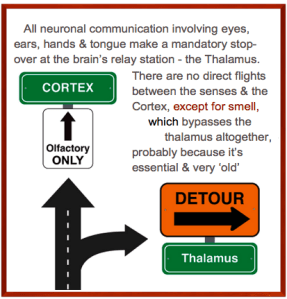
The Association Cortex is outside of the primary areas of the surface of our brain. It’s essential for mental functions that are more complex than the basic aspects of sensory stimulation which use primary sensory areas.  All the senses – except for smell – are filtered by the brain stem before being sent to other areas,
info which is then: sense & thalamus
• Screened out or ignored if it isn’t important or meaningful
EXP: Dust particles in the air are all around us, but we tend not to see them unless they’re in the sunlight, or when there are too many of them

• Noticed
& assigned relevant importance, so the info is sent to the appropriate area of the brain for a response
EXP: A car honks at us & we look to see if we need to do anything about it

• Habituated
or eventually ignored if the input is constant or doesn’t change much over time.  EXP: Wearing a watch or ring. (MORE….)

• Senses allow us to learn, to protect ourselves & enjoy the world. They detect stimuli – anything that causes a reaction in a living organism (pain, heat, sound, chemicals….). When something is detected, receptor cells in the appropriate sensory organ are triggered, generating impulses transmitted through the nerve to the brain. The brain’s interpretation of this info will tell us how to respond.
If one sense is not working due to birth defect, accident or illness, other senses will take over or become stronger to make up for the missing one(s).Screen Shot 2016-05-16 at 12.17.24 AM

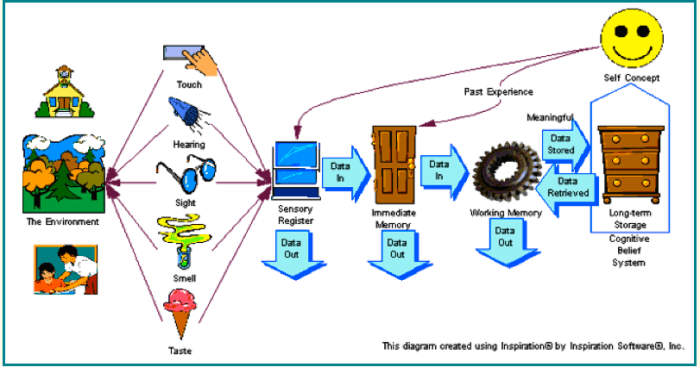
DIAGRAM: How the brain takes in information from the environment & processes it.
~ David Sousa & Patricia Wolfe (2001)

NEXT: Sensory Learning – Arousal (Part 2)

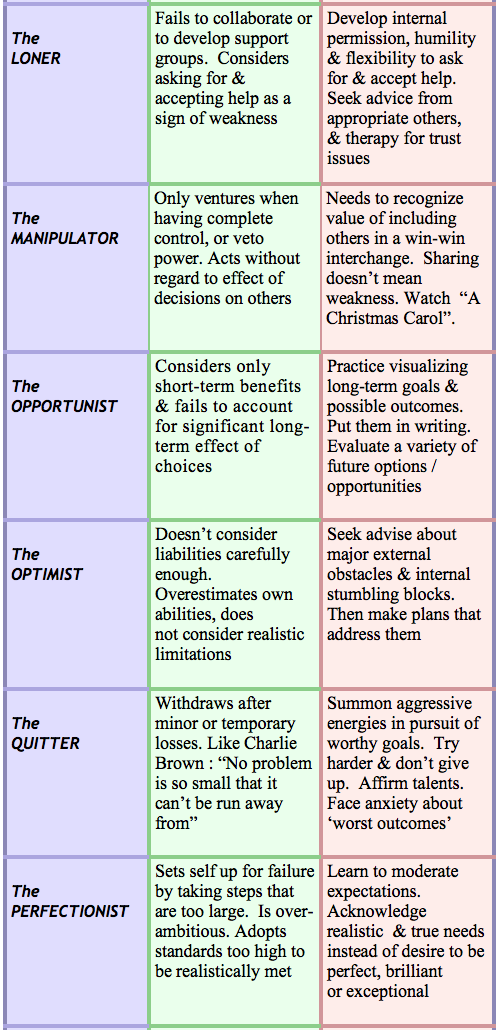
Weak DECISION Styles (Part 3)

I’LL RISK EVERYTHING –
to feel that ‘high’

PREVIOUS: Bad Decision Styles – #2


PART 3: Last 6 of 18 types of unsound decision-making (D.M.) styles & their corrections (no known source).  While these types represent dysfunction, they’re based on each person’s native approach to life, with the addition of an unhealthy upbringing.

Some EFFECTS of bad D.M.:
• we compromise ourselves – our self-worth, values, needs….
• we don’t get what we say we want, so we can obey our Toxic Rules
• we do get what they want, but at the expense of others, damaging our relationships
• they generate anxiety, distress, shame, guilt, self-hate….
• we experience physical symptoms, aches and pains, major illness
• have to learn lessons the hard way instead of making life easier
• waste a lot of time, either doing unnecessary things or having to cleanup a mess later

• we hurt, disappoint, ‘abandon’ people we care about & love
• loss of important opportunities, with some that can’t be retrieved
• suffer unnecessary financial distress, debt, loss of valuable property
• get in trouble with authorities, the law, go to jail
• they may lead to accidents, permanent injuries, deathconsequences
• they’re a waste of our precious life, talents, abilities, potential….

Allowing for Nuances
• Most decisions are NOT written in stone, so they’re nor forever, even tho some do have far-reaching consequences, so it’s wise to strive for ‘sane’, healthy, adult choices as often as possible
D.M. is inherently circular, since most are made by moving back and forth between:

a. the characteristics we want our choice to meet (the ‘new’ car we want to get should be small, used & inexpensive but not worn out)
b. identifying the possibilities we can choose from  (depending on where we live, how much money we have, our knowledge about used cars…)
— The alternatives available influence the criteria we apply to them, and vice versa – the criteria we set influence the alternatives we consider

• ACoAs tend to lump all types of decisions together – all are huge, impossible, overwhelming, undo-able — we think ALL have equal importance & equal consequences. NOT SO!
We can divide decisions into (at least) 3 levels of importance & intensity. Use these suggestions to make your own outline.  It can be argued than any choice can cause a big problem OR have a great benefit, but if we use our Adult observation we can have a general sense of what to expect, as long as we don’t limit our thinking to what happened in our childhood

SMALL-ish Decisions: where to do for dinner, what to wear, when to talk to someone, to go or not go to a party, which errands to do when, buying something for the house…..
MEDIUM Decisions: Where to go on vacation, what diet to use, to go back to school, change accountants, redecorate, get a new car….
BIG Decision: change careers, get married or leave a relationship, move to a different city or country, stop using drugs / alcohol / cigarettes, start going to therapy, have an operation…..

✶ The more we come to believe “I KNOW WHAT I KNOW”, trusting our intuition & judgment, the easier the process of D.M. becomes.

Weak DECISION Styles (Part 2)

IT’LL ALL TURN OUR GREAT –
no matter what they say!

PREVIOUS: Bad Decision Styles – #1


PART 2: Next 6 of 18 types of unsound decision making (D.M.) styles & their corrections. (No known source) While these types represent dysfunction, they’re based on each person’s native approach to life, with the addition of an unhealthy upbringing.

4 general Categories of D.M.
By Command – made without input from anyone else
By Consultation – inviting & include input from others
By Vote – discuss options & then call for a vote, majority rules
By Consensus – keep talking until everyone agrees on one outcome

Warning SIGNALS (interchange a. & b.) that:
a. you’re about to make a weak, unhealthy or dangerous decision:
• when you’re exhausted, sick, emotionally distressed or overwhelmed
• are not willing to change your mind when a situation changesbad choices
• only think of what you want & how you feel, ignoring everyone else
• base your choice only on fear, anxiety & low-self-esteem
• don’t plan for dealing with difficult people or unexpected events

• don’t consider the bigger context, or the possible consequences to you or to others
• twist yourself to fit other people’s expectations of how you should behave, conform to peer pressure or automatically agree with the majority (being overly dependent on others)
• ignore available information (newer, better) that would help you make a better choice about a person or situation

b. you have made a weak, unhealthy or dangerous decision:
• when you didn’t do anything even tho it was important to act
• acted before you were ready or before the time was right
• made a choice using familiar CDs, such as B & W thinking
• ignored glaring problems or important factors that you knew about a situation
• ignored hints that told you something was wrong or there was too much uncertainty

• chose a way of doing something so you wouldn’t have to ask for help
• picked an action based on “well at least I” ……have a job, don’t look stupid, have a boyfriend, am safe, to available information — which comes from a poverty or victim mentality
• based a decision on what you thought you should do, rather than what was right for you & the situation

Weak DECISION Styles (Part 1)

NO MATTER WHAT I PICK –
it’ll always be wrong!

PREVIOUS: Procrastinators Anon Tools

POST : Purpose of Emotions : DECISIONS


PART 1 = First 6 of 18 types of un-sound decision-making (D.M.) styles & their corrections. (No known source) While these types all represent dysfunction, people gravitate to one of these styles as a reflection of their inborn approach to life, along with an unhealthy upbringing.

• No matter what our personal style, ACoAs have a great deal of difficulty making decisions. This deficiency has nothing to do with our basic intelligence, only our damage. An apparent exception are those in the Hero / Rescuer family role – who seem to be able to make decisions easily & continuously. But the hidden worm in the fruit is that they only do it on behalf of others. Decisions for themselves are rare & usually unhealthy

– D.M. is the process of identifying & choosing alternatives, based on our values & preferences &
– D.M. is the process of reducing enough uncertainty & doubt about our options to give us the freedom to pick out the best one at the moment

SOME REASONS we have trouble with D.M.
• not having a clear identity (who am I, how do I present myself, what do I need or want….)
• letting the WIC (wounded inner child) be in charge of considering what to do, who either acts impulsively or is stuck / paralyzedbad decisions
• not trusting the knowledge, judgment & experience we’ve gathered throughout our life

• not realizing we have options to choose from, or better options than we think we have
not having permission to change our minds – about anything!
• being in denial about what we know regarding a person or situation

• fear of making the wrong choice – we think the wrong one will have life & death consequences, or result in severe punishment or self-hate, afraid of taking risks, asking for help, getting good things

• co-dependence: wanting to please everyone, all the time
• growing up with a series of double-binds (paralyzes us)
• not having enough or the correct information to decide accurately
• using CDs (cognitive distortions) in thinking about a problem

➼ As we Recover, some of these reasons melt away, some diminish & some we struggle with throughout life – & which is which will be different for different people.


Procrastinators Anon TOOLS

putting it off 

PREVIOUS: RE-ORGANIZED pages


THESE TOOLS ARE GREAT.
I’ll try them later!

PREVIOUS: ACoAS & Procrastination (#5)

POSTS“ACoAs & Procrastination” / / “Weak Decision Styles

Procrastinators-Anonymous.org – “a fellowship of men and women who share their experience, strength and hope with each other that they may solve their common problem and help others to recover from chronic procrastination.”
TOOLS for RECOVERY
1. Break It Down: Break down projects into specific action steps; include preparation tasks in the breakdown.

2. Visualize: Plan what to do, then imagine yourself doing it. The more specific and vivid your visualization, the better. See yourself doing the task, and doing it well.

3. Ask Yourself Why: While you are visualizing doing the task, see if you can detect what it is about the task that feels odious to you, what uncomfortable emotions you are avoiding. Knowing what’s behind the avoidance can help you get past it – for example, address real problems or ignore irrational fears.

4. Focus on Long-Term Consequences: Procrastinators have a tendency to focus on short-term pleasure, and shut out awareness of long-term consequences. Remind yourself how panicked and awful you’ll feel if the task isn’t done, then imagine how good it will feel when the task is finished.

5. Avoid Time Binging: One reason procrastinators dread starting is that once they start they don’t let themselves stop. Plan to work on a task for a defined period of time, then set a timer. When the timer goes off, you’re done.

6. Use Small Blocks of Time: Procrastinators often have trouble doing tasks in incremental steps, and wait for big blocks of time that never come. When you have small blocks of time, use them to work on the task at hand.

7. Avoid Perfectionism: Procrastinators have a tendency to spend more time on a task than it warrants, so tasks that should be quick to do take an agonizingly long time. Notice this tendency and stop yourself. Some things require completion, not perfection.

8. Keep a Time Log: Increase your awareness of time by logging what you are doing throughout the day. This is a great diagnostic tool for discovering where your time went, and an excellent way to become better at estimating how long tasks take.

9. Develop Routines: To help structure your day and make a habit of things you always need to do, develop routines for what you do when you wake up, regular tasks of your workday, and what you need to do before going to bed.

10. Bookend Tasks and Time: Use the Bookending board on the P.A. Web site to check in throughout the day, or at the beginning or end of specific tasks you are dreading.

Please visit Procrastinators-Anonymous.org for more info.  Details are at the top of the Bookending board.  AS A REMINDER:

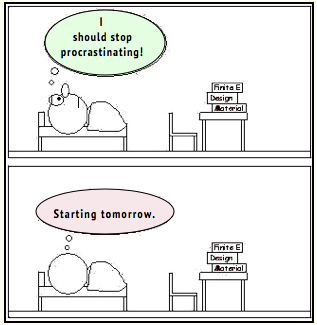
putting off cartoon
NEXT: WEAK Decision Styles, #1

RE-ORGANIZED Site-Map Pages

file drAwer

PREVIOUS:
Procrastination (Part 6)


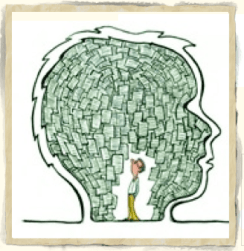
TOO MUCH?

Some readers have expressed a sense of  overwhelm by the amount of info presented. on this blog.
(SEE also 80+ pages of website: www.acoarecovery.comSoverwhelmwd

When working toward any goal it’s typical of ACoAs to skip Process, but instead insist on trying to do things ‘perfectly’ & NOT use small steps or do things in orderly stages.

Then the WIC balks at the ‘bigness’ of  the task / project /  procedure – & will quit part of the way in, or procrastinate & so not get started at all.

SUGGESTION:

To get the most out of this blog – cruise thru each year (2010-2021, at top of Home Page) & just familiarize yourself with what’s available.
See what jumps out at you & only read that.

Then when Sprocessan issue comes up in your life, go back to the lists & read what applies.

Slow down enough to mull over what comes up for you.

ALWAYS take things in small chunks. The brain absorbs info better that way.

A LOT OF WORK to re-order all !
The complete listing of over 600 posts has been re-distributed (2010-2016).

Changes in site-map:

— Listed in order of topic posting, per month – rather than alphabetically

— Similar topics grouped together pr.year, as much as possible – rather
than by original writing date

— Space made between topics, or between bub-topics of a group, rather than
clumped together each month

— If something has not been ‘linked’, it means it’s a future post, in the pipeline.

Comments or corrections welcome.
THANK YOU for READING.

Donna Marie

NEXT : Procrastinators Anon TOOLS

ACoAs & PROCRASTINATION (Part 5)

make notes I CAN GET THINGS DONE –
& feel good about it!

PREVIOUS: Putting things off #4


SITE: Overcoming Procrastination

BOOK: “Willpower: Rediscovering the Greatest Human Strength” by John Tierney, New York Times science writer, & psychologist Roy F. Baumeister.
An unconventional “self-help” book that, much like Timothy Wilson’s ‘Redirect’, grounds its insights & advice in 30 yrs of serious academic research into willfulness & self-control. While the book is fascinating in general, its 3rd chapter “A Brief History of the To-Do List, From God to Drew Carey,” is particularly interesting.

5. BOTTOM LINE
“WHY BOTHER?” underlies all our indecision & procrastination. We don’t take genuine care of ourselves, no matter how busy or cocky we seem to others. On a deep level we’re paralyzed by:
a. Not knowing or having access to our healthy True Self, so we believe we don’t know what we want or like, nor what our rights are!

b. Not being allowed to be our own internal motivator – so our only reason to take actions has to come from outside. We have to use family, a boss, teacher, a cause, religion, a career, friends & lover relationships, AND ultimately our terror of abandonment & punishment to push ourselves. Left to our own devices, we just collapse inward

c.
Our Internal Conflicts:conflict
• losing someone, being hurt or punished vs. feeling ‘safe’ (even if that safety is an illusion or self-destructive)
• WIC & PP vs. the Healthy UNIT
• obeying vs. disobeying the Toxic Rules
• old patterns vs. new ways of doing things
• what we want vs. what we’re ‘supposed’ to be, do, think, feel

d. Double messages, originally forced on us by one or more adults, we had no choice but to internalize the resulting Double Binds* (simultaneous but opposing demands, with a penalty for whichever one we can’t fulfill).
EXP:
• As kids they expected us to do for them (which may still be going on with an elderly parent), taking advantage of us to be their parent substitute – using hints, guilt, shaming, manipulation, demands, threats…. AND were angry / abusive if we did nothing (the penalty)

• BUT THEN were totally dissatisfied with & critical of (the penalty) whatever we did do for them, no matter how much effort we put in, what it cost us, what we had to sacrifice, how clever we were at it….

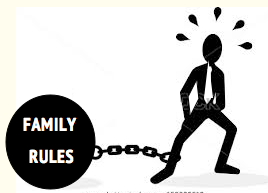
*EITHER WAY we were/are punished. If they’re still live we compulsively keep trying – to please them,chained to rules over & over. If they’re not around anymore we often find some other needy, critical person to satisfy – always with the same impossible, painful results!
YES, we’re addicted to the rejection, while maintaining the illusion that we have the power to change them, if only we try hard enough, long enough!

Ultimately, we stopped trying – but only for ourselves, because:
• we’re still waiting for them to approve of us, & give us permission to have a life of our own life (free us of their bondage because we don’t believe we can do it ourselves!)
• we’re convinced that if we failed with them (the family, also school, religion), it’s inevitably that we’ll fail with everything & everyone else, so there’s no point in trying
• we’re waiting for someone – anyone – to come & rescue us so we don’t ever have to be our own parent!

6. FACING our INNER REACTIONS
• Unfortunately, delaying inevitable responsibilities (as well as ones we’ve taken on voluntarily) creates endless obsession & self-recrimination. “”I’m just lazy by nature”, “I can’t do anything right” , “I’ll just mess it up – again” ….procratination

So why would we rather worry ourselves sick than ‘just do it’?
• we SAY it’s just a habit – but it’s really our self-hate
• we’re used to longing for things, rather than having them
• we’re waiting to be taken care of
• we think we don’t know how, even tho we actually do
• staying loyal to the family by copying how those adults ‘handled’ daily actions & problems
• we’re not allowed to do things easily because suffering is the norm (if it’s too easy it doesn’t count)

NEXT: Procrastination #6