ACoAs: Lack of TRUST (Part 2)

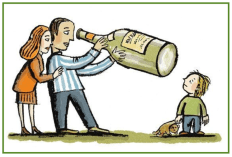
unsafe parentSEE, I TOLD YOU –
nobody’s safe!

PREVIOUS: Lack of Trust (Part 1)

See ACRONYM page for abbrev.


🕛 LIFE STAGES
🕕 DEF. of Legitimate Trust

 🕕 CAUSES of ACoA DISTRUST
PHYSICAL
• growing up in a neglectful, unpredictable &/or volatile family
• constantly subjected to undeserved bullying & victimization, by individuals & institutions
• death or loss of one or more loved-ones

EMOTIONAL
• emotional, physical &/or sexual abuse at the hands of our caretakers
• being chronically put down for the way we felt or for what we believed
• hostile relationship between parents, with siblings & with step-parents

RELATIONAL
• parental infidelity, bitter divorce or loss of another long-term relationship
• our own painful relationships, being belittled, misunderstood, abused or ignored
• being cheated on / betrayed – sexually, emotionally, financially
• our confidential information betrayed by a trusted friend, relative, spouse or professional …..

SOME RESULTS
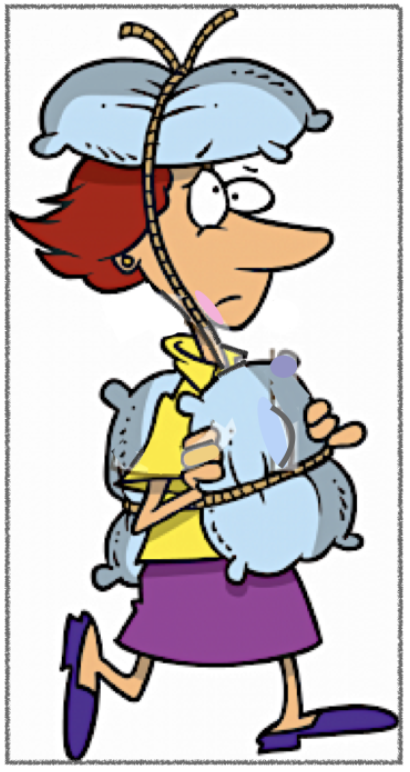
• we get so caught up in unresolved grief that we can’t open ourselves up to others, terrified we’ll be left alone again, as if we’re still living in that household & still 5 years old!

• because of S-H, we can’t believe that we deserve attention, or anyone’s care & concern for us, so have a problem trusting even the positive, healthy & consistent behavior of someone who is sincere

🕕 ACoA thoughts / beliefs about NOT Trusting
Re. OTHERS
• there’s no such thing as a healthy relationship
OR – I wouldn’t know a healthy relationship if it fell on me!
• marriage is a prison sentence – I’ll be trapped & used
• I can’t seem to find any good friends or good partners – so why bother looking?

• as soon as you let yourself care about someone – they leave you!
• I’m never letting anyone ever get close enough to me again so I won’t be vulnerable anymore
• people don’t really improve or change, & any ‘reforming’ is temporary or just fake (like an alcoholic getting sober).
No matter what they say, it’s all manipulation to get their way.  If I let myself believe & relax my defenses, I’ll be devastated when they go back to their old ways

Re. OURSELVESunsafe world
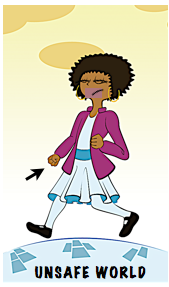
The only way to survive & protect myself is to avoiding people as much as possible, because:
• I’ve been hurt so much & by so many in the past
• all men / all women are dishonest
• everyone’s out to get the most they can (from me)
• no one respects me
• if I let my guard down someone will step on me OR all hell will break loose
• if I open myself up people will use that info against me…. so how can I trust anyone?

 ♦️LACK OF TRUST can CAUSE:
Arguments with others, because of intruding on their privacy, about what we think are their ‘suspicious’ activities, their lack of openness – often leading to retaliation from them
Anxiety in us, especially when we don’t know where a loved-one is & we’re convinced they’re not being honest

Deception by a partner or child who’s being controlled & boundary invaded. They may sneak around, either to do the bad things they’re accused of OR just to get some privacy & peace of mind
Fear of reprisals, from ourselves for our accusations (guilt, shame, S-H), & AT them for not being what we want (trying not to punish them)

Fear of risk, because we never got the mirroring, support & feedback to make scary changes, AND which we can’t receive in the present if we don’t trust anyone
Low self-esteem in others, which we ‘encourage’ by constantly investigating them, questioning, following (suspicion is the opposite of acceptance)
Miscommunication, or lack of communication, because we’re afraid to let others know what we really need, want or feel

MOVIE: “All This & Heaven Too”, 1940, staring Bette Davis. An excellent portrayal of a disturbed personality – the Count’s wife, played by Barbara O’Neil – is a needy, barbara-oneilnarcissistic, desperately clingy & demanding shrew.
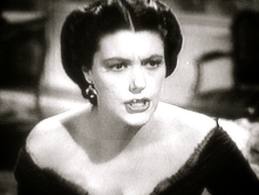
She has a deep fear of abandonment, is constantly suspicious of her husband, & rejects her children because they interfere with having him all to herself. This drives the children away from her & the Count into the arms the loving nanny – the very thing that makes her even more distrustful & enraged – leading to tragedy.

NEXT: ACoAs – OVER-Trusting (#1)
ACoAs: Lack of TRUST (Part 1)

con man
WHO CAN I DEPEND ON?
for sure NOT my family!

PREVIOUS:
 Early Trust Betrayal

REVIEW post: ‘Parents Blaming us


LIFE STAGES Erik Erikson, a German psychoanalyst heavily influenced by Freud, developed a psycho-social theory of personality development, which included the impact of external factors (parents & society) ON our:
• ego identity (the self)
• personal identity (what distinguishes one person from another)
• social/cultural identity (social roles we might play)

Erikson’s theory says every person must pass through a series of inter-related stages over the entire life cycle —>   AGES:
1. Infant   (Hope) – Basic Trust vs. Mistrust 
Birth to 18 mths
2. Toddler  (Will)    – Autonomy vs. Shame
18 mths to 3 yrs (MORE….)

IN Infancy (Stage 1) the main emphasis is on parental ability to nurture & care for the child, especially using visual contact & touch, so that :
• in a safe environment the child will develop confidence, optimism, security & trust
• in an unsafe home, they’ll develop insecurity, worthlessness & general mistrust of the world

In an episode of LIE TO ME, (TV series, Fall 2010), Dr. Lightman says:
“The way to make a disturbed personality is: Constant Criticism & Lack of Affection – it works every time” !

DEF. of Legitimate Trust
Re. OURSELVES 
• be able to rely on our own observations, judgement & intuition
• when exposing vulnerabilities to someone, assume they won’t take advantage of or abuse our openness, but know we can’t control their reactions
• have confidence placed in us by someone else, & accepting the obligation that entails
Re. OTHERS
• identify how someone is going to act (predictably good or bad) & gauge our probable losses & gains. It’s based on what we already know about them, using their past performance as a guide
• have a firm belief in the integrity, ability or character of a person or thing, from our own experience, or based on accepting the opinion of a highly reliable source
• Hope: to be able to rely on something or someone in the future / to expect a specific outcome with assurance

NOTE
• The Healthy Adult ego state knows no one can be perfectly dependable, & that the wish for it isn’t possible – so we wouldn’t expect it.
Secretly demanding others to be absolutely 100% ‘safe’ (before we can trust) is UNrealistic,  which makes us vulnerable to always getting disappointed, leaving us in the same old place – convinced that ‘no one’ is trustworthy

• There are legitimate reasons to not trust certain kinds of people – especially the not-so-obvious narcissists! – which we definitely need to acknowledge, & then stay away from.
Past experiences with them should not be ignored, especially as we become sure of our ‘evidence’.

EXERCISE : Keep a log for a month (or as long as needed) of each time you feel unsafe with someone, & see what patterns show up. Then take a small, definite action to change the situation or your part in the relationship

unsafeMISUNDERSTOOD
ACoAs often say : ‘I can’t trust anyone’ –  the focus being on people outside of ourself. This is B & W thinking & not totally accurate. Although it[s true that our parents were not safe, most of us do have/ or have had a few people throughout our life who have proven themselves trustworthy (even if not perfectly!).
❇️ Instead – trusting needs to be focused internally – on our own intelligence.

MAIN reasons we say this ⬆️ – is that unhealed ACoAs :
a. haven’t learned to trust our own observations, experience, & intuition!
b. keep picking & staying with toxic people, & keep getting burned. Strange that we’re surprised each time!
c. want / expect / demand the assurance that whatever or whoever we put our trust in will never ever let us down, disappoint, abandon or hurt us!

This demand is:
• B & W ‘all or nothing’ thinking (a CD) – typical of children & thdemanginge emotional immature
• the position of the WIC, who wants everyone to be the good parent we never had, so we don’t have to grow up & take care of ourselves
• an expression of co-dependence – being focused on others, outside of ourselves, instead of internally listening to what we know to be true

NEXT: ACoA Lack of Trust (Part 2)

ACoAs: Early Trust Betrayal (Part 1)

angry father WHO CAN I DEPEND ON?
for sure NOT my family!

PREVIOUS: Adult Play #2

QUOTE: “To be betrayed, the person must first experience trust in the betrayer….. Betrayal is probably the most devastating loss a person can experience.”


😥 BETRAYAL TRAUMA 😲
This is when the people or institutions you depend on for survival significantly violate your trust or well-being
EXP: physical, emotional, or sexual abuse perpetrated by a caregiver
Q: Does the victim need to be conscious of the betrayal to call it “betrayal trauma”?
ANS: “No.” Being mistreated is by definition betrayal, whether the child recognizes it explicitly or not.
While conscious awareness of it may be suppressed at the time of trauma & for as long as the victim is dependent on the perpetrator, strong feelings of betrayal will eventually surface.

✍️ THEORY
Traumatic events differ in degree of fear & betrayal, depending on context & characteristics of an event.
EXP : People with a history of childhood sexual abuse – which result in PTSD & dissociative symptoms – much more often reported feeling betrayed than feeling great fear.  Many other studies have found that betrayal is a psychologically toxic dimension of events.

😴  BETRAYAL BLINDNESS 😵
“Betrayal blindness is the un-awareness, not-knowing, & forgetting about painful experiences, & may extend to betrayals not traditionally considered “traumas,” such as gossip, inequities in the workplace & society….
• Victims, perpetrators & witnesses may have betrayal blindness to preserve relationships, institutions or social systems they depend on…..

In Childhood
• Children automatically trust their parents (caregivers) – they don’t have a choice. But that trust can be destroyed early & easily if their family & community is unreliable, non-nurturing & dangerous. The earlier the trust-betrayal, the more long-term damage is done, since small children can’t understand & process such disappointment

• Kids don’t want the instability & cruelty of their home to be true, so they can’t afford to consciously admit their suffering is being caused by the unloving adults they depend on. If they did it, would make life even more unbearable, so they do whatever they can to deny painful experiences (blame themselves, fit into roles, people-please, rescue…..)

• Years of emotional pain & abusive treatment lead children to make definite & lasting negative decisions about themself & the whole world, based on very real events. These twisted conclusions & assumptions form self-hate, cynicism, bitterness & hopelessness.

That pain is then mirrored & added to by rigid unhealthy ‘laws’ of other dysfunctional groups such as school, church, neighborhood, the combination becoming the basis for all future interactions.  Toxic beliefs get ‘written in stone’ , very hard to change as long as they stay out of awareness

♻️ Besides internal reasons for ‘not-knowing’, there may be external reasons for not-knowing & silence. Common demands for silence come from a perpetrator & others (family & society’s flying monkeys), to the point of never having the ‘event’ mentioned – much less acknowledged. More….)

Experiences that have never been shared with anyone else may create a 
different internal structure than shared experiences”
BTW: Al-anon slogan “You’re only as sick as you secrets”

disappointed

🙇🏻‍♂️ BETRAYAL ways
a. Programing : We were taught to not trust our own observations, opinions, emotions & conclusions.
We were:
• told “you don’t feel that way /  that’s not how it is / I don’t know why you think that / Oh, nothing (is going on)” ….. OR

• not given important information about what was really happening in the family, leaving us with an uncomfortable feeling of insecurity, wondering what’s wrong, making up scenarios & blaming ourselves

• expected to go along with the program, no matter how harmful to our mental & emotional health, did not fit our native personality, nor how little it allowed us to explore options & possibilities in the world, or find out what our true purpose is

EXP: “The Judds” was a reality show on the OWN tv channel (2011).
Mother Naomi slowly spilled all the ugly family secrets she’s been protecting for the past 60 yrs – murder, incest, suicide, neglect…. Daughter Wynona finally has an understanding of the problems between the two, & came to have compassion for & a new trust in her mother.

NEXT : Trust Betrayal, Part 2

“INNER CHILD SPEAKS”, re-posted (Part 2)

inner kidYOU DON’T HAVE TO KNOW EVERYTHING
to listen or talk to me!

PREVIOUS: Child to Adult Monologue (#1)

SITE: “Love Your Inner Child


WRITER: Marie T Russell (1996) publisher of InnerSelf Magazine. Reprinted in full, as is. 
LETTER CONTINUES

The child cries out:  “You told me that it was not a-prop-riot-e behavior to dance in the street, or to sing with the birds, or to talk to the new people that I discovered on the street – you call those people strange-hers. You told me that it’s not appropriate to be playful & childlike, that I had to act your age. Well, I’ve got news for you. I’m an Inner Child & I’m eternally young… so my age is whatever I choose. And today I choose to be five years old. So it is okay for me to sing & dance & love everyone I meet, because I know that God loves me, and that I am loved by everyone because God is in everbad inputyone.

“Do you know what is not appropriate? When you frighten me with your grown-up mixed-up beliefs. You have a picture of the world that I do not like, & you try to frighten me into doing what you want by telling me about your picture. Well, your picture is all wrong! Do you know why?

Because your picture has a nasty God in it that punishes children & He gets very angry when they make a mistake. Well, my God loves me & loves you too. And my God does not frighten little children. Instead He provides birds that make music, fruit trees for food, sun for light & warmth, grass to roll in & lay on, animals to play with, & lots of other good things.

“Your picture is just a horror movie that you made up, & I don’t watch horror movies. So if you insist on watching a horror picture, keep me out of it. Don’t even tell me about it. I don’t like to hear yucky stories. They make my belly & my heart hurt.

“But if you decide you’d like to watch and live a beautiful love story with me, then simply switch channel to the Inner Child channel. You and I can get to know each other, then we can have some fun as well as some love & peace together.

“You probably don’t even know where I am. Well, that’s because I’m scared of you and I’ve been hiding. I would suggest you tame me, just as if you were dealing with a scared kitten. Just imagine that your Inner Child is a scared kitty hiding under the bed. What do you do? Well, maybe you start talking gently, lovingly to it even though you can’t see it. And then maybe you bring it a saucer of warm milk (for me a saucer of unconditional love will do), then back off a little & keep talking softly.

“After a while, I may peek around the corner to make sure that you’re really for real & won’t judge or criticize me again… after all, you’ve done that a lot. If I feel that you are really ready to love me & be nice, I’ll come out & we can talk & play.

“Another way that you can get in touch with me is to listen to what you call your intuition. Lots of times that’s me telling you what would be great for us. So the next time you feel that it would be good for you to go for a walk, or sing out loud, or dance… pay attention. That’s probably me making my presence known. The more you spend time doing the kind of things I like, the more you’ll start feeling me there, & enjoying our time together.

“And keep taintuitionlking to me. Soon you’ll start hearing me. You see, I talk very softly cause I’m little and sometimes I’m scared of you cause you’re big and you talk loud and gruff. So listen softly, and then you’ll hear me.

Remember that I love you & really want to spend time with you. I know that once you start spending time with me, you’ll be much happier. You’ll find yourself singing & maybe even taking silly little dance steps in the street. The people around you will start smiling for no apparent reason when you walk by, because their own Inner Child will recognize me & will also pop up to the surface.

“Can I come out and play? I love you a whole bunch! I hope you’ll come visit often & invite me to hang out with you a lot too! We can really have a great time together, you and me.”

With Love, 
Your Inner Child

NEXT: ACoAs & Playing, #1

ACoAs: BOOKENDING with the WIC (#2)

bookends 2
I CAN BE IN THE PRESENT
by being kind but realistic

PREVIOUS:
 Book-ending, Part 1

POSTS: ✦ Self-Hate
✦ 
Abandonment Pain, Now

See ACRONYM Page for abbrev.


TRYING to PROTECT ourselves (cont)
a. RULES & ROLES

b. CDs – Another strategy evolved into using Cognitive Distortions (CDs), B & W thinking being the most common – trying to have some predictive ability amid alcoholic chaos. We pickup them up from family, school & religion – as well as our own immature thinking. Ad now they’re entrenched in the WIC.

CDs were a way to project what we assumed would happen in any given situation, so we could either be prepared or avoid it altogether.  In terms of T.E.A., they’re forms of incorrect Thinking. But they’re too limited in scope to deal with most of reality, deep-rooted beliefs that leave out important info & lead to incorrect conclusions.

✶ Unfortunately this strategy also backfired, just like many others the WIC (understandably) absorbed. This is mainly because we were / are still trying to do the impossible: getting unhealthy people to love us & stop being abusive.

The only thing that’s truly successful is to stop chasing the WIC’s delusion that we are responsible for the original abandonment, & the fantasy that we can somehow make ‘them’ see & accept uimpossibles!

CDs are so harmful because:
• they’re the twisted ‘logic’ behind much of our un-healed habitual actions & emotional reactions, which are inevitably self-defeating & painful – even torturous!
• it makes us think we’re crazy when other people use them on us – unless we’re familiar with the distortions & can counter them accurately.
However, once you know the various CDs & Logical Fallacies well, you’ll never again think you’re nuts. Never again! Hurray!

Negative USES of Bookending
a. overblown unrealistichopeful’ expectations
• Both types of expectations (over & under-realistic) are based on  the WIC’s narcissism – ‘everything that others do (to me) is about me’, but this one comes from the aspect of ACoAs that is grandiose, symbiotic & unrealistic about people & events

Again, this is the WIC who desperately needs & want something, but is not using real-world criteria to evaluate what’s actually possible is any particular situation. Because the imagined outcomes are not possible, we are inevitably disappointed.
This reinforces our original CD – that we don’t deserve anything good & that the universe is against us/
Some of these CDs are:  • over-estimating  • mind-reading  • wishful thinking  • externalizing self-worth  • always being right ….. Screen Shot 2015-09-10 at 3.33.35 PM

b. totally negative beliefs about how , hopelessly things will always turn out.
Some of these CDs are: • all or nothing  • only noticing the negative  • making everything about oneself   • jumping to conclusions  • under-estimating …..

ALSO, we use idealization / fantasy to mask how scared we really are
• because we’re not actually allowed to get our needs met, AND
• when we already know the person or situation is unsuitable, even damaging, but don’t want to leave & have to start over – after all, if it’s hopeless anyway, why bother!

✶ This defensive way of thinking is NOT the same as being Appropriately Positive and Realistically Hopeful – about what we are actually capable of accomplishing or ways we can be nourished by healthy environments. ACoAs are so steeped in the fantasy, we have trouble imagining wonderful, happy circumstances – for ourselves!

However, as we heal and DO get good things in our life – we will know & feel the contrast with our upbringing : THIS is the way it should have / could have been, but never was. We need to mourn that loss but stop looking back for something that was not possible.

NOW it’s time we give ourselves the happiness we never had as kids!

NEXT: Bookending- #3

ACoAs: BOOKENDING with the WIC (#1)

I NEED TO STAY AWAKE
for how my beliefs hamper me

PREVIOUS: Why resist – #7

FoO – Family of Origin


BOOKENDING with the Inner Child

This is a MENTAL tool borrowed from the practical D.A. version (Debtor’s Anonymous), used to Cognitively Restructure our thinking (T) – to free ourselves of suffering & confusion! Once we learn the technique & get used to it, we’ll find it comes in handy not only for ourselves, but helps us hear when others are using CDs on us!

The NEED for Bookending: to correct CDs
Communicating with our precious Inner Child is something we need to be doing 24/7 – at least while we’re awake! 🙂 This included both our Wounded Child & the Healthy Child ego states. However, book-ending is a specific tool to deal with the distorted beliefs we grew up with.

For many ACoAs, no matter how smart, talented & even accomplished, our WIC is still living in the past, mentally & emotionally – still using our childhood experiences (based on the PP voice) as a model for how things functions & what we to expect.
This is in spite of the many other experiences & information we’ve gathered throughout our life that give us different viewpoints, and disagree with our family’s messages

✶ It’s truly amazing how good we are at ignoring or negating all the positive people & situations we’ve come across, which could be incorporated into & greatly enhance our world view – if only we would!

PRE-FoO Recovery: Growing up constantly disappointed, not allowed to have our thoughts & emotions, never comforted, and ignored, made fun of, put in double binds, tortured, scapegoated, neglected, controlled ….

…. we became thoroughly convinced these things will continue – they’ll always happen with everyone else, in every situation – for the rest of our lives, no matter how hard we try to change our ‘fate’.  Toxic Rule : “Life is suffering”

✶ Naturally, if we spend most of our time in relationships, locations & jobs that are UNhealthy, then we will indeed keep re-traumatizing ourselves. Compulsively following our earliest training always leaves us frustrated & hopeless.
So – It’s important to know that we can change these patterns!

GOAL of Bookending
The fundamental purpose is to bring the WIC into the present (sometimes kicking & screaming) via the ÚNIT”. That way we’ll consistently be able to see the world correctly – that there are other kinds of people & options which are not like our family!

• To do that we have to be aware of our negative & distorted beliefs, and then work on correcting them. It’s the only way we can truly be safe! Book-ending is a valuable tool in changing our Cognitive Distortions (CDs)

This is a tool to prove to the WIC that the way things were in our family is not how it is everywhere else in the world. Some place Yes, but Not everywhere! We need to create new pathways in the brain to counter the old deep grooves, & the main way to do that is repetition. You know: “How do you get to Carnegie Hall? Practice, Practice, Practice!

TRYING to PROTECT ourselves
a. RULES & ROLES – Because our childhood was chaotic & frightening, as children we tried to find any possible way to protect ourselves. This included incorporating a series of Toxic Rules to live by & fitting ourselves into the Toxic Roles forced on us

In dealing with our parents, we tried to :
• figure out what they wanted from us & then twist ourselves into that
• help them, cajole, protect, educate, rescue…to fix them
• identify what we did wrong & try to be as good as possible
• hide anything about ourselves that would upset the family ‘mobile’

NEXT: Bookending, Part 2

ACCEPTANCE & ACoAs (Part 2)

accept-serene 

ACCEPTANCE ISN’T SO BAD
once I understand it

PREVIOUS:
Acceptance & ACoAs (# 1)


1. The PROBLEM (cont)
🔹 Negative MEANING (cont)
We (self-destructively) ACCEPT that we deserve / or must endure:
• being controlled, verbal abuse, disrespect,
• being treated like a dumb kid (we were never dumb, even as kids!)
• being over-looked, unappreciated, ignored
• having to let others use, manipulate & torture us
• having to deny / destroy ourselves in order for others to be OK
AND TO
• not be able to have a positive impact on our world (be effectual)
Hansel & Grethel• never finding love & validation, since our parents didn’t (narcissists attach, but don’t actually love others)
• only staying with unavailable, distant, cruel & selfish people (note the parents in Hansel & Grethel).
• staying small & ‘weak’, not knowing how to take care of ourselves

Our Toxic Rules are so deeply ingrained that even when we start having useful, valid new information about ourself & the people in our life (A1), we still skip over A2, automatically going to A3.
Whenever we have any new Awareness, ACoAs immediately ask: “What can I / should I DO about it?” (Action is not Acceptance) . This Chart shows why :
NEG 3 As
We compulsively SKIP the middle ‘A’ because:

• it’ll make us safer, considering the harmful CD we think it means
• our whole culture focuses on Action (just DO it!)
• our culture does not value process, ONLY immediate gratification
AND
• we’ve been waiting so long for something better to come along, we don’t want it to take time. The WIC is convinced that if we’re told to wait, it means it’ll never happen / never get our needs met
• our dysfunctional family made their approval conditional (if at all) – based on our actions that suited them. If you act bad, you’re bad, if you act good, we ‘love’ you – sort of.  YUCK. Healthy love is unconditional!

We think we have no choice, trapped in a double bind:
• on the one hand – we hate the rules we grew up with
• on the other hand – we’re terrified to disobey them, ever.
So, since OUR version of acceptance is so painful & debilitating, we keep trying to ignore it altogether, as if we could control the truth away!

♦️                                   ♦️                                ♦️
2. HEALTHY ACCEPTANCE
ALL Acceptance is simply acknowledging the TRUTH about things, without any makeup or mask. It’s ONLY about what actually is or was! It’s about reality, not what we wish things were like, what we think they should be, what others say things are, or even what could potentially be.

Acceptance is only about WHAT IS, such as:
• being damaged in childhood, whether from an alcoholic family or not
• that it caused us great harm
• that we are NOT the source of that damage
• that we’re responsible for working toward healing that damage, no matter how unfair
• that people aren’t always what we want them to be
• that we don’t have the power nor the right to try changing others
• seeing who people ACTUALLY are, not ignoring the parts that hurt us….

ACCEPTING good things requires that we slowly:
• leave behind all our ratty, smelly baggage & garbage in the old internal universe, carrying that broken down spooky old mess we grew up in, dropping the rags of our False Self , a piece at a time
• patiently move our God-given True Self into a beautiful new Inner Universe, with a castle that we have the full deed to, which has level floors, clearly defined halls, stairs & comfortable rooms, with cozy furnishings just to our taste!

NEXT: Healthy A2 – Cont. (#3)

ACCEPTANCE & ACoAs (Part 1)

'acceptance' stampACCEPTANCE – BAH!
I don’t like it, so I’ll ignore it

PREVIOUS: Healthy Give & Take

QUOTE: “Most men would rather deny a hard truth than face it.”
G.R.R. Martin, Game of Thrones

😁 Calvin: “Now what state do you live in?”
Hobbes: Denial.” ― Bill Watterson 

1. The ‘PROBLEM’
ACCEPTANCE is the middle ‘A’
 of Al-Anon’s 3 As (2. Awareness — 3. Action).  Correctly understanding & using this concept will make our life much clearer & saner.
For ACoAs this pesky A2 is the most misunderstood & the one many ACoAs HATE!  We don’t even want to acknowledge it’s something we need to deal with, because of thinking that “I can’t accept anything I don’t like or is too painful”, which is a CD – cognitive distortion

DEF : A2 does NOT mean –
• liking or not liking something! – a MAJOR misconception
• staying a victim, accepting our lot in life, being resigned
• giving up, not trying, not looking for a way up & out
• putting up with ‘crap’ from people, including our Introject’s bad voice
• sitting around waiting for things to happen or for someone to rescue us

Parts 2 & 3 will explain what it IS. Sadly, as in other areas of life, ACoAs will turn almost anything against themself, even good things. But first let’s see how we do use the 3 As, in the service of our dis-ease, a shorthand for all of our toxic thinking.
Negative MEANING of the 3 As
To put Acceptance in context, the unside downalcoholic / narcissistic family message given children is —
You are Bad, We are Good, the World is Bad”.
And the WIC understands this triple threat to mean:
Neg. A-1 = “I’m so bad, no one will ever love me”, &
Neg. A-2 = “I try to ignore it, but believe it absolutely”
Neg. A-3 = so – “I must be perfect, (or dead!), to make up for it” 

These 3 became the foundation of our world view – being stuck with this awful protocol without any possibility of escape. Negatives EXPANDED :
A1 = Awareness re. US – the deep-seated belief of the WIC that we’re unworthy, not entitled, beyond redemption! (S-H)

A2 = Acceptance re. THEM – that our family was right about everything, which we absorbed from their overt / covert brain-washing. Guess whose opinions we still hold on to!? We believed them because :
• all humans are intensely loyal to their upbringing – it’s our most basic connection to others
• it’s the way our brain got programmed – every experience created the neural pathways which formed our understanding of life (“How we Learn“)
• AND ‘they’ constantly made it clear that we were un-acceptable. Some parents even used God, spirituality & religion to convince us of their beliefs!

As a result we were trained to accepted all sorts of terrible things as normal & inevitable for the rest of our life, in obedience to our family & community’s lessons

dangerous worldA3 = Action re. the WORLD – everything & everyone who’s not part of our distorted & insulated family mobile is considered dangerous, unhelpful, unwelcoming, indifferent…. since our family (& community) forced on us their narrow, alcoholic, bigoted view of the world. Our actions reflects this.

Unhealed ACoAs deal with the ‘A3‘ BY:
Defiance of all authority & systems, which have become substitutes for our parents.
We can hate outside forces instead of admitting our rage at the family.
AND since the world is SO-O-O dangerous – we’re NOT going to give in or let them get us! OR —
Compliance – we have to give in, keep our head down, hide in the shadows, so no one will get us!

NEXT: Acceptance & ACoAs (#2)

ACoAs – Healthy GIVE & TAKE (Part 2)

reciprocity
THE MORE I KNOW ABOUT MYSELF
the more I can enjoy what I’m offered

PREVIOUS: Give & Take (#1)


WHAT TO TAKE from others – or NOT

👎🏽 Saying ‘NO’ requires that we know enough about ourselves & our rights – to make the best choices.
In some cases it also depends on who’s offering & why. If the giver is a relative, a boss or important client, taking the gift may be the kindest, or wisest thing to do, regardless of our taste. We can always regift

But if it’s close family or friends who are supposed to know who we are – & they insist on giving us things that are clearly not appropriate or suited to us – it’s legitimate to say “No thank you!”

EXP: Paula & Sharon were BFFs who lived in adjacent buildings & spent a lot of time in each other’s place. Paula was ‘earthy’ & preferred antiques, while Sharon liked everything bright, shiny & new. For their B/days (one day apart) they exchanged lovely gift BUT Paula always gave Sharon things that were her taste & totally NOT Sharon’s.

After a few years of this Sharon finally spoke up, asking to be considered accurately. The following gift again did not fit Sharon clothes or decor, so with regret, she gave the gift back!
PS. Years later Sharon developed another close friendship, also an ACoA, who admitted not knowing how to give appropriate gifts. They solved it by exchanging a short list of what each would like, to choose from. It worked great.accept good

Say YES to:
• complements about anything – looks, skills, style, accomplishments, knowledge, talents,  creativity
• freely given generosity – of money, help, provisions, short-term free services, lending something you need
•  kindness, respect, positive attention, appreciation….. any time
• offers of aid when you most need it
• new ideas, suggestions, other people’s experiences we can learn from
• something frivolous & fun – just because!

CONSIDER: Rejecting someone’s good-faith offers of time, kind words or small objects – is a way to dismiss the person as unimportant, & can un-necessarily hurt their feelings. It implies that what they’re not good enough for you

EXP
: In early Recovery Sean was reminded to appreciate whenever he was complemented, rather than negate it by explaining at length why he didn’t deserve the acknowledgement. His sponsor said: “It’s insulting to the person who is giving you a gift, by throwing it back in their face. Just say ‘thank you’ & then zip the lip.”
He remembered thinking: “OK, I’ll just say thank you, but privately I don’t have to agree!”  Oh well, Progress – not Perfection! Eventually he was able to appreciate genuine praise.

HEALTHY RECIPROCITY
IMP: Being reciprocal means that we are supposed to receive something in return for our efforts – it can be a Thank You, a smile, a vacation or even a house! It means we ‘allow’ others to give to us in return for something positive we have done (once or regularly) – OR just because they like us! Can you imagine?

Being able to receive is a normal part of life. This is hard for many ACoAs to believe & grasp – if we’ve been blindly obeying Toxic Rules such as “Only other people’s needs count”. Do-ing for others is all we know & taking anything makes us feel guilty! Because we don’t feel worthy of anything good, we’re not comfortable receiving – even when it’s done freely & with pleasure.

Beneficial EXCHANGES of any kind DEPEND ON:
know thyselfa. Knowing our needs. Directly or indirectly, we were taught to ignore & deny them. So now – how can we know what to take & what to reject, if we can’t tell what’s good for us or what we need?
TOXIC rules: “No one wants to help me, nor ever will” , “I should never be comforted when in pain”….(Post : Our Rights)

b. Trusting ourselves. We learned that we could never believe our own thoughts, experiences, emotions, good judgement or intuition!
They told us everything we felt was wrong, stupid or the opposite! So now – how can we identify what feels right for us or not?
TOXIC Rules: “It’s weak & dangerous to have needs, ask for help, have our emotions”

NEXT: Give & Take (#3)

ACoAs – NOT allowed to RECEIVE (Part 3)

giving infoNOTHING IS FOR FREE!
I know I’m going have to pay a high price!

PREVIOUS: Not allowed to Receive – #2


ACoA REASONS 
1. ABOUT US
(cont)
c. Backlash – Most ACoAs believe that if we ever got the good things we long for – we would be SOOO happy (right away) & all our problems would vanish.  It’s true that over time being with healthier people, pursuing our dreams, being loved… is healing, but not always right away!

Of course there may be some negative or mistrustful reactions from other people (bosses, friends, family, spouse, even adult-children).  But since we assume everyone will reject us for changing, we’re surprised when some respond positively

IRONY: We need to keep in mind that when we first start receiving emotional & practical benefits of Recovery, we may actually feel worse – for a while! This seems counter-intuitive, until we understand what’s at work, & can prepare ourselves to manage the discomfort, until it fades.backlash

• Moving toward positive things in our life – going on vacation, going into Recovery / therapy, finding a loving friend or mate, getting compliments & validation …. can produce internal backlash – from ourself.

Our discomfort is confusing & unexpected, especially when nothing seems to be wrong on the outside (it’s actually tooo good). It makes us think we’ve done something wrong because:
• the PigP’s voice will get louder “Who do you think you are…”
• we feel depressed, fearful, unsettled….  which is so ‘normal’, we don’t make the connection
• we may feel angry at the person who has been helpful, complimentary….

Actually, the ANXIETY comes from: • breaking the Toxic Rules
• feeling disloyal to our parents, even though they were neglectful & cruel, because the WIC thinks they were right! so we feel unworthy of receiving
• the contrast HURTS – compared to all we’ve suffered as kids & since then – at the hands of family, teachers, mates, sometimes even healers
• rage at being duped by our ‘disease’, when we “Could’a had a V8” (Love) all this time!

REMINDER : There are still people who insist (from ignorance, denial or control) that: “The past is over & done with & has nothing to do with now – let it go & get on with your life”!

Unfortunately those of us who experienced abuse & trauma as kids have a toxic programming deep in our bones. So, being conditioned to believe we’re unworthy of receiving, we can’t properly nourish ourselves or let others help us. To ‘let go’, we need the right info! To heal takes courage & time
🧤
2. Assumptions ABOUT OTHERS
• ACoAs project onto others all the overt & covert experiences we had with our dysfunctional parents (see list in Part 1). Since they were absent, careless, crazy, controlling, depressed, incompetent, demanding, violent, incompetent….
we unconsciously assume everyone else in the whole world is like that too, even though, as adult, we have definitely seen, heard of or met capable, functional people.
Emotionally, we simply ignore this knowledge & automatically react to everyone as if they’re a carbon copy our family

a. Actually, many people we run across will not be like our family, yet we treat them unfairly. Such people will be confused by the way we act & react to them. They inwardly just shake their heads & stay away!

b. More commonly, because ACoAs are talented at sniffing out people who indeed are similar to our background – we feel pulled to them, drawn in by their familiar dysfunctionality.

They have little or nothing to offer – but all the while we’re wanting, expecting, even demanding to have a different kind of interaction with them – better, more satisfying!

• We try to create a different outcome because we think it was somehow our fault that family relationships didn’t work out – & therefore we can change it, fix it, even if it has to be with substitutes! This is clearly impossible, but we keep trying – until we ‘get it’ that we didn’t cause the original problems and that we’re powerless to change other people.

NEXT: Not Allowed to Receive #4