What is CHARACTER ? (Part 1)

WHO AM I? my flaws or….

PREVIOUS:  Emotional Maturity

SITE: Personality Types (scroll down)


PMES = Physical, Mental, Emotional, Spiritual

ACoAs suffer unnecessarily for many reasons
– one of which is NOT believing we have any positive qualities. All we can see are the problems created by our False Self, which was developed in reaction to our upbringing, but which we assume is the real us.
Because originally we had such distorted mirroring (seeing ourself only thru the eyes of our dysfunctional caretakers) we deny our natural gifts.

• Yes, we have ‘character defects’, but these are extensions of our S-H & are how the WIC learned to function, rather than what our Healthy Child or ‘Unit’ are capable of. Even so, these gifts do show up in many of our accomplishments throughout adulthood.
The next several posts provide some positive qualities essential for PMES maturity – to ponder, identify & then own!

EXP: Julie chased boys since she was 9 or 10, but she never caught any. By her 30s she was defeated & full of S-H. She told a therapist: “I’m such a pathetic jerk – all this time I’ve been doing the same stupid thing, with the same awful results!”
The therapist replied: “You’re not stupid, pathetic or a jerk – you’re persistent. Now you can focus that quality in a new direction – toward the goal of emotional & mental growth, as well as fulfilling your dreams!”, which Julie eventually did – successfully!
😘
CHARACTER (C):
• DEF: C. is “the stable & distinctive qualities built into an individual’s life which determine his or her response, regardless of circumstances.”
• C. refers to the specific combination of aspects which make a person unique, expressed in their habits, likes, values, dislikes, behaviors….

• Psychologist Lawrence Pervin says that moral character is “a disposition (strong tendency) to express behavior in consistent patterns of functions, across a range of situations.”
• Similarly, academic Arthur S. Adams said: “Good character is the quality which makes one dependable, whether being watched or not.”

• C. is multi-dimensional & must be measured in ways that do justice to its breadth & complexity. It’s made up of specific psychological mechanisms that express the presence or lack of virtues such as wisdom, courage, humanity, justice, temperance, and transcendence.

Positive Qualities expressed in T.E.As.
CURIOSITY

❖ Curiosity Thoughts: “That doctor sounds like she knows what she’s talking about. I wonder if she could help me with my specific problem & if she’s taking on new patients?”
❖ Curiosity Emotions:
• I wanted to ask her a question about ____, but I’m angry that she’s ignoring me
• I want to take this risk, but I’m afraid to try
• I see new possibilities, & it excites me
❖ Curiosity Actions: I went to see the boss. I stood quietly, waiting in line. I asked the teacher questions. I expressed my interest by a smile & leaning forward…..

FLEXIBILITY – The ability to respond easily & appropriately to new or changing Emotional moods or physical conditions in our environment – by changing or modifying actions & beliefs as needed, without great agitation or drama.flexible
Willing to shift our Actions to comply with the plans or ideas given by authority figures who we need to deal with.
Flexible Thinking : Consider a new or different way of ‘seeing’ a person, event or chain of events (reframing).  EXP:
• DO NOT = be stubborn, compromise what’s right, get upset when plans change
• DO = respect the decisions of others, look for the good in changes.

HUMOR  – Laughter is an essential part of a healthy, happy life.   It helps people smile & feel relaxed by seeing the lighter side of things. It can help to manage physical &/or emotional pain, enhancing our immune system & reducing stress.  VALUE – TO:
• take a break every day to laugh, be playful   • not stay discouraged but find what’s already positive in one’s life   • see the foolishness of human self-importance  • treat every job as important • be an energy-giver to others    (POST : “Resilience & HUMOR “)

NEXT: What is Character, Part 2

Emotional MATURITY – Relational, Spiritual

I CAN SEE THINGS CLEARLY
making all my relationships easier

Previous: Emotional Maturity – Emotional

REMINDER: See ACRONYM Page for abbrev.


RELATIONSHIPS
a. Re. YOU

• are playful, creative & express your silly, zany side
• can accept your current limitations, & get help as needed
• evaluate legitimate criticism, accepting it gratefully, glad for an opportunity to learn & improve
• can take in genuine love & respect, in big or small ways, without ‘paying’ for it
YOU
world friends• accept responsibility for who you pick to be with & how you act with them, adding to your self-respect
• have sufficient & the right kind of boundaries, by knowing your values, needs & tastes
• can regularly say ‘“No” to harmful requests, or what will over-extend you
• don’t get easily offended, don’t bite when baited, but also let others know what’s acceptable or not
YOU
• form deep relationships with people from other backgrounds, races, cultures, & classes
• genuinely care about others & express that in all you do
• are comfortable being intimate with appropriate people, being approachable & easy to be with
• can relate well with others, connecting in a cooperative & positive way, while knowing you don’t fit with everyone
avoid insulters• know when to be a realistic help to someone vs. when to let go, so they can handle their own life
• thoughtfully evaluate friends & social contacts, avoiding people & situations that push your buttons, but rather pick those who bring the best out in you
• know when to be a realistic help to someone vs. when to let go, so they can handle their own life
• don’t expect special consideration from anyone, but are comfortable being appreciated, thanked & valued


b. Re. OTHERS – YOU:
• are friendly & share resources, cooperative with peers & teams, where appropriate
• are are a good listener, without judging, trying to fix or push your own way of doing things
• can ‘confront’ someone when they’ve disappointed or hurt you, using the “I’ form, without attack or blame
YOUgetting along
• can nurture others without rescuing or controlling
• can work inter-dependently with others when required, without having to be the center of attention or dominating others
• cooperate in order to find win-win solutions to disputes. If an answer isn’t good for each party involved, it won’t be good for the relationship
YOU
• aren’t easily fooled by or idealize people or situations that are unhealthy, abusive or just not right for you
• don’t judge others you don’t understand or are very different. Try to learn, connect & be a peacemaker when possible
• empathize with others’ experience & Es, imagining what it’s like to be in their shoes
• forgive others for hurting you, & yourself for any wrongs you’ve done, making amends when possible without shame or self-hate
YOUconflict resolution
• look for the good in others rather than use a critical eye, with compassion
• offer information & make decisions clearly, with respect
• resolve conflict in a clear, direct & respectful way (NO avoidance or put downs, escalating tensions, or going to a third-party rather than to the person directly)
• understand & accept others as they really are, not what you want them to be

5. SPIRITUAL
GENERAL – YOU:
• are are filled with joy & a sense of humor, rather than being wounded because of what others say or do
• an are organic part of a larger whole, contributing your part to each group you’re a member of
• found a meaning in life that gives a connection to all humanity, not just self-interest
spiritual connections• have humility (“I have value but not better than”), rather than humiliated
YOU
• know life is full of uncertainties, but aren’t brought down
• have inner abundance so can be generous & unselfish, which is satisfying
• live by the motto “Don’t quit before the miracle”, so don’t use endless escapes (chemicals, sex, money, food, suicide….)
YOU
• have outgrown the “all or nothing” stage, appreciating the Golden Mean (desirable middle between two extremes, from Aristotle, Confucius…).  Recognize that most people or situations are a combination of good & bad
• some insight & wisdom to see the beauty & value in all of life, in spite of the negatives 
• take care of yourself because you’re precious & God doesn’t make junk

SPECIFIC  – YOU:
• believe in a caring God who is always available, knowing that the Supreme Being is not an alcoholic parent!
• acknowledge & appreciate all the opportunities & help that God has already provided, which support you in surviving or outgrowing your difficulties
• enjoy being alone in quiet reflection with God & yourself (the personal version of daily prayer & meditation)spirit-human connect
YOU
• have a definite set of personal & spiritual principles to live by
• have faith in a Power greater than yourself, & keep that connection current
• obey the spiritual essence of the Golden Rule:  “Thou shalt love thy neighbor as thyself”, while making sure you don’t harm yourself
• pray for guidance & healing, to be given grace & peace, instead of trying to ‘go it alone’
• thank God for all past life experiences, understanding how He has used them to uniquely shape you

NEXT: What is Character #1

Emotional MATURITY – Emotional

maturity 3I’M WILLING TO GROW –
beyond my early training!

PREVIOUS: Cognitive & Practical (#1)

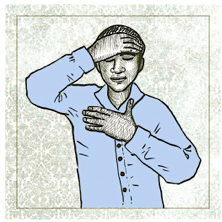
SITE: Self-Soothing Hand positions Exercises (helps with PTSD)

See ACRONYM Page for abbrev.

QUOTE: “We grow sometimes in one dimension & not in another, unevenly….. mature in one realm, childish in another. The past, present & future mingle, pulling us backward, forward, or fixing us in the present. We’re made up of layers, cells, constellations.” Anais Nin


Def: Emotional Maturity (EM)
is expressed in ways that appropriately fit our chronological age – with increased adjustment, stability & self-regulation.  Psychological Wiki
PURPOSE – is TO:
1. acknowledge healthy qualities we’re already developing, based on personal growth – to appreciate our Recovery progress
2. know what personal goals to work toward
3. know what to look for in others* – lovers, mates, friends, family (adults), bosses…..

✶ ACoAs will say they wouldn’t know a healthy person if they fell over them.
WELL – here are some guidelines – for YOURself & about others! Keep a copy on your phone, desktop & bathroom mirror
PS: As emotional wounds heal & distorted beliefs are corrected, we can claim these EM characteristics, & see many areas of our life gradually improve

soothing handsEMOTIONAL GOALS & ACHIEVEMENTS – YOU:
• accept yourself unconditionally, even for the things that are incomplete, unattractive or need improving
• accept & tolerate anxiety & other uncomfortable Es
• accept & face guilt when breaking family rules
• accept that some stress is part of life, rather than trying to hide, without creating drama.  Can meet emergencies with poise
YOU:
• admit & are able to work through Es (fear, anger, pain…) from traumatic events in your life (divorce, major illness, death, disasters….) rather than pretending nothing’s wrong
• are comfortable expressing Es in a healthy way, from the Adult ego state
• are in touch with a full range of Es. Not afraid to find out what they are at any given moment, but not overwhelmed or driven by them
• aren’t afraid to feel sadness & cry, as well as explore the reasons for it
self-pity• can handle disappointment, so are a good loser, deal with defeat without whining or blame
YOU
• have a reasonable amount of patience at reasonable delays, & have self-control in adversity. Accept you sometimes have to adjust to other people’s convenience, needs or limitations
• have Es in perspective, from a balanced internal place rather than B & W extremes. Accept that “If it’s hysterical it’s historical”
• have mostly outgrown envy & jealousy, being honestly glad when others have success or good fortune
• know how to manage & cope with old or new pain
• let yourself be vulnerable without shame or terror, & can let others see your unsuccessful / soft side, but only when appropriate & with safe people
• recognize anger or rage & express them appropriately, in a way that leads to your growth
YOU
forgive• aren’t overly ‘sensitive’ or touchy, can feel your Es but not so easily hurt
don’t have to “show off” in socially unacceptable ways to feel important
• don’t require approval from others to feel good about yourself
• don’t need to constantly find fault, but also aren’t idealistic & unrealistic (in denial) about things that are genuinely harmful
• don’t worry about or try to fix things that are beyond your control
• don’t indulge in self-pity (“woe is me”), understanding the law of compensation* operates in all of life.
IMP: Having compassion for ourself & our misfortunes, which are not of our making, is not the same as self-pity, which only blames others for our pain without taking any responsibility for having to heal our wounds

*Compensation: All life is about trade-offs – good for bad, & bad for good. It’s an amend or reward for loss or deprivation. Anything that makes up for the lack or limitation of something else
“As there is no worldly gain without some loss, so there is no worldly loss without some gain:
• If thou hast lost thy wealth, thou hast lost some trouble with it
• If thou art degraded from thy honor, thou art likewise freed from the stroke of envy
• If sickness hast blurred thy beauty, it hath delivered thee from pride
• Set the allowance against the loss and thou shalt find no loss great.”
English Metaphysical poet Francis Quarles (1592 ~ 1644)

NEXT: Emotional Maturity – Relational, Spiritual

Emotional MATURITY – Cognitive, Practical

maturity 1

‘I KNOW WHAT I KNOW’
and I’m also willing to learn

PREVIOUS: Emotional Maturity – General

NOTE: As recovering ACoAs, many of us start the maturing process much later in life than we would have if we’d come from a healthy, loving family. This is perfectly understandable.

Therefore, we need to
:
mourn the loss of time & possibilities our damage has stolen from us
safely express our rage at the unfairness of having to clean up the mess our parents & environment bequeathed us
• consistently work at Recovery, & persevere no matter how hard & long it takes
• keep looking for, finding & accepting appropriate people & support systems that will nurture our growth
• know in our bones that Recovery & therefore EM is a realistic goal for ourself NEVER ‘compare & despair’, since you are NOT someone else!

COGNITIVE – ABLE TO:
• be self-appraising, & comfortable with who you are & what you want in life
• take responsibility for your decisions. Admit when you’re wrong, without being overly guilt- or shame-ridden
• consciously look for the motives behind your own actions, with wisdom & compassion
• face reality, in yourself & in others, the way things are right now (acceptance)
TO:
• decide what you believe, based on experiences & feelings, not on what others say or do – or want of you. Believe “I know what I know”
bla, bla, bla• realize there are many different opinions in the world, & you can’t use others to form your identity
• change your opinions about people or situations when receiving new info
TO:
• accurately chose info from available data, then apply it to make positive decisions for yourself
• mainly use reason to decide how to act. You need Es to say what’s suitable or not – for yourself, but they are not always or automatically to be acted on
• think before acting to be in control of your behavior
TO:
• eliminate magical thinking (grandiosity), unrealistic expectations, projections….
• live with being imperfect & sometimes failing. It does not reflect on your personal value, no matter what you were told as a kid
• thoughtfully listen to others’ opinions. You can understand & tolerate differing views, without diminishing yourself in any way
gaather knowledgeTO:
• accept not everyone will feel the same way about a situation, stimulus or idea as you do
• understand the relationship between core values & Es
• always want to learn new things to improve yourself, making you more effective & useful in the world

PRACTICAL – ABLE TO:
• admit & deal with the consequences of your actions or inactions
• accept when you don’t succeed at something. Figure out what went wrong, learn from any mistakes, & make the necessary corrections – when possible, & without shame
• asses the risks of a potential or planned situation (date, interview…) that you’re already familiar with, OR that you know enough about to evaluate – without projecting negatively.
When assessing possible pitfalls / risks of an upcoming event, do research & then use that info wisely (not impulsive, compulsive)
TO:
• balance family, rest, work & play – without trying to do it perfectly, or do it well all the time
shoot for dreams• be mainly self-reliant in all areas of life, but not isolated or afraid to ask for help when needed
• follow through with things you’ve started, even when it’s hard, but also know when to let go of a hopeless situation
TO:
• know what you want to do with your life & then pursue it with enthusiasm & patience, persevering even when there are obstacles
• plan ahead, being realistic & practical, rather than letting things go ’till the last minute. Use inspiration & intuition when faced with an unexpected problem, but not as a substitute for being prepared
• tackle difficult & demanding situations – even when scared – trusting you can use knowledge & experience, not forgetting past successes
TO:
balancing• take overall responsibility for your own life (& small children), without endless excuses, but not be responsible for the lives or needs of (most) other adults
• use moderation & balance in all things, but allow for extremes once in a while when appropriate
• work hard toward your goals, not compulsively or to the point of exhaustion, but with a reasonable plan that can be modified or enhanced according to circumstances

ARTICLE:Knowing your Strengths gives you Clearer Direction

NEXT: Emotional Maturity – Emotional

Emotional MATURITY – General

I INTEGRATE ALL PARTS OF ME
while still working on the ‘old stuff’

PREVIOUS: Emotional Immaturity (Part 3)

SITE : True Happiness (Emotional Maturity Questionnaire)

QUOTES: 🔅 “Maturity consists of no longer being taken in by oneself” Anon.

🔅 “Maturity is the ability to think, speak & act your feelings within the bounds of dignity. The measure of your maturity is how spiritual you become during the midst of your frustrations.”  Samuel Ullman (American businessman, poet & humanitarian)

EMOTIONAL MATURITY (EM) means having a healthy self-concept: not thinking too highly or too lowly of ourself, being part the world but realize we’re not the center of it

Characteristics can be identified in relation to AGE :
a. Social  – can relate well socially for our physical age
b. Emotional  – can handle emotions appropriate for our age
c. Spiritual  – can behave in a spiritually mature way

In ACoA language, EM develops slowly by minimizing the damage in our WIC & quieting / limiting the PP voice, as much as possible. Ultimately it’s about no longer having S-H & living from our True Self.
Maturity comes from growing the Unit (Healthy Adult & Loving Parent), who are regularly (but not always) in charge of the WIC, encourage the Natural Child to blossom, & keep in touch with our Higher Power.

• Maturity does NOT mean having eliminated all our damage, but rather to lessen the grip of the Introject, diminish accumulated old pain & be able to deal with our core wounds when they do surface, so they don’t take over & we can bounce back faster.imperfect

ACoAs are quite capable of developing mental, emotional & spiritual maturity – as long as we don’t strive for perfection*.  Actively using the “Principles of the Program” helps to outgrow the worst of our damage so we can live more comfortably in the present, instead of in our tortured past.  When psychological health takes root, we carry it with us even under stress, & express it in ‘all our affairs’

Perfectionism is a sign of immaturity, based in FoA & S-H,- a belief (CD) rather than an event or action.
To be human is to be IMperfect, & to be mature is to be OK with that!
Fortunately there are times when everything works out well = we’re successful at a task, reach a goal, or feel empowered. These do NOT come from perfection.
Basically, they’re just events without mistakes. Those moments are the result of our knowledge, effort, practice & persistence, help from H.P, our faith, & perhaps some ‘luck’.

KEY QUALITIES of MATURITY
confidence1. Emotional
Emotional Responsibility : identifying them, AND know they come from inside, rather than caused by other people, places or things
Self-control: accept & control our passions, impulses & desires. Can handle stress well, ‘let go’ & detach, know when we’re powerless over a situation
Self-esteem: have inner fulfillment, enjoy life, experience ourself as one source of love.  Have understanding of & insight into current reality.

2. Psychological / Mental
responsibleCognitive Responsibility: be accountable for our thoughts – beliefs, opinions & prejudices. Handle finances, have good work habits & are reliable
Mental Clarity: able to think clearly & rationally. Process information based on general reality, know how to gather & communicate information
Independence: make appropriate decisions & observe consequences in order to make better choices. Learn & grow from experience.

mental clarity3. Practical
Action Responsibility: know what we want & can make it happen
Function: make the effort to learn what we need to know in order to accomplish our goals
Participation: join group & community activities that encourage creativity, collaboration & empowerment, perhaps volunteer for a relevant cause

4. Relational / Social
Inter-personal Responsibility: treat people as separate entities with the right to their own needs, wishes & dreams (not use people)
relationalRespect: understand & tolerate different views, cooperate with peers or teams, care about others & support their concern
Connections: make connections easily, sustain intimate relationship, take in friendship & love, share decisions & resources

spiritual5. Spiritual
Moral Responsibility: have a healthy value system / code of ethics. Choose what’s right for ourself first & then in relation to others
Congruence: Act honestly, live by our principles & listen to our intuition
Altruism: have concern for all humanity, do what we can to help others – realistically!

NEXT: Emotional Maturity (Part 2)

ACoAs: Getting to our EMOTIONS – Over (Part 2)

confidence I CAN HAVE ALL MY EMOTIONS

and still be in charge of myself!

PREVIOUS: Getting to Emotions – OVER (#1)

SITE: The Emotional Sensitive Person

BOOK: Emotional Confidence ~ Gael Lindenfield


2. OVER-FEELING
(O-F)
a. DAMAGE

b. RECOVERY
EXP of a BETTER way to cope with Emotional Intensity
• Sue is an O-F with a strong-willed Inner Child. With great love & effort she has developed a bond of trust with her IC in Recovery.bad lunch

• Sue is on a blind lunch date in a small upscale restaurant. The man is an engineer, all left-brain & totally un-self-aware.

When he asks what she does for a living & she says ‘Healer’, he begins a lecture about how unscientific & useless that is!
Sue can feel her kid’s rage building to an explosion, but she knows that if she lets herself attack the man for insulting her & her chosen profession, she will only be making a fool of herself – and in such a small public, space!
SO —
— just before the angry words can leave her mouth, Sue quickly asks the man to talk more about his work. She’s not interested and is not listening, but it stops his ignorant comments.

This diverts the intense emotional energy long enough for her to have a private talk with her angry Inner kid :
“Honey, there’s no point in letting him have it. Remember Al-Anon says to ask: ‘How important is it?’ This guy wouldn’t get it anyway, & we’re never going to see him again.
The only important thing is that I don’t want us to be embarrassed here & sound like the crazy one, since I know we’re not!”  Her IC agrees & is mollified.

TOOLS: Heal & Grow “WORK” for Over-Feelers
GOAL – TO:
• become the Good Parents to our Inner Child that we never had
• learn & use the tools for coping with our intensity
• gradually get the piled-up pain out of our body so we’re not flooded all the time
• re-connect with emotions that have been repressed (Didn’t think there were any more?)

TOOLS : Similar to Under-feelers BUT with emphasis on calming
BODY WORK (Site:Trauma release)body work
Any that can be administered by a professional AND some we can learn to use on ourself
• Biofeedback – changes brainwave states, from very active to a calmer level
• EFT – re-wires the brain to not over-react to triggers
• Release work – Core-energetics, Gestalt, Qigong, Psychodrama,  … (A-Z therapies)
art therapyDRAWING / READING
• any workbook that teaches IC drawing
• express how the IC feels, past & present
• recovery & Inner Child books & literature
• spiritual lit, poetry …. anything to calm the mind & heart

SEEING / LISTENING
• any music, movie… that gets our Niagara Falls flowinglistening
• soothing, peaceful music
• for some of us – focus on the orchestra’s timpani – in rhythm with our rage
TALKING 
• to loving friends & family… but ONLY with people or groups genuinely able to tolerate intense emotions without judgment or trying to control
• 12-step Meetings, as often & as many kinds as possible
• Psychotherapy, including FoO work, Experiential, Primal, Gestalt….
VISUALIZING / SPIRITUAL
visualize• dreams, guided imagery, Hypnotherapy … for validation & nurturing
• Inner Child – putting an image to our experiences & then for continual comforting
• prayer, services, the Psalms … for wisdom & centering

WRITING – See list for Under-feelers
🩸 2-handed IC Dialogues – especially to comfort the WIC so it knows it’s not alone with all its ES anymore, listening thoughtfully, giving guidance, correct CDs & protect from the PP   lists
• Make a “ME” list of YOUR good qualities in PMES categories – to shift the pain to joy!

REMINDER: The more we clean out old pain in safe ways, the more room there is for healthy pleasure (not addictive highs) ! Our suffering will be replaced by a sense of relief & comfort.
✳️ Being comfortable is not boring! We just have to let the brain get used to it.
AND, as we developed healthy boundaries, our Sensitivity will then be a special gift, for :
• correctly identifying who & what is safe for us, in our environment
• empathizing with, comforting & helping others, but only those who are appropriate & only when we are able or want to!
(see posts: “Feeling Sorry For ., “Rescuing and “Healthy Helping”)

NEXT:  Accessing & Accepting Es (#1)

ACoAs: Getting to our EMOTIONS – Over (Part 1)

too many Es HELP, I’M overwhelmed –
I can’t cope with all these feeling!

PREVIOUS: ‘Under-Feeling’ (review)

SITE: “Handling emotional overwhelm


1. IN THE PRESENT
– emotional intensity comes from the Wounded Inner Child (WIC), who had to stuff & store all the hurt no one helped us process in childhood, day after day, year after year! “If it’s hysterical it’s historical”,

• Our self-hate, guilt & shame add to the mountain of misery we already carry, as well as staying with emotionally unavailable &/or outright abusive people.
Yet we stubbornly resist doing emotion-release work because we say we don’t want to feel the WIC’s pain – while we’re creating more pain with our damage!  Over-Feelers (O-Fs ) are already suffering! Why not clean it out & be done?

• Being swamped with old pain (and new) blocks our ability to have pleasure! We know we’re not happy but are so used to misery, we believe we’ll never be free. “Does a fish know it’s wet?” Unexpressed grief & rage keeps us stuck obeying our Toxic Rules.

• ACoAs need permission and courage to express distressing Es. Also, learn how to handle them appropriately whenever they surface, expressing them in the right places & in safe ways.

• One reason O-Fs are afraid of letting out intense rage & terror is because we honestly don’t want to hurt others. But sometimes, when our huge abandonment button gets pushed, our Inner Sadist (I.S.) raises it’s head, & we can’t stop ourself from saying & doing cruel things.  Afterward we feel guilty, ashamed & remorseful.  So O-Fs try to push big Es down too – just not as successfully as U-Fs.Screen Shot 2015-07-11 at 4.14.10 AM

IMP: If you’re over-sensitive (O-F) AND see it as a character defect – brainwashed to believe that by dysfunctional parents because everything seems to upset you, consider this:
• You were born with an very active limbic system (brain-seat of Es)
• It’s like having hyper-sensitive pale skin. If you’re out in the sun too long – without protection – you’ll get burned

• So too, an emotional ‘sensitive’ will have intense reactions to being burned by years of emotional abuse & neglect as a child – without the internal protection of an adult brain, & externally without safe adults to protect our little body & heart!   NOTE: It’s not the sensitivity but an abusive childhood that’s at fault!

2. OVER-FEELING (O-F)
a. Damage
O-Fs have a hard time holding in Es when hurt, so growing up we were scolded, punished, made fun of & misunderstood – everywhere.
We cried too much, were depressed, felt suicidal, threw tantrums, were clingy or rude, withdrawn or flamboyant…. The more we expressed our pain, the more we were abused, so the more pain we had to endure. AND – the more we showed distress at being abused – the more we were punished for it! Vicious cycle.

EXP: Jinny was a bright, intuitive & hyper-sensitive teenager. Not only had she been emotionally & mentally stressed since birth, but then hormones kicked in. Her ACoA parents had no clue how to deal with her – the narcissistic mother wanted her to ‘shape up’ & the depressed father identified with her but was powerless himself. One evening, in the kitchen, yet another insensitive comment from her mother set Jinny off & she began sobbing.

— Her father came in & told her to stop, which made she cry harder – so he slapped her.  His reason: “You were hysterical & I was trying to snap you out of it”.  It’s something he had once read, so thought he was being ‘helpful’! UGH!
Jinny was devastated by his betrayal – as he was ‘the kind one’.  She knew she was not hysterical & could think quite clearly!  Not everyone can “walk & talk & chew bubble gum” but she could, yet her father never bothered to find out who she really was!

• As a result of our experiences, O-Fs often hate having emotions but can’t suppress them, so we despise them as ‘weakness’!
Growing up we were rarely if ever comforted, left desperately alone with our pain – profoundly terrifying for any child.  Combining no empathy with being penalized for expressing legitimate suffering = taught us to loath being Sensitive.

• This enormous backlog makes un-healed ACoAs very touchy & easy to flare up. One O-F woman in early Recovery expressed it as : I’m an emotional hemophiliac – touch me & I bleed”!

NEXT:  Over-Feelers – #2

ACoAs: Getting to our EMOTIONS (Under)

feelings hurtFEELING BITE!
I won’t let anyone get to me

PREVIOUS: Feelings Aren’t Facts – #2

POSTs:  Emotional Maturity


ISSUE
ACoAs were trained to ignore our Es, often with tragic consequences. It prevents us from being able to identify what is:
• suitable or not for us          • mentally sane & logical
• psychologically healthy       • genuinely pleasurable
STYLE
• At its simplest: The Right brain governs our emotions & the Left brain our thinking (among many other things).
Connecting the 2 sides is a thick mass of nerves, the Corpus Callosum, allowing the halves to communicate, like being able to verbalize (T)<—> feelings (E).  (see posts re. M & F Brains)

• Everyone is born with a unique personality which then interacts with their  environment & training.  Growing up in constant stress, for protection the 2 sides can stop communicating. Then some people function too much from the L & others too much from the R. We can see this in the way we react to physical or mental hurt.

1. UNDER-FEELING – L brain
Under-Feelers (U-F) “live in their head” to avoid painful Es, cut off from a vital part of our being, & need ways to re-connect the ‘wiring’.
a. GOAL – TO:all Es
• feel all our emotions without judgment
• learn names of a wide range of emotion & be able to associate them with sensations the body generated in the limbic system
• learn how to manage painful emotions when they surface
• regularly use available tools to get in touch with repressed emotions
• nurture the Inner Child so our Abandonment pain diminishes – making us less afraid of Es!

TOOLS
• The exact order & stages (process) needed break thru layers of emotional denial is different for every person & can’t be predicted. Each of us starts at a different mile marker on the road to Recovery. So the effectiveness & timing of these activities will vary

• Any one, or a combination, of the following methods can bring up Es we had to push into the unconscious.  It takes patience & perseverance. Try as many as you can & never give up

BODY WORK — ANY available in your area, like:
acupuncture, to re-align meridians so energy can flow freely (Es are energy)
Brain Gym (re-patterning), to reconnect the 2 brain halves
• core energetics, a safe way to clean rage out
• craneo-sacral therapy, to get trapped cerebro-spinal fluid moving
massage, to release holding Es in muscles
◉  If none of these are available, go to a gym, find a place to run, get a punching bag, hit pillows, get a plastic bat & use it on the bed or couch
READING
• 12-step literature          • Personal-growth articles & books
• Spiritual works         • any other writing that ‘touches’ you
SEEING / LISTENINGspiritural practice
• movies, plays, classical & modern music, choirs
• old family photos, diaries, letters….
SPIRITUAL
• religious services, spiritual gatherings
• meditation, prayer….

TALKING
• 12-Step Meetings – Al-Anon,  ACoA, SIA (Survivors of Incest)….
• any form of therapy – individual, group, experiential, primal….sharing
• loving friends, getting family info from anyone willing to talk
VISUALIZING
• Inner Child visualizations & guided imagery
• ‘hypnosis’ – with a trained therapist or self-administered (fully awake but with focused concentration on a topic)
WRITING
Dreams – write them out using the Gestalt Method
Evening Inventory – Brief Journaling OR a positive 10th Step
4th-Step inventory: list of character defects, childhood traumas & losses – but NOT used for self-abuse!
2-handed IC dialogues – learning to listen to the Inner Child AND how to respond lovingly

 Lists of positive qualities – 5 or 6 categories (PMES, Natural abilities, Learned Skills, Talents, Interests, Personality traits… ). Use POST: “Our Timeline inventory”
–> Add to each category as often as you think of : things you do automatically, what you’ve learned in school or on your own, natural tendencies, tastes, interests…, whatever you’re good at, AND anything positive that other people say about youjournaling
Morning pages – stream of consciousness – first thing in the a.m. we’re less ‘defended’ against our inner truth (POSTs “Writing for Personal Growth

• keep a separate list of self-hating beliefs every day to ’hear’ how ugly & untrue they are.  ASK: “Would I say these things to someone I love?” If not, then why let the Pig Parent say them or let the kid agree with them? You can change that!

NEXT: ‘Getting to our Feelings’ – OVER – #1

“FEELINGS AREN’T FACTS” (Part 2)

heart talkWHEN THE HEART TALKS….
… I should listen

PREVIOUS
: “Feelings aren’t facts” (#1)

SITEs: • How to listen to the heart
• Diff between feel, think, believe

POSTs : Use THINK instead of Feel


1. FEELINGS (Part 1)
2. ‘FACTS’:  The other problem with this platitude is that these 2 words don’t really belong together (feelings & facts).
a. Facts – are only actions, quantifiable, with measurable results. Simplified – facts come from the head.
b. Feelings – as pointed out in Part 1, has 3 different uses, 2 legit, 1 not.

For people who use this term – ‘feelings’ means Emotions (Es) and Es are never ‘facts’ – they are internal experiences – from the gut.  Yes, it’s a fact that we have emotions. Even Vulcans have those pesky things, underneath. For humans, to be cut off from them turn us into narcissists or worse – sociopaths!

• Eventually someone in Al-Anon added what they thought was a clarification: “Feelings aren’t facts, but it’s a fact that I’m having these feelings”.  OK – this does refer to Emotions. This was encouraging for many of us to hear, because as CoAs we were taught to repress some or all Es – to deny them as irrelevant or unacceptable.  So this version gave permission to FEEL emotions.
But this is not what the phrase “Feelings aren’t facts” actually means.
circular

c. Thoughts (Ts) are not technically facts either, but rather ‘constructs’ of the mind – not tangible in themselves. They are:
• the cause of emotions (in the present) :
EXP : T ⏩ “I can’t believe she never called me back. What a b— I’m so angry!” ⏪ E
Unrealistic expectations, cruel toxic rules, scary projections, unfounded assumptions & S-H … lead to distorted thinking & obsessions, which cause us great suffering, & often lead to unfair or harmful actions toward others!
OR
• the cause of actions, healthy or unhealthy, depending on the type (may not be conscious, but the real reason for behavior)
✒︎ NOTE : Watch out for people who ONLY talk about what they or other people are doing, where they’ve been, who they know, what they’ve accomplished…. Facts, facts, facts!  That tells us they’re NOT in touch with their emotions, which makes them unsafe in relationships, for anything other than giving information – if that!

CONCLUSION: Based of these distinctions, what does “Feelings are facts” really mean?
ANS: In this case ‘Feelings’ are obsessions, circular repetitive thinking built on negative, distorted beliefs, and NOT emotions at all! which are not telling us the truth (facts) about a situation.”
✒︎ In other words : “What my obsession is telling me is most likely a lie.”

And what do most ACoAs endlessly obsess about ? :
bad thoughts☁︎ EITHER Self-Hate
”I don’t know why he won’t talk to me – why is she ignoring me – was it something I said? Maybe I should have been nicer to her.  I probably sat in the wrong chair… I know he doesn’t like me… what can I do to change their mind… “  –  bla, bla, bla….
OR
👺 Rageful thoughts towards others
“How dare she treat me like that… Why didn’t he call me…. I never did anything to her… I’m going to give her a piece of my mind… I hate her, she’s a witch…. no I’d better not… what should I say… I don’t want to get fired…”  grrrrr , grrrrr

❖ Healthy THINKING is imperative for us to function well in the world & in personal relationships. This requires :
• accurate, reasonable & present-day information about how everything really work   • what our needs, goals & dreams are
• what is positive about oneself (character & abilities)
• what it means to be human (determined, imperfect) images-4
• universal spiritual truths about Higher Power.

EXRESS  thoughts
, opinions & beliefs, directly:
• “I think that the government should…”
• “That’s not my opinion”   •   “I wouldn’t say that…”
• “I suspect he’s not going to honor his agreement”
• “I’m convinced there’s a better way to do this project”

❖ Healthy EMOTIONS are NEVER good or bad, but rather range from the very painful <———–0————> to the very joyful.  ‘0’ is neutral.
✒︎ We’re most successful & comfortable when we live within a range of +5 to -5 on either side of center, most of the time, although not exclusively. Times of great stress OR great joy will push the range much higher or lower, but not get stuck at either extreme.
☆ This medium state can only happen when healing diminishes accumulated anxiety so we don’t have to alternate between the ‘outer limits’ of misery or fantasy/illusion!
(REVIEW all posts on Emotions)

NEXT: Getting to Our EMOTIONS – Under

“FEELINGS AREN’T FACTS” (Part 1)

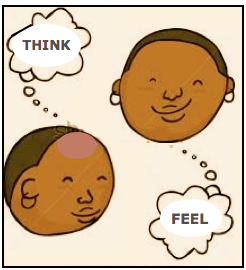
think or feelTHOUGHTS vs EMOTIONS
I’m confused! What are you talking about?

PREVIOUS: Recovery Thoughts


This is a familiar phrase used in 12-Step Programs, but not exclusively. It contains an intrinsic truth and an intrinsic lie.  We have to examine both words – ‘feelings’ and ‘facts’ – to understand.
1. FEELINGS
a. CONFUSION:
• In our language, the word feelings is used in almost every context to mean either thoughts, emotions or sensations, without distinction.
• The main problem is that most of the time people use ‘Feel’ to mean Thoughts, not emotions. This causes confusion for both speaker & listener.

confused• This triple usage may be a clever ploy in our culture – likely unconscious – to suppress Emotions! We’re taught to live in our head & only focus on actions (“Just do it”), which we gladly embrace as a defense against facing our deepest pain.
So, along with many other sources (family, media, male culture, war, sport…) our language encourages cutting us off from an essential part of ourself

b. CLARITY:  We’re not going to change how we talk, but we can understand the 3 uses of the word FEEL, so we can be accurate.
i. Sensations – ‘Feel’ as a Physical experience : I feel hungry, tired, thirsty, sexual…
ii. Emotions: If ‘feel’ as indicating Emotions –  followed only by a single words : “I feel…… sad, glad, mad, anxious, pleased…..”.
AND we can have more than one E at the same time, even contradictory ones.
“I’m happy to see you, but disappointed that Ted’s not here too.” (Posts: Use THINK, not feel)
iii. Thoughts :
 The word “Feel” should never be used to mean Thoughts / Opinions / Beliefs.  Thoughts are always in sentence form, always more than one word. 
When “Feel” is misused, it usually leads with ‘that‘ or ‘like’:
•  “I feel like he wants to talk about something”
•  “It feels like you’re not supporting me”
• “I feel that we should leave soon”
• “I don’t feel that we’re communicating”
•  “I feel like going to the movies”

Stated as such, none of these are about emotions, only ideas – ** even though emotions are implied but not acknowledged. It’s subtle & at best unintentionally, at worst it’s manipulative & dishonest

c. INDIRECTness : Another mix-up occurs when thoughts are expressed in a round-about way. Such statements are clearly sentences, but couched in terms of feeling, which makes the speaker sound unsure of themself. They’re not actually expressing confusion, but rather insecurity by asking for permission to have a voice.

ACoAs are ‘notorious’ for talking around an important point, leaving out crucial info, adding too many qualifiers, justifications & apologies! This misuse comes from not being allowed to own our personal power.
We say:
• “ I hope you don’t mind if I tell you…”
instead of
  “I’d like to tell you something / I need to talk to you about___”

• “Is it alright if I___ , Will you be upset if___ …”
instead of (with a smile, perhaps) “I won’t be able to____ , I need to____ , I’d like to___ , I’m not available for___”

• “I feel like I’m doing better”  instead of “I’m doing better”
• “I feel like I can’t trust them”  instead of “I know they’re not trustworthy”

☑️ Unfortunately, for many ACoAs, being direct is not just considered impolite but actually aggressive! which it is not IF statement are accurate & made without anger.
Sadly, women are more likely to be indirect as a way to not be pushy, which makes staying connected easier, but at a personal price. (BOOK : “He & She” by Chris Evatt)

YES, there is a time & place for careful wording, being respectful of others’ time & space, or for apologizing.
HOWEVER, the above examples of waffling have to do with ACoA shame, S-H, fear of being seen, of punishment or being cut off.

The BEST, clearest way to communicate combines emotions + thoughts in the same sentence : be clear
• “I’m scared you won’t stay with me”
• “I’m so happy that you got the promotion”
• “I feel sad that she’s ignoring me”
• “I’m worried that he won’t like this gift”
• “I’m excited for you & curious about what you’re going to be doing”
• “I’m concerned that you’re going there alone”
This of course implies that we know what we’re feeling (emotions) and have permissions to own & express them.
🔴 Practice verbalizing your thoughts & emotions using declarative sentences, so they come out of your mouth more easily. And repeat, daily: “I know what I know”!

NEXT: “Feelings aren’t facts”, Part 2