Mind-Reading vs. INTUITION (Part 2a)

intuition 1


I JUST KNOW IT –
but I don’t have any proof

PREVIOUS: MIND-READING – 1b

Review Mind-reading, 

1. MIND-READING

2. INTUITION
DEF: INTUITION =  It’s like overhearing a conversation in a language we’re not fluent in but can still get the gist of what’s said. It’s the ability to maneuver within our beliefs & knowledge, giving us a relative awareness of where we are on the map of life
PS: Inspiration is seeing the whole path we need to travel on the map

Intuition is complex – mostly it’s being tuned-in to the world around us – & beyond – picking up info without any obvious source
🔺For some it’s a gut feeling
🔺For others it’s the universe giving them a gentle nudge
🔺For still others it’s the answer to a prayer or a whisper from God

Intuition is an innate survival tool, a compass & a tether connecting us to our environment. It doesn’t have to be supernatural – it is most often a subliminal accumulation of what others are saying, feeling or doing (their T.E.As) & storing it for future reference (see pt. d)

SO – Intuition is in us & comes from us, but is about everything outside of us – the opposite of Mind Reading.
✶ When cultivated, it bypasses or counters certain of our ACoA damage!

a. In the Myers-Briggs Personality Inventory (MBTI), the second of 4 levels is “Sensate vs Intuitive”, which has to do with one’s style of gathering information about the world.
From MBTI Posts :
🟢 S
= ‘I need to work thru a problem to see a result’. Fun: This was great for the price. Communication: Specifics
• At one extreme are the Sensates (S) who need proof of everything, literal & practical. They prefer hands-on, here-&-now tangible experiences, only believing what they can see & touch. They are about 70% of the US population & are considered ‘hard-nosed’ by their opposites

🔴 iN = ‘I see results/solutions to problems at the beginning’. Fun: This just gave me a great new idea! Communication: Big picture
• At the other end are the Intuitives (iN) who ‘just know’. They look for meaning, possibilities & relationships among things (the gestalt). They like to put things in a theoretical framework, seeing things holistically. They comprise about 30% & are considered ‘flakes’ by the S. (See all 4 levels)

NOTE: Whichever side a person prefers is important because MBTI’s 3rd level : “Thinking vs Feeling” then bases decisions on it.

✶ Most people don’t live at the extreme ends of this level (S vs N). But when 2 people in any kind of relationship DO, it is one of the most difficult discrepancies of the 4 levels to overcome.
They never really ‘get’ each other.  This is often a problem between many men (Ss) & women (iNs). But it’s especially hard when an extreme S mother has a very iN child – she’ll likely negate the child’s way of understanding its environment, making the child doubt its perceptions, even its sanity –  especially if the mother is also a narcissist.

b. As Children
• From birth, kids have a capacity for seeing & sensing things that many adults are unaware of. This is an important instinct for them, since they’re so vulnerable & don’t yet have language.  Infants mirror what we present to them, especially our emotions.
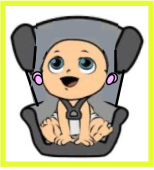
EXP: When a mother takes a slow, deep breath each time she feels tension, either in herself or from the infant, it teaches the baby to do the same. She’s creating & reinforcing the state of anxiety – without ever saying a word!
• Equally so, children who comfortably spend time contemplating & exploring their thoughts & feelings without interference, will develop self-awareness & the intuitive abilities that come from this inner knowledge

•  The absorption capacity of intuition, so highly developed in kids, allows us to assimilate our parents’ inner feelings as much as their overt messages. The combination becomes the Introject – which is only negative if our parents were mentally &/or emotionally unhealthy

Exp:  A friend remembers one evening when she was 6 or 7, sitting with her dad in the living room while he was reading the paper. For no apparent reason she asked him who Lydia was.  He looked at her puzzled but didn’t answer. Many years later she found out that he was having an affair with a Lydia back then, but at that time no one in the family knew about it.  What had she been ‘picking up’ on? – A smell? his guilt? his residual pleasure?

NEXT: INTUITION – 2b

MIND-READING vs Intuition (Part 1c)


PREVIOUS
: Mind-reading #1b

QUOTES: “I will not let anyone walk through my mind with their dirty feet.”  ~ Mahatma Gandhi

• “Great relationships are based on clarity, not mind-reading.” ~ Steve Arterburn, founder of New Life Ministries

• “You’d think a person who could read minds would be able to get a better boyfriend.” ~ Lori Brighton, in “The Mind Readers”
1. MIND-READING (M-R) cont.
a . Official meaning // b. A Variation

INSTEAD OF nurturing us, our family…. (cont.)
i. They Controlled us….. (parents)
ii. We Control others……(safety)

iii. At the same time, mind-reading (M-R) is also a way to imagine that others have what we want & need, since we’re not confident we can provide for ourselves.  “If I take care of you, you will become strong (& grateful) & then be able to return the favor – without my having to ask!”

We learned it was shameful to have needs, so we have to “depend on the kindness of strangers”. WE are not allowed to have anything positive for our False Self – much less for the True Self. All our efforts go into assuming we know who others are & what they want
SO :
1. our need for information becomes “I have to tell her why she’s doing that self-destructive thing – she’ll be so interested”arrogant helping
2. our desperate hunger to be loved becomes “I know he loves me”
3. our need for healing becomes “He‘ll be glad I gave him this recovery book to read, because he’ll see the light & feel better”

4. our fear of loneliness becomes “How could you go on that trip alone?  That must have been depressing!”
5. our fear of abandonment becomes “It must have been so hard for you to leave that relationship / job / country…”
6. our fear of risk becomes “… that was so brave of you!”…..

✒︎ At first glance these statements may seem legitimate because it sounds like the focus is not on us but on the other person.
Actually – we’re making up what the other person needs, thinks or feels, without ASKING, based on our point of view, & therefore dishonoring /disrespecting who they actually are!
✶✶✶ AND – even when they tell us what they like or don’t like – we still believe we know better! How arrealityrogant – & unsuccessful

REALITY (re. the 6 points):
1. She probably won’t want to hear your opinion! Besides, she didn’t ask for it.
2. He barely knows you’re alive, or just sees you as a friend
3. He didn’t ask for the book, won’t read it, doesn’t take any other advice you give, & tells you you’re being controlling (you are!)

4.
She has no problem going anywhere alone, & while she may feel a bit lonely sometimes, she makes friends wherever she goes
5. She was ready to leave, in fact – couldn’t wait!
6. It didn’t take bravery because he wasn’t afraid

EXP of mind-reading:  Ernie is an only child, raised by a mentally ill mother who sat staring at the wall – often for days. Sometimes she’d be ok for a while – except for an occasional fit of rage.  His father was depressed & had no time for him. One way Ernie survived was to live in a fantasy world, & also being a good student.

• As an adult he’s done very well at ‘mental’ work that doesn’t require much interaction with others. Even so, he longs to know the comfort of a loving relationship & family life which he’s never been able to achieve.
When he walks down the street & sees a couple hand-in-hand or a parent talking with their child – he assumes (imagines) their life is great, they have no problems, they’re happy & will be so ‘forever’.

CONTINUING the use of Mind-Reading
Internally — we stay ‘separate’ by living in our own fantasy world //  stay deprived by minimally providing for our own needs
Externally — actually hurt others instead of helping them // we don’t interact with others based on reality
➼ No matter what excuse or explanation we make up about it, mind reading is detrimental to ourselves and others.

⬆️ CHART: Using Healthy Intuition creates safety, not Mind-reading. NEXT 3 posts.

NEXT: Mind-Reading vs INTUITION – 2a

MIND-READING vs Intuition (Part 1b)

illusion
YOU DON’T KNOW ME!

I know I’m right

PREVIOUS: Mind-Reading  (Part 1a)


1. MIND-READING (M-R)
a . Meanings
(cont)

CONTINUING this kind of M-R keeps us:
• Internally – attached to our dangerous family // anxious & needing to isolate
Externally – suspicious of everyone’s motives // missing out on all the good people & opportunities that present themselves

Reality: Instead of making up someone with our mind-reading ‘talent’= our fantasy, we need to stay awake for who is healthy & who isn’t.
Once we clearly see an un-recovered person’s toxic pattern – from having many painful encounters with them –  it’s time to stop giving them the ‘benefit of the doubt’!

EXP of NOT mind-reading:
I taught my 12-week ACoA course “Knowledge is Power” over 10 years. Reaction from students varied widely in every class.   Some listened intently, taking notes & asking questions.  Others seem disinterested – they fidgeted, yawned, fell asleep, got mad, or stopped coming.

Regarding the latter group – IF I had been prone to mind-reading, I would have assumed the ‘disinterested’ people indicated the ‘truth’ – that I was a boring speaker, gave complicated or worthless info & generally wasted their time – the LIEs thatScreen Shot 2015-08-30 at 11.33.21 PM the bad voice whispers!

➼ However, I know I’m a good teacher, that my material is important & useful, & have been told by many students that the course greatly improved their lives.

I also know that some people were very tired (especially being an evening class), some had ADD & so usually have trouble sitting still for 2-3 hours, but most of all –  the class material brought up a lot of difficult awarenesses & intense pain, so that some people just wanted to opt out.
Actually – their seeming lack of interest was ALSO a validation of my work! So there – PP! See – Little One??

b. A Variation
Another way mind-reading can show up is projecting our wishes, needs & tastes onto others.  It’s not a strict interpretation of the definition, but is the same aspect of the child’s narcissism – ‘I am you & you are me.’  It’s still based on OUR personality, not on who the other person is.

INSTEAD OF nurturing us, our family:
• over-controlled us               •  expected us to be little adults
• demanded we be perfect and without needs – so they wouldn’t have to deal with us
• didn’t guide us, so we had to fend of ourselves, without much training!
worried childThis background formed another version of the familiar ACoA Dilemma :
✓ As kids – we had to take care of ourself – not always in material ways, but definitely emotional & often mental, which gave us the message we weren’t worthy of being taken care of – SO
✓ As Adults – we believe we should not / cannot care for ourselves, copying their lack of care, which became lack of permission to focus on ourself

i. Their CONTROL – WIC projects that everyone is like our parents, who were totally wrapped up in their own worries & addictions. They expected us to figure out what they needed & then provide it. This was either said or implied, but we got the message.
☁︎ So we assume everyone else also wants / needs us to do that

• And we were punished for not getting it right!  Either directly, by them berating or hitting us, or just by continuing to be drunk, crazy, mean, depressed….
This left us with a deep well of anxiety – fearful that we’ll always “get it wrong” but not knowing what to do or how to be to please them

ii. Our CONTROL – now we’re the ones being controlling – trying to make everyone & everything around us SAFE so we can feel less terrified, by making sure they have all their needs met – by us. The assumption is that everyone is as weak, needy, incompetent, scared, sick…… as our parents were

The WIC is convinced that when we fix whoever we’re with, they will :  protect us, never leave us,  take care of us, love us …. if only we work hard enough to get it right. Unfortunately, as long as we let our Adapted Child pick relationships, they’re going to be unhealthy, just like our family!

NEXT: Mind-reading #1c

MIND READING vs. Intuition (Part 1a)

mind-readingIS IT REAL OR…..
am I just projecting?

PREVIOUS: Healthy RISK

POSTS: Symbiosis & ACoAs
• “How ACoAs Abandon Others”

See ACRONYM page for abbrev.

1. MIND-READING (M-R)
a. Meanings
This is one of the many Cognitive Distortions (CDs) that plague ACoA & alcoholic thinking :
♦︎Expect yourself to know what others are thinking, without them having to tell you, and
♦︎ Magically assume you know how someone’s feeling, or what they need or want – from you —> so you can provide it!
AND
♦︎ expect others to know what we need, feel & think, without having to tell them.

This CD is a form of symbiosis, (opposite of S & I), the WIC’s desperate desire to stay connected to others — the same way an infant needs the mother to KNOW what the baby needs & feels.
In a healthy family mindreadingthis is provided, which allows the child to form a safe internal base. Then they can outgrow the need to be intertwined & rely on themself.

ACoA impulse to Mind-Read is :
• knowing from experience that our parents did not love us unconditionally & so assume everyone else will feel the same way toward us
• being raised in an environment where the adults hardly ever talked to us, or evaded admitting what was happening, so we couldn’t know what others were thinking or feeling
AND
• growing up in a family where emotional & mental honesty was missing (lying, hypocrisy), so we had to guess at reality
• our fear of separateness – if we ‘know’ what someone is thinking then we’re permanently joined (intertwined), to stave off the bitter loneliness of the WIC
• needing to protect ourselves at all times from the ‘dangerous’ world by ‘figuring out’ what to expect – always
AND
• not taught how to gather info correctly, we make things up. We’re not allowed to ask AND assume we won’t get the truth anyway
• trying to figure out how to behave (if I “know” what you’re thinking I can adjust my actions accordingly)

🦠 Mind-reading is completely about us – not about the person or group we’re referring to. Because it’s not based in reality, it does the opposite of what it’s supposed to accomplish.
Instead of keeping us attached & safe, M-R insures staying at a distance in a fantasy fog, separating us from the rest of humanity, which reinforces our sense of alienation.  No wonder ACoAs feel like we ‘don’t belong anywhere’, even when in a room full of other ACoAs!

M-R also means WE :
♦︎ are sure someone is reacting badly to or thinking negatively about us, without any real evidence… often contrary to what the other person actually feels, says or does….
SO OUR:
✧ S-H becomes “Nobody likes me”
✧ FoA becomes “She would never spend time with me”
✧ paranoia becomes “I know they’re talking about me”
✧ fear of rejection becomes “She’ll be too busy to help me”
✧ perfectionism becomes “They all thought my _____ was awful”
✧ lack of boundaries becomes “The boss expects me to be just like her!”

angry guyMe, me, me!  M-R completely erases others, as if they didn’t have separate identities, minds of their own OR had other things to think about besides us!

EXP: Paul sits anxiously in a 12-step meeting, raising his hand but not getting called on.  He’s convinced the speaker is deliberately avoiding him – “she must not want to hear what I have to say… she doesn’t like me… she thinks she’s better than me…”, so Paul sits & fumes.

Reality: If Paul had asked the speaker about this, he would have been told: “I’m sorry, I saw your hand, but just didn’t get to you.  It’s so hard to pick – you want to include everyone, but there’s just not enough time.”

EXP: If your therapist yawns or seems distracted – you assume he / she is bored with you.
Or if you get invited to a dinner party, you’re sure they only invited you to make up the seating numbers.

Reality: You’re therapist was up all nite with a sick child or has a bad headache! AND, you were invited to dinner because the hostess likes you & knows you’ll be a great addition!

NEXT: MIND-READING vs Intuition – 1b

Another AWARD

Thanks to The MANHATTAN AWARD PROGRAM

Screen Shot 2014-02-18 at 3.25.42 PM

HEALTHY RISK

healthy risk
RISK IS NOT A DIRTY WORD!

as long as I’m realistic

PREVIOUS: Risk Addicted #2


COMMENTS

Risk of any kind usually entails some type of action (T.E.A). When average-functioning people are deciding what to do – ahead of time or if they only have a few seconds to consider – they use a reasonable thought process.
Thinking RISK thru :
• consider your aspirations – hopes, dreams AND level of wishing welldesire
• the short or long-term goal
• do you have the skill or knowledge to at least try
• know your expectations (to succeed or fail)
• weigh pros & cons of the situation
• consider possible consequences, both for yourself, & what’s socially acceptable
• “how important is it”! (whether to push or not)

😲 However, many ACoAs’ thinking about Risk – is either faulty or missing. Anxiety pushes some to act impulsively (R-addicted), & terror holds others back from even trying (R-averse).
❖ Which type you are now – & how you reacted to constant chaos & abuse as a kid – is based on your native personality

• ACoAs are trained to be perfectionist – only Actions counted in the family – but we could never be good enough, since nothing satisfied them.
EXP: Even raising my hand in class felt like too much of a risk. What if I don’t know the answer? What if I’m made fun of?

We’re bound tofall down fall down or become paralyzed from setting the bar for every accomplishment so high we can’t possible reach it (such as trying to make everyone like us!),
Sadly, to the outside world it can look like we don’t set the bar high enough, labeled lazy, stupid or crazy. We are NOT. It’s our terror (E) & CDs that stop us, or cause mistakes & procrastination.

SCIENCE: re. taking actions, we can generally be divided into
— ‘sitters’, who observe & then act, or
— ‘rovers
’ – who act more randomly.
In our culture it’s “Just do it” (Action) vs. “Look before you leap” (Thinking).
We’re born more as one than the other, but when mixed with damage it gives us the -averse or -addict style. Each Personality Type has it’s advantages & disadvantages, & neither should look down their noses at the other!  (MORE… w/ examples)

HEALTHY RISK
Appropriate risk-taking, like all other aspects of mental health – is rooted in balance & goals. What are you specifically trying to achieve in each situation?
Finding a balance between —> considering all possible outcomes (T) vs. —-> just taking a leap of faith (A) requires knowing ourself well, & also how the real world works.planning
a. IT IS
• moving forward in any aspect of your life. Do something!
• NOT about perfectionism (a form of S-H)
• usually not something physically dangerous, AND not as emotionally dangerous as your WIC or PP think it’ll be
b. ARE
• evaluated for realistic advantages & disadvantages
• mostly small ones (sending a text, talking to a stranger at an ‘event’, asking for help)
• occasionally bigger ones (moving to a different state, changing careers, getting a divorce…)

c. EVALUATE
• which negative extreme is your False Self ‘norm‘? What would it be like to swing to the opposite unhealthy side, & what would be middle ground ?
decide what changes you can handle & what’s currently too much – based on self-knowledge about your emotional capacity

get help• who can help you over a hump (of fear) : ask a safe friend to sit with you, go with you, let you be at their place… while you try a new, scary action
• think through the consequences (outcome) of your actions, not using self-hate, co-dependence or fear of abandonment (FoA) as a guide
• consider what the result might be of not taking any action – to you or others
• try out something small & see what happens. It may turn our OK or great. If it doesn’t, figure out what the problem is & try something else.

GROWTH : One of the benefits and joys of healthy risk-taking is finding out that positive outcomes are possible, when guided by our ‘UNIT rather than by the WIC or PP.
Use Book-Ending with your Inner Child to find out what’s possible & what’s not.
MOST IMP: No matter the outcome – catch & stop any form of S-H.
ONLY : Acceptance, Acceptance, Acceptance

NEXT:  MIND-READING vs Intuition – #1

ACoAs: Risk-ADDICTED (Part 1)


DANGER IS MY MIDDLE NAME!
Don’t bore me with your caution

PREVIOUS: Risk AVERSE #2

SITE: “Risk-Taking Behaviors

ACoAs : OVER-RISKERS
ACoA risk addicts are formed by a combination of growing up in a constantly chaotic & dangerous environment – along with a personal ‘preference’ for high stimulation. People with a higher than average need for novelty, change & excitement – don’t always abuse drugs & alcohol – some become scuba or sky divers…. (Zuckerman M, 2004)

Studies look at such causes as:
Biological (hormonal effects), Cognitive (risk perception), Environmental factors / influences (parents & peer groups) & Personality (sensation seeking tendency)

PHYSICAL 
Sensation / Novelty seeking in humans is inherited, with genetics accounting for 30-50 % of the personality trait.  Risk-taking causes real changes in the brain. Major risks release adrenaline, providing a quick rush, & dopamine, giving an intense feelings of pleasure. Over time, it can function much like a drug (adrenaline junkies). Such people may need bigger ones to get the same rush, so routine daily activities will feel empty, even painful.

While these chemicals contribute to a powerful high in most people, the feelings can be especially addictive to people struggling with sadness or depression.
Interesting: This behavior has been associated with low levels MAO (monoamine oxidase), which regulates neurotransmitters like dopamine. Levels of MAO are lower in men than women, & lower in young people than older ones

Research reported in the Journal of Neuroscience indicates that daredevils’ brains are more saturated with dopamine – because of fewer inhibiting receptors – predisposing them to keep on chasing the next high, like driving too fast, drinking & drugging too much, overspending….. ” (MORE….)

Studies of risk-related poor decision making found it was related to lesions on the ventromedial prefrontal cortex. Some studies indicate that people who score high on Neuroticism – a combination of anxiety, moodiness & worry (O.C.E.A.N. types) are more likely to be risk-takers, while other studies found they actually score lower on N. than the general population.

PERSONALITY & ENVIRONMENT
Personality plays another major role in this tendency, such as the kinds of risks a person is willing to take. Some adrenaline junkies have a preferred ‘exciting’ behavior, like a dangerous profession, while those who are highly physical might choose rock climbing or mountain biking as recreation.
Ironically, the dedicated smoker might be terrified of heights, driving, or illness, without ever recognizing that smoking is a risky behavior.

Cultural influences & peer pressure also have an affect. As travel has become a part of the educational path of middle class students, more & more are willing to go to potentially risky locations, & many studies have shown that people are more likely to take risks when in a group.

EMOTIONAL 
IN GENERAL – Not everyone with higher levels of dopamine pursue danger. But those of us who do are cut off from our True Self & a wide variety of emotions, especially the ones we think make us weak – such as loneliness, sadness, vulnerability, terror….. (Review: large range of possible Es ).

Such people feel empty inside, bored & dissatisfied with themselves (S-H).  Along with a need for high stimulation – addiction to adrenal rush – they want to be different from the ‘average’ joe, whom they look down on, but secretly identify with

They love the attention they get from being daring, outspoken & flamboyant.
— When their actions are socially acceptable (bungee jumping, parkour jumping, jet plane testing, ambulance attendant, member of ‘special forces’, fire-fighter….) they bask in the awe & admiration of their peers & public

–When their choices are ‘invisible’, such as undercover agent / spy, risk-taking makes them feel in control, powerful, unique

— When their acting out is less socially acceptable (criminal), there may be few people to cheer them on. But their main ‘satisfaction’ is internal – getting away with something they’re not supposed to do, thumbing their nose at authority, a mistaken belief that they are setting a boundary, expressing contempt for rules…. ALL being run by the Introject and/or the (adapted) WIC.

NEXT: Risk-ADDICTED (Part 2)

ACoAs: RISK-AVERSE (Part 2)

attacks
ATTACKS COME FROM EVERYWHERE!
I have to protect myself at all costs

PREVIOUS: RISK  – Intro

See ACRONYM page for abbrev.

T.E.A for ACoAs (cont)
EXP : re. Portfolio management
RISK Aversion –
a preference for safety & certainty over uncertainty, & the potential for loss or pain
vs. LOSS Aversion : 
a complex need for both risk aversion & risk seeking behavior. It’s not just the desire to reduce risk but an utter contempt for any amount of loss. These people feel the sting of loss twice as much as the joy from an equal size gain – & make financial investment decisions accordingly

Neuro-economic studies have found that when people are facing a loss, the amygdala – our brain’s fear center – begins to fire. It is the same area that reacts to being in mortal danger. No wonder many investors are influenced by loss-aversion.

So too, some ACoAs are :
a. MORE risk-averse – hardly ever taking risks of any kind, living mainly as victims, who stay in menial or unfulfilling jobs most of their work life, stay closer to home, don’t try new things, don’t reach out… And SOME are:
b. LESS averse : more adventuresome in ‘action’ ways, but afraid to risk in other important areas, most often not experiencing their emotions, & avoiding relationship intimacy

😩We learned to ignore potential options, because WE WERE:
• told anything we did was wrong, stupid or not good enough
• constantly interrupted by someone else’s needs or crises, so we couldn’t stay focused on what we needed to do for ourselves avoid risk

• punished equally for big or small infractions of ‘rules’, many of which made no sense or were unspoken! This made us put off or avoid taking normal activities, much less branching out to try things that are deeply important to us, or something more unusual to expand our world

IN the PRESENT – our reaction to childhood trauma is to avoid as much confrontation & newness as possible (co-dependence / risk-aversion).
We’re convinced that all forms of ‘taking a chance’ are bad & will guarantee a bad outcome.
We’ve been trained to assume that that’s the way life is, forever – at least for us! This is so ingrained that we don’t even know that’s what we believe. But we live it every day.
Because WE :
• copy a parent’s life-long fear of risk
obey our specific toxic rules
• rebel against family demands for success
• can’t take center stage in our own life
• don’t want to lose proof of their abuse
• not allowed to be visible, or out-shine them

also FEAR – of:
• abandonment, reprisals, punishment
• authority, not being perfect, not picking right
• being a ‘laughing stock’
• being shown as incompetent (not knowing)
• dealing with competition
• having to deal with others’ jealousy
• not getting our deepest desires, no matter how hard we try
AND / OR have to: 
• face our childhood damage AND CHANGE!
• S & I (outgrow & out do unsuccessful family)
• leave someone unsafe or incompatible (parent, friends, mate, children, job, addictions, locations….) if they prevent our growth
• deal with the discomfort of getting good things now, & being successful, which the WIC says it doesn’t know how to be
• then take riskier steps after that… maybe even scarier (like: write something, then publish, then promote, then…)

RECOVERY
In terms of positive T.E.A., while risk is primarily about Actions, there are many which fit into Emotion & Thinking, in spite of the WIC’s fear of personal growth.
WE CAN: leave home
T. – disagree with & disobey the Negative Introject, outgrowing the addiction & attachment to our family (giving up denial)

E. – tolerate the painful emotions what surface in the process of letting go, both from re-experiencing pent-up old pain, as well as facing being hurt by current family judgment & abuse for ‘leaving them’ ie. upsetting the family mobile by changing the dysfunctional dynamics.

A. …. & risk healthy actions : clearly objecting to abuse, disobeying Toxic Rules by doing positive things for our life, & sometimes having to distance ourselves from actual family members & dealing with the possible fallout.

NEXT:  Risk Addicted

ACoAs : RISK-AVERSE (Part 1)

trapping ALL I’M DOING IS BEING OBEDIENT
so what’s the problem?

PREVIOUS: ACoAs & RISK – #1

POSTS: Book-ending’ with the IC
‘What to DO when confused’

✦ ‘Weak Decision making styles
PROCESS


RISK AVERSION
is a preference for a sure outcome — over taking a gamble for an outcome with higher or equal expected value
⎖ Nobel Prize-winning psychologist Daniel Kahneman wrote, “For most people, losses loom larger than gains, so that the fear of losing $100 is more intense than the hope of gaining $150″

⎖ Columbia University’s Tory Higgins, from 20 years of research, suggests that we see goals as opportunities to provide a benefit. People are either :
⛔️ Prevention-focused, more risk-averse, to maintain the status quo & keep things running smoothly, BUT will embrace risk when it’s their only shot at returning to their status quo
OR —
💢 Promotion-focused, less risk-averse, to make progress & end up better off, with the potential for richer gains

IMP: To be able to risk – appropriately – everyone needs to have :
a. a True Self to make healthy choices, so we don’t need to keep procrastinating as a way to avoid any losses
b. a realistic ability to trust – in ourself, in process, as well as in a safe Higher Power

FAMILY TRAINING
We are all the products of our heredity & our early experiences. We interpret our upbringing thru the lens of our basic personality. But our orientation to Risk is colored by how our parents reacted to people & life events
UNDER-RISKERS
ACoAs see the world as always being dangerous – no matter the reality – IF :fearful parent
• one parent was particularly risk-averse AND we identified more with that parent
• they were depressed & not very functional
• we were constantly told not to trust ourselves AND we learned to not thrust our care-takers, with good reason!
• most adults around us were too scared to go towards new & better people/places/things
• they didn’t protect us from other crazy, abusive & dangerous adults….

EXP: One ACoA’s cold, abusive mother often told him that the world is a jungle, a survival of the fittest – the weak (him) are eaten by the strong (her) & no matter how big you think you are, there’s always someone bigger & badder who will get you! Naturally he grew up to be very timid.

For ACoAs, this style is T.E.A. resistance & withholding
MENTAL – NOT:
speaking up for ourself, asking for our needs or preferences, protecting the Inner Child
• asking for help, making calls, talking to unfamiliar people
• asking Qs when unsure or confused
• responding to a Q when we know the answer

EMOTIONAL – NOT
• being willing to feel all Es & deal with our damage (“You’re only as sick as your secrets”)
• opening up emotionally in the right way, in order to have positive intimacy in relationships

BEHAVIORAL
As all kinds of self-deprivation, not only with food but in many other areas of life ($$, love, career, self-care….). We prevent ourselves from accepting & absorbing many of the good things available to us, because of S-H, from the belief that we don’t have a right to prosperity & peacefulness.
But the deeper reason for not risking much is to keep the fantasy / demand that someone else will eventually rescue us from having to grow up & be responsible for ourselves. It includes —
NOT:
• avoiding pesilent screamople who are needy, users, leaches, abusers
• leaving a bad or outgrown relationship, OR rarely or never being in a good one
• having an adequate (or any) support system
NOT:
• having an adequate salary to live comfortably (under-earning), or not greatly increasing your income
• pursuing a career passion or vocation which has been a long-held dream, taking classes to expand your world, ‘following your bliss‘
• starting over, somewhere else that’s more suitable to you
NOT:
• trying out new foods, changing personal style of clothes or hair when appropriate (with age…), improving your living conditions
• looking for new, better or easier ways to do things ……
• learning & then doing something creative, & showing it off

NEXT: RISK AVERSE #2

ACoAs & RISK – Intro

risk 

TO RISK OR NOT TO RISK –
That is the question

PREVIOUS: Unrealistic Expect.-UNDER

See ACRONYM page for abbrev.

REVIEW posts on (not) TRUSTING


Basic MEANING of RISK

a. taking a chance on something, most often referring to the possibility of harm, misfortune or loss
b.
can also be about a positive outcome, resulting in pleasure, accomplishment & success
c.
OR a neutral / acceptable result – with no danger but no gain

STYLE “a” ⬆️ characteristics
PHYSICAL
• dealing with something or someone known as a source of danger
• a venture chosen without regard to possible loss or injury
• being exposed to the chance of damage or injury, not by choice

EMOTIONAL / PSYCHOLOGICAL
• a situation which causes suffering — being accused wrongly, manipulated & used, humiliated, misunderstood or shamed
• an element or course of action involving uncertain, unpredictable discomfort or distress
• the possibility that something unpleasant or unwelcome might happen beyond ones control

FOR ACoAsmany outcomes
Although the definitions indicate more than one possible outcome, only the a. meaning is considered an option for us – because of  Toxic family rules  such as: “Life is endless suffering’,  ‘You must always struggle but can never get ‘there’,  ‘Don’t expect anything good, ever”…..

In a ‘sane’ world, Risk is minimized or no longer a factor IF the outcome of a situation in known ahead of time based on experience, or is predictable based on dependable information
Then a person can take an action OR avoid a situation – with confidence. This is not wishful thinking, projecting or unrealistic expectations. It comes from realistic knowledge, using present-day Adult ego-state evaluation

• But that’s not how ACoAs operate. We persistently ignore info we do have from years of experience, only using the WIC’s distorted ‘glasses’.
We compulsively pursue unsafe actions, when we  —
✎ choose to return to dangerous situations, stay connected to harmful people…..
✎ & avoid beneficial opportunities, often refusing to take relatively safe actions.
Because of our very deep denial system we keep getting burned – then wonder why we don’t trust!

ANXIETY – ACoA issues around risk-taking are always about internal anxiety. One scared kidscharacteristics on the Laundry List is:
“We have become addicted to (negative) excitement after years of living in the midst of a traumatic & often dangerous family ‘soap opera’.”

ACoAs get things backwards. We keep trying to do the impossible & have trouble doing what is possible!
We’re not sufficiently afraid of some very dangerous ‘people, places & things’ while being overly scared of things that are not actually harmful (like having emotions)!

ALL ACoAs are fear-based**, the Inner Child’s terror of feeling out of control that we bring with us into adulthood, underscoring every aspect of our life. Anxiety is what drives all our character defects, our acting out, our addictions . It’s why the Serenity Prayer is so important for ACoAs!

** Fortunately, long-term recovery – if we’ve been doing emotion-release work – diminishes the intensity of our fear, so it’s not on the surface all the time.  But since our terror-base is very deep, it never dissipates completely.
So we should not be surprised when it occasionally grabs us in the gut – if or when some current event sets it off again. “If it’s hysterical, it’s historical”.

The difference is, or should be – that we’ve built a Loving Parent voice, with years of acting in healthier ways & using our tools, so we can soothe & comfort the WIC whenever we’re triggered (Use Book-ending)

CONTROLcontrolling
The counter-action defense against anxiety is to be controlling (as opposed to Having Self-Control).
It avoids any type of risk-taking that inherently implies unpredictability.
The greater the inner fear, the greater the need to control – in a futile attempt to keep anything or anyone from abandoning us – yet again.

This is why ACoAs try so hard to be mind-readers. If we can figure out what someone feels, thinks or needs – before they say anything – we assume we’ll be ‘prepared’ – for the worst, of course – to prevent being hurt, & stay connected by twisting ourselves into what we hope others will find acceptable.

NEXT: ACoAs & RISK – #2