ACoAs & Being DISAPPOINTED (Part 4)

PREVIOUS: Disappointment #3

SITE: “Overcoming Disappointment


🍎 🙀 💠
RECOVERY: While it’s normal & human to be disappointed from time to time, ACoAs have lived in it to-o-o much.
• To HEAL from early Ds, acknowledge that it did happen, a lot. If you don’t, you can’t heal it. Then do an inventory of all the times you can remember being let down – by age, no matter what the reason. Share it with a trusted person. Let yourself feel the pain, sorrow, rage, frustration, loss, loneliness…. of them all. It’s BIG.

• To counter your current ongoing disappointments :
√ remember the inventory of Ds. Be sure to actually say what you need, first to yourself, & then to someone else, just to be clear.

√ When you ask for something from another person, try to be specific, direct & brief.
Make sure they’re capable!
If the person is reliable they’ll try to answer (yes, no or later) honestly & accurately. If they’re evasive – take that as a NO, & go elsewhere.

• Make sure you provide as much of your adult & child needs as you are currently capable of. Reach out. Try new things. Be aware of your expectations & check to see if they’re reasonable.
Follow thru & don’t just wait to see what others will do. They have busy lives, & either don’t know your needs, or don’t care!
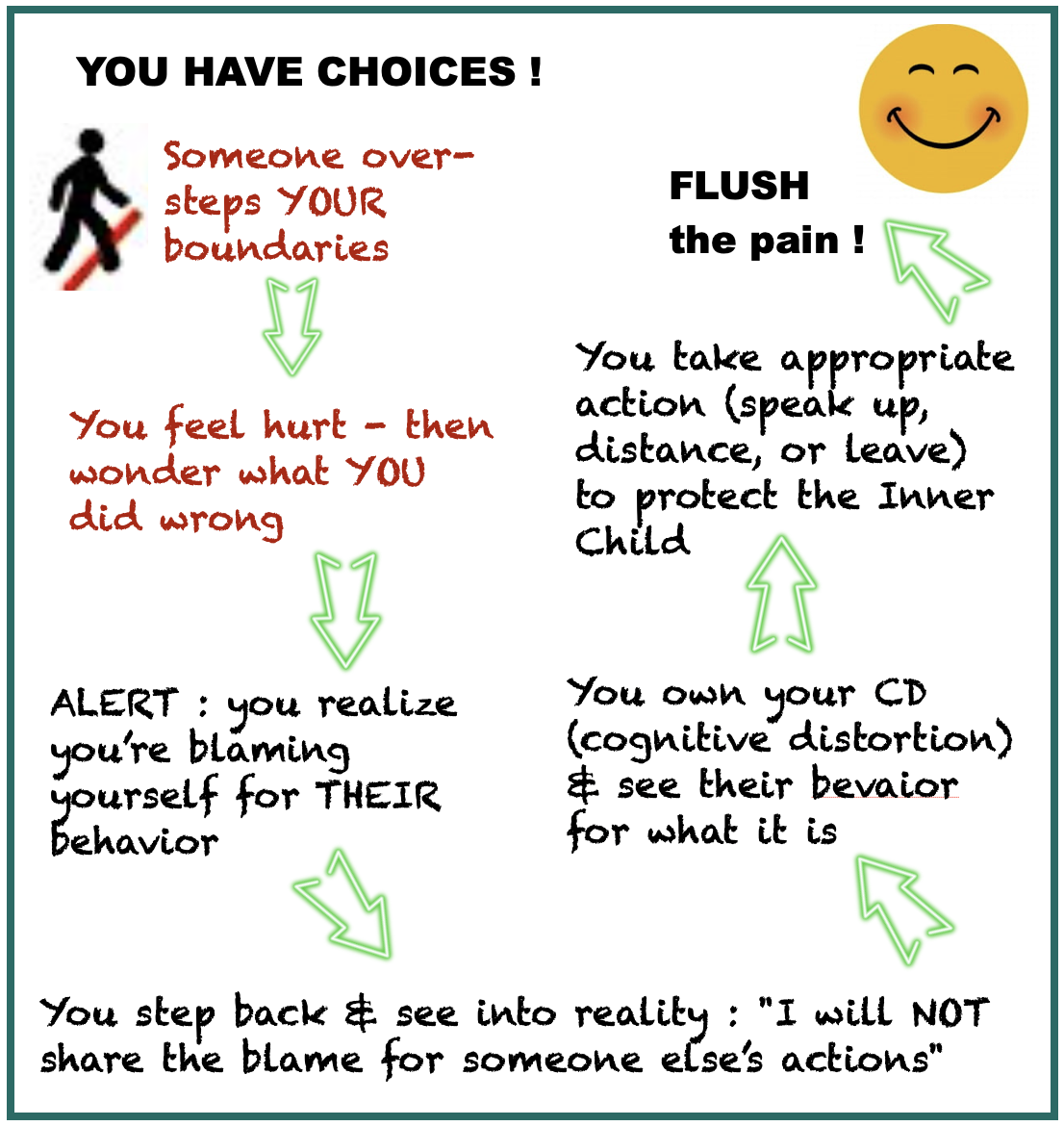
⬆️ CHART: “Opting out means consciously making different choices

• Focus on gratitude – for all the things you DO have. This doesn’t mean being ‘up’ when you’re not, but only shifting perspective. You can still work toward getting what you want – but make sure it’s in the right places & with the right people – who already have what you want & can provide it to you – under the right circumstances.

ASK, ASK, ASK others:
Ahead of time – “Are you sure you can do this? When can you do do it? What will it cost me if you do? What do I have to do to make it happen?…..
If I’m disappointed: “What happened? Why didn’t you let me know you couldn’t —-? Can you still do it soon? / when?” ….
CORRECT THINKING :
√ If you know the person us generally dependable, you can be sure that their reason for ‘forgetting’ was legitimate, AND not about us
√ If you don’t know them, you need to give them at least one more chance, maybe two. No more than that, especially if their ‘misses’ are fairly close together, which spells a pattern
√ If you know them to be unreliable & you’re stuck with them for some reason – DO NOT rely on them AT ALL. Focus on yourself & look for an appropriate support system.

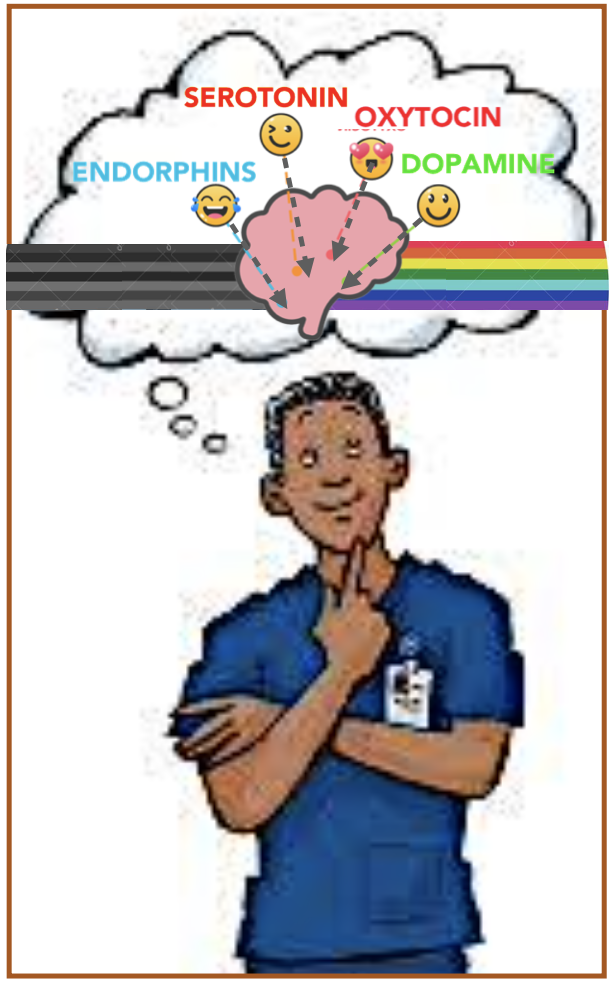
NOTE: We can reduce the impact of these experiences by re-directing them to our cerebral cortex. That is, we must use reason, focusing on the unfulfilling experiences more objectively, correcting negative thoughts.

How we cope with disappointments can become defining moments in our lives, which are most often influenced by our upbringing. Some people try to avoid them by underachieving (setting expectations permanently low), others by overachieving (setting expectations unattainably high).

👁️‍🗨️ INSTEAD we can choose a coping style :
☼ that actively looks to identify what ‘went wrong’
☼ checks if our expectations were reasonable, or not
☼ continues to evaluate our thinkings & actions (introspection)
☼ finds positive solutions, instead of obsessing on the past.
Although some disappointment is inevitable, feeling discouraged is always a choice – based on our beliefs.

TREE Illustration from Dr. Randolph M. Nesse, in AZ.options tree
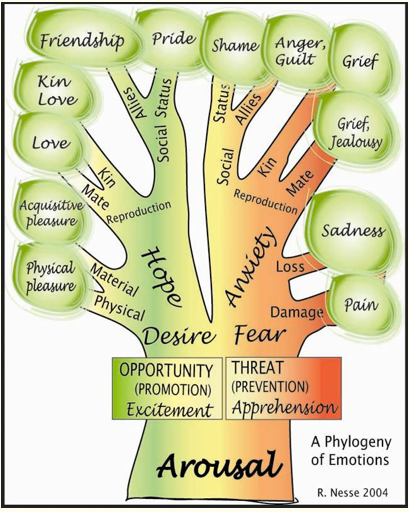
The ‘Disappointment Wedge’ lists 5 painful emotions (in part 3).
This drawing ➡️ clearly shows the two main branches we can climb, depending on where we start.

• For so many of us, the ‘arousing’ factor in our early years was constant threat, generating a pileup of anxiety.

NOW we have options. So let’s go back to the bottom of the tree, & start up the other branch, the one based on positive opportunities & realistic HOPE. It’s what our WIC has been waiting for.
THEN – life’s ‘normal’ disappointments won’t hurt so much!

NEXT: Dealing with criticism #1
ACoAs & Being DISAPPOINTED (Part 3)


PREVIOUS:
Disappointment #2


EXPECTATIONS (cont)
1. COVERT (Part 2)
2. OVERT Types of Disappointment
The less we take care of ourselves, the more needy we are, yet may reject or ignore the help & resources available.
We pick people to ‘rely’ on who either don’t have what we need, or are too self-absorbed to reciprocate, especially if we’re acting the Rescuer / People-pleaser. That drives the WIC to desperately keep look outside of ourselves to provide, for as long as we aren’t willing to take on the Loving Parent role.

• We believe whatever a particular person says, especially things we want to hear (like promises, compliments or endearments) – even though they’ve consistently proven themselves not trustworthy or dependable.  EXP: “I’ll call you tomorrow” but never does. “I love you”, but is needy & selfish, or withholding & critical

• If we have the courage to actually ask for something, & are ‘promised’, but then they don’t come thru, we’re disappointed. We’re angry, even withdrawn, but are afraid to ask “What happened?”

📣 If you’re an extrovert, & feisty, you’ll try to get more of what you want from the person or situation, but angrily, maybe even attacking (the teacher, the belief, the procedure) – & then leave, or keep trying to “force solutions” (in the Al-Anon intro)

Disappointment (D) works like this wedge ⬇️
If our self-esteem & safety depend only on our circumstances, we’re in trouble, because circumstances are always changing. There are too many variables for them to remain the same.

• Too much Disappointment as kids left us Discouraged & frustrated. We didn’t have that many options, & even when we did try to get our need met, most of the time they were thwarted &/or we were punished.

• Slowly the wedge was driven deeper, & we began to be Disillusioned. For many of us this happened very early in life. The more disenchanted – before we could handle the reality of not having a safe family – the greater the need for illusion.

ACoAs have an over-developed fantasy life, based on hopes & wishes without permission to achieve them. This type is not not productive. However – healthy fantasy can be used to fuel our dreams, which then need to be put into FORM

• As Disappointment invaded our psyche even deeper, it lead to Depression. This D. is about loss, whether something we once had, or about all the things we were deprives of.

• Ultimately we end in Defeat. It’s the “Learned helplessness” syndrome. The WIC  thinks that if we’re going to keep getting disappointed, there’s no reason to keep trying.
This is how many ACoAs plod along – barely surviving ‘quiet lives of desperation’. And it all started with years of Disappointments!
SITEs: Christian perspectives 1=Response // 2=Dealing with 

DISAPPOINTMENT & the BRAIN
The pain in our brain after a disappointment is realm because it processes unhappy experiences as events that undermine our balance & well-being. The basic reason is that disappointments are processed in the limbic system, the brain structure linked to emotions.

We know that the body releases endorphins to relieve pain as much as possible when receiving a blow, cut or burn. The brain reacts instantly to the message sent by injured receptors.

However, the same doesn’t apply to psychological “wounds”. Even though the brain interprets disappointment as an ‘blow’ to emotional balance, it doesn’t respond with endorphins. Instead, we experience frustration as physical pain, such as headaches & muscle tension, as the levels of helpful neuro-transmitters decrease.

Neurologists say that the mechanisms of depression share processes & structures with those responsible for disappointment. A neural “jolt” happens before every disappointment. There’s a sudden decrease in serotonin, dopamine & endorphins. So, all those molecules responsible for well-being momentarily stop.

NOTE: We can reduce the impact of these experiences by re-directing them to our cerebral cortex. That is, we must use reason, focusing on the unfulfilling experiences more objectively, correcting negative thoughts.

NEXT : Disappointment- #4

ACoAs & Being DISAPPOINTED (Part 2)

disappointedEVERYONE LETS ME DOWN – so I stay away from everyone

PREVIOUS: Disappointment – Part 1

SITEs: • “How to Cope with Disappointment

▪︎ Psychology of Disappointment

EXPECTATIONS (Review posts – Over and Under)
No matter which form it takes, expecting others to fill our empty heart & mind, instead of being pro-active, means:Screen Shot 2016-05-31 at 10.13.44 PM
• the WIC is still running our life, waiting to find the ‘right’ parent – magically – so we don’t have to care for ourselves

• we’re functioning from our narcissism – always from the point of view that “Everything is about me!” (and against me)
This assumption was not true about the abuse we grew up with, & it’s not true about what people do to us & around us – now. (ACoA 3 Cs : I didn’t cause – the chaos & trauma”)

We know this because when WE change, in Recovery, those same hurtful responses from others seem to bother us much less!
ARTICLE: “Managing Negative Expectations” w/ chart

ACoAs get disappointed (D) by so many things, because the WIC desperately wants the world to be a certain way (to meet all its needs) rather than our Adult noticing AND accepting the way things are – both good & bad – in our environment.

IRONY: With reality in clear view, we can get our needs met by choosing among the many options that are actually available in the present!

1. COVERT Types of Disappointment
Because we’re not allowed to know our wants, needs & emotions, NOR to ask for anything, we imagine (silently expect, demand) that others will read our mind & provide for us – which comes from the WIC

• We truly believe that if we want something a certain way – without saying it – it will automatically happen
EXP: Your B/day (or any holiday that’s important to you) is coming up & he hints that you’ll do something together. You have it all planned out – exactly what you want to do, how it will look & feel.
But you never say any of it.

Then the day comes & it turns out Screen Shot 2016-05-31 at 10.12.55 PMvery differently – maybe not bad, but not what you imagined. Now you’re angry at him, unappreciative, cranky, attacking – OR you decide he doesn’t really love you at all, you don’t feel the same about him…..

OY! You’re deeply disappointed, but how was he supposed to know?

• We naively assume that everyone means what they say, OR will do what they promise. To ‘feel’ safe we need to believe that others are as literal (& ‘responsible’) as we are
EXP: Josie says she’ll bring the book to work tomorrow that you’ve been wanting to borrow. You not only believe it, but count on it, looking forward in anticipation. Tomorrow comes & she’s ‘forgotten’ the book. You’re angry. You’re convinced she’s messing with you, she lied, she…..

• When going into a new situation (class, work, relationship), the WIC presumes they will be safe, needs the people to be helpful, informative, consistent, appreciative, respectful…. & then they’re NOT. Sometime it/they turn out to be very ‘bad’, but most of the time they’re just not what we secretly (unconsciously) needed & expected.

We’re disappointed, so we get depressed or really mad.
📢 If you’re an introvert, or still in Victim mode, you’ll just sulk, withdraw, not participate, sit in misery, or leave without saying anything

NEXT: OVERT

Positive  HUMOR  from Grant Snider

NEXT:    ACoAs  & CONFUSION

ACoAs & Being DISAPPOINTED (Part 1)

empty promises I CAN’T TRUST ANYONE – I’ve been disappointed too often

PREVIOUS: Anxiety & T.E.A. #3

QUOTES: “Longed for him. Got him. Shit.” ― Margaret Atwood

“Disappointment is a sort of bankruptcy of a soul that expends too much in hope & expectation.” ― Eric Hoffer

DEF: The feeling of dissatisfaction that follows the failure to manifest of expectations or hopes, with the focus on the outcome, rather than the poor choices one may have caused the failure – decisions / actions that got one there

• Decision Analysis studies many different topics, including Disappointment – its causes, impact & degree to which individual decisions are motivated by a desire to avoid it.

FROM the Regret & Disappointment Scale:
“The emotion most frequently studied by decision theorists is regret, the counter-factual thoughts that create emotions – when realizing or imagining we would have had a better outcome if we’d decided differently.

Regret depends on a Choice made in the past which led to an unfulfilling action – later causing  counter-factual** thinking.
And the intensity of regret depends on – whether suitable alternatives were available (to the person at the time) but were not chosen.
**Counter-factual thinking is picturing one or more outcomes different from what actually happened. It’s when we obsessively think  ‘If only I had… What if it hadn’t….”

Psychologists & economists have been investigating the relationship between Regret & Choice since the early 1980’s. The emotion of disappointment is also based on counter-factual thinking : when we keep wishing events had turned out more to our liking.

Although regret and disappointment are different emotions, they’re both generated by comparing “What IS” reality with “What might have been”.(MORE….)

ACoAs have very intense reactions to being disappointed (D) – either with outright rage OR deep depression, depending on the strength & importance of the unfulfilled needs, and how long we were deprived of those needs.
This to be such a big issue for ACoAs, which tells us how constant & overwhelmingly abandoned in PMES ways we were as kids – first & foremost by our parents, & then by everyone else who let us down.

• We needed them to be there for us, to encourage, guide, protect, validate, mirror, love…. & they either did these things sporadically, incompetently or not at all.
Constant, endless disappointment in our caretakers (also teachers, relatives, baby sitters…) has left us with a very big wound. It’s one of many wounds – & some of us have buried it so deep, we don’t evedisapponted catn recognize it when it happens again in the present.

To be disappointed we must:
1. have a need ( + desire, wish, dream, hope….)
We may not even know we have a particular need or wish, because we were not allowed to have them, or if we did, we were told in many ways, over & over – that they were not legitimate, were selfish, were dumb….
AND must :
2. (secretly) expect that need to be met.
Since we’re still not allowed to have them, we not aware that they’re always in the background. We still have needs, just by virtue of being alive. But since they go unmet – they can never go away, like being hungry but barely eating anything if ay all – OR eating empty calories & harmful foods / chemicals…..
For many of us, the greater a specific need, the more desperate we become – waiting for someone else to do something for us we should be doing for ourselves or can learn how to
and must :
3. not get that need met : We can track deprivation of need, hopes, wishes….  by the intensity of our reactions when we don’t get something we (unconsciously) longed for, actually asked for or tried to get in some indirect way.

❥ HUMOR from Grant Snider


NEXT: ACoAs & Disappointment – Part 2

ACoAs – ANXIETY & T.E.A. (Part 4)

OUR NEEDS
IT’S ALWAYS WISE to pay attention to my needs!

PREVIOUS: T.E.A. & anxiety (#2)

SITEs:
T.E.A. charts from GOOD MEDICINE˜ Dr. James Hawkins

What Is Cognitive Behavioral Therapy (CBT)? – Using T.E.A.
2. ANXIETY (cont)
⚑ ⚑ TOXIC anxiety //  💚 GROWTH anxiety

🔔 AWARENESS
Cognitive Behavioral Therapy’s (CBT) basic messages :
◆ What we think and do affects the way we feel
◆ Our best effort to cope with our emotions sometimes ends in uncomfortable outcomes which keeps us from feeling better
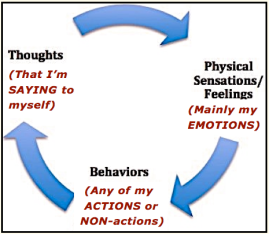
◆ We can better understand problems by examining our Thoughts, Emotions, physical sensations & Actions in specific situations, all interacting in a ‘hot cross bun’ formation.

a. NEGATIVE BELIEFS create painful emotions. Just as we may sometimes be hungry or thirsty for food or drink that in fact isn’t good for us, so emotions are not always indicators of current reality. It’s important to notice when an intense emotion is healthy energy, vs. when it wants to push us in a distorted or unsafe direction.

Unfortunately for most of us, we didn’t always get the right responses to our original needs.  Our family, schools, religion  & other important early influences rarely were respectful of nor encouraged our normal drive to satisfy healthy needs.  It’s inevitably then that we try to make sense of why they didn’t.

As children, we had very limited information about the world, & expected that the adults would know better & more than us.
If we got into conflict or other unsatisfying interactions with adults, our normal child narcissism assumed we were at fault – not them. This is especially true because many of them actually told us we were wrong & the problem, which we had no choice but to believe.
We assumed that : “It must be because I’m are unlovable, untrustworthy, not good enough – that I’m treated this way.”

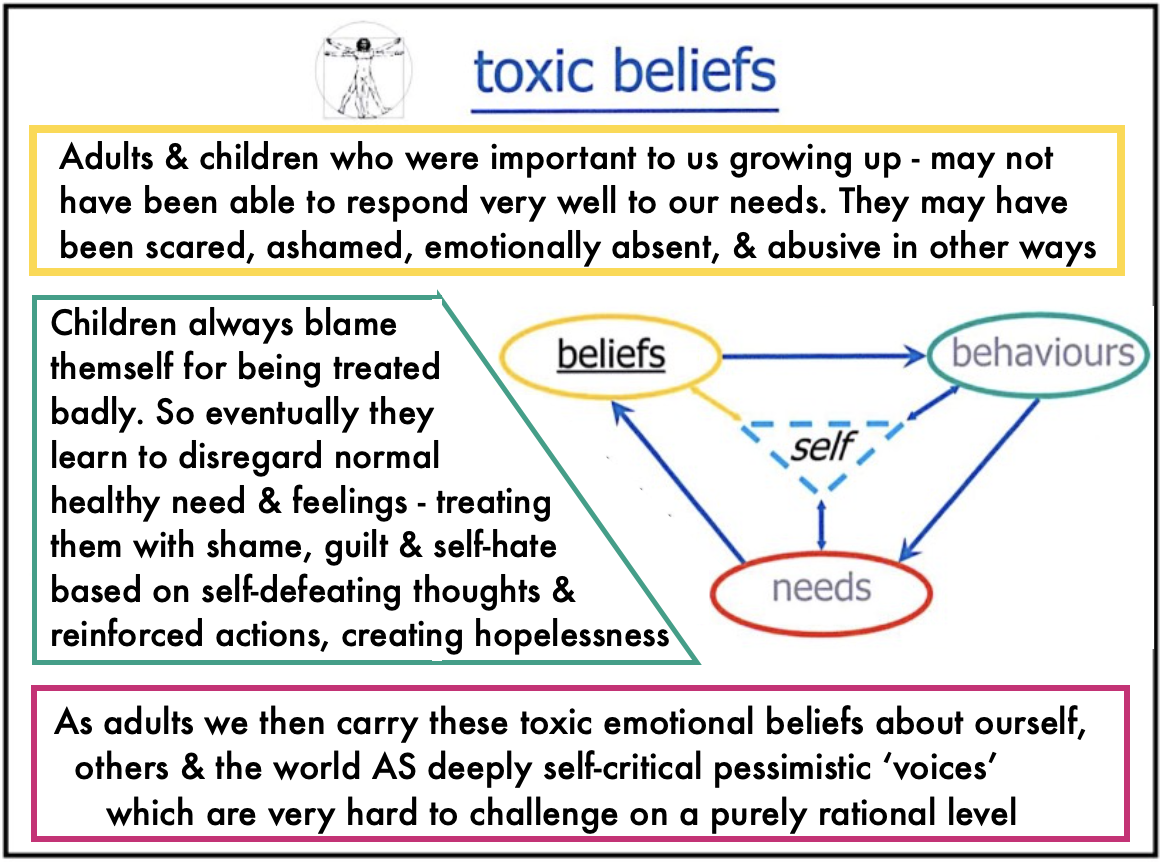
✦ For many of us, we bring into adulthood the original trauma which lead to —-> a great deal of suffering, which led to —-> the toxic beliefs, which inevitably lead to —-> problems in relationships & general functioning in the present

b. UNHEALTHY ACTIONS are created by toxic beliefs
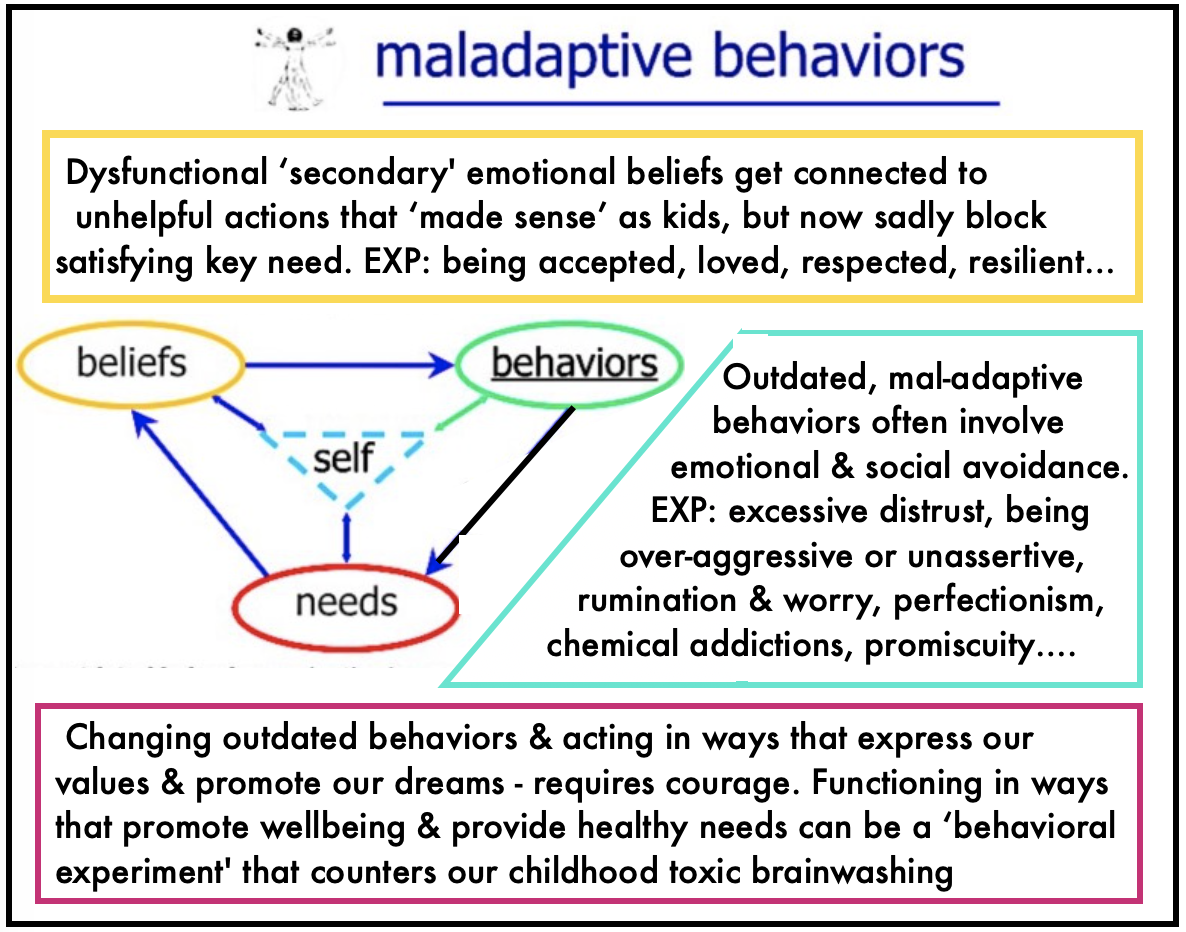
This chart highlights how dysfunctional Behavior patterns develop from unmet Needs & toxic Beliefs – given what we were living thru, & may even have served us well for survival.
But as adults they definitely do not work in the larger world (outside of family), which we can see now having gathered  more info & experience.

c. Mental/ Emotional Health is based on providing personal & universal human NEEDS & RIGHTS
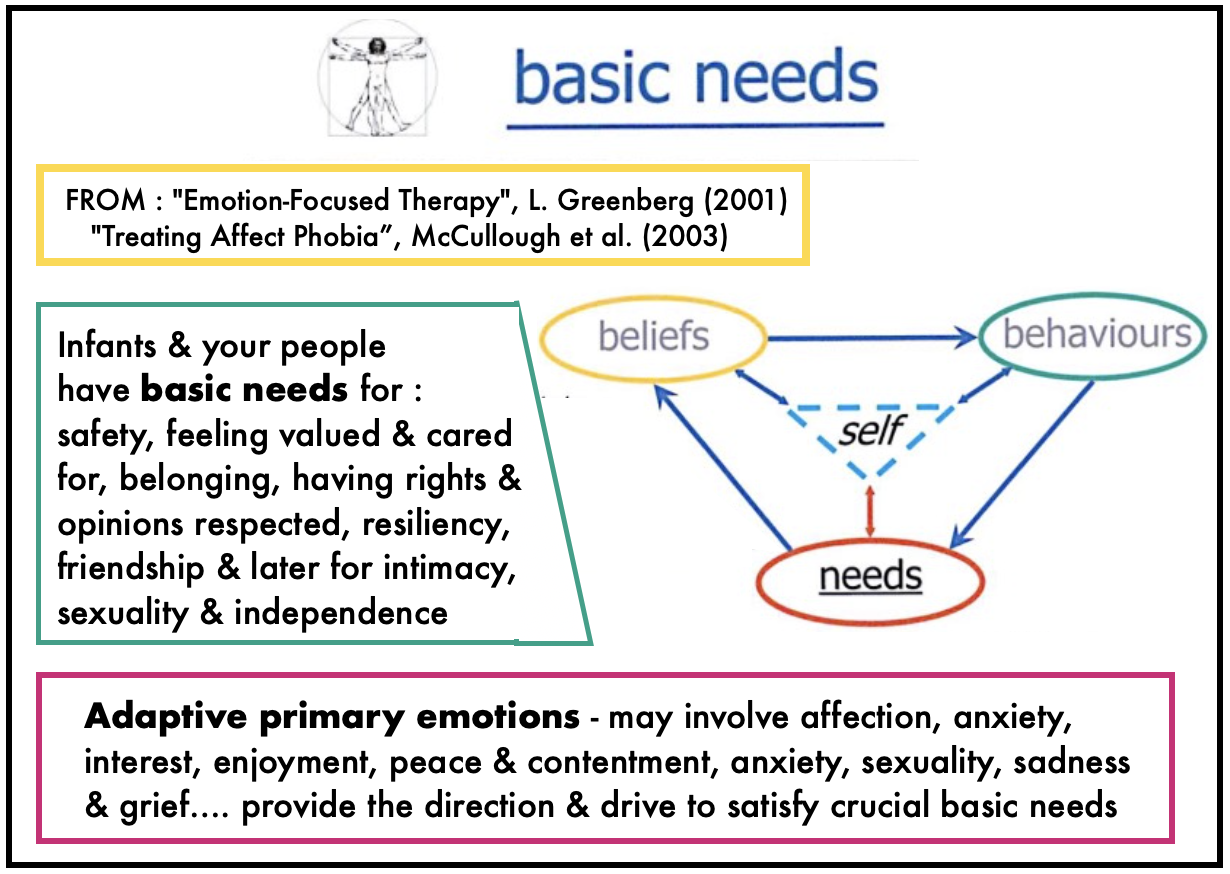
Children need security, stability, feeling valued, encouraged, loved & trusted – in order to build self-esteem & independence. And these needs continue into adulthood for everyone, although ACoAs are still not allowed to fulfill them.

The drive to fulfill needs shows up in basic adaptive feelings & emotions that push us towards psychological health, just as hunger or thirst push to satisfying basic physical health.
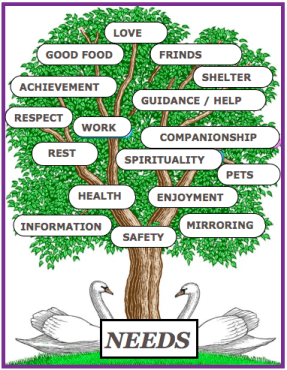
It’s imperative that we allow ourselves to acknowledge & work on providing them. See “Needs” on tree above.
(ChartsMORE info)

NEXT: Being Disappointed (#1)

ACoAs – ANXIETY & T.E.A. (Part 3)

PREVIOUS:
Anxiety & T.E.A. #2


2. ANXIETY (cont.)
⚑ UNDER / ⚑ OVER (Part 2)
⚑ ⚑ TOXIC anxiety
In the present : Our internal process causing anxiety begins with some action which we judge harshly (see Laundry List ),  our harmful, self-hating thoughts about some ‘failure’.  Only then do we become overwhelmed by fear/ anxiety/ panic.
OR the anxiety can be a response to how badly someone else is treating us, simmer to the way our family did.

RULE: Our negative, narcissistic, paranoid beliefs ALWAYS PRECEDE anxiety. Many of us don’t know this because we don’t :
⚡️pay attention to the chatter in our head
⚡️notice what we’re actually saying to ourselves (CDs)
⚡️realize it’s distorted alcoholic &/or co-dependent thoughts
⚡️understand that most of mental spinning is just a bunch of dangerous LIES!
We just end up FEELING scared, worried, in danger!

Yes, we do indeed carry with us piles & piles of old anxiety – from our traumatic, abusive, chaotic childhood. So, present-day distressing events – often beyond our control – can re-traumatize us, bringing to the surface long-held fear & panic we may not even realized was still there

It’s the constant fear we lived with on an almost daily basis as kids – not given comfort for it, & then punished if we cried or objected! And the causes of that fear never got talked about.
Those unresolved emotions got stored in our body as feeling memory (summary) – which need to be verbalized with safe people, then cried out & pounded out.

At the same time – we currently add emotional stress to our life by many self-defeating actions & inappropriate relationships, but more commonly by continuing to believe the abusive messages we got at kids, which we hold as gospel truths!
ALWAYS remember that both accumulated fear & current anxiety is in our WIC (“If it’s scared childhysterical, it’s historical”), who still loyally agrees with the Introject’s messages.

Whenever this wounded Child Ego State takes over – we can’y manage well or choose differently!
😿 It’s not up the child part of us to know how to function in the world!, especially given our woefully inadequate upbringing.
🤓 Rather, it’s our grown-up responsibility to develop a Healthy Adult & Loving Parent (the UNIT) capable of acting in safer, more successful ways.

 💚 GROWTH anxiety : At first, anxiety & guilt will come up any time we break family rules as we Heal & Grow – when taking better care of ourselves, when letting others be loving & kind toward us, when changing how we interacting with other in new positive ways…..

This anxiety is from our earliest experiences, the WIC still believing (T) that we don’t deserve good things, SO it’s convinced that if we reject the old patterns & focus on taking care of ourselves :
• we’ll lose the love of our family, spouse, boss, friends, children….
• we’ll be punished / ignored (again)
• we’ll be all alone forever
• we’ll hurt other people….

PAY ATTENTION! Al-Anon’s 3 As starts with Awareness – so we need to stop & ask:
♢ What is my WIC saying to itself about this situation?
♢ How accurate is it?
♢ How do these ideas reflect my alcoholic family?
♢ Do I need to check out my thinking with someone sane & trustworthy?
♢ What would be a kinder, more loving way to think about what I did or didn’t do?

T.E.A.
When something doesn’t work out for us – like getting caught in a mistake, or someone doesn’t like something we did…. we wonder why.
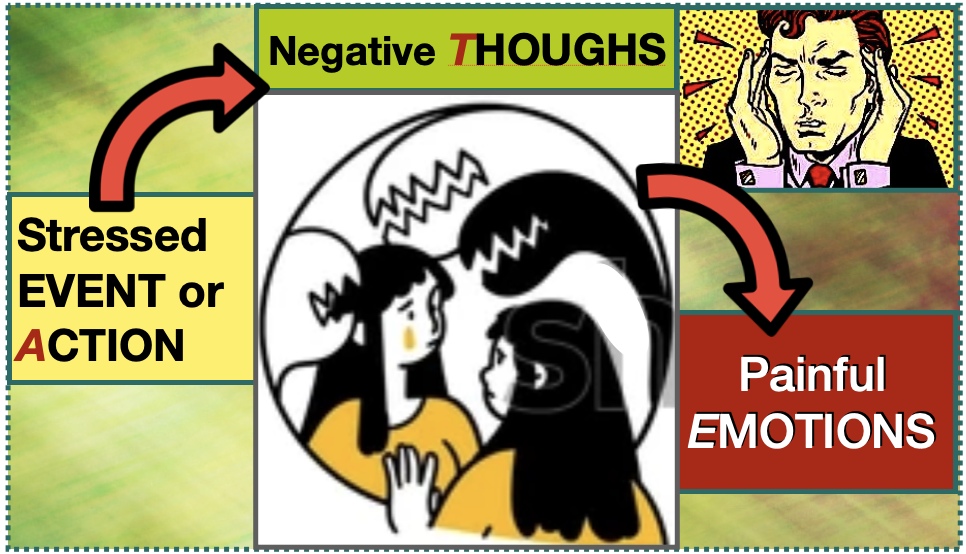
⬆️ INCORRECT order 
When upset : Totally
focused on the emotional pain triggered by a situation – assuming the anxiety is only from the difficult event (unaware of negative thoughts)
OR only on self-abusive obsessional thinking, trying to ‘figure things out’ but not feeling it

⬇️ CORRECT order
To understand what’s going on inside – we need to apply T.E.A. accurately.
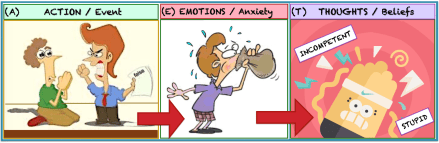
What generates our reactions to an external upsetting event (A) is our Thinking, which causes Emotions, which may or may not lead to your Actions in response.

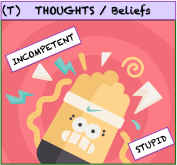
Look for what you’re saying to yourself (T) when trying to explain how you feel (E) about an event (A).

NEXT: Anxiety & TEA #4

ACoAs – ANXIETY & T.E.A. (Part 2)

HOW AWARE AM I about my painful emotions?

PREVIOUS: T.E..A. & Anxiety (#1)

SITEs: Anxiety Fingerprint (Tool 3)
Consciousness & Emotions & the brain

BOOK: Freedom From Body Memory : Awaken the Courage to Let Go of the Past….. “a person can accumulate years, even a lifetime of stress in their body from past experiences….”

1. T.E.A defined (Part 1)

2. ANXIETY (cont)
⚑ UNDER: For those of us who try to skate past our anxiety when something sets it off – we’re deeply shocked, overwhelmed, can’t cope, think we’re losing our mind…… And if we unexpectedly get too flooded, without a healthy way to resolve it, it can trigger an anxiety attack, which is very scary & physically painful

ACoAs will do almost anything to avoid feeling our emotions – especially fear. ‘Coping’ styles (escapes):coping styles
• keep so busy you can’t feel it (or much of anything else)
• withdraw, isolate from people, refuse help or comfort
• find other ways to escape (internet, tv, sleeping……)
• stay angry so you don’t feel scared
• blame everyone / everything else

⚑ OVER: And then there are those of us who are drowning in anxiety – for days, months, years or as far back as we can remember – as our constant daily companion. We don’t know what to do about it, don’t know the source & have never learned how. It’s one reason why some ACoAs actively try suicide – even though few achieve it directly.

Reactions:
• obsess over that you did wrong when upset or disappointed
• search for answers outside of yourself to fix your problems
• use various categories of addiction to numb any unpleasant Es
• dump on anyone who’ll listen : compulsively go on & on about situations & people in your life that upsets you, without any self-awareness of internal causes,
or else try to make appropriate external changes where possible.

CHICKEN or EGG
Whether anxiety (physically & emotionally painful) has been a life-long black cloud always overhead  which has effected everything you do,
OR an occasional unexpected ‘visitor’, seemingly out of nowhere –
2 important questions come to mind:
Where is it coming from? // What can I do about it?
If you’ve asked yourself these Qs, you may have just shrugged ”I don’t know”.

a. Not everyone is self-reflective. Most people go thru life ignoring or using the list above as defense mechanisms to sidestep emotional pain. They’re just baffled & stay that way.

b. Some see a connection between an event (action) & anxiety, but don’t know what it is, & attribute it to something that shows our imperfection :
√ making a mistake, forgetting something, being late, saying the wrong thing, losing something valuable (even temporarily), making  a fool of ourselves, failing at some effort…..

More often it’s something or someone outside of ourselves that makes us anxious :
√ waiting for an important phone call, being called into the boss’s office, a break up, anticipating an attack or punishment, the death of a family member, someone important turning against us, being verbally attacked or accused wrongly, caught in a character defect …..

c. Emotionally oriented ACoAs feel the anxiety intensely, but will only ‘hear’ obsessive thoughts – “spinning” – & assume it’s a way to explain the emotional distress, after the fact. (Suggestion: Enneagram 2, 4, 6 types, & anyone with a lot Water signs in their Astro natal chart – Scorpio, Cancer & Pisces)

Sensitive /emotional ACoAs may assume that a stressful situation is what generates anxiety, CAUSING the spinning (obsessive thoughts) – as a way of explaining the emotional upset to ourselves. (Posts: “What just happened?“)
We may use this kind of endless ruminating:
to beat ourselves up, taking on all the blame for a situation
to identify how bad/ weak/ inadequate… we’re convinced we truly are & in what way
to figure out how to fix it, but from a narcissistic perspective (“It’s all about me!”), via people-pleasing, groveling, hiding out, being belligerent…. depending on our personal defensive style.

HOWEVER – the reality of our internal process is the reverse : our harmful THINKING CAUSES our anxiety!

NEXT: T.E.A. & Anxiety (Part 3)

ACoAs – ANXIETY & T.E.A. (Part 1)

T.E.A. chart

PREVIOUS: Fear of Responsibility (#5)


1. T.E.A.  = Thoughts, Emotions, Actions.
⚠️ Most people are not taught to distinguish between these 3 modalities. This causes much confusion in how we express ourselves, creating a great deal of mis-communication in relationships. While the 3 categories interact, they’re not the same parts of us.

The most important thing to remember is that Thoughts & Actions can be changed &/or modified, but emotions just are. It is not healthy nor legitimate to suppress emotions, while it is necessary & appropriate to choose what we say & do to express them (the words & actions), depending on the situation we’re in.

THOUGHTs – always made up of a string of words.
thinking mindAll of us have running dialogues in our head much of the day, on the surface of our awareness, such as:
• planning what we‘re going to do or ‘should’ be doing

• reviewing what’s happened to us or what we did (pleasant or not)
• ‘dreaming’, wishing, imagining, designing projects……
• worrying, obsessing – often about things we can’t control

• ranting to ourselves about people who hurt us & things we hate
• thinking about things we’ve seen or read
• planning things we want to say, either personal or for work……
AS WELL AS:
• what we’re thinking about under the surface, that’s out of our direct awareness. Some thoughts are deeply hidden, others accessible if we pay attention. This is what sitting quietly in ‘meditation’ is for – to hear the chatter in our head.
(Post:Using Think instead of Feel“)

EMOTIONs – see extensive posts
These are always ONE WORD things – happy, sad, angry, amused, lonely, scared, pleased, sexy, excited……(NOTE: if you say “I feel” immediately followed by a sentence – it’s not an emotion, but rather a thought – a string of words. EXP: “I feel like going for a walk”)

Posts
: Getting to Emotions – Under & Over // ACoA Emotions re Painful Events // ACoAs – accepting & accessing Es // What is Emotional Abuse? // Over-controlling ourselves

ACTIONs – Any activity we DO, as well as things we DON’T do, that are helpful or harmful to oursef & others

📌 An extension of this category – our behavior – is used as a defense mechanism, called “Acting out”, which can be defined as –
• Any compulsive (temporarily out of conscious control) ↵
action or non-action, which is ↵
• a way to externally express or demonstrate ↵
• painful emotions we’re not aware of at all (ongoing repression), or not experiencing at the time about a particular situation we’re in or that we anticipate happening

EXP
: ♟ being late for OR blanking out on an appointment we didn’t realize is making us anxious
♟ starting an argument (T) at the end of a nice evening, weekend (just before leaving the person or group)…. rather than feel the familiar old abandoned pain (E) at the separation, no matter how temporary!

Posts : Actions: Healthy opposites // Noticing painful events // Negative reactions to painful events // Positive responses
💚
2. ANXIETY
 All ACoAs are fear-based, whether our preferred defensive sty
le is to be :
• phobic (fearful, passive, victim, timid, worried, overwhelmed) OR
• counter-phobic (don’t consciously feel scared, & then keep anxietydoing dangerous things to ‘prove it’). This is a reaction to suppressed emotions accumulated from our abusive background or any other traumatic events in our life

❥ When was the last time you were struck by anxiety?
❥ How long did it last? What caused it?
❥ What did you do about it?
❥ OR is it with you all the time? & how do you cope?

Given our painful, chaotic, abusive early years – with very little comfort, explanations or guidance – we carry with us an enormous backlog of fear. This pile-up gets covered over & redirected, so we barely realize it’s there.
Once we’ve cut ourselves off from knowing the source of our fear, in many cases what we’re left with is anxiety – that free-floating painful flutter or tightness in our gut we don’t connect with anything in particular.

NEXT: T.E.A. & Anxiety (Part 2)

ACoAs: HEALTHY RESPONSIBILITY

PREVIOUS: (FoR) Fear of Responsibility  #3b

<—- CHART

SITE :

QUOTE: “In the long run, we shape our lives, and we shape ourself. The process never ends until we die. And the choices we make are ultimately our own responsibility.”  ~ Eleanor Roosevelt

HEALTHY appropriate Responsibility (R)
Psychological  / Social DEF: “…. R is the willingness to BOTH :
◆ accept the importance of standards that society establishes for individual behavior, AND
◆ to make determined personal effort to live by those standards

Personal responsibility also means that when individuals fail to meet expected standards, they do not look around for some cause outside themselves to blame.” (More….)
NOTE: This def. applies to us now as adults.
We were NOT responsible for what our parents did!

1. About Us

• as adults – we take care of our own needs, not wait for someone else to rescue us
• ask for help when we really do need it
• take time to rest, process, rejuvenate – but not isolate

• know ourselves well enough to observe how we functions in the world in many different situations. Improve where possible, but accept our limitations without S-H, & so gain mastery  (Posts: Multiple Intelligences ➡️)

• regularly check the motives that drive our words & actions, & correct them when they’re coming from our damage

• be willing to ‘fess up’ to words or actions we make in error or that hurt someone else, without self-recrimination
• make changes when our thinking & actions are self-defeating or harmful to others
• be interested in improving ourselves, whenever possible – allowing for resistance, damage or outer pressured which may slow down our growth

• identify all our talents, gifts, knowledge & hard work – and USE THEM
• own our strengths & weaknesses, from self-esteem rather than obeying Toxic Rules

2. About Others
• learn the difference between caring about someone & care-taking them
• honor everyone’s personal boundaries, as much as possible (no perfectionism)
• consider the other person’s ‘buttons’ so we don’t keep stepping on their toes

• never assume we know what’s going on with someone, no matter how intuitive we are or how well we know them
• notice what the other person says about themselves & use that (not ourself) as the basis for communicating, gift giving, giving support, choosing activities…

• ASK, ASK, ASK – before giving suggestions, advice, instructions….
— ask if they want or need it
— ask what they’ve done so far so we don’t waste their time (or yours) covering what’s already been tried & maybe didn’t work for them (POST: “ACoAs – Asking Questions“)

• if we can not keep a promise, let them know as soon as possible
• be emotionally honest with others, without dumping, whining, blaming, being too needy or manipulating

ADULTING
Taking personal responsibility can help us achieve more than we thought we could IF:
• we take actions aimed at reaching positive goals – not just do what’s in front of us at the moment
• we understand that long-term improvement comes from persistence, not by ‘trying’ in short spurts, once in a while
consistent ‘right action’ is what really pays off, not just thinking about it

T.E.A. – When we go about our daily activities from an accurate understanding of personal responsibility, we build self-esteem.
As we increase self-compassion (E) & self-awareness (T), some of the difficulties (A) that have plagued us our whole adult life will diminish or right themselves – without trying! This requires modifying or eliminating as many as our CDs as possible. CDs = “Cognitive Distortions

BENEFITS of Self-Responsibility
✶ we gain inner stability from knowing who we are, & then how to behave
✶ it increase self-esteem & allows the True Self to blossom
✶ it makes us more reliable, likable & trustworthy
✶ it allows us to get more of what we want in the world
✶ focusing on gratitude gives us comfort & hope

✶ we have less psychological distress
✶ we can trust our judgement & intuition
✶ it eliminates the need for lying or spin
✶ it significantly reduces guilt & shame
✶ it’s easier to solve problems
NOT BAD, huh?

❗️ Being respectful & kind – which comes from the Healthy Adult, is NOT co-dependence – which comes from the wounded IC.
➼ Consider how you’d like to be treated & then do likewise to others, whenever possible, without hurting yourself!

NEXT:Anxiety & TEA #1

ACoAs: RESPONSIBILITY (Part 3b)

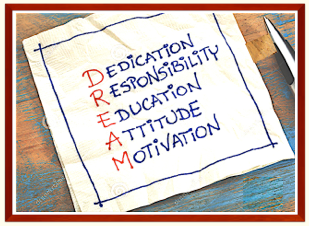
DREAMTAKING RESPONSIBILITY –  WITHOUT SELF-HATE greatly empowers me!

PREVIOUS:
Fear of Responsibility (FoR) #3a

🧍🏽‍♀️🧍🏽 AS ADULTS – GROWTH (cont)
🔆 Steps 4, 5, 9  (in #3a)

🔆 Step 10 – in AA, Al-Anon…. 
“Continued to take personal inventory, & when we were wrong, promptly admitted it

☑️ Comment on Step 10 (re. mindfulness)
This is often misused by ACoAs in the service of perpetuating our self-hate – seeing everything we do as wrong (sorry, sorry, sorry!), which is NOT what it says. Rather: “… and, when we were wrong…” which is not all of the time. (Posts on Step 10)

Because we don’t believe we have any positive, valuable characteristics, we’re constantly barraged by Bad Parent attacks. This is extremely stressful, & for some of us the pressure if so great that we end up spewing it out everywhere we go – constantly telling ALL our flaws, failures, trauma & problems – in great detail. We think it’s being honest & responsible. NOT. screen-shot-2015-07-15-at-10-09-17-pm

This compulsion is actually:

• SELF-HATE, which says: I’m so bad, worthless, unlovable & a f–k up, that I can never do anything right, AND I have to let everyone know that I know, so they don’t think I have an arrogant bone in my body

• LACK of BOUNDARIES – no sense of what’s appropriate about who, what, where & how to over-disclose our wounds. One woman at a Recovery Conference when meeting a friend of a friend – said all in one breath: ”Hi, I’m Mary, I was raped!”

• FEAR OF ABANDONMENT – ACoAs’ default position is that: “I will get abandoned by everyone, sooner or later anyway – so why not get it over with before I get too attached.
I’ll tell them what a mess I am so they won’t be shocked & disgusted later when they get to know me. That’s when they’ll dump me  – when I’m already involved – which will be unbearable”

✦ DOUBLE BIND (D-B) #1boy-sad-clipart-clip-art-clipart
• Our family made it clear they were not going to provide much of the PMES things every child needs. From that we concluded we didn’t deserve to have them anyway, we accepted this lack at a very deep level.
AND yet —
• Our needs never seem to go away, no matter how hard we try to ignore them, still longing to be taken care of anyway. Since we were on our own as kids, trying to get by as best as we could without knowledge or nurturing, & we still are. So we sneakily try to extract a little of those pesky need from the world – but usually in self-destructive ways.

✦ D-B #2
Long ago we gave up hope of ever succeeding at what we were ‘born to be/do”, so now we never go for the brass ring. ACoAs are ‘famous’ for being great at what we like to do the least, since it’s not a threat to our core Self. We think that if we fail at something we don’t care about it won’t matter as much!
⚠️ Andneeds if we dare reach for the sky & actually achieve some success >> at best we assume we’re frauds, & << at worst we find ways to sabotage it

AND at the same time —
— we keep trying to do & be what they said they wanted of us, or what we thought they meant – so we can finally get it right – to get their acceptance & approval!
We keep hoping someday all our effort will pay off, assuming it’s totally up to us to fix, so we bend ourselves into a pretzel – anything to deny our family’s disregard & abuse

✦ D-B #3a
Our family bullied us into emotionally & physically ‘taking care’ of them, insisting when we were children that we act as fully competent adultsfor them (as arbitrator, lawyer, doctor/ nurse/ psychologist, housekeeper, babysitter…..)
AND yet —
— any attempt we made to use those same skills for ourselves were continually belittled, discouraged, made fun of, punished, under-cut…..

#3b – As a result of 3a:
We have to – at least – try to get other people to take care of us, because we truly believe we don’t know how DB #3
AND yet —
— we do take care of others, actually exhibiting amazing skills & talent we never use for ourselves, still thinking we’re incompetent!

✦ D-B #4
We are angry at having to be responsible for others, still protecting the abusers in our life
AND yet —
if we don’t keep up our co-dependent dance with everyone (be over-responsible), we’re convinced we’ll never be able to get our needs met (as reward)  (MORE…. re. DBs)

NEXT: Healthy Responsibility