INDIRECT Abusers (Part 2)


PREVIOUS
: INDIRECT Abusers (Part 1)


Abusers & THERAPY
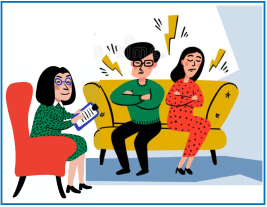
a. There are some covert abusers who will go to therapy because they’re in very real pain – for years & years, but are not actually willing to dig into their unconscious (Shadow side) to clean out their pain & correct their CDs.

These narcissists, borderlines, paranoids…. are trying to get relief by ‘using’ the therapist as a nurturing parent rather than learning how to parent themselves. Unhealthy counselors will fall into the trap & become enablers, while the healthier ones will challenge the client to grow – never well-received – which will likely run the patient off!

b. However, most deeply entrenched abusers (hard cases who have too much to lose) won’t go to therapy because, as far as they’re concerned, the problem is with other people, never them.
If pressed, their reasons for not going may be:
lack of time or money, they’re handling things themselves, they don’t believe in airing dirty laundry, they tried before & it never helped, it’s all psycho-babble & B.S. anyway….

abuser in ther.c. If they give in – reluctantly, it doesn’t last & there’s no actual improvement. Maybe they’ve been told by their adult-children, friends, a spouse….. that they’re abusive & need help. Maybe they’re forced to go in lieu of losing their job or serving time. In any case, their real motives are:
• to get the mate or child to return to their clutches
• to save face, their job, or prevent some other loss
• to get better at their all-consuming passion – psychological warfare – by using their newly learned therapeutic info & tools, but in a distorted form

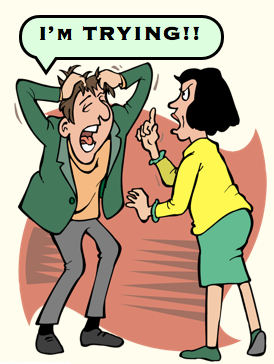
❖ AND then demand credit for ‘trying’, but always blame the V. when nothing changes, saying the V. is the real cause of their problems, since they’re not acting “right”.  SO, it’s completely unrealistic to believe that the P. is going to counseling to face their underlying damage, the same way you can’t trust a married boyfriend who keeps promising to leave his spouse.

EXP : The game “LHIT Look how hard I’m trying” lays out this pattern, which can be applied to – gov’t leaders, poker players, office workers, kids, mates….. The P acts like they’re making an effort but really aren’t. (4 more from GAMES PEOPLE PLAY, by Eric Berne)  (Read about Transactional Analysis)

▶︎  Mate ‘A’ pushes mate ‘B’ to therapy, who is not at all interested. They go together, but B quits after 1 or 2 sessions. Their relationship either limps along endlessly on its own, or ends in a split. Either way, B can say “it’s not MY fault – LHIT!”
Psychological Games can also apply to kids cleaning or spouse doing chores. They try but bungle it, so parent or spouse can’t ‘justify’ anger & punishment – who ends up doing everything themself.

♟THESIS = Passivity, to show that “I’m helpless & therefore blameless”
♟ STROKES = through belligerent exchanges
♟ AIM  = to avoid guilt over angry feelings, domestic responsibilities & intimacy
♟ ROLES =  2 or 3-handed : “Steadfast”, Persecutor, (+ Authority)
♟ MOVES = A suggests, B resists // A pressures, B complies // A tries to get approval, B makes sure requests fails

BOTH Direct & Indirect abusers do great harm, but NEVER because of anything the Victims are or have ever done! Mistreatment is totally on the P’s shoulders. As with others addicts, the P must be willing to face & own their actions & deeper motives, but toxic narcissists will NOT….

😪 Therefore, no effort by the V to stop the abuse will ever work.
Al-Anon offers 3 Cs for Vs: “I didn’t Cause it, I can’t Control it, I cescape abusean’t Cure it.”
GOOD NEWS:
Given enough time, many victims reach a tipping point, perhaps ‘suddenly’ wake up to their rights, understanding & finally believing the abuse is not deserved
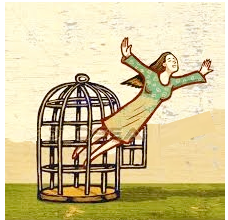
OR are simply not willing to tolerate the humiliation & pain anymore. They’ve had it, & decide to get out & get help for themselves.

• The faster Vs can come to this conclusion, the less damage we have to repair. Listen to that still small voice whispering in the background, to your gut & all the comments from others about your situation. YOU can change your life.  The abuser likely will not tolerate the changes in you, so plan your escape!

NEXT: DELIBERATE Abuse – or Not? #1

INDIRECT Abusers (Part 1)

  …. BUT HE’S SO NICE TO ME –
the rest of the time!

PREVIOUS: Direct abusers

RESOURCE:
Dr Irene’s great Verbal Abuse & Recovery site

See ACRONYM Page for abbrev.


COVERT ABUSE  (CA) – Emotional, Mental & Spiritual
• Emotional abuse is one of the most under-reported stressors in the US today. Blatant emotional cruelty may be noticed by others, & definitely felt by the Victim (V) – even if they ignore or excuse it.
The indirect type is consistently administered in small doses, ways the abuser uses so it’ll be easily overlooked, as it gets woven into the fabric of the relationship.
In China this is a form of torture called Lingchi =”Death by a thousand cuts“.

Typically, the V. will say : “It’s not all bad, You don’t know him the way I do. I know she loves me. When something goes wrong it’s really my fault. He didn’t meant it. She’s just under a lot of pressure. I don’t want to miss out on the good things we have together. He needs me. It’s only because she’s in pain” ….

• Sneaky Perpetrators (P) are also full of S-H & FoA, but they hide it better than Vs.  They also think they’re unique, so different from others that they don’t have to follow the same rules as everyone else. Yet they actually have a lot in common with all other Ps, sharing similar thinking & behavior patterns.

While they may never lift a finger to physically injure anyone, the psychological damage they do to others, with it’s long-term scars, are much harder to heal.
Victims are threatened & terrorized emotionally when they try to object to how they’re being treated. A major result is that they don’t believe they have a right to identify themselves as Vs, or to admit their mate, adult-child, friend, relative, boss….is actually abusive.

• TO outsiders, sneaky emotional abusers (E.A.s) don’t stand out – they usually present themselves as decent, successful, calm. They have a talent for creating a public image that contradicts how they are behind closed doors. They use public venues to have an adoring audience & as an outlet for their ‘better’ qualities (at work, church, politics….) —covert abusers
— but will take out their emotional sickness on those who are closest, most vulnerable & most dependent on them. In general, Ps needs a safe place to let their dirty hair down where no one will judge them, hold them accountable, object or leave!
TO their families, they’re often childish, controlling, self-absorbed, cheap, hypercritical, compulsive, & mean-spirited. What’s so confusing is that this type of abuser is actually BOTH. But the abusive side always wins out in private.

• Covert Abusers are passive-aggressive, which means they show their anger (aggression) sideways (passively) by withholding information, deliberately stalling, being stubborn, sulking, and/or not trying their best. They ignore reasonable requests to put in a reasonable amount of effort into their closest relationships. They pick partners who are push-overs with low self-esteem, who find it easy to make excuses for the other person’s terrible behavior.

EXP: Ps will make you choose an action that affects you both (dinner, movie, trip….) & then blame you because they didn’t like it or it didn’t work out. They also may deny that you asked them for their opinion or input in the first place, accusing you of being controlling. You’ve been set up! Altering another’s reality is abuse.

FORMS of Cover Abuse
Brainwash: using systematic & often forcible pressure, they coerce someone into adopting radically different beliefs from their own
Crazy-making: throwing someone mentally or emotionally off-balance, making them easier to control (so they don’t trust their own thoughts)
Divert / Evade : change any “undesirable” topic to something irrelevant, illogical or crazy
AND
Gaslight: psychologically manipulate someone into questioning their own sanity (not trust their own memory or observations )
Groomingprepare or train someone to become submissive for a particular purpose or activity, by first being overly-attentive
Guilt-tripping : shift blame, act sincere then retaliate with silence, word twisting & circular conversations
Playing the Victim : act like they’ve being injured by any request for communication or appropriate responsibility  (MORE…)

NEXT: INDIRECT Abusers (Part 2)

DIRECT ABUSERS

THEY ALWAYS SCARED ME  now I can’t say how I really feel

PREVIOUS: What is abuse #4

SITE: Characteristics of Abusers

QUOTE: “Social anxiety results from being around people who are resolutely opposed to who you are.” ✍︎ Stefan Molyneux (Freedomain Radio)

OVERT ABUSE
(Perps = Perpetrators, Abusers / Vs = Victims)
• The visible form of overt abuse – physical violence – is easiest to identify. But Vs are usually too broken & ashamed to acknowledge what they’re enduring : “I walked into a door, I accidentally fell , It’s nothing, they didn’t mean it”…..

However, there are other direct ways that only the V experiences (list below). Cover-ups are used by all types of Vs : TOWARD single women, financially dependent mothers, children, the elderly, and abused men – to not show weakness. Shame silences.

• All blatant abuse is done with no concern for the physical or mental well-being of the victim. Even ‘loved ones’ have no real or separate existence – the V is just an extension of the Perp’s internal world, experienced as part of themself, like one of their own limbs. Narcissistic mother to child:  “Put a sweater on, I’m cold!”

👺 Most Perps totally believe they have a right to control, put down, manipulate. They consider it legitimate to exert power over others, and that weak people deserve to be put in their place – because weakness is to be despised. By extension any weakness in themself has to be eradicated!  Besides, they say Vs are ‘asking for it’ by being pathetic. So there’s no reason for the P to change!

IRONY: Abusers believe & act as if they’re the god of their personal world – to be obeyed & worshiped. YET they’re totally dependent on others for their sense of equilibrium & well-being!

IF they loses power over others, it can feel like they’re losing control of a limb, even their mind. Their insecurity-driven anxiety will trigger violence, intense manipulations & frantic attacks, in an effort to shore up the endangered False Self & force the V. back into alignment.
BECAUSE:
• the independence or disobedience of a significant other radically diminish the Perp’s identity & supply of psychic nourishment
• it forces the P to experience not being the center of everything, while not realizing their world view is way ‘off’
• they lose the sense of control over their inner world (thoughts, feelings….), which they find intolerable

CONFUSED Victims often say “I just don’t understand why they…” OR obsessively repeat: “Why are they doing this? What did I do wrong?”….

➼ Vs are not asking for self-knowledge, nor compassion for the P. Rather, it’s their WIC’s need to placate the monster they’re not allowed to leave.
Traumatized ACoAs believe that – “If I could only figure out exactly why they’re acting this way, then I can change myself, them or the situation (mainly myself), then things will get much better & we’ll all be happy!”

BEHAVIORS  (see also  “TRAITS” )
Degradation: make the cost of resisting seem more dangerous to the V’s self-esteem than giving in. Reduces them to “animal level” concerns
Enforce Trivial Demands: create the habit of giving in (compliance)
Induced Debility & Exhaustion: weaken mental & physical ability to resist
Isolation : eliminate all social support which would help the V. to resist. Create in the V. an intense concern for & dependence on the P
THEY:
Monopolize Perception : focus the V’s attention on some immediate problem, forming a narrowed vision of reality.  Eliminate any input competing with those chosen by the abuser, preventing the V. from taking any opposing actions
Omnipotence: make it clear it’s impossible to resist being abused & dominated
🖤 Use Occasional Indulgences: The P provides ‘positive’ motivation for the V’s continued compliance (payoffs for obeying), but keeps the V starving with crumbs to keep them quiet & coming back for more
Threats: Cultivate fear, anxiety & despair
(from Dr. Judith Biderman, MORE...)

NOTE:  At the end of “The Sopranos’, the therapist fires Tony after reading a -genuine – study by Samuel Yochelson & Stanton Samenow, psychiatrists specializing in the criminal mind. It reports that therapy doesn’t actually help sociopaths – only further enables their bad behavior by sharpening their manipulative skills.

NEXT: Indirect Abusers, #1

What is EMOTIONAL Abuse? (Part 4)

PREVIOUS: What if emotional abuse

SITE: Understanding Your Core Pain and False Self

(P. = Perpetrator  /   V. = Victim)


TYPES of EMOTIONAL ABUSE (E.A.) (cont.)
🖤 NEGATING Ways
a. Denying – Perps :
• disallow & overrule your viewpoints or feelings that differ from their own
• dismiss emotional needs, especially when you’re in great pain (of any kind), with the intention of shutting you up, by hurting, punishing or humiliating
• refuse to consider your request to be treated better
• withdraw emotionally, refuse to listen or communicate, use the silent treatment as punishment

b. Invalidating – they
• refuse to acknowledge reality by denying specific events actually happened
• negate your observations, memory, even your sanity
• try to distort, undermine & negate your perceptions of the real world
EXP – Perp’s responses to you
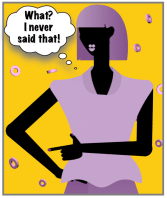
▫︎ when you object to being called a bad name, they may insist :
“I never said that,  don’t know what you’re talking about,”…
▫︎ if you indicate you’re hurt by something they did or said, they’ll sneer :
“Geeze, I was just kidding! That shouldn’t bother you. That’s your problem. You’re too sensitive…”
P.S. A possible counter: “Well, you’re not sensitive enough!”

c. Minimizing : a less extreme form of invalidation – they
• may not deny that a particular event occurred, but will downplay the severity of an abusive episode, & question the validity of your emotional experience or reaction
• may say “You’re exaggerating, blowing this out of proportion , You made that up, You’re over-reacting….”, implying you’re “crazy” since your evaluation of the experience is faulty

d. Trivializing : An even more subtle form of denying – they
• underplay their own behavior while telling you that your actions, thoughts & feelings don’t make sense (not important or legitimate)
• suggest that what you’ve done or said is stupid, unimportant & not worth bothering with

🖤 UNREALISTIC EXPECTATIONS – They
• accuse you of being selfish if you don’t do exactly what they want
• demand constant attention, to spend all your free time with them, & expect you to put aside tasks & down-time to focus on them
• indicate that no matter how much you give, you always fall short
• put unreasonable demands on your time, energy, space, money…. then berate you for not fulfilling all their needs
• say you’ve stupid but expect you to be their perfect cleaner, lawyer, doctor, parent, lover….

🖤 WITHHOLDING  – they
• doesn’t pay attention to or help with everyday ‘little things’
• leave out important information you need
• never gives praise or shows appreciation for your efforts
• never shows concern, won’t offer to protect & never have your back
• refuse your offers of affection, approval, appreciation, love, validation
• won’t say where they’re going or what they’re doing

Some Results in YOU

Overall, long-term abuse creates ‘learned helplessness‘  (MORE…)
• always on edge, anxious, off-balance  •  become hopeless & depressed
• lose respect for yourself   • often get sick  • self-esteem erodes
• question & mistrust your own perceptions & opinions – lose all confidence in your most valuable survival tool : your own mind

❤️ ANTIDOTES to E.A.
It’s very hard to take in love from others when you’re scared all the time! (See Maslow’s Hierarchy of Needs). And we won’t ever feel safe if we:
a. choose & then stay with abusers
b. stay emotionally shut down, or over-react to every event or comment

• The best defense is to know what to look for (T) AND then stay awake to your physical reactions that tell how you’re feeling (E).
Being in touch with your intelligence, intuition & every nuance of emotion is vital : Our Es let us know when who or what is appropriate or inappropriate for us. Then we can act accordingly. That’s up to US!

• As we clean out old pain we clear a channel to our True Self, which includes having legitimate, in-the-moment reactions to our environment.
Like the Ick Factor – that little jolt in the gut when we’re with someone who says or acts in away that’s wrong for us. Because it’s subtle, it’s easier to notice it IF we’re not full of anxiety.

Whenever we experience & acknowledge that ICK, we can ask what that person meant by their comment, or just say ouch!
Whether you’ve spent a few days, weeks or months with an Emotional Abuser, once you have the correct info you can recognize if they’re unable or unwilling to change. If that’s the reality, it may be time to curtail or eliminate the relationship.

NEXT: Direct abusers #1

What is EMOTIONAL Abuse? (Part 3)

YOU NEVER ADMIT
what’s really going on!

PREVIOUS: What is E. A.? (#2)

SEE ACRONYM Page for abbrev.


P. = Perpetrator / V. = Victim
TYPES of EMOTIONAL ABUSE (E.A.) 

ASSERTIVE = standing up for ones rights without intent to harm.
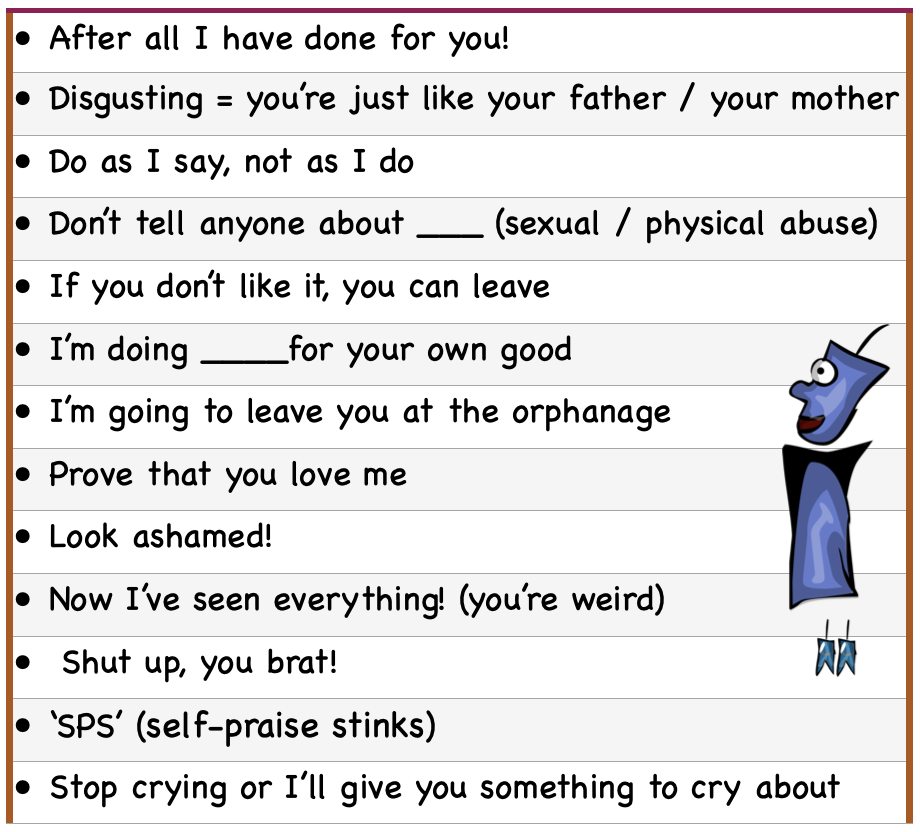
Statements we may have heard growing up
VS
AGGRESSIVE  = deliberately trying to hurt someone, at any level (PMES). The receiver of the aggression may not be the actual target, like kicking the dog when you’re mad at your boss

EMOTIONALLY HARMFUL statements we may have heard growing up ALSO, they tell outright lies about us, and love to recount to everyone -sensitive, shameful or embarrassing stories about us
Naturally, this list is only a fraction of what damaging family & other adults are capable of – a guide to help us think about what we may still be ignoring from the past OR still putting up with, maybe without realizing. (Journaling POSTS – “Writing for Personal Growth“)

TYPES of EMOTIONAL ABUSE (E.A.)
✔️ Direct & obvious
Perps usually have an angry, attacking attitude. THEY :
• make you one-down to them by judging & invalidating you, undermining the equality & autonomy essential for healthy adult relationships
• use accusations, blaming, labeling, name-calling, ordering around
• use one-up parent-to-child communications, infantilizing you

✔️ Dominating
INDIRECT -They
• railroad discussions, talk over you, won’t give you room to respond…. so you don’t have time to identify what’s wrong with what they’re saying or doing
• if verbally clever, they’ll make their point seem perfectly logical even though they’re twisting everything in their favor, using CDs
DIRECT – They
• give away or throw your things out without discussion or permission
• smash, throw, deface or cut up personal or household items

• want to control your every action, to have their own way – and will resort to threats & verbal attacks to get it

✔️ Emotional Blackmail – they
scared• draw you in by being nice, then unpredictably say something cruel, or push you away, act disgusted
• play on your compassion, values, guilt, shame, limitations or other “hot buttons” to get what they want
• threaten to end the relationship, to totally reject or abandon you, ignore or use other fear tactics, unless you give in

✔️ Indirect – they
• are often disguised as “helping”- BUT it’s actually criticizing – ‘fixing you’, giving unsolicited advise, analyzing you, questioning your tastes & decisions
•  use the implied judgmental tone of “I know best” – to belittle, control, or demean, rather than support your growth & development

✔️ Threaten
• to leave, any time they don’t like something – but doesn’t go
• to take the kids, the car, the house…  • to stop paying for important necessities  • to get you fired  &/or ruin you reputation using lies
• to hit or do other harm (your kids), but don’t follow thru
• to commit suicide (& it will be your fault), but never do

✔️ Verbal assaults – theyScreen Shot 2015-07-15 at 2.51.42 PM

• berate, belittle, criticize, name call
• blow your flaws out of proportion, harping on them
• constantly blame, use sarcasm & humiliation
• make fun of you, any time, & in front of others
• scream, threaten you physically

NEXT: EMOTIONAL Abuse? (Part 4)

What is EMOTIONAL Abuse? (Part 2)

CRUELTY COMES IN MANY FORMS –
& they all hurt my feelings!

PREVIOUS: Emotional Abuse (Part 1)

SITE: Types of Emotional Abuse 


EMOTIONAL REACTIONS to Emotional Abuse (E.A.)

✶ The most important thing to remember is that ALL categories of abuse cause emotional damage. We need  to notice how those actions or words make us feel emotionally – as in – NOT happy!

UNDER
– No matter how much head knowledge we have about our issues, without doing deeper FoO work many ACoAs have a hard time even recognizing familiar abuses as they’re happening, much less feel an emotional sting. If we’re still numb from old pain & lack of self-care, it’s very hard to connect depression & S-H with being exposed to E.A.

• It’s as if we were wearing that huge white medical collar that vets sometimes put on dogs/cats – we can see over the top, but not the knife in someone’s hand as they stick it in our gut – especially if they’re smiling!
We may feel some pain, but don’t understand that it’s truly coming from outside of ourself. As trained victims from childhood, we always assume that – if we’re hurting – it a sure sign there’s something wrong with us. NOT SO!

OVER – When we do over-react emotionally to a person or event, the tricky part is being able to over-reactseparate what just happened in the present from the accumulated suffering of past abuse. Often it IS a combination of the two, in layers – like when someone’s only ‘stepped on your toe’

Instead, it feels like the foot has been cut off & we’re left bleeding, because of all the times our family did the same thing to us.
Whenever we have an intense reaction we know “If it’s hysterical, it’s historical”. We need to validate our fear, outrage, sadness…. while still staying in the present moment & seeing reality.
SO,  we can:
• double check** if something was actually an abusive situation – or are we reading into it (projection) because it’s so similar from the past.
⚙︎ ASK: “Did this current event call for such an intense reaction?
Do I feel like I’m being stomped on, discarded like garbage or my life is being threatened – when all someone did was not text immediately back, looked at me ‘funny’’, not said hello, told me what to do…..

** ‘Checking’ may include asking someone we trust for an evaluation of the event, or going back to the original person & asking what they meant by ___?, or why they did ____?.
Whether they tell us the truth or not, many times their answer will be surprising – it’s not what we thought they meant, because it had nothing to do with us.  So we could not have guessed what they actually meant!  It’s important to ask.
work abuseWe can also:
• identify unpleasant or inappropriate words & actions that did actually happen, instead of ignoring the event or how we feel. They weren’t just in our imagination.
For some ACoAs this may take outside validation too, including comparing lists of ‘My Rights’ against Abusive Behaviors.

✶ All Over & Under-reactions come from our WIC or PP. Appropriate responses (not reactions) come from our UNIT.
Learning to tell the difference between actual abuse & our projections or paranoia comes from internalizing the healing of Recovery work + accumulated information about present-day reality + validating our feelings & experiences – via meetings, reading, healers & therapists.

UNPREDICTABILITY
a. Their Reactions
Perps have drastic mood changes or sudden emotional outbursts –
✓ with unpredictable, irrational changes in reaction to you or your normal behaviors
✓ who will say one thing one day & the opposite the next, &
✓ will like what you do one day & hate it the next…
SO: mood swings
• being maddeningly inconsistent, you never know what’s expected of you
• you’re always waiting for the other shoe to drop
• you have to stay hyper-vigilant so you know when to ‘duck’

b. Constant Chaos – THEY
• are ‘addicted to drama’ causing endless upheaval for everyone
• change plans or ‘rules’ at the last minute, without informing you
• keep you off-balance, never knowing what’s real or ‘safe’, so they have all the power
• often start arguments, disagreements, create conflicts
• make promises you depend on, but rarely follow thru

NEXT: Emotional Abuse (Part 3)

What is EMOTIONAL Abuse? (Part 1)

I’M ALWAYS DRAINED or ANNOYED
after being with that person!

PREVIOUS: Grandiosity vs Normal

BOOK: “Co-dependence: The Dance of Wounded Souls” ~ Robert Burney

REVIEW posts on Emotions


EMOTIONAL ABUSE (E.A
.)
How others treat us is about them (their damage or health).
AND –  How we react to others is about us (our wounds or Recovery!)

“Emotional abuse is the foundation of all other types. It’s the most damaging part of physical, sexual, mental….(PMES) trauma done to our heart & soul, the way we were betrayed by the people we love & trust.  It’s is a devastating, debilitating mutilation of our essence – the deepest lasting wound of any abuse .” (MORE….)
Co-dependence: The Dance of Wounded Souls” ~ Robert Burney

• E.A. is also sometimes referred to as Psychological or Mental Abuse, divided into Verbal Aggression, Dominant and Jealous Behaviors – by the “Conflict Tactics Scale”.
Unlike sexual or physical mistreatment, which can cause lasting trauma with only one event, E.A. comes from repeated exposure. E.A. is :
— anything that causes fear by intimidation (US Justice Dept)
pulling hair— motivated by urges for “power & dyscontrol”** (Health Canada)

**Dyscontrol : “A pattern of abnormal, episodic or frequently uncontrollable social behavior, of repeated acts of violent aggression in an otherwise normal person, markedly out of proportion to events that provoked it, which are caused by brain disorders OR substance abuse”

E.A. comes in many guises, obvious or subtle. It’s violence experienced in any relationship which is just as damaging as physical assaults, if not more so, because it goes to the core of who we are as human beings. (Wikipedia)
Many emotional abusers operate under the guise of “teaching, advising, correcting, and/or guiding”, & therefore fly under the radar, spreading their poison year after year.

“Emotional violence is another kind of abuse … not about words, because Perpetrators don’t always resort to using the verbal club, but rather an untraceable poison……
They may in fact, speak very kind words to you, and so – to everyone else – will seem nothing but supportive.  Their covert abuse is administered in small, cunning ways over time.  So the impact is gradual, not immediately visible.”
~ from “THIS IS HOW” Augusten Burroughs
NOTICING 
E.A. can be very difficult to identify because:
a. very often there are no outward signs, such as physical scars or broken bones – ‘only’ breaking of the spirit!
It includes the use of coercion, insults, neglect, threats …. to control another person, who loses (or never gains) self-esteem & the freedom to grow.
Victims of E.A. blame themself for the mistreatment, & their S-H makes them cling to perpetrator, staying because they believe they have nowhere else to go, & no one else will want them.

b. it’s so common in our culture that we don’t consider it a problem. Alice Miller’s “For Your Own Good: Hidden Cruelty in Child Rearing & the Roots of Violence” (1980) describes this issue. Read Review .
And her “Banished Knowledge” book is about how we’re taught from early on to ignore being treated badly (T.) & how that feels (E.) Read Review.   People who are emotionally hurtful are everywhere, & are usually oblivious to the effect they have on their Victim(s).

Perpetrators (P)  includes people who:
• don’t consider our personality when interacting to us (only their own)
• make a judgmental or belittling comment to us in front of others
• only talk & think about themself (no room for us)
• tease us using things they know we’re sensitive about
• tell us what to do, how to think, how to feel
• try to make us take care of them, make us feel guilty, act needy…..
• try to fix us with action-suggestions, when we only need an ear & empathy

ALSO, the people around the P’s target often validate pubic humiliation & thoughtless or cruel remarks by laughing, as if the mean comment was clever & amusing. It’s a way to cheer the perpetrator on – long as it’s not being done to them! This can come from siblings, school mates, co-workers, club members…
When we are the target – we feel terribly alone, hurt & angry.

NEXT: Emotional Abuse (Part 2)

GRANDIOSITY and ‘NORMAL’ (Part 2)

PREVIOUS: GRANDIOSITY and ‘NORMAL’ (# 1)


REMINDER:  All posts on ABUSE will have a lot of repetition.


1. NORMAL

2. GRANDIOSITY (G) (cont)
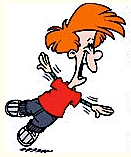
kid flyinga. KIDS: This is a legitimately ‘normal’ characteristic of small children, all the way thru the teens – thinking they can do much more than they actually can (fly – with their arms, keep playing without having to eat or sleep, get away with misbehaving, doing something big – like driving or having sex – without guidance or training, not needing help “I can do it my-self!”….). It’s a self-focused survival mechanism – preventing children from being crushed by fully realizing the extent of their vulnerability.

b. ADULTS (a G / Gs = people who act grandiose)
This refers to someone who has a sense of uniqueness, superiority (not a ‘puny human’) – the belief that few others have anything in common with themself, & that they can only be understood by a few or very ‘special people’.
Sound familiar?  This is a form of narcissism which is normal in children but is supposed to be outgrown by adulthood.

For ACoAs it’s a continuation of that early psychological defense, not having yet developed a healthy Adult Ego State. As long as our WIC runs the show we use that same protection to hide our sense of vulnerability – which now comes from being stuck in our frightening past.  EXPs:

Self-Hate : All of S-H is a form of grandiosity – in negative terms: “I am the ‘worst’, the most hopeless, I don’t have the capacity to love, I’ll never get better, I have to give up the hope of finding someone right for me….”
EXP :  Always feeling separate – “I never fit anywhere”, different – but negatively or superior – “I don’t have any problems”, while acting out Victim role. “You just don’t understand!”overlapping

No Limits : Not having boundaries – “I’m the same as you, you are me, we feel & think alike…” the state of an infant that we need to outgrow.
EXP:  Pushing ourself until we collapse. or going beyond normal limits – especially when in a weakened condition. (Run on an injured leg, over-use hands, over-do exercise, go to work when very sick, try to rescue our Perps or other Victims, mind other peoples’ business ….)

Perfectionism : Yes it shows up everywhere!
This is an impossible goal, regardless of some spiritual teachings. Yet we try to compensate for the continual inner & outer sense of danger by trying to know everything & never make a mistake – instead of healing the wounds that cause our fear.

We’re convinced that anything about us or our actions that’s not 100% ideal (distorted, unrealistic standards) IS: perfectionism
• our failure to make up for our ‘unwillingness to be good’ (please our parents), which we use to beat ourself up – & then try again to be inhuman
• ‘proof’ of our inherent & permanently flawed identity, making us unworthy of anything positive in life. Since we believe we’re defective, we can easily be thrown away. Our imperfect-ness is assumed to be our fatal flaw.

As the WIC says:
“No one loves or takes care of me, so I might as well die”!  PS: This is not being dramatic – to a small child. AND it’s:
• the reason why we don’t even bother trying many things we’re actually capable of doing, lest we ‘fail’ (to be perfect).
What an illusion. What a waste of possibilities!

Finished with an Issue
This is the extreme opposite of “I’ll never get better”. Most common in early Recovery – we think we’re DONE with a character defect or childhood pattern that we worked on for a while.
OR – we think we should have gotten over our ‘issues’ by now (in Recovery, at our age, with so much therapy….)

Problem : When that same old (“cleaned up”) emotional reaction or unhealthy behavior inevitably resurfaces, usually under stress – we feel defeated, full of S-H & fall back into : “I’m hopeless at this growth stuff. I might as well not even try!”
Reality : Repetition & Process lead to improvement – NOT perfection!

GIVING UP Grandiosity?
To let go of this defense we need to know all our needs & rights, as well as our limitations.  It’s finding a healthy balance between :
🏵 realistic optimism based on acknowledging all examples of our progress ➕
💔 a realistic understanding of the depth of our wounds & the ongoing nature of process.
Healing & growth will take the rest of our life – no matter how successful we become. That’s what it means to be human.  Al-anon slogan: “Progress, not perfection”!

NEXT: What is Emotional Abuse? #1

GRANDIOSITY and ‘NORMAL’ (Part 1)

I CAN HANDLE EVERYTHING –
I’m not weak or wounded!

PREVIOUS: Victim or not? #2

Review posts:Rescuing”  //  “Process


DISTORTED  COPING 
(P = Perp / V = Victim)
As long as ACoAs have trouble facing the trauma of being a Victim IN childhood, we can’t outgrow that state -because it lives in our WIC & keeps getting acted out all over our life.  Another ‘backwards’ ACoA pattern :
while we do many destructive victim-y things to ourself & let others do them to us, we also are masters at trying to cover up the inner wounds, the same way battered people try to hide broken bones & external bruising.

1. NORMAL
a. Normal can mean what is average for any location or situation, but may be positive or negative & is never absolute
EXP
– It’s the norm for :
▫️people in a bar to drink a lot
▫️men in prison to be raped
▫️children of addicts to be scarred
OR It’s the norm for :
▫️country air to be healthier than city air
▫️money to make life easier
▫️great teachers to produce some excellent students.

b.
Normal can also mean anything that is the opposite of unhealthy, & is only positive.  NORMAL is being:
▫️a whole human being, by taking care of ourself
▫️part of a community & helping others
▫️happy & productive, with satisfying relationships
Normal is for Love to heal broken hearts & minds…..

ACoAs desperately want to be ‘normal’, as in ‘b’, while not wanting to admit being damaged / wounded (NOT defective), with all it’s weaknesses, so not having to do the hard work of Recovery to become healthy.  This false-normal is a facade to cover our lack of self-esteem & to quiet the bad voice (the PP), rather than being genuinely OK at our core.
normalMany of us don’t want to ask for any kind of help, or be in groups that focus on healing, because “They’re all crazy & I’m not like them!”  But Al-anon reminds us that “You’re only as sick as your secrets.”  It’s one thing to feel empowered & be able to face life’s difficulties with equanimity & guts. It’s another to over-compensate for our un-acknowledged & unhealed history with grandiosity.

EXP: Trish was never taken care of as a child, even in basic ways, & was eventually left by her weak father to take care of her violent, mentally ill mother. In spite of not having any self-esteem or knowledge about self-care, in her early 20’s her talent as a performer got her periodic jobs in small venues.

One day she found out she was pregnant, but wasn’t ready for motherhood & scheduled an abortion – for the same day that she had a gig in a local mountain club. She went to the doctor in the am – alone, & that afternoon drove up to the resort to sing – still alone & in pain.
It never occurred to her to have the operation on a different day, to have someone go with her, or that there was anything amiss about combining the 2 events – until pointed out to her by a therapist 20 yrs later. To her it was all normal !

2. GRANDIOSITY – at its simplest, it’s how a person sees themself as bigger, better, more capable than they really are. It often leads to putting oneself in jeopardy, as big as extreme physical activities, taking unprotected financial or sexual risks, or as ‘small’ as always crossing the street just as the cars start moving forward, smoking for years….
They act as if they’re invincible, magically untouched by the laws of nature or common sense.
BTW : ‘Normal’ grandiosity does include the person having a degree of insight into their overblown ideas – aware their behavior is unusual or unrealistic – just not crazy. But those with grandiose delusions lack this capability for reality-testing.

MAIN CHARACTERISTICS
IRONY: It’s typical of many ACoAs, using it as defense to hide intense unworthiness. Gs:
1. believe they don’t need other people
2. don’t recognize normal human limitations, nor their own
3exaggerate talents, capacity & achievements, are boastful or pretentious
4. feel unique, special or superior, compared to others. May not admit it even to themself, because it’s not part of S-H
Gs :
5. live in grand fantasies, without taking realistic actions
6. look down on others who won’t take the same chances – as weak or cowardly
7. generally criticize, nit-pick & downgrade other people’s projects, achievements, ideas & dreams – as ‘small’

IMP: Grandiosity hurts ourself AND is abusive to others

NEXT: Grandiosity #2

VICTIMS or NOT? (Part 2)

PREVIOUS: Victims or Not? #1
QUOTEs:  • “Never be bullied into silence. Never allow yourself to be made a victim. Accept no one’s definition of your life. Define yourself.” ~ Harvey Fierstein

•  “You can either be a victim of the world or an adventurer in search of treasure.” ~ (from Eleven Minutes’, by Paulo Coelho)


🌋 VICTIMs or NOT?  (V = victim , P = Perpetrator / abuser)
a. Victim (Part 1)

b. Stoic: At the other extreme are the ACoAs (often in the Hero role) who can’t admit anything bad happened to them. These believe we were not abused & that everything was fine.  Even if we do sometimes say it wasn’t all great, we believe it was our fault. We walk around with emotional stab wounds, bleeding from unseen trauma & pretending we’re fine. Just fine, thanks over much!

Our closest & ‘dearest’ can carelessly spew their damage at us, YET we blame ourself! We say: “But, they didn’t mean it / They didn’t know any better”….
What we mean is : “Since they didn’t mean to hurt me, I can’t be angry at them! So there’s no reason to be upset (I don’t want to feel anything)”. Phew!
grief rcoveryThis reasoning is SO flawed because all ACoAs are in fact sad, lonely, disappointed, hurt & angry – under whatever defenses we’ve cobbled together!

It’s not healthy for us to ignore what’s going on – inside or outside. Denying that we were wounded by our family and that we have many & complex emotions – is a way to victimize ourself – adding to the original pain.
If most ‘normal’ adults are enraged by being mistreated over time, how much more so are children, who are dependent, vulnerable & powerless.

Abuse & neglect are terrifying & humiliating, no matter what the reason for it or motivation of the P. As kids, the longer we had to ignore bad behavior, the angrier we got – which often got suppressed & then acted out on ourself & others. EXP: Reason for the murder of Martha Moxley, seen near the end of the TV movie “Murder in Greenwich (2002).

Re. Pity for others
One way stoic ACoAs can feel superior & also deny our pain – is to feel sorry for others, especially our parents & mates. It may seem like a show of kindness & empathy on our part, but all it does is allow our Ps to get away with being inappropriate & stay unhealed.
Feeling pity for incompetent, addicted or abusive people is a way to disguise our anger at them for not taking care of themselves & not carrying their weight in the relationship.

REVIEW why we don’t want to “know what I know”
Because • we figure the situation is futile – since we can’t change it – so why even notice  (this is NOT the healthy Powerlessness of Recovery, ie. Letting Go). AND —
— WE would have to:
• be ‘forced’ to feel that old fury, & we’re not allowed to be angry at ‘them’ OR to weep about it!
• give up the illusory power of our S-H “I can fix people-places-things so they’ll stop hurting me”
• give up the WIC’s hope / demand that they will get better, love us, turn things around, connect with us
• feel the depth of pain from how badly we’ve been treated
• S & I (reject the Introject), be our own Parent, give up the WIC’s desperate wish to be taken care of

♦ We are not only protecting ourself from past & present Reality, but also protecting our Perpetrators. Not speaking up about how their mistreatment has affected us is self-destructive, and abdicates responsibility to ourself. It’s giving the P permission to continue neglecting us, beating up our Inner Child & disrespecting our Healthy Adult.

Not feeling ALL our emotions a little at a time (the high achievers, isolators, rescuers, caretakers, Heroes & Mascots….), especially the old sorrow & rage, has a high price. It makes us internally ‘dead’ & externally alone, a numbness that has become a wall, even if we keep busy, busy & have lots of relationships.
RECOVERY is about moving out of the Victim Role into our True Self.

NEXT:  Grandiosity & Normal #1