SAYINGS that MISREPRESENT (Part 1)

I WANT TO BE CLEAR
about what I’m saying

PREVIOUS: Growth for the Scapegoat #3

SITE:Use of Language (Many links re. the meaning of words & phrases)

INTRO
CONFUSING
: We all use short-cuts in daily conversation, which is understandable, but sometimes this can do us a disservice.
There are truisms we take for granted, phrases & sayings we repeat without considering what they really mean. We assume they are correct, & that they apply across the board  (the latter is B & W thinking – a CD).

It is said that the unconscious has no sense of humor & is completely literal. It’s the reason affirmations need to be said in the positive: “I have a right to be happy…. rather than “I don’t want to suffer any more”, and stated as if our goal had already happened; “I am making / have made $100,000 in sales this year”, rather than “I wish I could make….”.

Language is so important, not just to connect well with other people, but mainly to connect with ourselves in the healthiest possible way. The Inner Child is always listening to everything we say to others, & at the same time is listening to the Bad Parent voice shouting or whispering in the background.
It’s up to the UNIT (healthy adult & loving parent) to make sure our language is kind as well as accurate.

In terms of having good mental boundaries, “Accuracy is more important than agreement”. Just because everyone else believes or does something – doesn’t mean we have to. Don’t let others confuse you. Don’t follow the crowd!

☁︎ NOTE: How we use Language is as important in the quest for ‘sanity’ as other factors. The words & phrases we choose either help or hinder our progress.

1. “I deserve to / You deserve it…..”
The problem is the word ‘deserve’. Sounds OK? Well, in terms of actual meaning, ‘deserve’ refers to something given as a reward for acceptable, special or difficult behavior (as in: “Here is your A+ / medal / Oscar / gold watch…..you deserve it”). It’s something earned, which is OK, since it’s good to be recognized & honored for accomplishments.

So it’s a ❤️ YES if you’re rewarded for earning a living, getting a good grade, winning at a sport or climbing a mountain….

BUT it’s a definite 💜 NO when speaking of our rights as a person. We’re not supposed to deserve them. They’re ours no matter what. Using ‘deserve’ in the context of personal growth is misguided, because it implies that our worth is based on how much & how well we DO things.

This reinforces our difficult childhood, when we were only acceptable (if at all) based on the condition of how well we conformed to dysfunctional rules, instead of being loved unconditionally for just being here.

So, connecting “I deserve …..” with self-worth is a subtle distortion, disguised as Recovery, which ignores our BE-ing. The implied message is: “Produce or lose!” It sneakily tells us that we have to keep on earning validation & permission to have things which are in fact universal Human needs (love, freedom, respect, identity, guidance, dependability….), & therefore should not have to be struggled for.
This deep-rooted negative assumption is why we keep trying to be perfect & please everyone.

2. “Well, at least you’re alive, You’ll be just fine, You’re strong”
❤️YES – of course. We want to affirm life & let people know we care about their existence.
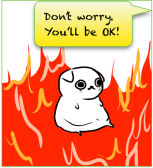
❤︎ However, without making this a NO, there is a way in which these phrases are a kind of insensitive throw-away. With many people it’s just a polite standard.

But if you just had a devastating loss & may even be injured – like a serious accident with a death, a full-scale house fire, a near drowning, a severe physical assault, a major illness…. You’re in pain, in mourning, in shock! so those comments are not comforting or uplifting.
Without looking for pity or to be rescued, some indication of empathy or sympathy would be welcome, rather than a glib pat on the head.

NEXT: Phrases #2

List of HEALTHY Boundaries (Part 2)

I KNOW WHO I AM & WHAT I NEED, & I can say it clearly

PREVIOUS: Health Bs, #1

SITE: Personal Responsibility


💟 PRACTICAL EXAMPLES of Healthy Boundaries
What B do NOT DO ( Part 1)

♥️ WHAT Boundaries DO – THEY:
• act as a warning sign when’re about to get into relationships or places that are unsuitable or dangerous – for us
• allow the Healthy Adult to be in charge – to protect us from our own emotional instability when the WIC feels vulnerable
• identify the specific consequences of boundary invasions
THEY:
• prevent anyone from inappropriately injecting themself into our life, or trying to get us to do anything we don’t want to
• protect our values, & the right to always be treated with dignity & respect
• provide pre-set guidelines for all areas of life. When we periodically regress into a symbiotic or self-effacing state (inevitable), we may need someone to help us re-establish Bs

1. EMOTIONAL (Es)  BOUNDARIES in Part 1

2. PHYSICAL (P) – With Healthy Bs we CAN:
• comfortably distance ourself from anyone who can’t / won’t respect our Bs
• have self-esteem about our P self, no matter how we look
• protect our P space from intrusion, invasion or abuse
• say NO to food, gifts, touch, sex .…  anything we don’t want
• safely give & receive P comfort
• stay in our body (be congruent) “My body & I are one”
• touch & be touched – with discrimination
• weigh the consequences before acting on a sexual impulse
KNOW
• it’s OK to move towards or away from someone
• the most comfortable space between us & another
• what’s appropriate modesty & openness with ourself & others. Modesty is not = being a prude! It’s about self-respect.

3. MENTAL – With Healthy Bs we CAN:
re. OURSELF
• act assertively (not aggressive) by respectfully stating our opinions, emotions & needs
• empower ourself to make healthy choices & be responsible for our thoughts
• know it’s OK to have some privacy / secrecy without guilt, even with intimates
• know when a miscommunication or CD is ours & when it’s someone else’s
• know what we believe (values) & what we want
CAN :
• own our toxic family beliefs & work on replacing them
wisdom• say No / Yes honestly, & are secure when others say No to us
• take back our projections (see others for who they really are, not what we think or wish them to be – or who our parents were)
• think & speak for ourself (without always quoting someone else)
• trust our own decisions, defining our truth as you see it
• value our opinions, tastes & viewpoints, as much as those of others

With OTHERS  – With Healthy Bs WE can :
• avoid expectations – knowing that we might get turned down, but can still ask
• be in charge of deciding if a potential relationship will be good for us
• ask for practical information, when needed
relationship types• choose to go slow in a new relationship while checking for compatibility
• communicate needs & wants clearly in all relationships
WE :
✶ DO
stand up for our beliefs, even when in the minority
• give personal info gradually, then check how others respond
✶ know that accuracy is more important that agreement in communications
• notice any time others boundary-invade us
• recognize that friends & partners are not mind readers
• respect others’ boundaries (EXP : ask if it’s ok before touching, or taking something)
• teach others to treat us with dignity & respect

EMOTIONAL & MENTAL RECOVERY Truths
✦ Aloneness is a bounty from which we can choose what we want
✦ Friends can only stand by to watch & encourage, while we make our own discoveries
✦ Giving is never losing, & giving freely is a semi-circle which completes itself in receiving
✦ Help doesn’t always appear in the way we expect or demand
smarts✦ More is possible than we think, if we truly believe
✦ No one can tell us who we are
✦ No one can live our pain or our joy – for us
✦ No matter who walks with us, no one can walk it for us
💗
✦ Our eyes can never see as clearly as our hearts
✦ Sharing is not legitimate unless we keep enough for ourselves
✦ Second-best may really be just second-arrived
✦ To want nothing is as selfish as to give nothing
✦ Wisdom comes from hearing & believing our True voice
✦ What we think we want may be inferior to what we receive
SO: ✦ We may often feel we’re walking alone, but we never are IF we know who we are

NEXT: Repairing Bs – with Self

ACoAS & WEAK Boundaries (Part 2)

rigid BsI DON’T LET MYSELF TALK
so I don’t upset other people

PREVIOUS: WEAK Bs (Part 1)


REMINDER
:
The requirement for having appropriate Boundaries
IS
knowing what your NEEDS are & actively providing them, as best as possible.


CHARACTERISTICS of weak Bs
They represent not having the right to our needs, often expressed as a general passivity in life – letting people & circumstances push us around.
BTW, you may notice that some of these expressions of weak Bs are the same or similar to those of rigid Bs. This is only natural since the underlying causes all come from our unhealthy upbringing.

⚙︎ SEXUAL
We have weak Bs if we:
• attach our self-esteem to being sexually attractive
• can’t distinguish between love and sex
• have sex when OR with whom we don’t want to
• feel a need to always be in a sexual relationship
• “fall in love” at first sight  – just because someone seems interested or reaches out to us
• let others touch us, even when it’s uncomfortable or inappropriate

⚙︎ PRACTICAL
We have weak Bs if we :
• accept unwanted gifts to not hurt feelings or make others angry
• allow others to take as much as they want from us (time, $$, energy….)
• are indecisive & therefore unpredictable, undependable
• don’t protect our physical space, letting people  — stand or sit too close
— take and/or use something of ours without asking
• don’t acknowledge our need for privacy, but don’t object to being asked personal questions, don’t stop others from snooping around our things…… without doing something about it
WE:
• DO too much, either by being controlling (B invade), OR overly responsible (doing everything ourself)
have to do something a certain way or modify our behavior so that someone else can continue their unproductive or unsafe behavior – enabling any kind of bad or self-destructive behavior in others
• let others determine our wants, needs & tastes, sacrificing them to someone else’s desires or demands – no matter how subtly done
no choiceWE:
overcompensate for existing ! especially when we think we’ve messed up in word or action
• measure another person’s caring by material gifts – how much, what kind they give us
• sacrifice our own goals, projects & self-care to help others – from FoA
• set no specific limits on our willingness to help others
⚙︎ MENTAL
We have weak Bs if we:
• allow the expectations of others to define our potential
• always verbally agree with others, even when we actually don’t
• are afraid to ask for help, so have to constantly manipulate others to get what we want (indirect)
• compromise values & beliefs to please others or to avoid conflict
• get too close too fast, share too much personal info (TMI – especially about our faults) before establishing mutual trust
WE:
• ignore our inner voice & rely on others’ opinions, values & emotions
• know we’re covering something up or keeping a secret, such as battered wife & children hiding injuries, kids covering up parental addictions, emotional torture, mental illness….
• let other’s influence / effect our behavior, continue to be unclear about our own preferences
• personalize everything, over-reacting to feelings or behavior of others (assume other’s reactions are all about us).

⚙︎ EMOTIONAL
We have weak Bs if we:
• are constantly preoccupied with & overwhelmed by others’ emotions, needs & problems (take them on as if our own), feeling responsible for their happiness & fulfillment

• are dependent for our identity & emotional well-being on what others think of us, so become chameleons OR isolates
• are not comfortable being alone, at least some times
WE:blend or leave
• can’t say no, even when wanting to, for fear of rejection (abandonment)
• feel everything ‘too much’, not able to contain or soothe our own emotions
• feel & act like victims, have no balance of power or responsibility in relationships
WE:
• have a high tolerance for abuse, for being treated with disrespect
• ignore our own discomfort, anger, anxiety or fear so someone else can be happy & comfortable
• need constant reassurance from others that we’re acceptable
• people-please – saying yes when we want to say no, & then act out later, either on ourselves (S-H) or at others (passive-aggression)
• symbiotically attach ourselves to someone, something – anything!

NEXT: RIGID Boundaries – #1