ACoAs – Set GOALS to MEET NEEDS (Part 1a)

GOALSPREVIOUS:
ACoAs Manipulating
Self & others, #3b


SITE: LIST of Personal Needs

SEE ACRONYM page for abbrev.


Process
includes 3 PARTS : GOALS, Implementation &
People.
In terms of T.E.A., this topic focuses on the A. (actions), since just thinking (T) about what we want is not enough, althought it is the starting point.  THEN we have to act on our own behalf.
1. GOALS
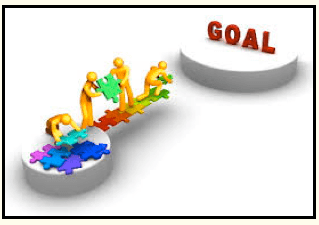
Psychologist tell us that people who make consistent progress toward meaningful goals live happier, more satisfied lives than those who don’t.

PURPOSE: Goal-setting is absolutely necessary & appropriate in order for us to be  successful – when it’s grounded in our Rights as human beings AND in our own personal interests. Goals are a normal part of Adult thinking, providing long-term vision & short-term motivation.
Clearly defined goals:
bulls eye- goal• potentially minimizes procrastination & confusion (but doesn’t eliminate it, since they still has to acted on)
• can help to organize our time & resources
• let us know what additional info we need to gather, if any
• allow us to observe & acknowledge progress as we go along, even if the process is hard work & it takes a long time to ‘arrive’
• help us measure & take pride in successful outcomes, which raises self-confidence

Before taking an action, especially when the outcome is important to us, the questions we need to be clear about are : —> “What is my surface goal? then —> what’s under that? & then —> what’s my motivation? then —> under everything, what’s my deepest, perhaps unconscious, desire/wish/hope in this situation?”
Every action we take – or inaction – is driven by a goal – to find food, to not get fired, to buy something we want or need, to hang on to a relationship, to avoid pain, to please an authority, to learn something new, to entertain ourselves, to express creativity, to be accepted, protect loved ones……
and all goals are based on some need, normal human needs such as acceptance, attention, achievement, comfort, connection, knowledge, love, safety, shelter, validation….. needs in all 4 PMES categories.

Each action aimed at reaching a goal:
• is a decision, often unconscious (3 Posts)
• which is based on our individual idea about how to achieve that (procedure)
• which in turn is formed by our most basic beliefs / rules about ourselves & how things function in the world.

EXP: Goal : To cross the street
〰️ Beliefs / rules — I can get to the other side safely, always look both ways, don’t run into traffic or you can get hurt or killed, jay-walking will get you a ticket (in some places), if you’re with someone else make sure they’re safe too …..
〰️ Procedure – Stop at the corner, wait until the light is green, then go

• Appropriate goals & healthy ways of achieving them are based on knowing who we are & our Human Rights .
Recovery EXP: 15 minutes before an evening lecture in a big auditorium a janitor is buffing the front vestibule floor, with the door wide open – so the noise is quite disruptive to the waiting audience. Bev goes out to ask the man to close the door. He completely ignores her, even though she stands there briefly to make sure he’s heard her. Nothing. She goes back to her seat. A minute later a man from the audience does the same – & the janitor closes the door!

noiseQs: ACoAs – If you were Bev:
— How would you be feeling – anger, resentment, S-H, shame…. ? and,
— What would you be thinking? “That <**☹︎**>, how dare he ignore me?…. / I should have been more forceful / I shouldn’t have bothered him / he’s a chauvinist pig….”
— Would your goal have been to get the noise down PLUS be validated, respected, honored – as a female, by a hostile male?

What was Bev’s goal? ONLY to dampen the noise. She was willing to make the effort, which was appropriate, but how it got done did not matter to her!
When we function from our True Self, with enough validation & support in our life from ourselves & from legitimate sources, we don’t try to get it (or demand it) from people who can’t or won’t give it!

NEXT: Getting needs met (1b)

ACoAs – “Being Negative” (Part 3)

EVERYTHING & EVERYONE sucks up my air!!

PREVIOUS: Negative Thinking (#2)

SITE: ▪︎ Complaining Rewires Brain for Negativity.… 


YOU’re thinking is too negative IF YOU :
• are always complaining about things, even when it’s in a rational, logical-sounding way, “This —- is an interesting tidbit to mull over”
• constantly notice the flaws in things (people, activities, ideas)
• have a tough time seeing the bigger, overall positive picture
IF YOU
• get a secret pleasure being negative along with someone else, or tearing something down
• see a flaw in something & just have to let everyone know, getting a little rush from being ‘right’ & superior
• think positive people are naive or fake, have low standards, easily impressed

YOU’re too negative WHEN:
• even a trivial flaw in something (good) will ruin it for you
• someone suggests an activity or product, & you’re quick to point out why it won’t work or why it’s a bad idea
• things get under your skin &you  ‘have to’ rant about them to anyone who will tolerate listening
negativityWHEN :
• others talk about the positive aspects of something – you just have to say, “Yeah, but…” pointing out its limitations or weaknesses
• something’s realistically going well, but you’ve got plenty reasons why it’s dumb, no good, won’t turn our well, is impractical ….
(from SuceedSocailly.com)

NEGATIVE thinking can come from copying our family, a personality trait that gets over-expressed, or seen as a ‘useful’ trait.  YOU:
• picked up a negative style from people we grew up with or around
• rely on negativity as a crutch in conversations. You wouldn’t know what to say if you weren’t complaining about or trashing something
YOU
• romanticize negativity, thinking it represents being a deep, complicated, tortured soul
• often get worked up about things & then vent, because it feels great
 –OR-
• are a little too rational. Not in touch with your own emotions, & don’t realize negative comments are harmful to others
YOU
• think that getting others caught up in your personal troubles is a reliable way to ‘stay connected’
• think you’re being ‘intellectual’ – as if pointing out flaws in everything (unsolicited, unprovoked) is proves analytical ability & honed critical thinking skills
YOU
• associate negativity with having refined tastes, as if putting down ‘mediocre’ things would show how discerning you are
• connect being cynical & overly skeptical about life with being ‘in the know’ or aware of how the world really works
• may think it’s just your style of humor – a way to be a clever, observational comedian or commentator. NOT!

Negative Thinking (NT)
1. re. OURSELVES
• Anyone reading this blog & other self-growth material, going to 12-step meetings & therapy – knows this category of NT is a core issue for ACoAs. It’s called self-hate (S-H) – powerful, deadly & tenacious! If our parents were unable to love us unconditionally OR not at all (no matter that they said), we concluded it was because we weren’t worth it

✶ So, our WIC is still sure that if the family didn’t make us feel wanted, safe & accepted, why would anyone else?
We think cruel things about ourself & even say them to others, while secretly being smug about being victimized by the whole universe!
Playing the role of the victim -now- allows us to not be responsible for our own life, while protecting the illusion of coming from a loving (or at least an ok) family.

2. re. Personal RELATIONSHIPS
NT (S-H) tells us we’ll NEVER:
• deserve love, validation, respect, peace, joy, success….
• even know what love is, even though we have indeed loved (children, animals, mates, activities, careers, locations, certain foods / arts …)
• be liked (much less valued) by healthy ‘normal’ people
• be able to leave bad relationships because it would condemn us to being completely alone (forever)
NEVER
• have the right to healthy, loving connections (family, friends, lovers…)
• have anything positive to offer others (personality, skills, experience..)
• have the right to look for & interact with accomplished people & other peers who we could enjoy & benefit from
SEE “The 12 Worst Relationship Mindsets (based on CDs)

NEXT: “Being Negative (#4)

MY RIGHTS – Questionnaire (25-48)

I’M CELEBRATING MY RIGHTS!
I feel so much better

PREVIOUS: My RIGHTS Qs – (1-24)


DO some inventory writing using these forms in Part  1 & 2

HAVING RIGHTS
When we thoroughly accept that we have ‘inalienable right’, we can work on listing & fulfilling our needs – not perfectly or easily – but as much as reasonably possible.
SELF-CARE allows us to:
1. eliminate deprivation.  ACoAs either harmfully over-indulge or live in self-denial starvation in all PMES ways. Knowing we have value makes is easier to find appropriate, balanced nourishment in every area of life
2. feel good about ourself / be empowered / enjoy our life – all natural results & rewards for being in charge of our needs

3. have boundaries. Once we know what we need or don’t need, want or don’t want – we can tell other people what is or isn’t acceptable, in case they can or want to be available or helpful
It’s not their job to guess or mind-read what our boundaries are. It’s up to us to let people know, so they can be respectful of them
TO
4. prevent abuse.  We won’t accept or tolerate any form of mistreatment, being clear about our rights, especially the right to be safe
5. not be manipulated.  When we know what’s legitimate, normal & healthy, we can tell when someone is trying to control us, & not fall for it
6. minimize anger & resentment.  The more we take care of ourself, the less we co-dependently expect others to provide what’s not reasonable, which minimizes our “disappointment quotient”.
«

«
NEXT : Deserving vs. Rights, #1