ACoAs being ‘RIGHT’ (Part 3b)

WHY DOESN’T EVERYONE
see my point of view!??

PREVIOUS: Being Right (#3a)

SITEs :’The Need To Be Right
Addicted to being right

⬅ “OFFICE SELFIE” by DMT


REMINDER
: BR comes in various degrees of intensity. You may have a touch of it, or it may run your whole way of interacting with others.

ACoA ADDICTED to Being Right – aBR (cont.)
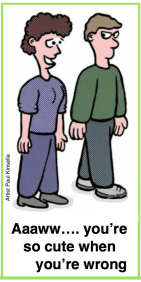
It fits the characteristics of an alcoholic or otherwise narcissistic family – as perfectionism & grandiosity. So, no matter how helpful to others our info or how valid our beliefs are, the way we know we’re in the grip of aBR (a character defect) is that it doesn’t allow for anyone else to also be right – for themself.

▲Knowledgeable people who are reasonably healthy will share their expertise with anyone seeking it, but never press other to listen or to agree. They know everyone has the human right to their own info & choices.

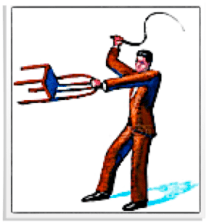
But being aBR can be the cause for attacking anyone who challenges our world view. Others may have good ideas, their own process, a different way of working toward a goal OR they may be deep in denial & acting out their damage.
Regardless, if what or who they are doesn’t agree with our ‘truth’, we will badger or cold-shoulder them.

We function from the unspoken thought:
“I can’t bear it when someone contradicts or ignores me. So I wait. I watch. I react. I pounce – ready to belittle, correct, insult, make fun of, negate…..”

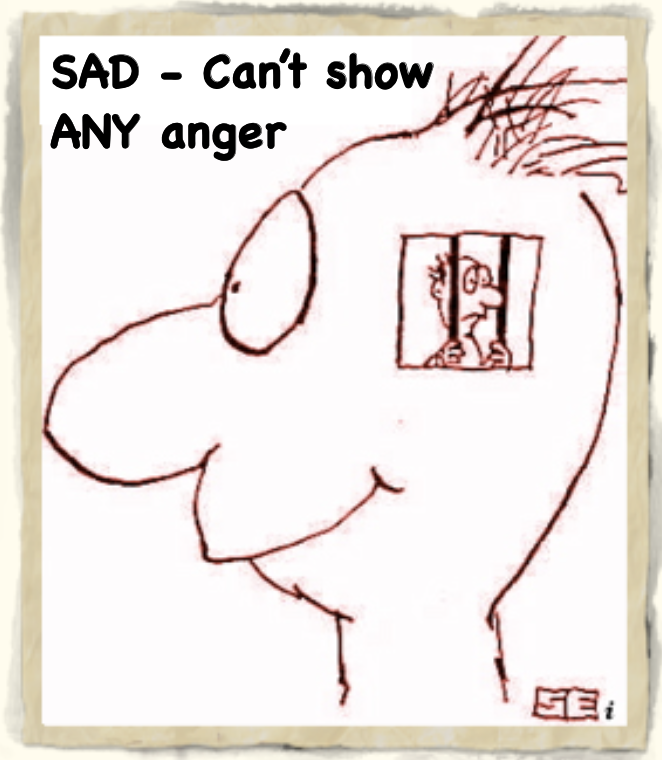
And if someone stands up for their opinions or style – or is just silent, we get very upset, get pushier, possibly even meaner. We won’t feel OK until & unless the other person capitulates.

EXP: When ranting about anything she thinks is wrong – with a person or in the world – one woman heads off any logic, comment or disagreement from her long-suffering husband with the command: “Just say YES!

RESULTS
While we who are Right-ists can easily find insecure wounded souls who will let themself be bullied, none of our tactics work with severe narcissists. And as for long-term active addicts, if they want to keep ‘using’, nothing we do will stop them!

Being convinced there’s a certain way everyone should think or act (unhealthy Ennea-type #1) will ultimately lead to personal frustration, annoyance & disappointment when others don’t follow our rules or opinions. This increases our underlying fear & rigidity. We feel betrayed, assuming someone we’ve tried to convince has automatically agreed to follow our lead, but then reneged on the implied compliance.

This is a thoroughly mistaken assumption, since most people do not automatically fall in behind the Right-ist, & their silence does not mean agreement. And whenever there is even a crack in our illusion, as Right-ists we don’t see our narcissism, but prefer to attack & accuse others.

Giving everyone the message they are or should be exactly like us obviously stiffles their ability or willingness to be cooperative & stay connected. If they don’t leave altogether, they pull away from us – the supposed ‘righteous’ one – reinforcing the feeling of abandonment on both sides.
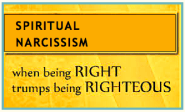
aBR prevents us from experiencing the understanding & intimacy we say we desire. We can’t understand why our partner/ boss/ child….. is so angry with us. We’re convinced they should be making changes – then we’d get along just fine! After all, we don’t want to confused ourself with reality – like that others have the right to their own way of thinking & doing things – when we’ve already made up their mind for them!

Spiritual Narcissism  Right-its can easily be dogma-zealots about anything we’re fired up about, trying to convince/convert the ‘ignorant’. We may sincerely believe we’re justified & being helpful, that having found the one & only ‘right way’ now we can set others straight & solve all their problems. But it’s up to the other person whether or not they’re interested in our position, and what works for one person, family or group is not always right for another.

NEXT: Being Right (Part 4)

ACoAs being “RIGHT” (Part 3a)

IF I’M THE ONLY ONE WHO’S RIGHT
everyone else is useless!

PREVIOUS: Being Right (#2)

SITEs: 38 (
unhealthy) Ways to Win an Argument w/chart


DEFs
:
▶︎ Rightness = A belief or action conforming to facts or truth. What is most favorable or desired
❖ Self-righteous = Convinced of one’s own virtue ((being perfect & therefore superior, even when well-hidden from most others) which is in stark contrast to the actions & beliefs of society. Being narrow-mindedly, moralistic. ~ Webster’s dictionary

REMINDER: BR comes in various degrees of intensity. You may have a touch of it, or it may run your whole way of interacting with others.

ACoA ADDICTED to Being Right (aBR) (cont. from Part 2)
PAST: We suffered thru an abusive, controlling & neglected upbringing, Constantly forced to give up our way of thinking, doing or feeling around a Right-ist – we gradually became less able to express ourself, seemingly less competent & articulate (brain-freeze).

We may have seemed stupid, making the bullying Right-ist even more convinced of their superiority. Flooded with fear & anger temporarily diminishes the capacity to use the frontal cortex, which is needed for thinking, decision-making & self-control.

• With some oppressive authority figures, BR was dangerous because it showed them up & was considered ‘arrogant’, slowly forming our belief that we don’t know anything

• With others, a way to survive & avoid punishment was to always get it right, prove it without mistakes & justify ourself – forming the assumption that we must know everything.

🚦Double bind: Many of us were constantly told we were ignorant / stupid / unteachable – while at the same time expected to take care of them as if we were adults trained in several professions!

NOW: Always having to be right can be used as a protective cover, giving us a false sense of stability & control. Projecting our scary childhood onto the whole world, we assume everything is still & forever unsafe, assuming we need to be perfect – to prevent further danger.
Still desperate to please so we won’t keep getting abandoned, we wobble on the fence between these 2 false beliefs (know everything, know nothing), inevitably falling off, inevitably feeling miserable. This original dilemma has left us with rage & S-H, alternating between rebellion & paralysis.

• Many grew up with one or more severe narcissist – who always had to have their way. Then some of us took up the Right-ist mantle & carry it forward, tromping on others as we were tromped on. (See Right-ist characteristics – Part 2)

— SUBTLE but pervasive – perfectionism is aBR in disguise. We can keep this obsession better hidden, but the obvious result is decades of procrastination

— BLATANT: Wanting & insisting on getting our own way most or all of the time – is the narcissism of the False Self, a common character flaw of wounded people (the majority!). We will push & push to get others to see that our way is the not only correct – but the only possibility.

• Feeling superior (aBR), we may not even realize our anxiety is temporarily relieved when we get our way: “I knew I was right! Now that you’ve got that straight, we can go on.” It calms us – our security blanket in an unsafe world. But it’s a false solution because our damage is still lurking in the background, waiting for someone or something to set it off. Unhealed, we’re driven by old, deep terror.

• But like any addiction, having to BR is very stressful – always vigilant, afraid to make a mistake, never truly safe, never comfortable.
While outside it shows up as false pride – the need to feel important or better than everyone else – inside it’s driven by inadequacy & shame, which we may not even be aware of! Especially if we need to be seen as innocent, good & all-knowing.

We’ll use charm & manipulation alternating with anger & intimidation, to force our agenda on whoever we deal with . However, all we end up doing is alienating others by being high maintenance, or taking psychological prisoners of the insecure. In the process we sacrifice our own well-being.

NEXT : BR, #3b.

ACoAs being ‘RIGHT’ (Part 1)

IF I DON’T INSIST
no one will pay attention!

PREVIOUS: Psychopath Red flags #3

SITEs:
 Why is it so important to be right? 

QUOTEs: “Everything that is in agreement with our personal desires seems true. Everything that is not – puts us in a rage.”~ Andre Maurois
🔎
People who think they know everything are a great annoyance to those of us who do.”   Isaac Asimov


What does ‘BEING RIGHT’ (BR) mean?
a. OK : Generally refers to having accurate information, knowing the right way to do something, or being sure of who we are, what we want, how we feel… It can be about:
Assertiveness: being accurately sure about a subject or a person (“I know what I know”) & not afraid to stand by it
Justice: fighting for what is just & right, especially in the face of opposition, but not for personal gain or to feed one’s ego
OR
b. NOT OK : Trying to force others to see our point of view & see the world exactly the way we do. It can be from:
Narcissism: needing others to agree with us (“I’m right & you’re not”), in order to preserve the False Persona we’ve carefully crafted to cover up feeling insecure & vulnerable
Symbiosis: the need/demand that others are just like us (“agree with me”) in order to not feel alone & abandoned
🚫 BOTH are being out of touch with one’s True Self

SO – it’s important to know when it’s legitimate to be right or not
Al-Anon tells us to ask ourselves “Do I want to be right or do I want to be happy?” It’s a choice between getting our way (at any cost) OR having peaceful encounters with others.
This Q. is addressed to those of us who are co-dependents & addicts, since it would be a rare issue for healthy people. We can also say that Right and Happy are really not opposite ends of a spectrum. Instead it’s about the right/freedom of others to have their own point of view, AND being OK/safe with their right/freedom.

● The Q. comes up when we are having a disagreement with someone & feel an internal pressure (from the PP or the WIC) to get them to do something our way, to understand our point or to agree with our opinion – in order to feel connected. This can only happen if we still have a great deal of unresolved abandonment fear. Remembering the co-dep Triangle (Rescuer-Victim-Persecutor), even victims can become bullies when terrified & desperate to not feel but off.

● It’s a tricky Q. for us to answer because:
💌 some of us go along with whatever others say just to ‘keep the peace’ but really it’s to not have the other person be angry or leave us
💌 some of us never agree with anyone for fear of being swallowed up & disappear (used as a false boundary), while –
💌 others can manage disagreements in some situations (casual friends, co-workers….) but not in others, as when deeply attached to a person or position (lover, job…), then our WIC desperately feels it needs to go along with ‘whatever.

The Brain Is Hooked on Being Right
In situations of high stress, fear or distrust – like being wrong, ignored or laughed at – our brain chemistry (cortisol….) makes ‘decisions’ about how best to protect itself. We default to 1 of 4 F responses:
fight – keep arguing the point, which is the hardest on relationships, & unfortunately the most common
flight – revert to or hide behind group consensus
freeze – mentally disengage, or shut up
fawnappease, ‘make nice’ by simply agreeing

The Fight reaction is partly due to other neuro-chemicals. When we argue & win, our brain floods with adrenaline & dopamine, making us feel good, dominant, even invincible. It’s understandable that we’d want to repeat those feelings. So the next time we’re in a tense situation, we fight again, & over time will get addicted to being ‘right’.
BUT if we’re getting high from being one-up, then the other person / group is one-down & therefore diminished.

NEXT: Being Right (Part 2)

DEALING with P-As: re. Us (Part 2)

IF I KEEP MY WITS
I won’t get sucked in

PREVIOUS:
Dealing w/ P-As #1

SITE: Anger & Stress management audio C.Disks, Inner Child tapes….


FOR US  — the Receivers (R) of passive-aggressive (P-A) words & non-actions, in our personal life or at work
The obvious first step is to learn about Passive-Aggressive patterns of communication & behavior. Interaction with one’s own P-A child, spouse, parent or friend will need to be a bit different than what we can do & say when dealing with someone at work. But the fundamentals are the same.

T.E.A: Before we can take action (As) in dealing with a P-A, we need to be as prepared as possible. That starts with our ability to manage ourselves, both in our thinking (Ts) & our emotions (Es).  As the previous posts outline, here we’re mainly looking at dyed-in-the-wool P-As – rather than occasional P-A behavior we all use when direct expression of displeasure & anger are not wise (work) or safe (home).

Identify P-A for what it is: HOSTILITY
Remember –  if you have to ask a person to do something (legitimate) more than twice, you’re dealing with passive-aggressiveness. You’re getting the indirect message:”No I won’t, & you can’t make me!Review P-A characteristics.

Don’t be fooled by the innocuous, sugar-coated presentation of an experienced P-A. Once you recognize it’s a sign of hostility, it can give you the courage & confidence to stand up to it. The biggest mistake ‘receivers’ make is to be lenient. It’s a power struggle, so once you give in to P-A behavior, you lose your personal power & your options.

IMPERATIVE:  Vulnerability in any area of your life is an invitation for the P-A nearby to harm you where it hurts the most – as you’ve probably already experienced. So – eliminate them as a source of psychological or financial support as soon as you can, & exclude any you become aware of in future before getting tangled up.

When you don’t have a choice (at least for the present)
a. If it’s someone at school, work, neighborhood, church, or other group – give them as little info about you & your life as you can – right from the beginning, & that includes good things! which they can easily envy (tell no great successes, feelings, problems, deep beliefs, family issues, personal weaknesses….).

P-As like to ask all kinds of personal questions, which seem innocent & concerned, like they’re really interested in you. But they’re very good at remembering what they hear, even little things you mention in passing, & will find ways to use it against you later. SO – if you can’t avoid answering, keep it brief & vague, said friendly or straight-faced

b. When it’s people who know you well, it’s much harder to detach. Changing your part in the Perpetrator-Victim ‘game’ has to be done slowly & carefully. You will likely feel a measure of fear, but if you keep going, you’ll find it’s empowering.
It’s best to do it piece-meal – tell them less & less about things that matter to you AND/OR things they have turned against you before – a little at a time until you’re out of the toxic symbiosis

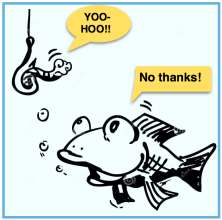
Don’t take the bait
There’s a difference between actively dealing with P-A comments & behavior (via our Adult) vs. getting sucked into the emotional chaos they can create (by our WIC). For exp, when a P-A is sarcastic, only respond to the words, not the tone.
It’s imperative to stop yourself from doing their psych work for them by asking Qs like “Why did you say that? or What does that really mean?”
These might get you a shrug & an “I don’t know”, or start an argument – but not the truth. It’s a way of enabling them to not be responsible for their feelings.
So if they were to say “Thanks a lot!”, you can just respond with “You’re welcome” – either with a smile, or in a neutral voice, which can make their brain go ‘TILT’.

Don’t take it personally
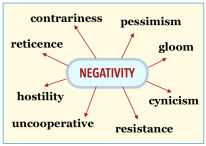
P-As revel in painting their world – & yours – with negativity, with a misery-loves-company attitude, & they’ll bond with you in their misery – if you let them. You’re either just the most convenient person to dump their resentments on, or you’ve chosen to be with them because of your own corresponding damage.

As stated in other poststhe P-A’s anger comes from their own upbringing& later from living with too much injustice & powerlessness – so it can not possibly be your responsibility. You do NOT have the power to fix their pain, only they can do that. What you do have power over is protecting your own hide, & cultivating your sources of serenity & enjoyment.

NEXT: Dealing with P-As  #3

Passive Aggressives – Review for ACoAs (Part 3)

WHAT A CONCEPT : Honest doesn’t mean hostile.
Pleasant doesn’t mean passive!

PREVIOUS: P-A ACoAs (# 2)

SITEs:” Emotionally Volatile People
• “Difficult People & how to Handle Them

REVIEW (cont)
1.The GAME // 2. WHO plays the game

3. CAUSEs of the game
ACoAs ; from our family, school, religion…. we were NOT allowed :
• to be angry, to the point of not even knowing we are!
• to know what we wanted, how we felt, what we preferred (being too much of an individual got smashed – so it left us confused)
• to ask for anything (don’t bother them)
AND
• were taught to never put ourselves first
• always had to always be perfect (no mistakes) – so better not choose anything
• no matter what we did, we were punished, so we couldn’t win
• safer to not be too visible (in a dangerous family, & later in abusive relationships)
taking any risk was discouraged, made fun of, punished (so now we can’t risk ‘failing’ & being disappointed)

4. EFFECTs of the game, as the P-A
a. Negative BenefitsWE DON’T have to :
• figure out who we are, what we want & need
• disobey any of the toxic family rules
• admit we’re angry, even raging, underneath
• stand up to the ‘control freaks
• make a mistake & deal then with consequences
• AND we get to blame others when something goes wrong, & maintain the illusion of superiority

b. Negative Consequences of being P-A :
• always feel scared of disapproval & losing people (FoA)
• it increases our Self-Hate & Loneliness 
• lose out on many opportunities to grow, to be heard, to have fun
• make other people mad at us, a lot! for forcing them to carry all the responsibility & then getting blamed
• never get what we really want, unless by accident or by luck
• we are dis-empowered, lose self-esteem, stay a victim, are infantilized, stay mute, don’t risk anything

4. HEALTHY
a. General: We need TO
• identify all the ways we were hurt as kids, including the specific messages we still obey, like ‘don’t feel’ , ‘don’t talk’ (Toxic Rules)
• prevent the Wounded Inner Child from running our life BY growing a Healthy Adult & Loving Parent  (the UNIT) who can make executive decisions about how to own & fulfill our needs
book-end with the IC, to outgrow living in the past. If done consistently, it will teach the WIC the difference between what’s possible & real in the present, vs the way it was in our dysfunctional family

b. For Passive-Aggressives – we need TO:
• keep a safe distance from anyone who is easily provoked to anger
own our hidden resentments, anger, rage, bitterness
• learn safe ways of discharging rage, & healthy ways of expressing it to others, when needed
• practice saying what we need, want, like, prefer – to find out that nothing bad happens to us or others
• stop looking for other people to be in charge of our life, tell us what to do, make our decisions & choices

Practice making ‘I’ statements every day, silently to yourself, so it gets easier & easier to say out loud:  “I want… I need… I don’t like… I’d rather…  that’s not for me… ” UNTIL it’s your new norm!

c. For Volatiles – we need to:
• accept that the rage is legitimate, but our actions are not always healthy
• find out what’s under the rag e: the reality of child abuse & neglect we lived thru, and the pain it created
• become safe enough to feel what’s underneath – grief, sadness, loneliness, hurt, sorrow, vulnerability Screen Shot 2016-06-17 at 10.24.27 PM.png
• learn calming techniques (bio-feedback, prayer, poly vagal exercises, visualizations…)
• own our Inner Sadist: make friends with it, but never let it act out
• work on getting rage out in safe, appropriate places (therapy groups, 12-step programs, doing rage-work at home, drawing, writing….)

Practice comforting & mentally holding the WIC, so he/she doesn’t feel so alone with all its pain.  Give yourself permission to cry – it is not a weakness – no matter what our family taught us!  Crying clears out toxins & releases pent-up emotional stress. It’s very necessary!

Realistically, while P-As can definitely work on having permission to express anger & rage, it’s usually up to the V. to STOP the game, stop reacting to / expecting (anything) from the P-A. Maybe even having to leave!

NEXT: Qs – Are you P-A?

Passive Aggressives – Review for ACoAs (Part 2)


I’M NOT ALLOWED TO BE ANGRY
– but you are (lucky you)!

PREVIOUS: Passive-Aggressive ACoAs (#1)

SITE:When your Defenses lead you into trouble

REMINDER: See ACRONYM page for abbrev.


REVIEW –
(cont)
1.The GAME

2. WHO plays the game (Chart – slide #7)
a. P-As always look for & often find another person who is overtly angry / volatile* (V.) to play the game with – no fun being stuck with all that UN-expressed rage alone! (See: Inter-personal games, Eric Berne).

As adults, they desperately need to maintain their illusions of being perfect, in the faint hope of getting or keeping their parents’ approval, being taught that strong emotions are considered dirty, messy, dangerous – even murderous! Being P-A is another unsuccessful way of denying intense fear of abandonment

b. ✶ Volatiles need P-As (for their part, or the game wouldn’t work) :
• it gives them an excuse for letting out some of their rage ‘legitimately’
• it’s much safer than aiming the rage at the real target – their family
• the rage makes them feel powerful, to cover vulnerability & emptiness
• both Vs & P-As are addicted to finding someone they can act out their childhood ‘story’ with. Vs are used to being disappointed, too, & P-As do continually disappoint! It’s their trade-mark, & it can be used to identify them.
• sooner or later, usually later, it’s inevitable that Vs get angry, raging, even nasty at P-As – out of legitimate, intense, longstanding frustration at the P-As’ tactics!  Of course: Vs have to stick around for this! They’re part of the game.

DIRTY POOL – P-As unconsciously, sometimes knowingly, will find & use ‘available’ Volatiles as their own personal pressure valve – as if getting the V. to explode with rage would relieve their own pent-up hostility. When Vs get angry, P-As get very self-righteous. They feel victimized & cry: “I haven’t DONE anything!  Why are you attacking me?
SO THEY CAN
• Accuse Vs of being controlling, even though they set the V. up TO:
— take care of them emotionally & practically
— vent their anger/rage for them
— make all the decisions in the relationship!
— use the V a substitute for the original harmful parent

• Make Vs the crazy or bad one (instead of themself), of being abusive & unfair, of reacting to ‘nothing’. That way the Vs can be ‘the monster’ for pouring out that vile stuff (anger) which P-As are terrified in themself.
They can continue to feel superior & ‘clean’, keeping their ‘good-child’ status. After all, P-As can point to being easy-going, never raising their voice or letting out that ‘nasty‘ anger – right?
➼ BUT that is exactly the point – they don’t DO many things that are their responsibility.  P-As make other people responsible for decisions they should be making themself, (even if they like the ones being made for them). They neglect to ‘show up’, hold up their end, be an equal partner or peer – ie. an adult. P-As stubbornly – yes angrily – demand to be rescued, never not expressing their needs / wants.

• THEN, if /when something goes wrong – when they don’t like the choices the V. made for them, or are disappointed with the outcome – they can blame the other person & continue to play the victim.

• AND P-As can say to the other person: “YOU’RE so controlling!” (& unspoken: “I hate you”). Wow! How dishonest.
✶ BUT if the V. stops playing the game, the P-A may finally tip their hand – if only briefly – showing the true rage behind their mask

EXP: Mark (P-A) & Sandy (V.) meet at a classical concert & become art-loving, theater-going friends. Mark regularly says self-deprecating things that are clever & funny, & Sandy obliges by laughing.
After a few months Sandy becomes increasingly uncomfortable with her complicity in Screen Shot 2016-06-15 at 12.04.49 AMMark’s self-hate. The next time he makes a crack about himself – she doesn’t laugh & is quiet. He gets annoyed & indirectly insults her for not responding ‘correctly’.
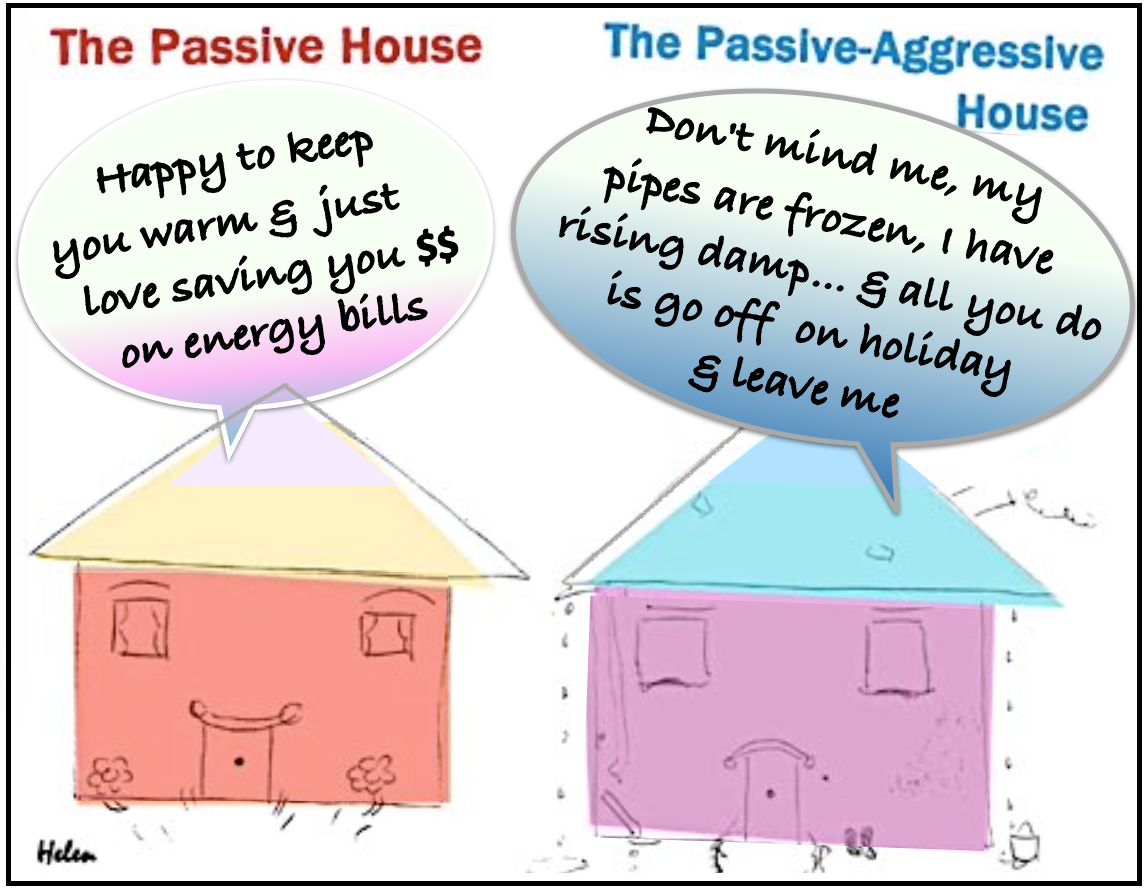
Later he buys her a B/day gift which deeply offends her artistic & Christian values – an ugly-made goddess statue – knowing her religious background! She can’t imagine his intention – but is outraged. She instantly blows up at him & gives the gift back. Naturally he’s shocked & insulted. After all – it was well-meaning. Instead he mails her a self-righteous note, asking “Is that any way for a Christian to act?”.  End of friendship! Sandy feels ashamed for blowing up but also relieved to get away.

NEXT: Passive-Aggressive ACoAs, (Part 3)

Passive Aggressives – Review for ACoAs (Part 1)


YOU’LL NEVER SEE HOW ANGRY I AM –
I barely know, myself!

PREVIOUS: P-A ‘nice’ comments

SITE: Constructive, Passive & Aggressive Leadership styles


REVIEW
1.The GAME (Post: How its played)
a. DEF : Passive-Aggressive ‘Personality Disorder’ (PAPD)
A 2-handed ‘game’ which always requires the Passive-Aggressive (P-As) person & the Volatile (Vs) one to react (in ‘Games People Play’ – audio – by Eric Berne)

✰ web-MD …. apparently compliant behavior, with intrinsic obstructive or stubborn qualities, to cover deeply felt aggressive feelings that cannot be more directly expressed….

✰ Wikipedia ….. a personality trait marked by a pervasive pattern of negative attitudes & passive, usually disavowed resistance … expressed as learned helplessness, procrastination, resentment, stubbornness, sullenness, or deliberate/repeated failure to accomplish requested tasks for which one is (often explicitly) responsible….

✰ DSM VI …. the behavior often reflects an unexpressed hostility or resentment stemming from a frustrating interpersonal or institutional relationship on which an individual is overly dependent

✰ The Straight Dope …. people who suffer from PAPD expect disappointment, and gain a sense of control over their lives by bringing it about.Screen Shot 2016-06-14 at 11.09.50 PM.png

b. ACoAs: MANY of us grew up in one of 2 emotional climates :
emotionally volatile – being around loud, hyper, dramatic, raging parents / relatives – which has made some ACoAs emotionally gun-shy. We had to sit on our own anger – there was so much flying around, and we didn’t want to be like them, so we shoved our rage into a huge locked room & tried to throw away the key. But now it comes out sideways!

Screen Shot 2016-06-14 at 11.00.40 PMemotionally repressed – the other extreme found some of us in a family of uptight, buttoned down, emotionally cut-off, perhaps P-A types, who made a point of suppressing any intense emotion in their children. They may have believed it was ‘spiritually correct’, or they just didn’t want their own repressed pain to get triggered, &y didn’t have the skill/ tools to deal with ‘big feelings’ from their kids. We either copied their style or became ‘dramatic’ & over-reactive to everything.

• Both styles have deeply effected our relationship to anger & rage.
IMP: These are normal human EMOTIONS (Es), which are just forms of energy & by themselves are not dangerous or bad.
✶✶ What to watch out for are the ACTIONS we take to express these Es! If we express them safely, we don’t hurt anyone & in fact feel lighter & can function better. If they’re expressed badly we can cause pain to others, while adding to our shame, guilt & S-H.

c. Briefly:  P-As ACoAs have a huge amount of accumulated anger & rage (from childhood, as well as in adulthood), which we’re not allowed to feel, much less admit to – in order to be the ‘good’ one. We have cultivated such a facade of ‘niceness’ we’ve fooled ourself (but not everyone).  We may be the Hero or Lost Child from any dysfunctional family –  the Rescuers, the People-pleasers, or the Invisibles. (Toxic Roles”)


no, noP-As compulsively resent, oppose & thwart – indirectly – what we see as demands to function at a level others expect of us. We’re convinced that we’re still not allowed to have real power for  ourself,  afraid to admit our anger at being neglected & unloved.
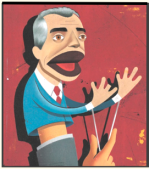
We end up saying NO to our own needs & wants – and to many things that would be good for us.

So we live in a state of deprivation, expecting others to read our mind & provide what we won’t give ourself . P-As are rarely if ever able to state outright what they want & don’t want, or distinguish between actual bullying & appropriate requests.

hidden handsSuppressing our anger is a form of negative self-control, then put all the rest of our effort into trying to control other people’s actions & emotions..  In light of our self-imposed limitation, P-As are inwardly driven to push others toward our secret goals: to prove we can’t be pushed around, and to get back at anyone who’s hurt us OR their substitutes) – while seeming to not push at all. (re. controlling). It’s a way  to get our agenda across without risking negative consequences.

NEXT: P-A ACoAs – Review (Part 2)

OUTGROWING Co-Dep Niceness (Part 8b)

I FEEL MUCH BETTER
when I’m forgiven

PREVIOUS: Asking forgiveness #8a

SITE:16 Common excuses for NOT asking for forgiveness”
(apply to anyone unwilling to be accountable, + Christian references)


RECOVERY from “Too Nice Syndrome” (TNS)
cont.
TOOL 7a, b, c FORGIVING Ourselves – as ADULTS

TOOL 8b. FORGIVEN by OTHERS (cont)
1.
WHO (in 8a)

2. For WHAT: Here again ACoAs get things backwards: (see Part 1)
Too much: we apologize, often too often, for things what are not ‘offenses’, only because our S-H, via the PP, says everything we do & ARE is bad / unacceptable.
EXP: Billy’s sponsee was always making ‘humorous’ fun of himself & he wasn’t even a comic. When Billy wouldn’t laugh at yet another clever self-putdown, the sponsee was annoyed: ‘You don’t have a sense of humor!”. Billy’s response: “Self-hate isn’t funny!”

Too little: at the same time we hide from admitting the actual insensitive or destructive things we say & do, because of shame, guilt & FoA. Yet such negative actions make us feel bad about ourself, so we hide even more – acting like nothing ever happened, instead of cleaning up our mess whenever possible.

a. Imagined ‘character defects’ (see Part 8a).
The alcoholics & other narcissists we grew up with insisted that we gauge relationships based on what they wanted or hated – which we now project onto everyone else. We assume others will be as weak, as judgmental, as demanding, as manipulative, as needy, as controlling, as dangerous, as easily upset…. as our family (school, religion) were. So we’re always looking out for emotional traps, trying to avoid other people’s disapproval & anger.

That makes us constantly worried that we have annoyed, bothered, offended, disgusted…. everyone else. But if we were to ask a person about something we said or did that we were sure they disliked/hated – they couldn’t imagine what had us so worked up – it hadn’t registered.
And if we tried to apologize for some imagined slight (based on our mind-reading ‘talent’) & they did remember the incident but barely noticed it, they might look at us quizzically or with amusement – since to them it was no big deal!

b. Real ‘character defects’ – because of damage.
Shame is at the root of all our wounds,
& asking for anything is considered shameful. So having to be humbly honest with someone we’ve hurt & then ask to be forgiven for our thoughtless or hurtful actions can be very uncomfortable, even terrifying – but only to the WIC part of us.

REMINDER – Admitting we have character flaws is NOT an indictment of our whole being. It’s not only human to be imperfect, but as ACoAs we definitely have more ‘issues’ than people raised in safer homes. All are a combination of our parents’ defects (which became our Introject), our native personality, & our response to all the abuse we suffered.

IMP: Before approaching others with your 9th Step – be very sure you will be talking to someone capable of treating you with respect. If they’re volatile or disdainful, don’t engage!

A WAY to START is to ‘lightly’ ask the person if they remember the event that you’re concerned about ? – unless you already know. Don’t make it sound dire.
1.  If they don’t remember, then drop it. If they ask why, say “I just wondered” & nothing more.😓

2. If they do recall, ask how they feel about it. Don’t put words in their mouth! NOTE : you’ll probably get a THINK answer rather Emotions. Decide which form is important to you to know, but
Don’t push.
• If they say they’re OK about the event, believe them – don’t try to mind-read their intention.
So leave it alone. Your guilt is your own – they don’t owe you absolution.

3. 😂If they express hurt, anger or disappointment, you know it’s time to apologize. Again – they don’t have to forgive!

NEXT: Passive-Aggressive Niceness – Intro-a

OUTGROWING Co-Dep Niceness (Part 1)

speak up for me
I WANT TO BE HEARD!
(I hope no one minds 🙄)

PREVIOUS : Neg EXTERNAL results
from others


 RECOVERY from “Too Nice Syndrome” (TNS)
Undoing our TNS isn’t accomplished by becoming a nasty bully or resentful isolate. Instead, we can apply the wisdom which the Snake of fable had not understood – that occasionally it’s necessary to hiss! Emotional maturity is about balancing between being well-behaved & putting our foot down when needed.

The following TOOLS are:  1. Facing FEARS //  2. SELF-WORTH   //  3.  ASSERTIVENESS  // 4. HAVING RIGHTS   // 5. FORGIVE OTHERS   // 6a. HEAL our T.E.A.s   // 6b. FORGIVE OURSELVES (as adults)  // 7. BE FORGIVEN

Used together, they can move us along in the right direction, but if we’ve been a life-long people-pleasers (P-P), it’s going to take time, patience & perseverance. Think ODAT & never give up!   We can go: From Damage —–>——>——-> to Wellness

TOOL 1. Facing FEARS

++ It’s normal for Co-deps to be fear-based, given our history. That fear may never go away completely, but can become much less intense. As we thaw out emotionally we can experience our feelings quicker when something hurts us – instead of registering months or years later.
Intensely painful emotions are a signal that you’ve either tapped into childhood trauma-pain, &/or you’re torturing yourself with cruel self-talk, causing terror.L & R BRAIN
Allowing yourself to sit with old pain & other emotions that come up from a current event – will free up a lot of psychic energy we use to hold them down.

☁︎  T.E.A. = Most people combine Thinking (mainly Left brain) & Emotions (mainly Right brain) into one big messy hodgepodge. If someone asked (or you ask yourself) : “Are your/my fears realistic?” they are not referring to the emotion of fear, but rather to the toxic rules, projections, S-H…. theTs that cause the fear (E).

Fear is just fear – it’s neither realistic or unrealistic, which only applies to thinking. (Post: “Feelings aren’t facts”)
Years of early abuse & abandonment created our fear – accumulating every hour, every day that we lived with those people (family, school, religion, neighborhood….). That feeling is an absolutely normal, appropriate emotional response to those events. We’re stored that terror in our body, which we now attach to thoughts & current events – adding to the pile, keeping P-P in place (“Anxiety & T.E.A.s”)

REVERSED – As Co-deps we often get both our mental & emotional reactions backwards. In terms of fear:
• we ignore or underplay emotionally damaging effects caused by actual people & situations that are inappropriate or outright harmful to us, but have a real effect on us even so, & yet —
• we can over-react emotionally with S-H & FoA to PPT that are either not dangerous at all, or are those uncomfortable pain-in-the-butt “that’s life” situations which seem overwhelming, but actually are fairly easy to smooth out, once we come to see them in proportion, & learn how to manage them

💚 Don’t let others keep confusing you. Be clear whether you (or they) are talking about Thoughts/beliefs OR Emotions – or Actions, & know how they’re related – or not!  Es can be a response to an As, without causing harmful Ts:

EXP
: I can be very frustrated & angry (E) about a situation I truly have no control over, such as ‘being laid off from a job/ loss of a relationship/ illness of a loved one….’ (A), yet still have a positive mental attitude about myself, my life, even my future, such as “It’s not my fault / I know I can find something or someone else / I’m actually better off now / I pray for them….” (T). (See many posts re. EMOTIONS)

To outgrow People-Pleasing (P-P) we need to stand up for ourself. And for that to be effective it has to come from our Adult Ego State, not as a knee-jerk reaction from the WIC. This includes knowing when to be silent or walk away, which will depend on recognizing whether a situation is hopeless or not, especially when dealing with Personality Disordered people.
Ironically, being too nice also does others a disservice – preventing them from being their best, by giving their Inner Brat opportunities to come out & play whenever they feel like it – on our head!

NEXT: Outgrowing P-P #3

Co-Dep EXTERNAL Negatives – in US

screen-shot-2017-02-28-at-10-47-34-am
I WAS SO SURE BEING NICE
would get me liked. Not! 

PREVIOUS: Internal high cost (#2)

SITE: Co-dep in Children
• Childhood Trauma Recovery ARCHIVE

See ACRONYM page for abbrev.

The HIGH COST of being ‘too nice’ (cont.)  NEGATIVE RESULTS – in US

• You have unrealistic expectations of others
Since you think of yourself as well-meaning, you may automatically assume that others have the same good intentions. When they don’t reciprocate, you think it’s about you, or that they’re being mean, or taking you for granted. Not meeting your (unspoken) expectations feels too disappointing, easily leading to anger & resentment.  BUT it’s either your —
— faulty thinking : that everyone is just like you (symbiosis), when they may just be taking care of their own needs – instead of yours, and/or
— 
faulty choices : sticking mainly to self-centered & abusive people who have no intention of reciprocating

EXP: ACoAs have our own version of Hansel & Gretel – You’re in the forest of daily life & run into the child-eating-ogre (‘perpetrator‘). Your WIC takes over, glued to the spot, looking up innocently, with big eyes & thinks : “You wouldn’t eat me, would you madam/ mister monster?” – instead of getting away as fast as possible, the way healthy people do!

You come off as tone-deafdo not tell to smile
Over-friendly people may mean well, but it can certainly be annoying, insensitive, even rude – rubbing others the wrong way  – because it’s a form of not listening.
EXP: A woman undergoing very painful medical treatments needed physical therapy. The young male receptionist in that office was a california-cheery type (but not in CA), who always beamed “It’s so good to see you!! How are you today?!!”
Walking slowly with a cane, the patient was obviously weak & in great discomfort. She was not amused by the greeting, much less uplifted. Even if his style was genuine, it truly lacked empathy, & was his need to project sunshine even tho’ it didn’t suit the situation. Being quietly gentle or even neutrally polite would have been much more soothing.

According to the School of Life, the too-nice are guilty of 3 major errors:
1. Believing you have to agree with everyone – making you a liar
2. Handing out empty compliments – making people think you’re fake
3. Being remorselessly upbeat – suggesting you can’t ‘read’ situations correctly, if at all – because you don’t have emotional intelligence (EQ)
These make it unsafe for others to reveal their truest selves around us.

• You attract needy people
Just like ‘takers’ are your catnip, you are catnip to those even more desperate than you! Over-dramatic, clingy, controlling /demanding, whiny adult victim types will find you & try to drain you dry. They expect you to be mommy/daddy, therapist, nurse-maid, char, “butcher/ baker/candlestick maker”. And they’re manipulative, playing on your need to be needed, skilled at guilt-tripping if you don’t be-or-do what they want.
ALSO:
• You attract aggressive, demeaning treatment
Being over-friendly invites bullying from arrogant personality types, who instinctively recognize the “Kick-me” sign on your back that you don’t realize is there. They smell weakness – your insecurity, fear of loss & lack of boundaries – which energizes their sadistic need to vent their rage on others, rage toward their own weak family members who severely abandoned & disappointed them

•  You get stuck in this role
Once everyone gets used to your pattern of ‘selflessness’, it’s not only harder for you to change, but many people you know will strongly object if you do start having clear opinions & setting boundaries. It would mean they’d have to make changes too, which humans tend to resist

• You can’t do your job well
Especially as a boss, if you’re too easy & agreeable, you:
— won’t get rid of people who hurt your business or company
— won’t stop workers, suppliers & customers from taking advantage
— won’t make beneficial changes because it might ‘hurt’ someone
— can’t do great things that require forging your own way
(Stop being ‘nice’ at work)

• You can hurt others
Being too available for too long is so wearing that it leaves you with no time & energy for yourself , family or friends. If you’re dealing with needy people, whatever you give will never be enough. Without setting & holding to firm limits, & with no reciprocation or appreciation, you will eventually get fed up. Then you explode or cut them off cold turkey. This leaves the clingers confused & hurt, ‘loosing all faith in humanity’. But they just put their faith in someone who has their own ulterior motives & almost as weak boundaries as themselves.

NEXT: External negatives – in us #2