ACoAs – “Being Negative” (Part 5)

positive thinking

 EVERY DAY I REMEMBER TO FOCUS
my thinking on the good things I already have!

PREVIOUS: Being Negative (Part 4)

SITE: The science of Happiness (“Happify” Website)


TROUBLE letting go
of negative thinking /talking – WHY?
• it’s strongly imprinted in our brain from years of ‘practice’
• it would require S & I from the family, which is never easy
• denial: we have a hard time noticing how often we think / talk that way

• it gives us a sense of false ‘control’
• no one would know how bad we had it growing up
• we get something out of it (Post: Negative Benefits)

• we don’t see the value in thinking/speaking positively, believing it’s for wimps, pollyannas or dummies (who don’t know what’s real!)
• we think it would be denying / our pain & suffering
• we use it to punish ourselves for being imperfect

CONSEQUENCES of Negative Thinking (NT
a. MENTAL: • it leads us to assume that any mistake is a failure, which will expose us to criticism/ judgment, like in our family
• tells us we should be able to make big strides quickly & easily, & that since we can’t – we lazy, stupid or hopelessly stuck
• it prevents being able to think of alternative solutions to problems
• when the brain tries to deal with a complex task, being inundated with NT slows down its capacity to process information & think clearly – by as much as 50%  (More…)

b. EMOTIONAL• can easily lead to depression, assuming we have to be perfect, & to being trapped by our own unrealistic standards
• can cause anxiety, leading to unhealthy coping mechanisms

c. PHYSICAL: • it’s harmful to the body, since negativity lowers its defenses & subtracts from our energy

• because NTs are so painful we can easily turn to addictions to escape (food, money, sex, alcohol/chemicals, relationships….)

d. PSYCHOLOGICAL: • is an obstacle to personal growth, making any change feel too overwhelming & painful
• it makes it hard to see & acknowledge the small steps in progress we DO make
• it denies or ignores possibilities that would improve life, & prevents receiving abundance
• it wastes time & energy, which could be used to heal old wounds & pursue healthy goals
• it convinces us that any form of risk is ‘life-threatening’

e. SOCIAL: • causes many personal, social & work problems
• has a downer effect on others we’re regularly around
• prevents us from relaxing & let our guard down, always second guessing ourselves  (Cognitive Therapy Guide

OUTGROWING NTs – change/modify things that contribute to it:change to positive

• start with AWARENESS of what you’re saying to yourself, what’s causing the ‘stinking thinking’, & the harmful effects it has on your life (& on others)

• slowly clear up practical problems which you have some control over (changing college course, job, spouse…., pay off debts, go to 12-Step meetings, do something creative/artistic….)

• try not to actually speak any negative thought out loud (develop personal boundaries instead of giving in to S-H).
If you feel the urge to criticize or get angry about something, shift to another topic if you NEED to talk

• accept/believe that positive thinking/speaking is a big plus, personally & socially. It does NOT mean being mushy, drippy, girly, sacrificing your opinions/ tastes/ values, or never objecting to something ‘wrong’
•  if you’re depressed, get the help you need to deal with it

• become acutely sensitive to the fact that some topics you’re interested in are intensely emotional (illness, jail, abuse, death, loss, war, politics, putting anything or anyone down….)

By your logic, these topics may be ‘perfectly normal’, interesting, current…. .
But when they’re inherently unpleasant, it is not respectful to foist them on others. It can easily sour the mood of a group, bring up old pain for someone or hurt someone’s feelings.

Naturally, such topics are appropriate in a group specifically designated for that (therapy group, 12-Step programs….)

• Notice how you feel when around another person who’s always a ‘downer’. Be willing to admit you may sound like that, & work on changing your own pattern – from the inside out.

NEXT: Being Negative #6

ACoAs – Being Negative (Part 4)

negativityISN’T IT CRAZY TO TALK TO MY BODY? 

PREVIOUS: NT (#3)


Negative Thinking (NT)
(cont)
1. re. OURSELVES
2. re. Personal RELATIONSHIPS

3. re. Our BODY
UNREALISTIC
a. At an extreme some ACoAs are hypochondriacs —  with the disorder that makes a person believe that body ‘feelings’ are signs of a serious illness —-> even when medical science can prove otherwise.
It’s their preoccupation with health, misinterpretiimagined illnessng a physical sensation (gas, muscle ache, headache….),  making it something it’s not.

Illness becomes a part of the hypochondriac’s identity, causing relationships & work problems. It occurs in men and women equally.
Relentless NT about the body is a substitute for / defense against feeling the huge backlog of hidden painful emotions we’ve buried. And long-term, it harms our immune system (Psycho-Neuro-Immunology).

b. Body Dysmorphia (BBD) – the distorted, unrealistic image of one’s physical appearance (ugly, fat, too thin… ). Most often it’s the result having been sexually abused as a child. In extreme cases the person cannot “see” their body, only their head, even in the mirror.

ACTUAL – However, many ACoAs suffer real physical problems, FROM :
• years of addictions, self-abuse & neglect
• being under constant emotional, mental & spiritual stress as kids, plus physical/sexual abuse, later creating very real medical conditions = the auto-immune diseases

• hereditary factors in alcoholic families: birth trauma, childhood ailments, mental illness, bad teeth & gums, depression, bipolar disorder, dyslexia, ADD, SAD, EDS, severe food allergies (wheat, sugar, nuts…), environmental illness & other chemical imbalances
SITE:“…severe childhood trauma can alter developing brain”

➼ Whether inherited or self-inflicted – it’s imperative to not use NT toward our bodies. We must never, ever curse our cells or wounded parts!
If we stay fearful, worried, & project the worst, OR rage at our organs, limbs, nervous system… the body absorbs that negative energy & may take longer to heal or maybe not at all. (Cartoons re. responses to Physical vs Mental illness)

Healthy EXP: Jody had a motor-bike accident which damaged a muscle group just above one knee & caused a limp. Along with Feldenkreis & Brain Gym, she spent time doing Positive Inner Dialoguing. Pictured the injury, she talked tenderly to her leg – “I love you & am so sorry you’re hurt. I can see the cells repairing themselves using the healing energy I’m sending you. You’re important to me & I need you. I want you to be strong again… ” While the muscle took longer to heal, the limp cleared up right away & all of the damage was eventually repaired.

5. re. THINGS
• This is a more subtle form of NT – saying bad things about objects, places, events…. anything not alive. Many people think it’s perfectly ok to call things insulting names : ‘Damn that stupid chair! I stub my toe on it every time!’ or ‘My car is such a piece of shit. It’s always breaking down.hate things

• What’s wrong with that? They don’t have feelings, so what’s the big deal? Well, it’s more of the same – projecting our painful childhood experiences onto objects, putting out more negative energy, which can get reinforced by others around us.

NOTE : Negative Reciprocal Attraction :  one person does something harmful to someone else, who then returns “the favor” with an action that’s similarly harmful (attack<–>revenge // glare<–>frown // ignore<–>snub… ). This explains why some people keep moving in the wrong direction, ie. away from ease, comfort & safety.

Reality Check
• Since the chair is inanimate, stubbing your toe may have to do with where it‘s placed, and/or the way you move thru space. In her autobiography  Nancy Friday tells of constantly getting black & blue from bumping into things. In therapy she learned that she was unconsciously punishing herself for her (repressed) rage at her mother

• And the car may be old & breaking down, but it’s not the car’s fault – maybe of the manufacturer, or yours for not taking better care of it – or it’s time to replace it but you’re mad & ashamed because you can’t afford to!

ACoAs tend to get things backwards, blaming things instead of identifying the real source of our pain. To be emotionally & mentally clean we need to identify & own:
😣 our disowned emotions (anger, hopelessness, disappointment, fear…) which then deny / ignoreget projected on to PPT

😡 that we ignore experiences which actually were harmful, then redirect our anger & hurt back on to ourself or at innocuous objects

Blatant negativity is hard to miss, but ours can be so hidden that others may never realize how often we’re thinking that way.

NEXT: “Being Negative” (#5)

ACoAs & HUMILIATION (Part 1)

humiliationI’VE BEEN DOWN SO LONG
I can’t imagine ever getting up!

PREVIOUS: Anger T & F, #2

SITE:Humiliation” (Wikipedia)

QUOTEs: “No one can make you feel inferior without your consent.” ~ Eleanor Roosevelt


» DEF: Being in a state of disgrace, a loss of prestige &/or self-respect.
A person who is continually subjected to severe humiliation will experience major depression, suicidal thoughts or actions, & severe anxiety states, such as post-traumatic stress disorder (PTSD).

RESEARCH: A study at the U of Michigan revealed that the same areas of the brain which light up when we experience a physical injury – are activated when we experience intense social rejection.
In other words, humiliation & isolation are felt just as strongly as body pain.

NOTE
: Humiliation is not the same as humilityThe opposite of Humiliation is Appreciation

HUMILIATION originally comes from external sources – which then get internalized as part of the PP voice (Introject).
✦ THEN – for ACoAs it comes first & foremost from our family, & then often from school, church, neighborhood…. It’s ‘being shamed’ rather than feeling ashamed

✦ NOW- a less severe event may cause us to “take offense” when something is said or done to us, which comes from what or how we think (cognitive, intellectual).
Whereas –
✦ Humiliation is more demeaning & hurtful – visceral, existential – about who we are fundamentally

In the present, most ‘victims’ disagree with the humiliation laid on them – don’t like it, know they don’t deserve it, see the treatment as unjust….but don’t believe they have any options, & so don’t challenge the source or change their environment

1. EXTERNAL Sources
Humiliation involves an event or ongoing situation that indicates unequal power in a relationship, where we are in a one-down position & unjustly diminished.
Often the painful experience(s) are vividly remembered for a long time after, & can lead to anxiety, especially if the exposure was prolonged. It requires:
victim/perp1. a Perpetrator exercising negative power,  in many different settings

2. a Victim who is truly powerless (child, minority, the poor….)
OR who is re-enacting a long-held victim role from childhood, so is who;; vulnerable to being humiliated
3. one or more Witnesses to or observers of – the event(s), such as family members, neighbors, teachers, the general public, peers, officials…. who usually do not object or help  (bystanders, helpers), sometimes even egging the perpetrator(s) on, as in bullying (Flying Monkeys)

➼ The following list was compiled by Leland R. Beaumont at Emotional Competency” & can be applied to children as well as adults.

a. PHYSICAL / SEXUAL (most visible)
Being
• boundary / privacy invaded, trespassed on
• denied basic needs &/or social amenities
• exploited, suppressed, violated
• forced to do or say something distasteful & self-shaming
• injured, assaulted (hit, spit on…), attacked
• isolated or physically abandoned
• the loser in a dominance contest / cheated on
• molested, incested, raped
• often beaten, slapped, kicked, punched
Having  your:elder abuse
• abilities diminished from being disabled, or movement severely limited
• basic personal freedoms lost (mobility, access, autonomy)
• competence / confidence damaged – from being tricked, trapped, mislead, opposed, sabotaged, let down
• goals & plans constantly thwarted, over a long time
• resources diminished from being defrauded, robbed, cheated, evicted
• safety or security reduced by intimidation or threat
• to see / watch a loved one sexually assaulted
• to watch a love interest flirt with another, causing intense jealousy

b. EMOTIONAL /PSYCHOLOGICAL
Being
• blamed for things that have nothing to do with you
• blatantly rejected, treated unfairly, forced to back down
• betrayed, cheated, lied to, defrauded, suckered, duped
• denied basic personal & emotional needs
• deprived of privileges, rights or human dignitymade fun of
• forced to swallow one’s pride
• laughed at, mocked, teased, ridiculed, given a dirty look
• lowered in ones own or another’s estimation, made to feel powerless
• dependent (not by choice), especially on weaker people
Being
 • made to look stupid or foolish
• manipulated, dominated, controlled, forced to submit
• taken for granted, used to fill a need in others
• denigrated for ones values & beliefs, made fun of
• snubbed, put down, disgraced, shamed (not ashamed)
• treated as an equal by someone of a lower-status
• treated like an object (it) or animal, rather than a person

NEXT: Humiliation (Part 2)

Anger – Ways to REACT (Part 1)

Screen Shot 2015-06-07 at 3.15.09 PMI HAVE LOTS OF OPTION
for expressing my anger!

PREVIOUS: Anger – Negative uses  (#2)

SITEs : The Logic of Emotion      

Emotion Wheel app

List of phrases about anger or conflict (date rape, hot-blooded, road rage, tit-for-tat….)   ✦ See ACRONYM page for abbrev.

NOTE: The following 5 posts give several versions of the basic ways to categorize how people react to their own or other people’s anger/rage (Unsafe <—-> Safe)

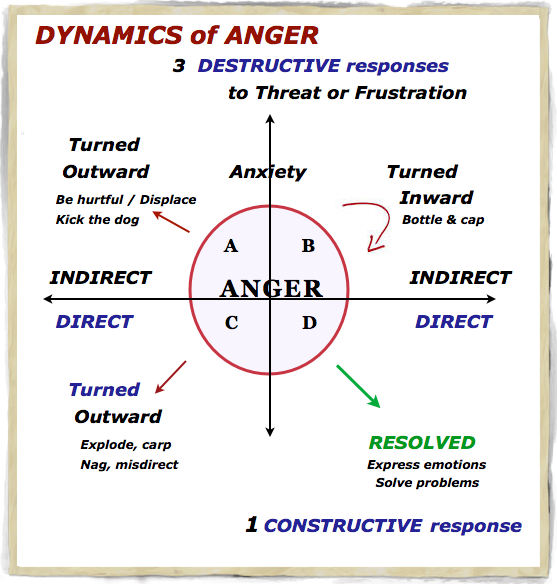
1. DYNAMICS of Anger Chart
A & C – OUTWARD anger at other people, places or things
A Indirect: sneaky or passive – without admitting or dealing with it
C Direct:
• Assaultive – physical, verbal & sexual cruelty
• Aggressive – attack on someone’s identity rather than their actions/ non-actions

MY dynamics of angerB
  
INWARD: suppressed & used against oneself, for FEAR of:
• losing control
• being disliked / rejected
• hurting / offending others
• the emotional intensity
• losing close relationship
• disobeying RULE  “Never get angry”
• too little communication / silent remoteness, depression

D Anger RESOLUTION, finding direct ways to manage, change or leave problem situations, using the Healthy Adult ego state

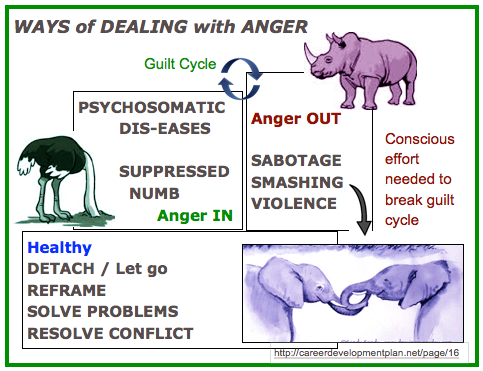
2. ANIMAL Symbolism
⬇️ CHART contrasts 3 ways of dealing with anger :
• Ostrich (Passive) = ignore, deny emotion
• Rhino (Aggressive) = attack, deny responsibility
3 anger ANIMALS• Elephant (Healthy) = be calm, understand, negotiate – expressed by:
a. Knowing ‘anger-signals’, from self or others, & then staying awake for them
b. Using a variety of productive & safe ways to respond (MORE….)

Use the S.M.A.R.T. action plan to deal with issues:
• Face the problem
• Ask questions to gather relevant info
• Re-frame – “What else could this situation mean?”
• Don’t take criticism personally, just learn from it – if possible. Side-step the WIC’s reactions
• Then let go of the whole thing. Forgive yourself, if necessary. (from the ELEPHANT JOURNAL)

3. MOOD MAPS – used to notice anger & in relation to other emotions
MOOD MAPS


CHART  ↘️
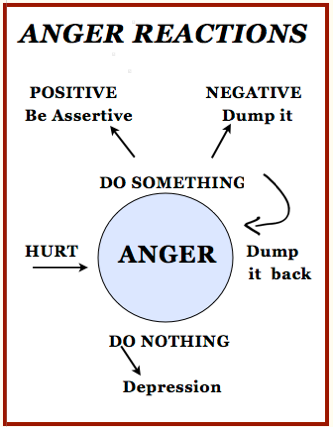
Appropriate expressions of anger are a way to be assertive (not aggressive)
• Unhealthy : dumping it on others or at oneself
• Ignoring : Suppressing it (denial) eventually leads toanger reactions depression4

NOTE: Speaking in a FIRM tone is not automatically an expression of anger. It can simply mean determination, being sure of something, or making a point.  This also applies to teaching, or correcting & providing discipline, which is meant to guide & support

🌀 However, if your WIC hears firmness, corrections or being giving direction as an attack or put-down, when it’s not meant as such, you’ll experience the same fear & weakness as if it were, based on childhood trauma.

4. Three TYPES of Anger

a. Hidden 
“Just because anger is hidden doesn’t mean it’s harmless. Just because it’s under wraps doesn’t mean it’s under control.”
For many of us, the need to deny the strength or even the existence of our anger is so powerful that we develop the ability to deny our anger even exists – unconsciously or by choice

• BUT – “Anger is such a powerful coping mechanism that repression & suppression are not actually successful. The more you try to avoid it, the more time & energy you ahave to spend with it. It’s a paradox.”  Dr. Roland Mairuo, Seattle MD. (+ Bible references)
Burying anger doesn’t diffuse it, it just burrow underground, where it undermines our sense of Self. The force of it will find other, secondary outlets when not allowed out directly & appropriately, usually in damaging ways

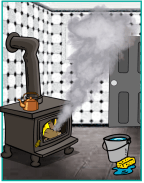
• Freud once likened anger to the smoke in an old-fashioned wood burning stove. The normal avenue for the discharge of smoke is up the flue & out the chimney.
If this is blocked, the smoke will leak out in unintended ways…. around the door, through the grate…. choking everyone in the room. If all avenues of escape are blocked, the fire will go out & the stove is useless.

Humans are the same – if anger is suppressed, it leaks out anyway. If suppressed for too long, we become cold inside & hard outside.
Normal human expression of anger is seen in big physical movements &/or loud vocalization, as in unhappy babies.

HIDDERN anger

NEXT: Ways to React (Part 2)

Anger & the BRAIN (Part 4)

pain/anger ME ANGRY? NAH –
it’s all in my head!

PREVIOUS: Anger & the Brain (# 3)

SITES: The 4 theories of Emotions

Brain Chemical Released When Angry


ANGER on the brain
A normal amount of anger is necessary & appropriate to function well in personal relationships & in the outside world.

The brain processes anger as stress, so it prepares us for the eventuality of fight-or-flight by elevating blood pressure, cortisol, serum glucose levels….
A certain amount of arousal is vital for efficient remembering, but when it’s too high, (as when we’re very angry) it seriously diminishes the ability to concentrate EXP: it’s hard to recall details of a really explosive argument.

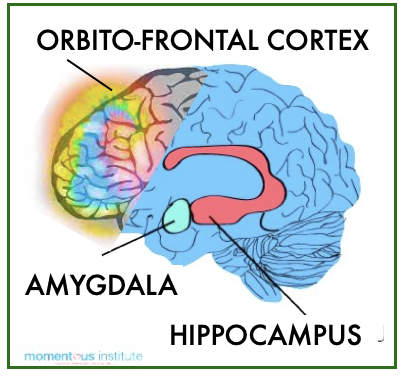
◆ The orbito-frontal cortex (OFC), the lower part of the prefrontal lobes, integrates sensory information from various other parts of the brain, such as weighing the value of reward-to-action, combining sensory input that turns taste into flavor….

Damage to the OFC can result in:
a. addictive behavior (over-eating, gambling…), so that the immediate thrill of a vice is chosen over the greater rewards of healthy choices & emotional stability.
b. over-reactions in behavior when very angry, because our cognitive understanding & interpretation of sensory experiences are distorted (an ‘innocent’ touch, hearing someone laugh, being accidentally bumped….)

◆ In a Harvard study of anger & the brain, MRIs of normal people showed that anger increases blood flow activity to:
> the amygdala, which deals with emotion & vigilance, and
> the cortex, which can cool the ‘heat’ of responses from the central & primitive parts of our brain, allowing a person’s conscious to decide how to respond, or totally inhibit acting on impulses.

However, severely depressed people may not have the correct balance of brain activity, so are not able to recognize & control their anger, which can lead to violent rages. (Darin Dougherty, Asst. Prof.)
SITEs:Trauma response to Anger” // Brain and Development effected after Child Abuse

Researchers at the Hotchkiss Brain Institute in Calgary, Canada, discovered that one of the effects that anger has on the brain – is that neurons in the hypothalamus stop working properly.
Normally these neurons (cells) receive chemical signals that prompt them to either switch on or off.
Certain neuro-transmitter chemicals produced when we’re angry interfere with these functions, jeopardizing the brain’s ability to slow itself down, by blocking the growth of new neurons & causing the death MY hormone interactionsof existing ones – leading to depression, memory impairment & learning problems.

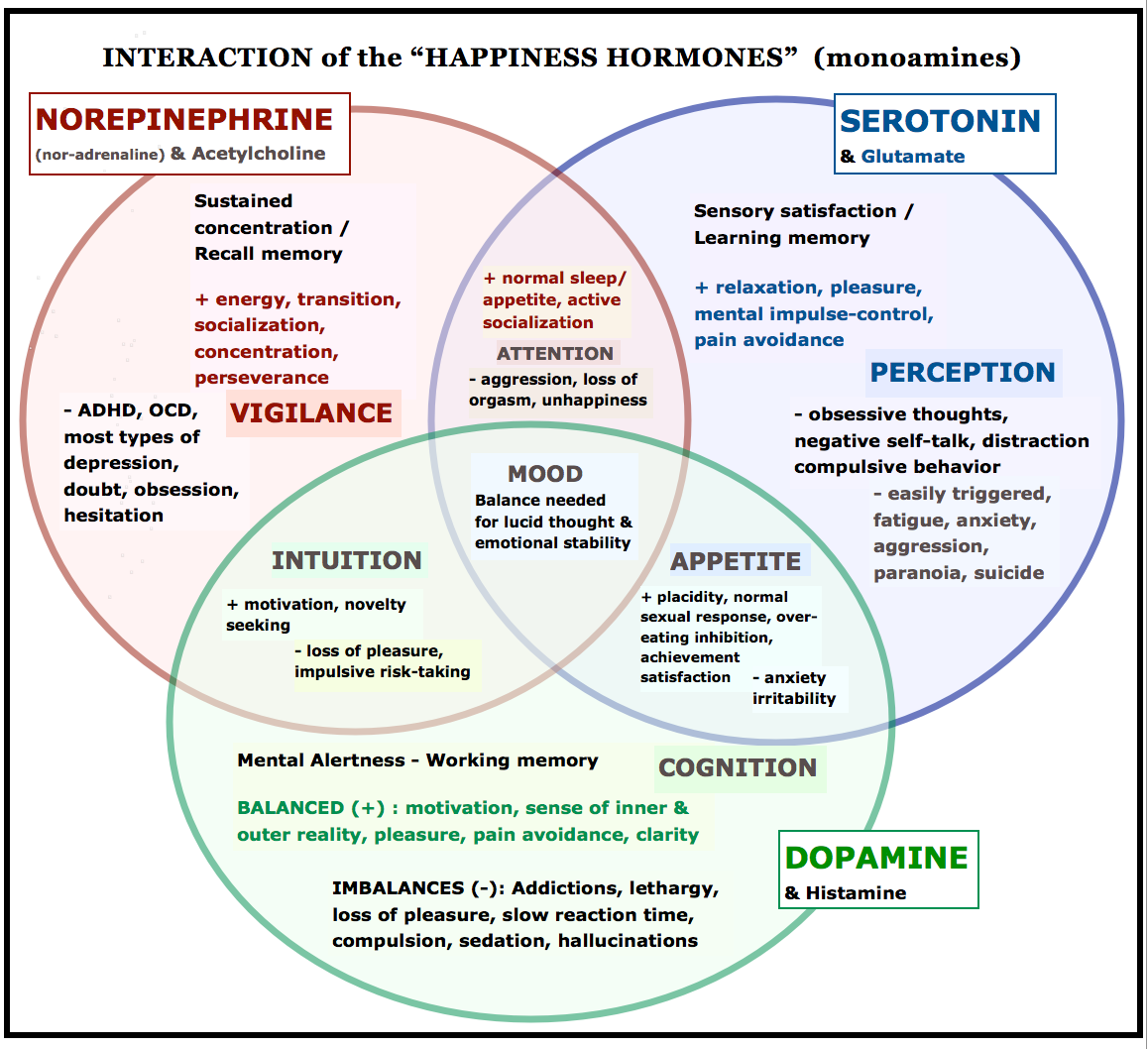
Happiness Hormones” are mono-amines, the main neuro-transmitters which animate the brain (how neurons transfer an impulse between them across a synaptic space) .

They’re associated with a variety of moods, playing a vital role in feeling, thinking & acting (T.E.A). When they’re up & running correctly, they produce a sense of well-being. These include:
‣ Serotonin, involved in emotion, overall mood, & keeping aggressive social responses in check. When low, it’s harder to control our reactions when we’re angry
‣ Dopamine is released to push us toward something good, or avoid something very bad. It also determines how angry we get when we’re upset

‣ Nor-epinephrin
(nor-adrenaline) prepares the body for ‘fight or flight’’
√ depressed people have Lower levels of this hormone
√ we get a ‘rush’ from combined epinephrine & nor-epinephrine
SITEs: Leadership chemicals (scroll down) / “Meet your Chemicals” (cute slides)

BTW: Normally, when we get angry, frustrated or feel other ‘uncomfortable’ emotions – because of some real or perceived danger – the adrenals quickly release the catecholamines Dopamine + Epinephrine & Nor-epinephrine, combined in a 80%-20% proportion.

They prepare the body for ‘fight or flight’, so we can deal with whatever is causing the anger, but the influx of these chemicals can also lead to acts of aggression in some situations.
In reverse, when they’re depleted or out of balance they cause physical & emotional disturbances, including anger, depression, anxiety, obsessions…

✤ Interestingly, these same chemicals are also generated by fear. It’s one reason why FEAR & ANGER are directly opposite each other on the Plutchik ‘Wheel of Emotions’. (“Identifying Emotions, #1)

FILL-IN form: FEAR Self-Inventory (+ info, charts, growth….)

NEXT: Anger & the Brain (Part 5)

Enneagram: Triad EMOTIONS – Intro

triad emotions 

UNDERSTANDING MY EMOTIONS
helps me deal with life better

PREVIOUS: Ennea Triad Basics – #2c

SITE: “Personality tool: Understanding the Enneagram. Scroll down for info on each type’s way of expressing emotions

CORE EMOTIONAL responses of the 3 Basic Centers
An important way of using the Enneagram is to identify & properly deal with the emotional essences of each triad – developed out of biological responses to survival threats. They can be seen across ALL mammalian behavior, via modern Affective Neuroscience. The same distress-emotions are triggered when the organism’s 3 BASIC NEEDS are not met.

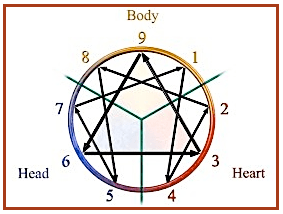
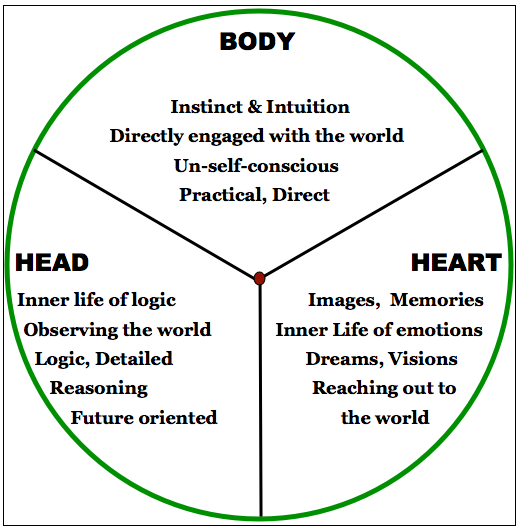
CENTERS: Feeling = Heart (234), Thinking = Head (567) and Gut (891) which includes = Instinctive (digestion, breathing, heartbeat) & Sensory aspects (running…).
Interesting: Gut acts 30,000 times faster than Heart, itself 30,000 times faster than Head. (“The Fourth Way)

◆ EVERY type is capable of experiencing ALL emotions, but each Center is driven by a main one. When things get tough, frustrating, won’t go our way….Screen Shot 2014-09-28 at 10.38.50 AM there’s an inner ‘default’ setting that gets triggered

234s = Grief, Shame
567s = Fear, Anxiety
891s = Anger, Rage
Each Type handles it’s primary emotion differently:
❖ The first # is overt “externalizes” :
2 its shame, 5 its fear, 8 its anger
◆ The second # “represses /covert” :
3 its shame, 6 its fear, 9 its anger

✦ The third # “internalizes /neutral” :
4 its shame, 7 its fear, 1 its anger

Basic FEARS – Triad emotion are our automatic ‘natural’ way of responding to the world, but most people don’t realize it’s what fuels their daily reactions.
When these emotions are cut off from our Core Self, they generate the Type’s defense mechanism, which underpin all dysfunction. While each Center has it’s preferred emotion, Riso & Hudson explained that each TYPE also has an underlying fear OF being: 
enn - Triand INFO1s – corrupt, defective, unbalanced
2s – unwanted, unworthy of love
3s – worthless
4s – without identity or personal significance
5s – helpless, incapable, useless
6s – unable to survive on their own
7s – in pain and deprivation
8s – harmed or controlled by others
9s – lost or separated from self & others

◆ Beatrice Chestnut, psychologist & teacher, condensed a human child’s early needs into 3 challenges – emotional ‘disturbances’ when not properly fulfilled:

A. Need to feel mirrored – when their caregiver makes direct, loving, face-to-face, eye-to-eye contact, so the young child feels ‘seen’ for who they are.

MISSING: Distress/Panic, from the loss of connection & bonding.
Heart types innately pursue this need, but do it incorrectly by creating a False Persona. This makes it hard to be curious about oneself, others & life.
They’re too busy watching what they do, so it will fit their created IMAGE of being:
2s – thoughtful & considerate – so others will respond favorably to ‘such a selfless person’ who only thinks of others
3s – a confident, successful person (so others will respond with respect to such a competent, achieving individual)
4s – a unique person, different from everyone else (so others will at least think they are special rather than lost or deficient).

B. Need to not feel fear – being protected from real danger, or whatever is imagined to be dangerous

MISSING: Fear/Anxiety, when experiencing ta threat, challenge, or danger to our very security
Head
types figure out what makes life certain for themselves. Some fear is necessary & useful if it’s not all-pervasive & overwhelming. When fear overwhelms, it’s very hard to be open to & curious about all the good things available to us.
It’s also imperative to separate fear that’s real from what’s self-created (S-H)

5s – move away from anything that scares them, retreating into a solitary, private world where they only rely on themselves
6s obsessively imagine future danger, &/OR act fearless, as a way of coping with their ever-present fear of life
7s try to avoid fear entirely with constant distractions, sticking to a positive attitude, always considering new possibilities, & planning escapes

C. Need to feel held & supported – seen in very young children who want to be securely wrapped & held, to not feel the threat of being dropped (injured or dead)

MISSING: Anger/Rage, when we experience not being able to depend on our caretakers to ‘back us up’ – neglected, violated & repeatedly deprived
Body Types can sense what’s wrong in their world, know what actions are needed to correct it & how to provide their needs. They want to control their experience & environment to deal with anxiety :
8s try to ‘hold’ everything & everyone by taking charge
9s ‘hold’ by repetitive activities that soothe them (narcotizing)
1s ‘hold’ by being self-controlled, trying to control or structure every aspect of life

LAYERS of the SELF enn -LAYERS of the SELF
Outer = COMPULSIVE : Behavior is automatic
Next = OBSERVING : Beginning of awareness, ability to notice & detach from compulsions
Semi-Inner = HIGHER : Increasing awareness & autonomy, the ability to access higher functions of the Centers
Inner/Center = ESSENTIAL :
Unified consciousness, not trapped in or identified with any one triad
(Chart: ‘Nine Paths’ 12/26/12)

Moving from the outer circle of Stress & Security points – towards our center – requires consistent self-observation.

NEXT: Triad Emotions (Heart)

DEFENSE MECHANISMS (Part 1)

defense typesI USE WHATEVER I CAN
to escape my fears

PREVIOUS: Enneagram Humor #4

REVIEW posts: Abandonment Pain

SITE: Defense Mechanisms Quiz

BOOK:In sheep’s Clothing (re. manipulative people) go to slide 50 ++

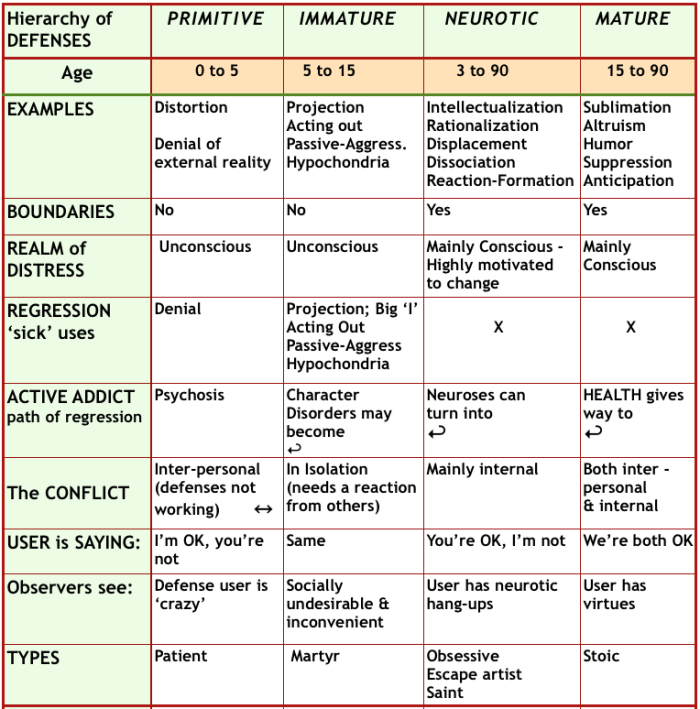
DEF: Unconscious & conscious processes to defend against or escape from conflicts, frustration & depression, so that the person can make useful adjustments to be able to live in their society.

REMINDER – as such, defenses are NOT bad. They’re needed to cope with life’s difficulties, as when we use humor to lighten our mood or altruism to lighten someone else’s load.
At best – most are delaying tactics, giving us breathing room to take a break & re-group.
The problem comes when any one of them become ‘land-locked’, so deeply ingrained that it can’t be given up easily, so rigid that it’s used like a hammer on every problem, regardless of size or importance.
tree of defenses
• In that case they become Negative Benefits” – used to avoid childhood or other trauma which the person does not want to deal face. To better understand what these are, we need to know about Defense Mechanisms, which were first identified by Freud, & then added to over the years by others.
He noted that people have wishes, desired & impulses that are either unacceptable to their society, religion or family – or their own sense of self  (CHART)

• The fact that the impulses don’t go away, but are usually hidden in our unconscious, leaves a residue (like at the bottom of a bottle) of anxiety*.
Keeping the impulses pushed out of awareness takes a lot of energy – which is exhausting, but considered by the ‘user’ to be safer than admitting them
(EXP: wanting to kill one’s parents or oneself). We do this by using Defenses. Which ones we pick will depend on our upbringing & our native personality.

*ANXIETY types, according to Freud
1. Neurotic – the unconscious worry that we’ll lose control of the id‘s urges, resulting in punishment for inappropriate behavior
2. Moral – the fear of violating our own principles
3. Reality – the fear of real-world events, usually easy to identify.
EXP: Fear of being bitten when near a menacing, snarling, barking dog is appropriate – so it’s best to avoid genuinely dangerous situations (PPT) if at all possible.

Defense Mechanisms distort reality
In proper proportion & with limited use they can also be adaptive, allowing us to function normally in very difficult situations, where there are no better options

The big problem comes from over-use, as a way of life, especially when they’re no longer needed. What was once a way to cope then becomes the problem. A goal in Recovery is to make the extreme / harmful use of defenses conscious so the we can develop healthier ways of handling anxiety & stress – without eliminating defenses altogether.

Sdefenses hierarchy


NEXT: 27 Defenses

EGO STATES – ACoAs


PREVIOUS: Ego states Basics #3

SITE: T.A. – Transactional Analysis lesson


ACoAs
 & EGO STATES
Carl Jung is credited with the concept of the “Divine Child”, but the term broke into the mainstream mainly with the book “Your Inner Child of the Past” (1963) by Hugh Missildine, MD. Modern IC work is an outgrowth of ‘Ego Psychology’, ‘Family Systems Therapy’ & Transactional Analysis

In the 1970s the concept of the Inner Child & co-dependence became popular.  In the ‘80s & ‘90s John Bradshaw did an excellent series of TV specials focusing on ACoAs & the IC.
This chart is from Eric Berne’s breakthrough book “Games People Play“. In its simplest form it’s the basis for all modern Inner Child work. For Berne, an ego state is ‘A system of feelings accompanied by a related set of behavior patterns.’

💜 When we’re grown-ups, our E.S. are meant to be built-in resources we can call on as needed, but for ACoAs — aspects of the basic states are distorted (WIC), deficient (poorly functioning Adult), even missing (Loving Parent) due to our upbringing

Under stress we revert to old patterns, which for ACoAs is either the WIC or PigP getting activated. It takes over, while the others recede, having less control, less able to help

Our immature ‘Parent & Adult’ parts are expressed mainly (or only) from the WIC’s point of view – with a child’s emotional range, & only with a child’s limited, perhaps twisted, knowledge of reality.
SO :
• Internally – we mistake our parents’ beliefs, rules, slogans…  for here-&-now adult reality (PigP voice), so that toxic beliefs are taken as facts
• Externally – we may easily be convinced that everyone’s laughing at us because “they” always laughed at us (WIC’s thinking from past experience).

That’s even true in spite of years of education & a wide variety of positive experiences! In Recovery we can find more constructive ways to protect the total personality (PAC).
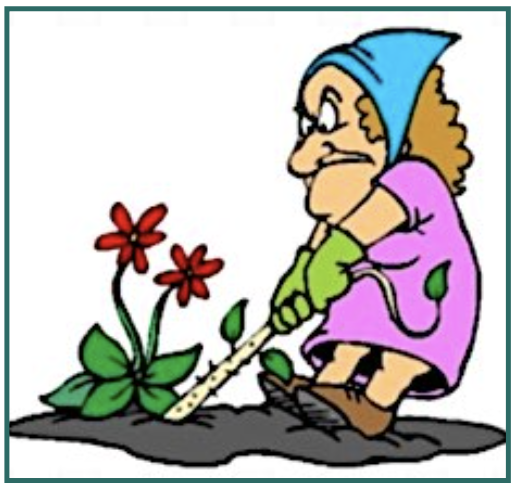
Current reality is contaminated when overlaid with unresolved emotions & memories of early experiences which became psychological weeds. Our E.S. growth becomes stunted, emotionally & mentally stuck in Child Mode – not our fault, but has to be corrected

Unmet childhood needs which are disallowed – are often disguised by behavior opposite to what’s actually required, like beating oneself up as way to force oneself to ‘behave better’. The original need was to prevent punishment, BUT is now turned into self-abuse!
EXP
Bad PARENT : “Why can’t you do anything right?”
Victim CHILD: “I know I’m dumb. Nothing I do every works out!”
Disconnected ADULT: “Let’s see, next I need to __, & then I’ll go __, and then I can __ …..

It’s normal for each E.S. to act differently when trying to accomplish something, no matter what the goal is. How the Adult part will handle a situation is not the same as an Inner Child or Loving Parent. This is not a problem for a healthy person, since appropriate actions are chosen to fit the situation EXP: Screaming at a concert (IC), being serious at funeral reception (A)….

But when a ‘sane’ Executive E.S. is not available, some internal Voices are frozen in terror, or all are out of synch with each other.
Each wounded state then pulls in a different direction, trying to fill needs that are at odd with each other – especially under stress. This makes it hard to feel emotionally grounded & mentally stable, so we feel like we’re going crazy. We are NOT!
EXP:
👨🏽‍🦱 The WIC’s version of an adult (A) can make us intelligent & very hard-working, but most of our efforts are meant to quiet some secret anxiety (FoA, guilt, S-H, shame…)

👮🏽 The WIC’s version of a parent (P) – actually the Introject – is:
✎ internally very harsh toward the C’s child
✎ externally dedicated, clever & kind – but only towards others
✎ OR very mean to others, while feeling scared & vulnerable

Because the Inner Child is ALL of our history, we can speak of it in the plural, having to do with more than one version of the wounded part – different ages, possibly of both genders, & each one holding an aspect of our early self – sad, angry, scholarly, defiant, carefree…. the suicidal one, the determined one, the caretaker, the bully….

NEXT: Ego states – Adult #1

Useful & Clever RESPONSES


I WISH I HAD A GOOD COME-BACK
when someone’s mean or stupid

PREVIOUS: Dealing with Toxic People

REVIEW: “Effective Responses” Heal & Grow website

SITE:” How to Craft the Perfect Comeback, According to Experts”

BOOK: “Viva la Repartee: Clever Comebacks

FRUSTRATED: ACoAs are often stumped when others say something unkind, controlling or ridiculous. No matter how smart, educated or competent, we’re often rendered mute by what we hear. First we’re shocked by the comments, not expecting such outrageous or boorish remarks. Then we can’t figure out what to say.

• So, here are some ideas that may be useful – some straightforward, some tongue-in-cheek. You may be uncomfortable with them if you think they’re rude, confrontational or hostile.  Actually, they are not – because: a. they are statements of fact
b. when said with humor, from our Adult ego state, & NOT in anger – they are very effective

TOXIC RULE: “Only other peoples’ feelings count”, which really amounts to:
• not holding others accountable for stepping all over us. Why do we let them get away with it, but condemn ourselves for being direct?
• being willing to abandon our Inner Child in favor of others, inslike ideastead of protecting it using a Loving Parent ego state?

SUGGESTION: Use these lines as is, or modify them to your personal taste. They represent setting boundary & teaching others how we want to be treated.
Pick 2-3 phrases that suit you & memorize them. Say them to yourself all day long, to get them set in your brain. Then, when you really need one – it’ll fall out of your mouth without having to think about it!
🏈 —

THEM: That was a long time ago / just get over it, let it go / stop dwelling on the past / why are dredging up old ……
YOU: 🔹That works for you, but it’s not where I’m at right now. I’d appreciate your support, but I understand if you can’t
🔹That’s exactly what I’m working on, it’s just going to take time, & I want to do it right
🔹I understand you don’t want to talk about this, so we don’t have to
🔹Getting well is the beat revenge – that’s what I’m aiming for

THEM: “That’s just a lot of psycho-babble”
YOU: “If you think that’s psycho-babble, you must not understand it.”

THEM
: You’re too sensitive // YOU: And you’re too insensitiveclever

THEM: You’re crazy! // YOU: Maybe, but I’m never boring!

THEM: You laugh a lot at everything I say
YOU: I’m easily amused!

THEM: You’re too emotional, over-reacting
YOU: You mean I’m too happy?  // Well, at least I can feel! // Maybe you could be more sensitive // You could use Compassion Lessons

THEM: Why don’t you …. / you’re just…. / if you…. //
YOU: That’s not helpful

THEM: You shouldn’t feel that way
YOU: Do you mean what I’m thinking or my emotions?

THEM: You should……
YOU: I try never to ‘should’ on myself. So please don’t ‘should’ on me either

THEM: You have to do (XXX) for me! (or else you’re bad / I’ll die…)
YOU: I’m sorry, but I can only take care of myself right now

THEM: That’s a stupid way to….. You …….
YOU: I don’t talk to myself that way

THEM: Why don’t you get (another cat) / why don’t you do…..?
YOU: Thanks, but I was talking about how I’m feeling. I wasn’t looking for advice or suggestions

THEM:  Don’t bother with that / do it this way / why can’t you…..?
YOU:  I don’t respond well to threats / being bullied / treated like a kidstop it!

THEM: —- (fill in the blank)
  //  YOU: Don’t talk to me that way

THEM: You really like that…..? / do you actually believe in that….?
YOU: Why did you ask // why say it that way?

THEM: If I were you, I’d….  //
YOU: Thank you for sharing your way of doing things!

THEM: If you don’t —– You’ll never see me again / I’ll kill myself / I’ll end up…. (& it’ll be your fault)
YOU:  I’m sorry to hear that. But do whatever makes you comfortable

THEM: I ne-e-e-ed you…. you’re the only one who can do…. who understands me….
YOU:  Well, actually, I have my hands full taking care of my own life. And there are lots of other people, groups, books… that can help you

THEM: If your mother says something provocative (or dad)
YOU: “Oh, mother!” – accent on ‘mother’, with at smile, then zip-the-lip

THEM: I’m just trying to be helpful
YOU: I’ve already tried that / I didn’t ask for help / That doesn’t work for me / Your suggestion doesn’t aideaspply to my situation / That’s not who I am / I was just expressing emotions

THEM:
 // YOU:
—> Add your own

PS: Yes, there’s a time & a place to know when to respond to insensitive comments & when not to. That takes practice, information & self-esteem based on knowing our rights.

GREY ROCKINGgrey rocking
And for those of us who are still dealing with the severe form of dysfunction – the malignant narcissists in our midst – the ONLY way to cope appropriately is to be a GRAY ROCK around them!
(
from “Psychopathfree” Forum)

NEXT: ACoAs – Dealing with Criticism (Part 1)

S & I : Healthy Individuation (Part 3)

S & I recoveryAS I WORK AT RECOVERY
I find out more about my True Self

PREVIOUS: Healthy I (Part 2)

POSTS:  PROCESS = ACoA version / vs / Recovery

CULTURALLY – Most people are wounded for one reason or another. Few have has a genuinely safe, truly nurturing childhood, especially in their first 10 years.
In his 1942 writing, “FEAR of FREEDOM”, psychoanalyst Erich Fromm deals with humanity’s reluctance to be alone – the lack of Individuation leading to our fear of isolation, & the resulting appeal of authoritarian regimes, such as Nazi Germany.
Fromm suggests that most are so afraid of freedom they find ways to minimize the fear by creating dogma & rituals that seem to provide a sense of security – whether for individuals or whole societies. (MORE…)

Authoritarianism: This personality type includes sadist & masochist elements. They need to have control over others to impose some kind of order on their world, but will also yield control to a superior force (government, religion…) from a person or abstract idea

Destructiveness
: Although there are similarities to sadism, Fromm argues that while the sadist needs to have control over something or someone, the destructive personality wants to destroy anything it can’t control

Conformity
: This happens when people unconsciously incorporate the over-all beliefs & Cognitive Distortions of their society, then believe it’s their own – so they can avoid genuine free thinking which would provoke anxiety

The PROCESS
If we can accept that we have our own specific lessons to learn, we’ll welcome them instead of complaining.
Lessons come in ever tighter circles until we’ve completed them, so knowing the stages of growth & accepting the spiral nature of self-healing (book), can help to appreciate our hard work & recognize successes

1. Develop awareness – notice what isn’t right in the quality of our life & relationships. It’s best to have a non-judgmental, observer’s point of view & friendly curiosity about ourself. This helps avoid triggering old patterns which originally formed as self-protection.
It’s imperative we don’t slip into S-H when we see these patterns again, to not add more pain, especially if we thought they’d already been ‘fixed’. No more salt in the wounds, please!

process2. Choose an alternative – this is an action step, but without aiming for perfection in any part of our life. It’s finding healthy opposites to break the trance of following the Toxic Family Rules, which can be a surprising & wonderful experience.

Switching to a better action (or non-action if called for) often brings up emotions of fear, guilt & shame, even anger, or sometimes feeling hopeless & suicidal – so be prepared to get the needed support

3. Practice what we learn – over & over.  Patience and Process are not our favorite things, but ARE the main ways we get better at anything – from sports & the arts to emotional, mental & spiritual growth. As long as we actively work to Individuate, we keep getting new info about ourself, which is exciting!

EXTERNALLY
The whole process of Individuation is the archetypal soup which all humankind is swimming in, the container that holds all our aspirations, dreams, fantasies, sense of vocation, successful ventures & wrong turnings (Marathi Culture 🔽)

Because it’s a universal human need, the physical expressions of Individuation Stages toward wholeness are found in all cultures, all eras, & in many forms:

Artistically, in the seemingly simple “Oxherder” pictures of Zen Buddhism or the cryptic, alchemical pictures of the Rosarium Philosophorum
Architecturally, in the labyrinth at Chartres Cathedral or the Bollingen tower that Jung built

Esoterically, in the Greater Trumps of the Tarot cards, or the pseudo-scientific, symbolic system of alchemy
Musically, in Mozart’s opera The Magic Flute or in Beethoven’s Fidelio

Mythologically, in the ancient story of Gilgamesh and Enkidu, or the Sumerian myth of Inanna and Ereshkigal
Playfully, in the many ball games played around the world

Poetically, in the spiraling journey of Dante’s Divine Comedy, or Hermann Hesse’s novel Siddhartha, about the life of the Buddha
Spiritually, in the Jewish Kabbalah, or the sayings and parables of Jesus of Nazareth, such as, “Whoever would seek to save their life will lose it; but whoever would lose their life will preserve it.”   From: “Individuation – the Process of a lifetime”

NEXT:  S & I needs a healthy ego – #1