DEALING with P-As: Emotions (Part 3)

HIDDEN ANGER
is tricky to deal with

PREVIOUS :
Dealing with P-As #2

SITE: BLOG re. P-A relationship


Our EMOTIONS
Notice how you feel around the P-A.
Pay close attention to your instincts. You’ll definitely feel frustrated, & then angry. If you don’t know what’s happening or you’re blaming yourself you may even despair. You are actually in a situation you can’t win – nothing you say or do seems to please them or get them to hear you. YOU :
• are likely feel tired or deflated, IF you’ve been trying to make sense of their behavior, & spending a lot of energy trying to get them to co-operate
• can feel hurt if they give you the silent treatment
•  feel annoyed that they’re always complaining, but don’t do anything to improve their situation

Make Friends with YOUR Anger
To be effective in dealing with P-As you have to be OK with your own feeling of anger at them (acceptance) – because that’s a normal reaction to being jerked around.

REMEMBER: We have our own hot buttons, which P-As can take advantage of – once they get to know us. Identify them, & then notice when you get really anxious or have a strong angry reaction when a button is bumped into.
EXP
: When ignored / accused wrongly / called ‘too sensitive’ / treated as stupid / taken advantage of / not given credit…..

Moderate your Response
Develop a “Teflon coating” for yourself when dealing with P-As — stay calm, keep your voice neutral, hold your emotions in check. The less reactive you are, the less fuel they have for their hidden anger tactics
• If possible, find out what the P-A is angry about – in the present situation. Notice a problem they’re reacting to as soon as you can

• Because P-As don’t show their anger directly, you can talk to someone who knows them well enough to tell you what the P-A’s buttons are, to know what subtle signs to look for

• Think seriously about what might really be driving the P-A’s behavior, which is usually a symptom of something else (or deeper) that’s upsetting them. NOTE: these is a tools to help with awareness, not in order to fix them

Stay as neutral as you can manage – even if you have to act-as-if. When you do get upset (which is likely), calm yourself down first before addressing whatever issue that’s bothering you – take a walk, crank up the music & dance, call a sponsor, read a page or two from the Al-Anon “Just for Today” Meditations…..
Then figure out exactly what you need / want from this situation, what is actually possible & what realistic outcome you can live with

Practice ++ self-talk (until it’s automatic), such as:
🤔”I didn’t cause it / I can’t control it / I can’t cure it”.
• I recognize their ______ as P-A behavior – it’s a familiar pattern I see & acknowledge
• He wants me to get angry & yell, so it’ll end up being my problem, not his
• I know what’s behind her procrastination, intentional inefficiency, ‘laziness’…
• It is her anger/ resentment that she’s not owning up to
• I don’t want to (& won’t) participate in P-A manipulation
• I have a right to be treated at least with respect, at best more lovingly
• I trust my gut reaction when I feel jabbed – because that’s what just happened

Empathize
Learn reflective listening & express empathy toward the P-A. While this may be hard to do, it can sometimes be helpful in dealing with sideways anger, & may disarm them. In any case, be compassionate toward yourself.

You can reflect (mirror back) their suppressed emotions by saying things like, “It seems like you were frustrated by what happened in school / at work….  today. That makes sense & must have been hard…..”
You can remind yourself that someone has probably been patient, understanding & compassionate towards you at times when you were not at our best. Pay it forward.

FROM Elephant Journal: “The passive-aggressive individual is not a bad person, they are simply a person who has been deeply hurt.
And when it’s a family member, friend, or intimate partner, the only way to stay present is with expansive love.
Pushing such a person to be honest or direct does not work, because they can’t see past their own fear & hurt.
Space and time are essential for healing.
Even more so, seeing the best in them can alleviate some of their fear, & reassure them they’re held with love, & embraced with your security.”

PS: In most cases it’s the P-A’s behavior / communication that’s hurtful & unhealthy (bad), is not the essence of the person. This is because the ‘acting out’ comes from the person’s False Self, rather than their hidden Healthy / True Self. However – their hurtful behavior is not to be excused or overlooked.
NEXT: Dealing w/ P-As #4

DEALING with Passive-Aggressives (Part 1)

THOSE PASSIVE-AGGRESSIVES
will drive me crazy – if I let them!

PREVIOUS: P-A Questionnaire

SITE: Dealing w/ P-A STUDENTS (for parents & teachers)

BOOK: The Angry Smile

REMINDER: “Passive-aggressives are not less angry than Volatiles, just less direct.”
A good portion of P-As were raised by mothers who were neglectful, non-nurturing, overly controlling, not allowing for any self-expression….. So you didn’t cause it. If you’re in a relationship with a P-A person, stay focused on yourself, & what you want to accomplish.  We’re only responsible for our T.E.A.s.

Our responses will be safest & least drama-producing for ourself & others when they come from the Parent ego state, as part of our True Self – rather than re-acting from the False Self / WIC. This includes making sure our own anger is healthy – because P-As do sorely try our patience!

REVIEW of some P-A tactics – THEY:
⚡️ Are persistently pessimistic, even when things are going well
⚡️ Avoid work and social obligations, often making excuses
⚡️ Critical, Blame others for personal failures
⚡️ Complain of being unappreciated or misunderstood
⚡️ Don’t do something that’s asked of them, are reluctant or fail to keep promises
⚡️ Exaggerate misfortunes, often run late
⚡️ Sabotage, are sarcastic, give the silent treatment, withholding intimacy

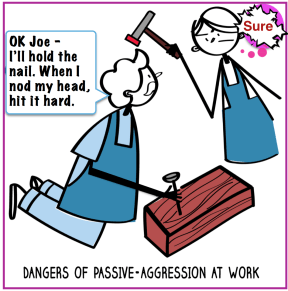
At Work – a P-A ‘team’ member may:
• Hold others to a very high standard of behavior & call them on imperfections / mistakes / oversights… in front of others (shaming)
• Intellectualize instead of apologize –“I wonder why I did that?” instead of, “I’m so sorry.”
• Interrupt – with a quick “sorry” – without real acknowledgment of the other person’s presence, conversation or activity

• Smile, & then do whatever they want by saying to the  other person, “You don’t mind, do you?”
• Take credit for what another team member said – by restating it as if it’s her own idea
• Use apparently logical reasons to undermine others’ success – and then say “You understand, don’t you? / You don’t mind, right?”….
• Use fake manners to cover a lack of genuine respect / manners
• Use neutral statements instead of true empathy. “Yes, it is difficult, isn’t it?” instead of, “How can I help? Let’s look at it and find a solution
• Use subtle sarcasm against a team member and call it humor “Just kidding”!”…… (Lydia Dishman)

ISSUES for us to OVERCOME
🌀 No boundaries.
P-As
have a nose for People-pleasers (P-Ps), Scapegoats & Victims – anyone with a big red button on their forehead that says “You can mess with me because I can’t stand up for myself”.  P-As (with walls around them) create drama & confusion, which directly impacts their ability to accomplish tasks, whether in business or at home.

• False-nice people (wounded Receivers) have weak boundaries, low self-esteem & are afraid of conflict, reinforcing their feeling of universal unsafely, This makes them perfect targets for the P-A’s hostility. P-As know when & how much they can get away with! ❗️so it’s up the non-P-A to work on developing / strengthening our Boundaries.

🌀 Confusing Communication
P-As will say one thing (like “Sure, sounds great!”) but mean the exact opposite, which is disorienting & disconcerting. Even if we (the Receiver) don’t fit into the Passive category we can still get lost in the morass of the P-A’s manipulation if we don’t understand the game they’re playing. Pay attention!

• And if we tend to be straightforward, we assume others are too, so we’re likely to take the P-A’s apparent agreement for a commitment: We think:
“They said they’d call the IRS / pick up the laundry / look for a job / do their homework / get that project done by Fri…. didn’t they?”

But for ACoAs, especially if we grew up with P-As, when we now have to deal with another one for any length of time (we may have inadvertently picked as boss, spouse, friend…..), some part of us can have a ‘sneaking suspicion’ they’re going to flake on us or drag out the promised action endlessly – but we still hope that this time…..

Sadly, depending on someone who is determined to constantly stone-wall leaves us endlessly disappointed, & having to do everything ourself anyway. Sometimes it’s not even worth asking .

🌀 Fighting fire with fire?
It’s inevitable that we’ll be frustrated & angry around P-As. But approaching them with sarcasm or our own passive-aggressiveness will only strengthen their resolve to be defiant. Besides, they’re much better at it – having had a lot more practice. 😼
<—– If we meet their anger with ours, the interaction will escalate, or they’ll just withdraw even more.  Remember that you’re always dealing with their hidden angry Inner Child!
We’re not likely to ever get the co-operation we want or need, so trying to ‘shake it out of them’ never works.

NEXT: Dealing with P-As (#2)

Passive-Aggressive ‘Nice’ COMMENTS

I HAVE LOTS OF WAYS
of being covertly angry
PREVIOUS: P-A #1

SITEs27 Most Passive-Aggressive Things That Ever Happened
P-A Commuter Types – (London)

** Southern P-A veiled insults 


Somethings Passive-Aggressives SAY :

Using their cherished bag-of-tricks to combat insecurity, especially if they feel pushed outside their comfort zone, P-As silently hope for attention & approval, trying to prevent loss of connection by avoiding confrontation.

The following statements are meant to express disappointment, hurt & hostility, but are coded in the form of underhanded insults instead of respectful honesty. Totally confusing most people, this style insures P-As do not get their needs met, while feeling ONE UP.
When they give those little looks, roll their eyes, or throw out subtly sweetly nasty comments, they’re cresting brain fog, so most ‘recipients’ don’t catch on that they’re being messed with. 

NOTE: Emotionally healthy people are self-reflective, so not only do they have decent self-esteem, but aren’t afraid to own their ‘stuff’.  So they rarely point a finger at others,, keep the focus on themself, not ashamed of their emotions, & can communicate directly with ‘I‘ statements.
EXP: “I won’t be able to help you with that // This is who I am, please accept me as is….”

BUT dyed-in-the-wool P-As have none of those characteristics. Almost all the following statements are ‘you’ types (some implied), and none of the “I” statements are kind or supportive, nor admit personal responsibility for their feelings / opinions

THIS often leaves someone wondering:
“Did I hear right? / / Did they mean to be mean? / / If I catch them or say ‘this hurt’ – will they deny or attack?……”  What the P-A wants is for others to always be off-balance.

This list includes things said/written by any adult in any setting
Aren’t we pretty today? = Who do you think you are? / / Is that what you’re going to wear? // What you’re wearing is ugly
Don’t bother! = means I really want you to do _____, & angry that you won’t
• Don’t take it so personally = means that it was a very personal barb
Fine. Whatever = sulking, they want you to stop bugging them
• How is your therapy progressing? =You don’t seem to be getting any better (maybe worse!) // you’re still such a mess, I don’t think even this will help
I’m coming! = foot-dragging, putting off doing something they want // I’m busy!

I didn’t know you meant now = means I won’t let you control when I do what you want, which I don’t want to do anyway
If you really want to = means I don’t really want to, but won’t say so
• It’s nice that you’ve found a friend = finally, since you’re not very desirable
If you insist! = means I don’t agree //  I don’t want you to, but won’t ask you to stop
It’s fine if you’re late, again = they feel disrespected but think it’s too petty to object directly (don’t have a right to be considered)
I didn’t do anything (wrong) = complete denial of their abuse or neglect
• I didn’t mean anything by it = means ‘pretend you didn’t get it’
I h0pe it’s worth it = they’re “worried” about a choice or decision you’re making, think it’s wrong and hope you fail
I thought you knew/ are in the loop = 
they had no intention of including you
• I was curious about / surprised / confused by…  =
a disguised criticism
I was only joking = sarcasm meant to stab at you. It’s not funny

• Oh my dear, you’re looking so much better today = boy have you been looking like something the cat dragged in lately (although you have not been sick)
No worries = short for Screw You
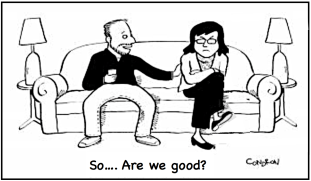
So… (by itself) = another form of Screw you, or what’s your point? — If in a sentence : So….When are we going? / have you called them back yet?…..  = the P-A is clearly agitated, worried…. but won’t admit it
Sure, I’d be happy to = they don’t want to & have no intention of doing it
• This is far too complicated for you to understand = dumb, dumb, dumb
Thanks in advance = you’re will do what they want, without your input or consent

• You’re asking too much / just wanted everything to be perfect = they don’t want to do what you asked for, but can’t get away with putting it off, so do it badly or half-assed, then are defensive when you rightly object to a sloppy execution
• You’ve done so well for someone with your limitations / with what you had to work with = means the P-A is jealous, but patting you on the head like a child. OR are very displeased & disappointed in you, & blames you

You decide / whatever you want = (as a pattern) never taking responsibility for what they want & then objects or criticized your choices
You’re imagining things = means that if you’re ‘crazy’, they’re home free – got away with abuse

You’re so intense / too emotional = P-As are hiding their own anger & pain, so don’t want your strong emotions to stir up their suppressed ones
You’re too sensitive = P-As don’t want you to object to their hostility, judgement or insult
Why are you getting so upset? = means “Ha, I got you!”
• We’re watching your progress & hoping the best for you = we don’t have a lot of hope or confidence in you, but want to sound supportive!.

NEXT: P-A ACoAs (Part 1)

Passive-Aggressive ‘Nice’ People (Part 2)

IT’S LONELY
being with a P-A

PREVIOUS: P-A #1

SITE Passive-aggressiveness
(in general & about men)


1. P-A CATEGORIES
a. Unintentionally hurtful = They believe they’re trying not to hurt others, not wanting anyone to feel bad. So they aim to be ‘perfect’, to not say or do anything obvious that might make the other person dislike them & ‘go away’. However, their anger is a barrier, felt at a nonverbal level, but others won’t know what’s wrong.
Because P-As don’t have access to ALL their emotions, their quietly defiant interactions prevent true intimacy, keeping people at arm’s length. Bottom line – they abandon a part of themselves, as well as people closest to them.

b. Self-protective =  This strategy is used by P-As when they feel the need to defend themselves at all cost, & believe they have no other options – even tho’ this may not be true – as a way to protect their self-concept, their job or personal interests. Usually based in repeated childhood experiences, they think they don’t deserve to speak their mind, afraid to be honest & open.

And P-As who want to believe they’re acting in your best interest – can say hurtful things because they’re actually trying to protecting their self-image, as well as prevent punishment (being fired, losing a friend, having someone be angry at them,,,,,). If confronted directly they become defensive, blame circumstances or the other person, instead of seeing their part.

c. Malicious = Since this series of posts are about surface-nice-people, it may seem incongruous to include P-As who aren’t so ‘nice’. But here it’s not their actions we’re considering – only their motivation. This type consciously wants to hurt anyone & everyone – without getting caught – planing out attacks or impulsively reacting to whoever annoys them in the moment (like secretly spitting in the drink they offer you).
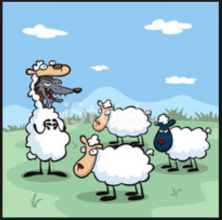
And some in this category are subtler than others, still keeping their ‘nice’ mask on.wolf/sheep's clothing

One way they play the game is to get others riled up & defensive, who then act out the P-A’s denied rage for them. Such a parent might say to their teenage child: “You should really try to treat your mother better after all the sacrifices I’ve made for you. You’re so selfish”.
This is an emotionally abusive effort to control the child’s behavior, but often only succeeds in generating guilt & resentment. Then this kind of parent can accuse the teen of being ‘difficult’! Every time the P-A gets away with it, their tactics are reinforced while still seeming to be innocent.

SILENCE (is not always golden!)
. Many writes assert that the Silent Treatment is the P-A’s favorite weapon. It’s a deliberate choice to not speak to someone for some extended time. It will be repeated any time the angry-nice person wants to punish another for any number of hurts, real or imagined, by shutting down emotionally & withdrawing, without admitting how angry they really are.

It’s a way to manipulate others into doing what the P-A wants by treating the ‘offender’ as if they’re invisible, in the hope that they’ll get the message “Do what I want/ be how I want – or I cut you off”. This is not about withdrawing love, since love is unconditional, but rather removing approval, & for approval-dependent people (children & many ACoAs), it’s a powerful form of control.

This silence is a sanitized version of murder. While the purpose is not to erase someone physically/ permanently, it is psychologically & emotionally deadly, causing far-reaching injury.
🔪 🔫 Physical murder means: “I do not like you. Therefore, I am going to make sure you do not exist – by killing you.”
💘☁︎ Silent Treatment means: “I do not like you. Therefore, I am going to treat you as though you do not exist – by not speaking to you.”

The tactic produces a great deal of fear in adults with a desperate need to stay connected – being vulnerable to being cut off – from having been repeatedly ignored by a parent.  (See: Qs to ask oneself, in upcoming post)

SITE: The Real Reason Why The Narcissist Punishes You” 

NEXT: P-As #3

OUTGROWING Co-Dep Niceness (Part 8a)

I CAN BE FREE OF some GUILT
if I admit when I mess things up

PREVIOUS: Adult forgiveness (#7c)

SITEs: “How to apologize : Asking for forgiveness gracefully” 


RECOVERY from “Too Nice Syndrome” (TNS)
cont.
TOOL 7a, b, c = FORGIVING Ourselves – as ADULTS

TOOL 8a. FORGIVEN by OTHERS
DEF – It is when someone we have hurt:
grants pardon for or absolves us of a mistake or wrongdoing
• no longer blames or feels resentment toward us
• frees us from a previous obligation or penalty

QUOTEs: “A relationship is only as strong as each individual’s capacity to forgive and ask for forgiveness.”
“Apologizing does not always mean you are wrong, & the other person is right. It can mean you value the relationship more than your ego.”

ASKING for Forgiveness
We know that a component of Co-dep fake-niceness is the desire to hide our guilt at having been less than honorable toward others. Clearing out some of the underbrush of our moth-eaten defenses (P-P) means being willing to ‘make amends’ for our negative reactions, whenever possible. This begins with telling the truth about our behavior, without over- or under- stating it.

A FEW problem areas that can harm others:
Being controlling, close-minded, dependent, dishonest, judgmental, narcissistic, prejudiced, perfectionistic, superior …..
For more, refer to the 3 posts ‘How ACoAs abandon others & both Laundry Lists.

AA’s Step 8 : “Made a list of all persons we had harmed, and became willing to make amends to them all”

Step 9 : “Made direct amends to such people wherever possible, except when to do so would injure them or others”

► While implementing the 9th Step is for our personal growth, it should not be taken without serious thought & preparation. It’s not going to help our healing if we don’t have a genuine desire to mend the breach with someone, but only do it because we’re supposed to, or are only thinking of how it will benefit ourself.
That narcissistic approach will likely anger the other person, & leave us confused & bitter.
Making amends is about ‘amending’ our ways, otherwise a verbal apology is hollow.

But, before we can consider asking to be forgiven, we need to look at who we’re going to apologize to & exactly for what. (‘Making amends is more than an apology)

1. WHO: Note that Al-Anon/AA Step #8 says “be willing“, but #9 cautions “except when.…”.
• In some cases we’ll never be able to connect with the person we owe an amends to because they’re simply not available – from death, unknown location, or not wanting any contact with us. Then go back to Step 5 to put that specific event to rest.

• Also, there are times when telling someone what we did to-or-against them will hurt them much more than staying silence, especially if they were unaware of our misdeeds. Always consider the consequences of your words. It’s not their job to make you feel better!

• And, just because some unhealthy people accuse us of being abusive when we accidentally push their buttons, don’t do what they want or don’t agree with them, set a boundary or stand up for ourselves….. (because they don’t feel safe unless everyone is apologizingtheir carbon copy), it does NOT mean we owe them an apology.
💛 We can acknowledge their feelings by saying we understand they don’t like something we did or said – or not. Period. Don’t add buts, excuses or explanations. As long as you know you’re being true to yourselves in that situation – you’re OK.
We are responsible for being as ‘clean’ in motive & action as we can, but NOT for how others react – regardless of our behavior.

NEXT: Forgiven for WHAT (#8b)

OUTGROWING Co-Dep Niceness (Part 6b)


TO BE or NOT TO BE

willing to forgive myself –
that is the question!

PREVIOUS : Outgrowing P-P #6a

SITEs: 12 Ways to Accept Yourself
I Forgive Myself for……
from ‘Journey of Be’, scroll to 9/2015


RECOVERY from “Too Nice Syndrome”
(cont.)

TOOL 6aHealing our CHILDHOOD T.E.A. (cont.)
As we outgrow P-P we can clean out the underlying issue that permeates every part of our life : our Self-Hate, which is blaming ourselves for not getting our needs met. It’s anger/rage at our family turned in on ourself

Reminder : Healthy, compassionate families, teachers & other leaders guide children with clarity, kindness, patience & humor. They set good examples, teach boundaries & realistic limits, explain the way people & things work, & help each child develop their Natural Self. (Healthy Parenting)

That was not our experience. All our childhood emotions, words & actions which were called “too sensitive, disobedient, difficult, selfish, lazy, stupid …..” do not need to be forgiven. Instead, we can look back with sorrow & compassion for what we endured!

SO: The more S-H we clear out, the more we drop P-P, automatically. Rather than struggling with the idea of having to forgive our youthful acting-out & normal child-reactions, we can benefit the most from ACCEPTANCE

++ ACCEPT that every child is programmed to follow their upbringing.  If it was alcoholic, dangerous, neglectful…. we drowned in too many rigid, harmful laws – or were completely left to our own devices. Now we can slowly form a new set of rules, loving & flexible – which will eliminate much of the need for fake niceness, so we’re free to be genuinely kind  (“ACoAs – Healthy Rules

+ + ACCEPT reality: We can let go of the – usually unconscious – twisted belief we may still have, that we’re hopelessly bone-deep failures because we originally:
• failed to be the kind of child who was good enough to have elicited love & approval from our parents
• failed to soothe & heal our parents’ many wounds
• failed to stop them from hurting us, each other & our siblings

++ ACCEPT that the mirroring we got as kids came from cracked mirrors – forcing us to see ourself thru controlling, cruel, drunk, insensitive, neglectful, raging eyes! What we came to think of as our Self was mainly their sickness projected on to us – which became our Negative Introject. This psychological process – helpful or harmful – happens to every child & is not ‘forgiveness material’.  (Parental Mirroring provides child….)

++ ACCEPT our child’s narcissism as normal, which made us think we had the power to do any of those things. Not! We can understand why we had those misguided ideas, & correct our thinking now (the CDs), to stop blaming & attacking ourself for what we believe are inadequacies & deficiencies

++ ACCEPT that following the Toxic family Rules does not & never did keep us safe!  No matter how ‘good’, helpful & self-denying we were as kids, we still got the full brunt of our family’s damage!
“I have to obey them” is a lie we tell ourselves so we don’t have to be our True Self & take care of our own needs

++ ACCEPT that as physical adults (not yet ‘grown-up’) we do not ne-e-e-d them to be our parents. That’s our job now. We do need a lot of help to heal, but trying to appease & please the original abusers is self-destructive

++ ACCEPT & stop judging ourselves absolutely, totally –  for:
• not being perfect // not knowing everything // making mistakes
• being so scared inside // being controlling // nit-picking
• having depression & the need for medication
• procrastinating or never finishing anything…  basically opposite everything on the RIGHTS list

++ ACCEPT that at first we’re going to feel guilt churning in our gut whenever we disobey any Toxic Family Rule, but we will slowly outgrow it.  This is ‘good guilt’ – for the short-term – because it signals doing something healthy for ourselves, which goes against all our original crazy training

The Tibetans have no word for ‘guilty.’ The closest is “Intelligent regret that decides to do things differently.”

NEXT: Self-forgiveness as ADULTS

OUTGROWING Co-Dep Niceness (Part 4)

I WANT TO BE ABLE
to enjoy all my rights

PREVIOUS: Outgrowing …. #3

WOMEN:  What “She’s too nice” means
MEN : Break “Nice Guy” Stereotype


RECOVERY from “Too Nice Syndrome” (TNS) cont.   TOOL 2. SELF-WORTH
                      TOOl 3. ASSERTIVENESS
TOOL 4. HAVING RIGHTS
++ To outgrow P-P we need a replacement for the Toxic Rules that drive our co-dependence. We need to know our RIGHTS. This makes us less scared, giving us the courage to ask for what is rightfully ours, diminishing the grip of co-dependence

Instead of having to ‘sing for our supper’, we want to acknowledge & act on RIGHTS which are everyone’s birthright. They are strictly for our benefit, not in order to be ‘good’ or to take care of others.  As we start living by them, eventually they can become automatic!

❤︎ YOU have a RIGHT TO :
✑ Think, Feel, Speak & Act according to your True Self
✑ be treated respectfully, no matted the circumstance
✑ never say “I’m sorry” for being yourself, or just for being here & taking up space 😎
✑ discover your passions & pursue them without interference
✑ appreciate yourself whenever you stand your ground
✑ not feel guilty for taking care of yourself or saying ‘no’
✑ take time out to answer a Q or request (“I’ll let you know”)
TO :
not care – so much!  You can’t carry the burden of all the world’s problems – there are too many, just as the whole world can not care about yours. And since none of us has the power to fix another person, you can stick to handling the things that matter the most to you, to get the most out of your efforts

✑ offer no justification!  Don’t lie, but don’t explain. Trying to prove your point – to unreceptive ears – can easily become self-humiliating. When an explanation is required, keep your answers clear & short

❤︎ YOU have a RIGHT TO –
✑ make mistakes // to not know // to be incompetent (every so often)
✑ ask for help  // to change your mind // to ask Qs
✑ not be responsible for other people’s needs, actions or problems
✑ disagree with others & express your opinion // to not respond to ‘stupidity’
stop victimizing yourself

✑ be helpful & generous to others — IF you have enough PMES supplies of your own to share.  Only do what you are legitimately capable of, what fits with your own self-care needs & when you have the time (unless there’s an emergency that only you can deal with – which is rare)

✑ take time out for yourself, even a little every day – to dream, to imagine a new possibility or something creative, to process the day’s experiences, to revel in an accomplishment, compliment or triumph

✑  find & maintain contact with support systems in various parts of your life, the kinds that fit your personal tastes, your work concerns, family needs & social interests. Let others give you whatever help & encouragement they have to offer – if it’s what you need!

• Never chase perfection – there’s no such possibility for human beings. Only God is perfect. Focus on your actual qualities, natural talents & accomplishments
• Know when your kindness is being taken advantage of, speak up about it & pull back some
• Don’t compare yourself with others. Since each of us has a separate body & separate personality, we also each have our own life path. Live yours!

• Always be kind to yourself. Stop self-hating thoughts as soon as there pop up, checking to see what abandonment trigger set it off (BOOK: “Compassion & Self-Hate – An alternative to Despair“- T. Rubin)

As the Al-anon Closing says ” ……We aren’t perfect. The welcome we give you may not show the warmth we have in our hearts for you. After a while, you’ll discover that ‘though you may not like all of us, you’ll love us in a very special way – the same way we already love you.”

❤︎ YOU HAVE a RIGHT to assert all these rights! (‘My Rights – Qs’)

NEXT: Outgrowing co-dep #5a

OUTGROWING Co-Dep Niceness (Part 2)

THERE ARE MANY WAYS
to help myself ‘let go’

PREVIOUS: Outgrowing P-P #1

SITE : 45 Confidence Exercises…..

<—- IMAGE from : “16 Acts of Self-Care to Get You Thru 2017

See ACRONYM page for abbrev.

RECOVERY from “Too Nice Syndrome” (TNS) cont.
TOOL 1. Facing FEARS

TOOL 2. SELF-WORTH
++ Self-esteem is fundamentally the result of unconditional love! To outgrow the need to P-P we can work at providing that for ourself now, even tho’ we didn’t get it as kids. Our attention has to be internal – on who we are, what we need, what our rights are & how well we take care of ourselves

☁︎ Co-deps base a lot of their ‘value’ on how much they do for others. This is self-defeating, guaranteeing ‘failure’, because :
• it’s only about action rather than personal identity, external vs internal
• we’re selfishly using others as a prop for our WIC’s distorted self-image
• we’re dependent on the unpredictability of how others respond to us
• we can never do enough for some people, so we’ll always come up short
• we can never fix anyone else’s pain, & even if it were possible, the people we most want to ‘save’ (rescuing=false helping) are usually the most recalcitrant (absolutely UNwilling to work on themselves!)
• some people will never give us any appreciation or validation. Sadly those are the ones we chase the hardest & longest!

Self-esteem allows for INTIMACY. To be capable of intimacy we need to overcome a large chunk of our self-hate – by developing at least a working knowledge of our Rights, using good Boundaries, having access to a wider range of Emotions & a nodding acquaintance with our Inner Child, the UNIT & our True Self.PP voice

☁︎ If you’re an ACoA, your needs & emotions (Es) were stomped on & ignored. Being ‘too nice’ was one way you survived, even if your siblings chose a different way to protect themselves. What does this tell us?
That we used whatever we could to deal with an emotionally & physically dangerous upbringing.
We didn’t create that situation, SO this pattern is not an innate flaw in us. It’s correctable!  Outgrowing P-P is a combination of:
— rooting out abusive self-talk & correcting distorted ideas about life (CDs)
— consistently comforting & nurturing ourselves (self-care)

As we “get it” in our bones that we didn’t cause our need to develop co-dep – it will greatly quiet the self-hate & PP voices, which tell us that it is our fault. Then we slowly outgrow the old pattern of people-pleasing (P-P) which is one of many defense mechanisms. We are “Damaged, not defective”

TOOL 3. ASSERTIVENESS
++ Practice saying YES to the things you do want
• SUCH AS things you’ve had an interest in or passionate about since childhood, even if you never got to pursue them. Now you can pick them up, just for pleasure, or maybe to start a whole new career:
— Say yes to learning new skills that will improve your income
— Say yes to healthier friends & lovers, jobs, living space….
— Say yes to a new couch, better clothes, flowers….(when you can)
— Say yes to filling some of your down-time with ‘good, clean fun’
— Say yes to taking time out just for yourself, to rest & recharge

➤ Say YES to one thing you’ve been wanting to do (a small tattoo, a dance class, a Spiritual retreat…..), but are afraid others won’t like it or will make fun of it. Too bad. Do it anyway!

• There are other things you can be enthused about as short-term enjoyment, something or someone you’re only into for a while (maybe even a few years) and then : You got what you wanted from the experience // or you did as much with it as you could // or you’ve gradually become disappointed in it // or you, they or it has changed, & now it doesn’t suit you anymore….  You’re done, so move on & choose new PPT (people, places, things)

NEXT: Outgrowing P-P #3

SYMPTOMS of Co-dep ANGER – in us

I DIDN’T REALIZE
the damage I’ve caused myself

PREVIOUS: Issues for Secretly-A.

SITE: ‘”Shame & Anger in Chronic Shyness”

See ACRONYM page fr abbrev.


NOTE :

• All of the characteristics listed below are most likely combined with anxiety, fear, depression &/or with a mental or physical illness, menopause, genetic inheritance ….. which can be checked out medically

• If you identify with many of the behaviors & attitudes in this post & the next (‘toward others’), they’re likely to be :
— copies of what we heard & saw growing up, since we carry an Introject in the form of the Bad Parent voice, which we use against ourself and on others
— the defensive ways we developed to cope with childhood stress

• These now express our self-hate, fear of abandonment, hidden suicidal wishes, how we placate people we’re afraid of, & try to get approval from people we’re afraid of loosing

PHYSICAL Symptoms (of co-dep anger)
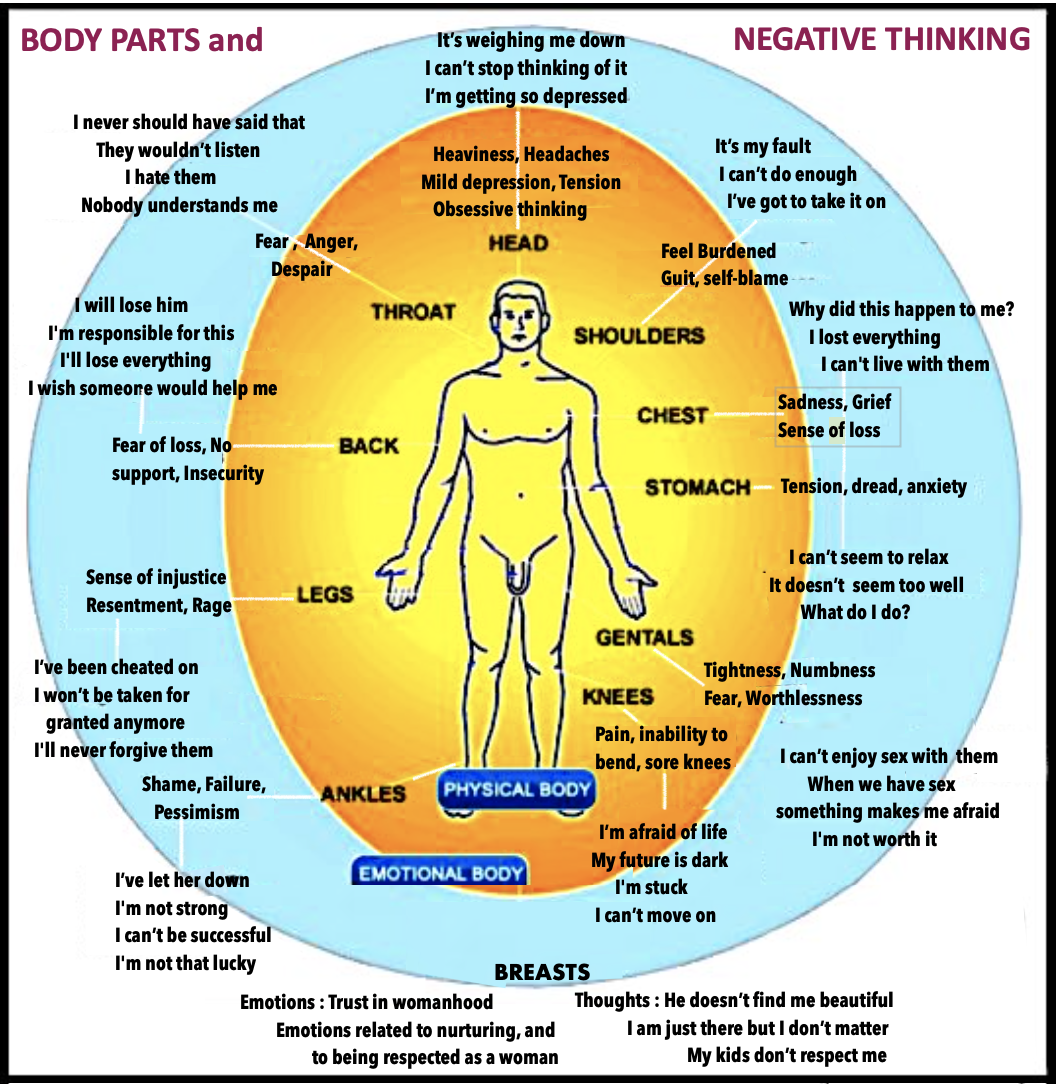
CHRONIC Complaints & Ailments, including hereditary weakness which gets activated from long-term stress & rage-suppression
♜ Addictions – any type of substance or activity over-use, food sensitivity….
♜ Illnesses – real, chronic or sequential = heart problems, obesity, ulcers, constipation, headaches, back & joint stiffness or pain, frequent colds, auto-immune diseases, asthma, knot in the stomach or tightness in the throat

♜ Lethargy – trouble staying asleep, over-sleeping, drowsy at inappropriate times, always tired, feel ‘heavy’, hold body stiffly, frequent sighing, brain fog
♜ Neglect – avoid self-care & appropriate medical attention, get burnt out from over-doing for others,  can’t rest or vegg out

♜ Systemic – muscle tension, poor memory, often distracted, loss of appetite or gorging on sweets
♜ Self-Harm – nail-biting, chewing inside of mouth, picking at skin, pulling out hair, head banging, cutting, often bumping into things
«

EMOTIONAL Symptoms
➤ Anxiety – panic attacks, excessive irritability, impatience, can feel sad, scared, hurt – but rarely angry, other emotions more intense from pushing down anger, obsessive worry, fear of being alone but also of being dependent (“I hate you, Don’t leave me.“- Dr. J.J.Kreisman and Hal Straus)

➤ Depression – (for no immediate or visible reason) low-grade but constant, boredom, loss of interest in things once enjoyed. Sulk, withdraw, pout, threaten or try suicide.  Exhaustion, burn-out from suppressing Es

➤ Inappropriate Affect –  Mood swings, smiling while hurting or feeling angry, laughing when telling about your abuse & neglect. Too calm – not angry but also not joyful, can have an explosive reaction that’s out of proportion. Altho’ very rare it scares others.  Are always nice to people who regularly hurt you

➤ Low self-esteem – trouble accepting yourself and others, blame self for harm that other do to you, feel unworthy of anything good, mentally beat self up all the time (rage turned inward)

➤ Superiority – feel ‘spiritual’, in control, better than – for never being angry, self-sacrificing martyr, the ‘good one’, control freak, know-it-all, everyone’s friend, helper, rescuer, center of attention

ATTITUDE Symptoms
insecure /anxious• act out self-sabotage & have a deprivation mentality

• afraid of competition & being seen as less than ‘perfect’
• are over-sensitive to criticism & afraid of any rejection
• feel misunderstood, invisible or unappreciated
• keep a stiff upper lip, act as if you don’t need support
• lack of ambition or motivation (can be depression)
let others infringe on your rights & take advantage, but then complain bitterly
• often complain about, envy & resent those more fortunate
• pretend something doesn’t matter when inside it does

COMMUNICATION Symptoms
• constantly apologize, over-polite, over-helpful, over-disclosing
• gossipy, two-faced, patronizing, sarcastic, complaining, flippant
have weak or no boundaries, afraid to say NO, both to abuse & to things you simply don’t like or want
• over-controlled/ monotone voice, or too loud & sharp, vague
• resist or have trouble talking about yourself, talk about issues/interests rather than personal thoughts & emotions

Our BEHAVIORAL Symptoms
• busy all the time to avoid emotions, minding everyone else’s business, rush from one thing to the next – OR –
• procrastinating – both for tasks imposed by others,  AND things we say we want to do for ourselves, OR
habitual lateness, unreliable, unpredictable, don’t keep your word
• financially lazy or irresponsible – under-earn, don’t focus on own talents
• visibly ambivalent, indecisive, start in one direction & then shift into another without finishing the first
• won’t plan for your financial future, worry @ $$ but hope for ‘magic fixes’

NEXT: Symptoms – hidden anger toward others

INTERNAL HIGH COST of Angry-niceness (Part 1)

P-A wifeI’M SO STRESSED OUT
& no one will help me!

PREVIOUS: Co-dep angry-nice (#2a)

BOOK: “The Book of No:
250 Ways to Say It – & Mean It, & Stop People-Pleasing Forever”
Susan Newman, PhD (book review)


INTERNAL
 High COST of angry-niceness
✔︎ Abandoned – as an adult.
To totally depend on others (especially on narcissists) to be ‘seen’ & for a sense of worth – will always leave you disappointed & even more alone. Yes, we need other people to help, encourage & validate. But self-esteem is an inside job, a combination of taking care of our WIC, growing the UNIT & relying on a Higher Power to heal our wounds.

✔︎ Addicted – Constantly depriving ourselves of needs, wants, dreams, goals…. makes the hole-in-our-soul** bigger & bigger. But since nature abhors a vacuum, we try to satisfy the longing for comfort & security with any addiction that fits our personality type. And it’s often a witch’s brew, engaging in several all at once or sequentially. If we’re constantly over-giving, we may escape by over-spending, over-eating, over-working…..
✔︎ Beleaguered (surrounded by troubles), yours & everyone else, until you just want to scream, but that’s too unacceptable, so you swallow the anger & collapse inward. Always saying “I’m sorry”- for things that are not your fault OR beyond your control, tying to placate the monsters inside & out

✔︎ Burnt out – run yourself into the ground, a workhorse – or should we say ‘work like a dog’!? BY – try to do more than everyone else
– never ask for help (including spouse & kids)
–  have outrageous expectations of yourself (perfectionism)

✔︎ Confused – “I don’t know how to____, I can’t seem to ____ // Why don’t I get any better? Why am I not appreciated? What am doing wrong? Should I have ____? Why don’t I ever get picked for ____? // I’m not sure who to listen to, who to believe. Isn’t my family right? What if my husband /wife is right about me?”…..

beleaguered

✔︎ Desperate – your frantic efforts to get your needs met in round-about ways always end up in disappointment & disaster. Sadly, no matter how much effort you put in & how determined you are, just like you can’t fix others, they can never fix you. Even so, you keep PMES starving, but refuse to feed yourself. You just get more & more desperate, often to the point of being suicidal

✔︎ Distrustful – if others do actually like you, it doesn’t count because:
– you don’t believe you’re worthwhile
– you don’t trust your own judgement as to who is sincere & who isn’t
– you idealize others, BUT are secretly sure no one is safe
– you know you’re not emotionally honest, so assume they only like your fake front
– you don’t realize others can see your good qualities, even tho’ you can’t

✔︎ False Self – that you had to develop as child – continues to get reinforced & dominates our life.  Only focusing on your outsides, waiting to be rescued / taken care of guarantees disappointment, wastes decades of your life. You miss out on drive & spontaneity, ignoring opportunities to be creative, to use your natural gifts & to accept all aspects of yourself

✔︎ Frustrated – from never getting control over others to make them be what you want, & do what you need – so you can feel safe. From trying so hard to get it right but never ‘figuring it out’. From longing for the love you don’t think you deserve or have a right to. From living in the fantasy of how thing would be, if only……

✔︎ Gilt-ridden – any time you’re less than chipper, any time you have an angry thought about someone, any time you just can’t do something you think you should or what someone else wants, any time you take a minute out for yourself, anytime someone’s angry at you, any time you’re not perfect……

✔︎ Obsessive – endlessly ‘chewing the cud’, going ’round & ’round about:
– something you did or didn’t do, that you’re sure is going to make others turn away from you in anger or disgust – OR
– about what someone said that hurt, or what they didn’t do that you wanted….. wasting time & energy trying to figure out why?
SO you can fix it & not be abandoned!

NEXT:Internal Negatives #2