ACoAs: NOT ENOUGH LOVE? (Part 1)

Screen Shot 2016-06-17 at 10.39.57 PM

THEY CHEATED ME –
&  now I’m left out in the cold

PREVIOUS: “Fear is the Absence of Love”

REMINDER: See ACRONYM page for abbrev.


An ACoA CORE ISSUE is the conviction that:
• there’s not enough love in the world – for us
• we don’t have the ability to love, OR
we don’t have enough love to offer others, or go around

EXP: Manda wants to study Veterinary Medicine but hesitates because of a fear-based belief: If she takes care of other animals & gives them her affection, she won’t have enough left over for her own dogs, which she adores (& eventually her children). 💙 NOT true!

LOVE – some observations:
Science
is finally studying it, & Spirituality has always maintained that we can’t live in harmony without it   (definition of LOVE) :

1. Love is first & foremost an emotion, & all emotions are psychic energy generated in the brain, so it has no limits “…love sides inside the very cells of our physical body, hidden away until we learn to access it…”
2. Love is expressed in words & actions – not just “feelings” (bottom of pg 14)

3.
Love can be nourished & enhanced by consistently interacting with positive & joyful ‘people, places & things’ (PPT)
4. Love is a healing force – for mental distress, physical ailments & emotional wounds (re. bi-polar illness) (music album) (Book:”Healing with Love“)

5. Healthy Love includes: good boundaries, a strong sense of worth, mental clarity, a connection to a H.P. & a generous spirit
6. Healthy self-love (a deep sense of value) is created from unconditional acceptance by ourselves & someone important to us

7. Developing healthy self-love allows up to have the inner resources to share with others in a non-toxic way
8. The more we share healthy love with others the more love we get back, so we feel safer & more comfortable in the world, which strengthens our capacity
♥                                         ♥                                           ♥
Where do our fearful, LOVE-LIMITING beliefs come from?
Screen Shot 2016-06-17 at 10.40.44 PM1. FROM THEM: our needy & abusive FAMILY (& often other sources such as school, religion, the community…)
• It’s helpful to remember that the adults we grew up with also had:
✓ active addictions  ✓ cognitive distortions    ✓ emotional problems such as depression, NPD, co-dependence…..
✓ fear of abandonment    ✓ self-hate  …..

• These dysfunctions combined to make our parents very fearful (Es), with a ‘deprivation mentality’ (Ts) & a deep sense of lack (As).  To survive without Recovery for themselves, they used whatever was in their environment to get by – each other, their work, their addictions – but most often they used their children as a source of vitality – like vampires!

a. Our parents (P) being ISOLATED from the outside world:
FoA (fear of Abandonment) – since they never dealt with their own losses, they emotionally & mentally crippled their children to keep us attached & loyal for a lifetime. This was done by neglecting, berating, controlling & belittling us, AND sometimes also over-praising us – for their benefit – all of which prevented the development of legitimate self-esteem

✓ Being “Tight Knit” – Many of our Ps didn’t want us to get involved with others outside the family because it would take us away from focusing on them, but when they socialized, it was at our expense!

Addictions, Shame, Fear of Risk – alcoholic families are typically a closed system – they generally don’t reach out to be of service or help the community, NOR participate in outside activities for fun & PMES nourishment

Narcissism – all Ns feed off of the attention & ‘service’ of others in order to keep their facade in tact (‘Malignant Self-Love’ – Dr. Sam Vaknin, about male narcissists, + Links )
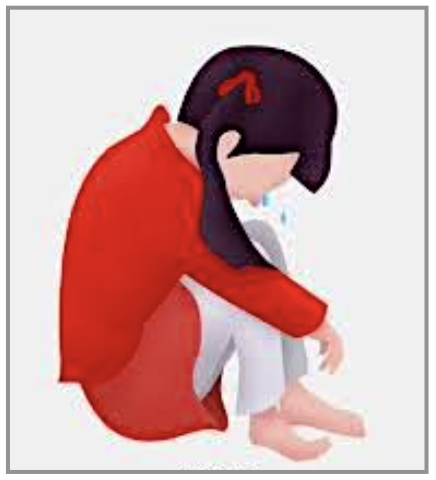
🔻 Children need to FEEL loved. It’s not enough that Parents (Ps) think or say they do. If they ‘show’ it in self-centered ways – even without beatings, molesting or physical torture – they definitely fail to get the message across.

NEXT: Not enough Love? (Part 2)

“FEAR is the ABSENCE of LOVE”

Sscared fish 

LOVE vs FEAR
I don’t know what love is, so how can I tell?

PREVIOUS: How ACoAs Abandon Others #3b

REVIEW: ACRONYM page for abbrev.


WHAT DOES this quote MEAN?
• Like so many popular ‘spiritual’ saying there’s some truth in it, but not the whole story, so we can easily get confused & also misuse it. Love & Fear are both Emotions, see. T.E.A.
Generally, it means that if we did have enough love in our life, we won’t be afraid = loved by a Higher Power, by family, by pets, by friends…  Yes, these are to be desired & cultivated.
BUT the reality for ACoAs is that we are fear-based, no matter how much recovery we may have. There are 2 separate issues re. this quote:

1. Fear is created in CHILDHOOD by genuinely being in danger!
• As kids, ACoAs lived in an atmosphere of constant trauma, subjected to fear-inducing experiences (mental, physical & emotional) practically every day of our childhood.
AND there was very little comfort or validation of our reality. On the contrary, if we told anyone or complained, they said we were over-reacting, making it up, being disloyal, AND it was our fault “What did you do?” Even if anyone believed us, they didn’t / couldn’t help, so we had to suck it up.

EXP:  A lot of our childhood was like being:
— a 5 yrs old, dropped off in the middle of a huge traffic intersection at rush hour, left there in our underwear, told to not whine & ‘JUST COPE’ !!  How cruel !

All that pain & terror got pushed down, so where did it go?  Yes, in large part, psychologically, it went into the unconscious. But physically – the chemicals generated by terror & other painful emotions got stored in our body – in our organs, our muscles, choking our aura, meridians & chakras.

2. Fear is created NOW by outer events & inner thoughts
a. Present-day reality. There are many real-world stressful events we’re faced with in life requiring a clear mind, much human help & Spiritual support. .
It’s normal to be fearful when WE:
• are overwhelmed by too many things needing our attention
• find out we’re very sick, & sometimes – don’t know the cause…
• hear / read about traumatic world events ….
• have a lot of emotional turmoil (visiting family, getting married or divorced…)
• loose something very important to us (apartment burns down…. )
• see someone we love is in danger (a child, a pet …)

BUT for ACoAs, such events can easily trigger the pain of past trauma, pushing us over the limit of our scarce reserves. So our emotional reaction will be much bigger than that of less wounded people.

b. Toxic Thinking. Fear will always be generated by harmful thoughts – our inner world of beliefs babad voicesed on negative family rules (CDs) – the harsh, scary things we tell ourselves, creating more terror on top of what we’re already carrying from our past.

Terror & S-H are behind ALL rage and ALL obsessions. WE:
• are convinced someone’s angry at us or can’t stand us, when they didn’t say hello or give us a compliment …..
• are so used to things not working out, & having anxiety as our constant companion, that we create mental drama when it’s not called for…
• believe we’re “dying of cancer” when we’re not seriously sick (especially when not feeling well but don’t know what’s wrong)
• assume others will react to us the same way we think about ourselves – badly !
• project only painful outcomes on to situations & relationships
• worry about future catastrophes & abandonments, which may never happen & which we will have no control over

Daily childhood abuse & neglect (unprocessed) accumulate in deep reservoirs of hidden pain, which most people call anxiety, because on the surface it doesn’t seem to be connected to anything obvious. HA !
As long as this backlog remains frozen, the pain:
a. drives much of our behavior, our thinking & interactions
b. causes physical & psychological ailments ….

… but in Recovery, much release work can be done, which definitely helps!  We can get to a place where we live more in a state of calm rather than upset. There will always be some residual ‘old’ fear that shows up thru the years when we’re under stress – never being completely rid of all original abandonment terror. This should not be a surprise, since there was so much of it.  We need to be extra kind to ourselves.: “Feel the fear & keep going”, but softly, softly.Screen Shot 2016-06-17 at 10.34.08 PM

“Fear is the absence of Love” is about :
— not having loving safe parents, originally
— the scary thoughts which torture us
— not searching out people who can be good to us, &
— not believing there’s any safety in the world – for us !

HOWEVER when we practice nurturing our Inner Child, connecting with the peace of a loving H.P. & with healthier people, our overall fear level diminishes, especially the unnecessary suffering we’ve been add to the ‘pile’.
➼  We can’t always control or eliminate old fear, but we can be in better charge of that we THINK & what we DO about it.

NEXT: Not Enough Love? – #1

ACoAs – ABANDONING OTHERS (Part 4b)


PREVIOUS :
ACoAs abandoning others #4a


7. UNDER-VALUING (cont.)
b. As a ‘life-style’(cont.)

c. Finding Fault (F.F.) in relationships – always looking for their flaws, no matter how unimportant, which will be a deal breaker for us – & we always find some! This is especially true if someone gets too close, whether the relationship is short or long-term. We may like a person at first, but there’s no leeway for them to be human – imperfect or occasionally disappointing.

✶ This is a common ACoA ‘back-door’ defense in relationships – always having one foot in & one OUT, ready to bolt. We assume all will end in abandonment anyway, so don’t get too invested! It feels safer than admitting we need anything (company, fun, live, respect, validation, being seen….), or to admit we’re needy & vulnerable under all our bluster.

Original CAUSE
Growing up in an emotionally & physically dangerous environments (at home & outside) left us with an inability to trust anyone – even people who are kind or neutral. We’re terrified of being trapped, controlled, abused, abandoned – the way we truly were as kids. This is not our imagination or just our interpretation!

We found all those early experiences so unbearable, THAT:
• some of us created a fantasy world & retreated into it, turning everyone & everything into a fairy story, to make them safe (idealized)
OR we decide as kids that to be permanently skeptical, that no one is safe (under-valued),
BUT
✑ anyone who’s kind, fair or appropriate is simply not in our line of sight
✑ or we think they’re faking it, & want something
✑ and once they really get to know us they’ll stop being so nice.

RESULTS
No Love: Undervaluing everyone & everything (“Life sucks!”) may seem like a protection against more hurt & punishment, according to the WIC.
But it actually prevents us from taking in any available attention, kindness & love we’re so desperate for. This insures that we don’t heal from our wounds, keeping us forever needy.

Poor Relationships: Fear of Intimacy is a core issue for ACoAs, which comes from the deadly combination of :
— fear of being engulfed (weak boundaries) &
— fear of abandonment (self-hate).
Our default position is that we’re unworthy of being loved or valued, while everyone else is allowed (like a preferred sibling).

• In childhood, the people who were our mainstay for survival & who tied us symbiotically to them because of their FoA, were dangerous or cold or gone. That was too painful to bear, but it’s the only form of intimacy our WIC knows, & we assume it’s all we can hope for.

Most ACoAs then project our parents’ toxic way of treating us onto others. Therefore everyone else in the world is also untrustworthy & cruel – so we’d rather do without, thank you very much! At its most severe, some ACoAs suffer from Adult Attachment Disorder 

DAMAGE: There are good, kind people somewhere in the world, but may be blind to them. They may in fact be right behind us but we’re not using our rear-view mirror. Or if we do stumble across one, we push them away because we’re sure they’d never want to be with us  anyway!
Most of us gravitate to those who will prove our negative beliefs (Toxic Rules), as a way to rationalize our rage & rebellion.
Once in a while an ACoA will actually marry a kind, loving person – good for us! – without really understanding what they see in us.

HEALTH – We need to be able to:Screen Shot 2016-06-11 at 6.57.49 PM
• choose people whose plusses outweigh their damage
• evaluate others realistically – to acknowledge their plusses & minuses
• stop projecting our parent’s flaws on to everyone & everything
• tolerate healthy people’s imperfections
• OWN our own damage, so when someone pushes our buttons – we can take responsibility for our reactions & not make our hurt someone else’s fault!

LOVE HEALS. Not just the exciting, sexually charged love of a mate, but everyday kindnesses, whether from a pet, the store clerk, a passing stranger, a good friend or the daily protection of our H.P.

NEXT: Abandonment #4a

ACoAs – ABANDONING OTHERS (Part 4a)

 Screen Shot 2015-06-16 at 6.53.22 PM

I FEEL SO BETRAYED —
they’re not who I thought they were!

PREVIOUS: How ACoAs abandon others (3b)

See ACRONYM page for abbrev.


REVIEW – 
Idealizing
inevitably:
• sets up the idealized person or event to fail, because no one / no situation can fulfill our unrealistic expectations to be perfect, to make up for all our losses, to be all the things our WIC never got at home & which are still missing in our life.
• This guarantees that we’ll be disappointed, sooner or later.
Basically we’re asking them to rescue us. It’s a way of using others. We ask too much of a person or situation, which nothing can possibly live up to, even if it’s healthy!

7. UNDER-VALUING
This topic is about how we diminish others.  All ACoAs in this category are very angry, some express it by being passive-aggressive, by perpetual crankiness, or by endless whining. 
When we feel let down by our fantasy of a person – (boss, teacher, lover, friend…), or situation (marriage, job, home, party, holiday…), we flip to the opposite extreme.
This defense
often kicks in with someone/ thing new, but not exclusively. It’s about wanting to be taken care of instead of taking care of ourselves – while not having to ask!

HARSH reactions to over-valuing (idealizing ⬆️) as a ‘life-style’ – finding fault (F.F.) with every situation we don’t like, all the time.
a. Endless complaining (F.F.) can be a sure sign of narcissism (N), & comes from our needy WIC or PP, since we manage to make everything about us – somehow. Keep in mind that all wounded people have some N. in varying degrees, so do not use it for more S-H. Instead. Work on healing it

Constant complaining is part of the Victim Role, taking everything personally, assuming anything we don’t like is the ‘universe’ being against US. We ignore that there are many other reasons for things being as they are, so we discount other possibilities.

We’re always judging the ‘other’ as bad, because:
• everyone & everything always lets us down, causes us trouble, is never there for us the way we want – so f-them!
• it doesn’t fit some rigid notions of correctness from our PP, even though the original parents never lived up to those standards
• we see everyone as exactly like our family, so they must be equally bad, which scares the WIC
EXP: “I can’t stand that / it’s not good enough” means I know better, can do better….
• “They’re so stupid” means I’m superior to all you little people, and if I were doing it / running things, I would handle it much better….
• “How can they do that to me, no one ever listens to me….” means they’re not doing the job I want them to – of being the good parent

b. Projecting our S-H onto the ‘world’. If I hate myself, I’m sure everyone else does too – or will, if I give them a chance! Just like a liar or thief believes everyone else is a liar or thief, even if it’s just in their heart. So ‘I’ll hate all of you first, that way I don’t care if you hate me – I won’t get hurt anymore!’  Better to keep everyone at arm’s length than to be vulnerable.

ACoA IRONY
: everything we think & feel is ONLY from our point of view (we assume no one else’s is valid) – other people’s needs don’t count, we don’t consider their limitation & don’t really want them to have boundaries, so we can be symbiotic.Screen Shot 2016-06-05 at 5.39.42 PM.png

At the same time, because we’re emotionally starving, our focus is completely outside of ourselves, dependent on ‘people, places & things’ (PPT) as the source of our nourishment & for our sense of identity. They are objects, not beings. If they don’t act the way we want, we feel justified in raging at them.

(POST: People should treat me better, but I won’t let them”).

NEXT: ACoAs abandoning others #4b

ACoAs – ABANDONING OTHERS (Part 3b)


PREVIOUS : ACoAs Abandoning others #3a


QUOTE:
“Disrespect also can take the form of idealizing you as a perfect woman or goddess, because he’s only seeing his fantasy, & when you fail to live up to that image he may turn nasty. It’s a failure to respect you as a real human being.” Why Does He Do That?, Lundy Bancroft

6. IDEALIZING (cont.)
EFFECT –  In fantasy relationships we (both men & women):
• desperately need others to live up to our ideal. What we’re really doing is using them !
• we’re saying that THIS person is ‘perfect’ (unlike our family), is going to fill our unmet childhood needs, will never disappoint us, will love us unconditionally & never leave!

• we’re completely negating who they are, what they need or want, by laying on them a preconceived role created by our Wounded Inner Child, thus abandoning them.
What a terrible, impossible burden to put on someone. Maybe you’ve been the object of such an idealization – how did it feel? How did it end?

IDEALIZING re-enforces our self-hate, because:addicted to another
a. we can never do the impossible, such as —
* fix someone else (so they can be there for us)
* resolve our family issues thru another person
* manipulate someone into genuinely loving us

b.
AND because:
* we know at some level that we’re hurting others
* we get rejected, attacked, misunderstood
* it never deals with the source of our pain & loneliness, so we can’t grow, recover or gain peace of mind
✶ we never have the joy of interacting with others as equals – adult to adult (have a healthy peer relationship with a variety of people)

FANTASY may feel good, but actually it keeps us suspended in a false universe which always backfires!

HEALTHY
✶ Every time you interact with someone, evaluate what you’ve learned about them – in reality. What did they tell you about themselves?
✶ Take it slow with any new relationship. WAIT to form a definitive opinion about someone. It takes time to get to know people. GO SLOW!
✶ Use any suitable Recovery process – work at healing your original abandonment pain & greatly reduce self-hate
✶ Write all your observations about them, plusses & minuses. This is NOT about taking someone’s inventory – which is a form of being judgmental. This is a way to prevent idealizing others, by being realistic about them & honest with ourselves.

NOTES

When you notice yourself idealizing someone, you can be sure there will come a time when you’ll want to turn against them & tear them down – if only in thoughts & emotions.

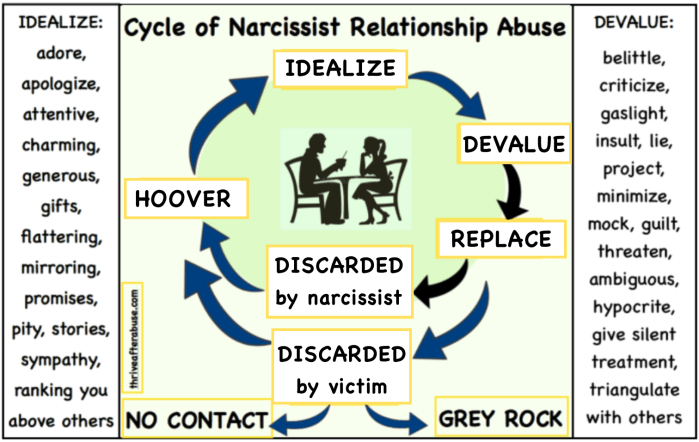
This is the B & W swing from idealism to devaluation (see Parts 4a/b), because something they did or said made your WIC’s fantasy program crash. If you desperately need to hang on to your illusion, you’ll have to dump this person (discard) & find the next one to ‘elevate’. CHART from “Thrive After Abuse

General HEALTH
Re. US
• Accept that we don’t have to be there for anyone, at all, but especially if or when we can’t
• We can keep working on our own damage, connect with our hidden pain & learn new ways to express it safely & appropriately
• We can learn that feeling our emotions will not kill us, but rather frees us to heal & grow, & the same is true for everyone else who wants to
Re. OTHERS

• Accept that we can’t fix other people’s mental or emotional distress, but we can be available to support them on their journey (see ‘Healthy Helping’)
• We can be more honest & respectful, to ourselves & others, when something is too much for us.
It’s much more appropriate to say: “I really can’t hear about this now/ any more..” / “This is too painful for me to listen to” / ‘I’m sorry, I can’t help you with this’…

• IF we set a gentle but firm boundary, & someone gets very upset with us / acts devastated / becomes enraged —> that’s a clear indication they want to be taken care of, & WE cannot do that!
NO judgement, no abuse, no dishonesty.

➼ THE GOAL is to take care of ourselves, first – other adults second, & ONLY within appropriate limits!  The more we do that, the less harm we do, to self & others.

NEXT: Abandoning others #4a

ACoAs – ABANDONING OTHERS (Part 3a)


YOU’RE THE BEST!
Even if I have to make you up

PREVIOUS: ACoAs abandoning OTHERS (3b)


See ACRONYM page for abbrev.


6. IDEALIZING
DEF:
• Another dysfunctional way to cope with the painful fact that our parents were not safe (nurturing, emotionally honest, mentally clear…)
• A way to survive back then. Some part of our child-mind had to make them perfect, without flaws – to deny how angry & scared we were at them, & still are
• A form of splitting off the good parts of ourselves & the bad parts of them – an overt or covert toxic agreement in childhood, with the family, that we were the bad ones & they the good ones.

All small children idealize their parents, which helps them feel safe. If they grow up in a healthy family this safety allows them to cope with reality, gradually able see the adults more realistically, with both weakness & strengths.

But for us – from the very beginning our parents disappointed us when we most needed them to be our ‘gods’ so we’d feel protected. Not only did they not help us deal with the outside world, but were the ‘enemy within’.  (➡️ IMAGE from “See Mom for who she is, not who you want her to be

To compensate now, some ACoAs idealize others, even strangers, as a way to shut out the WIC’s earliest terror still lurking in the bushes of our unconscious, BY:
a. Putting anyone – who we feel is important – on a pedestal (parent, teacher, lover, friend, boss…), not able or willing to acknowledge their real personality, including human limitations & damage (character defects) – UNTIL that person does something that pushes a big button in us, & then we feel rage at them. The illusion we created is shattered & we can’t tolerate it. So we punish them &/or cut them off.

EXP: Carol started a new class & was immediately in awe of the professor.  She began staying after class, asking all sorts of questions, unconsciously flirting a little. The teacher became less & less responsive or available.  Carol kept trying to hold his attention, but finally felt the rejection, became very angry & stormed off, telling everyone else what a jerk he was.

b. VARIATION: Making a new lover the “Answer to all my prayers!” Screen Shot 2016-06-11 at 6.51.05 PMBelieving ‘This is the one!” OR immediately making a new friend into a BFF, without taking the time to find out :
• are they actually who they seem to be?
• who this person really is (character & type)

• how you’ll feel about them, in a year or less
• what personal problems they may have
• how their ‘issues’ are going to affect you
• how will your issues impact them?
• AND, if we’re fundamentally compatible!

➼ To know that, we need to have a clear sense of ourselves, good boundaries, reasonable self-esteem, not too much anxiety about abandonment, tolerate imperfections & have the ability to ‘go slow’. PHEUW!
BTW, we may find someone willing to play out the fantasy with us (some for a while, some much longer), because they too need to be symbiotic, feel needed, overly-important…anything to not focus on themselves & their issues. This does not diminish our responsibility for playing our emotional games.

CAUSE:
• This kind of ‘jumping into’… comes from an intense need of the WIC to symbiotically attach, to fill the emptiness left by inadequate mothering in early life.
The human person we now choose to idealize will:Screen Shot 2016-06-11 at 6.51.46 PM
— EITHER be someone who is similar in damage to our own family – the hope being that this time we can fix them & so get their love & approval, even if we can’t get it from our family.
We only end up (unconsciously) playing out our abandonment / victim role – since we can’t fix others or con them into loving us

— OR someone who is or seems to be completely the opposite of family – stable, competent, smart, nice….so we can finally be taken care of!  Even if they do, for a while, we pay too high a price – being controlled & staying immature.
But usually such people are too healthy to rescue us at all, so we get disappointed again, but not as much.

• Either way we’re trying to get from others today what we couldn’t get originally, but no one can’t make up for our losses! We need to heal from the inside.

NEXT: ACoAs abandoning others (3b)

ACoAs – ABANDONING OTHERS (Part 2b)


THAT’S NO WAY TO FEEL!
You’re too much for me.  I don’t want to hear it.

PREVIOUS: Abandoning Others (2a)

See ACRONYM page for abbrev.


5. REPRESSING Others’ EMOTIONS (cont.)
d. Insensitivity —> have INappropriate responses when hearing any expression of emotional distress (“I’m really upset / scared /worried…”), such as:
• come up with thoughtless, unfeeling, unsolicited or unnecessary ‘solutions’ (the most common mistake!)
• ignore it completely, or blatantly change the subject
• stop calling or visiting – just disappear for a while without explanation

In this case the ACoA is trying to stop someone’s emotional discomfort with a ‘practical fix’, so we don’t have to deal with ‘messy’ emotions – theirs & ours! BY:
• giving them a ‘chin up’ lecture, telling them it’s not all that bad (when it is)
• trying to take their mind off of the hurt (may be helpful – sometimes, with some, but not recommended as a first option)
• promising that something good will ‘come out of this / it’ll Screen Shot 2016-06-05 at 5.57.54 PMturn out OK’ – which we can’t possibly know or deliver

• say ‘It’s OK’, when nothing is changing in reality (like a parent or spouse’s drinking / drug use)
• minimizing the extent of their pain, by NOT believing the depth of their suffering with comments like:  “It can’t be that bad?!” / “You’re just being dramatic”
OR
• pretending the sufferer has NO responsibility for the pain they’re currently in as an adult (like, marrying yet another addict / not dealing with a health problem until it’s too late / getting fired from yet another job…), just to make them feel ‘better’

• giving unsolicited ‘helpful’ suggestions which have nothing to do with the issue at hand OR not the point of the pain
EXP: After surviving the devastation of her apartment burning down, which destroyed everything including her 2 cats & 2000 books — a woman heard various insensitive things like :
• “You should be grateful. At least you weren’t killed!” • “So, what did you learn?” • “So, just get another cat?!” • &, some just laughed!
ARGHHH @**!!! %@%

CAUSES of REPRESSING
Re. US: clearly, these are similar to ways we were abandoned by our various caretakers – Screen Shot 2016-06-05 at 5.55.53 PM& not just by our parent. Also by teachers, baby sitters, religious leaders, other relatives….
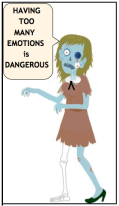
• Emotions were either not tolerated at all, or ONLY certain one were acceptable – usually ‘pleasant’ ones (see Toxic Rules)
Re. our Family:
• we were taught to ‘take care of others’ at home, because they couldn’t or wouldn’t be responsible themselves or us, so now we’re just following the script. It has become our identity. (Rescuing’)

• we saw how incompetent our parents were in many ways, & how un-able they were to deal with THEIR emotions – so we project that incompetence & inability onto everyone else in our life, without even realizing it!

• we could NEVER fix our family, stop their pain, make them whole – SO we compulsively try to do that with others in the present, desperately trying to quiet our fear & guilt
• we think we have to protect & fix everyone, or they too will fall apart, like our family.  But we’re only trying to keep OUR world from falling apart!Screen Shot 2016-06-04 at 9.27.20 PM

➼ We deeply believe that if we allow ourselves or others to FEEL too much, that we (& they) will go crazy or die! This comes from our early experiences & is now firmly embedded in our Wounded Inner Child (WIC).

However, the real issue is that we never learned how to ‘house’ & process pain, nor do we know how to comfort ourselves. Feeling all our emotions can be painful but not dangerous. Suppressing them is!
See 2 POSTs:Accessing & Accepting Emotions

EFFECT
Re. US  • we stay stuck in the past, can’t express our True Self or gain serenity
• we lose out on the knowledge, connections & love that comes from treating people as equals, rather than as being one-down to us
• we perpetuate & increase our own abandonment – because others Screen Shot 2016-06-05 at 5.53.59 PMwill become angry, resentful, abusive or just avoid us
Re. OTHERS
• without realizing it, we’re being arrogant, presumptuous, narcissistic
• think we’re mind-readers, have magical powers, can do the impossible (this is typical ACoA grandiosity)
• we’re mistreat others, encouraging symbiosis & dependency, negating their rights, adding to their abandonment experiences

NEXT: Abandoning others #3a

ACoAs – ABANDONING OTHERS (Part 2a)

Screen Shot 2016-06-11 at 6.37.49 PMOH, NO! DON’T BE UPSET!
I can’t stand it when you’re
in any kind of pain

PREVIOUS: Abandon Others (#1b)

See ACRONYM page for abbrev.


5. REPRESSING Others’ Emotions (Es)

ACoAs are often guilty of mistreating others in the same ways they were by family & other authority figures. To the degree we are still repressing our own Es, we try to suppress the Es of others. Many of us can’t tolerate anyone being in emotional pain or going thru a hard time, especially if we care about them.
(ACoA website Site Map, pg. 24-26)

REPRESS BY:
a. Assuming – sure we know how someone is feeling, emotionally – without asking, OR not believing what they tell us they’re experiencing, & then insist we know better (what nerve!)
EXP: At a wedding celebration, Sam saw cousin Annie sitting alone, arms crossed, withdrawn, & assumed she was angry. Not bothering to check what she was really feeling, he started lecturing her about her unsociability, how inappropriate her attitude was, & that she was 
bringing everyone down … when actually she was deeply sad, feeling lonely & missing her ex!

EXP:
When I cried intensely at my father’s memorial service, a relative accusingly told me I was being ‘fragile’ – as if weeping made me weak & therefore unacceptable (I know they were punished for crying, as a child).  Actually, I always feel clearer & stronger after letting out some pain – it’s a strength, not a weakness!screen-shot-2016-06-11-at-6-46-58-pm

A variation: 
Deciding we ‘absolutely know’ someone’s angry at us, or jealous of us,  or upset with us in some other way – of course, without checking – and then obsess about it, gossip to others, worry, prepare a defense or rebuttal, avoid them OR confront / attack them…
BUT, actually

• our assumption may only be a projection of our own S-H & FoA
• OR, we did pick up some emotional vibe from them (ACoAs always have their antennae up for trouble or rejection) but what the other person was really feeling was not what we thought!

EXP
: As a therapist, during a sessions, if I strongly express an opinion about certain topics (that inner-abuse coming from the Introject or self-hate is NOT OK ), or if I’m not smiling or being light-hearted – it is often misunderstood by a client as me being angry – at them. NOT! I’m just strongly indicating how serious something is.


Another variation:
Ironically, some ACoAs can’t tolerating anyone else doing well. They try to stop others (mates, children friends) from feeling good, because “misery loves company”!
EITHER: they create dysfunctional situations for others, to keep the chaos & misery going we’ve been conditioned to feel as ‘normal’
OR: be consistently enraged & abusive or withholding & silent, whenever someone expresses enjoyment, happiness, excitement, peacefulness…to make them feel bad (again) – to be like us

b. Arguing – acting out a pattern of anger & fights with someone 
arguing, fightingclose (mate, child,  friend, loved parent…) when it’s time to separate,
 even for a few days.
• First – fighting, saying cruel or stupid things
• then later doubling the abandonment by denying being upset, or underplaying it all — thereby negating the pain we caused & the other person’s real experience.

This is done to keep us from feeling our own abandonment pain, which would make us feel vulnerable.  Being angry –
• gives us a sense of power & makes the ‘bad feelings’ an easier way 
to leave, BUT
• it’s dishonest & disrespectful to ourselves & the other person
REMINDER – even tho’ we can’t technically abandon another adult, the term is always used here to express ‘not being there’ for others emotionally

c. Negating – directly discounting someone’s E. experience:
— “You don’t really feel that way”// “Don’t feel like that” negating
— “Don’t say that” // “That’s no way to talk”
— “That’s not a nice thing to say”….
EXP: When telling a religious friend at a conference about the ongoing pain from her childhood trauma, Jen was told: “You shouldn’t feel that way!”.
Fortunately Jen had been in Al-Anon long enough to respond: “Well, I don’t ‘should’ on myself!”, then smiled & walked away.

NEXT: ACoAs Abandoning others (#2b)

ACoAs – ABANDONING OTHERS (Part 1b)


PREVIOUS: ACoAs Abandoning others #1a


ABANDONMENT STYLES (cont.)

3. IGNORING
This is a pattern of NOT HEARING what someone is telling us about themselves, their needs, their tastes, their point of view, present availability….BY:
• doing the opposite of, or unrelated to, what is asked of us
• twisting what they say against them or using it later to zing them

• responding in a conversation from some inner thought process of our own not related to the current topic depressed
• pretending to listen, on the outside, while inside our attention is elsewhere – wandering, worried, in a rage …
BY:
• always & only talking about ourselves
• going into a panic state, & just blanking out
• insisting on getting a response to a call or text, when clearly the other person is not available — & then accusing them of ignoring us (feeling ‘abandoned’)
• seeming to be involved in a conversation, even talking, BUT later can’t remember what either of us said

CAUSES:
• copy what was done to us by our family
• desperately try to hang on to our own thoughts & emotions, so can’t hear anyone else’s (weak boundaries)
• overwhelmed by a jumble of painful emotions (anxiety, rage, terror, self-hate…) without being able to sort them, identify the reasons or learn self-soothing
• without a True Self being afraid of getting swallowed up if we let ourselves connect
barrierEFFECTS:
• assume no one’s interested in our input
• believe others will want too much if we really pay attention
• severely limit benefits others may have to offer (friendship, knowledge, respect…)
• stay impoverished, emotionally & practically
• unable to find & express our True Self
HEALTHY:
• diminish self-hate by accepting that the original abuse & neglect was NEVER our fault
• gain healthy boundaries
• process enough old pain to lower anxiety levels

4. COPYING
Human being are biological programmed to imitate each other’s emotional displays – by face & body – using the mirror neuron system. Our brain practices doing actions we only observe in others, as if doing them ourselves. Children copy their parents, long-term spouses copy their mates, people & animals even end up looking alike!

🌀 However, here we’re referring to a misuse of this capacity – the compulsion of some ACoAs to latch on to someone they ‘admire’ & then make their life a carbon copy of their idol (teacher, friend, performer….). This has nothing to do with intelligence, other than that copy-cats are generally smart & resourceful – in all but Personal Identity.
This will happen gradually over time, sneaking up on the unsuspecting admired one.

This may happen more often between women, because of they’re natural tendency to connect on a level footing, whereas testosterone-fueled men focus on being one-up to other men & hate feeling one-down.

BEHAVIOR – ACoAs will copy an ‘idol’ :
• first befriend them, try to be helpful, but actually are just co-dependent
• go into the same profession, or having met at work – form a ‘camaraderie’
• copy any hobby or avocation that suits them (quilting, tennis, a Spiritual Practice….), & then take over groups the idol is involved in, bragging that it was their idea, they’re so much better at it, more devoted….
• often dress & change hair styles to match
• move location to be closer, get the same kind of car, buy a summer home in the same town….

CAUSE: Copiers —
• were so damaged in childhood they weren’t able to form a sense of Self
• now have a weak or fractured ego structure, equally true if the person is floundering in life or successful in their field
• are desperate to have some kind of identity, even if it’s someone else’s.
EFFECT
For the COPIER – The tragedy is that while they many have some things in common with their idol, they simply can not have the same personality (even twins don’t) SO they’re wearing someone else’s, instead of finding out who THEY are!

For the IDOL – once the pattern becomes obvious, & the idol is reasonably healthy, they’ll be creeped-out by someone they thought was their peer. They become aware that their admirer is actually a narcissist bent on being ‘taken care of’ in this indirect way. Eventually they’ll distance themselves & ultimately withdraw completely

NEXT: How ACoAs abandon others (2a)

ACoAs – ABANDONING OTHERS (Part 1a)

 mean teacher

I DON’T KNOW WHY YOU THINK THAT
(since I never would!)

PREVIOUS: Abandonment Pain Now #3


See ACRONYM page for abbrev.

ABANDONMENT STYLES covered:
1. Symbiosing, 2. Controlling, 3. Ignoring, 4. Copying, 5. Repressing other’s Emotions, 6. Idealizing, 7. Undervaluing

ACoAs are usually focused on how much we got abandoned, without realizing we’re just as prone to do that to others.
Not surprising, since everyone copies what they learned in childhood. We treat ourselves & others the way we were treated & the way we saw adults treat each other.
➼ Each style derives from a combination of :
• The original role models (parent, siblings & other relatives, teachers…..
• Our own native personality, forming the type of defenses we choose.
BTW – even tho’ we can’t technically abandon another adult, the term is being used here to express ‘not being there’ for someone else

1. SYMBIOSING
CAUSE : Many ACoAs raised by controlling narcissists were trapped in the state of ‘one-ness’ with one or both parents. We may have felt safe & loved at first, but slowly were engulfed by the needs & demands of unhealthy adults.
As we grew & began developing our own personality, we were slapped down, cut off or rejected outright.
The only option we had was to stay enmeshed, without the chance of developing ourselves fully.

RESULT: As adults we look for anyone we can mesh with, to prevent a terrifying sense of aloneness & abandonment carried over from childhood. Trying to connect with others this way is actually a form of abandoning them, because we’re not connecting with them for who THEY are, only for what our needy WIC wants them to be – for us. (“Symbiosis“)

2. CONTROLLING
• Putting severe limits on what someone can & cannot do when they’re with us (what they wear, where they sit, how they talk, what emotions are OK…)
• Constantly telling someone how they should live their life or how they should be doing something (whether they asked or not)

NOTE: This is not the same as asserting appropriate boundaries regarding what works for you or what you don’t want to be around
CAUSE
• ALL controlling behavior represents our disowned fear accumulated from childhood on into the present
hiding the mess• Trying to micro-manage everything & everyone around us so we don’t have to feel vulnerable, as in our unsafe & chaotic family, & later in bad jobs or bad relationships

• A defense mechanism designed to make us feel powerful & the world be more predictable, by hiding our inner mess, trying to make everything exactly the way we want – SAFE.
As long as we refuse to or can’t deal with the underlying cause of this compulsion (& being controlling IS compulsive, fueled by intense anxiety) we won’t be able to stop

EFFECT
Regardless of the underlying reasons, this pattern is:
arrogant. We’re convinced we know better than everyone else, about everything,  AND have the right to make others do / be what we want
disrespectful to others!  We’re implying, consciously or not, that we don’t care about the effect our controlling has on the other person – we trample on their needs &/or wishes, because only our needs matter!
If we did care, we’d think twice about continuing.
insulting. We believe they are too incompetent, weak & stupid to make their own choices or figure things out for themselves

✶ Of course, trying to be in control of others instead of ourselves – never works. Not only does it not alleviate our underlying terror, but makes others withdraw or be resentful & angry at us – so us feel even more unsafe & alone

HEALTHY Separation & IndividuationScreen Shot 2016-06-11 at 6.34.14 PM 
• Acknowledge that each person has their own way of doing things & the right to make their own mistakes. We are NOT their Higher Power!

• ASK, ASK, ASK: what someone wants, what they need, how they feel, what works for them, what their taste is….
We do not have to supply any of it IF we can’t, don’t want to or it’s not appropriate. Just keep in mind that others are separate from us, & that’s not bad – their differences do not negate who we are!
• Be willing to deal with our own damage, our accumulated pain & toxic patterns

NEXT: ACoAs Abandoning others (#1b)