“They Did the Best They Could” (Part 3)


PREVIOUS: They did the best…. #2

See ACRONYM page for abbrev.


Part 1. General info, Denial
Part 2. Denial – Problem & Reality

3. AWARENESS INVENTORIES
Staying in denial keeps us stuck.  Accurate information is the beginning of change, because we need to stop pretending everything was “not so bad”. If we can be totally honest with ourselves, YOU CAN :

a.
Make a list of all the ways they hurt your feelings, disappointed you, let you down, made life harder for you, said mean things, were disrespectful, demanded too much of you, didn’t help you learn … past & present (5 Harmful Mothers”)mean mother
EXP: One lady said that when she told her aunt about her recent marriage, the aunt said: “Oh yeah, your mother mentioned it. She wondered how you got such a nice guy!”  GRRRR

b. If possible, talk to anyone (safe) who knew your family when you were young, & ask their honest feedback about that they saw & heard.  If not, then ask anyone who has dealt with them more recently
EXP: Another woman, in denial about how neglectful her mother had been, was talking to her oldest friend about those early years. Her friend said “Oh yeah, don’t you remember all the times she just left you alone to go out with her boyfriends?  I even told you then it wasn’t ok!”

c. Make a detailed inventory of all your adult mates, lovers, bosses, friends….. identifying what they all have in common, to see what you’re attracted to (how much are they like your family?) That will tell us your pattern of reproducing your upbringing
EXP: A young woman grew up a nice middle class family who were socially active, well dressed, not highly educated but practical & intelligent, generally admired & well liked.
journalOn the surface all looked great, but behind the scenes, much psychological, spiritual & emotionally damage was being done – which was not acknowledged or dealt with. After all, they were “doing the best they could”!  (Hint: Both parents were unrecovered ACoAs)
THEN:
When the girl finally got out on her own, she ‘went wild’ & fell in with angry, disappointing friends, worked at inappropriate jobs & dated alcoholics. Most people treated her much worse than her parents had, so she must be crazy. Right? Only on the surface. Actually, she unconsciously found situations which expressed the inner reality of her home life – bringing to light the hidden abuse.

For expl: She realized that….
✓ …. her secret goal in life was to be dead! She remembered the first time she wished she were – at age 10.  At 13 she told her parents & they just shook their head. In her 20s she acted that out with dangerous men who had the potential to kill her, since she’d never do it herself

✓At 16 she found a high school Psych Class list of psychotic / schizophrenic characteristics, thinking it identified her (NOT), & was brushed aside by her father

✓ She believed her greatest ‘character defect’ was her need for love. After all, if she never felt loved & definitely didn’t deserve it – why was she still chasing it? What a fool!

✓ She hated herself for being ‘so dramatic‘ & intense. Her mother often claimed she herself was perfect, & was glad she wasn’t sensitive like her kids. SO, one way to be acceptable & ‘good’ was to not FEEL, which this young woman couldn’t do, being artistic & emotional.
✶ With therapy & Program she was eventually able to undo much of the damage & claim her natural self.

4. RECOVERY
• You may still think they did the best they could – but it wasn’t good depressed s-henough to prevent seriously wounding you & your siblings

• The sad, enraging truth is that our family carelessly dumped their damage on us, & now we’re stuck having to clean up their mess. Unfair!! screams the WIC
• The important question is whether of not we’re willing to do the hard work of healing. There’s much to rage & mourn about.
For most of us, Recovery is long & stressful, but do-able, and WE are WORTH IT, even if our family didn’t think so.

NEXT: “Negative Benefits….” #1

“They Did the Best They Could” (Part 2)

denial  PREVIOUS : They did the best … (#1)


First – Review Part 1

2. DENIAL : Re. US (cont.)
i. PROBLEM

We want to ‘forgive’ without going thru the process of healing!
• Most of our parents may not have been evil – although some definitely were, & some things they did are unforgivable.
And some ACoAs determined to ‘have it out’ with a parent or other abuser, or try to explain our experience & point of view. So we’ve tried, over & over, but got flat denial or more abuse. It’s been an absolute waste of time – they don’t want to know!repetition compulsion

Motivation
WHY do we want to approach them about the pain they caused? Usually it’s because the WIC wants to do the impossible – change them, get them ‘to see’, force them to admit their culpability, OR just hurt them back….
ii. REALITY
• our WIC is still in deep shock. We need to identify & validate those early experiences before we can let ‘move on’. Until then, our life is run by our damage
• we are very angry at them. We need to feel it, but only in safe ways & places, away from them – with people who can hear our pain & don’t have a stake in shutting us up
• we need a clear picture of the toxic lessons we learned, so we know what to change
• we have to stop wanting our unavailable family’s approval & love, since they can’t because they haven’t dealt with their early damage, & probably never will.
As adults, some of us have a better relationship with parts of our family, but most don’t. We have to accept that or we’ll keep feeling devastated

• we can’t afford to exonerate them, to white-wash the abuse & neglect.  It’s what they taught us to do – to never hold them accountable.  SO now we don’t hold others accountable either for bad behavior, letting ourselves be exploited

➼ WHY is this this process important? Because – as long as we negate their responsibility, we take it on as ours.
We
need to see the truth, not them, so we can stop copying old patterns (Freud’s Repetition Compulsion)

This bears repeatingself-hate tells us we always cause all our suffering – old & new. This is a lie.  Just think – our parents were fully formed & set in their ways before we were born, no matter how young they were. We could not possibly have been bad enough as ages 2, 5, 10…. to warrant the neglect, punishments & accusations we got! It was their damage, their rage, their abandonment pain, their addictions, their anxiety – NOT US!

BTW, sometimes it’s OK to talk with family members – if they are willing, to ANSWER questions about :
— what they remember about us as kids, & their early experiences with us (be specific)
— about a parent’s childhood & life before having us kids

Also ASK our siblings what their experiences were in our family, & how they saw things back then.
It can be very helpful, because each kid’s experience is different, which can round out our understanding of what we lived thru.

• And ask parents to LISTEN to:
– what WE remember (good, but mostly bad)
– how we felt back then, and now
– what we needed & missed
– how we’d like to be treated in the present…..

….. BUT ONLY when we’ve done some rage work, to approach them with equanimity & boundaries, and without the expectation that they’ll change, understand or respond ‘sanely’!
It’s not about punishing them NOR getting them to see our point!
So – what would be the point?

✶ The main purpose is for the Inner Child (both wounded & healthy) to have our Adult help us become visible, to stand up for ourselves, to finally have our say, no matter what the outcome. We we voiceless as kids, but not anymore!
EXP:  After may years of Recovery, one woman sat at the kitchen table for 2 hrs, calmly telling her narcissistic mother what she’d learned about her childhood.
At the end the mother’s only comment was: “So you’re saying I should never have been a mother”.
“Yes” responded the daughter, unfazed & without guilt – even tho that’s not what she’d said or implied. Then they went about making dinner. Amazing!

NEXT: They did the best…. #3

“They Did the BEST They Could” (Part 1)

they did the best... 

YES, I WAS HURT BY MY FAMILY,
but they were hurting too, poor things!

PREVIOUS: Results of abuse – #2

REMINDER: See ACRONYM Page for abbrev.


1. GENERAL
This is a commonly used phrase – in & out of Program – mainly in the service of the speaker’s denial!
You may at first think this post is harsh or unfair, BUT please remember that everything our parents were  – WE internalized into our Negative Introject.
As long as we deny how harmful their actions were toward us – we will continue doing the same to ourselves, mistreat others AND let others mistreat us in many of the same ways! ( Self-hate’).

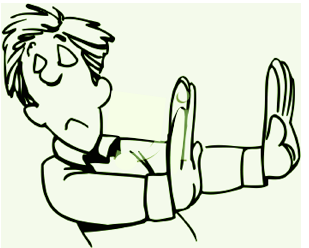
How is this phrase usually meant? That that no matter how cruelly, crazily…. our family may everything's OK ??have continually acted, to each other & us, even to this day – it was the ‘best’ they could manage.
It implies that they :
• used all possible resources to cope
• could NOT have done any better
• meant well, even if they didn’t show it
• really tried, in spite of falling short
• didn’t have any other options ….

In most of our families NONE of these are true – OR if true in part, it was a very small part – not enough to help us as kids!

2. DENIAL
a. THEM: This phrase is usually said by adults, about their parents – but only by people who had painful childhoods! You won’t hear a happy, well-adjusted person needing to even think this, much less say it!

The BEST they could? If our parents were verbally cold, controlling, cruel & insensitive, narcissistic, neglectful, not comforting, drunk, demanding, abusive, addicts, raging….  That was the BEST they could DO? Really?

NO. The most we could say is that they:
chose the ‘easiest way out’,  just didn’t care enough to bother, or were self-righteous about their parenting style (“Spare the rod, spoil the child”) – anything to not take to look at themselves & the effect they had on their children & others
did what any addict would (not just alcohol, but also food, shopping, raging, gambling, exercise, TV, sports, religion….) – everything possible to not deal with their responsibilities & emotions

did what was done to them. Yes, but most never bothered to change. One mother, when confronted, kept saying – “But there weren’t any books about this stuff when you were little”! Except the daughter knew mom never bothered with anything deep, ever. She only read ‘Readers Digest” & watched soap operas! AND, there were some books, & people she could have asked to help. But she ‘was never wrong’!

refused to get whatever help that was available to them at the time (AA & NO to helpAl-Anon have been around for over 50 yrs, psychologists even longer).  One mother admitted she wouldn’t be caught dead going to a therapist. Another was begged repeatedly by her daughter to go to Al-anon, but always blatantly refused

were neglectful – some of us had a parent with a genuine mental illness – but others in the family denied the problem & did little or nothing to seek out solutions that were possible at the time, if not for the sick adult, then at least for us kids
EXP: More than one CoA was left alone for years to deal with a drunk, suicidal or psychotic parent

b. US: On the surface, when ACoAs say this phrase we mean the ‘General’ qualities listed above (from denial).  Under that, we’re really saying that we :
• can’t afford, emotionally & mentally, to admit how badly we were treated
• still believe we caused or deserved the terrible things they did / didn’t do
• “understand” why they acted that way, intellectually – so we don’t have to FEEL the hurt, sadness, frustration, rage, disappointment….

—–> And here’s the kicker:  we’re saying that – since “they did the best they could” – we can’t possibly be angry at them! Saying that we forgive them is actually our way of exonerating them. – not holding them accountable.

OK, so what’s wrong with that? Yes, it is the ultimate goal of mental health to let go of our anger, detach with love – or indifference, to forgive, outgrow our need for them… BUT…… (cont. in #2)

NEXT: “They did the best they could” (Part 2)

WHAT IS SHAME? (Part 2)

SHAME IS OVERWHELMING
 all I can do is hide!

PREVIOUS: Shame – #1

POST: Emotional NEEDS….

SEE Acronym page for abbrev.

IN CHILDHOOD (Part 1)

IN ADULTHOOD
ACoAs’ core toxic rule : “DON’T HAVE NEEDS!”
We feel shame WHEN:

▪︎ anyone gets too close, emotionally
▪︎ anyone shows us kindness, respect, caring
▪︎ we do something a little foolish in publicScreen Shot 2016-06-11 at 6.10.11 PM
▪︎ we allow ourselves to have feelings of love for someone
WHEN
▪︎ we don’t know something which seems common knowledge
▪︎ we don’t try to do something, whether we can or not
▪︎ we find out our expectations of someone are not realistic
▪︎ we try something new, & don’t get it right the first time
▪︎ we want to be paid attention to, but get smacked down or ignored….

ANY NEED that was ignored, abused or made fun of in the past :
⚡️ is now completely suppressed, so we’re not even aware of it
OR
⚡️ we’re vaguely aware, so keep trying to get it met, but only in VERY DYSFUNCTIONAL ways (obeying old rules, so it can be refused, punished, or have bad consequences),
OR
⚡️ we wait endlessly for someone else to notice the needs – as long as we DO NOT ask for it
OR
⚡️ we manipulate dysfunctional others into providing it for us
ALSO
⚡️ we can’t receive anything good without having to ‘pay’ for it somehow, even when it’s given freely & without strings !
⚡️ we mistreat, abuse or leave anyone who consistently treats us with respect & kindness
⚡️ we prevent anyone from knowing that we have needs, as we suffer in silence

RECOVERY from SHAME:
This a deep & long process, requiring much help from H.P. along with kind & knowledgeable humans.
We can:
✶ start by identifying all NEEDS, common to all human beings
✶ allow for emotional discomfort, be angry, confused, scared, face frustrating delays, have internal backlash, hear discouraging comments, regress to old ways…..
✶ continually give ourselves permission to HAVE these needs
AND
✶ identify actions & non-actions that prevent meeting them correctly
Live Long & Prosper✶ identify people, places & things who can help with this
✶ list actions to DO, to meet those needs

✶ list which ones were not allowed, in order of intensity
✶ patiently, slowly RISK changing old patterns

✶ NEVER STOP improving:
• never, never deny having needs, whether you can get them met – or not
• observe the results of your healthier actions, & compare benefits with old outcomes
• participate in any spiritual practice which fits
• replace inappropriate people & places
• read helpful material, attend suitable recovery programs or groups
• try out new actions to see what works or doesn’t
• validate & reinforce any improvements & positive results

GRANDIOSITY vs HEALTHY SHAME
Unhealthy Shame ‘holds hands‘ with grandiosity, which makes us totally believe we can do way more than is humanly possible, or that we’re capable of / have the skill to do it. It’s therefore a defense against deep feelings of powerlessness, carried over from childhood

Healthy shame is the reverse – the antidote to grandiosity (John Bradshaw : “Healing the SHAME that Binds You”).
It allows us to acknowledge & accept that we have realistic LIMITS & capacity, because of:
— being human, & therefore can’t be perfect
— not having been appropriately nurtured & cared for, in childhood
— our genetic inheritance, providing pre-conditions & tendencies for physical, mental & emotional capacities (pluses & minuses)
— our native personality, reacting to & molded by all our early experiences
— our socio-economic, religious & educational background / environment
Screen Shot 2016-06-05 at 5.56.29 PMPositive – To have self-esteem, children need to be:
• admired & applauded for the things they do well
• patiently taught how to do things
• respectfully corrected for errors or lapses
• treated with patience for the things they cannot do, especially when it’s because they’re too young yet, but will be able to eventually –  or because they have a learning disability.
Screen Shot 2015-07-16 at 3.38.36 PM

Embracing realistic limitations does not mean that we can’t heal & achieve!
It does mean that we spend the ‘first half’ – or so – of our life repeating all the bad stuff we learned, & then spend the rest of it fixing the damage that was originally done to us.
It’s not fair – but it can be done!  THEREFORE: PATIENCE, PATIENCE, PATIENCE !!

NEXT: “They did the best they could” #1

WHAT is SHAME? (Part 1)


THE BAD SEED
I was born bad & I’ll always be bad

PREVIOUS: What is Guilt?


While guilt is mainly about negative actions,
SHAME is about our IDENTITY – about who we are, fundamentally.

🔹 It tells us that our very essence is bad, unlovable, unacceptable – to be eliminated. It makes us:
• want to hide, isolate, not talk, try to be invisible
• want to be dead! The pain of shame is so great & the conviction that we’re un-redeemable is so deep (not worth saving), that it eliminates Hope. Why bother even trying!
OR
• we overcompensate – by acting superior, controlling, out-doing, knowing ‘everything’, never showing ‘weakness’ (grandiosity), shaming others…..

SHAME is connected to our NEEDs, rather than actions – specifically – each need we had as a child which was neglected, punished & made fun of.
Consider how many needs children have, & how many of them were met with abuse or not at all – you can imagine how huge our shame quotient is !!

BTW, most of us focus on the need for love, & while it is crucial, the need for safety is even more basic! We can’t begin to take in love, even when it’s available, if we’re terrified.

IN CHILDHOOD:
a. Being Ashamed – Children admire, even idealize their parents when they’re quite small. They need to do this to feel safe – to know they can rely on those people to be competent & available to them. It helps to compensate for the child’s extreme dependence & vulnerability.
✶ In reasonably healthy families, children gradually come to understand that their parents are human, fallible, imperfect – BUT still basically trustworthy & decent role models.

● But in dysfunctional families, one or more adults act out their damage ⬅️ 
All of these & more, make children feel ashamed of their family (the chaos, the craziness, the cruelty) – & by extension themselves, as members of that group.
A sense of pride in themselves & their parents is eroded & shattered.
This is devastating. That feeling is then carried, like a canker sore in our spirit, into adulthood.

b. Being Shamed – Children in damaged families are:
▪︎ expected to know or do the impossible
▪︎ insulted about ones gender, looks, tastes, interests….
▪︎ punished, yelled at, hit, humiliated – in public
▪︎ pushed to do things when too young & then punished for ‘failing’
▪︎ teased & made fun of for many things  (anger disguised with toxic humor)
▪︎ treated unfairly, abused & then punished for crying, being upset or getting angry at the mistreatment
▪︎ yelled at, attacked, harangued – often for nothing specific or obvious

These & many other ways of shaming have been called soul murder. It represents parents’ lack of love & respect for themselves & so for their children, who stand in for their own Inner Child. Their dysfunctions negate / abuse the needs that all children have.
EXP of NEEDS : be paid attention to & heard, feel safe & loved, find out who they are as individuals, grow & learn at their own pace, know they can depend on their caretakers, look up to their parents, treated with respect, to LIVE, prosper & succeed….

Many or all of these NEEDS became SHAMEFUL !
We conclude that if the adults hated these needs, then they’re bad (& us for still having them). So they must be suppressed, better yet Screen Shot 2016-06-11 at 6.28.55 PM– eliminated, no matter how deep & persistent they may be.

EXP: After hearing the 4th Step in Al-Anon (“Made a searching & fearless moral inventory of ourselves’), one member suddenly realized:
☁︎ his #1 toxic rule was: “I should be dead !”
☁︎ most shamed need was for love. “ I thought that was my greatest character defect!
After all, the constant message was that he wasn’t lovable – so he must be a fool to keep wanting it – which he does, desperately!”

In Recovery he learned that this & all his needs were legitimate, universal & his RIGHT, & so he was able to reject the need to die, & could start loving himself.
(The 12-Steps – comments & videos)

NEXT: Shame (Part 2)

WHAT is GUILT? (Part 3)


PREVIOUS: What is Guilt (#2)


POINT 3. “GENERAL” Types


POINT 4
MAIN REASON for ACoA Guilt (cont)

ACoAs feel guilty FOR :
• getting sick, being tired, not wanting to do something ….
• having our own opinions, likes, dislikes, needs & desires
• ‘making’ anyone angry at us, no matter what the reason
• standing up for our rights (we think it’s selfish & being confrontational)
taking time for ourselves, needing down time, taking a vacation, enjoying ourselves
FOR NOT:
• being able to stop someone from drinking, drugging, or doing other self-destructive things
• being perfect
• being smarter, more sociable, more successful, more outgoing…
• knowing something, or taking too long to learn things (so many ‘shoulds’)
• making our parents, friends, lovers, children… healthy & happy

DEFENSES against FEELING Guilt
• Avoidance = “I’m too busy to deal with it”
• Condemning the agency = “The universe is against me”
• Denial = “I didn’t mean anything by it”
• Dissociation = “I never said that”
• Justification =  “I can’t help being bad”
• Minimizing = “I think you’re being too sensitive”
• Projection = “They asked for it”
• Rationalizing = “I did it because you were being a jerk”
• Self-abuse = “I feel better when I hurt myself”
• Self-deprivation = “I don’t deserve anything good”
• Sharing = “Listen to this….(ha, ha) I’m such an idiot”

 RESULTs of BREAKING Toxic Rules:
Internal Backlash, in the form of abusive self-talk, being irritable, getting sick, feeling depressed, heightened anxiety, panic attacks…..
These can be countered by understanding where the backlash comes from, knowing that we’re doing the healthy thing, & comforting the scared WIC

External Backlash – possibly from family, if we’re in contact, since they want us to ‘stick to the plan’ & not abandon them by being different.
Also from friends, bosses, mates, even children – for the same reason – they’re used to the ‘old’ us, & don’t want to make any changes in themselves to accommodate our growth!

OK, so NOW :
▪︎ we’ve identified our specific unhealthy rules
▪︎ & understand that obeying them retards / prevents progress
▪︎ & decided that to Heal & Grow, we have to stop obeying them —-
What then? ⬇️

POINT 5. HEALTH
Yes, at first we can expect the painful emotion of guilt.  But:
This time – the guilt is a SIGNAL we’re doing something good for ourselves.  Since we don’t want to return to obeying sick rules, we can confidently say:
“This feeling of guilt is actually telling me that I’m on the right track – so by NOT obeying a harmful rule I’m doing something healthy for myself”. YEAYH!

✶ If we continue to dis-obey toxic rules, guilt will eventually diminish & in some areas even go away completely. So, it’s imperative that we tolerate this kind of guilt & backlash, in the short-term, & continue thinking & acting in self-esteeming / self-empowering ways, even in the face of opposition.

✶ Because this process is stressful, we need the right kind of supportive people in our life, to encourage our efforts, process confusing thoughts, reinforce our resolve & applaud our progress.
As long as the support is positive & realistic, it can come from anywhere – healthy family members, friends, therapy, books, internet, 12-step meetings, co-dependence rehab, clergy & spiritual disciplines….

NOTE : ACoA recovery-guilt is different from guilt about things we’re actually done that harmed ourselves or others. We need to deal with them separately.

We’ve heard that “confession is good for the soul”, & when done in the right places it provides forgiveness, which alleviates guilt.
The 12-Steps remind us that “We’re only as sick as our secrets”, so after writing out the Step 4 Inventory, Step 5 says: ” Admitted to God, to ourselves, & to another human being the exact nature of our wrongs”.

From “PERCEPTIONS”, the tv series (Season 2, #7)
Lecture on Confession & the Brain:

“…… Got a secret? Right now there’s a war going on in your brain – your cingulate cortex wants to tell the truth, but the orbital prefrontal cortex is calculating how bad it’ll be…
If the prefrontal wins, your stress level goes up. If the cingulate wins, stress drops.
So if it’s biologically healthier to confess our secrets, what is it about human nature that make us fight so hard keep them hidden?  Although we may be desperate to bury them, the more we try, the more they surface. We are neurologically compelled to confess……”

As for ACoA Recovery-guilt, repeating new, healthy actions that counters our harmful beliefs will create new pathways in the brain – making it easier & more natural to be comfortable & successful in all aspects of our lives.

NEXT: What is SHAME? #1

WHAT is GUILT? (Part 2)


PREVIOUS: What is Guilt (#1)

SITE:   How to ditch the guilt of putting yourself first


POINT 3. “GENERAL” Types (cont)
In addition to those listed in Part 1 dealing with action / non-actions, there are:
• Adaptive (pro-social) – considered helpful guilt, as it relates to a person’s genuine understanding of wrongdoing & responsibility

• Maladaptive – chronic guilt that leads to mental or emotional distress, & therefore has a negative impact on life.
People with unresolved guilt might feel irritable or always on edge, overly clingy or apologetic. This guilt can show up as physical symptoms: insomnia, digestive issues (stomach pain, nausea….), headaches, mental confusion, muscle tension, tearfulness…..

🌱 Genuine guilt mobilizes. 🔪Self-punishment paralyzes
🌱 Genuine guilt leads to repairing relationships. 🔪Self-punishment makes us withdraw from connecting
🌱 Genuine guilt helps improve damaged relationships with others. 🔪Self-punishment damages relationship with oneself.

POINT 4MAIN REASON for ACoA Guilt
GUILT is an emotion that ACoAs feel often & intently. It’s a familiar companion of negative self-talk & of actions we believe to be bad, but which are not always.
G is an inevitable side-effect of self-hate, since our WIC’s default position is that we’re intrinsically bad, so anything that goes wrong for us (that hurts) is OUR FAULT.

This self-hate assumption is never to be questioned & is very hard to give up, even when we ‘know better’ – because we think it makes us less vulnerable, a little more powerful!
After all, if “it’s my fault – then it’s in my control to stop the pain – up to me to fix the problem, change something about myself or the other person – which will make it all better”!

Perfectionism leads to ACoA guilt. “If I fail at anything, no matter how small, then I’m not perfect & then I’ll never get the love, acceptance & validation from my family, & then by no one else in the whole world.”

MEANING: “I can do something to make things better.” We naturally thought that obeying their rules would work
PROBLEM : Not only were those rules cognitive distortions, they also kept changing, were endlessly contradictory or simply impossible to fulfill. And the adults didn’t follow their own rules! Remember “Do as I say, not as I do” ? ? It was crazy-making!

In childhood – having power over our circumstances was an illusion, since the cause of our pain came from outside of ourselves. Alcoholic, narcissistic family members & others were the source of our suffering, which we had NO control over – no matter how hard we tried to please. There never was a way to win!  We were not a failure.
⬅️ Hogwarts’ Wall of Rules

HOW IT WORKS for ACoAs:
1. Guilt is the emotion – generated by ↩
2. Breaking a law or rule – of ↩
3. Society, government, religion, community, school or family
4. Category of rules we feel guilty for breaking ate Toxic FAMILY Rules
(“If you don’t like it you have to stay! / Only other people’s needs matter / don’t trust anyone, don’t have fun, don’t think for yourself….”)
✶ If the family’s rules had been healthy, we would currently be doing positive, self-esteeming things, most of the time
✶ Because most of the rules were unhealthy, we continue to act on them in ways that hurt ourselves & others, on a regular basis.

Therefore – ACoA guilt is caused by any thought or action which disobeys any direct or indirect rule we internalized as kids.

IMPORTANT to remember:
• most ACoAs don’t realize we’ve absorbed those toxic rules & are automatically obeying them – but we can tell by our habit-patterns. They’re the self-defeating things we automatically do over & over.
• we don’t have to consciously agree with the rules – but the WIC has to believe they applies to itself, no matter how much we may hate it or intellectually know they don’t make sense

True PURPOSE of Guilt :Screen Shot 2016-06-05 at 5.47.18 PM
➼ To make a person (or group) go back to obeying the law or rule they broke.
This is the legitimate reason for human guilt – a natural & positive thing. It’s built into our psyche, like the ability to love. People devoid of guilt are sociopaths / psychopaths.

🔻 We are not trying to get rid of all guilt – we need it to tell us how to behave in safe & appropriately ways, for everyone’s benefit.
🔸The issue for most ACoAs is that we feel guilty about things that are not actually bad – like having needs, emotions !

NEXT: What is Guilt (#3)

WHAT is GUILT? (Part 1)

Man with tamI PLEAD GUILTY !
Since everything is about ME (isn’t it?)- it must be me, I’m always wrong

PREVIOUS: ACoA SiteMap

SITEs:  How to deal with Guilt Trippers
3 Types of Guilt & How to Let Them Go

NOTE: See ACRONYM page for abbrev.

POINT 1. Guilt (G) is a normal EMOTION, but not a primary one like fear, joy, sadness, love….
Since it helps preserve social bonds, a moderate amount of guilt is adaptive. Too much is crippling, repeatedly telling lies trains the brain to ignore feeling bad about it, & not having any remorse is psychopathic.
ACoA focus on guilt explained in Part 2

POINT 2. Guilt is the emotion mainly related to ACTIONS or NON-actions, but also to ‘unacceptable’ thoughts & wishes

POINT 3. General USES of guilt are for:
a.
 exerting influence – G is used by some people in close relationships to control another’s behavior (MORE….)
— the one with less power can get their way by guilting the one with more
EXP: “If you loved me, you wouldn’t do that / would do that for me”
— The one with more power can shame & punish the one with less
EXP: “I guess you mean I shouldn’t have been a mother” when told of old hurts

b. spreading out emotional stress – negative & positive sides of a ‘bad’ situation – acknowledging you’ve messed up, AND showing you care about that person or event
EXP: “If you (person A) feel guilty over not taking out the garbage, chances are your spouse (person B)–who wanted it taken out–will feel better knowing that. In this way, emotional equity is restored, because bad feelings in A are restored to B, who caused them,” (psychologist Roy F. Baumeister, CWRU of OH) Abstract Article

c. maintaining relationships – G depends on inter-personal context, a two-person experience, which can help make people pay attention to others
EXP: feeling bad about not keeping a promise, not spending enough time with loved ones, not responding to texts….
Given how uncomfortable guilt can feel, it can provide a strong motive to apologize, correct or make up for a wrong, & be more responsibly in future- BUT only if the mis-behavior is legitimate

‘Normal’ TYPES of G – in relation to actions, cause by:
a
. something you did — wrong : that harmed another person, that violated your own ethical or moral code, or something you swore you’d never do again. In these cases, there’s no doubt it happened

b. something you didn’t do, but want to — thinking a lot about an action that’s against your own principles, or is dishonest, unfaithful, or illegal.

This kind of G can be confusing, with conscience poking a finger at you.
Since you didn’t actually commit the act (yet), & no one know what you’re thinking – you’re still on moral high ground. But obsessing about wanting to do something you know is wrong (for yourself or toward others) can make you very uncomfortable

c. something you think you did — A lot of present-day unhappiness comes from our own irrational thoughts about situations we’re in. Some people will be wracked with G if they’re convinced they did something wrong, even if there’s no objective evidence of that.

EXP: The magical belief you can jinx people by just wishing them ill, without acting on it. If something bad actually happens to them later, you’ll secretly think it was because you were that powerful!  At some level you ‘know’ that’s illogical, but it’s hard to give up the belief altogether

d. that you didn’t do enough to help someone — who you know is having a hard time or is sick, but you don’t call to check on them or help in some practical way.
OR – you’re already doing too much for someone, & you take a break or just stop, because you’re burned out (compassion fatigue). Continuing to act out of guilt will only drain you further & end up making you a less effective helper

e. that you’re doing better than someone else. It can be:
— adult children doing much better in life than their alcoholic / narcissistic family, or poorly-adapted immigrant parents, such as going to college, making more money….. even if they say they want their children to succeed

— the only person left in the family after some natural (fire) or social (war) disaster, often will feel survivor guilt, even though the event was totally out of their control. This can have Spiritual implications – they were meant to survive for a reason. 😢

NEXT: What is Guilt (#2)

SITE MAP of the ACoA website


“HEAL & GROW for ACoAs”
80+ pages of great info!  

Go to http://www.acoarecovery.com,
& click on SITE MAP to navigate


ABOUT ME
Pg. 81-83 • Info, Background & Testimonials

ACoA SYMPTOMS
3  • Laundry list, 12 Steps for ACoAs
4  • Unhealthy Parenting
5, 6   •  Expanded characteristics
7  •  NARCISSISTS – characteristics
8  • Cognitive Distortions, w/ examples

ARTICLE
69, 70 • “Healthy Opposites- Change Behavior to Change Your Life”

BARGAINs WITH FATE
12,13 •  Intro & 5 Bargains  (from Shakespeare’s plays)

BLOG
87 • as of 7/15/10 — 16 entries

BOOKS
84,85 • Recovery Titles

BOUNDARIES (Bs)
39  •  Definition, Purpose
40, 41  •  Unhealthy Bs
42-44  •  Healthy Bs  (emotional, mental, physical)

CO-DEPENDENCE
45, 46 • Definitions; Unhealthy & Healthy

COURSE
55-58 • “Knowledge is Power: What Makes an ACoA” outlines

DECISIONS
72 •  Good  & Bad Approaches
73-74 • Extensive List of Personal Values
75-76  • Types of Decision Makers
77-79  • Decision Making Criteria (1-5)

DEFINITIONS
52-54 • Brief explanations of Confusing Terms

4 FAMILY ROLES
20 • Toxic Roles: Hero, Scapegoat, Lost Child, Mascot

EFFECTIVE RESPONSES
51 • Short & longer THINGS to SAY back to abuse or stupidity !

EMOTIONS
47 • Extensive list of emotions words
48-50 • Unhealthy & Healthy expressions/ uses of ANGER

FRIENDS
80 • Extensive list of characteristics

HEAD GAMES
9, 10 • 4 common games
11 •  4 more games, Expanded

INNER CHILD
14 – 17 • ‘Parent, Adult & Child’: Voices, Purpose, Characteristicssca0219
18, 19  • Developmental Stages, Memo from Child

LINKS
86 • @ Narcissists, etc.

NEW RULES
65, 66 • Healthy rules to take care of the Inner Child

RECOVERY
59, 60 • What it’s NOT & what it IS
61- 63  • Mental Health & Healthy Families
64  •  Benefits of Group Therapy

RELATIONSHIPS
23,24 • Issues & Beliefs
25-27 • Intimacy – Unhealthy & Healthy
28 • Love addiction; Power Plays
32 • LOVE – 5 languages, 5 Types
33 • TRUST – Who can, why not, How To
34 • Gay & Lesbian ACoAs
35 • M vs F ways of Responding
36 • 16 Men – by Myers-Briggs Typing
37 • Givers vs Takers

SAYINGS
67, 68 • Affirmations, Promises, Serenity Prayer

SEX & LOVE ADDICTION
29, 30 • Self-Diagnostic Qs

SEXUAL ABUSE
31, 32 • Survivors’ Symptoms;  Recovery

TOXIC RULES
21, 22 • Long & Short versions of dysfunctional childhood rules

WORK ISSUES
71 • ACoAs at Work; Healthy ways to work

NEXT: What id GUILT?

Loneliness in RECOVERY (Part 4)


PREVIOUS: Recovery Loneliness #3

SITEs : Beating 4 Types of Loneliness
🔐 Healthy Loneliness (for Seniors)

With RECOVERY
If we diligently stick to the growth process, we find that loneliness is no longer a major issue, because the emptiness is being filled with the Healthy Child, The Loving Parent, perhaps a Higher Power, appropriate companions & guides. In recovery we’ll feel connected & able to handle things – more of the time – even when things are rocky.

We don’t suffer L. as often, since we:

1. found our True Self. The goal is to be a whole person, not fragmented into compartments that don’t communicate or are always at odds. We accept even the imperfect & still wounded parts. The PP & WIC voice are much quieter, which once created the inner loneliness

2. willingly accept ALL our emotions, having learned to comfort ourselves when stressed or in pain, & allow ourselves to revel in the pleasant or joyful ones, becoming the Positive Parent we never had

3. have internal permission from the Loving Parent in the form of Healthy Introject to receive respect, attention, validation, love….
For some of us it took a great effort to take in positive regard form others, because it forced us to feel the contrast with the enormity of childhood emotional & psychological deprivation

4. don’t have to hide from others, since:
• knowing who we are, we don’t have to depend on unreliable others
• our wounds are no longer raw & over-sensitive. FoA no longer runs us
• we’re not afraid of our anger, being in charge of our rage
• we’ve developed reasonable boundaries, knowing where we end & others begin, which makes us feel safe

5. are more comfortable being visible & able to take appropriate risks. It allows us to be more pro-active when connecting with individuals & groups, sharing our thoughts & talents – without the self-conscious worry about being judged

enjoy life6. know what we like, want, have a right to, what we’re good / great at….and so:
• actively follow our dreams & freely express our creativity
• can ask for as much help as we need, since we can’t possibly know everything, & don’t have to do everything alone (nor go without)
• go to the right people for those needs or wants. We’ve developed a large enough pool of support & resources to draw from so we don’t feel bereft, even when faced with difficulties

7. can leave unsuitable people & situations much sooner, by picking up on many large & small Red Flags (cues), from them & in ourself, when something isn’t working. We don’t have to stay bored, uncomfortable or annoyed by PPT that are not a good fit, AND can keep looking until we find the ones that do!

8. don’t spend much time worrying what others think of us, want from us or if they’ll reject us, because we’re no longer desperate to stay connected.
NOR do we waste energy obsessing about others who are NOT taking care of themself, & so don’t rescue them by doing for them what they can do for themselves.

We can think of Recovery as progressively healthier Dependencies:
shilft dependence
NATURALLY – we need to remember that no Recovery process is ever complete or smooth. The list above is a general outline of a healthy person, but as ACoAs we all have some regressions, occasional depression & loneliness. These can come from present circumstances or from past trauma. In any case, we’re responsible now for creating a safe environment for our Inner Children.

❇️ We are NOT looking to get rid of the WIC, but rather integrating him or her into a good Inner Family who work to help each other – Good Parent, Skillful Adult & Happy Kid.

NEXT: Website site-map // What is guilt?