Al-Anon STEP 10 – Comments (Part 3)


PREVIOUS: 10th Step #2

SITEs:  8 books for ACoA   ///   Apology GUIDE

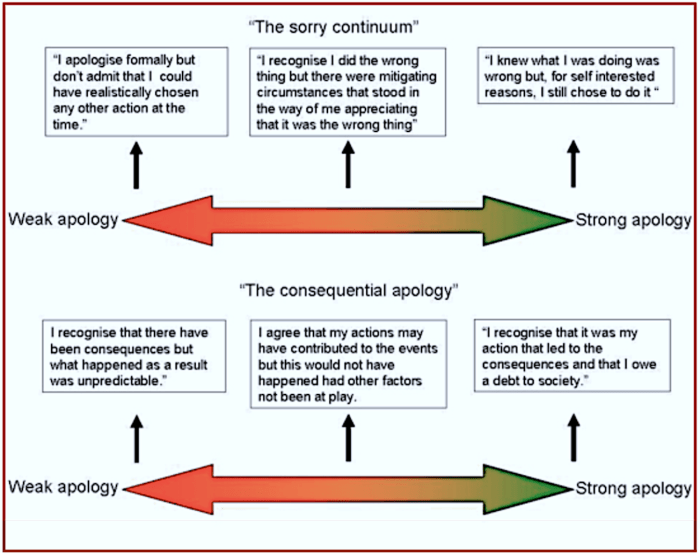
AA / Al-Anon Step 10 : “Continued to take personal inventory & when we were wrong promptly admitted it.

1. Daily Inventory

2. AND WHEN WE’RE WRONG  (cont.)

🔻 Something that did not hurt or upset another, but which we are convinced did. Again, this is our narcissism – projecting how we’d feel if….. In fact, what we’re obsessing about may not have even registered, or if it did – it didn’t bother them.

So – ASK  “When I said/did ——, how did you feel?” (done right away, or at the next opportunity). Do not put your words in their mouth!
✔︎ If the other person was not upset, believe them & drop it!
THEN if you insist on explaining, justifying…. it’s not at all about making an amend to —-> the other person.
Instead – it’s all about you, trying to get them to make you feel better

✘ If it did bother them, then we can apologize, but not in a self-serving way by trying to justify our behavior!
However, sometimes BRIEFLY providing a legitimate context is helpful to the other person “I’m so sorry for ———, yesterday my mom was rushed to the hospital // I’d just had a chemo treatment…. // Sometime my brain-injury makes it hard to remember —– ” (Try not to use the word ‘but’ before the explanation!)

⚠️ Human mistakes  – not a tragedy. These can come from being tired, under great stress, over-doing or from ignorance. We need to have our own internal permission to be ‘normal’ (imperfect), to forgive ourself with kindness & then make any necessary corrections.
Most other people are not as upset about our errors as we are !

🔻 Things we said or did which actually hurt / harmed someone.
Sadly, the WIC still gets things backwards, as with the backwards Serenity Prayer.
We blame ourself for things that are not wrongs, while having great difficulty owning long-term defense mechanisms : superiority, lying, lateness, insensitivity, laziness, procrastination, S-H …..
Not noticing our unhealthy behavior is a lack of self-awareness – patterns we think “well, that’s just me” but are actually the False Self, & a deep-seated shame about our True-Self needs.

*    *    *    *    *    *
3. PROMPTLY ADMIT IT
a. Re. OURSELF –  The Program phrase “Let it begin with me” certainly applies here.
If we accurately identify a ‘failing’, we can promptly admit it to ourself – without shame or S-H.  Hard for many ACAs to do!

In Recovery we learn that character defects come from the wounded child &/or PP, so even with years of hard work they don’t go away fast or easily. We need to be KIND to ourselves, & patient with our process!
For in-depth info, read posts Outgrowing Co-dep Niceness #6a-7c”, re. Forgiving ourself.
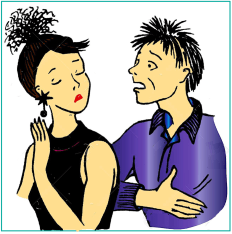
b. Re. OTHERS – 9th Step procedure applies here too – read post “Outgrowing Co-dep Niceness #8a = Being forgiven by others”.

A sponsor may suggest that “promptly” means to act within 48 hours – not a week or a year.  But for many ACAs it can take hours or days before we realize we need to make an amend, or to take the time to overcome shame, or calm down from anger, & get some perspective.

REMEMBER that in some cases the other person may not accept the amends or want to talk to us at all. Sometimes it’s not safe or even possible to reach them.
Also – an abusive boss, a mentally ill family member, a manipulative narcissist, the passive-aggressive….. can easily use a sincere ‘amend’ against us, if not right away, then some later time when it suits them.
We do need to use discretion & be self-protective.

Not wanting to apologize may seem like PRIDE on the surface, but actually it’s:
a. being ASHAMED of not being perfect
b. something that was shamed / punished in our family growing up
To be able to apologize ‘easily’ we can not be choked with SHAME!

💠   💠    💠    💠
Read: ACoA 12 Steps

ACoA 10th Step: “We continued to take personal inventory & to love and approve of ourselves.”
• This is not arrogance or narcissism, but rather, self-care.
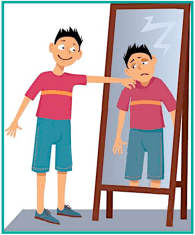
• It’s not about being at the extremes of either having to be “right” <—–> or of self-flagellation.
• AND keeping our side of the street clean does NOT mean staying with people who don’t want to be with us, who are subtly abusive or simply are incompatible!

By accepting ourself completely, we can slowly outgrow much of our damage, & uncover our True Self. This minimizes the amount & frequency of acting on character defects. It keeps us from isolating ourselves & judging everyone else.
“Admitting & Accepting” is the mental health of acknowledging our human-ness & the need to be part of the human race.

NEXT: MBTI Introverts

ACoAs: PATIENCE vs Co-dependent Waiting (Part 2)

PREVIOUS: Co-dep vs Patience #1

SITE: How to cope with waiting for news

QUOTE: “Good character is not formed in a week or a month.  It is created little by little, day by day, by protracted patience” – Heraclitus of Ephesus

PASSIVE PATIENCE (cont.)

Co-dep also shows up as IMPATIENCE, annoyance, intolerance, worry, fear & distrust
• It’s demanding what we want, right now (instant gratification), because any delay in getting a need or a desire met is taken by the WIC as a definite “NO – you can’t ever have it, so shut up & go away!” from the PP (Negative Introject)

• It’s rushing relationships, to get that feeling of instant attachment, which is actually symbiosis. It’s an attempt to compensate for present-day fear of Abandonment pain, to make up for not having had that bond as an infant with mom, when it should have occurred

• It’s impulsively rushing into situations without considering whether they’re right for us, or what the consequences will be – to ourself or others
• It’s pushing our way ahead of others (selfish entitlement) – the unconscious fear of being left behind – while consciously assuming it’s ‘our right’, but is actually childish narcissism
<ADD YOUR OWN kinds of unhealthy co-dep ‘patience’ & impatience>

Fortunately, Recovery gives us an out – a way to identify our damage so we can separate & strip it away from the Real us that’s hidden under all the defenses, separating the Toxic Rules from our Rights. As adults we have very real options, if we’re willing to risk leaving our attachment to the dysfunction.
REMEMBER: We’re damaged (wounded), not defective!

🦋 🐯 🦆 🐳 🦒 🐇

HEALTHY PATIENCE
This kind is an ACTIVE response to reality (personal & environmental)
Just like ‘Acceptance‘ does NOT mean giving up or giving in, Patience does NOT mean letting the world trample us.
Nor does it mean ‘taking the moral high ground’ as some spiritual superiority, nor a punishment from the ‘universe’
• It does not imply the hopelessness of being forced to endure suffering & deprivation
• It does not mean being passive, of not taking appropriate actions when necessary to accomplish something, especially if it’s something only we can do. (Posts: Healthy Actions // What to do when confused // Why are you stuck?)

It DOES mean being emotionally mature. This allows us to tolerate delayed gratification, which can only come from lowering the WIC’s intense anxiety. Healthy patience is active in the sense that we choose to wait for a desired outcome, while at the same time actively continuing to live our life the best way we can – every day.

Real patience :
• requires knowing the difference between Rescuing & Healthy Helping, because it takes patience to sit with our own discomfort of not jumping in to someone else’s problems. Knowing the rules for Helping is important.
But we can also tell what’s healthy by feeling physically stressed or relaxed, & by our emotions: Rescuing / people-pleasing is driven by anxiety, a compulsion to compensate for something broken in us. SO —
• Before a situation (a communication, an event….)  we can obsess & worry OR – be excited about ‘doing / reacting’, which comes from a false sense of connection, & temporary relief of abandonment fear.
Afterward – we can feel drained – from overdoing, disappointed if we didn’t get what we wanted in return, & then angry. Here the actions are ALL about us, the WIC trying to cover up S.H.

True Helping is done from an inner sense of calm & confidencebefore taking action a choice that comes from the Healthy Adult’s enjoyment of sharing our personal talents, knowledge & experience. And we feel pleased, satisfied & comfortable, even uplifted – afterward. We benefit, & not just about ourself.

NEXT: Co-dep vs. Patience #3

BEING TOO NICE – High Cost (#1)

angry-nicenessI DON’T KNOW WHY
they’re being so mean to me!

PREVIOUS: Underpinnings, #2.


The HIGH COST of ‘too nice’

Co-dependence
is a survival strategy developed in childhood in an alcoholic or otherwise narcissistic family & community. They prevented us from developing a clear sense of our identity, so we didn’t learn how to be our own knowledgeable & loving caretaker. We may not realize we’ve taken on this ‘persona’, but a deep part of our psyche wants to please others to avoid negative reactions we’re afraid we won’t be able to bear.

Now, as physical adults – but reacting emotionally as a child – we use co-dep tactics as sneaky ways of expecting other people to fill the hole in our heart left by our unhealthy parents. Not usually aware of being angry & scared, & not believing inot with-itn ourself – we constantly look to others to tell us who we are, what we should wear, read, think, feel, study, do for a living…. even to giving us permission to exist! – because any differences threatens our WIC. We end up ‘wearing’ people’s personalities – at least when we’re with them.

This makes us vulnerable to the moods of others, as if their state if mind is a reflection on us – so if they treat us well we’re OK, but if they’re cranky, critical or just gone – we blame ourselves and feel bereft!  With weak or missing boundaries we’re everybody’s puppet, jerking an uncertain way thru life

Q: What if the one basic requirement for boundaries?
ANS: Our NEEDS! Knowing what they are, having permission to own them & then implementing as many as possible. You can’t draw a line in the sand unless you know where that line is supposed to be – which is based on your True Self.

People-pleasing
As co-dependents we are people-pleaser (P-P) – who will do anything at all, no matter how humiliating & self-destructive – to keep others attached to us. Many ‘experts’ warn that being too nice will lead to a loss of self-worth – implying we had it at sometime in the past. This may be true in some cases, but not for most ACoAs. People-pleasing is rooted in & springs out of a lack of healthy core & genuine self-esteem – to start with.

As a result of this lack, co-dep P-Ps are most easily attracted to friends & mates who are controlling, who always seem to know what’s best, & happy to tell everyone. And they want to be with us because we let them be in charge all the time. If we had at least one such parent or other important caretaker – we make the unconscious connection between love & being controlled. We think that way we’re safe & don’t have to make the effort to figure out what we want.

However, no matter how battered, each of us does have an inner voice of our own that wants to be heard. So eventually, in a long-term relationship with any controller – we can get more & more anxious, resenting the other person for always getting their way. But afraid of rejection, we may start withdrawing or become passive-aggressive, instead of leaving or being more assertive. (MORE….

Being “too nice” can backfire
a.  Others often see it as a sign of weakness & some will use it as an opportunity to take advantage of us. (More in a future post)

b. If you’re ‘too nice’, wanting social harmony at any cost, you avoid conflict as much as possible, but end up harming yourself. You’re much less willing to stand up for yourself, or say things like: “No, I don’t want that / No, I won’t do it / No that’s not what I meant….”

This avoidance creates more disruptions, since problems never get aired or resolved, & in some cases cause others harm as well!

NEXT: Being Too Nice, #1

Separation & Individuation (Part 1)

family tree TO STAY ATTACHED OR NOT – how can I be truly safe?

PREVIOUS: Symbiosis #3

POSTs: Autonomy & Attachment

SITE: Object constancy (vs object permanence)

BOOK re. S & I:‘‘The UNFOLDING SELF”  by Mara Sidoli

Normal DEPENDENCE
As children we are all dependent on the ‘kindness of  strangers’ (parents / caretakers). This makes us vulnerable to their personal, social & religious training, so children are either nurtured & loved OR abused & neglected.  Even those of us who had an outwardly ok family may have experienced abandonment in ways that others can’t see from the outside

As adults, IF we were originally victimized at home, we have the illusion that staying dependent will get us taken care of, making up for the past. However, the tradeoff is to give up adult rights – to have our own opinions, make our own choices, follow our own destiny

Healthy INDEPENDENCE
French aristocrat, writer, poet & pioneering aviator Antoine de Saint-Exupery said, “I know but freedom of mindone freedom and that is the freedom of the mind.”  We can say that the root of independence lies in our ability to think freely, since to a large extent, our thoughts determine our actions & experiences.

• Some expressions of independence are : being competent, having our own unique voice, acting autonomously in the world – while still being able to consider the differing ideas & feelings of others. It allows us to stay connected without being symbiotic.

Object Constancy: To develop healthy independence a person would have needed a genuine connection with dependable, competent & emotionally available caretakers, starting with a psychologically healthy mother.
🌺 That would result in the ability to remember that people or objects are consistent, trustworthy & reliable, especially when out of the person’s immediate field of vision

THE GOAL of all therapy & other types of Recovery is Separation & Individuation (S & I), the struggle to become an adult**. This can only be done by clearly identifying & expressing the person we were born to be, as part of our genetic & social heritage, yet not a carbon copy of anyone else. Children from healthy families are allowed this process while growing up, so they don’t have to go thru the stress of this particular type of ‘letting go’.

**Many ACoAs balk at the suggestion that we have to grow up (become an adult), because —
✓ the WIC doesn’t want to give up being in charge. This ego state has allowed us to survive thus far – but with great limitations. Having to rely on ourselves way too early gave the WIC the only sense of power it has ever known & won’t relinquish it easily

✓ we equate being an adult with being like our drunk & narcissistic parents – either mean, weak or crazy.  They were acting out of their Bad Parent & WIC, but never from a Loving Parent / Healthy Adult state.
Of course we don’t want to be like them – BUT we are, in the way the False Self was formed, using the Toxic Rules & Toxic Roles.
So we can’t look to them for a model of adulthood!

S & IThe False Self (FS) is made up of two or more sub-selves that develop from childhood damage – as the only way to survive we had at the time. These well-meaning but wounded, comfort-seeking persona usurped leadership from our naturally talented True Self (TS).

It’s not just the mask we present to the world, it’s what we now assume IS us, the only Self we’ve ever known.
As the FS aspects formed, they disabled or stunted our TS, preventing our wise brain/body’s ability to make instinctively natural, holistic mental decisions & action-choices, so what we truly think, perceive, feel & how we act – are distorted or hidden.

• These sub-selves (FS) have tried valiantly to manage under extremely difficult conditions, & we can appreciate their efforts that allowed us to survive.  However, they no longer serve our adult needs, so we can’t afford to let them continue ruling our life.
In our ‘language’, it means not letting the WIC be in charge anymore, by growing the UNIT.
(⬆️ CHART modified from “Break the Cycle”)

NEXT: S & I (#2)

SYMBIOSIS & ACoAs (Part 2)

symbiotic trapIT’S SO HARD TO LET GO
I want to stay loyal to them!

PREVIOUS:  Symbiosis & ACoAs (part 1)

REVIEW: Ego States – Parent
Autonomy & Attachment” – opposite of symbiosis

SITE: Do you Love to be needed or Need to be loved?

IN CHILDHOOD (Part 1)

AS ADULTs
Emotional Symbiosis (ES) is the damaged part of us that tries to make any important “other” a carbon copy of ourself, assuming it will make us feel safe & loved. But it doesn’t work.
Because our mother was not able to emotionally bond with us from birth on – it created the original Abandonment, underpinning all our dysfunctions. It left us with a desperation for that missing connection – at any cost to self or others – which healthy infant-symbiosis would have provided.

SYMBIOSIS is narcissistic, appropriate for an infant – but NOT for an adult. It’s an futile attempt to get maternal nurturing & to gain self-esteem thru adult relationships

• It’s frustratingly unsuccessful, even if someone is willing to co-dependently try, because we know at some very deep level that it’s not a legitimate way to connect

• We’re trying to force others to give us the mother-infant love we never got, demanding they give us permission to be on the planet — rather than being with us out of genuine affection & respect, as equals.
And, if they do agree to “help” us, they are doing it to feel needed, to fill a hole in themself, SO it’s not really about you!

Unfortunately, ES not only affects the individual family unit, but is usually passed down through the generations, always with a negative impact. Family enmeshment is a form of psychic incest, as inappropriate cross-generational bondingego states
.

Characteristics :
• children are caught in up the needs of parents, having to ignore their own
• communication is triangulated (party line)
• everyone is in each other’s business all the time
• everyone must conform to the party line – whatever that is in that family
• kids must stick to narrow Roles (Scapegoat, Hero….)
• have poor or no boundaries between the various members
• member are punished for any non-conformity or trying to be a separate individual, by constant badgering, outright attacks, the cold shoulder or banishment

IN THE PRESENT – in us or our parents
The compulsion to symbiose now comes mainly from the WIC ego state , held in place by its attachment to our internal negative Introject & external damaging parents – who were either overly-out of focusattached or unavailable for us.  The compulsion comes from NOT:
• having appropriate role models for healthy ways to relate
• having a strong healthy sense of one’s True identity
• feeling safe on ones own
• not having boundaries
• not knowing ‘who I really am’, with a deep fear of abandonment, causing intense self-hate, shame, guilt

ES is a way to not acknowledge absorbing the family line which implied or blatantly told us that we’re worthless & unlovable. Denying childhood abandonment is maintained in many ways – such as trying to prove we’re nothing like them – while at the same time repeating the very family drama we claim to be escaping. So we unconsciously choose the old familiar PPT (people, place & things) ! Freud’s ‘Repetition Compulsion’

A person who craves & demands ES has a limited capacity to be aware of, appreciate, respect & acknowledge the inner experience of another. They need everyone to agree with their point of view – about everything – & tend to put others down when they don’t.

Symbiotic Attachment IS:
• taking someone emotionally captive instead of having equal, healthy, inter-dependence with others (“Alcoholics – & other narcissists – don’t have relationships, they take hostages”)

• USING others to take care of us instead of being our own adult, to not have to do the deep emotional work that can heal our damage & free up the real us

• the need to insist everyone be a carbon copy of oneself (mirror image) to validate one’s shaky identity – actually the False Self. We don’t have permission to be REAL, so – if others are just like us – then we’re OK (allowed to live).  (MORE….includes examples)

NEXT: Symbiosis – Part 3

Loneliness in RECOVERY (Part 3)

not lonely

I NEVER IMAGINED
I’d ever be this comfortable!

PREVIOUS: Loneliness in Recovery (Part 2)

SITE: The GIFT of Loneliness ~ Dr. Chip Dodd (scroll down)


The middle A :
ACCEPTANCE  (#3)
Recovery (Rec) Loneliness is part of the process, so it’s normal & to be expected
(cont.):

6. Accept temporary Rec. Loneliness of…..
…. Shifting our dependence on to ourselves & our Higher Power as the Good-Parent we never had. Humans will always let us down, even the best ones, but “God, as we understand Him’ never will.

NOTE: For those of us who have trouble with this (from lack of faith, anger at the God of our childhood, or not having a concept of a H.P. greater than ourselves…) we can ask for guidance from Governing Principle that will be a comfort to us. connect W.HP

TRUSTING an unseen Spirit Being or Force is hard when we don’t trust anyone or anything. But that can start the shift by learning to trust ourselves, AND by picking healthier more reliable people. Also, because Spirit is intangible, we need to be in touch with the emotions housed in the Healthy Child & Loving Parent ego states, which includes our intuition or 6th sense.

SOME RESULTS
Emotions from leaving inappropriate people can be sadness & brief loneliness, OR relief and healthy self-congratulation – which we’re not used to & not ‘allowed’ – & think it’s arrogant & selfish!

Practical outcomes can be:
• short-term isolation, which we need to process such big changes, but not from fear, guilt, shame or S-H
• that some people we distance from can’t tolerate their own abandonment pain, so will keep bugging us : ”What happened? Where are you? Are you all right”? even after telling them you need alone to thinkspace, or ending with a final good-buy.
If you’re truly done, you don’t have to respond. We are not responsible for THEIR WIC, even tho we can understand & have compassion
• we’ll feel lighter & have more energy for our own life & pursuits
• having the space to add in more & more healthy suitable people/ places & things (PPT) for ourselves

Keep in mind Al-Anon’s 3 As:
1. Awareness 2. Acceptance & 3. Action.
It’s never healthy to jump from #1 to #3, which is what most ACoAs do automatically. We need to spend as much time in #2 as our psyche /WIC needs. Then the eventual Actions will likely be much healthier.

Occasionally we’ll still find ourselves lonely, as when we’re :
• with the wrong people, which triggers old Abandonment pain
• outgrowing old ‘supports’, leaving behind (or limiting contact with) people & locations we’ve had in our life for a very long time, but were never suitable, or just plain bad for us
• moving on to each new level of personal growth, from :
“I don’t belong anywhere”—-> to —-> “I know who I am & I go where it’s warm”

With RECOVERY we don’t feel as deeply L. because:
• the L. that was based on S-H & hopelessness is so much milder
• we know it’s OK to the alone when we want to, & it’s not isolating, nor an indication that we feel unwanted & unlovable, ie. unsafe
• we’re more likely to find a healthier life partner, if we want one, not out of loneliness but to share our principles, goals & dreams
• we’re living mainly in the positive present, & enjoying it

These big ‘changes for the better’ can be hard on us emotionally, as another layer of old pain surfaces, but now we know how to deal with it because the UNIT is in charge, & we’re happy to clean out more of the old damage.

NEXT: Recovery from Loneliness #4

Loneliness in RECOVERY (Part 2)

separation I’M NOT  LONELY AS OFTEN
now that I have myself!

PREVIOUS: Recovery Loneliness (#1)

SITE: Stop being Lonely in Recovery

The middle A : ACCEPTANCE  (PART 3)
Recovery (Rec) Loneliness is part of the process, so it’s normal & to be expected
(cont.):

4. Accept temporary Rec. loneliness of……
….. re-evaluating all our relationships. At first we just become aware of the problem, slowly we consider leaving the most blatantly inappropriate / abusive people, then eventually catch the more subtle ways people are harmful, unavailable or just plain unsuitable for us, no matter how good they look ‘on paper’leaving

….. realizing that actual ‘leaving’ comes in stages too. Some people just drift away, some we have to have a talk with, some will not accept the loss & pursue us.
And then there are the relationships we’ll keep falling back into – even when we know they’re not healthy for us, because the WIC is not ready to let go of them, so we’re conflicted. When the kid is sick & tired of being sick & tired (being on the same page as the UNIT) – we move on, with little or no regret!

5. Accept temporary Rec. loneliness of……
….. an increasing Awareness (the first A):
• of anyone one who is not ‘all there‘, We may live them & they may not be a bad person BUT they’re shut down, distracted, narcissistic, not available – fir us. We are truly alone with such people & we don’t like that anymore! (YEAH!)
• that we get confused when someone tries to ‘help’ us, yet we still feel angry, alone, lonely, misunderstood.
Screen Shot 2015-07-12 at 7.57.56 PM— Sometimes this is because the WIC is still not allowed to be helped by anyone, BUT more often
– we’re legitimately picking up that the solicitousness to help is tainted, because they’re controlling, narcissistic, people-pleasing or a rescuer.
We come to realize that it’s being offered for their benefit not ours. That leaves us alone – again!

• that in early Recovery we tend to idealize NEW support people or groups who are genuinely helpful, kind & gentle. This is the WIC experiencing them as the Good Parent, rather than just healthier peers. As long as we idealize anyone – we will be let down & disappointed when they don’t / can’t live up to our fantasies.

✶✶ However, for those of us with parents still alive – a very important & powerful Recovery experience is when we finally ‘get it’ that being with our unhealed family IS being mentally & emotionally alone – no matter how well behaved they may be with us in the present.
It’s not just our imagination or some flaw in us. It’s that they haven’t done the ‘work’ & are still shut down, still ‘active’, still self-centered…. so our connection is superficial. We want more, but they’re simply not available.dumping everone

a. Too fast – re letting go
When we first truly see of how unhealthy / harmful many of our long-term relationships are, some of us will want to get rid of everyone right away, & may start dumping our whole phone book.

If the phone list is very recent, that may be appropriate. But it doesn’t make sense to compulsively throw the baby out with the bath water.  Ending all old relationships at once – if at all – will be too jarring, leaving us bereft of any connections before we can replace them with more loving ones.

b. Too slowly : At the other extreme are those of us who procrastinate, taking too long to separate, especially those long-term relationships that were once important to us. We’re afraid of —
— being disloyal (even tho they are not worthy of it)
— hurting their feelings (even tho they rarely considered ours)
— losing some fun, good things about them
— the loss of our illusions about how badly they treat us, even tho we’ve always really known there was something wrong, but couldn’t admit it. It’s scary to realize how off our thinking has been.

NEXT: Recovery Loneliness – Part 3