
ASKING Qs THE RIGHT WAY
is a way of respecting someone
PREVIOUS: Types of Qs (Part 1b)
SITE: “Mutual Inquiry: 8 Steps to Deepen & Shift Thinking”
QUOTE: “Most misunderstandings in the world could be avoided if people would simply take the time to ask, “What else could this mean?” ― Shannon L. Alder
TYPES of Questions – Subsidiary (cont) …. Informational // Inventive // Irrelevant // Irreverent
LEADING
🔎 Qs that are phrased in such a way that sets a person up to answer the way the questioner wants – to agree with their point of view or point the listener in a certain direction. It’s not always done deliberately but is an easy trap to fall into. EXP: “How much do you think this investment will grow?” indirectly implies that it will grow, but the issue is only by how much. If the responder doesn’t catch the logic error, they’ll likely give a biased answer.
OPEN-ended
🔎 Qs that allow for much longer responses (than Closed ones), so are potentially more creative & informative, encouraging responders to be in control of how much they say. They’re not ‘Why’ Qs, but rather ‘What or How’. These deal with unresolved issues that have not been finally determined, so ask the responder to reflect, give opinions & feelings. (“What are your personal strengths & weaknesses?”) (MORE…..)
ORGANIZING
🔎 Qs that group info into categories, forming logical structures. They find patterns & relationships among & between collected fragments of info to create meaning & understanding. Whenever new valuable info surfaces, it can be added correctly to the structure already in place. (“How can I make sense of all my confusing thoughts? // what categories do they fit into?”)
 QUESTIONNAIRE
🔎 Qs in list form, for research or survey designed to gather specific info. They have 4 basic purposes: (1) to collect appropriate data
(2) make data compare-able & suitable for analysis (3) minimize bias in formulating & asking other Qs (4) make Qs engaging & varied (“Please fill out this Questionnaire about your dining experience”)
PLANNING
🔎 Qs that depend on a specific focus, covering a core baseline evaluation. They require thinking about how to structure the search for info, where to look for it & what resources will be needed, such as time, location, people…. It’s standing back & looking at the big picture before starting out, but also can provide a way to look ahead to identify possible obstacles & consequences (“ Who ha written the best book on this subject? // What clothes will I need for this trip? // MORE….)
PROVOCATIVE
🔎 Qs that are meant to challenge, push or throw conventional wisdom off-balance. They give free rein to doubt, disbelief & skepticism, often used in satire, parody or as an expose. These Qs are not always welcomed, they’re like the court jester whispering unpleasant truths in the king’s ear. The fool could often get away with Qs never allowed a legitimate member of the council, but he might also lose his head if the monarch took offense. (“Where’s the beef? // What’s you point?”)
 PROBING
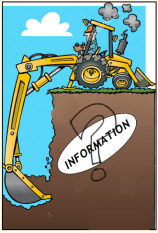
🔎 Qs that look below the surface to the heart of the matter, so that every answer leads to another one. Continually searching for more insight, the best results come from joining 3-4 relevant elements of a subject, to get something far more pointed & powerful (“Why did you want to go to the Middle East at that time”? // MORE….)
They’re best used when dealing with someone who is being evasive, or when trying to understand a deep issue. They’re usually CLOSED, looking for clarity about what someone’s saying, or good for getting to the root cause of a problem – by drilling down fast. Probing the cause of a problem may require going down several layers. Asking “WHY” after each answer – 5x – can be very revealing. Most people don’t consciously know they have deeper & deeper ‘reasons’ until asked.
NEXT: TYPES of Qs #1d


