ACoAs – Fear of Commitment (Part 6b)

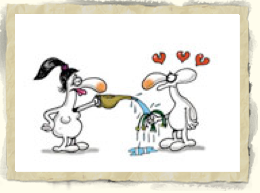
too much loveALL THAT ATTENTION makes my head hurt!

PREVIOUS: FoC #6a

SITE: “How to Cure Commitment Phobia” – NLP ‘secrets’


3. SELF-SABOTAGING re-enactment
(cont)
Some POSITIVE things that interfere with our willingness to Commit :
a. Fear of self-care / b. F of being treated well & loved / c. F of our Power

d. F of Visibility. To the WIC, C. to anything means everyone can see us, in all our imperfections & ‘badness’.
If we combine Fears OF : Abandonment + Compromise + Losing Control + Making mistakes + Responsibility, we end up with a deep terror of being fully visible.
It would mean exposing ourself to the whole world as undeserving frauds, as “Who do you think you are?” echoes in our head. The assumption is that everyone else is also like our family, who will punish us for daring to have an identity different from theirs.

e. F of Receiving To the WIC, C. to others means making oneself vulnerable.
• Receiving
exposes us to good things we never had before, which opens the floodgates of need & longing, which will drown us!
We’re hungry for recognition & nourishment, but are forbidden. Our injunction against Receiving is bone deep, especially for the Hero & Lost Child.
TOXIC Rules include:
“Do everything yourself / I’m not important or valuable / I have no rights / No one actually sees me….”.
To ACoAs, Receiving IS: > breaking family rules, > being weak & needy, > selfish & greedy, especially when others are suffering, > getting something I don’t deserve, > arrogant, presumptuous….

2 broad categories given to
🔸 Receiving something because we actually asked. Being direct about what we need is not only forbidden by the PigP, but the WIC also believes that: 👎🏽 If we have to ask, then getting it doesn’t count!

But asking is appropriate. Even infants who can’t talk let feelings be known, while being totally dependent on adults to know & respond to their needs.
Instead, most of us had narcissistic, unavailable & weak parents who were not attuned.  So we’re still stuck back there, in the emotional infant-toddler stage, waiting, waiting…..
This passivity is not appropriate for adults. It is our responsibility to know what we need & then ask for whatever we can’t supply for ourself.

surprise gift🔸 Receiving something without asking, from someone generously offering time, attention, gifts….. because they want to! Naturally, with our background of abuse & deprivation, the WIC doesn’t believe anyone would give us something ‘just because’. Since we feel unworthy, everyone must have an ulterior motive, & it’s up to us to figure out what they want.

f. F of Success – To the WIC, C. to achieving our deepest goals means the sure loss of a connection to our family. (See Point c. in #3a). This refers to fulfilling our heart’s desire – what we were born to do. But even if we’ve managed to follow the Right Path, we’re more likely to keep from being as successful as we’re capable of – so we “Don’t get too big for your britches”! Full success would mean disobeying a basic Toxic Rule that “You always have to struggle, but never get there” !

g. F of Peacefulness. To the WIC, C. to anything good means being bored to tears. ACoAs are adrenaline junkies, ‘addicted to negative excitement’ (Ennea-type 7), always creating or inviting situations that make life more complicated & stressful.
This can include those of us who are isolated & withdrawn, whose form of excitement is mainly internal – the mental ‘spinning’ of obsessive self-hate & worry. Both types create unnecessary drama, re-enacting how our parents functioned + the chaos they created. Screen Shot 2015-08-22 at 8.55.38 PM

• To be calm, quiet, peaceful makes no sense to ACoAs & make us anxious! 🧐  Without constant ‘agida‘ we feel empty, which we call boredom, but is actually the result of being emotionally numb.

Getting used to inner Serenity takes time, with persistent love & patience. Whether the unconscious compulsion to be a ’drama queen /king’ is blatant or camouflaged, it’s up to us to replace it with a saner way of life.

h. F of Higher Power (God, Spirit, the “Universe”….). To the WIC C. to any form of ‘power grater than ourselves’ is guaranteed obliteration (death of Self). ACoAs are ‘afraid of authority figures” (Laundry List). John Bradshaw pointed out that children transfer their experiences with parents (the original ‘gods’) to their concept of the true Higher Power. If they were dangerous – then obviously so must God be. Not!

NEXT: Recovering from FoC #1

ACoAs – Fear of Commitment (Part 6a)

dating DATING IS HARD WORK!
I always have to be ‘on’

PREVIOUS: FoC – #5


2. RE-ENACTING (a-j)

3. SELF-SABOTAGING re-enactment
There are also POSITIVE things that interfere with our willingness to Commit, such as :
a. Fear of self-careTo the WIC, C. to ourselves means having to give up the fantasy that someone will come along & rescue us.
12-Step Programs remind us that to truly progress, we need to put our Recovery first, before all else – particularly true for newcomers.

♥️ Commitment to ourself:
• requires the guts to go against all our early training, managing the resulting guilt & backlash
• means re-defining terms like ‘selfish, normal, fair, family, love’….
• means talking to the WIC every day, Meetings, 2-handed writing, books, therapy…. as much as possible.
Once our Inner Child trusts that we’ll consistently show up for it, making a commitment to others won’t be so scary
self-care
➼ If you’re in Integrity – true to Deepest Self – & are accused of Selfishness, it simply means you’re not doing what the other person wants.
Don’t let someone guilt you into betraying your values, observations & beliefs. You can comply with their wishes if it suits you, but not from FoA

b. F of being treated well & loved. To the WIC, C. to anything or anyone positive, means having to feel the contrast between the suffering our family (& others) put us thru – against – now being seen & heard for who we are, treated with kindness & respect. We start to understand what could have been, in a saner family. Painful & enraging.

• BUT we don’t want to be disloyal to our parents, afraid to hurt them. After all, they said/say they love us, right? How can we admit otherwise?Yet many of us actually believe that wanting to be loved is a character defect!  Infer all, if they couldn’t – how dare we still want something we have no right to?!

But being loved is a fundamental & universal human need, which we had very little of when we needed it the most! So now we’re attracted to & stay with PPT that are either blatantly bad for us, not actually bad but unsuited to our True Self, or which only partly meet our needs. Screen Shot 2015-08-22 at 7.21.10 PM

• We’re afraid to  grow up, afraid to be ‘vulnerable’.
Being treated with consideration, patience, admiration, encouragement…. forces us to FEEL the abandonment we grew up with – how much we missed out on, & to think: “I could have had a V-8!” – which means : “I didn’t cause the pain I grew up in. With healthier parents I would have been safe & loved!” 😢

c. F of our Power – To the WIC, C. to our own strength means eclipsing family members, so in some way destroys them. 
🔥 Any sign of ‘stepping into our power’, being smart, knowing our rights & being able to shine was considered arrogant, presumptuous, even sinful.  Beside all the verbal & physical abuse for just being a normal kid, many of us got smacked down badly if we ever let some of our natural strength out.

😡 The other down side of showing competence & strength as a kid was that one of more of the damaged adults used it – like a nightmare octopus – to feed off of us! (Post: “Personal Power”)invisible

So, between being abused and used – we had to hide most of who we truly were, & adapt to what would get us through.
Expressing our strengths as a kid would actually have meant being :
– a disruptive threat to the whole dysfunctional system
– a signal they might no longer be able to ‘mess’ with us
– an attempt to disengage the symbiosis, triggering THEIR FoA
– highlighting the adults’ weaknesses & limitations
– usurping the narcissists’ limelight

That left us invisible to ourself – not knowing what we’re inherently capable of, unable to commit or connect in a genuine way. And our co-dependence tells us that if we outshine others, we’ll be bad for making them feel bad about themselves. Then they won’t like us, plus we’re terrified of their envy-backlash.

🌀 And, now – If we do get an inkling of our healthy power, so foreign & undeserved, it can set off panic – at first . To let others actually SEE us feels life-and-death dangerous. But as we continue to inhabit our natural skin, we become more & more comfortable.

NOTE – Unhealthy responses from others & our resulting terror ONLY happens when dealing with very wounded / abusive people!

NEXT: FoC – #3a

ACoAs – Fear of Commitment (Part 3)

FoC I KEEP TRYING TO CONNECT – but no one seems to want me!

PREVIOUS: ACoA – FoC, #2


SITE: Commitment Phobics – playing out a dysfunctional family role

Some REASONS for FoC

RE-ENACTING (cont.)
a. FoA /  b. F of leaving family / c. F of being trapped

d. F. of responsibility
as kids To the WIC, commitment (C) meant we had to be responsible for everyone & everything, & no one taking care of us. We were forced to be responsible (R) for our unhappy angry, crazy, drunk parents, & sometimes our siblings. Many of us had to be the ‘designated adult’ even when we were very little, because of their incompetence, selfishness & addictions. We got the RULE loud & clear “Everyone else’s needs are more important than mine”.

e. F. of losing control – OPPOSITE of being ‘in control’, of ourself & our life, which eliminates being able to fully commit. To the WIC, C. to anything  -means many ‘unbearable’ things :
— accepting how things really are
— having to move on
— ‘allowing’ others to be different from us
— giving up absolute autonomy or of getting our way….

We violently resist the middle “A” (Acceptance) or any suggestions to “let go – with love, let go & let God, let go – with sadness, disappointment, anger…” – any way we can, but LET GO.

We believe that WE have to be constantly alert to preventing others from having power over us, and to stop the ‘craziness’ of addicts from falling apart and narcissists from engulf us. Many of us kept trying to do this in our original home – without success. And some of us still do, no matter how futile or unnecessary!

ACoAs project our S-H & paranoia out on the whole world, perpetuating our deep fear & mistrust. As adults, being controlling is a substitute for having real boundaries – mental & emotional walls the WIC thinks will protect us from actual or imagined dangers.

• If we were raised in an uptight, controlling environment – we’ll either rebel & want no limits at all, or follow the family pattern & be uptight, rigid & overly-fussy..
OR
• If we were raised in great physical & emotional chaos, many of us will expend all our energy as adults trying to keep people-places-things (PPT) in a tight grip. The assumption is that if we don’t, everything will spin out of control, even if the present day circumstances are actually much more manageable.

In any case, which ever style our personality leans toward – will be greatly influences by birth order & our Toxic Family Role (Hero //  Placater), but will also have a great deal to do with our native Type

Needing to control everything & everyone in our environment is both a way to prevent others from getting too close (intimate), as well as trying to keep them attached to us.
🔉 Overtly: Telling everyone what they should be doing, feeling & thinking – that it’s our way or the highway.

Being pushy, aggressive, ‘difficult’, demanding…. is presumptuous & insulting – the controller’s conviction that they’re the only one who knows how to do things, knows what’s best, what’s RIGHT, & how things should be done!    See Posts: “Controlling & Abandonment” //  “ACoAs – Getting controlled

🔇Covertly: Many ACoAs are sure they’re not controlling, because they don’t recognize how they do it, since it’s indirect & sneaky – by omissions, withholding & people-pleasing.
in controlSome ways:
– BY consistently denying oneself (needs emotions, opinions…) in favor of another. It’s a way to manipulate how someone behaves & how they feel about us, or prevent them from leaving (abandoning us).
– BY withholding – affection, communication, decisions, preferences….
– BY always being a victim, sickly or incompetent, so others have to take care of us or clean up our messes
– BY rescuing, people-pleasing…., trying to change someone or something into what we want, so we won’t have to leave & start over

NEXT: FoC, Part 4

ACoAs – Fear of Commitment (Part 2)

acoas fearI DUMP ON ANYONE who tries to love me

PREVIOUS: FoC – ACoAs #1

SITE:10 most common fears” & more….


1. ORIGIN

2. RE-ENACTING (cont.)
As stated in Part 1, besides ‘close’ relationships, Fear of Commitment (FoC) also shows up as not giving our all at school or work, at home or in public…. It’s a fear of giving our best, convinced that our best will always be considered “not good enough”. That leaves us ashamed, lonely & scared.

Q :  ‘Not-good-enough’ & always being wrong – according to whom???
Ans : Original family, maybe peers, religion…. As long as our WIC is running things (via beliefs & emotions) we’re stuck in the past, assuming everyone will treat us exactly like our family did/does, even when we’ve had positive experiences to the contrary.

Many ACoAs long for a loving, steady relationship & a better over-all life. Yet no matter how hard we try we keep missing the brass ring. The WIC’s terror of reproducing the dangerous intimacy of our original Parent-Child bond is so strong it prevents us from finding the safety & acceptance we crave.

❤️ What stops us from creating our own strong, internal Loving Parent ? The kind who will pull the WIC away from the PigP, form a connection to a loving H.P., & prove there’s another way to bond with others – safely ?

Some REASONS for FoC
a. Fear of abandonment (FoA) – our most basic fear.
A = not getting enough of our legitimate childhood PMES needs met
, AND being abused in each of those 4 categories. This created the belief that we’ll always lose what we need & love.
So there’s no point in setting ourselves up for more pain by committing (C) to something we truly care about.  It’s one reason ACoAs are ‘best’ at what we like or love to do – the least.

It’s inevitable that FoA creates lack of trust. SO – if our parents & other important caretakers neglected & assaulted us, how can we possible believe anyone else would be dependable or care for us?

b. F of leaving family of originwe can’t C. to anything we need or like, if it takes us away from ‘them’. IF WE:
– are so ‘under their thumb’ that we’re not allowed to make our own choices, or let family pick for us (mates, career, where to live…)
– have emotional-incest ties to a parent, so we can’t have our own dyad
– are still dealing with a parent who’s an active addict, mentally ill or otherwise impaired, so we feel compelled to keep taking care of them, instead of ourselves

c. F of being trappedTo the WIC, C. to anything means :
— never being able have our own space to breathe, nor
— get out of any situation that doesn’t work out the way we hoped.

As kids we were chained to ‘them’, & the adults were trapped with each other – in dead-end jobs, with relatives they hated, & most of all trapped in their own damage. We swore we’d never let that happen to us, so now we never commit to anything or anyone.

♻️ Instead, we make our own prison because of :
• NO Options: not allowed to choose (lovers, friends, mates…) for ourself, so whoever wants us gets us, whether we actually want them or not

come here-go away• NO Boundaries – automatically disappearing / losing ourself when around others, especially a mate. Not having access to our True Self, we don’t know what our needs, wants or tastes are, so we go along with whatever others expect, want, demand, imply….
This makes us feel suffocated, ‘swamped’, overwhelmed when we / they get too close.

• NO Freedom: we’re stuck because, along with our own FoA, we’re not allowed to leave one of our toxic family rule: “If you don’t like you have to stay”.
ACoAs react in one of 2 ways:
– either stay way too long in bad or unsuitable situations OR
– compulsively come & go, isolate or just keep running
⬆️ “Come here-Go away” dance of FoC (see ‘Boundaries’)

NEXT: FoC – Part 2b

ACoAs – Fear of Commitment (Part 1)

chasing the alcoholic I REALLY WANT TO,
but I just can’t get myself to do it!

PREVIOUS: Fear of Commitment – general (#2)

QUOTE: ‘The worst thing isn’t fear of commitment – the worst thing is being with the wrong person because of fear of loneliness”. ~ ANON


1. ORIGIN
– the basis for this fear (FoC) is the fear of intimacy, ie. “in-to-me-see”.
• In general, INTIMACY is the mental & emotional closeness between 2 people which allows each to know the other person behind their defenses or socially acceptable mask. Sexual intimacy may or may not be included.

a. But initially, it’s the intimacy between a child & its mother. From the very beginning of mother-childlife, each child is totally dependent on its primary caretaker(s), & therefore totally vulnerable to the adult’s plusses & minuses.

If the mother (or substitute) is an active addict, controlling, cruel or crazy, depressed, ill, distracted, insensitive, manipulative, raging, scared, (usually some combination) —
— then the child will be in an intimacy double bind:
☼ on the one hand, desperately needing the parent to love it, protect it & take care of all its needs
☼ on the other, emotionally & intuitively aware that the connection with that person is totally unsafe & therefore terrifying.

🌀 In this case the child is trapped in this most intimate of all relationships, which is truly dangerous to its well-being, but inescapable. Being raised with unreliability & chaos inevitably creates a lack of trust, which then becomes the model for all future relationships, creating a deep terror of intimacy.

b. In most cases we witnessed one or both of our parents:
— be unable to make a commitment – to each other, to their children, to work, to personal growth…. OR
— be committed to work instead of relationships (us), to their spouse but not their children, to their addiction & nothing else!……
…… so we didn’t have a role-model for the emotional & spiritual requirements needed for consistent reliability

• Sometimes a child has another parent, older sibling or other relative who are more available & attentive than the primary. But if they are part of the same family, they too will have narcissistic damage & be limited in how much emotional safety & love they can provide. Often this ‘better’ person will either leave, die or turn on the child at some point – multiplying the abandonment pain.

All roads lead to Rome” was a familiar statement to the ancient Romans, & still is to all roadsmodern-day History students.
The ACoAs version is: “All roads lead to Abandonment!”. This fear is the bottom line for us, governing all our responses to the world. So much so that we can even feel abandoned by the end of a book or movie we feel intensely connected to!

• Whenever we beat ourself up, feel distrustful, hopeless or obsessive, are terrified something bad will happen to us…..  we’re tapping into old abandonment pain (E).
Given how much abuse & neglect we experienced as children, it makes sense that the WIC would believe (T) that Ab. is the only possible outcome for us, forever!
SO – why bother committing to anything, if we’re always going to mess it up or have it taken away??

2. RE-ENACTING  (F=fear)
➼ Healthy : Making a commitment to something or someone means showing up regularly, being self-motivated, taking risks, not knowing everything, asking for help along the way, having rights…. all the things we’re not allowed!

confusion• The ACoA’s WIC has a whole trunk-full of reasons for FoC, even when we don’t have words for it or are aware of the WHY.
As adults, this fear is perpetuated by Self-Hate & weak or missing Boundaries. We can apply the following issues to PPT (people-places-things), even though the focus here is mainly on relationships.
It shows up as:
– Confusion (I don’t know what I want, who I am)
– Indecisiveness (should I or shouldn’t I?)
Perfectionism (I have to know it all & do it right – the first time!)
Procrastination (maybe later, but secretly – maybe never)

NEXT: FoC – Part 2

Fear of Commitment – General (Part 2)

love distancingI WANT TO STAY WITH HIM but he only wants freedom

PREVIOUS: Fear of Commitment (#1)

POSTS:Relationship Stages” // “Unrealistic expectations

SITE: Overcome fear of commitment
(+ Hypnosis tapes)

⚑ 
GENERAL: Fear of Commitment (FoC)
⚑ WAYS of AVOIDING Emotional Commitment

⚑ SYMPTOMS of FoC
 When reading the following list – & holding your WIC – picture something you find hard to commit to – not just relationships, but anything you’re afraid to do or continue with. How many of these items apply? but without S-H!

1. IN OURSELVES
a. Mental (including CDs)
• Compulsion: overwhelming impulse to flee the situation, although the assumed danger is only in your mind – tough to understand or resist
• focus on bad / scary images & movies about the subject shown
• obsess about the subject (whatever you’re avoiding)
• trouble thinking about anything other than ‘it’
OR
• are sure you have a fatal illness (aids, cancer…) but don’t
• no motivation, can’t make decisions, confused
• scared of fainting, losing control or going crazy
• feel “unreal” – detached, not yourself

b. Emotional
• Anticipatory Anxiety – persistent worry about upcoming events that involve any form of commitment
• Moods: high levels of anger, sadness, fear, hurt & guilt
• Physical Apathy: lethargic, depressed, sleepy
• Terror: constant overwhelming fear of the ‘issue

c. Physical
• Breathing : shortness of breath, smothering sensation, feeling of choking

• General: hot or cold flashes, temporary muscle weakness
• Gut: nausea or stomach distress, diarrhea
• Head: dizzy, unsteady, light-headed, faintfear-sick
• Limbs: trembling, shaking, tingling, joint pain
• Physical Apathy: lethargic, depressed, sleepy
• Torso: palpitations, pounding heart, or numbness, accelerated heart rate, chest pain or discomfort

♥︎ Relationships
Gamophobia – fear of getting married, assuming it will inevitably be harmful. It’s found more often in men, because the real or potential trouble they’re afraid of may have greater consequences socially, financially, legally & personally.
Of course, FoC a very common fear is all types of ACoAs, & can extend to any relationship, even those we’d like to have.

• Old ➕ New painful / traumatic personal experiences, as well as observing the negative effects of domestic violence, divorce, parents never married…. in others – can lead to FEAR of being trapped & abused, an inability to trust, abandonment terror, depression….

• Long-term inability to be feel SAFE /vulnerable & show one’s ‘weak parts’ is a sign of a gamophobiapersonality disorder. In severe cases, we may like or love someone, but IF the other person returns our affection & wants to be together permanently, Gamophobes can easily change our attraction into fault-finding, disdain, even hate.

This happens more often unconsciously, using the other person’s ‘limitations’ as an excuse to push them away. Turning love into hate, or over-valuing & then under-valuing a partner – without a legitimate reason – is a defense mechanism. Often, the sufferer knows their fears are unreasonable or exaggerated, but feels powerless to change.

2. IN OTHERS
FoC in Women – While they’re often portrayed as ‘commitment hungry/crazy’, changes in social & moral rules make it easier for them to act out this fear, no matter how well disguised. (More….)  (“She Won’t Commit”).

Women who are socially awkward, have social anxiety, fear of being trapped, or in the closet – can now stay single & not be judged (except by conservative people & communities!).
➼ Biggest hint that a “Stayer” type woman is also commitment phobic – is repeatedly choosing & then clinging to ‘unavailable’ partners!
(Love a commitment-phobe? Dating Tips For Men)

NOTE: In Part 3 – some of the symptoms for men apply to women as well, so go through them with that in mind.

NEXT – FoC – ACoAs (Part 1)

Fear of Commitment – General (Part 1)

fear of commitment I WANT TO MOVE FORWARD
but he/she doesn’t

PREVIOUS: Feeling Sorry for #3

QUOTEs: “Commitment is healthiest when it’s not without doubt, but in spite of doubt.” ~ Dr. Rollo May, psychologist
• “If you deny yourself commitment, what can you do with your life?” ~ Harvey Fierstein, actor, writer, director

DEF of COMMITMENT:
• an attitude of working very hard to do or support something
• a promise to do or give something, to be loyal to someone or something ongoing or permanent – if at all possible (‘Til death do us part’)
• an instance or the state of being obligated or emotionally driven
• an agreement to perform a particular activity at a certain time in the future, under certain circumstances

POEMby Ashbash 1/13/2005
happy old coule• Commitment is what transforms the promise into reality
• It’s the words that speak boldly of your intentions, & the actions which speak louder than the words
• It’s making the time when there is none
• Coming through time after time after time, year after year after year
•  Commitment is the stuff that character is made of
•  It’s the power to change the face of things
• It’s the daily triumph of integrity over skepticism
➼ When I say I love you, I mean that I’m committed to loving you even when it’s hard.

⚑ GENERAL
 Fear of Commitment (FoC) is usually about relationships. However, the issue is much broader than that.
Lack of commitment shows up by not pursuing or completing :  education, career, hobbies, work projects, ones hopes & dreams, ideals & ethics – as well as relationships…. anything we’re procrastinating about, or avoiding.

“Putting things off” may  :
• be something we want very badly but which our unrealistic or inaccurate beliefs (CDs) keep us from pursuing
• come from trouble deciding on anything – where to go on vacation, what to eat in a restaurant, which courses or job to take, go to the party or stay home….
…. because we don’t know ‘who we are’, wanting to do everything at once, afraid someone will be mad at us, afraid to make the wrong decision…. (Posts: Putting things off // Procrastination)

⚑ WAYS of AVOIDING Emotional Commitment (using T.E.A.)
1. Mental (Thoughts)
• afraid to lose out on other (possibly better) options
• afraid / refuse to talk about a future with a partner
no in love• compulsively having one foot ‘out the door’, thinking or saying “I can always leave if you….”
• focus on the negatives of the other person, continually criticizing / hurting our partners

• have a long list of impossible requirements, too high expectations
• make unrealistic assumptions about that we’ll get from the other person or from the relationship

2. Emotional (Emotions)
• always depressed, needy or angry, keeping others away
• always looking for / chasing new sexual partners, no matter how unsuitable, unhealthy, unstable (even when in a relationship)
• form attachment only if no long-term demands are put on us (moving in, marriage, children…)
• not being worthy, afraid to make any mistakes
• over-reactions, mood swings, unwilling to talk about emotions
• only have a series of superficial relationships that can’t go anywhere
• unjustified jealousy, always worrying about ‘being left’
• unwilling to risk — trying new things, moving out of ones comfort zone

3. Physical (Actions)
• date only ‘unavailable’ people (addicts, married, narcissists, long distance…), &/or people they’re ashamed of
• frequent job/career changes, &/or address changes

• isolate & avoid situations where they could meet potential dates/lovers… from fear of criticism, loss of freedom &/ or identity
• leave too soon, before giving it a change – find fault with everything, run at the first sign of conflict or power struggle
• often backing out of plans at the last-minute

NEXT: Fear of Commitment (#2)