Psychological DISORDERS – Neuroses (Part 3a)

I’M NOT AS MESSED UP 
as some people I know!

PREVIOUS: Disorders #2b

SITEs: “Why being neurotic could actually be a good thing”

⬅”THERAPY SESSION” by DMT


1. HEALTHY

2. NEUROSES – now called “depressive or anxiety disorders”, are a group of mental dysfunctions which do not interfere with a person’s ability to think rationally or function day-to-day, but definitely cause distressing anxiety.
PSYCHOLOGICAL
Freud said they’re a result of an extremely painful experience earlier in life, which was never processed consciously (rape, witnessing a traumatic death, attacked by a person or animal….)
Jung added they’re caused by a conflict between conscious concerns (like obligations) & unconscious content (unacceptable thoughts, wishes, emotions….)

Trait Neuroticism (TN) one of the 5 personality components of O.C.E.A.N. All vertebrate animals – including humans – have a “negative affect system” to avoid dangerous or punishing situations. TN includes individual differences in sensitivity & activity of this system, ie. how painful someone’s emotions are & what kind of responses they have to upsets (affect=emotion)
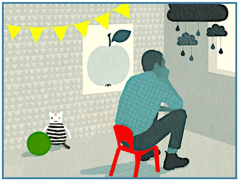
People tend to be more sensitive, so are high in TN & more likely to develop depression & anxiety, especially when exposed to ongoing stressful living conditions without having the skills to process their distress in a safe, validating interpersonal environment. They can either avoid the disturbing person /situation, or shutdown from frustrated needs & losses. AND they can either turn their pain in on themselves, or turn it on other (S-H or attack).

Karen Horney in “Our Inner Conflicts” said neurotic needs move us:
Toward others: who look for affirmation & acceptance from others – needy, clingy, looking for approval & love
Away: those who are hostile & antisocial – aloof, cold & indifferent
Against: those who are hostile, with a need to control others – difficult, domineering & unkind

❎ MEDICAL / SOCIAL
• Scientific studies show a correlation between neuroticism and a specific human gene with its corresponding allele pair. These cell components help to control the amount of serotonin released into the body, which when delivered unevenly, will continue to stimulate surrounding nerve cells, causing neurotic symptoms (anxiety)

• Not surprisingly – a 1998 study of over 9,500 UK residents found a higher number of neurotic disorders among poorer people. It’s possible that genetic factors predispose an individual to anxiety & neurosis, with outside factors triggering the symptoms.(MORE….)
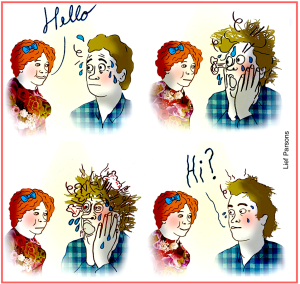
IMP: Neurotics have a consolidated identity (not fragmented – being mostly in touch with reality), are well aware that something’s wrong (unlike PDs & psychotics), & can use ‘normal’ defenses (like CDs).

• With neuroses (n.), only a part of the personality is effected.  A person confronted with their feared issue (big dogs, snakes, airplanes, clowns, public speaking, visiting family….) will inevitably have an intense desire to avoid it. But their way of dealing with it is self-defeating, because it prevents the person from meeting their long-term needs (feeling safe) & goals (achievements).

✰ The main symptom is excessive anxiety, along with one or more physical issues not based on illness (tight muscles, palpitation, headaches, sleeplessness…..), & may include anger & irritability, co-dependence, compulsive self-defeating behavior, low self-esteem, obsessive harmful thoughts & perfectionism.

Re. traumatic events – without psychological & spiritual help at the time of the originating stressor (rape, severe accident, death of parent, best friend, classmate….), the unconscious suppresses unbearable emotions, & sometimes even the memory of the event. Whether the person remember or not, their nervous system continue to experiences it as it did originally, becoming an ‘invisible injury. This makes dealing with their specific fear very difficult, while others parts of their life function relatively well. (MORE…..)
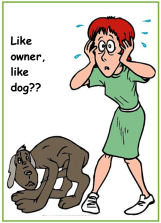
Neurotic reactions can show up in one or more areas :
♟ Beliefs: (‘verbal cognitions’), intensely protected rigid beliefs about ourself in the world, developed to justify actions & reactions
♟ Defenses: trying to manage the tension between conflicting internal goals, & filter unacceptable ‘stuff ‘ out of full consciousness, but doing so at significant cost
♟ Emotions: generally either over-regulated (suppressed & not expressed) or under-regulated (hyper-sensitive & over-expressed)
♟ Habits: automatic or ritualized patterns of visible actions used to calm anxiety & provide a (false) sense of security
♟ Relationships: developed rigid styles of dealing with others, & can have extreme reactions when not getting the connection they want/need

NEXT: Psych Disorders #3b

COMMUNICATION Categories – Topologies (Part 4)

I HAVE SO MANY OPTIONS for connecting with others

PREVIOUS: Categories #3

QUOTE: “A genius is capable of making the complex simple.
An idiot is capable of making the simple complex!”


CATEGORIES of Communication
(Comm) cont.
4. Re. SYNERGY levels /// 5. Re. WHO the participants are // 6. Re. Focus of STRUCTURE

7a. Re. MECHANICAL Networks (as of 2017)
a. Local Area Network of computers in a localized area, such as office or school. All are connected through the LAN via a hub or a switch. A large number of computers drag down the speed of a LAN

b. Wide Area Network – Covers a large geographical area, usually made up of multiple computer networks. The Internet is a WAN that relies on a complex global interface of service providers using routers, switches, modems & servers, which carry data, media & Web pages

c. Public Switched –  A network of circuit-switched telephones – basically the phone version of the Internet. It’s mainly digital, which includes services for both cells & landlines

d. Telecommunication – The transmission of signals over a large distance, usually by electromagnetic waves. It’s used for TV, radio & phones, as well as computer data

e. Wireless – It provided info transmission & network connectivity to devices without cables or wires – such as broadcast radio – over long geographical distances. Wi-Fi is for computers, & Bluetooth is a shorter-range version, which connects with a nearby mobile phone

f. Satellite – It comes in several types, such as those used by phone companies. Some provide navigation info, military surveillance or weather data. Others provide TV programming, radio broadcasts, & broadband Internet service

TOPOLOGIES : the ways component parts are interrelated or arranged
NODE:  hub or switch // workstation or other device

STAR – a network where each component is attached to a central node, with a point-to-point connection. This reduces the probability of network failure. All peripheral nodes can only communicate with all others by transmitting to, & receiving from, the central node

The BUS – each node is connected to a single cable – the network’s backbone , via interface connectors. A signal from the source travels in both directions to all connected machines until it finds the intended recipient. If the machine address does not match the intended address for the data, it ignores the sent info

RING – a Bus topology LAN in a closed loop, forming a single continuous pathway for signals going through each node, with data only traveling around the ring in one direction. When data is sent from any one node to another, it passes through each intermediate node until it reaches its destination

MESH – a LAN, WLAN or VLAN. In ‘full mesh’, each network node is connected directly to all the others. In partial mesh, some nodes are connected to all, while others are only connected to those nodes they exchange the most data with

Mesh networks play an important part in the Internet of Things (IoT). Unlike the star, which require a router to deliver Internet service, network nodes are decentralized, so they can “talk” directly to each other without requiring an Internet connection. A big advantage is that there can’t be a single point of failure (SPoF).

IoT – In 2016 30 cities (including Phoenix, Dallas & Fort Worth) were connect to a new M2M network specifically geared towards the Internet of Things (IoT), by Ingenu, the company building the project. The Machine Network is the “largest exclusive IoT and M2M network serving 100 million users in the U.S. covering nearly 100,000 square miles.”
The technology is designed to avoid interference by being able to self-modulate within the band to find a clear signal at both network & device levels

HYBRID networks – combining 2 or more basic topologies, so the resulting network is different (not bus, star, ring…..). EXPs: A tree network is a star interconnected via a bus , but a Tree connected to another Tree is still topologically the same, not a distinct type. A star-ring network consists of two or more ring networks connected, using a multi-station access unit (MAU) as a centralized hub. 2 other hybrids are hybrid mesh and hierarchical star. (MORE…. Wikipedia)

EDITORIAL comment: NOTE all the acronyms!
NEXT: Comm. Categories #5

COMMUNICATION Categories – Focus (Part 3)

HOW CAN I BEST
get my point across?

PREVIOUS: Dealing with conflict #2 

⬅️ Designed & assembled by DMT


CATEGORIES of Communication (Comm) cont.
3. Re. FORMS of Comm.  /// 4. Re. SYNERGY levels

5. Re. WHO the participants are
a. INTRA-personal comm – mental conversations with oneself, silent or out loud. It’s a form of thinking, where we consciously pay attention to certain information, to process & analyze a situation. This strategy is particularly useful when we need to make important life decisions, or deal with a conflict.

EXPs: To-do lists, journals, inventories, notebooks, calendars, a reminder to finish something, -OR- mentally congratulating yourself on a job well done, planning a project, or “Positive self-talk” to encourage & improve self-esteem

• In biz: An exchange of info among departments. Frequent, in close proximity & only dealing with internal company issues

b. INTER-personal Comm – only between two people, & usually face-to-face. It can be impromptu or planned, & it’s meant to share / exchange information, feelings, experiences, plans….
EXPs: Conversation between you & your BFF, a text message from mom, a meeting with a boss or teacher, explaining something to your child…..
SUBDIVIDED into: Assertive (strong but not harsh), Non-assertive (weak, disrespecting self) & Aggressive (angry, hostile). (MORE…..

c. Small Group Comm –  takes place within private gatherings or work teams, where everyone is encouraged to participate in discussions. The purpose is to provide info that’s of common interest to the members, or to get the opinions of each participant – to arrive at a decision, solve a problem, plan a project or event, discuss a result….
EXPs:  a family dinner, hanging out with friends, a class discussion, a football huddle or post-game review, executive committee meeting, Meet-Up.com, 12 Step programs….

d. One-to-Group Comm – involves a speaker who informs, persuades or motivates an audience – a spiritual teacher giving a sermon, a candidate giving a campaign speech, a football coach giving a pep talk, a college lecturer….

e. Mass Commone or more individuals directing a message to a large audience at the same time, often made up of members not in the same location, & who have a wide variety of characteristics. It can be provided electronically such as thru TV, internet, newspapers, PHS announcements…. 

OR it can be a live event (rock bands, opera in the park, political rallies or protests, Billy Graham Crusade…. in a huge space). In such cases the person(s) on stage needs to have special skills & charisma to hold the audience – talent, voice, posture, phrasing & timing, relevant info, media material, props ….EXPs : requests to support a cause, to donate time & money, or may offer some benefit, such as – health education, spiritual guidance, emotional release, call to social activism…..

6. Re. FOCUS of STRUCTURE
a.   Known to Unknown
Comm starting from info which the listener already consciously or subconsciously “knows” & accepts, then moving into a clear explanation of new or unknown info.

Using this order means the speaker understands the other person or group’s real-world experiences, & is going to present possible answers or solutions to deal with the current situation or problem.
This helps to form a Yes Set” in the listener’s subconscious, which encourages a tendency to accept that the speaker’s ideas & suggestions are correct, worth taking seriously, & acting on.

bGeneral to Specific
This approach starts with an overview of the big picture & general category to be discussed, who lets the listener know what’s being dealt with. Equally important is that it allows for a wide variety of possible items to be included, without identifying which one.
EXP: Animals / Cars / Emotions / Law Suits / Seating  ….

Gradually more details are added, giving the listener time to absorb what’s presented, like gradually moving down a funnel, which limits & curbs the amount of info given at each level.

c. Simple to Complex
This structure is the reverse of Point b. It requires the speaker to fully understand the ‘whole’ as well as its components, in order to lead the listener gradually toward an action goal or understanding of a big ‘concept’ – in small increments.

It counters the assumption that the listener already knows the issue being discussed. Unless addressing an educated person or group with highly specialized knowledge, each part needs to be described, adding & linking pieces in logical order, building up a picture of the topic.
EXP: It’s not helpful – or fair – to tell a child: “Be good”, without first identifying ‘good’ characteristics & behaviors.  (MORE….)

NEXT: Levels of Comm #4

COMMUNICATION Categories – Types (Part 2)

I GET ALONG BEST with people who get me

PREVIOUS: Communication, #1

QUOTE: “A man’s character may be learned from the adjectives which he habitually uses in conversation.”  ~ Mark Twain

↗️ “FORIGN STUDENTS” designed & created by DMT

CATEGORIES of Communication (Comm) cont.
1. Re. CONTENT (in Part 1 a & b)

2. Re.
AVAILABILITY to self & others
The Johari Window works best for groups because it allows for self-awareness & useful feedback. It can also be used to track the growth of an individual, in their progress towards intimacy in 1-to-1 relationships.

Even when we decide to take the risk of being open with others, doing so fully is much scarier & more complicated than most will admit. The chart shows what people know or don’t know about themselves, & what they reveal or don’t reveal to others.

JOHARI Windows  explained ➡️
GREEN: Initially, what is known & shared with others will be very small – should be!

⬅️ The longer 2 people or a group interact, the more the ‘windows’ change size for the better – IF they are reasonable healthy & well-meaning. The larger the Open section, the better the communication.

3. Re. FORMS of Comm.
a. Verbal – using words to deliver an intended message. While it’s still the most successful form, this makes up only @ 7-20% of all human comm! Effectiveness depends on clarity, grammar, vocabulary & writing style, plus the skillful use of the other 80%
• Written: brochures, contracts, formal business proposals, handbooks, memos, press releases…..
• Oral : face-to-face, phone, text, voice chat, video conferencing …. Can be either Informal, such as the grapevine & rumor mill, arguing a topic…. or Formal, such as conferences, debates, lectures….

b. Visual Aids: Use of color, drawings & illustrations, media, graphic design, typography…. Graphs & charts reinforce anything written, or can replace it altogether.

c. Para-language (non-verbal/gestural) : Physical ways to convey thoughts & feelings – the way something is said – such as expressing approval, interest or lack of it.
It includes emotion, intonation, pitch, style of speaking, stress, tone, voice quality & touch. Some research estimates tone of the voice accounts for 38% of all comm, 55% is from body posture & gestures, & only 7% from the actual words used. (MORE….)

EXP of shortcuts • shrugging = “I don’t know”
• crooking a finger = asking someone to come closer
• holding a hand up = stop / back off / enough
• laughing = I agree / I identify -OR- I think that’s ridiculous
• looking away =  I’m thinking -OR-  I’m lying / withholding
• patting = I empathize / “Poor dear”…
• tapping = Hello / Pay attention
• tone of voice = pleasure at seeing someone, – OR-
displeasure / anger about something
• wagging a finger = saying “naughty, naughty”

Other FORMS can also express one’s personality, social status & taste :
▸ Aesthetic comm & creative expressions – dancing, art work….
▸ Appearance, & style of dressing/ grooming
▸ Space language – owning paintings & landscapes
▸ Symbols – any religious or ego-building images
(From: Bright Hub Project Management)

4. Re. SYNERGY levels, via TRUST + CO-OPERATION
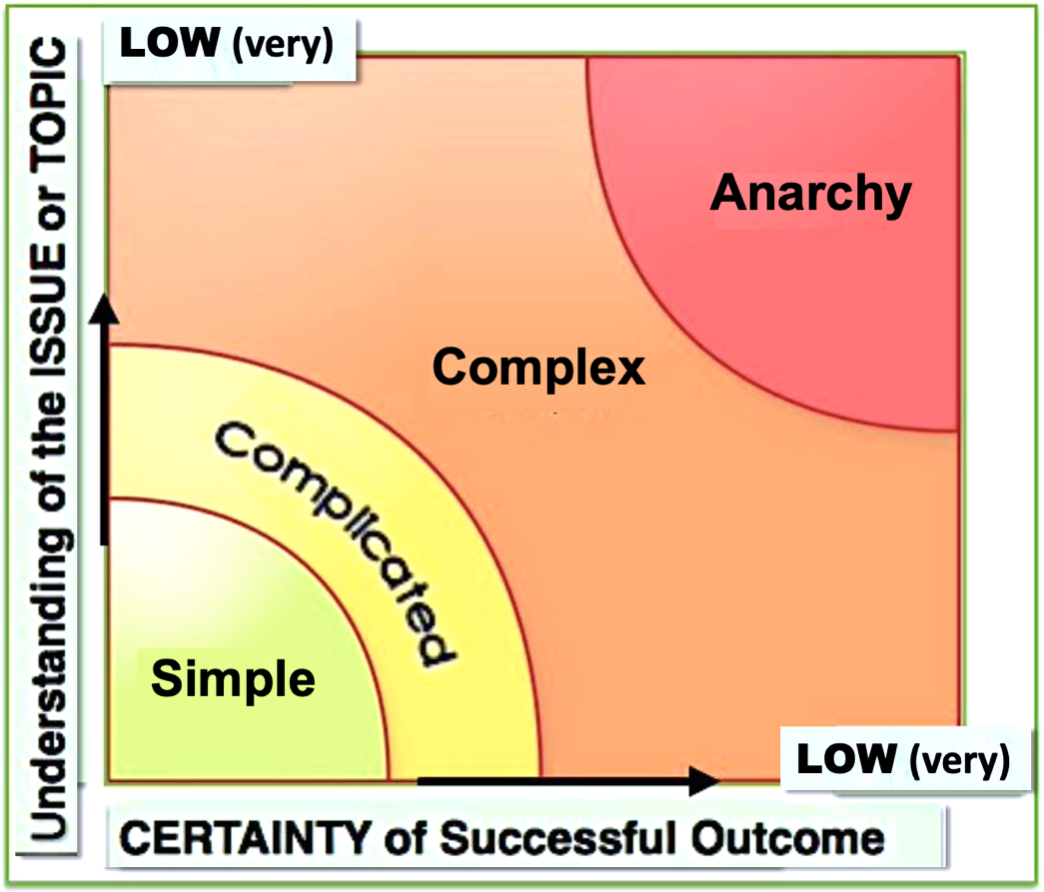
Synergy means that the whole is greater than the sum of its parts – so inter-actions between them create new connections. The result is not just another ‘part’, but the most catalytic, empowering, unifying & exciting outcome.(CHART)

LOW-Trust: These interactions are expressed thru defensive, over-protective & often legalistic language – used to ‘covers all the bases’, to indicate escape clauses & qualifiers (if…then) – in case things ‘go south’

MIDDLE: This is ‘careful’ communication, used by average/normal people, who have respect for each other, & want to avoid the possibility of ugly confrontations, so they’re polite rather than emphatic or confrontive. They might understand each other intellectually, but are not likely aware of their own underlying patterns & assumptions, so aren’t really open to new possibilities available from connecting with others

HIGH: Synergy allows interactions with creative solutions offered by others that are much better than any available at the lower levels. Here all participant know it, feel it & enjoy the outcome – practical, emotional &/or artistic. It means that 1+1 may equal 8, 16, or even 1,600. The possibility of truly significant gains & improvements in such relationships are so real that it’s worth the risk to let oneself welcome the unknown. 

NEXT: Comm Categories #3

COMMUNICATION Categories – Content (Part 1a)

THE MORE I KNOW
the better I can do

PREVIOUS: Dealing with disputes, #3

SITE: Barriers to effective Communication & Skills needed


DEF: 
Communication is the process of passing info & understanding from one person to another – which includes any behavior that results in an exchange of meaning.
 • It’s the sum of all the things one person does when they want to create understanding in the mind of another.
• It is a bridge of meaning, involving a systematic & continuous process of telling, listening & understanding.

ACoA Communication (comm)
IF we are being appropriate – we will comm. differently in different situations. So –
♟ the way we verbally play while watching a game together is not how we behave in a religious setting
♟ what we eventually confide in a good friend is much greater than what we let out at first
♟ things we tell our mate aren’t usually things we tell co-workers
♟ things we say at work may not be appropriate for our children to hear. (Posts: Relationship Continuum)

It’s sad that many of us say we yearn for emotional connection & yet adamantly push it away – spending much of our time —> monologuing / pontificating at, gossiping with, or chit-chatting about trivial or pointless topics.

🚩While these are used by most people as a type of social glue or social currency – it’s also typical of what passes for communication in alcoholic & other narcissistic households. Nothing ‘real’ is ever said or talked about – how each member feels or thinks, what drives their behavior, what their true Self’s  motivation might be…..

But at the other extreme are the emotionally & verbally starved ACoAs who desperately want to be heard. They’ll take any opportunity to “go deep”, as in spilling TMI to whoever will listen. This kind of sharing is necessary BUT belongs in 12-Step meetings, therapy & a daily diary. The alternative is to not talk at all.

In fact, many ACoAs are notoriously reluctant (refusing) to make light conversation (small talk) , meaning : the ‘normal’ sharing of mutually interesting but not earth-shattering experiences, tastes & opinions. They feel that only ‘serious’ counts – but is most often just dumping, the WIC without socially appropriate boundaries.

Careless over-sharing is a mistake – there is a time & place for the ‘heavy’ stuff. We say we want to be accepted, but then act inappropriately. Keeping things light in many situations makes us much more approachable & likable!

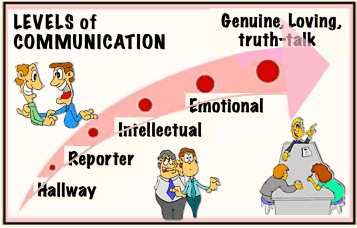
It’s true that healthy relationships – whether private or public – are based on some degree of Emotional honesty. And the deepest level is the realm of Spiritual communion – with oneself, others, nature & Higher Power. (4 Qs to Ask Yourself Every Day).

However, as powerful & precious as the Emotional & Spiritual levels are, they’re too intense & raw to sit with for too long, at any one time.
1. If our tendency is to get heavy too fast with another person – we need to set boundaries – with our Inner Child! It’s not appropriate to assume that someone is a ‘friend’ & then jump into telling our deepest thoughts & emotions (suffering, complaints…..), which is almost always about our S-H & dysfunctional family history.

2. In general, most people are simply not equipped emotionally to go ‘deep’ at all, & it’s not fair to spring such comm. on someone without their consent, or on those we know can not handle it. It’s disrespectful to others (our narcissism) to inflict our intensity on them. (from C. Gilkey)

NOTE: Small-talk is appropriate, from time to time, to keep things on the surface when with acquaintances, or with people we know have very little depth. It is also not a substitute for meaningful conversation with ’emotional peers’, no matter their age or level of self-awareness.

We need to learn that we are in fact fundamentally like everyone else – we share the same needs & desires, & even many times similar experiences. It counteracts our suspicion & isolation.
We also need a break from our own emotional intensity, which will help to balance us. And we may even learn something new!

NEXT: Comm. Categories #2

ACoAs – Dealing with Disputes (Part 1)


THERE ARE SOLUTIONS
to many disagreements
 

PREVIOUS: Being Right #5b


REVIEW
When there is a difference in taste, opinions, needs, goals…. between you & another person (or group) – it doesn’t automatically mean either you or they are wrong. Each one feels their version of events is correct, & for each person it may be. YOU do not have to give up yours – just to keep the peace.

But ACoAs tend to hang out at the extremes – of everything – including disputes:
↘️ either thinking others are always right & we never are, discounting our own point of view altogether (co-dependence), OR
↗️ that our way of thinking & feeling is the only right one, discounting everyone else’s altogether (narcissism)

In the previous set of posts we’re reminded to acknowledge & accept that everyone has their own angle on life & it’s never exactly like ours. So at the very least – we should consider what others have to say, seeing if they have a point – with can include something good we’ve never thought of! Then evaluate it in light of our experiences & personal preferences, & maybe agree with it – or not.

But, when you do express who you genuinely are & what you need or want —
— AND a someone important to you gives you a hard time, strongly objects, attacks OR tries to change you, tries to prevent you from pursuing or reaching a goal….
— you’re  likely to feel appropriate anger. But deeper than that will be sadness, frustration & loneliness.

UNHEALTHY
However, unless we’ve done a lot of our own FoO work to develop our True identity, then when we have an intense disagreement with someone where they’re angry at us (we’re hurt & angry too) – as ACoAs we will buy whatever they’re selling – outright – especially if they’re using narcissistic ‘logic’ to prove their point,

♻️ We’re left with the painful obsession about what just happened, which can go on for hours or days. We’re torn between outrage, fear & S-H. Was I right? or were they right? Should I apologize? What if it’s my fault? I can’t stand having someone angry at me…..

This kind of mental self-torture comes from not being clear about who we are (True Self) & fear of separation (abandonment), but most of all not knowing that we’re being abused & that we didn’t cause any of it !
If we stick around such people, without a strong UNIT  (adult & good parent), our WIC is intimated & continually re-traumatized. If we engage, we’ll alternate between dragged-out verbal fights & folding in childish helplessness. (Excellent Article : “Gaslighting & Spite“).

Dealing with unhealed people is always very frustrating & painful. Even more so if you do have a modicum of mental health:
🔸If you have the courage to object TO:
— any form of emotional abuse, lying about where they were
— something not done that should have been, because of  P=A
— insult her appearance, forgot to buy an essential staple – again,
— didn’t pick up the kids,  didn’t ____as promised)…..
🔹……AND the problem-person refuses to admit any responsibility or even a valid explanation for their behavior, but always makes it your problem, putting all the blame on you…… (See post: “P-A comments“)
🔶 you’ll be very angry, but mostly aware of being powerless to get your needs met from such a person —>EVER!

OUR unhealed REACTIONS – WE:
hold in hurt & frustration, letting it pile up, then explode. ACoAs are afraid of conflict, but blowing up makes us feel worse than if we dealt with an issue while it’s still relatively small

• blow up a small hurt or slight way out of proportion, then react to that. Many times “Message received was not Message sent”. ACoAs hear some things thru the lens of early family insults or school bullying, so a casual remark now can feel like a major attack

• are defensive (over-explaining, denying, lying….), instead of considering the possible validity of the other person’s objection or point of view about us. ACoAs hate being caught in an imperfection, error or mess-up

• refuse to even discuss a dispute, even if it’s presented in a reasonable way. Negative reason: feeling shame, guilt or arrogance (“not me!”)
Positive: knowing that no matter what you say, you’re not going to be heard, they’re going to get nasty, or you’ll always be made wrong.

NEXT: Dealing with disputes #2

ACoAs being ‘RIGHT’ (Part 5c)

I’M COMFORTABLE WITH MYSELF
whether I’m right or wrong!

PREVIOUS: Being Right #5b

SITE“Why always having to be right can poison your relationships”


IDEAS for changing the aBR pattern (cont)
• When you feel the urge to force your way on a person or situation, decide not to – just this once (each time). Go with the flow & see what happens
Notice whenever something is actually out of your control. If YES, then accept that.
How does it feel in your body – to not react? What can you learn about yourself? How can you make it an advantage?? HINT: You can relax more often!
Accept that there’s no such thing as control over PPT, only yourself.
(Modified from ‘Simple Life Strategies‘)

🙀 Every so often admit WHEN you’re actually wrong about something – but not if you’re not! If someone insists you’re wrong about something, & you’re sure how you feel about that specific issue, you can say so clearly with our anger OR just smile.
If that’s too scary to contemplate right now, then —
• you don’t have to say you’re wrong out loud, but consider admitting it to yourself later – when you feel psychologically/emotionally stronger / safer, OR
• maybe try admitting an error when it’s not about something important to your sense of identity, & only to someone you know won’t judge you – ever
AND:
• notice how often you get upset when someone doesn’t agree with you by implying you’re stupid or wrong). Take a breath, understand it’s either your WIC or PP reacting, & know that insisting on being validated is ‘off’
• if by any remote possibility you conclude you’re truly wrong about something, OR you reacted to a trigger by not being acknowledged, just sit with it for a little while
do NOT judge yourself & get angry if you’re reactive L.et it be an opportunity to learn more about your Wounded Child, the False Self you’re working on outgrowing.

You can say things like:
“I think I was mistaken about that // Yes, you were right about this // I got that wrong, my bad”….. it may come as a shock to you, & to others 😟. It can take courage & integrity, & is a character-building experience

• Letting go of the aBR compulsion is about having the serenity that comes from knowing what you are absolutely sure about & what you actually have control over , as well as accepting that other adults are responsible for what they think & do.
• Remind yourself they have the right to believe what they want, because they have their own point of view & experience.
• Work on being OK with the fact that not everyone will admit you know more than they, or that you’re right  about something – when you are. Maybe they feel threatened or jealous, really don’t understand your point, or are just being contrary.

IMP: Allowing others the right to be whoever they are doesn’t mean going along with anything they say or do. IF their way of being is unsafe or simply incompatible with you – you don’t have to make them wrong – just keep your boundaries & maybe even keep your distance!

Emotions are your Guidance System. When you’re uncomfortable, or anxious or angry – it could be that:
• something in the present is pushing your old buttons, so your wounded child (WIC) is being reminded of past abuses & abandonments, OR
• they are a warning signal that someone is mistreating you – no matter how subtle or indirect, OR
• something’s missing from the situation or relationship – something  deeply important to you that you need . HINT :  it leaves you bored, sad, annoyed, frustrated, lonely….)

NEXT: Being RIGHT, #5d

ACoAs being ‘RIGHT’ (Part 5b)


I GET SO MUCH MORE
from careful listening

PREVIOUS: ‘Right’ #5a

SITEs: “You don’t always have to be right” (hypnosis) = Purchase downloads

⬅ “The RIGHT WAY” by DMT


Being Right the RIGHT WAY (BRR)
*️⃣ the Opposite of being self-righteous (addicted to = aBR)
Being Right / honest ‘correctly’ is NOT —
• assuming we don’t know anything, or should just shut up
• berating oneself for all the years of unhealthy superiority
• having to always know exactly what’s true or accurate
• saying we’re always wrong /stupid /a f–up
• throwing out all the information we have in our mental data bank

🚧 🚦 NEITHER is it co-dependent people-pleasing, where we deny or ignore our own opinions, needs, emotions or desires! The only people who want us to do that are the PPs, P-As, active alcoholics & other narcissists.

The RIGHT WAY IS: 
• being open to the uniqueness of any given situation, & drawing conclusions from other perspectives (but not from angry, unhealed people!)
• keeping an open mind & heart, curious, willing to learn something new
• looking at the big picture rather than the immediate issue or situation
• seeing what’s in other viewpoints that might have a degree of validity
• staying ‘present’, being conscious & available for what the world has to offer us, which help to recognize where our next opportunity may come from
• willing to listen to what healthy & knowledgeable people have to say

☆ We may still end up sticking to our Truth – the best part of our core knowledge (“I know what I know”) – as well as revising damaged beliefs (CDs), thus finding saner ways to think about ourself & the world

• Daily practicing open-mindedness, paying attention & humility (NOT humiliation) make all our relationships work better.
But this can really be hard for those of us deeply attached to always having to be right (aBR). For ACoAs, being caught in a mistake, an oversight or a lack of info can bring up shame & perfectionism – a form of S-H 

✳ Letting go of this compulsion requires legitimate validation of our painful experiences so we don’t always have to prove something. It also includes having permission to be seen for who we are – the True Self. Most of us never had the right to disagree with our parents’ perspectives & beliefs, much less being allowed to have good things of our own.

😮 While ACoAs who are afraid of saying the wrong thing need to speak up more (it’s OK to not know something or even be wrong sometimes!) —
🤔 — those of us who always have something to say (whether useful – or not), can benefit from being still & truly listening

In either case, no matter how genuinely smart we are, if we ASK for info (“What did you mean when you said —?”….), we may be surprised by what’s going on in someone else’s head. Usually something we couldn’t have guessed!

NOTE: Our addiction to BR is another form of being controlling – rather than being in charge of ourself. Healthy control requires knowing that there are options – to almost everything.
But with aBR – there are no option, no choices, no variations. It really is about not having ‘the right’ to think & feel – our own way – fueling the need for constant validation – from everyone else!

IDEAS for changing the aBR pattern
• Identify your aBR control beliefs (Use CD posts )
Ask : “What do I gain from trying to control everything?”
• Why are they so important to you?
• Where do they come from?”
With those answers, keep checking to see if you really do get what you assumed you would – by sticking to aBR (usually not!)
Write down your ‘control rules’ (my way or the highway) & the correction for each

NEXT: Being Right #5c

ACoAs being ‘RIGHT’ (Part 5a)

KNOWING MY RIGHTS
makes it OK to not always be right!

PREVIOUS: Being Right (#5a)

SITE “Being right without being rude”

QUOTE: ”The way of a fool is right in his own eyes, but a wise man listens to advice. ~ Proverbs 12:15


Being Right the RIGHT WAY (BRR)
Each of us have a unique DNA, so our brains are wired differently. Along with the differences in our family & social background, how each of us thinks & feels is not like anyone else. Some of us may have similarities, but ultimately we can’t be in anyone else’s skin, nor they ours.
So, healthy BRR is about :
• ownership of knowledge & wisdom, for the benefit of ourself & others
• a responsibility to find our True Self, learn about dysfunction & how the real world works
• standing on our personal wisdom, & defend all our rights, especially in any unhealthy environment.

We can verify “I know what I know – but I can’t know everything!” by using supporting evidence, usually based on positive experiences & education. But sometimes ‘existing knowledge’ can hinder us from opening our mind to possible alternatives & solutions, thus curbing the creative process. So having to be right – all the time – is overrated.

NOTE : We know that brain chemicals are triggered when reacting angrily to strong upsets (scroll to ‘special case’), which make us feel better – temporarily.  If ‘have a fight – feel better’ (aBR) is constantly repeated, it will set up an addictive cycle without dealing with the underlying problems.  CHART

• Instead of aBR – There’s another hormone that allows us to feel just as good as adrenaline, which is oxytocin*.  It’s activated by positive human connection, opening up networks in the executive brain (prefrontal cortex), increasing our ability to think clearly so we can feel safe & be available for positive interactions.
* Studies now show that oxytocin (the ‘love hormone’) interferes with the release of cortisol, a hormones responsible for stress, so it reduces anxiety-raised blood pressure. It makes one feel affectionate, calm, generous, relaxed & trusting. This improves sociability, reducing the feeling of isolation.

HUGS release oxytocin 😍, the chemical that plays a big role in promoting & building lasting relationships, strengthening marriages & reducing conflicts, even respect & connection between strangers. (More…)

Instead of aBR – gaining Mental Health includes gently detaching from our compulsive need for ‘Right-ness’. This will come from having our many painful experiences validated, knowing our true rights, & learning to identify harmful behavior in others – so we don’t keep trying to convince the unconvinceable.

We don’t always have to push our own agenda or always get our way. Al-Anon asks: ”How important is it?” – in the big scheme of things. Will we remember this incident 10 years from now? Some things are simply not worth the effort – such as being right all the time.
And some people will never agree with us anyway, or even understand our point of view.

Review EXP: Sarah is on a blind lunch-date in a fancy East-side restaurant, where the tables are 2′ apart in a small space. When the man tells her he’s an engineer, she suspects the meet isn’t going to be successful. (She intuits he’s an ST & she’s an NF = MBTI oil & water). Sure enough when she tells him she’s an astrologer – he begins to berate & belittle the profession.

Sarah is hurt & angry – her work has helped herself & many others. She wants to lash out & set him straight, but remembers the Al-Anon Q. So to not embarrass herself & not waste time justifying, she quickly asks him to say more about his profession – & then stops listening.
Instead of mouthing off to set him straight & embarrassing herself, she comforts her WIC, explaining why saying anything is useless.  It’s the best self-care, & a win for her self-esteem!

NEXT: “Right” – #5b

ACoAs being “RIGHT”- Opposite (Part 4)

IT’S ABSOLUTELY NORMAL
to get things wrong sometimes

PREVIOUS: Being Right (Part 1)

SITE: The Joy of Being Wrong

QUOTE: “….people find it far easier to forgive others for being wrong than being right.” Harry Potter in the Half-Blood Prince


A LOOK AT THE OTHER SIDE
Reality – In ‘Being Wrong’, author Kathryn Schulz argues that it’s time to embrace our errors. After all, making mistakes is inevitable, so we need to stop pretending we can imagine it out of existence.

Being Wrong (BW) is uncomfortable
The process of learning something (so that we’re skilled, correct, knowledgeable) takes time, determination & effort. And it includes getting things wrong from time to time. This is normal, & applies to everyone, but most ACoAs hate process, because it means something different than it does to less damaged people. We’d rather assume that what we already believe is the final word (so we never have to be wrong), & expect others to go along with it. This is understandable for ACoAs, since BW makes us feel out of control.  Review “CDs & the Brain

Normal LEARNING Process
Stage 1: we are wrong but don’t know it. Feels fine
Stage 2: we realize we are wrong. Feels horrible
Stage 3: we are right. Feels fine again (More…)

SUGGESTION: If you’re at stage 2, don’t resist – take comfort. It means you’re on the way to being right – if you don’t give up.

✔︎ Resistance to BW is why most of us are so poor at following our own advice – we’re much better at diagnosing & solving other people’s problems. Even tho’ we may quite accurately evaluate issues for them, we rarely use this skill for ourself, as it’s much harder to own our limitations & flaw, or make necessary changes.

✔︎ Resistance to BW explains why some of us have trouble getting started – trouble taking positive actions – even when it’s a ‘project’ we want to do, is worth doing & is actually possible. But since we can never do it perfectly, we put it off – either by endlessly fantasizing/talking about it, doing ‘research’ for months or years, or just avoiding it all together.

✔︎ Resistance to BW also suggests why it is so hard to let go of something that’s not turning out well (a bad relationship, the wrong job or investment, trying to do something we’re not equipped for….).
It’s often painfully obvious – to everyone else – when something isn’t working any more, or has never worked for us. We should cut our losses, but that would mean accepting that we’ve been wrong – which can feel too humiliating – especially for ACoAs.  So we plow on, whatever the personal or financial cost.

Being Wrong (BW) is OK!
What we think is absolutely right in most cases is only our opinion, & may or may not be correct nor apply to anyone else. And – knowing ‘everything’ is not always a plus, depending on what’s motivating us (Unhealthy EnneaType 5s). A great deal of knowledge is useful only if it’s the right kind & put to good use, otherwise it makes us narrow-minded, even stubborn – harming us & others.

BW (mistakes, ignorance, foolishness, limitations….) has its advantages. Allowing ourself to be imperfect (human) frees us :
🍃 to be open to infinite possibilities & to focus on solutions
🍃 to find our own timing & style, so we can free up our true inner genius
🍃from a great weight of oppressive & unrealistic ‘responsibility’
🍃 from wasting time trying to be & do what’s truly impossible

The sky’s the limit. CONSIDER:
● Allowing ourself to BW means opening our mind & heart to receiving other people’s knowledge & help, making creativity & options available

● While past experiences can be helpful, it’s important to not rely on them exclusively – especially if they represent expressions of our damage

● BW eliminates perfectionism (fear of failing), which is stifling. When we’re OK with BW, we’re not afraid to try new things, making life much more interesting & productive

● We gain more respect from others by admitting when we’re in the wrong or unsure. No one likes a know-it-all, who is too arrogant to take legitimate risks or unwilling to see other people’s point of view (See “Humility” )

●  When our opinion or facts are wrong, or we just have a poor attitude in dealing with others – admitting the truth to someone we’ve hurt (as in Step 5) will preserve their dignity. Forcibly slanting a behavior or argument in our favor (aBD) or showing off at someone’s expense – diminishes them.

NEXT: Being Right (Part 4)