ACoAs – Dealing with CRITICISM (Part 3)

PREVIOUS:
 Criticism (#2)

SITE:  “How to give Constructive Criticism


Getting VALUE out of Criticism

Whatever style of communication being ‘sent’, remember you’re not responsible for what others say, but only for how you react.
Using our Adult ego state, we can have our internal feelings of hurt, anger, disappointment, confusion…. but it’s more self-esteeming if we don’t justify, over-explain, attack, or cause a scene. If we challenge the other person, it may escalate into an unnecessary & possibly damaging argument

Ultimately, if the constant criticisms are in fact judgmental, controlling, manipulative, attacking our character…. then it’s wisest to walk away, or be very brief in our response (See “Effective Responses” & “Useful, Clever responses”)

😣 Suggestion : No matter what – it’s not empowering to be defensive or try to ‘make them see’ – which comes from the WIC. (see ‘ACoAs & Anger’ post). This is especially important when dealing with family, a mate, friend or boss – IF those people are in the habit of being emotionally abusive.

However, if the person offering criticism is reasonably fair-minded & genuinely wants to be helpful, you can :
1. Think of the criticism as a ‘suggestion’ rather than a condemnation or a command. Consider what you’ve been told carefully, thinking it over & looking at it from different angles.
KEEP in MIND: If you’re having a rage or S-H reaction then it’s an old wound, so it’s best to process that first (in 2-handed writing, therapy, Program….).
ASK yourself:Self diagnosos
• is the criticism accurate & I’m ashamed of being exposed?
• is it similar to what I heard a lot growing up?
• is the ‘thing’ being criticized related to a deep need or longing in me?
• is my criticized behavior the result of my damage, or a disability (ADD, dyslexia), because of a recent trauma, a change in meds?…..

OR are you actually being misjudged & you just want to kill?  ACoAs :
• get enraged when accused wrongly –  growing up there was no justice, no one took our side or wanted to hear an explanation of our reality…. AND
• feel terrified when accuse rightly! – as kids we got severely punished, often unfairly, leaving us feeling deeply alone. Nor did we get the right info to learn what we did wrong & how to correct it!

2. With due consideration, decide what you think of the criticism
a. If you do not agree, either wholly or in part, take the time to form your reasons, based on intuition, experience & positive information. You may or may not choose to express this to your critic, depending on how important it is to your well-being or to your work, & depending on whether the person is dangerous or not – to your livelihood or health

CONSTRUCTIVE CRITICISMb. If you do agree, hopefully you’ll have dealt first with any negative fallout from you WIC or PigP.
No one can be perfect – it’s not human! Agreeing with the other person is not an admission of failure or worthlessness!

Double check:
• ASK yourself if there’s any reality to what I’m being told
is the Sender simply telling me about themselves – nothing to do with me? Or are they seeing me clearer than I can see myself?
• Did the ‘sender’ provide any alternatives? Were they useful?
If you’re not sure, ask someone else – who is safe & trustworthy.

•  if there is some truth in it, am I interested in making a change?
• if they may have a point, do I have the courage to ask for more information & suggestions?
• if I don’t agree with the criticism, can I keep my ‘center’ & either not evaluatingsay anything, or just say Thanks & drop it?

IMP:  Consider how you can apply the offered suggestion to your actions or way of communicating.  Whatever you choose to change must be suited to your personality, abilities & current circumstances.
• Once you’ve made a change, note how it has helped or hindered you. Was it a good, neutral or bad outcome? How does it feel?
• If one revision didn’t work very well, don’t give up. Try others

ACoAs have a hard time knowing the difference between the + & – types. In either scenario always try to remember that you can use criticism to your advantage.

REVIEW posts:‘What to do when confused” // “Victims or not?
What just happened?” // “Noticing Painful Events” //
Positive Responses to Painful Events 1-5” // “Actions – Healthy opposites

NEXT: ACoAs Being Negative #1
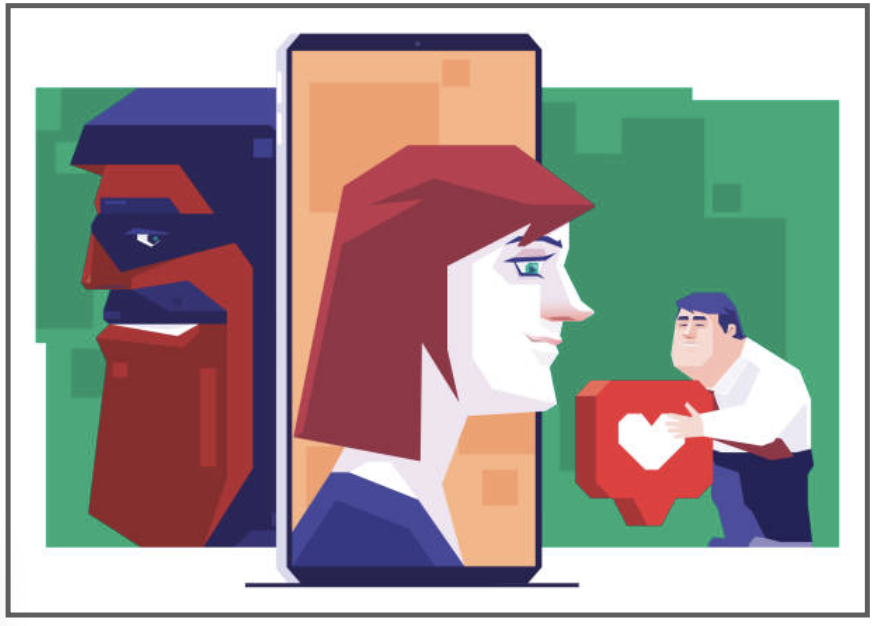
ACoAs – Dealing with CRITICISM (Part 2)

being criticized

PREVIOUS:
 Criticism (#1)

SITE:  “Varieties of criticism”(Aesthetic, Moral, Practical….)


Managing CRITICISM
Any form of criticism challenges our thinking, behavior or skill, so it’s normal to feel uncomfortable.
When we are dealing with actual criticism we need to understand what we’re hearing : not just when feeling judged, nor when our essence is being attacked, even just a comment about / disagreement with our ideas or actions.
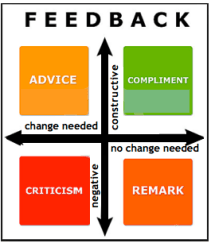
Is it legitimate vs. negative ‘feedback’? Are the comments constructive or destructive?

1. Are we receiving
Hurtful criticism? This is most likely a form of thoughtlessness, not consciously meant to injure, but can nevertheless be insulting or just insensitive. It’s usually ‘perpetrated’ by garden-variety narcissists who are simply expressing their point of view, as if it’s a given that others will see the world the same way. (“That’s a stupid thing to say” // “I can’t believe you didn’t know that”…..).
They’re generally unaware of their effect on the listner’s emotions & sensitivities, since only their own feelings & ideas are real to them

Destructive criticism? This type is a direct attack on someone, generally given with the intention to harm, belittle & destroy the other’s creationcriticism, prestige, reputation &/or self-esteem.
It’s malicious & harmful, meant to show that the person or object being attacked has no worth or validity, so no practical advice or suggestions for growth are included.
Naturally, this can do a lot of damage, & in some cases trigger verbal or physical retaliation.

While anyone is capable of this kind of attack – occasionally, & under great stress – here we’re talking about people who use this style as their main way of communicating about anything they don’t like or don’t approve of.

Generally, they’re the angry, controlling narcissists, who may or may not even notice other person’s feelings, and don’t care. They want everyone to be like them & can’t stand anything that isn’t.
Under the facade of superiority they’re deeply insecure, so bringing others down boosts their False Self, & temporarily satisfies their ego.
EXP: “You’re wrong. You’re always wrong! // You shouldn’t dance – you’ll just embarrass yourself // You have lousy taste”……

2. OR are we being offered:
• Constructive criticism? The Sender also points out ‘issues’, but without attacking the Receiver’s identity, AND may include practical advice on how something can be corrected.
That way the Receiver can choose to improve – but only if they agree with the solution AND if it suits their personality.

When using gentler language, constructive criticism aims to help the Receiver function better in the future, by kindly suggesting what to work on, & without arrogance (as in “do it my way or you’re stupid”). Therefore, it allows the Receiver to consider.

EXP: “I like your painting. Would you consider adding brighter colors?” // Your Math grades would improve if you let a tutor help // Practice keeping your back straight so you’ll feel stronger & more confident….”

HOW something is said is just as important as what. Suggestions & alternatives are offered without the Sender being manipulative, insistent, or superior – as if only they have ‘the answer’.  This usually makes it easier to accept, even if it may still hurt a little.
As a Sender:
📌 FIRST, be sure it’s appropriate to put your 2 cents in
◆ if you feel the need to tell someone a harsh truth, be sure it’s not offensive
◆ make it clear it’s your personal taste, & just your opinion – even if it’s based on first-hand knowledge or hard-won experience
◆ if you’ve tried your best to be respectful, but it’s still taken badly, then it’s not your responsibility to fix their hurt feelings or pride

As a Receiver:
a. If you get negative criticism you can say :
• “Thank you for sharing”
• “Ouch, that hurt, now say it nicely”
•  OR – just shake your head, change the subject or walk away.
Do NOT try to convince them they’re wrong, or get into a fight. It never works.  If the comment is simply not relevant to who you are – just say “Thanks for the info” or “That’s not helpful” & move on

b. If you get helpful / constructive criticism:
❥ always take it positively. Think about it, & if it applies, use it to grow. Remember that anyone willing to be careful in how they talk to you is reasonably healthy, & likely care about you as well, so take it as a sign of love or at least of goodwill .

NEXT: Criticism (Part 3)

ACoAs – Dealing with CRITICISM (Part 1)

being judgedPREVIOUS: ACoAs Being Disappointed #4

SITE: ”7 Realizations to Help You Deal with Feeling Judged


DEF:
➖ Being Judged – (Usually) being told / have it implied that there’s something terribly wrong with your fundamental identity (Mother to daughter: “You’re not smart enough to become a doctor” / “You’ll be the death of me yet” …)

➖ ‘Negative’ Opinions: When someone says what they think or feel about something or someone – having nothing to do with the object or person of their criticism (I hate that hairdo / That’s being done backwards / That’s no way to….. )

➖ Being criticized – when a mistake in our behavior is pointed out – OR when our behavior or communication is disliked by the criticizer.
The critic may or may not include telling you how you ‘should’ do do/say it correctly. But it’s often done with anger, disdain, superiority – in order to control & manipulate.
In rare cases it’s done with caring & good will, if the person is healthy & you’ve agreed to learn from themcriticism styles

🟰 Given a suggestion
– When we’re offered a better way of doing something – to make it easier or better for us, or our environment
EXP: “If you added an aspirin to the water, the flowers would last longer / When you travel, why not take less luggage?…”).
Done with kindness, respect & from a genuine desire to help

➕ Having Good Judgement : realistically choosing —
☆ between an objective positive or negative alternative
EXP: That fruit is spoiled, I’ll take the fresh one / The left trail is safer than the right one….)
OR
☆ between things that do or do not personally suits you
EXP: I’m allergic to sugar, so I use honey / I regularly watch comedy shows but never horror movies)

✔️ Being judged vs. legitimate criticism
★ Judgmental comments are about the essence (being) of something or someone, & is generalized to the whole category (Blue is ugly, all men are pigs….) , while —
☆ Legitimate Criticism is aimed at someone’s behavior (doing)(hitting your little sister is not OK & not allowed) or the state of something (that house is a mess, & needs a lot of repairs)

Children & wounded adults rarely make the distinction between BE-ing & DO-ing. So – it’s imperative for ACoAs to ‘hear’ whether we’re being told something about our behavior (speech or actions) vs. our identity.
Attacks on the latter is absolutely not acceptable, & healthy adults don’t stoop to this low blow anyway (usabuse vs criticismually), nor tolerate it from others

ACoAs confuse criticism with abuse
Legitimate criticism is an ‘evaluation of the merits or weaknesses of an action, choice, decision, thought process….’ , & at its best used as a method of correction.
It is NOT a de-valuation of our whole being or identity! as ACoAs feel/ believe.

We confuse or blend the two because:
a. In the past – our family almost always judged & misjudged, attacked & humiliated us. There was little or no balance provided : no praise, encouragement or patience – when we couldn’t do something the first time, or perfectly – and without guidance or when we were too young

b. Now, having absorbed the original abuse into our PigP, it has become the essence of our S-H. So any slight ‘disapproval’, or even a correction from others is taken as a personal indictment

OUR confusion, because of a Double Bind: (see D.Message)
★ on the one hand we agree with them
Any time others are not positive & supportive, S-H flares up because it mirrors what our PigP has been saying/ implying all along, AND which the WIC believes as absolute truth.

When someone points out something they consider to be our imperfections – even when it’s only their opinion or projection – we feel exposed & worthless, endlessly obsessing about what we did wrong

♦︎ on the other hand we’re resentful
We hate the person who hurt our feelings, or makes us feel disrespected…. We’re depressed or rageful, BUT on our high-horse, thinking “Who do they think they are saying that to me, judging me, ignoring me?” ….
We ruminate about what we should have said, what we will say or do to get back at them, that we’ll get them to see how wrong they were, wanting to justify ourself to them….. we go round-&-round, digging our hole even deeper, getting nowhere.

NEXT: Criticism (Part 2)

ACoAs & Being DISAPPOINTED (Part 3)


PREVIOUS:
Disappointment #2


EXPECTATIONS (cont)
1. COVERT (Part 2)
2. OVERT Types of Disappointment
The less we take care of ourselves, the more needy we are, yet may reject or ignore the help & resources available.
We pick people to ‘rely’ on who either don’t have what we need, or are too self-absorbed to reciprocate, especially if we’re acting the Rescuer / People-pleaser. That drives the WIC to desperately keep look outside of ourselves to provide, for as long as we aren’t willing to take on the Loving Parent role.

• We believe whatever a particular person says, especially things we want to hear (like promises, compliments or endearments) – even though they’ve consistently proven themselves not trustworthy or dependable.  EXP: “I’ll call you tomorrow” but never does. “I love you”, but is needy & selfish, or withholding & critical

• If we have the courage to actually ask for something, & are ‘promised’, but then they don’t come thru, we’re disappointed. We’re angry, even withdrawn, but are afraid to ask “What happened?”

📣 If you’re an extrovert, & feisty, you’ll try to get more of what you want from the person or situation, but angrily, maybe even attacking (the teacher, the belief, the procedure) – & then leave, or keep trying to “force solutions” (in the Al-Anon intro)

Disappointment (D) works like this wedge ⬇️
If our self-esteem & safety depend only on our circumstances, we’re in trouble, because circumstances are always changing. There are too many variables for them to remain the same.

• Too much Disappointment as kids left us Discouraged & frustrated. We didn’t have that many options, & even when we did try to get our need met, most of the time they were thwarted &/or we were punished.

• Slowly the wedge was driven deeper, & we began to be Disillusioned. For many of us this happened very early in life. The more disenchanted – before we could handle the reality of not having a safe family – the greater the need for illusion.

ACoAs have an over-developed fantasy life, based on hopes & wishes without permission to achieve them. This type is not not productive. However – healthy fantasy can be used to fuel our dreams, which then need to be put into FORM

• As Disappointment invaded our psyche even deeper, it lead to Depression. This D. is about loss, whether something we once had, or about all the things we were deprives of.

• Ultimately we end in Defeat. It’s the “Learned helplessness” syndrome. The WIC  thinks that if we’re going to keep getting disappointed, there’s no reason to keep trying.
This is how many ACoAs plod along – barely surviving ‘quiet lives of desperation’. And it all started with years of Disappointments!
SITEs: Christian perspectives 1=Response // 2=Dealing with 

DISAPPOINTMENT & the BRAIN
The pain in our brain after a disappointment is realm because it processes unhappy experiences as events that undermine our balance & well-being. The basic reason is that disappointments are processed in the limbic system, the brain structure linked to emotions.

We know that the body releases endorphins to relieve pain as much as possible when receiving a blow, cut or burn. The brain reacts instantly to the message sent by injured receptors.

However, the same doesn’t apply to psychological “wounds”. Even though the brain interprets disappointment as an ‘blow’ to emotional balance, it doesn’t respond with endorphins. Instead, we experience frustration as physical pain, such as headaches & muscle tension, as the levels of helpful neuro-transmitters decrease.

Neurologists say that the mechanisms of depression share processes & structures with those responsible for disappointment. A neural “jolt” happens before every disappointment. There’s a sudden decrease in serotonin, dopamine & endorphins. So, all those molecules responsible for well-being momentarily stop.

NOTE: We can reduce the impact of these experiences by re-directing them to our cerebral cortex. That is, we must use reason, focusing on the unfulfilling experiences more objectively, correcting negative thoughts.

NEXT : Disappointment- #4

ACoAs & Being DISAPPOINTED (Part 2)

disappointedEVERYONE LETS ME DOWN – so I stay away from everyone

PREVIOUS: Disappointment – Part 1

SITEs: • “How to Cope with Disappointment

▪︎ Psychology of Disappointment

EXPECTATIONS (Review posts – Over and Under)
No matter which form it takes, expecting others to fill our empty heart & mind, instead of being pro-active, means:Screen Shot 2016-05-31 at 10.13.44 PM
• the WIC is still running our life, waiting to find the ‘right’ parent – magically – so we don’t have to care for ourselves

• we’re functioning from our narcissism – always from the point of view that “Everything is about me!” (and against me)
This assumption was not true about the abuse we grew up with, & it’s not true about what people do to us & around us – now. (ACoA 3 Cs : I didn’t cause – the chaos & trauma”)

We know this because when WE change, in Recovery, those same hurtful responses from others seem to bother us much less!
ARTICLE: “Managing Negative Expectations” w/ chart

ACoAs get disappointed (D) by so many things, because the WIC desperately wants the world to be a certain way (to meet all its needs) rather than our Adult noticing AND accepting the way things are – both good & bad – in our environment.

IRONY: With reality in clear view, we can get our needs met by choosing among the many options that are actually available in the present!

1. COVERT Types of Disappointment
Because we’re not allowed to know our wants, needs & emotions, NOR to ask for anything, we imagine (silently expect, demand) that others will read our mind & provide for us – which comes from the WIC

• We truly believe that if we want something a certain way – without saying it – it will automatically happen
EXP: Your B/day (or any holiday that’s important to you) is coming up & he hints that you’ll do something together. You have it all planned out – exactly what you want to do, how it will look & feel.
But you never say any of it.

Then the day comes & it turns out Screen Shot 2016-05-31 at 10.12.55 PMvery differently – maybe not bad, but not what you imagined. Now you’re angry at him, unappreciative, cranky, attacking – OR you decide he doesn’t really love you at all, you don’t feel the same about him…..

OY! You’re deeply disappointed, but how was he supposed to know?

• We naively assume that everyone means what they say, OR will do what they promise. To ‘feel’ safe we need to believe that others are as literal (& ‘responsible’) as we are
EXP: Josie says she’ll bring the book to work tomorrow that you’ve been wanting to borrow. You not only believe it, but count on it, looking forward in anticipation. Tomorrow comes & she’s ‘forgotten’ the book. You’re angry. You’re convinced she’s messing with you, she lied, she…..

• When going into a new situation (class, work, relationship), the WIC presumes they will be safe, needs the people to be helpful, informative, consistent, appreciative, respectful…. & then they’re NOT. Sometime it/they turn out to be very ‘bad’, but most of the time they’re just not what we secretly (unconsciously) needed & expected.

We’re disappointed, so we get depressed or really mad.
📢 If you’re an introvert, or still in Victim mode, you’ll just sulk, withdraw, not participate, sit in misery, or leave without saying anything

NEXT: OVERT

Positive  HUMOR  from Grant Snider

NEXT:    ACoAs  & CONFUSION

ACoAs & Being DISAPPOINTED (Part 1)

empty promises I CAN’T TRUST ANYONE – I’ve been disappointed too often

PREVIOUS: Anxiety & T.E.A. #3

QUOTES: “Longed for him. Got him. Shit.” ― Margaret Atwood

“Disappointment is a sort of bankruptcy of a soul that expends too much in hope & expectation.” ― Eric Hoffer

DEF: The feeling of dissatisfaction that follows the failure to manifest of expectations or hopes, with the focus on the outcome, rather than the poor choices one may have caused the failure – decisions / actions that got one there

• Decision Analysis studies many different topics, including Disappointment – its causes, impact & degree to which individual decisions are motivated by a desire to avoid it.

FROM the Regret & Disappointment Scale:
“The emotion most frequently studied by decision theorists is regret, the counter-factual thoughts that create emotions – when realizing or imagining we would have had a better outcome if we’d decided differently.

Regret depends on a Choice made in the past which led to an unfulfilling action – later causing  counter-factual** thinking.
And the intensity of regret depends on – whether suitable alternatives were available (to the person at the time) but were not chosen.
**Counter-factual thinking is picturing one or more outcomes different from what actually happened. It’s when we obsessively think  ‘If only I had… What if it hadn’t….”

Psychologists & economists have been investigating the relationship between Regret & Choice since the early 1980’s. The emotion of disappointment is also based on counter-factual thinking : when we keep wishing events had turned out more to our liking.

Although regret and disappointment are different emotions, they’re both generated by comparing “What IS” reality with “What might have been”.(MORE….)

ACoAs have very intense reactions to being disappointed (D) – either with outright rage OR deep depression, depending on the strength & importance of the unfulfilled needs, and how long we were deprived of those needs.
This to be such a big issue for ACoAs, which tells us how constant & overwhelmingly abandoned in PMES ways we were as kids – first & foremost by our parents, & then by everyone else who let us down.

• We needed them to be there for us, to encourage, guide, protect, validate, mirror, love…. & they either did these things sporadically, incompetently or not at all.
Constant, endless disappointment in our caretakers (also teachers, relatives, baby sitters…) has left us with a very big wound. It’s one of many wounds – & some of us have buried it so deep, we don’t evedisapponted catn recognize it when it happens again in the present.

To be disappointed we must:
1. have a need ( + desire, wish, dream, hope….)
We may not even know we have a particular need or wish, because we were not allowed to have them, or if we did, we were told in many ways, over & over – that they were not legitimate, were selfish, were dumb….
AND must :
2. (secretly) expect that need to be met.
Since we’re still not allowed to have them, we not aware that they’re always in the background. We still have needs, just by virtue of being alive. But since they go unmet – they can never go away, like being hungry but barely eating anything if ay all – OR eating empty calories & harmful foods / chemicals…..
For many of us, the greater a specific need, the more desperate we become – waiting for someone else to do something for us we should be doing for ourselves or can learn how to
and must :
3. not get that need met : We can track deprivation of need, hopes, wishes….  by the intensity of our reactions when we don’t get something we (unconsciously) longed for, actually asked for or tried to get in some indirect way.

❥ HUMOR from Grant Snider


NEXT: ACoAs & Disappointment – Part 2

ACoAs – ANXIETY & T.E.A. (Part 4)

OUR NEEDS
IT’S ALWAYS WISE to pay attention to my needs!

PREVIOUS: T.E.A. & anxiety (#2)

SITEs:
T.E.A. charts from GOOD MEDICINE˜ Dr. James Hawkins

What Is Cognitive Behavioral Therapy (CBT)? – Using T.E.A.
2. ANXIETY (cont)
⚑ ⚑ TOXIC anxiety //  💚 GROWTH anxiety

🔔 AWARENESS
Cognitive Behavioral Therapy’s (CBT) basic messages :
◆ What we think and do affects the way we feel
◆ Our best effort to cope with our emotions sometimes ends in uncomfortable outcomes which keeps us from feeling better
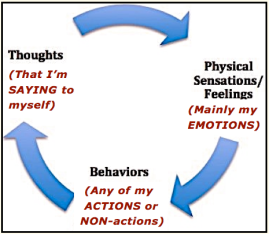
◆ We can better understand problems by examining our Thoughts, Emotions, physical sensations & Actions in specific situations, all interacting in a ‘hot cross bun’ formation.

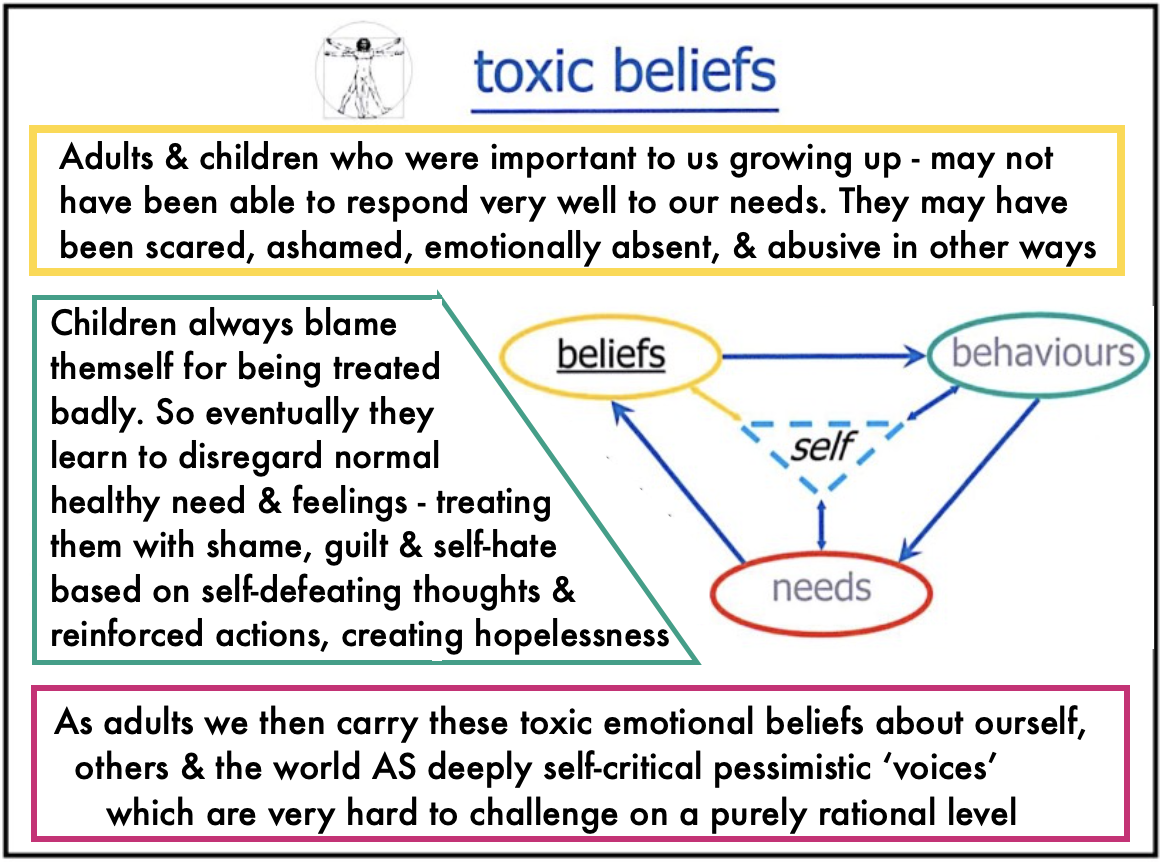
a. NEGATIVE BELIEFS create painful emotions. Just as we may sometimes be hungry or thirsty for food or drink that in fact isn’t good for us, so emotions are not always indicators of current reality. It’s important to notice when an intense emotion is healthy energy, vs. when it wants to push us in a distorted or unsafe direction.

Unfortunately for most of us, we didn’t always get the right responses to our original needs.  Our family, schools, religion  & other important early influences rarely were respectful of nor encouraged our normal drive to satisfy healthy needs.  It’s inevitably then that we try to make sense of why they didn’t.

As children, we had very limited information about the world, & expected that the adults would know better & more than us.
If we got into conflict or other unsatisfying interactions with adults, our normal child narcissism assumed we were at fault – not them. This is especially true because many of them actually told us we were wrong & the problem, which we had no choice but to believe.
We assumed that : “It must be because I’m are unlovable, untrustworthy, not good enough – that I’m treated this way.”

✦ For many of us, we bring into adulthood the original trauma which lead to —-> a great deal of suffering, which led to —-> the toxic beliefs, which inevitably lead to —-> problems in relationships & general functioning in the present

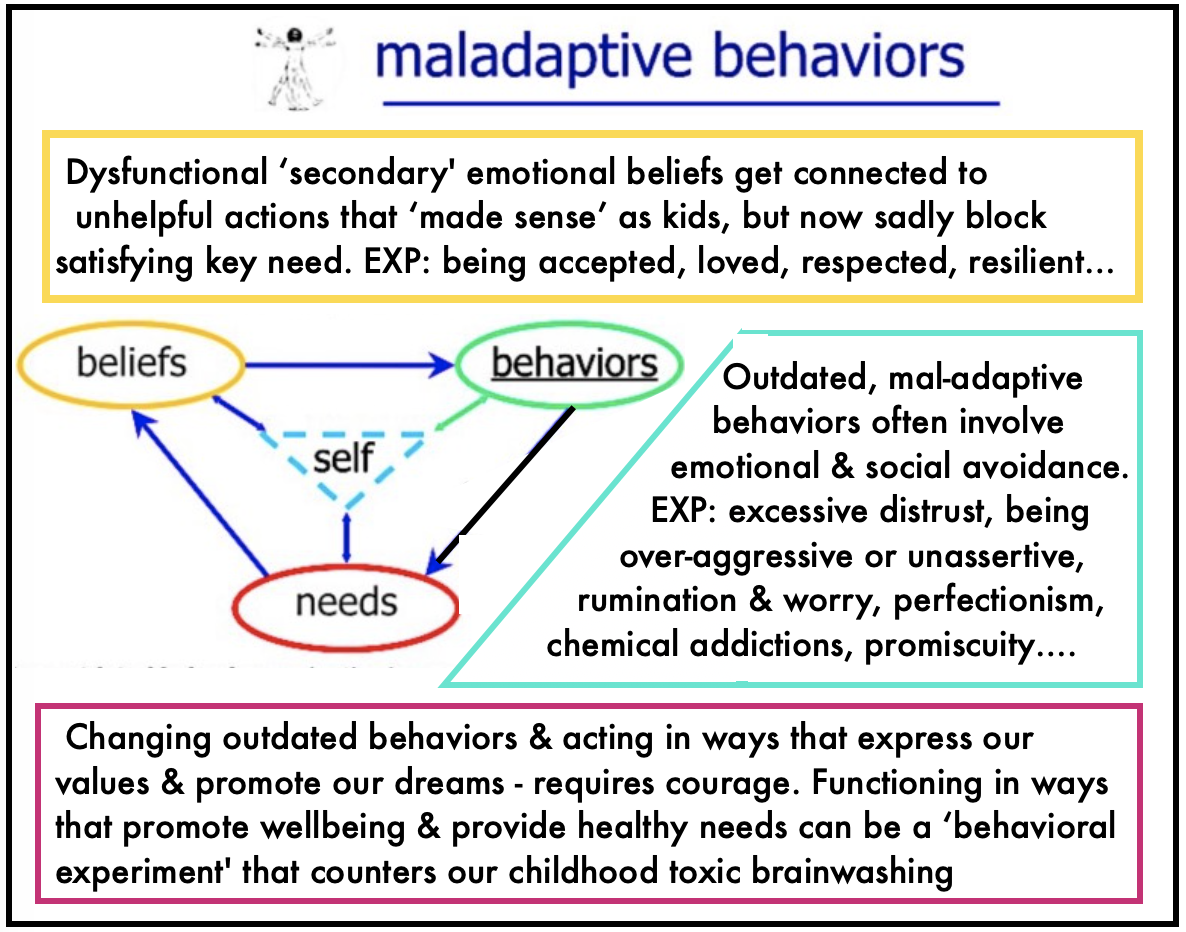
b. UNHEALTHY ACTIONS are created by toxic beliefs
This chart highlights how dysfunctional Behavior patterns develop from unmet Needs & toxic Beliefs – given what we were living thru, & may even have served us well for survival.
But as adults they definitely do not work in the larger world (outside of family), which we can see now having gathered  more info & experience.

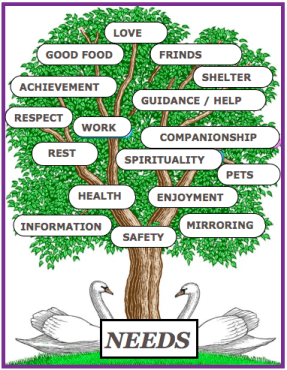
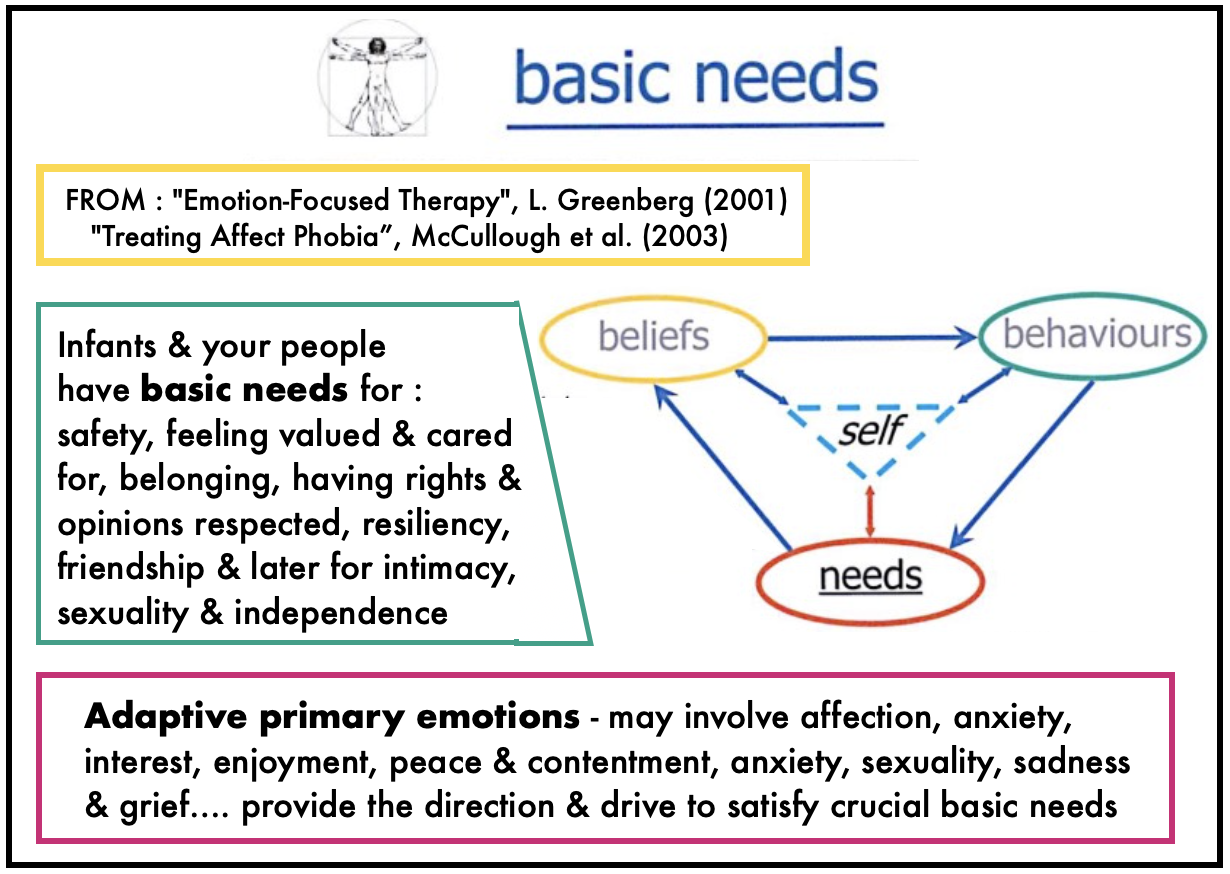
c. Mental/ Emotional Health is based on providing personal & universal human NEEDS & RIGHTS
Children need security, stability, feeling valued, encouraged, loved & trusted – in order to build self-esteem & independence. And these needs continue into adulthood for everyone, although ACoAs are still not allowed to fulfill them.

The drive to fulfill needs shows up in basic adaptive feelings & emotions that push us towards psychological health, just as hunger or thirst push to satisfying basic physical health.
It’s imperative that we allow ourselves to acknowledge & work on providing them. See “Needs” on tree above.
(ChartsMORE info)

NEXT: Being Disappointed (#1)

ACoAs – ANXIETY & T.E.A. (Part 3)

PREVIOUS:
Anxiety & T.E.A. #2


2. ANXIETY (cont.)
⚑ UNDER / ⚑ OVER (Part 2)
⚑ ⚑ TOXIC anxiety
In the present : Our internal process causing anxiety begins with some action which we judge harshly (see Laundry List ),  our harmful, self-hating thoughts about some ‘failure’.  Only then do we become overwhelmed by fear/ anxiety/ panic.
OR the anxiety can be a response to how badly someone else is treating us, simmer to the way our family did.

RULE: Our negative, narcissistic, paranoid beliefs ALWAYS PRECEDE anxiety. Many of us don’t know this because we don’t :
⚡️pay attention to the chatter in our head
⚡️notice what we’re actually saying to ourselves (CDs)
⚡️realize it’s distorted alcoholic &/or co-dependent thoughts
⚡️understand that most of mental spinning is just a bunch of dangerous LIES!
We just end up FEELING scared, worried, in danger!

Yes, we do indeed carry with us piles & piles of old anxiety – from our traumatic, abusive, chaotic childhood. So, present-day distressing events – often beyond our control – can re-traumatize us, bringing to the surface long-held fear & panic we may not even realized was still there

It’s the constant fear we lived with on an almost daily basis as kids – not given comfort for it, & then punished if we cried or objected! And the causes of that fear never got talked about.
Those unresolved emotions got stored in our body as feeling memory (summary) – which need to be verbalized with safe people, then cried out & pounded out.

At the same time – we currently add emotional stress to our life by many self-defeating actions & inappropriate relationships, but more commonly by continuing to believe the abusive messages we got at kids, which we hold as gospel truths!
ALWAYS remember that both accumulated fear & current anxiety is in our WIC (“If it’s scared childhysterical, it’s historical”), who still loyally agrees with the Introject’s messages.

Whenever this wounded Child Ego State takes over – we can’y manage well or choose differently!
😿 It’s not up the child part of us to know how to function in the world!, especially given our woefully inadequate upbringing.
🤓 Rather, it’s our grown-up responsibility to develop a Healthy Adult & Loving Parent (the UNIT) capable of acting in safer, more successful ways.

 💚 GROWTH anxiety : At first, anxiety & guilt will come up any time we break family rules as we Heal & Grow – when taking better care of ourselves, when letting others be loving & kind toward us, when changing how we interacting with other in new positive ways…..

This anxiety is from our earliest experiences, the WIC still believing (T) that we don’t deserve good things, SO it’s convinced that if we reject the old patterns & focus on taking care of ourselves :
• we’ll lose the love of our family, spouse, boss, friends, children….
• we’ll be punished / ignored (again)
• we’ll be all alone forever
• we’ll hurt other people….

PAY ATTENTION! Al-Anon’s 3 As starts with Awareness – so we need to stop & ask:
♢ What is my WIC saying to itself about this situation?
♢ How accurate is it?
♢ How do these ideas reflect my alcoholic family?
♢ Do I need to check out my thinking with someone sane & trustworthy?
♢ What would be a kinder, more loving way to think about what I did or didn’t do?

T.E.A.
When something doesn’t work out for us – like getting caught in a mistake, or someone doesn’t like something we did…. we wonder why.
⬆️ INCORRECT order 
When upset : Totally
focused on the emotional pain triggered by a situation – assuming the anxiety is only from the difficult event (unaware of negative thoughts)
OR only on self-abusive obsessional thinking, trying to ‘figure things out’ but not feeling it

⬇️ CORRECT order
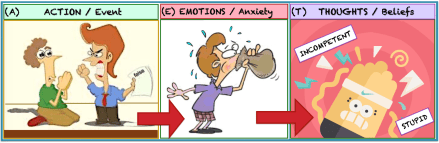
To understand what’s going on inside – we need to apply T.E.A. accurately.
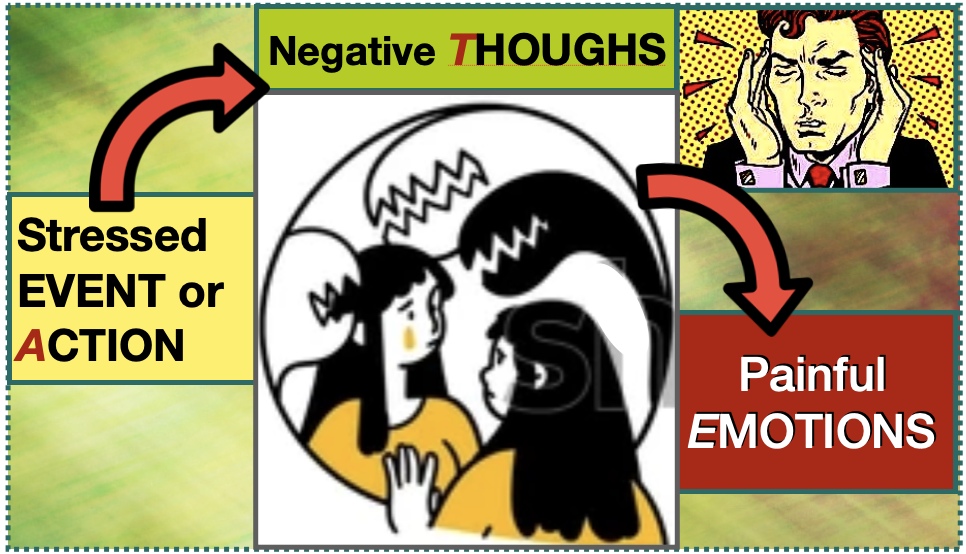
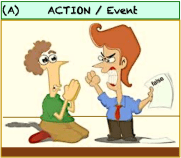
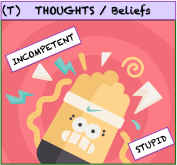
What generates our reactions to an external upsetting event (A) is our Thinking, which causes Emotions, which may or may not lead to your Actions in response.

Look for what you’re saying to yourself (T) when trying to explain how you feel (E) about an event (A).

NEXT: Anxiety & TEA #4

ACoAs – ANXIETY & T.E.A. (Part 2)

HOW AWARE AM I about my painful emotions?

PREVIOUS: T.E..A. & Anxiety (#1)

SITEs: Anxiety Fingerprint (Tool 3)
Consciousness & Emotions & the brain

BOOK: Freedom From Body Memory : Awaken the Courage to Let Go of the Past….. “a person can accumulate years, even a lifetime of stress in their body from past experiences….”

1. T.E.A defined (Part 1)

2. ANXIETY (cont)
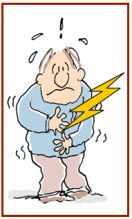
⚑ UNDER: For those of us who try to skate past our anxiety when something sets it off – we’re deeply shocked, overwhelmed, can’t cope, think we’re losing our mind…… And if we unexpectedly get too flooded, without a healthy way to resolve it, it can trigger an anxiety attack, which is very scary & physically painful

ACoAs will do almost anything to avoid feeling our emotions – especially fear. ‘Coping’ styles (escapes):coping styles
• keep so busy you can’t feel it (or much of anything else)
• withdraw, isolate from people, refuse help or comfort
• find other ways to escape (internet, tv, sleeping……)
• stay angry so you don’t feel scared
• blame everyone / everything else

⚑ OVER: And then there are those of us who are drowning in anxiety – for days, months, years or as far back as we can remember – as our constant daily companion. We don’t know what to do about it, don’t know the source & have never learned how. It’s one reason why some ACoAs actively try suicide – even though few achieve it directly.

Reactions:
• obsess over that you did wrong when upset or disappointed
• search for answers outside of yourself to fix your problems
• use various categories of addiction to numb any unpleasant Es
• dump on anyone who’ll listen : compulsively go on & on about situations & people in your life that upsets you, without any self-awareness of internal causes,
or else try to make appropriate external changes where possible.

CHICKEN or EGG
Whether anxiety (physically & emotionally painful) has been a life-long black cloud always overhead  which has effected everything you do,
OR an occasional unexpected ‘visitor’, seemingly out of nowhere –
2 important questions come to mind:
Where is it coming from? // What can I do about it?
If you’ve asked yourself these Qs, you may have just shrugged ”I don’t know”.

a. Not everyone is self-reflective. Most people go thru life ignoring or using the list above as defense mechanisms to sidestep emotional pain. They’re just baffled & stay that way.

b. Some see a connection between an event (action) & anxiety, but don’t know what it is, & attribute it to something that shows our imperfection :
√ making a mistake, forgetting something, being late, saying the wrong thing, losing something valuable (even temporarily), making  a fool of ourselves, failing at some effort…..

More often it’s something or someone outside of ourselves that makes us anxious :
√ waiting for an important phone call, being called into the boss’s office, a break up, anticipating an attack or punishment, the death of a family member, someone important turning against us, being verbally attacked or accused wrongly, caught in a character defect …..

c. Emotionally oriented ACoAs feel the anxiety intensely, but will only ‘hear’ obsessive thoughts – “spinning” – & assume it’s a way to explain the emotional distress, after the fact. (Suggestion: Enneagram 2, 4, 6 types, & anyone with a lot Water signs in their Astro natal chart – Scorpio, Cancer & Pisces)

Sensitive /emotional ACoAs may assume that a stressful situation is what generates anxiety, CAUSING the spinning (obsessive thoughts) – as a way of explaining the emotional upset to ourselves. (Posts: “What just happened?“)
We may use this kind of endless ruminating:
to beat ourselves up, taking on all the blame for a situation
to identify how bad/ weak/ inadequate… we’re convinced we truly are & in what way
to figure out how to fix it, but from a narcissistic perspective (“It’s all about me!”), via people-pleasing, groveling, hiding out, being belligerent…. depending on our personal defensive style.

HOWEVER – the reality of our internal process is the reverse : our harmful THINKING CAUSES our anxiety!

NEXT: T.E.A. & Anxiety (Part 3)

ACoAs – ANXIETY & T.E.A. (Part 1)

T.E.A. chart

PREVIOUS: Fear of Responsibility (#5)


1. T.E.A.  = Thoughts, Emotions, Actions.
⚠️ Most people are not taught to distinguish between these 3 modalities. This causes much confusion in how we express ourselves, creating a great deal of mis-communication in relationships. While the 3 categories interact, they’re not the same parts of us.

The most important thing to remember is that Thoughts & Actions can be changed &/or modified, but emotions just are. It is not healthy nor legitimate to suppress emotions, while it is necessary & appropriate to choose what we say & do to express them (the words & actions), depending on the situation we’re in.

THOUGHTs – always made up of a string of words.
thinking mindAll of us have running dialogues in our head much of the day, on the surface of our awareness, such as:
• planning what we‘re going to do or ‘should’ be doing

• reviewing what’s happened to us or what we did (pleasant or not)
• ‘dreaming’, wishing, imagining, designing projects……
• worrying, obsessing – often about things we can’t control

• ranting to ourselves about people who hurt us & things we hate
• thinking about things we’ve seen or read
• planning things we want to say, either personal or for work……
AS WELL AS:
• what we’re thinking about under the surface, that’s out of our direct awareness. Some thoughts are deeply hidden, others accessible if we pay attention. This is what sitting quietly in ‘meditation’ is for – to hear the chatter in our head.
(Post:Using Think instead of Feel“)

EMOTIONs – see extensive posts
These are always ONE WORD things – happy, sad, angry, amused, lonely, scared, pleased, sexy, excited……(NOTE: if you say “I feel” immediately followed by a sentence – it’s not an emotion, but rather a thought – a string of words. EXP: “I feel like going for a walk”)

Posts
: Getting to Emotions – Under & Over // ACoA Emotions re Painful Events // ACoAs – accepting & accessing Es // What is Emotional Abuse? // Over-controlling ourselves

ACTIONs – Any activity we DO, as well as things we DON’T do, that are helpful or harmful to oursef & others

📌 An extension of this category – our behavior – is used as a defense mechanism, called “Acting out”, which can be defined as –
• Any compulsive (temporarily out of conscious control) ↵
action or non-action, which is ↵
• a way to externally express or demonstrate ↵
• painful emotions we’re not aware of at all (ongoing repression), or not experiencing at the time about a particular situation we’re in or that we anticipate happening

EXP
: ♟ being late for OR blanking out on an appointment we didn’t realize is making us anxious
♟ starting an argument (T) at the end of a nice evening, weekend (just before leaving the person or group)…. rather than feel the familiar old abandoned pain (E) at the separation, no matter how temporary!

Posts : Actions: Healthy opposites // Noticing painful events // Negative reactions to painful events // Positive responses
💚
2. ANXIETY
 All ACoAs are fear-based, whether our preferred defensive sty
le is to be :
• phobic (fearful, passive, victim, timid, worried, overwhelmed) OR
• counter-phobic (don’t consciously feel scared, & then keep anxietydoing dangerous things to ‘prove it’). This is a reaction to suppressed emotions accumulated from our abusive background or any other traumatic events in our life

❥ When was the last time you were struck by anxiety?
❥ How long did it last? What caused it?
❥ What did you do about it?
❥ OR is it with you all the time? & how do you cope?

Given our painful, chaotic, abusive early years – with very little comfort, explanations or guidance – we carry with us an enormous backlog of fear. This pile-up gets covered over & redirected, so we barely realize it’s there.
Once we’ve cut ourselves off from knowing the source of our fear, in many cases what we’re left with is anxiety – that free-floating painful flutter or tightness in our gut we don’t connect with anything in particular.

NEXT: T.E.A. & Anxiety (Part 2)