RE-ORGANIZED Site-Map Pages

file drAwer

PREVIOUS:
Procrastination (Part 6)


TOO MUCH?

Some readers have expressed a sense of  overwhelm by the amount of info presented. on this blog.
(SEE also 80+ pages of website: www.acoarecovery.comSoverwhelmwd

When working toward any goal it’s typical of ACoAs to skip Process, but instead insist on trying to do things ‘perfectly’ & NOT use small steps or do things in orderly stages.

Then the WIC balks at the ‘bigness’ of  the task / project /  procedure – & will quit part of the way in, or procrastinate & so not get started at all.

SUGGESTION:

To get the most out of this blog – cruise thru each year (2010-2021, at top of Home Page) & just familiarize yourself with what’s available.
See what jumps out at you & only read that.

Then when Sprocessan issue comes up in your life, go back to the lists & read what applies.

Slow down enough to mull over what comes up for you.

ALWAYS take things in small chunks. The brain absorbs info better that way.

A LOT OF WORK to re-order all !
The complete listing of over 600 posts has been re-distributed (2010-2016).

Changes in site-map:

— Listed in order of topic posting, per month – rather than alphabetically

— Similar topics grouped together pr.year, as much as possible – rather
than by original writing date

— Space made between topics, or between bub-topics of a group, rather than
clumped together each month

— If something has not been ‘linked’, it means it’s a future post, in the pipeline.

Comments or corrections welcome.
THANK YOU for READING.

Donna Marie

NEXT : Procrastinators Anon TOOLS

ACoAs & PROCRASTINATION (Part 6)

PREVIOUS: Procrastination #5


4. GOOD Stuff
5. BOTTOM Line (in #5)

6. FACING our INNER REACTIONS (cont)
RESULTS:old vs new
more anxiety, to the point of ulcers, migraines, auto-immune diseases, weight gain, depression….
• getting caught / ‘punished’ at work, by the IRS, angry family & friends…..
• adds to the S-H, so we stay in league with the PP
• lose out on more income, develop an illness, pay $$ penalties, lose a good opportunity….
• We expect that when we finally get something done that’s been weighing on us that we’ll feel relief – & sometimes we do.

But more often – we just feel empty! Once the obsessing is gone we’re left with the hole in our gut. At that point ACoAs often think “Now what do I do?” Like when we have a day off with no plans, no one to take care of or obey (like a boss, parent, spouse…) we don’t know what to do with our free time! Very often we do nothing, and find something else to obsess about – like the fact that we’re wasting time!

RESISTANCE
Doing things in a timely & competent manner would MEAN: fighing angel
a. Disobeying family rules, which enrages the PP, — AND
b. Showing us that we are actually capable (without having to be perfect), which enrages the WIC, because it would force us to give up the demand (& fantasy) of one day being taken care of by someone else – finally!

7. OUTGROWING Procrastination
a. INNER ACCEPTANCE
• admit our damage is behind the procrastination & make a diligent effort to find out what our issues are
• know the difference between what the WIC & PP want VS. what is good for us – using the “Unit” as guide
• deal with our double binds, fear of A. & fear of success
• be willing -to be willing!- to relinquish the demand that someone else take care of us, in place of ourselves
• OWN that we have always had abilities & skills (observational & intuitive, thinking & feeling…) which we were born with, even at our most dysfunctional, we just didn’t know how to use them correctly

b. OUTER ACTIONS
• find out what our realistic options are in any given situation, which means learning from others what’s possible in the world
• be able to ask for help when needed (information, emotional support, connections, referrals ….)
• be OK with getting praise & rewards, feeling successful, happy, empowered…..

➼ Know and be able to handle:process
• making mistakes, without self-judgment or giving up
• emotional discomfort & disappointment
• that process takes time
• that not everyone will be supportive, but to keep looking for those who can & will
• making changes in our ‘style‘. Much of what we believe is our ‘personality‘ is our False Self
• that not everything works out, but that doesn’t mean we’ve done something wrong, or the universe is against us
• that if we’re ‘in the flow’, getting what we want comes in Higher Power’s good time

c. INVENTORY: Divide actions into those you:
• need to take (work, self-care, chores, obligations…)
• want to take (relaxing, playing, creating, dating…)
THEN
Identify what’s causing your resistance to pursuing each activity:
• the toxic beliefs (Ts)
• the painful emotions (Es) you’re avoiding, but not actually feeling

• Keep the lists of activities available to look at when you have free time. Pick one from each list & do at least something towards getting it done, even if you can’t finish! ✶ ACoAs are often afraid that if we don’t finish something in one sitting, we’ll never go back – which we’ve proven to be the case time & again. However, once we start cleaning out the damage, we don’t have to be a slave to that pattern.make notes

d. REVIEW – Taking small steps toward any goal means to:
– Evaluate the outcome each time, taking notes
– BookEnd with the INNER child and trusted supporters
– Learn from any mistakes & make corrections
– Proceed to the next step
– Never give up. REST when needed
– Enjoy all successes, no matter how small!

NEXT: Procrastinators Anon TOOLS

ACoAs & PROCRASTINATION (Part 5)

make notes I CAN GET THINGS DONE –
& feel good about it!

PREVIOUS: Putting things off #4


SITE: Overcoming Procrastination

BOOK: “Willpower: Rediscovering the Greatest Human Strength” by John Tierney, New York Times science writer, & psychologist Roy F. Baumeister.
An unconventional “self-help” book that, much like Timothy Wilson’s ‘Redirect’, grounds its insights & advice in 30 yrs of serious academic research into willfulness & self-control. While the book is fascinating in general, its 3rd chapter “A Brief History of the To-Do List, From God to Drew Carey,” is particularly interesting.

5. BOTTOM LINE
“WHY BOTHER?” underlies all our indecision & procrastination. We don’t take genuine care of ourselves, no matter how busy or cocky we seem to others. On a deep level we’re paralyzed by:
a. Not knowing or having access to our healthy True Self, so we believe we don’t know what we want or like, nor what our rights are!

b. Not being allowed to be our own internal motivator – so our only reason to take actions has to come from outside. We have to use family, a boss, teacher, a cause, religion, a career, friends & lover relationships, AND ultimately our terror of abandonment & punishment to push ourselves. Left to our own devices, we just collapse inward

c.
Our Internal Conflicts:conflict
• losing someone, being hurt or punished vs. feeling ‘safe’ (even if that safety is an illusion or self-destructive)
• WIC & PP vs. the Healthy UNIT
• obeying vs. disobeying the Toxic Rules
• old patterns vs. new ways of doing things
• what we want vs. what we’re ‘supposed’ to be, do, think, feel

d. Double messages, originally forced on us by one or more adults, we had no choice but to internalize the resulting Double Binds* (simultaneous but opposing demands, with a penalty for whichever one we can’t fulfill).
EXP:
• As kids they expected us to do for them (which may still be going on with an elderly parent), taking advantage of us to be their parent substitute – using hints, guilt, shaming, manipulation, demands, threats…. AND were angry / abusive if we did nothing (the penalty)

• BUT THEN were totally dissatisfied with & critical of (the penalty) whatever we did do for them, no matter how much effort we put in, what it cost us, what we had to sacrifice, how clever we were at it….

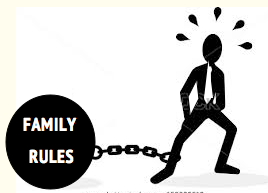
*EITHER WAY we were/are punished. If they’re still live we compulsively keep trying – to please them,chained to rules over & over. If they’re not around anymore we often find some other needy, critical person to satisfy – always with the same impossible, painful results!
YES, we’re addicted to the rejection, while maintaining the illusion that we have the power to change them, if only we try hard enough, long enough!

Ultimately, we stopped trying – but only for ourselves, because:
• we’re still waiting for them to approve of us, & give us permission to have a life of our own life (free us of their bondage because we don’t believe we can do it ourselves!)
• we’re convinced that if we failed with them (the family, also school, religion), it’s inevitably that we’ll fail with everything & everyone else, so there’s no point in trying
• we’re waiting for someone – anyone – to come & rescue us so we don’t ever have to be our own parent!

6. FACING our INNER REACTIONS
• Unfortunately, delaying inevitable responsibilities (as well as ones we’ve taken on voluntarily) creates endless obsession & self-recrimination. “”I’m just lazy by nature”, “I can’t do anything right” , “I’ll just mess it up – again” ….procratination

So why would we rather worry ourselves sick than ‘just do it’?
• we SAY it’s just a habit – but it’s really our self-hate
• we’re used to longing for things, rather than having them
• we’re waiting to be taken care of
• we think we don’t know how, even tho we actually do
• staying loyal to the family by copying how those adults ‘handled’ daily actions & problems
• we’re not allowed to do things easily because suffering is the norm (if it’s too easy it doesn’t count)

NEXT: Procrastination #6

ACoAs & PROCRASTINATION (Part 4)

self-motivationTHERE REALLY ARE THINGS
I can do to get going

PREVIOUS: Putting things off, #3

See ACRONYM page for abbrev.

SITE: ‘Beating Procrastination


2. NOW we put things off because of…. (in Part 3)
3. WHAT makes it HARD to act
a. Internal FEAR of // b. External FEAR of….

Internal & external fears can show up as: (cont.)
Putting off tasks. Many of us find that our whole life is permeated with the ‘habit’ of waiting to the last-minute to do things. It doesn’t seem to matter whether the ‘thing’ is something we would like to do or something we dread. We just put it off & off & off.

— Then comes crunch time – the deadline has caught up to us. We’re in a panic, scrambling to do the task, but now it’s going to be half-baked. We don’t have enough time to do a thorough job, don’t read the instruction correctly (or at all), leave out or miss something. And by leaving it tot he lat minute it can never be done right
— OR the deadline has past & we don’t get the benefit of a discount, miss a class or a needed product, a reunion, a party….

▶ Of course we’re painfully aware of all this, but as long as we’re stuck: worried
— we’re full of anxiety & S-H for not doing it Perfectly
— we scare ourselves with dire projections & predictions about how we’re going to get judged, punished, fired….
— hate ourselves for letting a desired or favorable opportunity pass by

But, like any good addict, we’ll do it the same way all over again, & again! WHAT? How can this be an addiction? WELL…. in this case it’s the addiction to: Fear + Adrenalin + S-H = Drama. This formula has become so much a part of our lives since childhood that we keep doing things (or not) to re-enforce the chemical surges it creates.

Yet under this self-inflicted ‘excitement’, the WIC is just trying to protect itself the only way it knows how – by NOT doing anything. Yet it’s not enough to just label it as part of our ACoA damage, which it is. We need to know how it all got started (Past) & how we perpetuate it (Present).

4. GOOD Stuff can deter us too – we often sabotage when things get too good!
• fear of success, as that would disobey basic Toxic Rules, and we’d have a lot of responsibility which the WIC believes it can not handle – even tho our adult can/could

• not allowed to be happy, based on the belief that life is hard, exclusively, AND that we aren’t worthy of having good things anyway
• stay loyal to the family by not out-doing them – we must also be a failure, don’t show them up, stay in the family mobile, don’t rock the boat…

• can’t be decisive: sometimes there are places we thinks we should go to, but really didn’t like, or we don’t feel well, or want to do something else, or do nothing at all…. even when it’s potentially pleasurable or valuable.

But we aren’t allowed to say NO to the inner Pressure-er (“what will they think if I don’t show up? / what if I miss out on something / maybe this will have the perfect answer to all my problems?….”). So instead of firmly deciding Yes or No, we dither & obsess, do nothing & then hate ourselvesindecisive

• are never supposed to say NO to what someone else suggests, offers, wants – especially if it’s good for us. Besides “Why do they want to be with me? Why are they being so nice?” So for those times we don’t rush to people-please, we make promises we eventually flake out on, make excuses or just lie, until people get angry &/or give up on us.
— That comes both as a relief – of pressure, and a big pain – of yet again feeling ‘abandoned’! Trapped in our own no-win game, we blame others AND are filled with self-abuse

NEXT: ACoAs & Procrastination #5

ACoAs & PROCRASTINATION (Part 3)

mananaMAÑANA, MAÑANA
I want to, but just can’t get going!

PREVIOUS: “Putting things off” Part 2

POST:Why are you Stuck?”


2. NOW we put things off because of: ❓Feelings  // ❓ Knowledge
✳️ ULTIMATELY – we put things off :
a. so we won’t feel so alone – that inner loneliness of not having nurturing parents growing up! Being our own caretaker, being competent – even in small things – is an emotional reminder of how terribly alone we always felt as kids – no one to guide (only bully), no one to comfort (only control), no one to encourage (only shame)…. inner aloneness

• Instead of doing something positive, all that wasted time spent worrying, obsessing about things we’re not getting done actually serves a purpose for the WIC : it fills up the emptiness inside – where a good parent should be – the Inner Supporters we never had (early abandonment).

EXP: Pre-Recovery, Tina needed to replace a knob for her radio that had fallen off & was lost. She knew she had the manufacturer’s purchase list in her files, but felt a general lethargy about taking the action = all of 5 minutes to find, make the call & order the tiny part. It was several months before she did this simple task.

• In the mean time Tina had to turn the radio on & off by awkwardly using 2 fingers on the sound stub. When the part arrived, in a little pouch, it sat on her night table several more weeks. Eventually she ‘faced’ the great task of taking the knob out of the package & clicking it into place = all of 1 minute!

b. because we have a deep (usually unacknowledged) feeling of hopelessness. After all – the WIC believes that our actions are supposed to get us the love & attention we’re always craved, specifically from our parents (dead or alive!). The Child’s logic says – “since they hurt me & hated me, it has to be my fault, so I have to find a way to fix it.”

But no matter how hard we work at being the perfect son or daughter, we rarely achieve this wish. So eventually drowningtaking actions gets harder & harder. Scapegoat & Lost Child ACoAs give up trying a lot sooner than Heroes & Mascots, but they never give up wanting to be loved & accepted! They just pretend they don’t care!

c. we feel powerless to have any effect on our environment (being efficacious). We could never get our parents (& sometimes siblings) to notice us, listen to us, take us seriously, consider or feelings & needs. So why would we be able to influence anyone else in the world? If we have no ability to influence, then why even try to DO anything?

3. WHAT makes it HARD to act
a. Internal FEAR of —
• not doing everything Perfectly (a form of S-H)
• not knowing how to do something (even tho we’re actually very
smart, clever, creative, knowledgeable)
• not knowing what to say when challenged or attacked
• looking weak, needy, incompetent, lazy, stupid…..
• having to stand up for ourselvesstandup
• making the ‘wrong’ choice, when having several options, or many demands on us at the same time
• having to feel the loneliness & pain of our original abandonment

b. External FEAR of —
• getting disappointing, hurting or angering someone
• being judged harshly (the way we do to ourselves)
• asking for help when we really need it
• having to deal with difficult people
• being interrupted & lose our train of thought /activity
• having to make everyone else happy (not be in pain) but resenting it

These can show up as:
• Not being able to decide what to do first, when we have several options, or what to do at all (like with free time)
Starting things (refinishing a pc. of furniture, art work, a book, even relationships…) but never / rarely finishing anything – IF for ourselves
• Can’t motivate ourselves – to have a life of our own, as in following our dreams, leaving bad relationships, moving to a better location….!

NEXT: Procrastination  Part 4

ACoAs & PROCRASTINATION (Part 2)

overwhelmed I’M OVERWHELMED
so I don’t do anything

SITE: “Fight Procrastination” – P. vs Payoff / P vs. Pain. charts

QUOTE: “Time you enjoy wasting is not wasted time.” ~ Marthe Troly-Curtin


1. PAST Causes of Procrastination
(cont)
d. Being put down  // e. dismissed or devalued
f. never (or rarely) acknowledged

g. Double Messages, leaving us feeling crazy – who constantly gave us confusing or conflicting messages about what was expected of us, or how to do things, so now we don’t trust our judgement

• Expected &/or forced to take care of them, never allowed to focus on ourselves, so now we refuse to use all that experience & creativity for ourselves, wanting someone else to do it for us. Been there, done that!

h. Punished (insulyelled atts, being hit, yelled at, sent to our room, made fun of, threatened….) – for having need, wants & emotions, as well as for not doing everything the ‘right’ way, ie. their way, or just not knowing how to do something – even tho we were too young, untrained & inexperienced, but they expected us to be mind-readers, & act like adults anyway!

• Absorbing & taking on our parent’s fear – who repeatedly warned us about the dangers of people, places & things, so we became fearful of everything too

i. Neglected, ignored – having to fend for ourselves – left alone to figure things out, when too young – not getting encouragement, guidance, ‘how to’ or just safe & loving company, which made us feel insecure & too alone.

ACoA “LOGIC”: I keep putting it off because –
• IF I ignore it long enough maybe it’ll magically go away
• I feel comforted – because not being fully functional keeps me from having to feel the abandonment pain of no one being there to teach, help or encourage me thru things when growing up

• It’s not fair that I have to do things by myself, for myself
• Since I hate doing it, I’ll wait until the very last hour or two, then cram in whatever I can manage. That way I’ll have an excuse for not doing it better (no time)

ALSO: maybe there’ll be a hail-mary save (rescued),
OR someone usually does show up to help at the last minute (luck), so I’ll just wait

🔆     🔅     🔆
2. NOW we put things off because of:
❓Feelings
• it reminds us of how we didn’t get helped as kids. All those ‘little’ abandonments add up to one big pain!Screen Shot 2015-09-06 at 3.59.01 AM
• automatically assume we’ll be abused, or left (A.) if we act on our own behalf

• haven’t learned how to deal with the PP voice that controls the WIC (Introject)
• we are deeply conflicted – to do or not do, to obey or disobey, to do it our way or theirs, to be separate or stay symbiotic…. and intense inner conflicts leave us paralyzed!
• afraid of ‘hurting’ others’ feelings OR having them be angry at us, which means getting emotionally abandoned (cut off)

❓ Knowledge
• we don’t know what’s actually stopping us (denial)
• we never actually learned process how to get reach a goal by going thru a series of necessary steps. We look fcan't swimor instant grat, or we make a half-hearted attempt, or we take the least effective steps. When these don’t work we give up, rather than learn what actually works!

• we believe in our deepest being that anything we do has to be perfect, & not being able to that – we end up doing nothing
• anything we’ve figure out for ourselves is either wrong or not of any value (crap)
• don’t know how to do something AND can’t ask for help, OR feel like we have no one to ask
• afraid of what we’ll find out (outcome of a job interview, medical tests, how much is -or isn’t- in the bank…)

NEXT: “Procrastination” Part 3

ACoAs & PROCRASTINATION (Part 1)

lazy, sloppy
I DON’ WANNA –
so I just won’t!

PREVIOUS: Why are you stuck?

SITE: : 15 Ways to Productively Procrastinate”

POSTs:What to do when Confused

NOTE: In terms of T.E.A., this topic is about ACTIONs. When we say we’re stuck, it often means that we’re not able or willing to take actions we know are needed & good for us, or that we would like to do, but ‘can’t’.

ACoAs are ‘famous’ for putting things off.
Of course, there are the over-controlled action-junkies among us who are always doing, doing, doing : for work, for the family, for the community – but not for ourselves. For these ACoAs, the ‘putting off’ issue is about not taking care of our own needs.

1. PAST Causes of Procrastinationchaos
These situations happened from the very beginning of our lives:
• Endless family chaos. No matter what we started (studying, playing, chores, going to bed….) or how hard we worked to put something together (a project), some drama or another would take precedence. Our life kept getting sidetracked by someone else’s mess or bigger needs. We’d have to start all over again, or never get back to it at all

a. Lack of positive Mirroring: not having someone clearly reflect back to us how we do things, what our personal style is, how our mind works, what our specific abilities are…. SO we always end up saying “I don’t know who I am, what I like, what I want to do when I grow up…”,  even though since then we’ve had a lifetime of experiences, learning, accomplishments…. which give us lots of definite hints & signs

Nothing was ever good enough:
— parents constantly criticized everyone & everything, arbitrarily
— we were never acceptable (much less appreciated) – they found fault with our taste & choices (clothes, music, friends… )
— criticized, made fun of or punished for not knowing things, not for “doing better”….
— AND for being too smart, intuitive, clever, artistic….(parents were threatened & jealous)accordion girl

b. Forced to do, learn or study something we hated or genuinely did not suit our True Self – sometimes for years (sports, camping, an instrument, a particular profession… spending time with hated family members, sent away to school, put to work in hated family business …), so now we do as little as possible or as poorly as we can get away with

c. Being constantly discouraged / undermined by the adults when we talked about our opinions, plans, dreams (“There’s no future/ money / jobs… in X / That’s dumb… / Don’t waste your time on Y…..”)
— OR not allowed to help them with anything – chores, working on the car, cooking, painting the house, decorating…. as if we were too slow or too dumb, so we think we can’t do things

d. Being put down when we actual did something – trying to figure out how to do a new task, taking longer to learn something than they had patience for (none), not ‘getting’ something (like math)
— ALSO, insulted, attacked, made fun of…. for things we naturally did really well (games, sewing, sports, art, languages…), especially if they could NOT do it as well or at all, pushing their insecurity or envy buttonsdiscouraged

e. Had dismissed or devalued whatever good we tried to do, like wanting to help, showing concern, being on our best behavior, suppressing ourselves to please them…. even the gifts we made or bought for them were ignored, given away or returned!

f. Were never (or rarely) acknowledged – much less – praised for what we did accomplish.
Kids need validation for any effort, without it having to be of world-class quality. So now we don’t value our accomplishments either!

NEXT: Procrastination =  Part 2

WHY ARE YOU STUCK?

unstuck LITTLE BY LITTLE
dismantle your prison

PREVIOUS: What to do when Confused – #7

See ACRONYM page for abbrev.


WHY
we’re stuck
There may be several reasons. Here we’re concerned with the many Toxic Beliefs* we carry with us from our childhood experiences.

✶ Our fear is strong & pervasive, but the main cause for that in the present is what we are THINKING! Change that & we’re free!
NOT being able to pursue & reach our needs & desires is caused by intense inner conflict between what we consciously desire VS the family rules coming from the Introject (PP = bad parent voice), whispering or screaming at the WIC, causing in S-H

• OBEYING the Toxic Beliefs guarantees that we stay trapped, continually failing, feeling more & more hopeless, even suicidal. BUT, they’re so much a part of us, we may not even know we’re being coerced by ideas that were created for us (deliberately or not, it doesn’t matter).

To get UNSTUCK – we need to know & own these self-destructive Rules, counter them & then slowly change our actions, ie. Only follow the New Rules!

IRONICALLY, these old beliefs are very hard to give up, because:
• the Inner Child actually believes them!pain
• following them represents loyalty to our family

GIVING them up would mean:

• getting in touch with the PAIN of our damage
• seeing what we missed out on (a loving, healthy family)
• having to give up what we thought was our ‘identity’ (our False Self
& one or more Roles)
• having to become our own person (S & I), grow up emotionally, make our own choices, be responsible for ourselves & our actions  – stop waiting to be rescued.

BELOW is one FORM to use whenever you want to know what’s going on in your head – what toxic beliefs are keeping you from getting what you want in life (use it separately for each topic or issue that’s bothering or confusing you), AND another FORM to make your corrections

➼ Please DON’T just say “I don’t understand this”, or “I don’t know how to do it” & give up.  That’s mainly resistance, even if you’ve never done this particular exercise before.  Anyone who has read self-help books & done therapy will definitely be able to fill these out, given some thought, but even if you never have, you can always ask for help from someone who knows you well.  Don’t worry if your answers are similar each time you use the forms. That’s to be expected.

resistSTART by identifying a problem you want to correct OR a goal you want to achieve, but haven’t been able to, so far. Suggested ‘Issues’What‘s stopping me from:
• starting a new career?  • looking for a new job ?  • leaving a harmful relationship?  • standing up for myself?  • letting go of my damage?  • cleaning up my apartment?  • studying  my artistic passion? ….”

1. FORM A – What’s familiar: using T.E.A. (Thoughts, Emotions & Actions), to ‘hear’ the damaged part of our thinking
•  Column 1. “Emotions” can be filled in right away if you’re very upset & know what you are feeling, otherwise —

— go to Column 2, filling in as many negative thoughts as you can (one for each category is ok if that’s all you can think of). Make sure you separate out what you’re thinking about yourself VS what you’re assuming about others (projecting)

•  If you left the first column empty, now add any emotions you’ve become aware of relating to the beliefs
• Then list the ways you ACT in response to those beliefs

2. FORM B – What is possible: Reversing patterns of thoughts & behavior will modify fear & greatly improve your experiences in life.
Use the same procedure as in Form A. but change the harmful beliefs to HEALTHY, positive & hopeful ones, & then keep the list with you at all times so you can review & internalize them

• Based on that –  you can practice changing you ACTIONS, starting in small ways, whenever you can. Plan ahead how you’re gong to change an old pattern & try it out.

• In this case the Emotions column is last because you may not know how you feel until you try our new behaviors & get some positive results. Don’t be surprised if you have uncomfortable emotions (as well as pleasant ones), which come from your WIC and/or PP.  Just let them be. Comfort your kid, tell the PP (Introject) to leave your kid alone, & focus on enjoying the relief & pleasure of living well (the best revenge!).

Sample PROBLEM :
“Why can’t I make & keep friends / lovers / bosses who are healthier, compatible & supportive??”

You may need help from a therapist, friend, sponsor or healer – to IDENTIFY the NEGATIVE and POSITIVE beliefs. Don’t be ashamed to ask!


MAKE several BLANK copies of these 2 FORMS,  and try it out on one of YOUR issues

NEXT : ACoAs & PROCRASTINATION (Part 1)

What to DO when CONFUSED (Part 7)

PREVIOUS: What to do when…#6

Questions: Personal Strengths Inv

POST: ACoA Time-line Inventory


💠 ACTIONS: UNRAVELING CONFUSION (cont)
3. PRIORITIZE // 4. OPTIONS

5. INVENTORIES (cont)
a. Venn Diagram Inventory (in Part 5)
b. Fill in the charts in the

c. OUTLINE in Part 6
EXP #2 – Woman with Bad Parent
EXP #1 – Man with Inner Child

EXP #3 – Adult to Wounded Inner Child

Adult: WHEN YOU (Inner child) constantly people-please or give in to a parent, adult-child, friend, lover (or potential), boss ……(A)
Adult: I FEEL (E) your longing, loneliness, emotional hunger (E) Qsand I know YOU BELIEVE that (T) :
no one is ever going to like you just for yourself, so you have to go out of your way to make yourself indispensable or at least to not make any waves – at all

Adult: BUT I PREVENT YOU (WIC) FROM:
stopping me from standing up for us (which prevents humiliation)
BY (actions & words – A & T) setting boundaries, saying what I need to take care of you, admitting I don’t know something, asking for something I/you want that’s fun, leaving harmful or unsuitable PPT (people, places, things), getting warm support…..

because it’s less painful than for :
a. You to FEEL: (E) rage, abandonment, boredom, sadness, frustration ….
b. both of us having to DEAL WITH (A): people taking advantage or walking all over us, ignoring, demanding, controlling, verbally or physically abusing….us

NOTE: An indicator of Recovery growth for ACoAs is not being ‘kid-whipped’ – when our Adult ego state is in charge more often. And being emotionally healed enough that we can say NO when appropriate without fear or guilt.

~~~~~~~~~~~~~~~~~~~~~~~~~~~~~~~~

INTERESTING: The human brain is a pattern-recognition machine – able to identify related things, connecting them into a meaningful whole. This skill helps us recognize everything from underlying themes in literature, to deep structure in science & math, to anticipating hidden complications in relationships, to seeing solutions to work problems. With experience, we gather a subconscious familiarity with the basic nature of the world which we can hardly verbalize, but instinctively act on

It’s why confusion can be so uncomfortable, but it can also have an up side:
a. NOT assuming there’s only one correct way to resolve a problem lets us explore lots of potential options, giving us a deeper, broader sense of the issues involved
b. NOT knowing answers creates a powerful drive to figure things out. We’re motivated to look deeper & more thoroughly for solutions, & so find things we wouldn’t have otherwise.

To encourage this, we can:
• expose ourselves to interesting but unfamiliar info
• tackle a new problem without instructions – instead of coming up with the ‘right’ answer – generate lots of ideas about its ‘parts’, & suggest potential solutions, leading us to perform better on future problems

• test ourselves before learning about a new subject – using only minimum info, like chapter titles. Speculating about material we haven’t seen yet will help us learn it better once we do look at it, having provided “fertile ground” in the brain for encoding knowledge when it’s eventually available (like answers to your Qs)

6. CONSULT
• Once you’ve done some inventories, perhaps considered some actions, you may want to run it by someone else, especially for the ‘big’ decisions. You have the right to ask & get help & encouragement from safe people, BUT ultimately the choices are yours alone

• Go to someone you know is trustworthy (not family), who will:
– just listen & not give advice (no agenda) & validate your emotions
– can help you work through any confusion you may still have, look at pros & cons, options, real limitation…..
– won’t be judgmental or expect you to have the answers
– provide mirroring (feed back your wishes & needs, not theirs)
– encourage your autonomy (“You CAN decide”)

• Ask them if you can book-endused when you want or need to take an action that makes you nervous & unsure (Call for support, take action, call back with results)
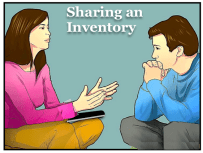
• CHECK – After taking an action, did you get the concrete results you hoped for? How did others respond? Was anything missing? Were the benefits greater than you imagined?….

• EMOTIONAL – How did taking that action feel:  Make you happy & more confident, or leave you feeling empty or bad about yourself? Were you disappointed & less satisfied, or you did feel stronger & empowered ?

NEXT: Why are you Stuck?

What to DO when CONFUSED (Part 6)


PREVIOUS: What to do….#5

POST: “ACTIONS – healthy opposites”


💠 ACTIONS: UNRAVELING CONFUSION (cont)
3. PRIORITIZE // 4. OPTIONS

5. INVENTORIES (cont)
REMINDER: ACoAs were trained to thinking the worst about ourselves. So doing many different kinds of inventories is crucial. Knowledge is power, & we already know a great deal (“I know what I know”), & the rest we can learn. MOST IMP – every Character list needs to be a positive one, about our core Self & what we aspire to. This is crucial to being clear-headed, the opposite of confused. (More….)

a. Venn Diagram Inventory (in Part 5)

b. Fill in the charts in theWhy are you stuck?” post
Choose responses that strengthen your True Self. Which ones:
• have value & importance to you or to the activity you’re engaged in
• are realistically do-able, at your present level of skill & Recovery
• make you feel good about yourself, especially afterward
• keep you in reality, rather in escape mode

• are the most enjoyable for your Inner Child (must be healthyassessment)
• are the least emotionally painful (if all choices will hurt) – OR
• have the least harmful consequences to yourself – AND
• benefit your personal growth / recovery the most
• break a Toxic Rule – which will empower you

c. Use this T.EA. version of “Relationship FORM A” for yourself. ⬇ Pick any topic you’re dealing with
EXP 1.  The WIC’s reaction to something the Adult wants / needs to do
EXP 2. The PP’s reaction to something the Adult wants / needs to do
EXP 3. The healthy UNIT talking to the WIC (in Part 7)

These are not dialogues, but rather info about the damage ego states.
For that see the “UNIT” posts & Lucia C’s workbook.
~~~~~~~~~~~~~~~~~~~~~~~~~~~~~~~~~~~~~~~~~~~~~~~~

ME: WHEN I (the Adult) WANT TO / THINK ABOUT (A)  __________________________
CHILD or PP: I/you FEEL (E) ______________________________________
because I/you BELIEVE that (T) _______________________________________________________
SO I/you PREVENT YOU/ME (the adult) FROM _________________________________________________________________
BY (actions & words – A & T) _______________________________________________
_____________________________________________________
because it’s less scary than having to:
a. FEEL (E) ________________________________________________
b. & DEAL WITH (A & T) ____________________________________________________

~~~~~~~~~~~~~~~~~~~~~~~~~~~~~~~~~~~~~~~~~~~~~~~~~~~~~~~~~Qs

EXP #1 – Man with Inner Child
MAN: WHEN I WANT TO approach & talk to any woman I find very attractive

CHILD
: I FEEL afraid, ashamed, embarrassed (Es)
because I BELIEVE that I’m not attractive, I’ll be awkward, won’t really know what to say, I’ll be boring, she’ll see right thru me (not lovable) ….(Ts)

SO I (WIC) PREVENT YOU (adult) from approaching an attractive woman
BY thinking I’m not good enough, they’ll laugh at me, “Who do you think you are…” (Ts)
because it’s less scary than having to:
a. FEEL humiliated, rejected Es)
b. and/or DEAL WITH being ignored, OR ending up with someone I’ll either have to take care of OR who will try to control me (A & T)

NOTE: The WIC comes from S-H & FoA, so believes that ALL outcomes will end up in painful abandonment, never with any successful or happy ones. Paralyzing!
~~~~~~~~~~~~~~~~~~~~~~~~~~~~~~~~~~~~~~~~~~~~~~~~

QsEXP #2 – Woman with Bad Parent
WOMAN (adult): When I THINK ABOUT giving up trying to stop you from drinking:

Pig Parent
(Introject) : I churn up FoA panic & guilt in your WIC (Es)
because I (PP) remind YOU (adult-child) that it’s all your fault that I’m miserable (“Why did I have to have a kid like you!?), AND I n-e-e-e-d you (VERY confusing)
so that the kid (WIC) will stay convinced that unless you keep trying, I’ll die, & then you’ll die (Ts)

SO I (PP) PREVENT YOU (adult) from forming & maintaining your boundaries
BY making you remember how I (real mother) blame, whine, attack verbally / physically, drink more, get sick, am depressed, threaten suicide…. (As)

because it’s much safer than having to:
a. FEEL my abandonment & S-H, being lonely, helpless, incompetent….
b. &/or DEAL WITH taking care of myself, being responsible for my actions (A)

NOTE: The PP holds the actual parent’s S-H & FoA, which we =as children – picked up as a burden to carry for them – out of love. But added to our own, it pounds us into the ground.
~~~~~~~~~~~~~~~~~~~~~~~~~~~~~~~~~~~~~~~~~~~~~~~~

❇ Identifying what our unhealthy inner ego states are telling us gives us clarity to counter the confusion, so our ADULT can override the self-defeating thoughts.

NEXT: What to do… #6