NEEDS – from DAMAGE (Part 3)

PREVIOUS: NEEDS – 3 Categories (Part 2)

POST: SYNOPSIS – Unhealthy & Healthy RULES


Categories of NEEDS: 1. Human, 2. Personality, 3.Damage

3. DAMAGE
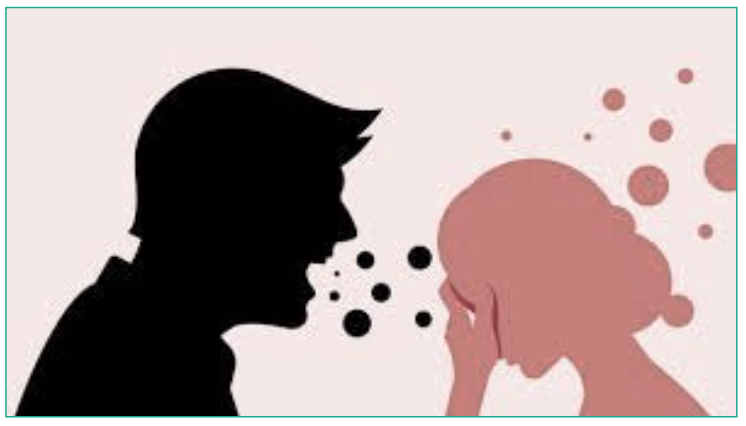
These needs are extreme (EXP: being very needy), & can often seem bottomless – nothing is ever enough. They’re accompanied by a great deal of anxiety & anger – because we’re not allowed to have needs, BUT can’t get rid of having them!

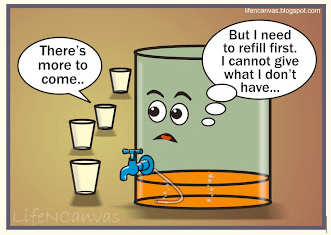
As children, our normal, human child-needs were a burden to our parents – not because we were “too much”, but because our family was too preoccupied with their own unhappiness & addictions. They DIDN’T HAVE IT to give us – not even those who ‘meant well’!

Unhealthy styles for each “COLOR” type, from Part 1 (SITE…)


EXPERIENCING REACTION to childhood events
a. Our specific personality (in Part 2 – True Self) influences how we respond to everything in our early environment. This is clearly visible in how / why sibling can be so different from each other

b. The way each child is treated (differently by birth order, gender AND style….) in the family & outside – contributes to the kind of damage-needs each of us has

Jungian analyst Donald Kalsched, exploring various archetypes of our psychological self-defence system in response to trauma, (2006) asked :
‘What is it about trauma that leads people to sabotage the road to healing?’….

Archetypes are primitive energies & emotions not easily assimilated by the conscious mind. They show up as characters in myths, fairy tales, theatre & film, as an inner figure swinging between protecting & persecuting us…. (⬆️ CHART )

Simone Weil wrote : “The True god turns violence into suffering. BUT the False god turns suffering into violence.” This double-edged self-care system in the traumatized child becomes the “false god” – its anger is turned inward, splitting the psyche between a supposedly inadequate ‘self’ & the critical inner protector.

…. When a child is consistently abused, its healthy developmental is compromised. Its core essence (the creative, relational, authentic spark of life) goes into hiding, deep into the unconscious – part of the Jungian Shadow.  (CHART explained ➡️)

…. The moment of this survival-dissociation is miraculous, since defensive splitting preserves the child’s psychological core in an encapsulated state,
but it’s also tragic because it forces the child to step out of the reality & vivacity of life. Having to separate itself from too many unbearable experiences, the child’s psyche goes into trance, causing it’s capacity for genuine trust in human relationships to slowly disintegrate.

….This split is cemented into the fabric of the child’s development process, & a shame-based identity becomes the filter through which it will then see everything.  Paradoxically – in the name of survival, this archetypal defense says “NO!” to life, as expressed in the last line of ‘The Rose’ : “And the soul, afraid of dying, that never learns to live”  (MORE…. excellent)

⬅️ CHART : • Barely meeting our needs (limited actions) leads to anxiety & ‘starvation’.
• The more we take healthy actions, the greater the personal empowerment & satisfaction.
• How much effort we put in also depends on how important a specific need is to us

♨️Trauma-related needs caused by our damaged past are ‘housed’ in the WIC, who was neglected, abandoned & abused. For severely wounded people, much of what we believe is our identity – is actually a distortion of our Original Self, masked by the conforming “False Self we had to create in order to survive.

EXP = desperately trying TO :
❗️always feel safe (even more than to be loved)
❗️have everyone always be consistent / dependable
❗️insist on being heard / visible  – by everyone
❗️always have an impact, everywhere (effective)
❗️never be hurt / abused / ignored
❗️never experience any form of loss or abandonment
❗️always use others to take care of us (emotionally), give us permission – to exist, do things for us that we can do for ourself…

To successfully deal with this 3rd category, we have to distinguish between ways we were wounded, the resulting unhealthy needs AND then how we deal with them, which can either be:
a. UNhealthy – the most common ways in pre- & early Recovery
OR
b. Healthy
– ways we provide Adult & Child needs, using the UNIT in all 4 PMES ways, to feel safer & make up for what we missed out on originally.


NEXT: CHRONIC LATENESS, #1

NEEDS – from PERSONALITY TYPE (Part 2)


IMAGE ⬆️ posted
byu/snake-chick – INFJ (July 2020)

PREVIOUS: NEEDS – 3 Categories (Part 1)

SITE: “Correlation between Human Needs system, Personality & Motivation”  (Economic approach to needs & preferences = Scholarly article, Romania)

POST: My Rights  // Our Wounded Child

3 Categories of NEEDS (Ns) : Human, Personality, Damage

2. PERSONALITY (cont)
🤓 In Recovery,
the goal is to identify as many of our personality QUALITIES, which connect to our needs, AND finding healthy ways to provide them, both by our selves and through our relationships with others – one-to-one, in groups or from the larger world.

EXPs
• Artistic types need to express their talents with imagination & self-expression vs the Scientifically oriented who need order & proof
• Introverts need a lot of down time vs Extroverts
• Emotional types need to identify how someone / something feels vs Thinking types who need to ‘logic it out’
• Loud people need a ‘platform’, an audience & many outlets vs quiet ones who need peaceful surroundings….
AND
• Parental types need to care for children vs non-‘nurturers’ who prefer work
• Realistic Idealists – to accomplish something valuable for humanity vs Worker types who only focus on the task at hand
• Physically oriented need to move around a lot vs more the sedentary…..
• Those who love ‘green’ nature vs water environments…..
➡️ LIPS : Personality Tests

🤓 Theories of personality are based on motives, which can be seen in behaviors which are controlled by needs (see Part 1). While some are temporary & changing, others are more deeply seated in our nature.

Henry Murray, (American psychologist, 1893–1988) described psychogenic (inborn) needs as a “potentiality or readiness to respond in a certain way, under certain given circumstances.” They function mostly on the unconscious level, while playing a major role in our personality.
These needs include:
Affection Ns – our desire to love & be loved
Ambition Ns – for achievement & recognition
Information Ns – to gain knowledge & share it with others
Materialistic Ns – for acquisition, construction, order & retention
Power Ns – both for our own independence, & to control others    (Explanations….)

🤓 Study with 2,477 company apprentices in Germany
✦ Apprentices distinguished between need-satisfaction in different contexts (vocational training & work)
✦ Personality traits, mainly predicting life satisfaction
✦ Basic psychological need-satisfaction (BPNS) predicted context-specific outcomes, more than Personality Traits (More…)

🤓 From Bell Labs , one of the most productive R&D labs – “8 Key Personality Types for Innovation Teams”:

• Analytical type (T) – who has the need to figures out a sustainably profitable business model
Consensus T – a need to help everyone collaborate well
Get Stuff Done T – the need to push team to complete a minimum viable version of the product, & get it to market early

Happy Go Lucky T – who need to keep things lights, as a playful life-the-party, especially during idea creation & innovation
Perfectionist T – they need to quality-assurance-check the product
Pragmatic T – the need to test all dreams against reality
Supportive T – a need to encourage everyone on the team
Visionary Creative T – need to see the world as they would want it to be (Described)

🤓 TYPES (by Color….) The Tendencies listed for each type can be considered needs / desires they want fulfilled – although not all may be possible, or only to varying degrees, depending on internal or external circumstances.

ALSO: other ways of identifying Personality Needs is by looking at the characteristics of your particular ENNEAGRAM and MBTI type ….

🤓 From TRYTON Capital Investors – chart shows the 9 types of investor personalities, which identifies each one’s specific NEEDS.
“‘Behavioral Finance’ combines psychology & economics to explain why & how investors act, & analyze how that behavior affects the market.
Based on where someone falls on the axis we can make a number of assumptions about your objectives, your attitude towards risk & then what may or may not be a suitable investment …..” (MORE….)

🤓 4 CUSTOMER Types & how to SELL to each
◆ Amiable – picky hoarder in the best way
◆ Analytical – values information
◆ Driver – goal-oriented decision maker
◆ Expressive – outgoing social junkie (Descriptions)

WHICH of all these many NEEDS do YOU identify with MOST? A combined of 2 or 3 main ones?
Can you also identify family, friends & co-workers? 

NEXT: Category 3. Damage-needs

NEEDS – from Being HUMAN (Part 1)

PREVIOUS: Synopsis of Family RULES

SITE:  6 Human Needs Test (see chart below)

POSTS: How to use Diagram ⬆️  // Definitions – review 

3 Categories of NEEDS (Ns) : Human, Personality, Damage
💡
Each must be considered in terms of PMES – physical, mental, emotional & spiritual. Everyone is born with the first 2, & all who come from dysfunctional backgrounds (alcoholic, narcissistic…. ), have the 3rd one – to varying degrees.

Many ACoAs are only aware of #3 – if at all, AND mistakenly assume “It’s just the way I am” – but is actually the “False Self” coming from early abuse & neglect.
💗 The goal of Recovery is to uncover & honor the first 2, & work on healing the third.

1. HUMAN

If our basic needs are fulfilled, we feel good.
We experience pleasurable emotions such as joy, contentment & healthy pride. Although we all have the same ones, specific needs are more important to some than to others (knowledge, beauty, safety….). Also, which strategies will best satisfy them depend on our experiences, personality, & the amount & quality of information we have about ourselves & the world. (school, self-study, apprenticeship….)

Naturally, no one can constantly or totally fulfill all their needs. Even a healthy person who experiences a severe disruption in life can get temporarily thrown, but with time & help will return to their previous equilibrium. Being able to deal with problems & shocks can be a positive – to develop trust in themselves & their ability to handle challenges.

However, if basic needs regularly go unmet – especially in childhood, as with many of us ACoAs – we end up with constant anxiety, depression & self-hate.
But since it’s not possible for human needs to dissolve & disappear, they accumulate & stay with us in exaggerated form, controlling our behavior in negative ways. (See Part 3 – “Damage Needs“).

IN GENERAL: Human needs drive our behavior. THINK OF :
✦ Needs as motives, means that all actions can be understood as being formed by the quest to satisfy or actualize our needs
✦ Needs as societal requirements – for flourishing & experiencing a good life. They indicate what’s necessary to avoid serious harm, & to participate in our society, whether or not others push us to act
✦ Needs as requirements to achieve a certain outcome (goals) like self accomplishments, self-fulfillment, happiness (More….)

Primary : based on biological demands (oxygen, food, water….)
(see Maslow Pyramid of Needs )

Secondary : generally psychological, such as the need for nurturing, independence & achievement. While they may not be required for basic survival, they’re essential for well-being

Basic, normal needs apply to everyone = male / female, young / old, all nationalities & religions  (List of MANY MORE….needs)

= = = = =
2. PERSONALITY
This group is what’s called the “Natural Self” – your specific needs, springing primarily from the type of person you were born as, although everyone is some combination of qualities – in differing proportions. What we’re looking for here are long-term patterns – the predominant interests & talents of your whole life, starting in childhood. (Use Our Time line Inventory)

They can be needs expressed at interests & talents which showed up early on, but may have been suppressed & ignored because of discouragement or trauma.
OR they can be tendencies we’ve always been aware of but only partially realized. Specific personality needs also can be seen in gender differences – how males vs female brains function.

Carol Dweck, a Stamford psychologist, coined the acronym “BEATs” = Beliefs, & the Emotions + Action-Tendencies stored with them. They’re made up of experiences accumulated in trying to meet all needs, expressed by our individual personality, invisible & visible. (⬅️CHART)

She identified 3 basic psychological Ns :
— to predict our world
— for acceptance from others
— to build competence to function in the world.
 

“Infants arrive highly prepared to meet these needs — they are brilliant, voracious learners, on the lookout for need-relevant information. As they go about trying to do this, they start building beliefs about their world & their role in it: Is the world good or bad, safe or dangerous? Can I act on my world to meet my needs (do I have an effect?)   (More….)

NEXT: Personality needs CONT.

HOW to/not to TALK to KIDS – Examples (#3)


PREVIOUS: HOW to/not to TALK to KIDS – Examples (#2)

POSTS : UNIT – Healthy Adult, Loving Parent


More negative vs. positive ways to communicate with a child. SAME great ways to talk to the INNER CHILD !


❣️

❣️

❣️

❣️

❣️

❣️

❣️

❣️

NEXT : Human Needs

HOW to/not to TALK to KIDS – Examples (#2)


PREVIOUS: HOW to/not to TALK to KIDS – Examples (#1)

WorkBook : ‘Recovery of your Inner Child”  ∼ Lucia Capacchione, PhD

More healthy ways to talk to a child. They suggest ways you can respond to your INNER CHILD from the Good Parent ego state !


❣️

❣️

❣️

❣️

❣️

❣️

❣️

NEXT : HOW to/not to TALK to KIDS – Examples (#3)

HOW to/not to TALK to KIDS – Examples (#1)

PREVIOUS: Unhealthy vs Healthy family

SITE : “Self Talk: Internal Dialogue of the Subconscious Mind

Excellent reminder, which applies to all of us, no matter what our preferred defense mechanism or addiction of choice


NOTE: All images are taken from the Faber & Mazlish book, but some titles & comments are reworked, because the authors use the word “Feel” to include emotions, thoughts & actions. This is confusing & inaccurate. (See posts : “Use Think instead of Feel“)

Apply this info YOURSELF first
Many ACoAs remark that they don’t know how to talk to their Inner Child. That’s understandable, since that was never modeled for us.  These scenes can help with that lack. They contrast the unhealthy abandoning ways we were treated vs. healthy, loving communication. (Posts: “Being Loved“).

Use them as a basis for great conversations with your INNER CHILD !
❣️❣️

❣️

❣️

❣️

❣️

❣️

NEXT: HOW to/not to TALK to KIDS – Examples, #2

SYNOPSIS: Unhealthy vs Healthy Family RULES


ARTWORK ⬆️ “His & Hers” and  ⬇️ ” Good vs Evil ” designed & created by DMT (2018 & 2019)

PREVIOUS: “I who have nothing”

POST: Toxic Family Rules // Healthy Rules  

🛎 You Tube : Homecoming (Part 1) John Bradshaw

BOOK review : Homecoming – Reclaiming & Championing Your Inner Childby John Bradshaw 
This book answers: “How can I let go of my bitterness about the past, learn to love myself, and how can I parent myself?”

 “PERMISSIONS” in a HEALTHY ENVIRONMENT
 5 FREEDOMS: It’s OK to feel your emotions, think your own   thoughts, have your own opinions, want what you want, & imagine.
It’s your right!


NEXT: How to Talk to Kids, #1

“I Who Have Nothing” Song Evaluation (Part 2)


PREVIOUS:
“I Who Have Nothing” by Tom Jones (#1)

See Part 1 for the Tom Jones rendition (or in YouTube)


💔  “I Who Have Nothing” 💔
I who have nothing, I who have no one – adore you & want you so
I’m just a no one with nothing to give you, but oh – I love you

He, he buys you diamonds, bright sparkling diamonds
But, believe me, dear, when I say That he can give you the world,
but he’ll never love you the way I love you

He can take you any place he wants, To fancy clubs and restaurants
But I can only watch you with My nose pressed up against the window pane

I, I who have nothing. I, I who have no one
Must watch you go dancing by Wrapped in the arms of somebody else – when, darling, it’s I who loves you.
I love you, I love you, I love you
EVALUATION
The SINGER (in this case a man)
💔 “I who have nothing, I who have no one…. I’m just a no one with nothing to give you”
◆ Is he is actually poor, maybe unemployed?  An average person, maybe a middle-class worker….?
◆ Clearly he has deep-seated self-hate (S-H), regardless of what his actual status & ability is in life
◆ He’s comparing himself – negatively – to her. She has all the power to get the best things in life, & he is powerless
💔 “I who have no one
◆ Why is that? Is he an isolate, because of S-H? Is he old, physically ugly or deformed? Or have a mental illness….?
◆ He would rather pine away for something out of his reach, rather than search (& find) a woman who can love him in return! (He’s in the reverse of the Serenity Prayer)
◆ Continuing to watch her with someone else is a way to keep torturing himself – unnecessarily!
◆ That way he doesn’t have to focus on himself, maybe even get the help he needs to improve his self-esteem & find realistic options
💔 “adore you & want you so
◆ He lives in a fantasy world of envy & longing
◆ He’s obsessed with this particular woman – who is obviously unattainable
◆ Even more to the point – he has never actually met her, only seen her at a distance, so he has no idea what she’s really like
◆ Since he’s never met her – he’s totally focused on her externals – she’s likely beautiful, & obviously dressed to the teeth
◆ There’s no way for the singer to find out what kind of person she really is inside – he might be very dissapointed
💔 “but he’ll never love you the way I love you
◆ Ironically – in spite of his S-H, he believes he is capable of loving, AND can love her more than the man she’s with – even though he’s never met that man either!
◆ He may be equating bring rich with being shallow & lavish spending with arrogance / narcissism, OR with insecurity, that the rich man is “love buying“.
From: “Money Madness: The Psychology of Saving, Spending, Loving, and Hating Money”. Goldberg, H., & Lewis, R. T. (1978)
These motives may be true for some, but the singer is projecting his own assumptions onto a stranger (not thinking accurately – see list of some cognitive distortions as in Generalizing)
The WOMAN:
💔 “He, he buys you diamonds, bright sparkling diamonds…..
◆ We don’t know if there’s a real relationship (love, respect….) between the couple – it may be very new, superficial or…..
◆ She may just be using him for the “good life” – in which case she is not ‘worthy’ of admiration, much less the singer’s passionate love
◆ It’s not likely that she’d ever be interested in this poor, self-deprecating man
◆ She may be shallow, narcissistic & ‘high maintenance’ ….. OR just having a good time, for now
◆ She may come from a rich family & this is how she’s used to being treated …..
WHAT DO YOU THINK?  You can add evaluation, suppositions or conclusions of your own – about all 3 characters in this song.
— Do you identify with any of them?
— Do you know anyone like one of these characters?
— Have you gathered / learned anything useful from the analysis of this song?
Feel free to leave COMMENTS.
DMT

NEXT ??

“I Who Have Nothing” Song Evaluation (Part 1)


PREVIOUS: 2 ego states – reprint

SITEs:  The Narcissism of Romantic Obsession

👄 The Untouchable Woman


A CHALLENGE : How AWARE are you?

This post is about listening to people – looking at the lyrics of the TITLE song, from a live performance by Tom Jones in 1970. I like this rendition of his the best, even better than Shirley Bassey’s.

Not everyone is familiar with Sir Jones’ work for the past 60 yrs.
He’s 80 this year (2020) AND still going strong – his voice as clear & powerful as ever. He’s been a coach on ‘The Voice UK’ on & off for 4 yrs, 2003 – 2020. (Solo concert, 2017)

But this post is not about him.
It’s a challenge to ACoAs, whatever your level of Recovery. If you’re willing to listen to this YouTube video (lyrics below), how would you evaluate the characters in this song? – in psychological terms, based on everything you know. In this exercise, see how clearly you can identifying what the man in this song is telling us about himself.

It’s true that people tell us about themselves all the time, even at the first meeting, often without realizing. The more we hear & see others clearly & realistically, the better we can choose our friends, mates & jobs.

What are you picking up AND acknowledging? (ACoAs think accurately about a situation or conversation that’s doesn’t seem right BUT automatically negate those thoughts & therefore don’t follow thru on them – to protect or stand up for ourselves).

How many different issues / comments / conclusions can you come up with? Include alternative explanations.
EXP:
◆ what kind of person is he? ◆ what about his love? ◆ who is the woman? ….

If you’d like, write them down, & you might even choose to post them in the comment section.  I’ll list my observations in Part 2.

💔  “I Who Have Nothing” 💔
I who have nothing, I who have no one – adore you & want you so
I’m just a no one with nothing to give you, but oh – I love you

He, he buys you diamonds, bright sparkling diamonds
But, believe me, dear, when I say That he can give you the world,
but he’ll never love you the way I love you

He can take you any place he wants, To fancy clubs and restaurants
But I can only watch you with My nose pressed up against the window pane

I, I who have nothing. I, I who have no one
Must watch you go dancing by Wrapped in the arms of somebody else – when, darling, it’s I who loves you.
I love you, I love you, I love you
——
(Spoken) I need you girl, I have nothing without you
I love you girl, I am just nothing without you

INTERESTING
: This song is an English language cover of the Italian song “Uno Dei Tanti” (“One of Many”), with music by Carlo Donida and lyrics by Giulio “Mogol” Rapetti.
English lyrics for “I Who Have Nothing” were written by Jerry Leiber and Mike Stoller, who also produced the first English language release performed by Ben E. King in 1963., & made popular by Shirley Bassey, in 1979.

NEXT : SONG lyrics evaluation (Part 2)

2 EGO STATES – Reprint (Part 2)

KENDRA ALLENBY, artist

Cartoons:
‘Is That the Voice of Your Inner Child (bratty teen) or Your Inner Adult?’


“I draw cartoons for the New Yorker and other magazines. I teach. I give talks. I use drawing to help organizations clarify and share their thoughts. I’m based in New York City but I go for long hikes and bike rides that sometimes last for months and I draw what I find there.  I use drawing to better understand being human.”

ALL IMAGES published in New Yorker, 3/2020

—————————-

REVIEW ACoA posts :   The UNIT (includes dialogues)
Why resist Dialoguing w/ Inner Child?