
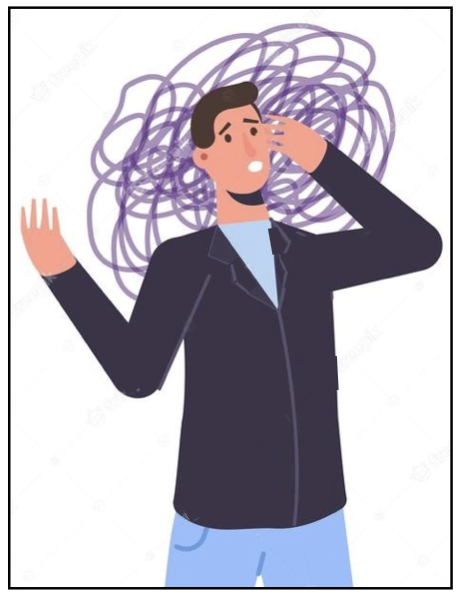
 I HAVE TOO MANY FEELINGS –
I just can’t handle them
PREVIOUS: The Body & Emotions – #4
REVIEW: “Getting to our Emotions – Under”
CATEGORIES
Many psychologists & sociologists have created their own Primary Emotions list (90 so far), some of which are seen on the Changing Minds & Alley Dog sites.
One THEORY of Emotions
A variety of concepts try to explain the source of Emotions (Es), put forth by psychologists, sociologists, philosophers & scientist.
EXP: The James-Lange theory argues that an ‘event’ first causes physical arousal (body), which we then interpret (mind). Only after the interpretation do we experience emotions (body) related to the event. However, if the physical ‘symptoms’ are not noticed or not given any thought about a specific event, then we don’t experience emotions
Here are some ways to think about this theory:
Expl: You’re walking down a dark alley late at night. You hear footsteps behind you. You start to shake, your heart beats faster & your breathing deepens. As you notice these body changes & decide this is telling you you’re in danger – then you feel fear
BUT: Those same physical symptoms can also occur when you met your exciting new lover – & your interpretation (what you’re thinking) is that this is a very good thing – so you feel the emotions of excitement, joy & sexual desire!
No Reaction: If you just found out that you lost out on a job opportunity you interviewed for but weren’t crazy about getting – you don’t have a physical response & don’t give it a second thought – so you’re not upset
Suppressed Reaction: You’re having a very busy day, running around without a moment to think. You pass by a major car accident on the street, with people screaming & bodies everywhere. You don’t stop – you’re mind is on the next task & how late you are, so you’re too preoccupied to feel anything about the event you just saw
However – you did register fear, sorrow, revulsion…. at some physical level you weren’t aware of – so maybe late that nite you have a nightmare, or the next day you’re sluggish & cranky but don’t know why!
EMOTION WHEELs
Below is Robert Plutchik’s well-know chart, a 3-D model using the color spectrum to indicate adjacent & opposite Es, (Fear opposite Anger, Sadness between Surprise & Disgust …..) The vertical dimension represents intensity & the circles are degrees of similarity.
1. Fundamental – inner circle shows the most basic Es. They are the intensity of an infant’s feelings, whose brain pathways are not yet developed enough to experience a variety of emotional nuances
2. Secondary – each row out from there are milder versions of the core
3. Tertiary – in the white spaces, each E. is made up of the 2 adjacent secondary Es (Trust + Fear = Submission; Anticipation + Anger = Aggressiveness ….)
2nd CHART indicates triads – emotions formed by combining 3 primary emotions, leading to 24 dyads & 32 triads (MORE….— also several other theories of Es)
EXP: Fear opposite Anger in extremes
• Think of some people who always seem angry. They’re using that emotion to feel powerful while covering up how scared they are, unwilling to be vulnerable (they wouldn’t be if they had a strong identity, good boundaries & healthy self-esteem!). They believe that feeling fear is a weakness & will do anything to avoid it
• Now notice people who usually present themselves as scared, delicate, easily hurt, a victim, isolating….. You can be sure that hidden underground is a lot of suppressed rage which they’ve been taught to deny & are terrified of in themself!
➼ Yes, anger AND fear can also mask sadness, loneliness, shame, guilt, hopelessness….. BUT we can actually see the difference when someone does FoO work & those extremes get evened out. The person is easier to be around since they live less in the painful Es, but can still respond with fear or anger when it’s appropriate, as well as have a wide variety of pleasurable feelings.

«
NEXT: Identifying Es #2 : W. G. Parrott’s Emotion List



 HEAL & GROW for ACoAs