ACoAs & BLAME (Part 1)

the BLAME GAMETAKING RESPONSIBILITY
is a healthier way to live

PREVIOUS: Revenge #2

SITE: “Blame – What’s the Use?” Psych & religious

PostSatir’s BLAMER Role


BLAME as a ‘social disease’
– by Carl Alasko
“Deeply embedded throughout our society is the destructive psychology of blame. We tend to view it as a necessary behavior, a way to seek justice, a synonym for accountability or responsibility. It is none of these.
In fact, blame is a four-headed beast that attacks our very spirit.

We can launch these behaviors separately or fuse them into an assault that can annihilate the intended target. Painful emotions can & do kill. Consider those who commit suicide when battered by just one of these toxic tactics – that of humiliation. Indeed, blame is so unrelentingly harmful exactly because its primary function is to injure.

• There’s also an unacknowledged psychological paradox embedded in blame that preserves its vampire-like longevity : Screen Shot 2016-06-01 at 4.04.05 PM.pngHuman beings are hard-wired to dump their uncomfortable emotions on to others. So blame helps reduce our anxieties by externalizing our fears & stresses.

Naturally this does not excuse or condone it, since humans are also capable of learning how to accept & deal with our inner ‘demons’.

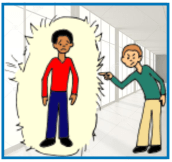
We see how political candidates temporarily surge in popularity when attacking an opponent, which reinforces the ‘value’ of the tactic. Then the opponents responds in kind, & the cycle continues. This dynamic is also at the root of bullying, whether in school or on the street. The bully’s internal anxieties are relieved by debasing another person or group. Thus blame feeds the roots of every form of bigotry, sexism and racism.”

🌀 🌀 🌀

ABUSE / cruelty : ‘Blaming the victim’ is holding someone responsible for pain they have or are suffering, especially when they did not cause it & had no way of preventing it
EXP: Born with some defect, illness, deficiency…..

Adult Blamers, in the present : the mental decision (conscious or not) to accuse someone of causing our suffering (even if accurate), WITHOUT acknowledging any possible part we may have in the source of our pain (sticking around for it, misunderstandings….)

Damaged parents often blame their children & the whole world for their own short coimages-2mings & life stressors (“Your made me hit you! If it weren’t for you I could have…..”). Then it’s only natural that as children we take on the blame. So we learned to:
• hold ourselves accountable for what was not our responsibility, AND
not hold others accountable for their bad behavior, and/OR
• blame others for our troubles, the way our parents did

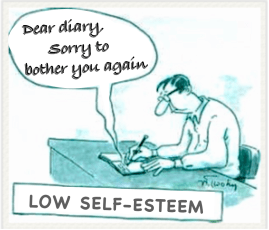
SELF-HATE is the result – incorrectly blaming ourselves when anyone hurts us, even though we have nothing to do with causing it.
ACoAs IRONY:
While easily pointing out other people’s shortcomings (as it affect us, of course), <—-> being hurt by them triggers our S-H, to deny feeling vulnerable.
Actually, we have it backwards – we blame ourselves for the source of our pain to avoid holding our parents accountable for those original wounds.

Reality : We did not deserve being blamed as kids, & we don’t deserve our S-H now, which is simply agreeing with the Perpetrators. In many alcoholic & other unhealthy families, no one recognized or took responsibility for their abusive or neglectful ways, & certainly never for their twisted thoughts & disowned emotions.

• It’s imperative for ACoAs to identify when or if someone is actually doing something harmful, neglectful, abandoning – to us or to others. If we are not sure, we can start by making a list of all the ways & times various people have hurt us or our loved ones, & look for common threads. (22 POSTs : “What just happened?” re. Noticing Painful Events)

This inventory is a sincere effort to clarity what we’ve experienced, especially when at the hands of someone who is taking out their damage on us.
The legitimate motivation for this kind of writing has to be the desire to identify & distinguish between:
• when we’re angry because of unrealistic expectations & assumptions, vs.
• breaking denial about harmful relationships we hang on to, so we can outgrow the addiction to abuse

NEXT: Blame #2
Victimizing OURSELVES (Part 1)

OH NO, I’M AGREEING – with my Bad Voice (again)

PREVIOUS: Abuse of children   


OLD PAIN vs. NEW PAIN
Old Pain (Abandonment) is made up of the daily misery we lived thru as kids, with no way to process or get help dealing with it.
It accumulated in our body & in our spirit, much of which eventually went underground, into our Shadow (the unconscious).

New Pain (Self-Hate) is the suffering we now do to ourself & allow** others do to us – acting-out our family’s training. This layer gets added to the old abandonment & the accumulation wears us into the ground.

**Re. “allow” : Denial makes it hard for us to recognize abuse as it’s happening, so we do not consciously choose to let others hurt us, but unconsciously gravitate to the familiar – & then stay!

• So it’s important to keep awake for what’s happening to us & around us. Having been exposed to rage, fear, neglect, disrespect, torture …. as kids, ACoAs are both drawn to AND are more deeply affected (badly) by negative people, places & things.

It’s like having an open wound that keeps getting bumped – it’s injured more & more, so it hurts worse, AND never has time to heal. We’re hyper-sensitive to uplifting and deflating energies, & need to stay away from harsh environments even more than ‘normals’ who are much less damaged.

EMOTIONAL ABUSE (E.A.)  to Ourself
Keeping PMES in mind, most people think of abuse only in Physical terms (beatings), but the damage we originally sustained was first & foremost Emotional. From earliest childhood ACoAs were trained to tolerate abuse in both subtle & blatant forms, which then became our default position.
In order to stop being tortured unnecessarily – now, observe how you Victimize yourself in ways that keep wounding your feelings.

 1. Self-HateS-H heads
As adults the most violent source of E.A. is our own inner Pig Parent (PP) voice, which generates relentless negative beliefs & demands we listen to & believe. Many of our troubles come from the WIC obeying this Introjected part, not wanting to let go of old ways which represent loyalty to our family system.
Monster : “Self-Hate” expressed in T.E.A. forms
E.As : Terror, hopelessness, self-pity, FoA, loneliness, desperation

2. Addictions
Again, most of the focus is on the Physical damage & results we experienced, & not enough stress is put on the Emotional devastation . OUR addictions (food, sex, spending, work, relationships, exercise….) are specifically designed to repress / suppress painful Es & memories – to silence the PP voice which tortures the WIC!
E.As: Shame, S-H, guilt, hopelessness & abandonment fear – from Toxic beliefs, AND from the immature / harmful / crazy things addictions ‘make’ us do.

3. Going to the wrong people….
…. to share personal issues, secrets or deep pain with – as well as marry! Their worthless or harmful reactions make us feel worse – betrayed, alone, enraged, hopeless, suicidal.bad people
The key point here is that we often go to people we already know from experience are not safe, but refuse to acknowledge it!
We’ve been disrespected, blown off, controlled, told what to do – before– by these people, instead of just listening to us & being sympathetic, YET we keep going back!

☀︎ Our denial of past & present reality has turned into self-abuse!
At best those unsafe people are out-to-lunch, at worst they’re assaultive. ACoAs say: “But they’ve been there for me in the past, so I owe them gratitude & loyalty”.

Maybe they were OR or maybe we just thought they were because of our own level of ignorance & denial. But the clues to their real & potential abandonment were always there. Being mentally & emotionally unawares (not our fault) made it easy for us to not recognize other people’s limitations or cruelty.

To quote Toni Morrison (& Oprah) – “When you know better, you do better”
As adults we are responsible for being in situations to be Emotionally Abused by certain people. In essence we’re letting our PP or the WIC keep drawing us back to empty or poisonous ‘wells’ for comfort, guidance & support! Not going to happen!
E.As: Confused, abandoned, angry, longing, demeaned, depleted

NEXT: Victimizing Ourselves (Part 2)

ABUSE of CHILDREN (Part 1)

WHAT DO THEY EXPECT?
I’m just a little kid!

Previous: Partner Abuse

SITE: “Emotional Trauma in the Womb


Abuse PATTERNS
: the following categories come from several Child Abuse sites. These 13 categories are mainly perpetrated by immediate family, but can also come from other caretakers, teachers & peers.

1. REJECTING
DEF: Absence or withdrawal of parents of warmth, affection, care, comfort, concern, love, nurturance, support or warmth

Expressed in various physically & psychologically harmful actions & emotional reactions (disgust, anger, disappointment…) :
🔸indirect (lack of emotional validation, encouragement, feedback…) or
🔹direct (“I never wanted children in the first place”). Negation tells the child it has no value as a human being.

• Children rejected from the start develop a range of disturbed self-soothing behaviors. Such infants have very little chance of developing into a healthy adult.
Rejecting child’s Actions, Needs, Worth – BY:
• constant criticism – nothing is never good enough
• excluding child from family activities or expel child from ‘inner circle’
• expressing regret the child wasn’t born the opposite gender
• frequent teasing about child’s body type or weight
• physical abandonment, deny child’s existence
BY:
• regular verbal humiliation, name-calling with : demeaning jokes, labels such as geek, over-sensitive, selfish, stupid, ugly, worthless ….
• refusing hugs & other loving (non-sexual) gestures
• not allowing the teen to make own reasonable choices
• treating a teen like she/he is still a young child
• yell, swear at or verbally attacking the child

FACT:  Rejection is the most insidious form of emotional abuse.   In the Baumeister: Rejection’ study students were randomly assigned ‘rejection experiences’. It found that subjects’ IQs dramatically dropped, disturbing their ability to reason, while increasing aggression.
💔
2. NEGLECTING 
DEF: “An ongoing pattern of inadequate care (4 types) – the parent not providing many fundamental, age-appropriate childhood needs (education, emotional nurturing, health care, nutrition, safe housing, supervision….) — even though financially able, to such a degree that the child’s health & safety are endangered (NCANDS, 2007)….

• Neglect can be the result of parents abusing drugs & alcohol, being physically incapable, depressed, hospitalized… but more often because they don’t want to deal with the many PMES needs of their children.
EXP: Anger at a young child for not meeting parental expectations re. a developmental stage (walk, talk, potty train – by a certain age. Infant not ‘allowed’ to cry …)

They may provide the Physical basics (food, clothing, shelter), but NOT▫️ Emotional  = love, comfort, acceptance, admiration …
▫️Mental  = general conversation, specific info, teaching, what to expect in the world…
▫️Spiritual needs = moral & spiritual modeling…. ( “7 Spiritual needs”  )

😪 Often, neglected children don’t want to go home at the end of each school day, are constantly tired, depressed & feel like they don’t belong anywhere.
IGNORING children deprives them of all the essential stimulation & interaction necessary for emotional, intellectual & social development. (RESULTS….)

3. EMOTIONAL Abuse (E.A.)
DEF: ✒︎”Acts of omission by parents or other caregivers that have caused, or could cause  – serious behavioral, cognitive, mental, or emotional disorders  (Nat. Center on Child Abuse & Neglect)
✒︎”When a child is regularly threatened, yelled at, humiliated, ignored, blamed or otherwise emotionally mistreated”.  (AMA)

❖ E.A. is a type of brainwashing which leaves deeper & longer-lasting scars than physical ones, eventually showing up as problems in all 4 PMES levels. E.A. includes:
• excessive teasing of infant or child, ridicule youth in public
• repeatedly tell the child it caused the divorce or death of a patent ….
• telling a child it’s adopted (when it’s a lie) as a punishment
• threaten to give them away or send them to an orphanage

Belittling – one of the most common forms, when the caregiver acts as a extremely distorted mirror – so the child sees themself described as : lazy, selfish, unlovable, worthless….
This slows the growth of the child’s talents & skills, or inhibits them altogether, severely limiting the child’s own sense of identity & what they can accomplish

E.A. systematically wears away the child’s :
• ability to judge situations realistically
• ability to take in compliments & trust positive reinforcement from others
• belief that anyone else could ever want or love them
• self-confidence, sense of self-worth, value & identity
• trust their own perceptions, thoughts & experience
• willingness to try new experiences, or to take appropriate risks
SEE posts on E.A.

NEXT: Abuse of Children (Part 2)

TRAITS: PARTNER Abuse

NO MATTER HOW HARD I TRY
we never seem to get along

PREVIOUS: STYLES (#3)

SITE: Lilac Lane’ re. Partner Abuse


CATEGORIES of Abuse

🩸Does the person you love hurt you?  Just because they don’t mean it – doesn’t mean it’s not happening!

This list focuses on live-in relationships with a spouse / partner, but you may have witnessed these patterns happening with your parent, siblings or friends
• The loved-one may be alcoholic or other kind of addict, mentally ill, have a chronic physical illness &/or a severe personality disorder (NPD, rage-aholic, psychopath, paranoid ….)
OR
• they seem like the ‘normal’ one & you’re labeled the crazy one

♟ Since abuse is not gender-specific, h/h (him/her) or an underline is used to indicate a specific Perp – so, fill in the initial of yours!

1. EMOTIONAL 
YOU (as victim) =  I….
• feel guilty about ___’s resentments toward me or anyone else
loss• feel depressed, anxious & are often or always afraid of ___
• give in to ____’s controlling because of their constant harassment
• have become extremely dependent on ____
• I’m nervous, anxious or worried about:
🔸 ___’s attitudes, moods or anger, even when h/h’s not around or is quiet
🔸 ___’s sarcasm, criticism, frowns, glares, gestures (finger-pointing….)
🔸 setting ____ off or getting the silent treatment

• my relationship is at a cold stand-off (few disagreements, but with a wall between us), but I won’t or can’t leave

THEY = HIM /HER (as perpetrator)
• blames me for all h/h problems & suffering
• constantly puts me in no-win situations (double binds)
•  ____ humiliates me in public, flirts with others in front of me
alcohol/abuse• is always needy & makes me wait on h/h hand & foot
• refuses to be happy or pleased – with anything, especially about myself
• periodically threatens to kill h/h self & says it will be my fault
• poisons the emotional atmosphere in the home with constant negativity
• uses the children to get control by undermining my parental authority

2. COGNITIVE (mental)
YOU the V. = I….
• am automatically defensive & reactive, even in ‘neutral’ situations
• edit my thoughts before saying anything, as self-protection
• hide intelligence & information I have, to not threaten ___
• know it’s not safe to discuss with ___ what’s bothering me
• think if I just tried harder, things would be alright

THEY = HER /HIM 
• constantly berates, belittles & intimidates, under the guise of “helping, guiding, teaching, just giving advice”, destroying my verbal abuseself-esteem
• ___ is ‘perfect’, never wrong, knows it all, talks AT me
• ___ is ok one minute & into a tirade the next, over seemingly nothing, or always about the same old things
THEY
• make all major decisions: where to live, furnishing the home, type of car
• teases or ridicules me for lack of specific info, how I express yourself, my vocabulary, accent….
• trivializes, insults or negates any of my accomplishments
• treats me like a helpless & stupid child, refusing to listen to my ideas or suggestions

3. PHYSICAL / PRACTICAL 
YOU = I….
• am accused of being unfaithful if I just talk to someone of the opposite sex (or same-sex – if applicable)
• don’t have the energy to fight back, set boundaries, object to anything
• feel obligated to have sex, including doing things I’m uncomfortable with – to prove my love, OR just to avoid an argument about it
anxietyI….
• get a pain in the pit of my stomach, have headaches, muscles pain, twitches…. that don’t come from physical exertion
• get criticized for any action I take unless it’s exactly suits ___’s taste or whim
I….

• have come to believe that nothing I do is good enough, so I constantly second-guess my actions before doing anything
• have to live too much in the moment – can’t plan ahead for fear of ___’s negative response to any of my plans or ideas
• tense up when I hear the door open, or ___ comes into the room
• AND when I walk by ___, my shoulders tense until we pass each other
(Article: “Being hated, Feeling hated, Overcoming self-hatred)

THEY = HIM /HER 
• constantly criticizes my weight, looks, they way I dress…
• controls all financial decisions, withholds important financial information
criticizer• ___ denies or limits my access to work, further education or other growth opportunities
• ____ has given away, destroyed or thrown away my belongings
• isolates me from friends, family or other groups
THEY  
• limit my financial or other material resources ($, food, clothes)
• steals from me, runs up debts & leaves me to handle them
• threatens to harm or get rid of pets
• threatens to harm the children, or leave with the children
• withholds sex as punishment instead of talking openly about something they don’t liked / are mad about

ADD your own experiences!

 NEXT: Abuse of children #1

What is EMOTIONAL Abuse? (Part 2)

CRUELTY COMES IN MANY FORMS –
& they all hurt my feelings!

PREVIOUS: Emotional Abuse (Part 1)

SITE: Types of Emotional Abuse 


EMOTIONAL REACTIONS to Emotional Abuse (E.A.)

✶ The most important thing to remember is that ALL categories of abuse cause emotional damage. We need  to notice how those actions or words make us feel emotionally – as in – NOT happy!

UNDER
– No matter how much head knowledge we have about our issues, without doing deeper FoO work many ACoAs have a hard time even recognizing familiar abuses as they’re happening, much less feel an emotional sting. If we’re still numb from old pain & lack of self-care, it’s very hard to connect depression & S-H with being exposed to E.A.

• It’s as if we were wearing that huge white medical collar that vets sometimes put on dogs/cats – we can see over the top, but not the knife in someone’s hand as they stick it in our gut – especially if they’re smiling!
We may feel some pain, but don’t understand that it’s truly coming from outside of ourself. As trained victims from childhood, we always assume that – if we’re hurting – it a sure sign there’s something wrong with us. NOT SO!

OVER – When we do over-react emotionally to a person or event, the tricky part is being able to over-reactseparate what just happened in the present from the accumulated suffering of past abuse. Often it IS a combination of the two, in layers – like when someone’s only ‘stepped on your toe’

Instead, it feels like the foot has been cut off & we’re left bleeding, because of all the times our family did the same thing to us.
Whenever we have an intense reaction we know “If it’s hysterical, it’s historical”. We need to validate our fear, outrage, sadness…. while still staying in the present moment & seeing reality.
SO,  we can:
• double check** if something was actually an abusive situation – or are we reading into it (projection) because it’s so similar from the past.
⚙︎ ASK: “Did this current event call for such an intense reaction?
Do I feel like I’m being stomped on, discarded like garbage or my life is being threatened – when all someone did was not text immediately back, looked at me ‘funny’’, not said hello, told me what to do…..

** ‘Checking’ may include asking someone we trust for an evaluation of the event, or going back to the original person & asking what they meant by ___?, or why they did ____?.
Whether they tell us the truth or not, many times their answer will be surprising – it’s not what we thought they meant, because it had nothing to do with us.  So we could not have guessed what they actually meant!  It’s important to ask.
work abuseWe can also:
• identify unpleasant or inappropriate words & actions that did actually happen, instead of ignoring the event or how we feel. They weren’t just in our imagination.
For some ACoAs this may take outside validation too, including comparing lists of ‘My Rights’ against Abusive Behaviors.

✶ All Over & Under-reactions come from our WIC or PP. Appropriate responses (not reactions) come from our UNIT.
Learning to tell the difference between actual abuse & our projections or paranoia comes from internalizing the healing of Recovery work + accumulated information about present-day reality + validating our feelings & experiences – via meetings, reading, healers & therapists.

UNPREDICTABILITY
a. Their Reactions
Perps have drastic mood changes or sudden emotional outbursts –
✓ with unpredictable, irrational changes in reaction to you or your normal behaviors
✓ who will say one thing one day & the opposite the next, &
✓ will like what you do one day & hate it the next…
SO: mood swings
• being maddeningly inconsistent, you never know what’s expected of you
• you’re always waiting for the other shoe to drop
• you have to stay hyper-vigilant so you know when to ‘duck’

b. Constant Chaos – THEY
• are ‘addicted to drama’ causing endless upheaval for everyone
• change plans or ‘rules’ at the last minute, without informing you
• keep you off-balance, never knowing what’s real or ‘safe’, so they have all the power
• often start arguments, disagreements, create conflicts
• make promises you depend on, but rarely follow thru

NEXT: Emotional Abuse (Part 3)

What is EMOTIONAL Abuse? (Part 1)

I’M ALWAYS DRAINED or ANNOYED
after being with that person!

PREVIOUS: Grandiosity vs Normal

BOOK: “Co-dependence: The Dance of Wounded Souls” ~ Robert Burney

REVIEW posts on Emotions


EMOTIONAL ABUSE (E.A
.)
How others treat us is about them (their damage or health).
AND –  How we react to others is about us (our wounds or Recovery!)

“Emotional abuse is the foundation of all other types. It’s the most damaging part of physical, sexual, mental….(PMES) trauma done to our heart & soul, the way we were betrayed by the people we love & trust.  It’s is a devastating, debilitating mutilation of our essence – the deepest lasting wound of any abuse .” (MORE….)
Co-dependence: The Dance of Wounded Souls” ~ Robert Burney

• E.A. is also sometimes referred to as Psychological or Mental Abuse, divided into Verbal Aggression, Dominant and Jealous Behaviors – by the “Conflict Tactics Scale”.
Unlike sexual or physical mistreatment, which can cause lasting trauma with only one event, E.A. comes from repeated exposure. E.A. is :
— anything that causes fear by intimidation (US Justice Dept)
pulling hair— motivated by urges for “power & dyscontrol”** (Health Canada)

**Dyscontrol : “A pattern of abnormal, episodic or frequently uncontrollable social behavior, of repeated acts of violent aggression in an otherwise normal person, markedly out of proportion to events that provoked it, which are caused by brain disorders OR substance abuse”

E.A. comes in many guises, obvious or subtle. It’s violence experienced in any relationship which is just as damaging as physical assaults, if not more so, because it goes to the core of who we are as human beings. (Wikipedia)
Many emotional abusers operate under the guise of “teaching, advising, correcting, and/or guiding”, & therefore fly under the radar, spreading their poison year after year.

“Emotional violence is another kind of abuse … not about words, because Perpetrators don’t always resort to using the verbal club, but rather an untraceable poison……
They may in fact, speak very kind words to you, and so – to everyone else – will seem nothing but supportive.  Their covert abuse is administered in small, cunning ways over time.  So the impact is gradual, not immediately visible.”
~ from “THIS IS HOW” Augusten Burroughs
NOTICING 
E.A. can be very difficult to identify because:
a. very often there are no outward signs, such as physical scars or broken bones – ‘only’ breaking of the spirit!
It includes the use of coercion, insults, neglect, threats …. to control another person, who loses (or never gains) self-esteem & the freedom to grow.
Victims of E.A. blame themself for the mistreatment, & their S-H makes them cling to perpetrator, staying because they believe they have nowhere else to go, & no one else will want them.

b. it’s so common in our culture that we don’t consider it a problem. Alice Miller’s “For Your Own Good: Hidden Cruelty in Child Rearing & the Roots of Violence” (1980) describes this issue. Read Review .
And her “Banished Knowledge” book is about how we’re taught from early on to ignore being treated badly (T.) & how that feels (E.) Read Review.   People who are emotionally hurtful are everywhere, & are usually oblivious to the effect they have on their Victim(s).

Perpetrators (P)  includes people who:
• don’t consider our personality when interacting to us (only their own)
• make a judgmental or belittling comment to us in front of others
• only talk & think about themself (no room for us)
• tease us using things they know we’re sensitive about
• tell us what to do, how to think, how to feel
• try to make us take care of them, make us feel guilty, act needy…..
• try to fix us with action-suggestions, when we only need an ear & empathy

ALSO, the people around the P’s target often validate pubic humiliation & thoughtless or cruel remarks by laughing, as if the mean comment was clever & amusing. It’s a way to cheer the perpetrator on – long as it’s not being done to them! This can come from siblings, school mates, co-workers, club members…
When we are the target – we feel terribly alone, hurt & angry.

NEXT: Emotional Abuse (Part 2)

How ACoAs Boundary Invade (Part 1)

LET ME BE CLOSE TO YOU –
whether you like it or not!

PREVIOUS: ACoAs & Boundaries – #4

REVIEW: “How ACoAs ABANDON  Others”

QUOTEs  : 👩‍❤️‍💋‍👨 ” If a person loves only one other person, & is indifferent to his fellow men, his love is not love but a symbiotic attachment, or an enlarged egotism” — Erich Fromm

REMINDER: All forms of Boundary invasion are expressions of narcissism.

OUR DAMAGE
• It’s only natural that IF our parents —-> invaded us, then we never learned good Bs, so we in turn —> boundary invade others.
We unconsciously assume this is a form of expressing love, & don’t see anything wrong with it. In fact, to many ACoAs it’s not boundary invasion but ‘connection’.  The deep-seated reasons for continuing this pattern are familiar:
to follow our family training, stave off our fear of abandonment, deal with loneliness, feel needed & desired, have a sense of purpose (for Rescuers)….

• SO – when we’re told to back off (even in a nice way) or anytime a person we want to be with – won’t let us be symbiotic – we feel hurt, ashamed & ostracized.
It doesn’t matter that we may feel uncomfortable, even angry, when others violate our Bs.  We want to be able to violate theirs – without objection!
As long as the WIC is running our life, we still want to have that familiar “feeling” of attachment – even when we don’t actually like someone!

• It’s true that some ACoAs, particularly Introverts, find it hard to be in large groups – like shopping, special events or the subway. They can’t handle being ‘space invaded’, while Extroverts are much less bothered, if at all.
However, all humans & even many animals become physically & psychologically stressed when personal Bs are violated, whether they’re aware of it or not – especially over long periods of time.

In his work on Personal Space, Robert Sommer says “The violation of personal space increases tension levels enormously.” He conducted experiments in public places by getting much too close to strangers & observed that it provoked tension-releasing responses — they started tapping their toes, pulling at their hair & getting completely rigid.

• In general, people either shut down (to be polite) or get aggressive (react angrily) when someone is invasive. For those of us with WEAK Bs it’s important to notice when we insist on being the perpetrator, whether intentionally or not. We many think we’re just being ‘friendly’.
We may not like to see ourselves in that light, but need to admit the truth about ways we act out our damage.
• It’s also important to have as much info as possible that will help us change ingrained patterns, if we’re willing, to help us counter the Bad Introject voice. It’s so hard to convince the WIC that what he/she feels most comfortable doing is actually not a good thing for ourself or for others.

EXPL: A attractive, intelligent but terribly insecure 23-year-old has finally found a charming, handsome boyfriend with a good job & a great motorcycle. She can’t believe her luck! Because he lives in another city she doesn’t get to see him very often, so every minute with him is precious. She’s waited her whole life for someone to love her & now she’s ecstatic to spend an occasional weekend in his big apartmeFoAnt.

• On her first visit, that Saturday morning is wonderful – making love, snuggling, listening to the birds chirping & the Country Music station playing.  Desperate to not lose that warm feeling, she follows him into the bathroom, & as he’s sitting on the john she perches on the edge of the tub to talk to him, their knees touching.

It doesn’t take long for him feel uncomfortable being watched, & shoos her out. Over the next few months they go on fun road trips, go dancing & have great sex. But her insecurity, clinging & boundary invasions overshadows all the good times & eventually he has enough. She’s devastated when he backs off, but doesn’t understand what really happened!

NEXT: ACoA Boundary Invading – #2