Ennea-CENTERS Stacks : “Ready, Aim, Fire”

PREVIOUS : Understanding them (Types 8, 9)


NOTE: See posts about Enneagram TRIADS  (centers):
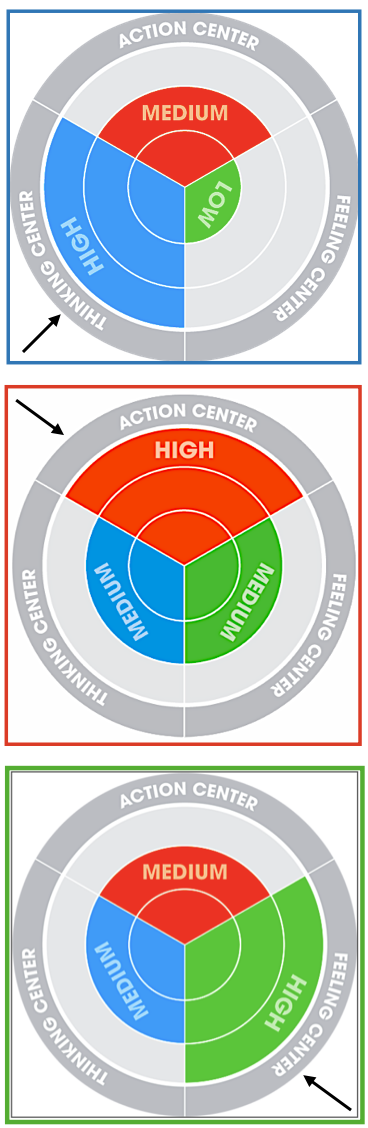
☼ Feeling #s 2,3,4 / ☼ Thinking #s 4,5,7 / ☼ Action #s 8,9,1

In strategy & in life, as in archery, the order of operations is important : Ready – preparing, steadying & grounding yourself
Aim – thinking strategically & taking aim at the intended goal or objective
Fire – taking action to execute the strategy.
While we each have all three Enneagram Centers available to us, we give them different priorities. There are 6 possible ranked or ‘stacked’ combinations how a person is likely to access their Thinking, Feeling & Action Centers.

Stacking the TRIAD Centers
🗯 Fire – Ready – Aim  = 1. Action, 2. Feeling, Thinking-last
This person tends to be intuitive & impulsive, connected to what needs to be done, engaged with the world in an active, energized way. They seem to just ‘know’ what’s happening or what needs to happen, but can’t always explain how they know. 

🗯 Fire – Aim – Ready = 1. Action, 2. Thinking, Feeling-last
These action-oriented people are quite aware of the environment they operate in, especially what’s missing, & sense what could make things better or move things forward.

When grounded & healthy, their drive is balanced by an ability to take a step back to consider the facts & options available – before moving into action.
In a less-healthy state, this ability is reversed – the person prematurely jumps to action, getting mixed or poor results, & only then pausing to think.

🔆 Ready – Aim – Fire = 1. Feeling, 2. Thinking, Action-last
This classic sequence combines emotionally intelligent, self-aware decision-making with collaboration & consultation, in people who prefer to consider all aspects of a challenge along with others, rather than being a lone wolf.

This person is quite thoughtful, taking the time to make decisions, asking others about their requirements & point of view, looking first for deep insights.
They like to work with others to build strong relationships, which also helps them understand any current problem. But accumulating too much information & too many opinions can prevent them from taking action.

🔆 Ready – Fire – Aim = 1. Feeling, 2. Action, Thinking-last
Open-hearted & responsive to the feelings & needs of others, these people intuitively know what someone wants or requires. They can be a great support to others, taking on the role of coach or facilitator, helping others to deal with their challenges & act on their goals. While emotionally aware, they’re too likely to only respond to their feelings, giving un-needed feedback or over-helping others, in stead of spending that time on analysis.

♻️ Aim – Ready – Fire = 1. Thinking, 2. Feeling, Action-
These thoughtful people excel at seeing the different sides of an issue, including a variety of other points of view, which generate many ideas & options. Their understanding of both facts & people make them powerful systemic thinkers.
Seeing the big picture brings in so much data to be considered for decision-making that there’s a potential risk of ‘analysis paralysis’ leading to procrastination, delaying action in favor of more thinking.
Collecting more information, assessing more risks, or consulting others – is an unconscious attempt to control a complex & uncertain world. In the process, they can miss an opportunity to test their thinking directly.

♻️ Aim – Fire – Ready = 1. Thinking, 2. Action, Feeling-
This profile is often appreciated in corporate environments, because these people show up as rational strategic planners, seeing things clearly & moving from insights to action without being distracted by subjective emotion. They think through the various aspects of an issue, generating ideas & possible actions. These suggestions are based on a solid understanding of facts & practicalities, so are available to make things happen.

The down side is that, with feeling-last, they may neglect the importance of emotions – both their own, their colleagues or customers. As a result, they can find strong resistance to their ideas, genuinely surprised that others don’t appreciate their efforts to create change. Their reaction is to explain why an action makes sense, rather than listening to the concerns of others, & potentially incorporating them. (MORE….)

BALANCE the Centers of Expression by :
✅ moderating your dominant Center if it’s over-expressed, using it intelligently
✅ adjusting your secondary Center to ensure it’s conscious & healthy
✅ compassionately accepting & connecting to the under-expressed or neglected Center, to give it a voice.

NEXT : Enneagram – Children & Parents
Ennea-Types : UNDERSTANDING THEM (Types 8, 9)


PREVIOUS : Ennea-Types Understanding them (6, 7)


Comments FROM Type 8s
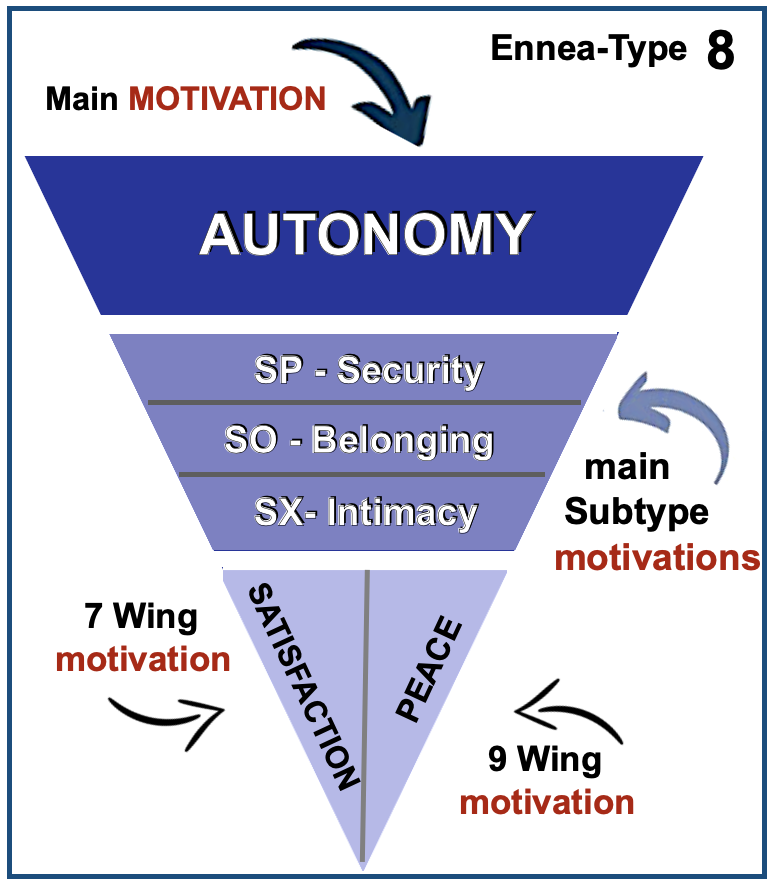
〽️ I know I seem tough & strong all the time, but I’m also sensitive, just like anyone else. Even though I don’t always show it, I feel things deeply, & am empathetic

〽️ I’m straightforward, so you always know where you stand with me. You don’t need to guess how I feel, & I appreciate the same in return.

〽️ I don’t often depend on others, & taking on so much responsibility can sometimes be overwhelming. If I depend on you, it means I trust & appreciate you.

〽️ My instincts are pretty good, so I can tell if you’re being manipulative or hiding something, which tells me you’re not trustworthy.

〽️ Sometimes I don’t realize my speaking volume has increased, especially if I’m talking about something I’m really passionate about! Do not tell me to “calm down” – I am calm! My loud = excitement.

〽️ I have a really hard time with others people’s arbitrary or unspoken expectations of me or my time. If you do, I’ll probably push back.

GETTING ALONG with Type 8s
They’re about being assertive, courageous, direct, & intense.
For You :
🔅Acknowledge them but don’t flatter. 8s assume flattery is just manipulation.

🔅Be sure of your ideas & stand firm on your beliefs. 8s respect intensity, strength & a good debate. So you don’t have to be stubborn or ashamed of your point of view when you realize you’re wrong.

🔅If you want 8s to be vulnerable, you’ll need to understand & accept their protective shell. They consider being vulnerable a weakness (the 8’s core fear) so they have to feel extremely comfortable with you before “letting their hair down”.

🔅Encourage them to exercise, which will help them use up some of their excess energy.
With Them :
🔅Just because an 8 is quiet, does not mean they’re upset with you. They’ll let you know when they are, so don’t assume

🔅8s may mistake tenderness for manipulation. You can still be ‘soft’ with them, but realize it’ll take a while for it to earn you enough credit to eliminate their assumption.

✳️  ✳️  ✳️

Comments FROM Type 9s
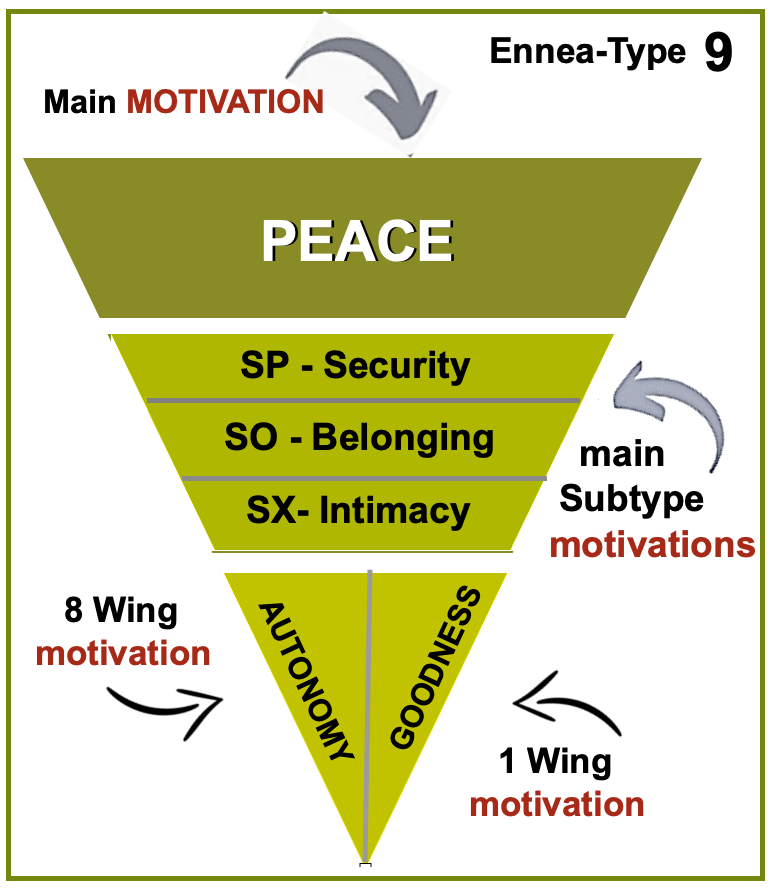
〽️Communication is key! It’s often important for me to talk through things, but I might not always know where to start or how to open up.

〽️ If you talk over me, I’ll shut down. I’m not going to fight for my voice to be heard.

〽️Ask me questions, but give me ample time to respond. I’m a thinker: I need time to process.

〽️ When I share, don’t dismiss or interrupt my thoughts! I can add a lot of value to the conversation if you’re patient & I have the opportunity to speak.

〽️ If I speak up for someone else’s perspective, I’m not trying to play the devil’s advocate, I just want you to see their side too.

〽️ My independence is important to me: sometimes I withdraw because I need to regain my footing.

〽️I don’t mind going along with majority opinion about some decisions, but don’t take it as permission to boss me around. I don’t like to be told what to do.

GETTING ALONG with Type 9s
They’re about attachment, open-mindedness & peace
For You :
🔅 Encourage 9s to name their own wants & wishes. Their toxic belief is that it’s ‘not ok to be assertive’ – for fear of causing conflict or loss of connection.

🔅 Reassure them that you’ll love them no matter what, & admire them for voicing what’s important to them.

🔅Focus on what they do, instead of what they forget to do.

🔅Don’t interrupt them when they’re talking. It reinforces their toxic belief about being silent, & the feeling that they don’t matter. They may meander, but they will get to the point..

🔅 Give clear, direct instructions about what’s expected of them, so they know what you want them to do, & to realize the priority of a task.
With Them :
🔅 Remember that 9 can easily get distracted easily, jumping to whatever task is right in front of them. You can redirect a distracted 9 by asking them Qs.

🔅 9s need independence & alone time to realize & develop their own needs, as well as time to recharge. Don’t take that as rejection. They’ll be back.

NEXT :

Ennea-Types : UNDERSTANDING THEM (Types 6, 7)


PREVIOUS : Understanding them (5,6)


Comments FROM Type 6s
〽️ When I share my stressors, I want to process them with you, but I don’t need you to fix anything.

〽️ I ask questions because I want to fully understand. I’m not trying to challenge or compete with you.

〽️ I really want the whole truth. Sometimes I just need what I already know to be confirmed.

〽️ When you ask me to make a decision, give me all the information I’ll need. The less I know, the more I overthink. I appreciate it when you let me work through the “what if” statements swirling in my mind.

〽️ I may sometimes seem anxious you, but often I’m just evaluating different possible outcomes. For me, analysis is not anxiety.

〽️ I like consistency & predictability. I also enjoy having fun & can be spontaneous, as long as it’s not coming from chaos.

〽️ If you think I’ve made a good decision, let me know – it helps boost my confidence! I can spend so much time thinking through the implications of every option that I get stuck.

GETTING ALONG with Type 6s
They’re about loyalty, reassurance, honesty & trust.
For You :
🔅Give them lots of reassurance about your commitment to them (verbally & through actions). Answer their questions honestly & thoughtfully.

🔅Listen the them when they’re running worst-case scenarios, & then help them to find the best possible outcome.
At the same time, don’t shut down their concerns. You want them to know you understand their worries but also provide options.

🔅Try to be honest, loyal, & not too needy. It’ll reassure them of your commitment, & give them back what they offer you (being honest, loyal & dependable).

🔅Give examples of the times they did trust themselves – which turned out well – logical concrete proof that the worse doesn’t always happen

🔅Encourage 6s to take some action instead of obsessing or second-guessing themselves, without pushing them to their breaking point

✳️  ✳️  ✳️

Comments FROM Type 7s
〽️ If you ask for a commitment, I might not be able to say yes right away. I’m not totally afraid of it, I just need to think about it for a while.

〽️ I know I need to say “no” more often so that I have space to say “yes” to the things that are truly important to me.

〽️ I get really excited about having interesting ideas & finding new procedures. If you shut them down right away, it’s frustrating & hurtful.

〽️ There are only a few people I’m close to. Just because I’m not always sharing my emotions doesn’t mean I don’t have them!

〽️ I can be sensitive, but I’m not going to let you see that you’ve hurt my feelings if I don’t feel safe with you.

〽️ My mind moves so fast that sometimes it’s hard to explain what I’m thinking. My ideas might seem random to someone ‘looking on’ from the outside, but they’re definitely not!

〽️ When we’re having a conversation, I like to keep things moving! Sometimes I interrupt because I’m excited, not because I wasn’t listening. Don’t dismiss my excitement for naïveté or rudeness.

〽️ The best way to invite my rebellious streak is to tell me what to do. 😏

GETTING ALONG with Type 7s
They’re about flexibility, positivity, adventure & excitement.
For You :
🔅 Listen to their stories. It’s often how they share feelings, used as one or two steps removed from their actual emotions, which make them feel less painful.

🔅 Be gentle & brief with criticism. 7s prefer to stay up-beat & avoid negatives.

🔅 Be comfortable – or at least accepting – of their spontaneity & flexibility.

🔅 Encourage them to have a full range of emotions. Remind them that you won’t abandon them when they do, & can depend on you to listen & sometimes be soothing.
With Them :
🔅Socializing is very important to 7s, but so is alone time. Allow them to have both. 

🔅A 7 may be will listen to you share difficult or emotions, but they don’t really want to help you process them. However, when they do – it’s usually reserved for close friends & family. On the whole they don’t like dealing with unpleasant topics.

NEXT : Understanding them (Type 8, 9)

Ennea-Types : UNDERSTANDING THEM (Types 4, 5)


PREVIOUS : Understand them (Types 2, 3)


Comments FROM Type 4s
〽️ Reminder to Self & everyone else : My feelings are valid, no matter what triggers them . They’re represent my truth & have merit in this moment.

〽️ I often need time to process before responding. I may throw out an initial reaction (too soon), but then when I really think it through, I may come back with a different answer

〽️ I don’t always want to share my emotions, especially if they’re too private, too deep, too complex, or too hard to explain.

〽️ When I express feeling vulnerable, don’t try to cheer me up or take my mind off of it. Just sit with me & listen.

〽️ I can get ‘intense’, so it helps if you just mirror my feelings (repeat what you hear) or share honestly about your own. If you withdraw, it makes me feel like I’m too much, so I won’t feel safe to share anymore.

〽️ I express al-l-l-l my feelings with emphasis! AND – I’m not sad all the time! I love life!

〽️  I love it when you remember something I’ve shared with you before. It makes me feel heard, & that I matter to you.

〽️ If you think I’m good at doing something, let me know! I honestly may not be aware of it.

GETTING ALONG with Type 4s
They’re about authenticity, emotions, creativity & sensitivity
For you:
Don’t tell a 4 that they’re too sensitive or over-reacting. It triggers a core wound – believing they’re ‘too much’.

🔅 4s continually long for what they don’t have. This is not something for you to fix

🔅 Be authentic with 4s. Being real is their core desire, so naturally they want others to be that way with them.

🔅 Let them know their belief of ‘not being enough’ is their right (they can think that),  but the facts say otherwise.

🔅 Stay grounded when they are moody or suffering. Give them room to experience all their feelings, but be a solid foundation they can hold on to, to keep from spiraling too far down.

🔅 Give them clear parameters for tasks, & creative freedom to do their work. 4s what to know what you expect of them, but also want to use their imagination & emotions.

✳️  ✳️  ✳️

Comments FROM Type 5s
〽️ Being asked, “What are you thinking?” is an intrusive spotlight. Instead : “What are your thoughts about this?” feels more manageable.

〽️ Don’t pressure me to participate! I actually enjoy sitting on the sidelines & observing.

〽️ I don’t always want to share my initial thoughts because I know I’ll want to add or edit later. Be patient while I thoroughly process.

〽️ I genuinely want to understand your point of view, even when I don’t agree!  I equally appreciate it when others ask me the same kinds of questions in return.

〽️  I have emotions too (excited, outraged, sad, happy…) even though I don’t show them in the way you do.

〽️ If I do express an emotion, try not to act shocked or poke fun at at me for “finally showing up”. That really hurts, so I won’t feel safe to share with you again.

〽️ Silence does not imply I’m agreeing with you. I may not be saying anything right now when I’m tired, frustrated, haven’t thought it through, don’t think I’ll be received well…..

GETTING ALONG with Type 5s
They’re about competency, knowledge, logic, & time alone
For you: 
 Be clear & direct with them. Don’t beat around the bush or be vague when having a conversation or giving instructions

🔅 Give them a heads-up about needing to work out an issue. Emotionally hard talks are definitely not what 5s want to have sprung on them.

🔅 If you do bring up concern you have with a 5, tread carefully, as they’re afraid of looking incompetent.

🔅 Don’t insist a 5 socializes. They don’t respond well to being pushed, & since their energy reserves are low, forcing them to socialize can push them beyond their limits.
With them:
🔅 5s have very limited energy reserves, so they need more time to recharge than other types. Accept this about them.

🔅 5s don’t talk just for the fun of it – only when they have something important to say. So when they do talk, make sure you listen.

NEXT : Understanding them (Types 6, 7)

Ennea-Types : UNDERSTANDING THEM (Types 2, 3)


PREVIOUS : Ennea-Onions & Type 1


Comments FROM Type 2
〽️ I may not openly say how I’m really doing, even if I want to talk about it. Go beyond a simple, “How are you?” to get a real answer
〽️ Remind me it’s okay to take a break & care for myself. I know I don’t *need* your permission, but it helps to remember that self-care is not selfish

〽️ When I’m in a good place I genuinely love to help! Even so, let me know how much you appreciate the little things I do.
〽️ I want to cultivate an open, honest connection with you, & hope we can both be ‘vulnerable’ enough to build a deep friendship

〽️ I know others depend on me to be warm & caring all the time, but I have bad days too! Remind me it’s ok to not always be UP
〽️I often find myself initiating contact with others. I’d be much happier if you’d reach out first!
〽️ Even if I don’t ask for it, I’m grateful for your help when I need it, but I don’t want you to take over everything.

GETTING ALONG with Type 2
They’re about affection, affirmation, connection & love.
For You :
D
on’t create unnecessary pressure for them by taking advantage of their helpfulness. 2s are incredibly giving, so often say yes when it would be healthier to say no

🔅Show your affection in practical ways, as well as with affirmation words. 2s want to hear they’re appreciated

🔅 Encourage them to be authentic, honestly sharing what
they’re thinking. Expressing needs & feelings is hard for them – believing they’re not allowed to
Let the 2 know it’s truly ok with you that they’re totally themselves & have needs

🔅Be careful when giving honest feedback, because 2s will ‘take it personally’. And – if you’re simply sharing something positive you’re doing for yourself – they can interpret it to mean they’re not as good as you, because they aren’t doing something for themselves too
With Them :
🔅All 2s need to process verbally, to get all their thoughts out of their head. So understand that it might take a while to hear their ‘bottom line’ about something, & their final conclusion might not be where they started from

🔅2s can become ‘oddly’ angry or have other strong emotional responses – if their needs are not met (unspoken or spoken ). Realize it represents a tipping point, a warning sign that they haven’t been providing their needs for so long that those pile up, & then at some point come crashing down on their head. It means the 2 needs to stop do-ing & be taken care of for a while.

✳️  ✳️  ✳️

Comments FROM Type 3s
〽️When I wear different ‘hats’ & adapt to various environments, it doesn’t feel fake for me; it feels necessary.

〽️ I may seem very confident, but I need reassurance just like everyone else. Be honest & direct but tactful.
I don’t always show it when your words hurt me, but please remember that I’m human & have feelings, too.

〽️If I share my thoughts & emotions\s with you, be gentle. It doesn’t come easily, so it means a lot when you listen & respond with care.  I like feedback because I want to improve, but unjust criticism is incredibly upsetting.

〽️ When I’m not 100% transparent about how I’m really doing, it’s not because I’m trying to lie : I either haven’t sorted it out yet OR I don’t feel safe with you yet.

〽️ I often feel like I’m not doing enough. So let me know you see me & my efforts. The more you dream with me, the more I feel connected to you.

GETTING ALONG with Type 3s
They’re about efficiency, optimism, recognition & success
For You :
Let them know you love them for who they are & not for what they do. 3s want to feel valued & admired, so say affirmative things to them often
🔅 3s put on masks so they’ll be liked or approved of. They’re afraid that without the camouflage they won’t be acceptable. Let them know you love them no matter what.

🔅 Do not interrupt a 3 when they’re working. They’re goal-crushers & won’t be pleased when something gets in the way of finishing a task.

🔅 Limit negative talk. 3s prefer to stay positive & optimistic.

🔅3s will be happy to do things for you (or accomplish tasks at work) but they want to know how, so give accurate instructions ahead of time.

NEXT : Understand Them (4,5)

Ennea-Types : UNDERSTANDING THEM (Onions + Type 1)

PREVIOUS : Motivations

BOOK : Spiritual Rhythms for the Enneagram….” by Adele Ahlberg Calhoun


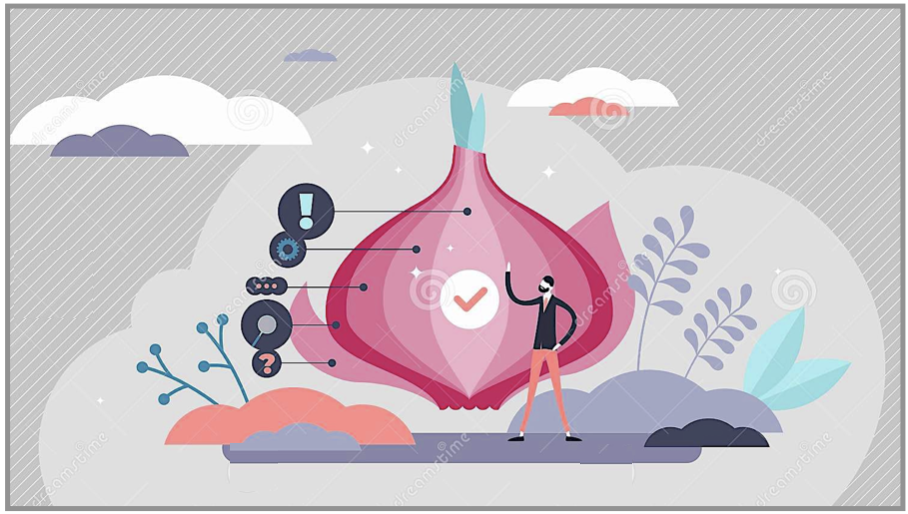
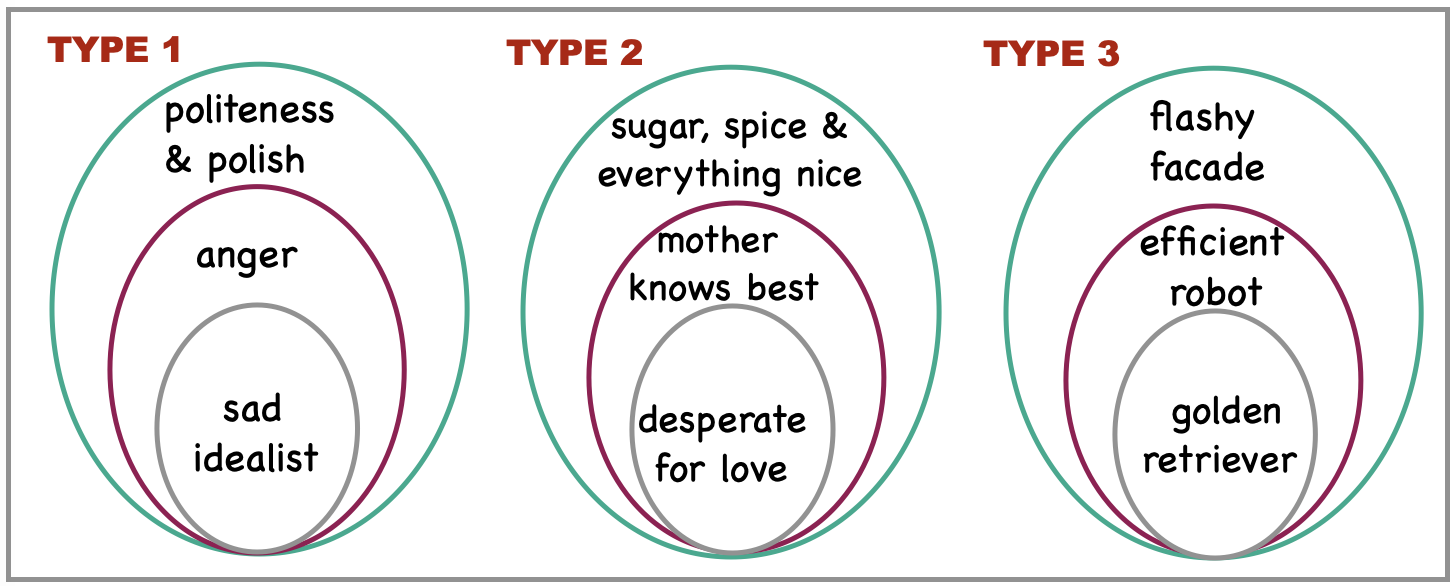
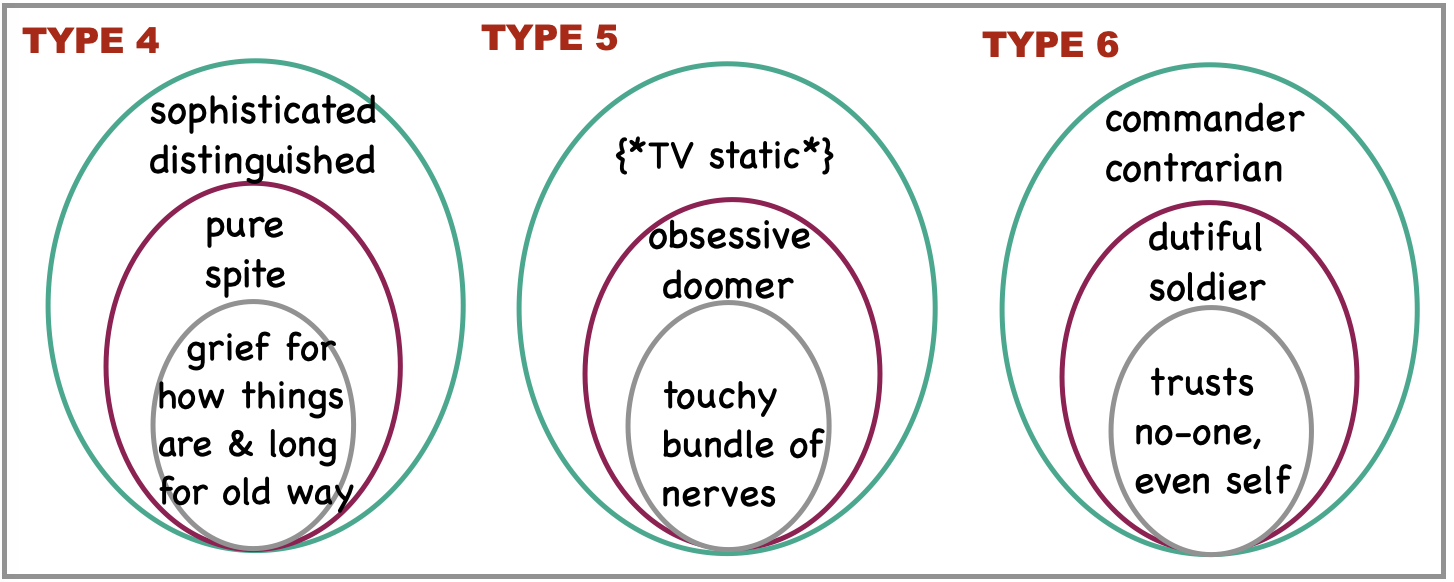
ENNEAGRAM BASICS, & as ONION layers
In the “Enneagram: The Discernment of Spirits” Richard Rohr says:
“Today all human problems are interpreted psychologically, but the real solutions are spiritual. There’s a primary blindness in each of us, an addiction to Self & the protection of Self.

Until that egocentricity is set aside, we see all of life through the distorted lens of self-interest. The 9 Enna-types each have their own  primary weakness – the Biblical ‘deadly sins’  that keep tripping us up.”

The Enneagram is a psychological-spiritual system, pointing back to the original sanity of our psyche, the intent of our one & only life, & describes how to recover it.   Its main goal is to help us become who we were born to be – our True Self.

It’s a tool that can be incorporated into our Recovery regimen, to release old patterns of reacting, that brings forward-movement, eliminating stuckness. Daily intentional awareness of our thoughts, emotions & actions minimizes anxiety, guilt & shame, so our natural gifts can flow through us.

It illuminates new choices we can put into practice on our journey of personal development, accessing the transforming power of God for our healing. Staying awake & in touch with that Tue Self – is liberating & empowering – focusing our attention on blessing available in every-day life.

True Self (essence = The Virtues ) the non-acquired /inborn self, emerging from union with God, so it has nothing to do with performance. The truest thing about us is that we are God’s temple, a home for God.

False Self (compulsive, old nature-self = the Vices) is the psychological self made up of past & present unhealthy experiences & briefs, with family-of-origin (FOO) issues, nature (heredity), & free will.

Transformation (redemption) brings the wounded False Self to God to be healed by the same thing that wounded us – much like inoculation.


A bit of HISTORY :
the Enneagram’s roots can be traced back to the desert monk Evagrius Ponticus, (AD 399) & the Franciscan monk Ramon Llull, in the 12th & 13th centuries. The Sufi schools of spiritual direction eventually adopted their work, but the system returned to the Christian west in the late 1960’s by Jesuit trained Oscar Ichazo. He later taught the system to his student Claudio Naranjo, a psychiatrist. (much MORE……)

✳️  ✳️  ✳️
 UNDERSTANDING Ennea-Types

Comments FROM Type 1s
〽️ I feel deeply, but don’t often express emotions because I want to be logical OR when they get in the way of doing the right thing.

〽️ I don’t like conflict, but I do like clarity. I’ll often choose to have hard conversations so that issues get sorted out, but I’m not trying to be argumentative

〽️ It’s harder to explaining the long list that’s always running in my head of things that need to be done – than just doing them myself

〽️ I see the highest potential in others. When I point out an ‘issue’ about yourself, it show that I love & believe in you. I’m not judging – I mean well. But I don’t understand why people don’t handle problems that are right in front of them

〽️ If you think I made a good decision about something, let me know! It helps boost my confidence. I often second-guess myself, which makes it harder to make decision.

GETTING ALONG With Type 1s
They’re about details, follow-through, order & responsibility.
For You :
🔅 Admit when you make a mistake. More importantly, take action to fix it & work on not doing it again
🔅 Follow through with your commitments & finish tasks on time
🔅 Make an effort to keep your area organized & remember details, especially about things that are important to the 1.
With Them :
🔅 Be gentle when pointing out their mistakes. Don’t avoid talking to them when needed, but remember the 1 is already hard on themself, so hearing someone else point out a problem will greatly increase their own hyper-criticalness.

🔅 Most 1s will shrug off appreciation because they don’t think what they do is extraordinary (“False modesty”?)
EXP : It would be like thanking someone for brushing their hair. Everyone can & should, so why make a fuss?
However, 1s do want to be appreciated, so don’t just ignore their contributions.

NEXT : UNDERSTANDING THEM (2,3)

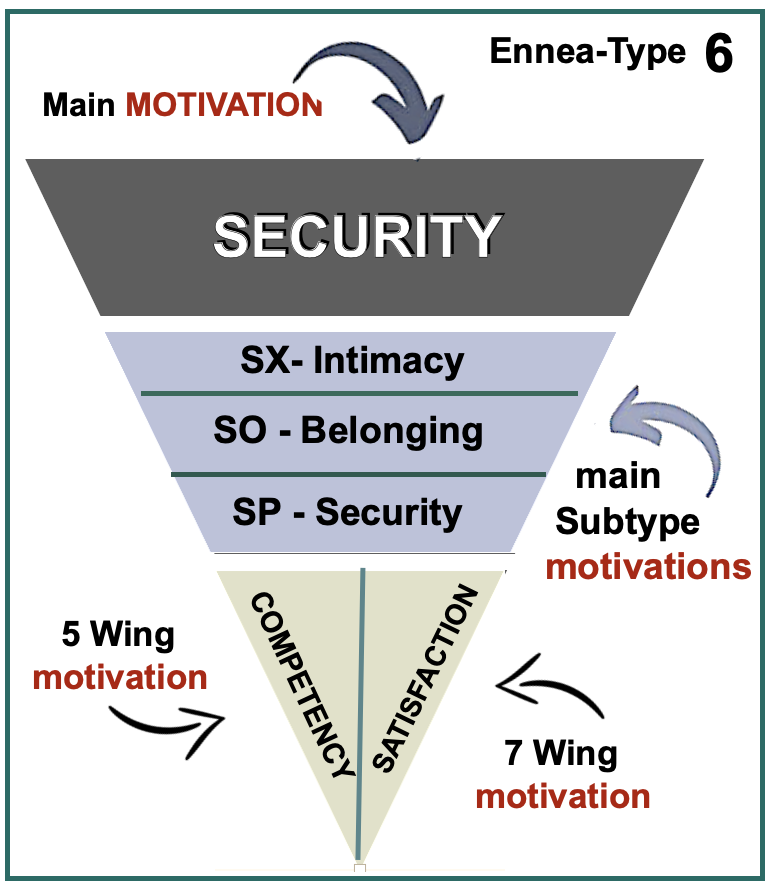
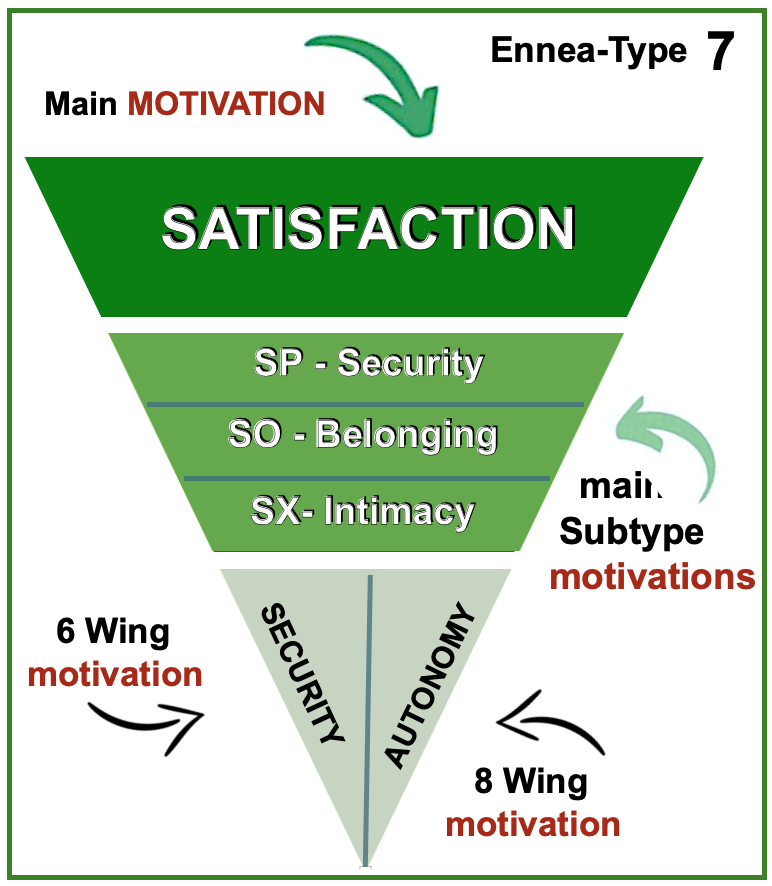
Ennea-Types : Main MOTIVATIONS

PREVIOUS : Enneagram

POSTs : 9 Psych LEVELS for each Type – in 2014

Digital Print : “The Black Enneagram – May Your Life Be….

Stack Energy – Motivations
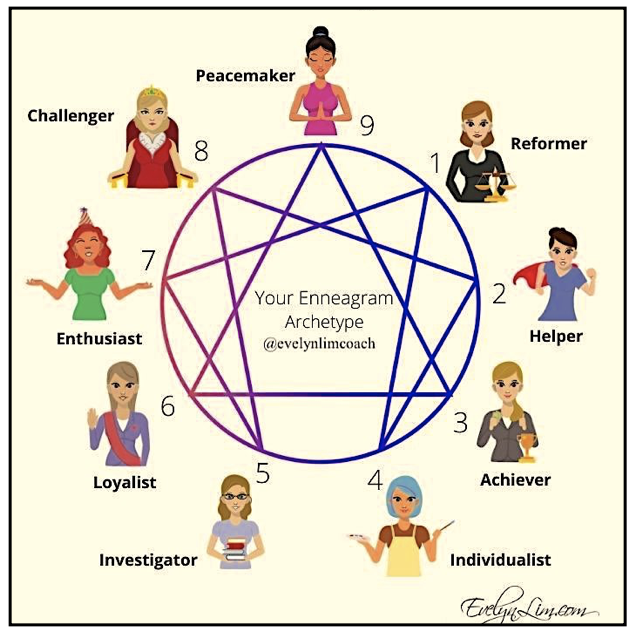
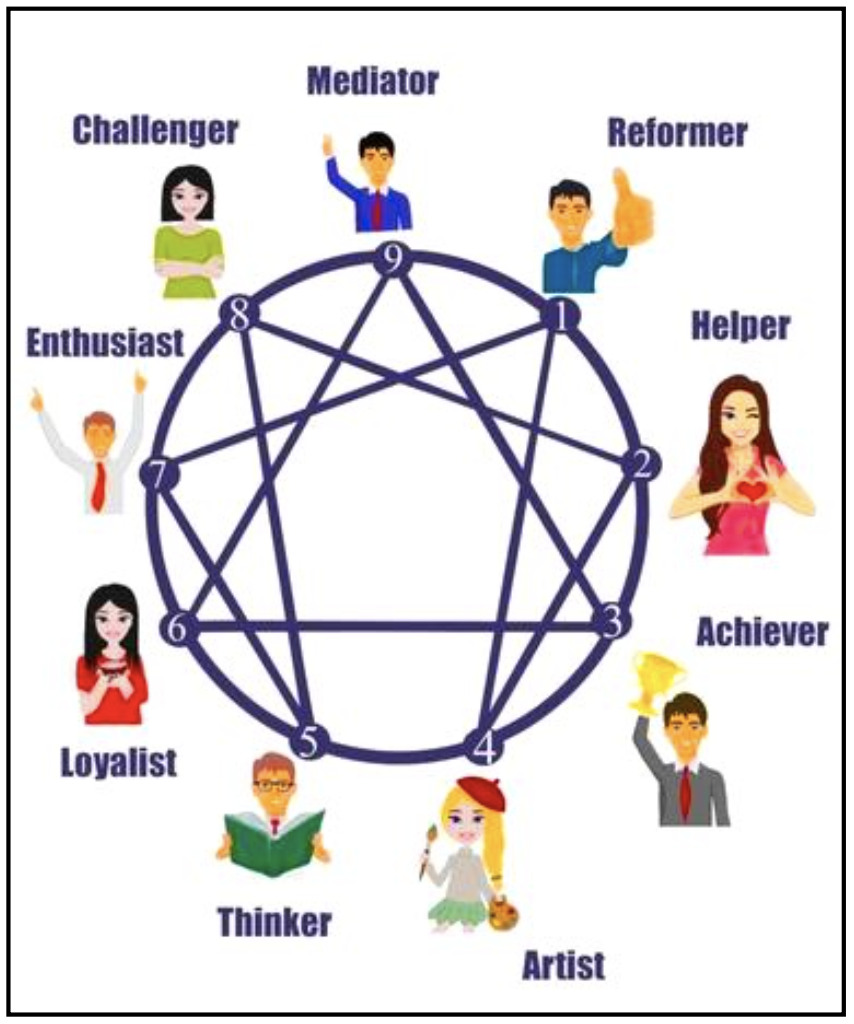
#1: The Reformer
You’re wise to the faults we have in our world, & put all you efforts into making it a better place for everyone. You want to bring out the best in people, but that can easily become too harsh & too high a standard for them. You’re a very responsible person with a strong moral code, & can be caring – if you soften.
Core Desire: Be ethical & have integrity
Core Fear: Being immoral or corrupt

#2: The Helper
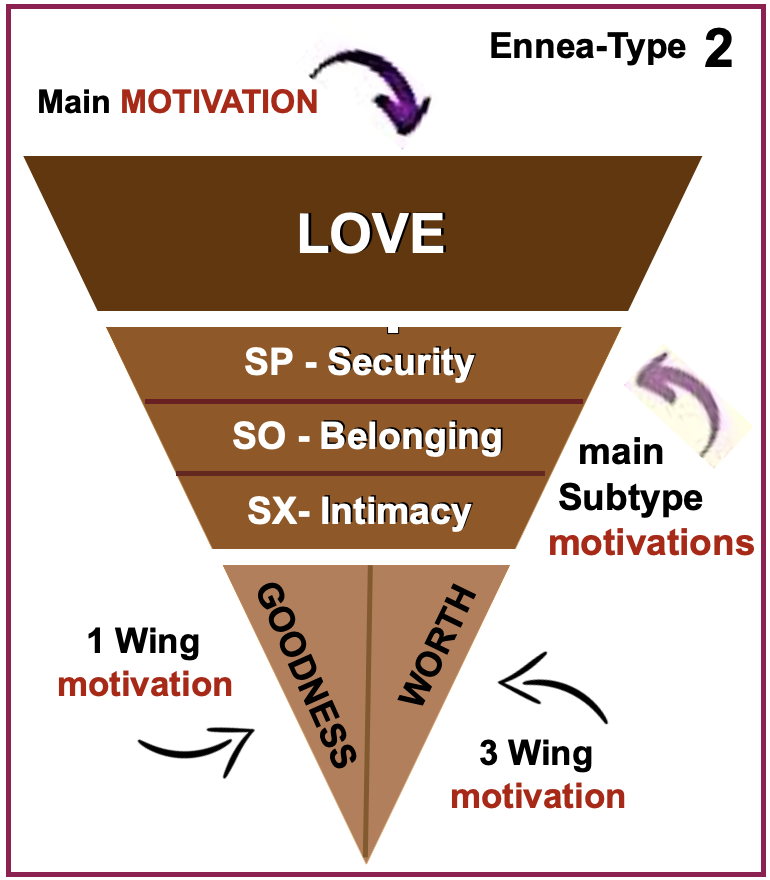
You have a deep understanding of your friends & family, insightful & can read people like an open book. You have a clear sense of responsibility & a feeling of love, wanting to help them when they’re in need. You sometimes question the validity of your own emotions, so instead – you focus on others’ by making thoughtful gestures.
Core Desires: Be loved & feel wanted
Core Fears: Being rejected & labeled as “too needy.”

#3: The Achiever
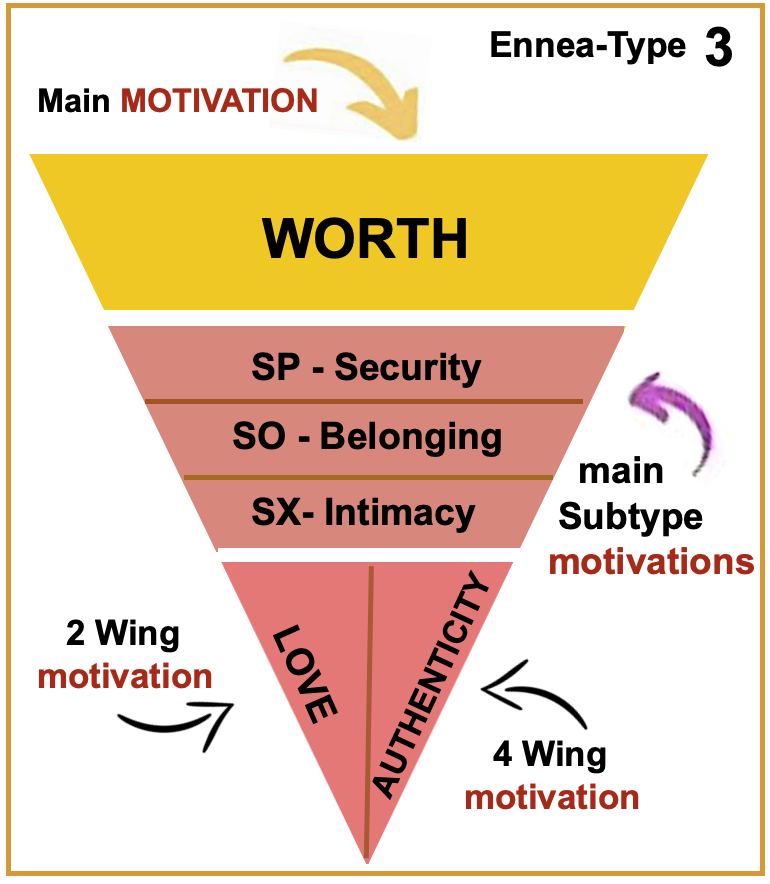
You have trouble sitting still for too long, wanting to keep moving & doing something useful. When working, you make sure to do everything quickly & efficiently. You’re a quick learner with an optimistic attitude, making an excellent mentor at work. But you sometimes feel like you’re only known for achievements.
Core Desires: Be successful & respected
Core Fears: Being a failure & feeling worthless

#4: The Individualist
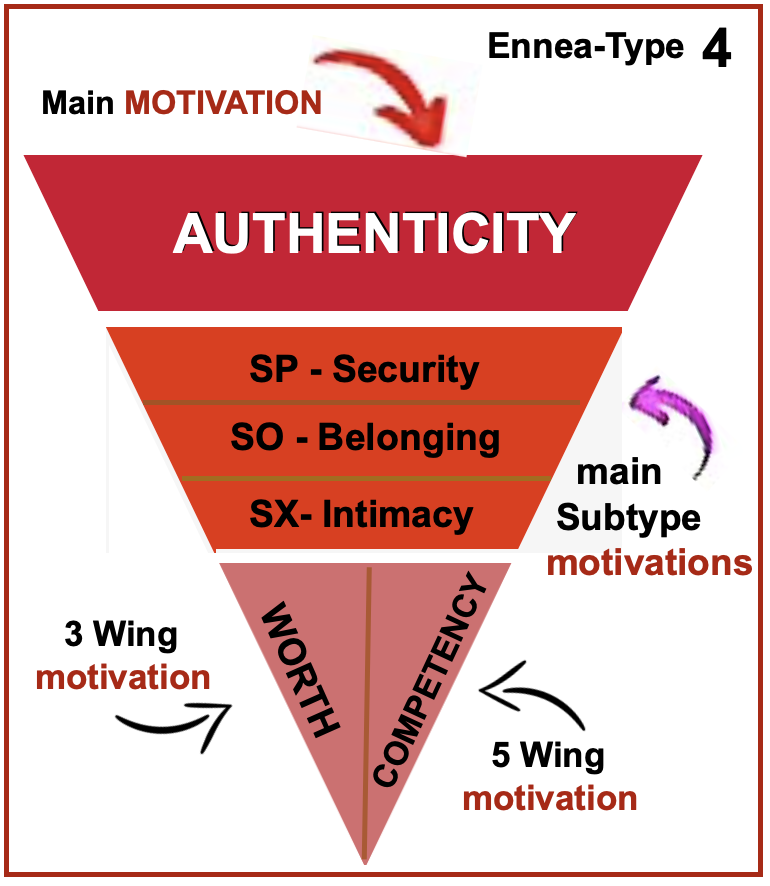
You ‘re a creative soul with a unique style, wanting to show the world the beauty that being yourself expresses. You don’t have a problem talking about your struggles with others because those are what makes you who you are. You have spot-on intuition,  are very sensitive & can often get caught up in your emotions.
Core Desires: Be authentic & unique
Core Fears: Being insignificant & flawed

#5: The Investigator
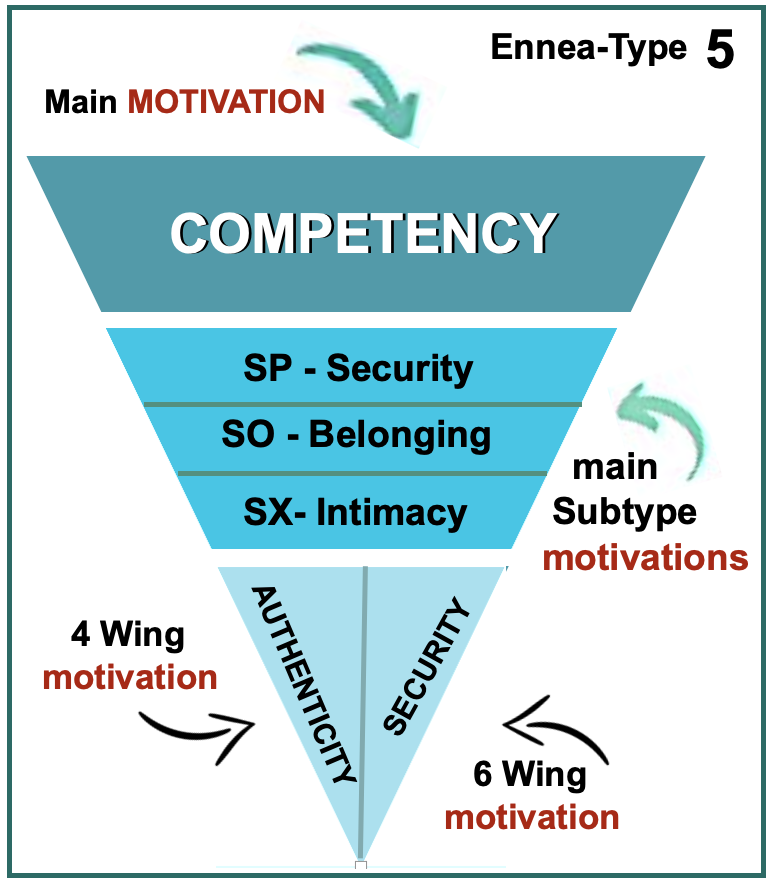
You have a hunger for learning, & like taking the time to soak up all the details of topics you’re interested in, to better understand them. You make every effort to analyze the fine print of assignments or documents before making final decisions. You like being alone, but can sometimes over-isolate & then feel lonely.
Core Desires: Be knowledgeable & self-sufficient
Core Fears: Being helpless & ignorant

#6: The Loyalist
You enjoy surrounding yourself with the many friends you’ve developed through your warm & compassionate attitude. You’re very loyal to the ones you love, witty & helpful, which also make you an excellent problem-solver.  You hate being alone because your thoughts are ‘loud’, & when there’s no one available to support you, you tend to over-think.
Core Desires: Have enough support & feel secure
Core Fears: Being abandoned & feeling Fear

#7: The Enthusiast
You love to have fun & live life like there’s no tomorrow, known among your large circle of friends as the life of the party. You have a way of bringing people together with your bubbly, energetic attitude. Your curiosity feeds on new experiences – afraid of missing out on all the excitement or being left behind by your friends.
Core Desires: Be happy & feel unrestrained
Core Fears: Being left out & feeling trapped

#8: The Challenger
You have a straightforward, hands-on approach to things, knowing what needs to be done, & aren’t afraid to do it. You have tremendous confidence in your actions, always knowing what you’re doing & why, which makes you leadership material. You dislike being bossed around by anyone, & you get angry when they try.
Core Desires: Be independent & protective
Core Fears: Being controlled & feeling vulnerable

#9: The Peacemaker
You don’t like conflict, so you resolve difficulties between others to keep the peace for everyone’s benefit. You’re empathetic & open-minded, allowing you to see different perspectives in disputes. You’re afraid that people in your friendship groups may fall out & separate, so you keep the peace no matter what it costs you.
Core Desires: Be stable & feel at peace
Core Fears: Being in conflict and losing connection with others

NEXT : Ennea-SUBTYPES

Power : Positive WORKER Types (#3)

PREVIOUS: Positive Workers (#2)

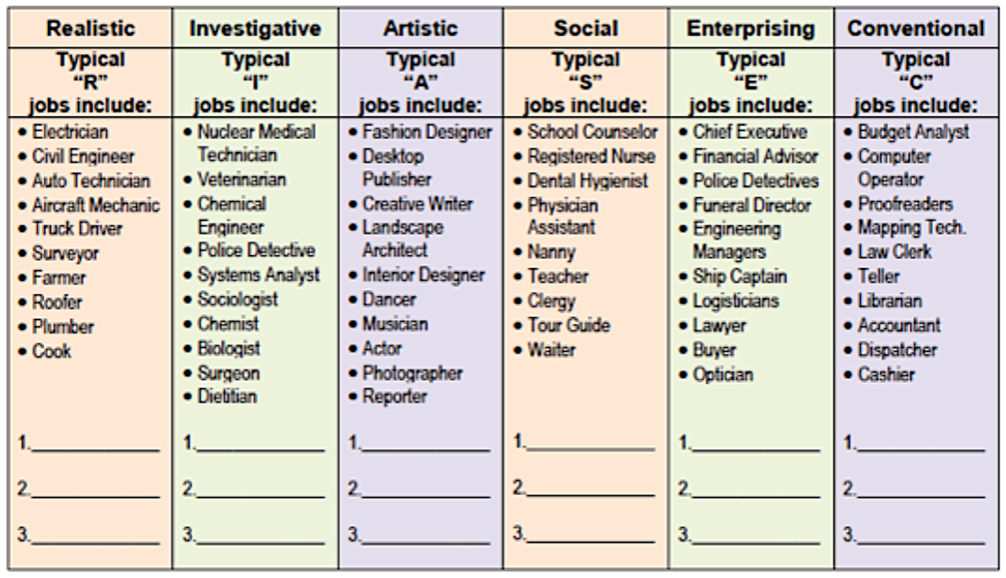
SITEs :Holland Code – How To Use it to Choose a Career
◎ Holland’s RIASEC – Possible careers for each type
(see CHART below)

BOOK:What’s my style” ∼ by Parsons & Willette


🔔 Holland’s 6 PERSONALITY Types
– which AFFECT career choices & work behaviors
(Most people are a combination of 2 or 3 of these)

ARTISTIC – sees self as :
🔸expressive, independent, original, prefers Ideas & People
✦ can be complicated, emotional, impulsive, independent
✦ generally avoids highly ordered or repetitive activities, may be chaotic
✦ has the skill / natural talent / can develop skills for any artistic category
✦ highly values & enjoys self-expressive activities, may feel it’s their ‘calling’
✦values all creative arts

CONVENTIONAL – sees self as :
🔸 detail-oriented, orderly, steady, prefers Data & Things
✦ can be careful, conforming, conservative, conscientious, self-controlled
✦ generally avoids ambiguous, unstructured activities
✦ good at ordering activities, paying attention to details, following a set plan, organizing or doing clerical work
✦ likes to work with numbers, records, &/or machines
✦ values success in business

ENTERPRISING – sees self as :
🔸 ambitious, energetic, sociable, prefers Data & People
✦ can be adventurous, ambitious, energetic, persuasive, risk-taking
✦ generally avoids activities that require careful observation & scientific, analytical thinking
✦ good at leading & managing people, & selling things/ ideas
✦ likes a competitive environment, to organize, to persuade people, to sell things & ideas
✦ values success in business, leadership, politics

INVESTIGATIVE – sees self as :
🔸intellectual, precise, scientific, prefers Things & Ideas
✦ can be analytical, independent, intellectual, reserved, scholarly
✦ generally avoids leading, selling to, or persuading people
✦ good at working with abstract ideas, intellectual theories
✦ likes to study & solve math or science problems
✦ values science, analysis & exploration

REALISTIC – sees self as :
🔸 mechanical, practical, realistic, prefers Things
✦ can be determined, focused, frank, mechanical, practical or rugged
✦ generally avoids social activities (teaching, helping….)
✦ has good skills re. working with tools, mechanical or electrical drawings, machines, &/or athletic activities
✦ likes to work with plants & animals, is hands-on
✦ values practical things that can be seen, touched & used

SOCIAL – sees self as :
🔸 friendly, helpful, trustworthy, prefers People
✦ can be amusing, charming, entertaining, enjoyable
✦ generally avoids using machines, tools, or animals to achieve a goal
✦ good at counseling, nursing, teaching, giving info or 1st aid
✦ likes to be healing, nurturing, make the world better
✦ values being cooperative, supportive, & solving social problems

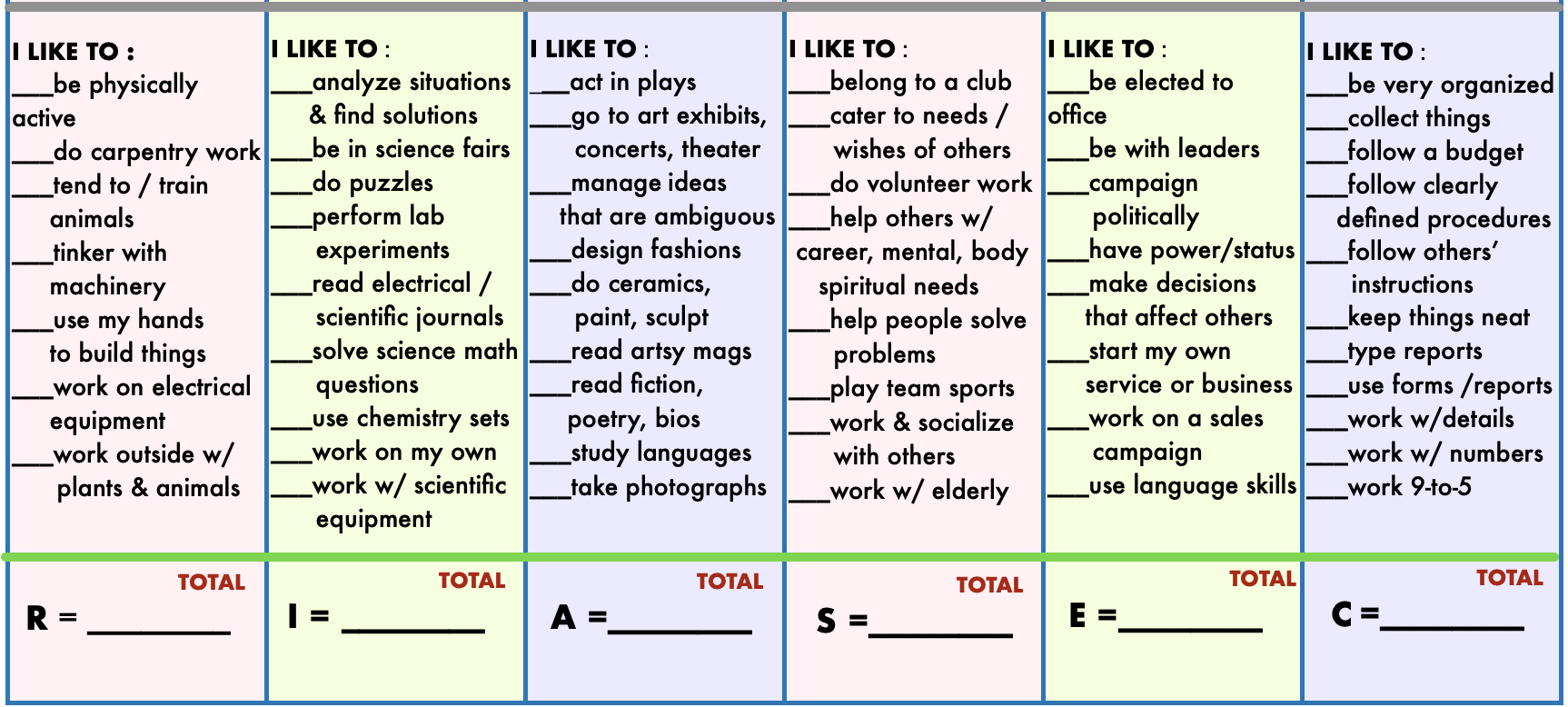
R.I.A.S.E.C. Personality Chart / in relation to Career choice =  Look thoughtfully at each descriptions & “check” any that apply to you. Count the number of check marks per column & mark the total in the box at the bottom.


RIASEC review


NEXT: Self-Regulation (#1)

Power – POSITIVE Worker TYPES (#2)


PREVIOUS : POSITIVE Workers  (#1)


WORKER TYPES 

🦚DISCERNers
✦ more realistic, sometimes considered ‘dream-killers”
✦ always asking “What problems that can arise?”
✦ have great instincts & can find potential pitfalls with products
✦ able to give advice on how to improve existing products

🦚EMPOWERers
✦ are the “bread & butter” of a team, encouraging & providing help on projects
✦ work relentlessly on all the small details that make the big picture a reality
✦ great at planning & achieving goals, knowing exactly what needs to be done

🦚EXPRESSIVEs
work at a fast pace, make decisions based on both feelings & opinions
✦ can be impulsive, bypassing processes & procedures
✦ do not work well in isolation, at their best when surrounded by enthusiasm & excitement

🦚GALVANIZers
✦ are naturally excitable & love to get others excited as well
✦ immediately want to talk about something new they’ve learned
✦ love to gather & organize people into tackling a goal, providing encouragement

🦚HELPers
✦ keep team atmosphere upbeat so people can work well together
✦ main focus is on the individual – support their emotional well-being & encourage them to achieve their full potential
✦ work to improve communication, & take time to listen, which gives them insights into needs & experiences of others

🦚INDEPENDENTs
✦ unhappy working closely with others or with too much supervision
✦ are efficient, disciplined & productive
✦  must run their own show, see where their instincts lead
✦ often found in creative or scientific fields (also called Visionaries or Entrepreneurs)

🦚INVENTORs
✦ create new & innovative products
✦ enjoy making prototypes or working models for new products
✦ love to brainstorm & put ideas into place, then take action
✦ love using mind maps, whiteboards & other brainstorming tools

🦚NETWORKers
✦ express their emotions freely
✦ enthusiastic communicators, good at building relationships
✦ love meeting new people, connecting those with similar or complementary interest who can benefit from each other

🦚STRATEGISTs
✦ are long-term thinkers, future oriented rather than about the immediate here-&-now
✦ define goals & figure out how to reach them
✦ identify fundamental problems, & creatively look for effective solutions
✦ ask “Why?”, & make others aware of how things should be changed / improved

🦚SUPPORTIVEs
✦ are skilled at conflict management, focused on building consensus, loyalty & team harmony
✦ main goal is to form deep connections with colleagues & clients
✦ thrive on collaboration, happiest celebrating successes with team

🦚TENATIOUS
✦ have great willpower, are usually the team member doing the most work
love to finish things, so won’t rest until tasks are done
✦ focuses on & finishes 1 task before moving on to others
✦ persevere toward a goal when others have given up

🦚WONDERers
✦ are the day-dreamers, always asking “why not?”
✦ gather inspiration & ideas before starting a project, good at seeing the big-picture
✦ look for a greater potential or opportunity in a situation
✦ get creative sparks from unexpected places – long walks, staring out the window, working on a unique hobby….

📣 🔔
NEGOTIATING (5 Stages)
In business, everyone negotiates. Skillful negotiators do not want to crush opponents, but rather be positive & productive. Both parties will benefit IF highly motivated to meet mutual needs, & able / willing to act on the appropriate problem-solving strategies. (Conflict Styles)

Negotiating style is determined by:
• Concern for the Outcome of the Negotiation (O of N)
• Concern for the Relationship with the other Party (R w/ P) ⬇️ Chart

The 5 COMBINATIONS
COMPETE (Win – Lose)  High O of N, Low R w/ P
• Competitors believe there can only be one winner. They drive a hard bargain, engage in win-lose competition, put personal interests first, use bluffs, deceit, surprises, threats

WITHDRAWAL (Lose -Lose) Low O of N and R w/ P
• Dodgers avoid confrontations, believe others are born with more power, keep a low profile, easily surrender, take whatever the other party is willing to concede

ACCOMMODATION (Lose -Win) High R w/ P only
• Altruists avoid unpleasant confrontations, like to keep the peace, make concessions & yield to pressure to further the relationship, trust others without reservation

COMPROMISEModerate O of N and R w/ P
Compromisers agree to split the difference, find easy solutions both parties can agree on, give something to get something (least valuable ?), look for trade-offs, believe “you win some, you lose some”

✳️ COLLABORATION (Win- Win) High O of N and R w/ P = BEST
• Problem-Solvers will make every effort to reach a favorable result based on objective criteria, create synergistic solutions to iron out problems, form partnerships, explore mutual interests & gains, yield to principle – not pressure! (MORE….)

NEXT : Negative worker Types (#1)

Power – POSITIVE Worker TYPES (#1)

PREVIOUS: Negative Workers #4

SITE : 30 Characteristics of a Good Employee

ARCHETYPES of Good Employees (hrgird.com)
✳️ Accurate Expressers  – believe that not accepting reality is more dangerous than promoting fantasy. Think
‣  that an ideas or plan that’s not valid stays invalid – even if it may have some positives, AND
‣ that an ideas or plan that IS valid stays valid – even with many opponents.

✳️ Collaborators – are sophisticated, & love working with people of all types to get the present task done. They’re Flexible, who can work easily with friction that comes from conflicting egos, differing personality types & work-styles

✳️ Cool Heads – don’t yield under pressure, & have great patience. They know the power of a calm mind is needed to make good decisions

✳️ Doers / Executors – are impatient to get things done, & get restless when tasks aren’t developing. They don’t need to talk, convinced that actions is what matter most

✳️ Dreamers – are great at visualizing the future of an an organization, constantly think of new possibilities, & love to talk about good things that should ideally happen for their organization

✳️ Empathizers – are curious to know why others think, feel, act in their specific way, & support how others feel, think & act, with an open mind

✳️ Energizers / Mobilizers – are great motivators, who can get others exited by their contagious enthusiasm. They also mobilize teams to get going on a mutually decided goal

✳️ Thinkers / Observers – believe that Truth does not need lighting up, because it will eventually become visible. They think about what else can be done to achieve an effective outcome. Introverts by nature, they invest their energy on patiently observing their surroundings

TOP SKILLS of a VALUABLE Employee (GetSmarter.com)
🔅Ambition. When employees have a clear, personal career plan or goal in mind, they don’t wait for their employer will drive their career, so they strive for advancement

🔅Conflict resolution. Good employees address & resolve
conflict maturely, rather than trying to avoid it. They maintain respect for those involved, not placing blame, & not giving in just to keep peace

🔅Creativity. Not all people are born with great creative talent, even so creativity is a skill that can be learned through effort – experimentation, imagination, questions, mentoring & study

🔅Dependability, Reliability, Responsibility. Employees who own their actions, arrive on time, do what they say, & don’t let the others in their team down, are highly valued

🔅Emotional intelligence. EQ is about being mindful of one’s own state of emotions, as well as those in the team. Knowing how to manage these well makes them a valuable employee

🔅Generosity. Good employees coach & mentor those around them, freely sharing their experiences & expertise. They understand that knowledge is only power when shared

🔅Honesty, Integrity. This includes telling the truth about tricky subjects such as workload, work/life balance, difficult customers or colleagues, & ineffective work procedures

🔅Innovation. Those who bring suggestions & innovative ideas that will positively impact projects are an asset. Stagnation & complacency are the enemy of growth

🔅Knowing the Why, as well as the What. They know the purpose for their job, & know how to do it. This allows them to come up with ways to improve their tasks & environment

🔅Professionalism. Being polite, well-spoken, calm & presentable is all part of being professional at work

🔅Problem-solving abilities. Positive employees work on something until it’s resolved or completed, using their best efforts

🔅Positive attitude. Those who bring a positive attitude to work have a beneficial impact on those around them, improving team energy

🔅Teamwork. They have the ability to easily work together, professionally fostering relationships, toward a common goal

🔅Willingness to learn. Hard skills gained through education are not enough to be a good employee – they’re also open to new ideas, sharing thoughts & personal insights with the team.

NEXT : POSITIVE Worker TYPES (#2)