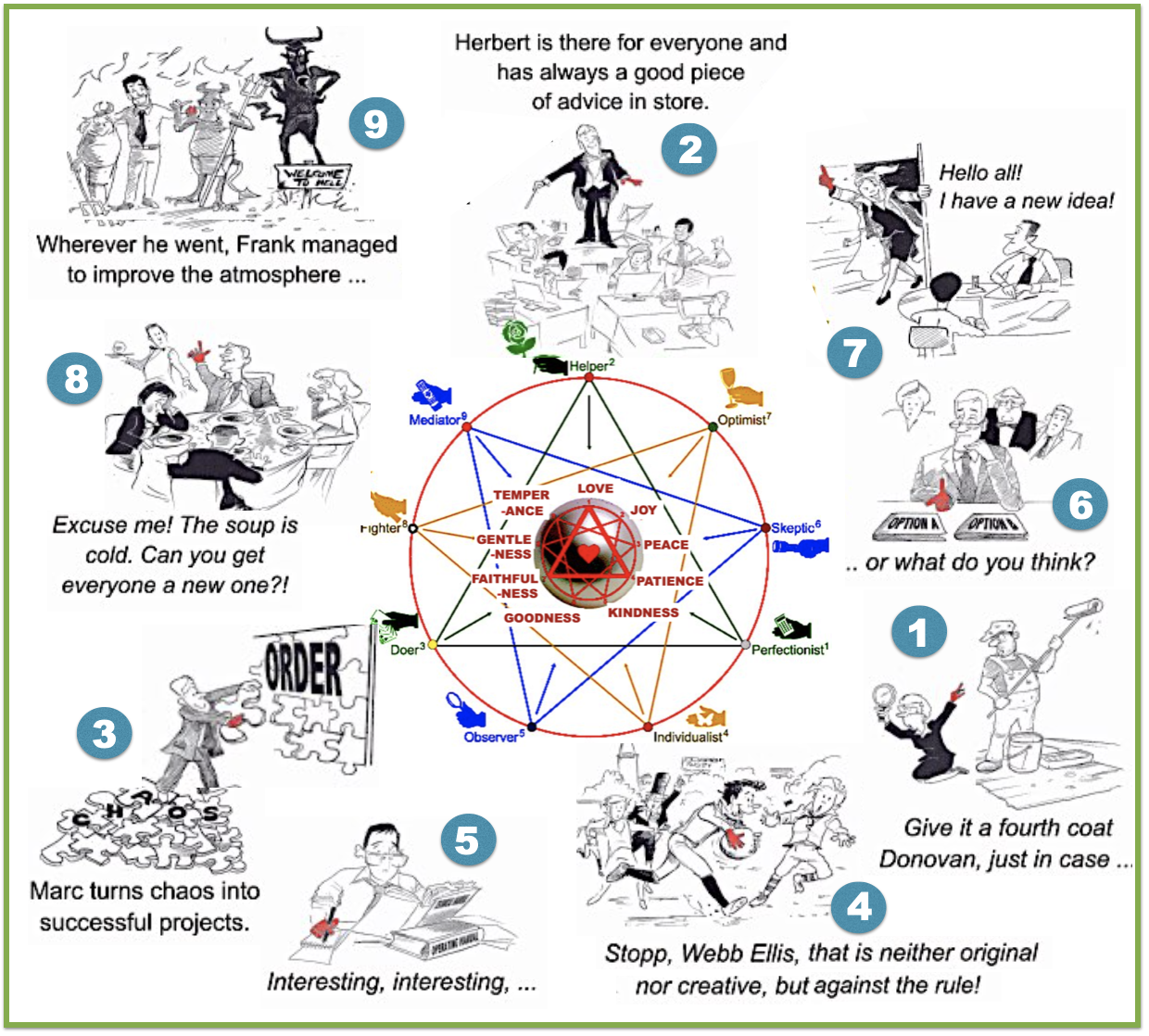
Enneagram COMMUNICATION STYLES (Types 3,4,5)

PREVIOUS : Talk Style (Types 1-2)

TALK STYLES (cont)

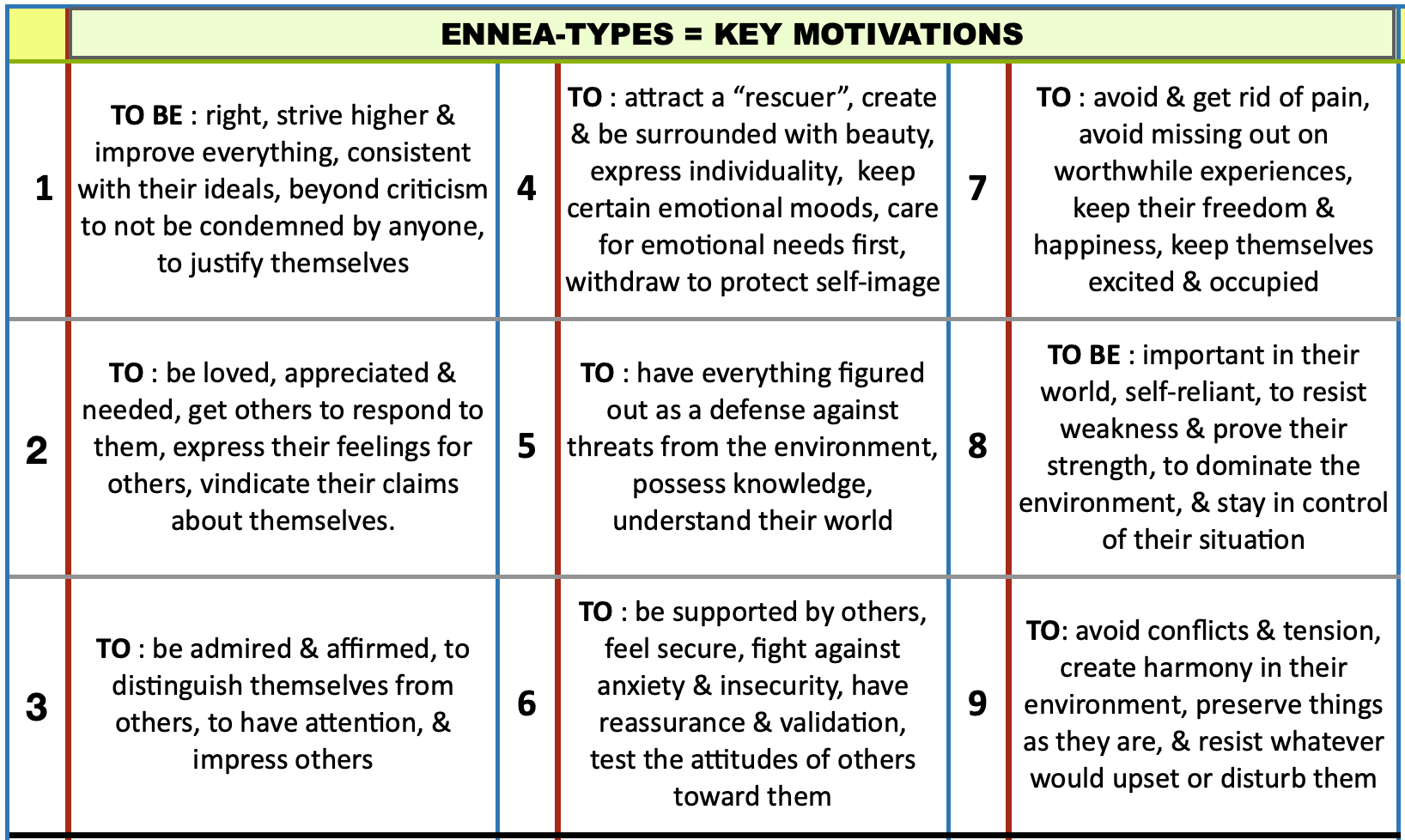
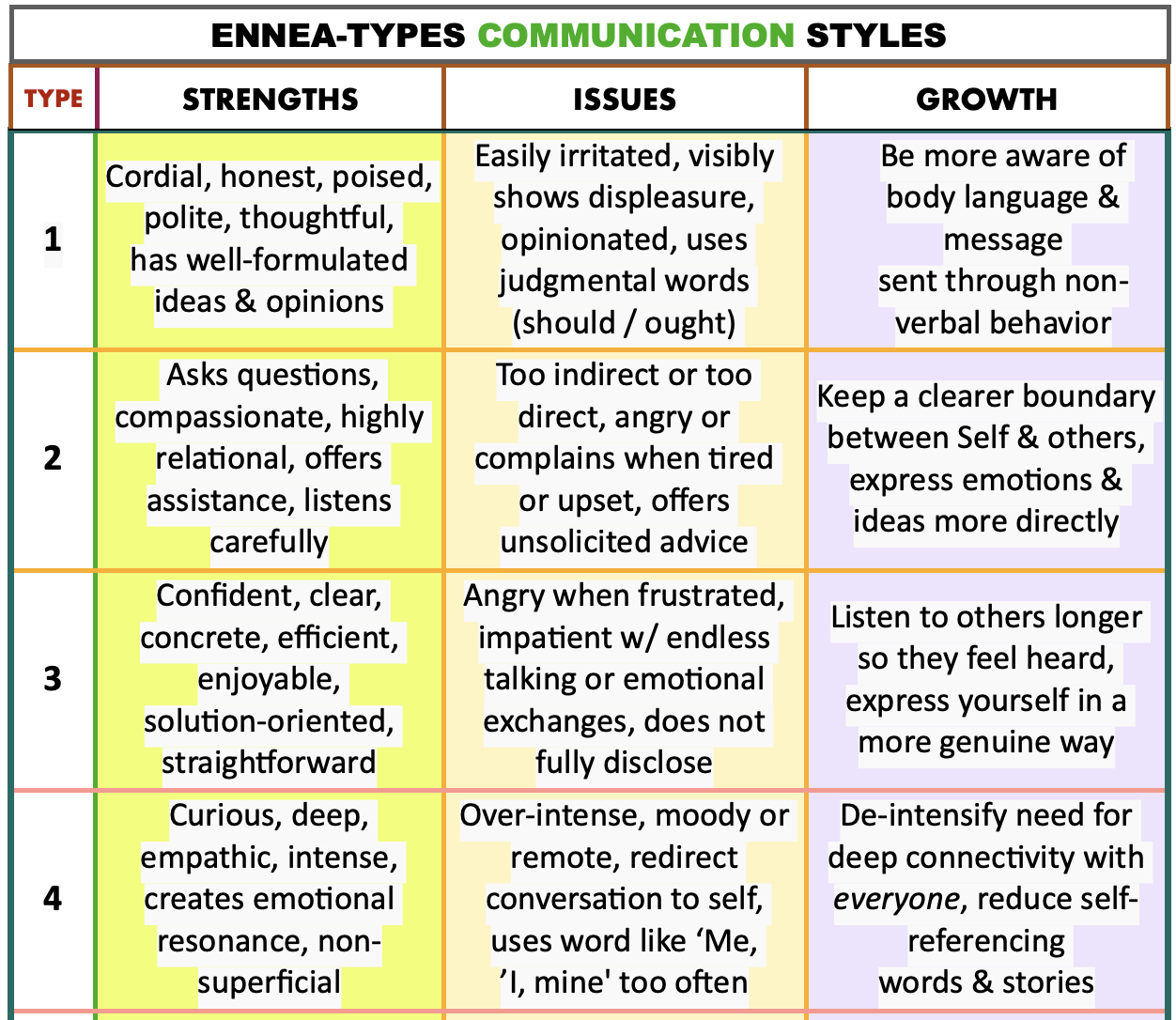
Ennea-type 3’s style is persuading or selling. They’re always trying to convince someone of something. And often, what they’re trying to sell is themself. Persuasion comes naturally to them, & find themselves in careers that benefit from this ability.
3s speak confidently & directly, using words that focus on the topic at hand. They know exactly why they’re talking – what they’re trying to accomplish. They’re not interested in side topics or some else’s agenda.

If a 3 is going to break up with their partner, they may say: “I don’t see this relationship going anywhere, & I don’t think we should waste each other’s time anymore. I think we should break up so that we don’t spend our best years on a relationship that’s failing.”

If they don’t see a relationship “going somewhere,” (after all, Existence is a verb to 3s) or positioning them closer to their goals, it’s got to go. Also, anything that smells even faintly of failure has got to go for an Achiever.

IN BIZ : Performer – 3s are tremendously productive, highly & enthusiastic , they quickly move into action to get results. CHALLENGE : take the time to listen to others, & build good relationships, They need to develop more long-term strategies, & watch out for personal burnout due to workaholism.
♦️
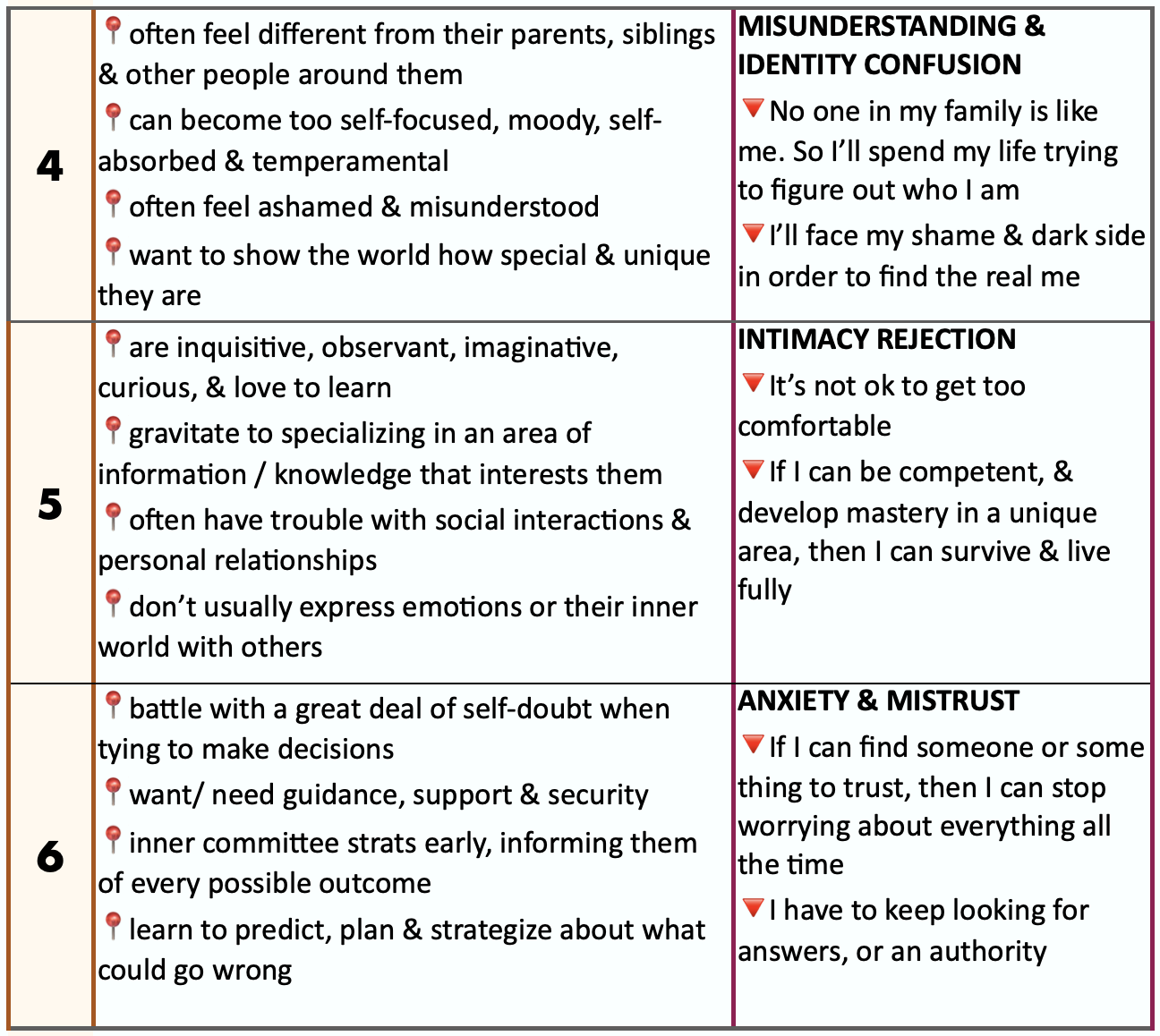
Ennea-type 4’s style is lamenting or expressing. Since they like to live in & feel comfortable in ‘darker’ feelings, you’ll hear a lot of complaining language, with melodramatic & flowery metaphors. It’s usually very emotion-based.
They may not outwardly seem to be emotional, but their language will let you know of hidden depths. 4s’ talk style tends to be self-focused, being a little too attached to how they react to everything. But they’re also highly creative, so their dramatic imagery will reflect that imagination.

If a 4 is going to initiate a breakup, they may say: “I just don’t know if you’re ready to plumb the depths of reality with me. I’m starting to find this relationship really stifling, & I don’t know that we’re the twin flames I thought we were.
I need to be on my own to really explore my true nature without feeling like I have to be someone else for you.”
Very melodramatic, with lots of visual elements, but ultimately it’s all about the speaker & their emotional needs.

IN BIZ : Romantic – 4s focus on aesthetics, authenticity, & ‘meaning’, valuing excellence in all things They want a personal connection to their work & to the people around them.
CHALLENGE : learn to tolerate the mundane parts of work, reduce their emotional reactions, & not take things too personally.
♦️
Ennea-type 5’s style is lecturing or presentational. They know a lot about their area of expertise, & want you to know about it, too. But more importantly, they just really want to go on about it – to better process the info.

They like talking about facts. Their language tends to be highly analytical – lacking small talk entirely – with a certain detachment from the topic they’re focused on. If you want to talk about emotions with a 5, be ready to do it in terms of psychology, not metaphors.

The likeliest way a 5 would break up with someone – is just to ghost them, or so cut them off emotionally, that one day the partner wakes up & thinks, “Oh, I guess I’ll just show myself out.”

They might even realize that in the 5’s mind, they left the relationship a long time ago. But, if your partner were to initiate a breakup, it could probably be in a short text, or something factual, like : “I’m moving to Boston to get my masters, & I would prefer you didn’t come with me. I’ll need time to myself without distractions. I wish you the best of luck.”

IN BIZ : Observer – 5s are excellent thinkers & strategists, looking to develop technical expertise & accumulate knowledge. They need lots of privacy & autonomy.
CHALLENGE : be available to other people when possible, to communicate warmth, & recognize other kinds of human assets besides mental intelligence.

NEXT : Talk styles (7-9)

Enneagram COMMUNICATION STYLES (+ Types 1,2)


PREVIOUS : Enneagram

IMAGE ⬅️ : From “The Enneagram in Business

SITE: “Type One: Body Language and Speaking Style


Communication – 80% or more is not in the words we use, but the patterns of speech, & the non-verbal ways we express our meaning.
Since communication is a 2-way street between speaker & listener, it always exists & is interpreted within a context
EXP : the history of the people involved
– blatant or implied hierarchical structure of their society
– the broader culture of organization, region, country…..

List ⬇️ from the Enneagram Institute
«

✴︎
❤︎ The Enneagram allows us to understand how communication styles develop from our Type. It helps honor our strengths & minimize distortions, so we can be understood, and understand what others are saying more accurately.
✴︎


✴︎
⬇️ From “The Enneagram in Business


  ✷EXPANDED TALK STYLES :
Ennea-type 1’s style is that of sermonizing or pontificating. While that may not be too flattering, for people whose level of health increases – the harsh qualities will lessen yo become much more tolerable

1s are precise, direct & honest, but include many “shoulds”. The Reformer may not always think have everything figured out or that they ‘re right-&-wrong police, it’s just their speech pattern.
EXP:  if a One was going to initiate a breakup, it might sound like this: “I don’t think two people should be together if it’s not going to work long-term. I don’t see this lasting, so the right thing to do is for us to break up.”  Direct, honest, some sort of concrete worldview, & a “should”.

IN BIZ : Perfectionist – 1s are responsible, thorough, and hard working with high standards for themselves and others. They know how to do things the right way.
CHALLENGE :  to balance their critical thinking with acceptance & appreciation, & know when “good enough” is more productive than “exactly right.”
♦️
Ennea-type 2’s style is advising or supporting. They’re very other-focused, with the belief that they themselves shouldn’t need help… but would really love it if others anticipated when they needed something, & just helped without having to be asked.
HINT : They tend to give the kind of help they wish they had.

Sometimes their misguided desire to be of use can blind their intuition – not knowing the difference between when someone just wants to vent vs. when they actually need the 2’s help.
So while they’re very friendly & their speech seems placating, they can also be pushy about offering to ‘fix’, to the point that their ‘helpee / victim’ will want them to stop with the advice for 3 seconds, & just listen to the emotions.

2s have a hard time initiating a breakup. They so need to stay connected, that pushing people away goes against their grain. So if you’re dealing with a 2 who’s actually tying to leave, you might be confused by their “bearing around the bush” communications.

They may say:  “You are so amazing, & you deserve all the happiness in the world. But I just feel like I can’t give you enough, so maybe you should see other people.”
You’d probably have to ask what they mean, because it could just as well be an invitation for you to have an open relationship instead.

IN BIZ : Giver – 2s are positive & people-oriented, making excellent communicators, who will support the best interests of the organization. Highly empathetic, they know what other people feel & need.
CHALLENGE : to practice good personal boundaries, & choose more carefully when & how much to help others.

NEXT : Talk Styles 3-6

Enneagram – CHRISTIAN Perspective (Type 9 +)


PREVIOUS:
CHRISTIAN Perspective (Types 5-8)

SITE : “What is the Gospel?”   


Type 9: Peaceful Mediator : from Sloth to ACTION
9s are easy going, non-judgmental, patient people who long for harmony
with others & their environment.
BUT – internally they struggle with conflicts that threaten the comfort they crave. Believing it’s their responsibility to make sure everyone is respected & heard, they ‘manage’ all that pressure by suppressing emotions, giving up on their own dreams & desires, always giving in – to avoid any form of conflict.

9s assume their opinions don’t matter, so they focus too much on others, merging with their agendas to gain a false harmony. While falling asleep to themselves, they’re constantly frustrated & secretly angry about being overlooked.

Sadly, people around them get frustrated by the 9’s seeming complacency, emotional unavailability, passivity or passive-aggressiveness & stubbornness, creating the very conflict they desperately want to avoid.

When trying to satisfy their longing for harmony, connection & comfort – apart from Christ – 9s become self-belittling, indecisive, & easily overwhelmed. This eventually backfires in relationships.

However, when the 9’s heart is in tune with Christ’s Love, they awake up to their pwn convictions & passions, learning that they matter & really can make a difference in this world.
From that place they realize that true peace comes from entering into conflict – not avoiding it. This lets them genuinely engage in their own life & with others, able to bridge differences, bring people together, & achieve true harmony.

Spiritual Practice – Enneagram ARROWS (see posts)
As you seek to follow Christ, be mindful of things you need to leave behind along the way.
a. Use your stress & growth numbers to let go of unnecessary baggage.
(“I now release….”)
b. Follow up with positive affirmation statement for your type from the numbers of your stress & growth arrows (‘I now affirm ….”)

Remember who you are in Christ, holy & beloved, so there is “now no condemnation” (Romans 8 : 1)

1—Perfectionist
I RELEASE – holding myself & others to impossible standards
I AFFIRM – that I can make mistakes without condemning myself

2—Helper
I RELEASE – the fear that I am unwanted & unloved
I AFFIRM – that I am honest & clear about my motives

3—Performer
I RELEASE – my fear of feeling ashamed & being humiliated
I AFFIRM – that I have value regardless of my achievements

4—Individualist
I RELEASE – all feelings of hopelessness & despair
I AFFIRM – that I can open myself up to people & the world

5—Investigator
I RELEASE – all feelings of powerlessness & hopelessness
I AFFIRM – my life & struggles are meaningful & have purpose

6—Loyalist
I RELEASE – my fear of being abandoned & alone
I AFFIRM – that I am independent & capable

7—Enthusiast
I RELEASE – all reckless & destructive impulses & actions
I AFFIRM – I can say ‘no’ to myself without feeling deprived

8—Challenger
I RELEASE – my fear of ever being vulnerable or ‘weak’
I AFFIRM – that I trust my instincts, & care about the welfare of others

9—Peacemaker
I RELEASE – turning away from what is unpleasant or difficult
I AFFIRM – that I am confident, strong & independent.

(from Don Riso’s Enneagram Transformations.)


NEXT :  Ennea-Communication #1

Enneagram – CHRISTIAN Perspective (Types 5, 6, 7, 8)

PREVIOUS: CHRISTIAN Perspective (Types 1-4)

SITE : “What is the Gospel?”   

Type 5: Investigative Thinker : from Avarice to LETTING GO
5s are afraid of not knowing everything, of not being enough in themself.  They want to be self-sufficiency, avoid relying on others – and a life free from emotional obligations.

They see what the demands of living with others entails, but feel ill-equipped to meet them. They hope eventually to be able to know enough & have the right resources, but on their own that never materializes. They don’t realize that connecting, emotions & vulnerability are natural parts of a healthy partnership.

Trying to mange all that apart from Christ can lead to being withdrawn, emotionally distant & isolated. They assume they have to know everything before expressing their insights, afraid they’ll look stupid – which overwhelms them, so they retreat.

Fortunately, when their heart & mind are in line with the Gospel, 5s discover that their needs are not a problem because these are fulfilled in Christ. They don’t have to know everything, since that’s not possible – only God is omniscient!

Then they can be more generous with giving what they do have, not just from their head, but with their heart & all the rest. That gift, coupled with a great vision & perspective, reflects the true wisdom of God.

Type 6: Loyal Guardian : from Fear to COURAGE
6s are some of the most reliable, hard working, dutiful & steady people around. Their sense of humor, ability to foresee problems, & fierce loyalty make them incredible team players, holding groups together & generally benefitting the common good.

When they forget the Truth of the Gospel, 6s are plagued with catastrophic thinking, uncertainty, self doubt & worry. It leave them anxious, unable to relax & unable to trust themselves or others.

Their thinking can be skeptical or muddled, hesitating to make decisions. They’ll focus on planning for & trying to control future catastrophes, so they can live in a world that’s predictable & safe.

In relationships 6s struggle with projecting their fears, doubts, & insecurities onto others as a way of protecting themselves. These misplaced fears, suspicions & doubts often erode their trust in God.

However, when their heart is aligned with the Gospel & they learn to take their concerns & anxiety to Christ, they experience a transformation that provides great courage. They can relax in the trust that they’re secure in Him, experiencing “a peace that surpasses all understanding”. which is not available in the world.

Type 7: Entertaining Optimist : from Gluttony to SATIATION
7s compulsively keep themselves extremely busy to avoid dealing with internal anxieties, sorrow & boredom.

They tend to be scattered, uncommitted, & unreliable, hindering development of emotional depth, which requires facing painful emotions & unhappy experiences. These characteristics also cause trouble with relationships, & people close to them get frustrated when they see that 7s value new experiences & things more than them.

The cost – as they chase adventure, pleasure & stimulating experiences – is the inability to enjoy the present, nor feel satisfied with what they already have.
Putting painful things out of awareness, or reframing suffering as something positive without ever dealing with it, show up in counter-productive ways.

However, when their heart is aligned with the Gospel, 7s become more grounded in the present & can taste all it’s flavors with a grateful heart. Trusting that God will fulfill their internal longings, their more receptive & thoughtful qualities emerge. Combining this with their natural creativity & energy inspire others by seeing how they get through the highs & lows of life.

Type 8: Protective Challenger : from Lust to SOBRIETY
In a world full of sin & injustice, where people are taken advantage of & abused, 8s feel an intense need to protect themselves against betrayal & powerlessness – by always having an invincible exterior & minimizing any personal vulnerability.

In relationships, 8s often sacrifice intimacy so their soft side won’t be discovered & used against them. Denying closeness to & tenderness from others, as well as giving or receiving forgiveness – leaves them incomplete, missing out on the
support everyone needs & has a right to.

They try to protect a hidden tender heart by forming thick armor, an outward strength fro prevent loss. While all Types fear people, others become passive, but 8s become aggressive. “I’ll control them before they can control me.”

Their fear produces a thirst for power & control, & ultimate justice. Apart from Christ, it can lead to being too blunt, confrontational, cynical, insensitive, domineering, even vengeful.

When 8s surrender their fear of betrayal, & rely on Christ, they can give up control & let people to see both their endearing vulnerability and a compassionate strength. From that place they can better protect the innocent from injustice, empower others, & use their leadership gift for the greater good.

NEXT : Enneagram – CHRISTIAN Perspective (#4)

Enneagram – CHRISTIAN Perspective (Types 1, 2, 3, 4)


PREVIOUS: Enneagram – CHRISTIAN Perspective (#1)

SITE : “What is the Gospel?”  


REVIEW each Type for basic info


Type 1: Moral Perfectionist : from Anger to SERENITY
Because we live in an imperfect world, 1s often feel assaulted by the flaws they notice wherever they turn. In an attempt to fix this, they feel a personal obligation to correct the errors they encounter in their everyday life. This overwhelming burden leaves them with chronic dissatisfaction, since their task is never finished.

Internally, 1s deal with an harsh critic that’s constantly accusing them. And they’re confused by others who resent them or object to their “helpful advice”, since they’re just trying to be helpful!

They don’t acknowledge their frustration & resulting anger, because that would be “bad”, & their core longing is to be seen as “good”, so it then gets turned into endless resentment.
When trying to satisfy the 1’s longing for everything to be good & right – apart from Christ – they become self-controlling, as well as perfectionistic & critical of others.

Instead, when they learn to take their longings to Christ, they can start letting go of their extremely high, unrealistic standards. Then their principled nature can be used to bring out the best in themselves & others, without having to prove they’re good.

Type 2: Supportive Advisor : from Pride to HUMILITY
The depth of need & suffering in the world is especially burdensome to 2s, who are naturally sensitive & empathetic. They assume it’s their job to alleviate the pain of the people around them, an endless responsibility.

2s try to feel good about themself by being helpful, because deep down they don’t believe they’re loved & wanted by others – apart from the support they offer. The overwhelming burden to care for everyone else’s ‘issues’ is damaging because they ignore their own. In their pride, they assume they know what’s best for others, while denying the care they too need.

Ironically, 2s feel hurt & insecure when they’re not needed, so they double their efforts to win people over, by flattery & gifts. And they don’t understand why others feel crowded by their efforts. Their efforts to fulfill this longing apart from Christ can turn into people-pleasing & being possessive, inserting themselves into other’s lives & violating boundaries.

However, when they learn to take their longings to Christ – 2s start taking care of their own needs, realizing they’re wanted & loved just for themselves.
From that place flows selfless generosity, encouragement, & a  beneficial kindness our world desperately needs.

Type 3: Successful Achiever : from Deceit to TRUTH
The 3’s deep fear of being worthless, a failure or incapable, causes them to put on a false front (deceit), hiding the parts they don’t want others to see, only portraying a successful exterior. In doing so they lose connection with their authentic self & with others.

When trying to satisfy their longing for accomplishment & admiration apart from Christ, 3s can become overly driven & image-conscious.
Believing they’re only as good as their last accomplishment, they’re competitive, self-promoting, constantly comparing themselves to others – running the risk of burnout.

However, when their heart is aligned with the Gospel message, they come to believe they’re already loved & valued for who they really are, not just for their success & productivity.

Then their confidence, enthusiasm & determination can inspire those around them. They become a humble team player & are happy to champion others. Their adaptability, excellence & drive can produce incredible achievements for the greater good.

Type 4: Romantic Individualist : from Envy to EQUANIMITY
Struggling with feeling envy & jealousy, 4s compare themselves to others, believing everyone else has all the things they themselves long for.

When trying to find a unique significance apart from Christ, they can become self-absorbed & temperamental. Painfully self-conscious, they spending a lot of energy ruminating on how different they are from others, turning it into self-hate & shame, wrapped in emptiness & despair.
They feel anxious around others, always wondering what someone thinks about them, forever assuming weakness, never their value.

Because of internal agitation, 4s can get into conflicts with others by being moody, emotionally demanding, withholding, dramatic & volatile, making them self-absorbed & disinterested in others.

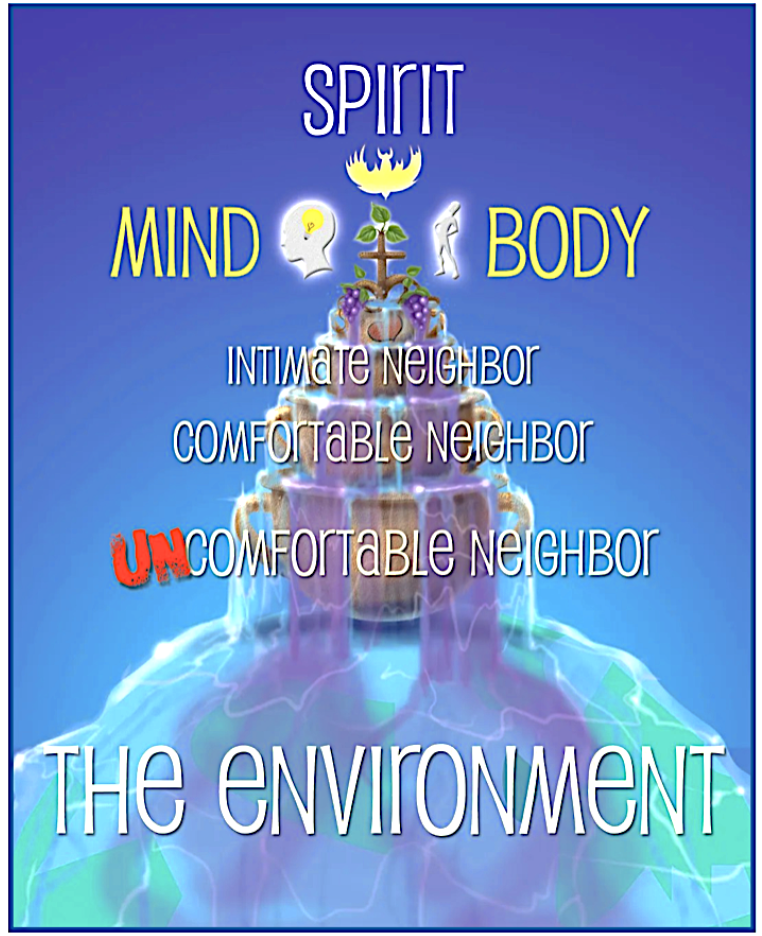
However, when the longings of their heart are taken to Christ, 4s are able to step out from under the waterfall of emotions & bring out their gifts in truly extraordinary ways.
They intuit others’ suffering & can support them in their pain without feeling overwhelmed. In fact, it brings them great joy to connect with people on a deep level & comfort them through their sorrows – an amazing gift to the world.

NEXT : Enneagram – CHRISTIAN Perspective (Types 5-8)

Enneagram – Christian ‘Fruit of the Spirit’

PREVIOUS : Christian – Intro

SITE : Read about each Ennea-Type


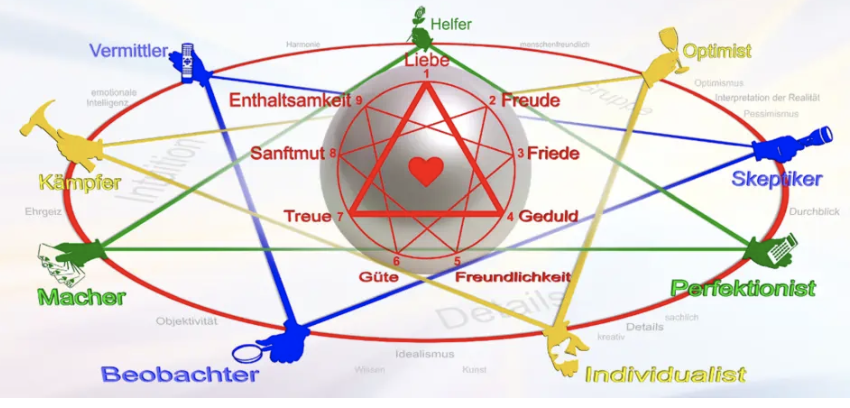
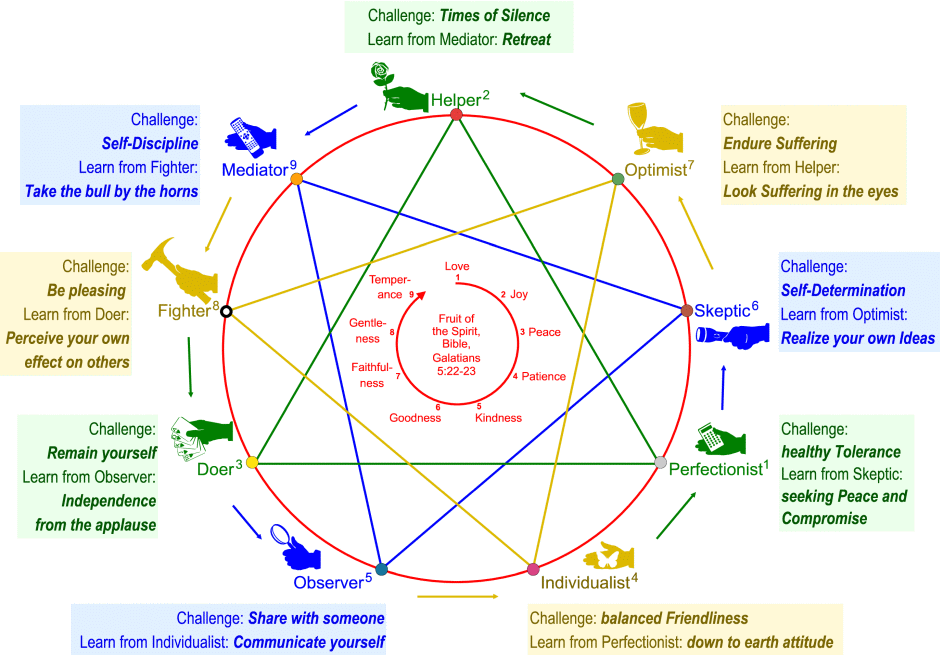
EnneaStar, developed by Markus Brunner (Salvation Army Switzerland), re-arranges the Enneagram’s 9 types.
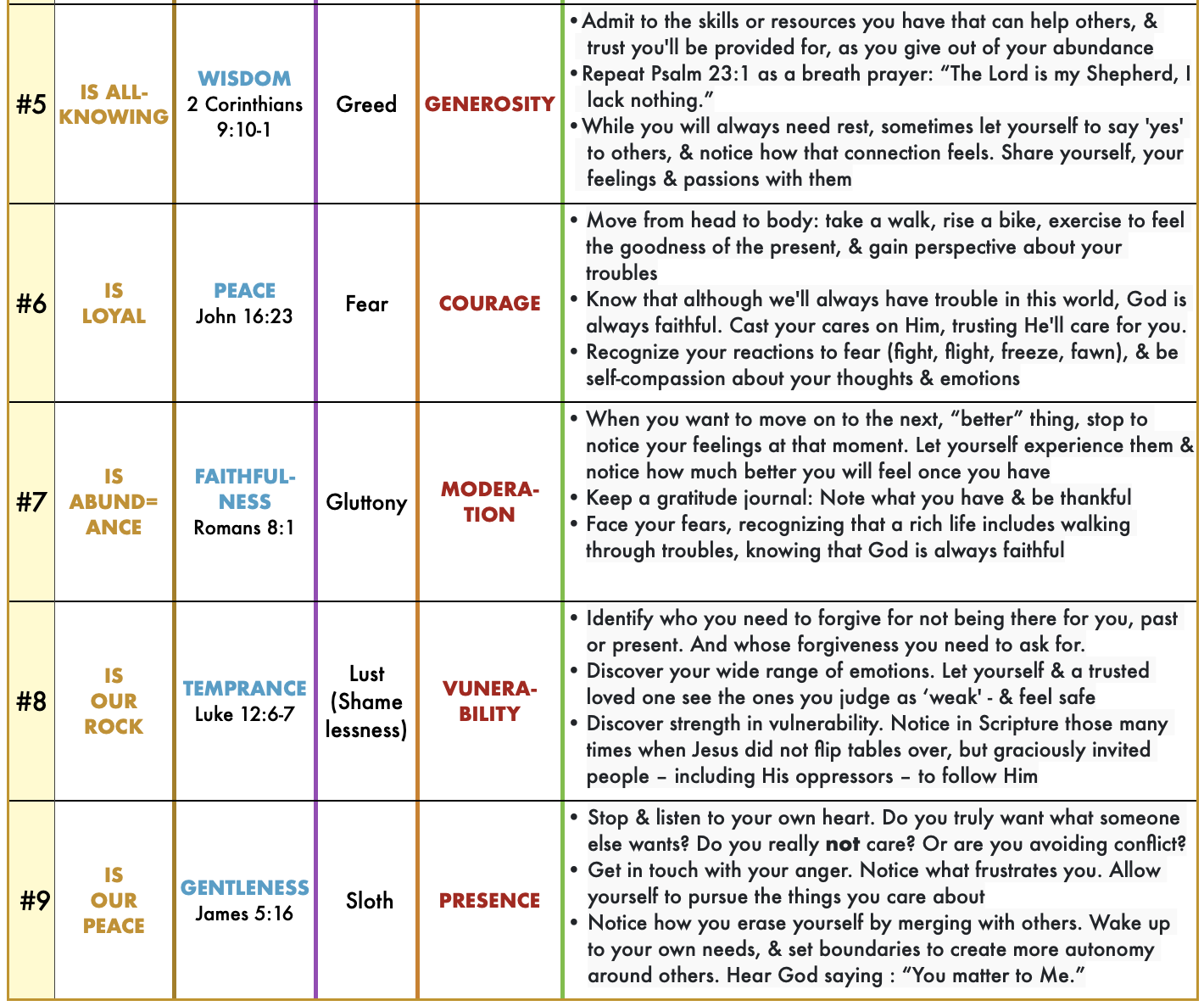
Inspired by the Bible’s Fruits of the Spirit, it assigns to each type one quality of God’s character, relating the 9 types to those divine characteristics of : love, joy, peace, patience, kindness, goodness, faithfulness, gentleness, temperance (self-control). (Galatians 5:22‑23)

ROOT SINS
Root Sins (defenses) of the Enneagram represent opposites of the Spiritual Fruits.

Studying the types has been a long-standing fascination with the Enneagram. Understanding & accepting them is an important factor in personal development. (MORE…. in posts)

WINGS
On the foundation of the biblical Spiritual Fruits, adjacent Types are combined (WINGS = neighbors) by complimentary characteristics.
EXP : 5w4 = Knowledge , or 5w6 =  Objectivity

TEAMS
a. In business 
Enneastar examines the dynamics of any group as it reflects each Type’s own behavior within their team :
🟡 Yellows influence the team, but are also ready to go it alone if / when it’s not cohesive (Types 4, 7, 8)
🟦 Greens also exert influence, but place themselves within the team (Types 1, 2, 3)
🟢 Blues can be in charge, without wanting to lead (Types 5, 6, 9)
b. Enneastar assigns the 9 types to 3 impulse groups.
» Group: people who recover in the community (not only family)
» Details: those who have eagle eyes for (creative / practical) details
» Intuition: who act & decide intuitively from gut understanding.

The combination of team behavior and impulse groups (a + b) forms the 2‑Minute Test, which provides surprisingly good results, using only 8 questions. 

Team ROLES
Successful teams are usually heterogeneous. This graphic shows each Enneastar’s typical attitude, based on Belbin Team Roles Theory.

The desired Types or Team Roles will not always be available. So for a work-group (as well as in a family) it’s helpful each person to function from their dominant subtype, but also develop the ability to actively call on their secondary preference – for the sake of the team’s balance. However, if we move too far away from our main type, the more energy it will cost to be a valuable part of the team.

LEARNING From Each Other
Striving for the divine ideal (Fruit of the Spirit) is encouraged by learning from each other.
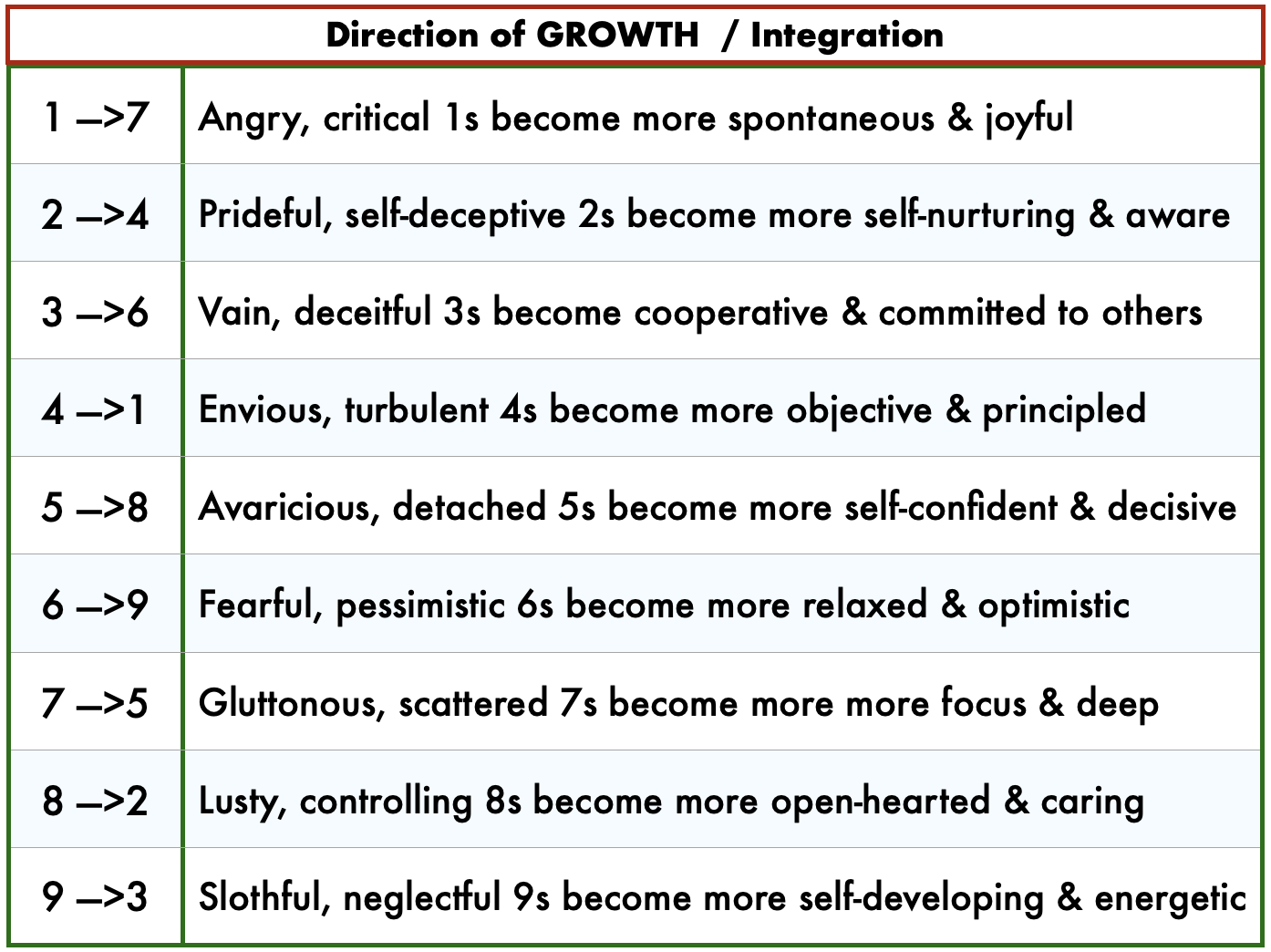
In the Enneagram, that is developed using the security points,(Growth ARROWs) & the Enneastar recommends a counter-clockwise movement.

Enneastar – Learn from each other

NEXT : Christian Perspective (Types1-4)

Enneagram – CHRISTIAN Perspective -INTRO

PREVIOUS: Enneagram type NEEDS

SITE : “What is the Gospel?”  

BOOK :  “The Enneagram: A Christian Perspective“∼ Richard Rohr & Andreas Ebert  “…. their best-seller shows both the basic logic of the Enneagram & its harmony with the core truths of Christian thought, from the time of the early Church forward.”

BACKGROUND – For millennia humans have tried to discover a predictable pattern of grouping people according to personality similarities. The ancient Greeks observed 4 basic types, & believed they were determined by the kind of body fluid you had (red blood, yellow bile, black bile & phlegm).

The Apostle Paul said that we are unique parts of the larger body of Christ. Jung listed 16 types, which were later incorporated into the Myers-Briggs Personality Indicator.

TRUE IDENTITY in CHRIST 
The Enneagram is about WHY we do what we do, not just what we do.
❣️“Enneagram types aren’t merely ‘types’ of people – but paths to God (the person God made us) .” – Russ Hudson

❣️ “The Enneagram exposes 9 ways we lie to ourselves about who we think we are, 9 ways we can come clean about those illusions, & 9 ways to find our way back to God.” – Christopher Heuertz, The Sacred Enneagram

Where we are on our spiritual journey can limit our awareness about our relationship with God. Picture the Enneagram as a giant circle of life, with our type as the tiny spot where we stand, representing our limited view of Self, the world & God. If we start from there, we’ll admit how much more there is to see.

Each personality type is based on a wounded message that molds the motivation behind its behavior. On the surface the Enneagram may seem to be just another way to gain self-knowledge, but it can also be used to move us toward the transformation God extends to us in Christ.

But for this tool to work properly we need to know its purpose in the context of the Gospel.
The Gospel is an enthralling invitation to be reconciled to God through the death & resurrection of Jesus Christ. Scripture says to “put off your old self” & “put on the new self created after the likeness of God.”

The Enneagram points out the specific ways we are held captive by our human nature, as well as the unique ways God intends for us – as His ‘image -bearers” – to display His glory & love to the world.
More than offering simple labels, the Enneagram gives us a roadmap that shows where we most need God’s healing in Christ, those exact places sin & wounds make us “fall short of the glory of God”.  (More….)

NOTE: No serious student of both the Gospel & the Enneagram thinks it is the gospel. We know the Enneagram is not the way, the truth & the life. God’s word is the lamp to our feet, & food on the journey to doing God’s will.  But we can think of the Enneagram as our Fitbit, providing some clear markers for the journey. (More…)

This tool provides 9 (actually more) distinct pathways to growth. That doesn’t mean there are only 9 types of people in the world. God made no two exactly alike. Although we identify most closely with one type, we contain traits of ALL 9We’re a whole person, not just 1/9th.

But we’re not all totally different either. We have more in common with some people than with others. Understanding the types can help us like & love each other more accurately. This inventory encourages us grow spiritually, & cultivate compassion for others. So we can pray for clarity to approach everyone as unique yet related.  

To use the Enneagram for spiritual growth, we start by identify our type. If you’re confused, study each number, & ask God to clarify which one most likely motivates you.
EXP: Why traffic jams stir your anger, why some movie make you cry, why the political climate frustrates you…..
(The most common type, is #6, then #9. Least common are #4 and #8 (More….)

ANATOMY of Ennea-Types
Beth & Jeff Weekly : “The Enneagram is powerful & effective when viewed through the lens of the Gospel.  When we’re out of alignment with Truth, each type’s defects reflects the fall of man. If we’re not resting our true identity in Christ, then struggles & shortcomings lead us to think & act in ways that harm ourselves & others.

When we’re healthy & aligned with the Gospel each Type reflects God’s glory & creativity – although imperfectly. By His grace, we can ask the Holy Spirit to guide us into healthier ways, to find peace & rest despite life’s burdens or trials, & appreciate people of every Type.”

IMP : When you find any tool that helps solidify your core self in Christ – use it. But don’t overvalue the tool. Worship the One who formed you.

NEXT : Enneagram – CHRISTIAN Perspective (#2)

ENNEAGRAM Type NEEDS

PREVIOUS : Enneagram

TYPE 1
+ Need to hear : “I see goodness in you. I still love you even when you make a mistake”
☼ I Need to be Spontaneous. TO laugh, play, & remember it’s not my job to fix everyone & everything – only somethings.

— Need to own that my critical attitude & irritability make others feel judged & ‘wrong”, like they should walk on eggshells to not raise my anger & recriminations

TYPE 2
+ Need to hear : “You are loved no matter what. It’s ok to express your own needs & desires”
☼ I Need to do something for myself. I can feel empathy without responsibility. I can intuit other’s needs but not have to provide them

— Need to own that my management of others & wanting to get my own way – can make loved ones feel manipulated & smothered

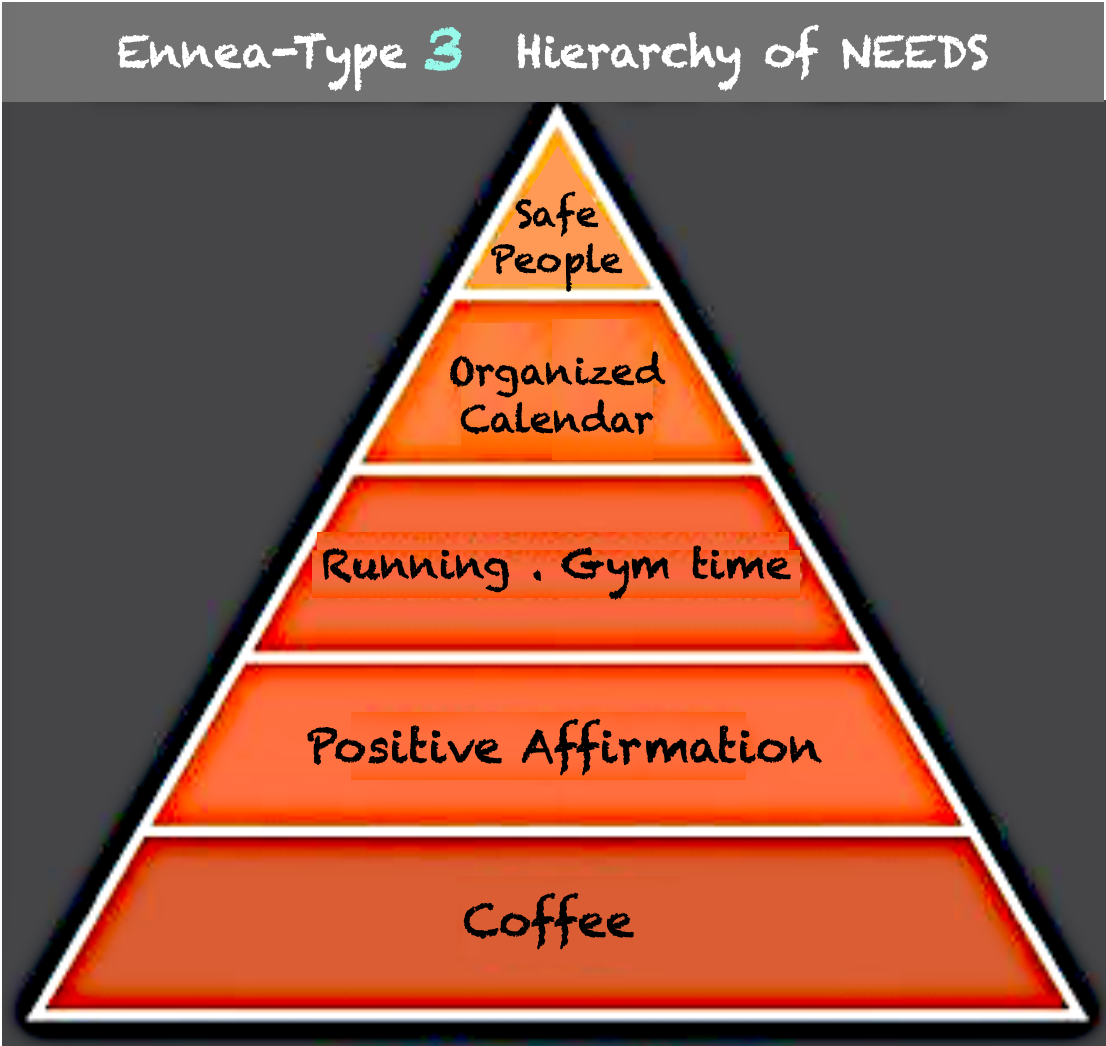
TYPE 3
+ Need to hear : “You don’t have to perform. I want to hear your thoughts & feelings ”
☼ I Need to do something Fun. Remember what I actually care about & stop saying yes to things that aren’t mine to do – even knowing I’d be great at them!

— Need to own that my workaholism & image management – can be alienating to anyone who wants to spend time with the ‘real’ me. Or it makes them feel like just another item on my to-do list

TYPE 4
+ Need to hear : “I am here with you. It’s ok for your emotions to be all over the place”
☼ I Need to take Care of my Body. I can be happy with ‘ordinary’, since there’s beauty even in the mundane. Also, I need to create some rhythm & structure in my life

— Need to own that my moodiness & feeling of exemption – can become tiresome to loved ones who feel they have to cater to my emotional storms & arrogant refusal to regulate my emotions

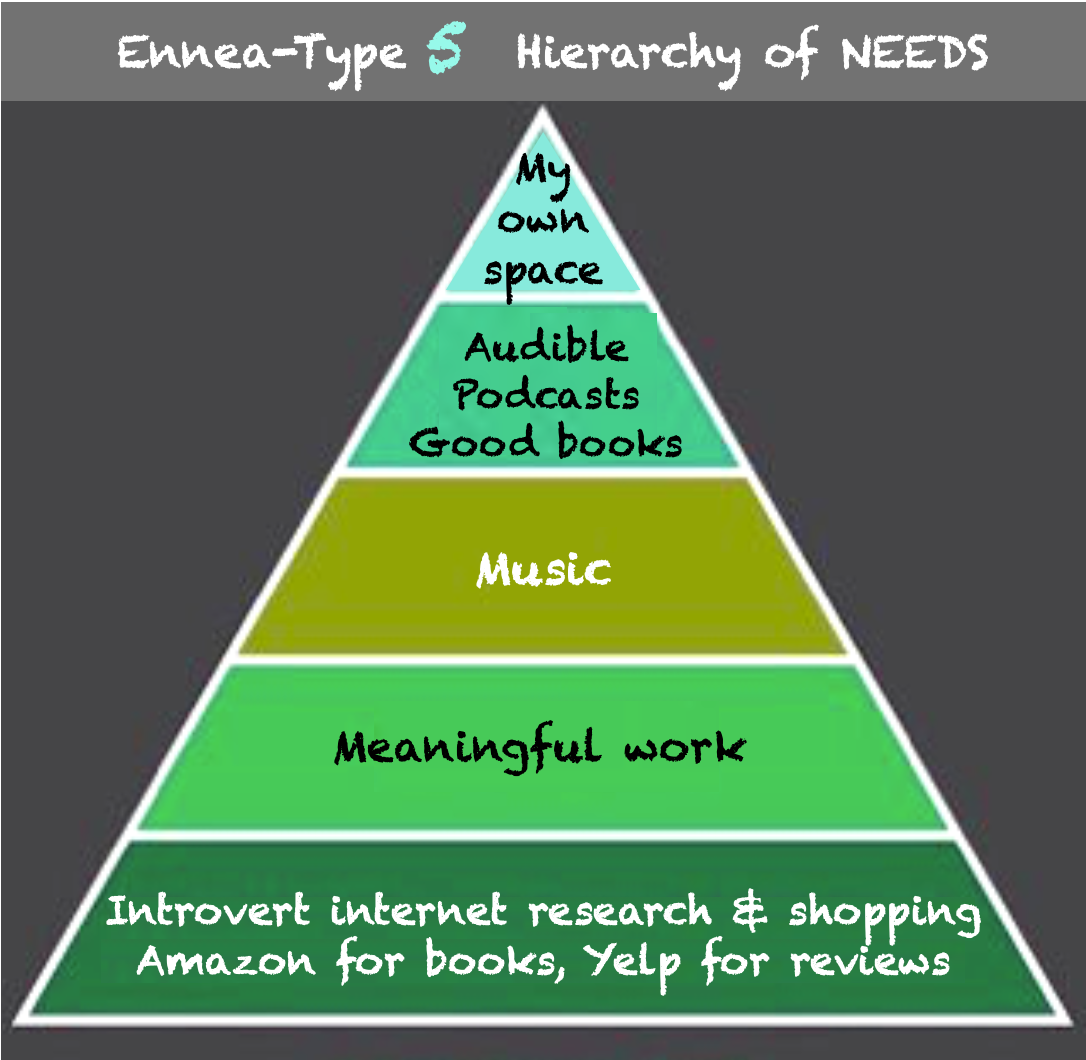
TYPE 5
+ Need to hear : “It’s ok to have needs. I know you need to retreat into your own space”
☼ I Need to get Out of my Head. Information is not the same as wisdom which comes from applying what I know. To do that I have to engage, moving out of my study into the world

— Need to own that my emotional stinginess & tendency to retreat – can make loved ones feel shut out & abandoned, creating a greater feeling of isolation in me

TYPE 6
+ Need to hear : “Everything’s going to be ok. I’ll support you as you pursue your passions, even if you’re scared”
☼ I Need to be Brave. There is good out there, just as much as there are dangers. I will find whatever I look for, so maybe I can start looking for the positive that’s available everywhere

— Need to own that my reactivity & need to control others & situations – to manage my anxiety – cause loved ones to feel they have to make me comfortable, to avoid my anger, panic or retreat

TYPE 7
+ Need to hear : “You are not a burden to me. Let’s plan a trip together”
☼ I Need to Embrace Negativity in healthy ways. Trust the process of life’s ebb & flow when I get to the messy middle. Grit is just as sexy as chasing the next great idea or running to the next fun location

— Need to own that my hunger for variety & freedom that creates an environment of frenetic restlessness – can make others feel tired, & that their plans & wishes are second to my agenda

TYPE 8
+ Need to hear : “I will never betray you. I’ll be careful when you let your guard down to show your vulnerable side”
☼ I Need to Chill Harder 🤠. Slow down enough to see others for who they truly are, & believe that they actually do want to know & love the Real Me. I can remind myself there’s no monster under the bed

— Need to own that my insistence on loyalty & control can be overwhelming & feel bullying to those near me – who become afraid to live freely, lest they rouse my anger or callous indifference

TYPE 9
+ Need to hear : “Your presence matters to me. I love it when you speak up & share your thoughts”
☼ I Need to Express myself! Avoiding a battle I need to fight, & having that looming over my head – drains my energy more than I realize

— Need to own that my avoidance of conflict & painful emotions make others feel neglected & dismissed – & that I’ll accuse them of being ‘dramatic’ If they expressing their emotions
(FROM :  ‘theenneagramworkshop’ + other sources)

NEXT:  Enneagram – Christian Perspective

Enneagram Types : CHILDREN & Parents (#2)

PREVIOUS : Ennea – CHILDREN & Parents (#1)

CHART ⬆️ : The Enneagram of PersonalityEnneagram Type Parenting Styles (the un-described types are mixtures of the two surrounding types – their WINGS)

SITEs: “Better Parenting with the Enneagram
🔔”Anatomy of the Enneagram Types– extensive descriptions of each type

The Adverse Childhood Experiences (ACE) Study that appeared in the American Journal of Preventive Medicine in 1998 was ground breaking. Prior to it, few connections were being made between childhood trauma & chronically sick adults.

The ACE study only covered 10 types of childhood trauma, but now we know there are many more (bullying, constant moving, foster care, environmental disasters, multiple loss/ grief, homelessness, loneliness, racism, religious persecution, seeing others abused ….)

However, ACE did succeeded in linking adverse childhood experiences to chronic stress, ill health & social problems in adulthood, providing validation for many more people.

Leonie Ash’s award-winning poster shows some results of physical, mental-emotional & social ill health  CHART  ⬇️


OVERVIEW
of each type’s ‘common’ childhood stress-elements
#1 Child : required to take on too much responsibility too soon, pressured to do things “correctly / perfectly” before they were ready

#2 Child : had to choose between their own needs & the other person’s – to stay connected to those they depended on /loved

#3 Child : had well-intentioned parents who praised them for their accomplishments – for what they ‘did’ rather than for who they are

#4 Child : when they experienced actual or perceived loss of love in early life, they blamed themselves for it

#5 Child : their parent / caregiver was rarely responsive to their needs, which (correctly) made them feel neglected

#6 Child : often felt unsafe & unprotected by their parent / caretaker, who actually was unpredictable &/or undependable

#7 Child : may remember childhood as fun or idyllic. But a traumatic event made them aware of being ill-equipped to face life’s challenges

#8 Child : had to grow up too fast. Home was a battleground, where conflict or combat was necessary to survive, so they adopted a tough persona

#9 Child : was overlooked, not heard, not included. So they learned to go along to get along  (MORE…. for each)

EFFECTS of childhood trauma can be obvious or subtle, often expressed as pronounced changes in behavior or mood :
🔻Under-responding or over-reacting to emotional events
🔻Changes in behavior or communication : heightened anxiety, hyper-vigilance, clinginess, chronic worry, or explosive anger

🔻 Painful emotions – depression, despondency, lethargy, inability to focus, isolation, or quietness/ silence
🔻Chronic illness, including irritable bowel syndrome, chronic fatigue, lethargy, or being easily injured
🔻Academic under-achievement ( MORE, re Healing….)

For PARENTS (MORE….) : ‘YourEnneagramCoach.com’ has developed some useful guides to help parents identify & understand their child’s type, worldview, core desires & fears.
ASK yourself these Qs to identify how your child is wired:


NEXT : Ennea-type NEEDS

Enneagram Types : CHILDREN & Parents (#1)

PREVIOUS : Ready, AIM, Fire – centers

SITEs: 🔔Understand All 9 Enneagram Childhood Wounds + How To Heal
🔔Enneagram Childhood Messages

🔔 Enneagram Types as Children’s Books Series : Type 7 as “IF YOU GIVE A MOUSE A COOKIE” (+ MORE types)

NOTE: The following Ennea-type descriptions will not apply 100%, because we must add other inventories for each child, such as their MBTI, DISC, OCEAN, astrology & numerology charts…. to get a full picture.

THEN – the child’s combined info must be looked at within the family context – since each one will respond to the positive & negative experiences of their upbringing thru the lens of their specific personality. (MORE …. re. childhood wounds ⬇️)

Childhood Scenarios for Ennea-types: Law of Three 
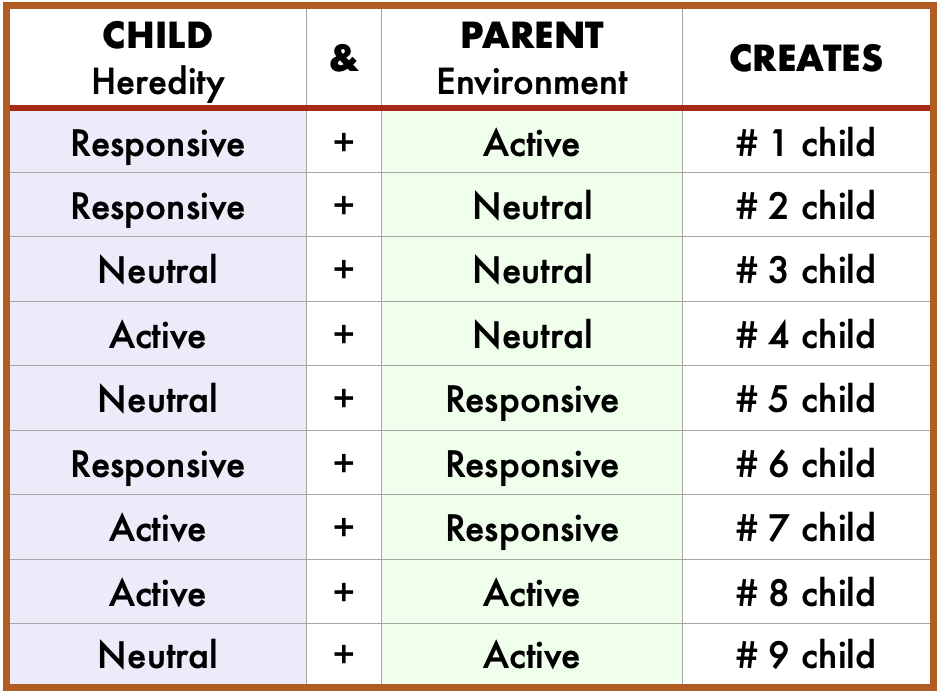
THEORY :  Each of the 9 types is the result of
🔺 Nature / hereditary = the child’s preferred inborn orientation
🔻 Nurture / environment) = interactions with their parents’ style

The concept is that there are 3 major innate orientations of Personality & we’re each born with one of them as strongest :

a. Active: assertive, bossy, demanding, egocentric, expressive, intimidating, outspoken, willful
b. Responsive: affectionate, cooperative, engaging, friendly, supportive, sympathetic
c. Neutral: absent, apathetic, avoidant, ignoring, indifferent, reserved, neglectful, withdrawn

Apparently, each child comes into the world with one of these pre-defined attitudes toward their environment. AND each parent will interact with their children from a their preferred style, which can be, but is not necessarily determined by their Enneagram type.


TYPE 1 – The Active parent is demanding, dominating & critical, so the sensitive Responsive child will try to adjust themself
TYPE 2 – the Responsive child acts in a pleasing, appealing ways, but will be treated with indifference by a Neutral parent
TYPE 3 – The Neutral child’s solitude is encouraged by their parent’s own Neutral withdrawal & indifference, which may not make this child feel openly rejected, but can intrigue & challenge

TYPE 4 – The Active child may react in dramatic, exaggerated ways, trying to grab the attention of an unconcerned caretaker
TYPE 5 – the Responsive parent tends to give a lot of un-asked for / unwanted attention to the Neutral child, who experiences this as smothering
TYPE 6 – The Responsive child will tend to become dependent on the Responsive nurturing, affectionate figure, so will reject conflicts & feel threatened by any lack of stability

TYPE 7 – The demands / concerns of the Active child are usually received with Responsive benevolence, support, encouragement
TYPE 8 – Both Active child & parent experience open conflicts on a regular basis.
TYPE 9 – The Neutral child is often overwhelmed & frightened by the controlling, domineering Active parent

Most often parents stick to their ‘natural’ style. However, any Ennea-Type Parent can shift to another orientation to respond to their children, if : 
– they’re personally under stress, or the environment is harsh
– because theirs isn’t working well to accomplish their goals
– the parent is in Recovery & wants to improve interactions

✔️ What determines the environmental component of a child’s future type is not necessarily the main caretaker’s Ennea-type, but rather their particular approach to relating to the child.
(MORE….. explanations re. each type)

PARENT – CHILD CONVERSATIONS
🔸 Before getting started, parents need to identify their own Ennea-Type & style

🔸When you choosing to love & understand your child based on their specific type it will help them feel seen, heard & validated
Keep the conversation light & fun

🔸For ages 3-5, choose various buzz words from the questions (seen in Part 2) about each type, remembering that children change over time as they grow, so don’t get stuck on a specific Ennea-type

🔸Because their personality is yet un-formed, they may seem like more than one type, & you may not know which arrows & wings to include in your evaluation

🔸Teach them not to use their Enneagram # as an excuse for bad behavior – especially as they get older. They still need to take responsibility for their choices & be reminded there are consequences for their actions.

NEXT: CHILDREN & Parents (#2)